Sadhguru — Life, Teachings, Isha Foundation & Relevance for NRI Hindus in 2026
Sadhguru (Jaggi Vasudev) — modern Hindu yogi, Isha Foundation founder, Inner Engineering creator, Conscious Planet & Save Soil movements. Lessons for NRI Hindus 2026.
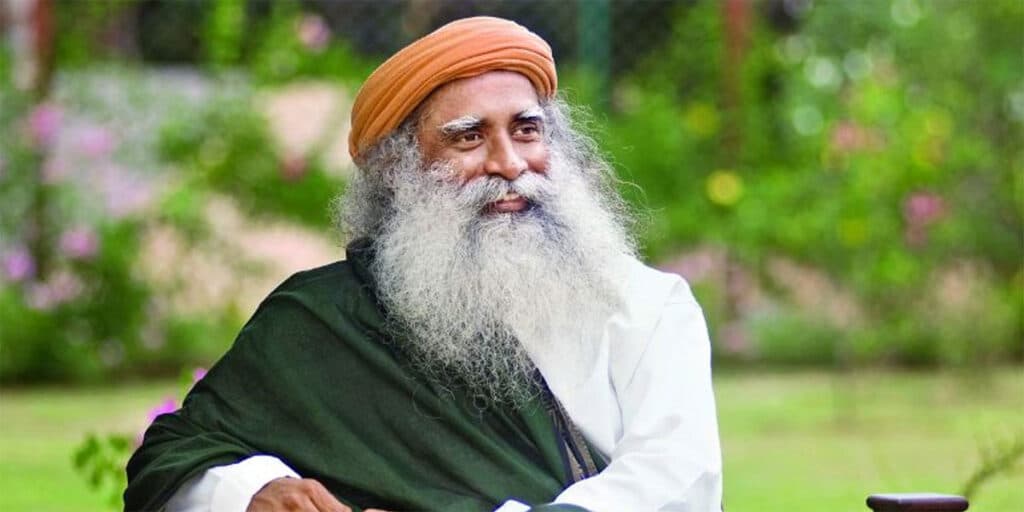
Sadhguru (Jaggi Vasudev) — modern Hindu yogi, Isha Foundation founder, Inner Engineering creator, Conscious Planet & Save Soil movements. Lessons for NRI Hindus 2026.
Quick Answer: Sadhguru (Jaggi Vasudev, born September 3, 1957) is the founder of the Isha Foundation (1992) and one of the most globally visible modern Hindu yogi-teachers. Based at the Isha Yoga Center in Velliangiri, Tamil Nadu, with the iconic 112-foot Adiyogi statue (consecrated 2017), Sadhguru reaches an estimated 7+ million people worldwide through Inner Engineering programmes, public talks, books, the Sadhguru Exclusive app, and high-profile global campaigns including Conscious Planet and Save Soil. His unique combination of yogic depth, modern communication style, English fluency, and willingness to engage Western audiences (TED talks, Oxford, Harvard, World Economic Forum) has made him the most-watched Hindu spiritual teacher of the 2020s. For NRI Hindus in USA, UK, Canada, Australia, Germany, GCC, Singapore, Malaysia — Sadhguru's teachings offer an accessible bridge between deep Hindu tradition and modern Western framing.
1. Early Life — Jaggi Vasudev of Mysore
Born September 3, 1957 in Mysore, Karnataka, Jagadish "Jaggi" Vasudev grew up in a middle-class family. His father was a doctor; his mother homemaker. His education combined Mysore University (English Literature graduate) with extensive outdoor exploration of the Western Ghats — a region whose mystical landscape would shape his later teaching.
In his youth, Jaggi was known for unconventional thinking, a poultry farm and construction business he ran while pursuing his degree, and an extensive motorcycle exploration of South India. By his early 20s, he was a successful entrepreneur — not yet a yogi.
2. The Mystical Experience at Chamundi Hill (1982)
On September 23, 1982, at age 25, Jaggi was sitting on a rock at Chamundi Hill outside Mysore when, in his account, he had a transformative mystical experience that fundamentally shifted his understanding of self and reality. The experience — described in his books Inner Engineering and Mystic's Musings — lasted only minutes in clock time but contained, in his telling, an immense expansion of consciousness.
In the months following, he experienced additional opening states. He gradually withdrew from business activities and began offering yoga classes informally. By 1992, he had formalised this into the Isha Foundation.
Sadhguru's narrative emphasises that he was not a lifelong spiritual seeker before this experience — he describes himself as having been "uninterested" in spirituality prior to age 25. This unusual trajectory is part of his appeal: he presents as accessible (former businessman, motorcycle rider, with a Western-style fluency) rather than as a lifelong renunciate.
3. Founding Isha Foundation (1992)
Sadhguru founded the Isha Foundation in 1992. The organisation has grown into one of India's largest non-profit yoga and human development organisations. Major divisions:
Isha Yoga
The core teaching programmes including Inner Engineering, Shoonya, Bhava Spandana, and Samyama retreats.
Isha Education
Schools across rural Tamil Nadu reaching tens of thousands of children.
Isha Outreach
Rural development, healthcare, agriculture programmes.
Project Greenhands
Tree-planting campaigns; planted millions of trees across Tamil Nadu.
Cauvery Calling
Campaign to revive the Cauvery river through tree-planting on its banks.
Isha Hatha Yoga School
Training programme for traditional Hatha Yoga teachers.
Conscious Planet / Save Soil
Recent global initiatives (2022-2026).
4. The Velliangiri Yoga Center and Adiyogi Statue
The Isha Yoga Center at Velliangiri (Coimbatore district, Tamil Nadu) is Isha Foundation's headquarters and Sadhguru's primary residence. Key features:
Dhyanalinga (consecrated 1999)
A 13-foot meditation lingam consecrated by Sadhguru. Open to people of all faiths and backgrounds; a meditation space rather than a deity temple. Visited by millions.
Linga Bhairavi
A Devi temple consecrated by Sadhguru (2010); focal point of feminine-divine practices.
Adiyogi Statue (consecrated 2017)
The 112-foot Adiyogi (Shiva) statue at Isha Yoga Center, Coimbatore — listed by Guinness as the "Largest Bust Sculpture in the World." The number 112 references the 112 paths to self-realisation Adiyogi is said to have taught. Visited by millions; site of the annual Mahashivaratri all-night celebration that Sadhguru has popularised globally.
Velliangiri Foothills
The Western Ghats foothills around the ashram are considered sacred mountain country in Tamil tradition. Sadhguru frequently teaches that the location's geological-spiritual character is meaningful.
Annual Mahashivaratri at Isha
Sadhguru's all-night Mahashivaratri celebration at the Adiyogi statue, with cultural performances and spiritual programming, draws tens of thousands of physical attendees and millions of online viewers globally each year (typically February or March, varying by lunar calendar).
5. Inner Engineering and Global Outreach
Inner Engineering is Sadhguru's signature programme — a 7-day in-person or online programme combining yoga, meditation, philosophy, and the practice of Shambhavi Mahamudra (a specific kriya practice taught at the program's conclusion).
The programme has reached over 7+ million people globally as of 2026. Inner Engineering is available:
- In-person at Isha centres globally
- Online via Sadhguru's website and apps
- Through corporate partnerships (Google, Microsoft, Goldman Sachs have hosted Inner Engineering sessions)
Sadhguru Exclusive App
Mobile app providing daily practices, talks, guided meditations. Free and subscription tiers.
Public lectures and YouTube
Sadhguru's YouTube channel — with 20+ million subscribers — is the world's largest single Hindu-tradition spiritual teaching platform. Daily uploads, archived lectures, Q&A sessions reach global audiences.
Major venues
Sadhguru has spoken at the United Nations, the World Economic Forum (Davos), Oxford Union, Harvard Business School, Stanford, MIT, the United States Congress, the European Parliament, and dozens of corporate headquarters worldwide.
6. Conscious Planet and Save Soil Movements
Conscious Planet (launched 2020s)
An environmental and consciousness movement framing planetary health as a matter of inner human transformation alongside outer action.
Save Soil (launched 2022)
Global campaign drawing attention to soil degradation as an existential threat. Sadhguru personally undertook a 100-day, 30,000-km motorcycle journey across 27 countries in 2022 to promote the campaign — drawing international media coverage and engaging with government leaders worldwide.
Save Soil has influenced soil policy discussions at UN, EU, and individual national levels. The campaign's reach has cemented Sadhguru's status as a global figure transcending purely spiritual teaching.
7. Books and Lecture Tours
Major books
- Inner Engineering: A Yogi's Guide to Joy (2016) — New York Times bestseller; the most accessible introduction to Sadhguru's teaching
- Mystic's Musings (1999, multiple editions) — Q&A format
- Adiyogi: The Source of Yoga (2017) — yoga's mythic origins
- Karma: A Yogi's Guide to Crafting Your Destiny (2021) — NYT bestseller; karma framework for modern readers
- Death: An Inside Story (2020) — yogic perspective on death
- Eternal Echoes poetry
- Encounter the Enlightened dialogues
Global lecture tours
Annual international tours including USA (multiple cities), UK, Singapore, Australia, UAE. Tickets sell out within hours; events draw 5,000-25,000+ attendees per venue.
8. Criticism and Controversy
Sadhguru's profile has attracted significant criticism alongside the global recognition:
Land disputes
The Isha Yoga Center has been involved in environmental compliance disputes related to construction permits at its Coimbatore property; some allegations of forest-land encroachment have been contested in courts.
"Estranged daughters" allegation (2024)
A high-profile case where two adult women filed habeas corpus petitions claiming they were being held against their will at Isha Yoga Center. The Madras High Court initially raised concerns; the case generated significant Indian media attention. The women themselves later testified that they were at the ashram voluntarily; the matter has been litigated extensively.
Wife's death (1997)
Sadhguru's wife Vijji Kumari died in 1997 at age 33. Some media reports (Tamil and online) have questioned the circumstances; Sadhguru and Isha Foundation have maintained that she entered mahasamadhi (voluntary yogic exit from the body). The matter has not resulted in legal proceedings.
Style criticism
Some critics — including some traditional Hindu acharyas — have noted that Sadhguru's teaching style emphasises personal mystique and Sadhguru-as-figure over deeper engagement with Hindu scripture and the broader Sanatana Dharma tradition.
Political engagement
Sadhguru's public engagement with political figures (including BJP leadership) has generated both support and criticism within India's polarised political environment.
For NRI readers, these criticisms are presented for completeness; readers should engage independent sources to form their own views. Sadhguru's reach and teaching are unquestionable; the deeper assessment of his role in Hindu civilisation will be determined by his ongoing actions and the long arc of his organisation.
9. Lessons for NRI Hindus in 2026
Lesson 1: Yoga is not just postures
Sadhguru's most consequential teaching for modern audiences is that yoga in its full Sanatana Dharma sense is not Western fitness yoga — it is the multi-faceted technology of self-transformation. NRI Hindus can reclaim this fuller understanding through Inner Engineering or related programmes.
Lesson 2: Hindu wisdom is communicable to the West without dilution
Sadhguru demonstrates that traditional Hindu concepts (karma, dharma, kriya, samskara, prana) can be presented to Western audiences with intellectual rigour and accessible language. NRI Hindus working in cross-cultural contexts can model this communication.
Lesson 3: Environmental responsibility is dharmic
Sadhguru's Save Soil and Conscious Planet campaigns frame ecology as dharma. For NRI Hindus active in climate advocacy, sustainability businesses, or environmental science — this framing connects work to Hindu philosophy.
Lesson 4: Daily practice over occasional retreat
Inner Engineering practitioners are encouraged to maintain daily Shambhavi practice (~20 minutes daily). The principle: consistent daily practice generates compounding transformation over years. NRI Hindus often struggle with consistency; the Inner Engineering framework provides one specific structure.
Lesson 5: Hindu thought engages modern problems directly
Sadhguru's writings on death (in Death: An Inside Story), karma (*Karma*), and joy (*Inner Engineering*) demonstrate that Hindu philosophy speaks to the actual life questions of modern professionals — not as cultural decoration but as direct framework.
Lesson 6: Critical assessment is part of engagement
For NRI Hindus, engaging with Sadhguru (or any modern teacher) is best done with both openness and critical assessment. Reading his books, attending his programmes if interested, but maintaining one's own discernment — including engaging with his critics — is the mature stance.
10. FAQs
Q: Is Sadhguru a Hindu spiritual teacher?
A: Yes — Sadhguru identifies as a yogi within the Hindu/Sanatana Dharma tradition. He emphasises that yoga predates the term "Hindu" and welcomes participants of all backgrounds, but the framework he teaches is Hindu-rooted.
Q: How can I attend Inner Engineering?
A: Available online via Isha's website (innerengineering.com), in person at Isha centres globally, or through corporate programs. Cost varies; subsidised programmes for low-income participants exist.
Q: What is the Dhyanalinga?
A: A 13-foot meditation lingam at Isha Yoga Center, Coimbatore, consecrated by Sadhguru in 1999. Considered a meditation space rather than a worship deity; open to people of all backgrounds.
Q: How does Sadhguru compare with other modern Hindu teachers?
A: Different teachers have different emphases. Sadhguru emphasises yogic practices and consciousness; Ravi Shankar (Art of Living) emphasises breath; Mata Amritanandamayi (Amma) emphasises devotion and service; BAPS sampradaya emphasises Bhakti to Swaminarayan. Each tradition has its strengths; serious seekers often engage multiple paths over a lifetime.
Q: Should I visit Isha Yoga Center?
A: Velliangiri Yoga Center near Coimbatore is open to visitors. Day visits, weekend programmes, and longer residential retreats available. Combine with travel to Madurai (Meenakshi Temple), Rameshwaram, or Kerala for a fuller pilgrimage.
Q: Is Sadhguru genuine or marketing?
A: Both supportive and critical perspectives exist. He has clearly transformed millions of lives positively; he has also generated controversies. Readers should engage independent sources, attend his programmes if interested, read his books critically, and form personal assessment.
Q: Where can I see Sadhguru speak?
A: YouTube channel (free; 1000s of talks archived). Annual global tour stops in major cities (tickets sell out fast). Inner Engineering retreats. Sadhguru Exclusive app.
Final Words
Sadhguru in 2026 represents an unprecedented experiment: a Tamil yogi who has built a global media platform reaching tens of millions of people, translated traditional Hindu yoga into modern English-language framing, and engaged Western institutions (UN, WEF, universities, corporations) at the highest levels — all while maintaining a base at a traditional ashram in the Western Ghats.
For NRI Hindus seeking accessible entry to Hindu yoga and philosophy, Sadhguru's teaching offers one significant pathway. For NRI Hindus already grounded in Hindu tradition, his work offers a model of communicating that tradition to non-Hindu audiences. For NRI Hindus engaged in environmental and climate work, his framing of dharma-as-ecology offers spiritual reinforcement.
The longer arc of Sadhguru's place in Sanatana Dharma will be determined by his ongoing work, his Isha Foundation's institutional choices, and the assessments of future generations. In 2026, he stands as the most globally visible Hindu yogi-teacher — a fact of Hindu civilisation's modern engagement with the world.
Sarve Bhavantu Sukhinah. Sarve Santu Niramayah.
Pranam Adiyogi! Jai Sadhguru! Jai Sanatan Dharma!
HinduTone Editorial Team · Tags: Sadhguru, Jaggi Vasudev, Isha Foundation, Adiyogi Statue, Inner Engineering, Dhyanalinga, Save Soil, Conscious Planet, Modern Hindu Yogi, NRI Spirituality
Frequently Asked Questions
What is Sadhguru?
Sadhguru (Jaggi Vasudev, born September 3, 1957) is the founder of the Isha Foundation (1992) and one of the most globally visible modern Hindu yogi-teachers. Based at the Isha Yoga Center in Velliangiri, Tamil Nadu , with the iconic 112-foot Adiyogi statue (consecrated 2017), Sadhguru reaches an estimated 7+ million people worldwide through Inner Engineerin
What are the key points about Sadhguru?
His unique combination of yogic depth, modern communication style, English fluency, and willingness to engage Western audiences (TED talks, Oxford, Harvard, World Economic Forum) has made him the most-watched Hindu spiritual teacher of the 2020s. For NRI Hindus in USA, UK, Canada, Australia, Germany, GCC, Singapore, Malaysia — Sadhguru's
Why does Sadhguru matter in Hinduism?
It reflects core values of Sanatana Dharma and offers practical and spiritual guidance that remains relevant across generations.
How can devotees apply Sadhguru in daily life?
By reflecting on its teaching, incorporating the related practices or observances into daily routine, and approaching it with sincere devotion and understanding.
You might also like
Ramanujacharya — Life, Teachings & Relevance in 2026: The Saint Who Opened Sri Vaishnavism to Every Hindu
Sadhguru Biography: Life, Teachings & Legacy

Isha Foundation's Mahashivratri 2026 Sets New Record as Most Viewed Celebration on YouTube