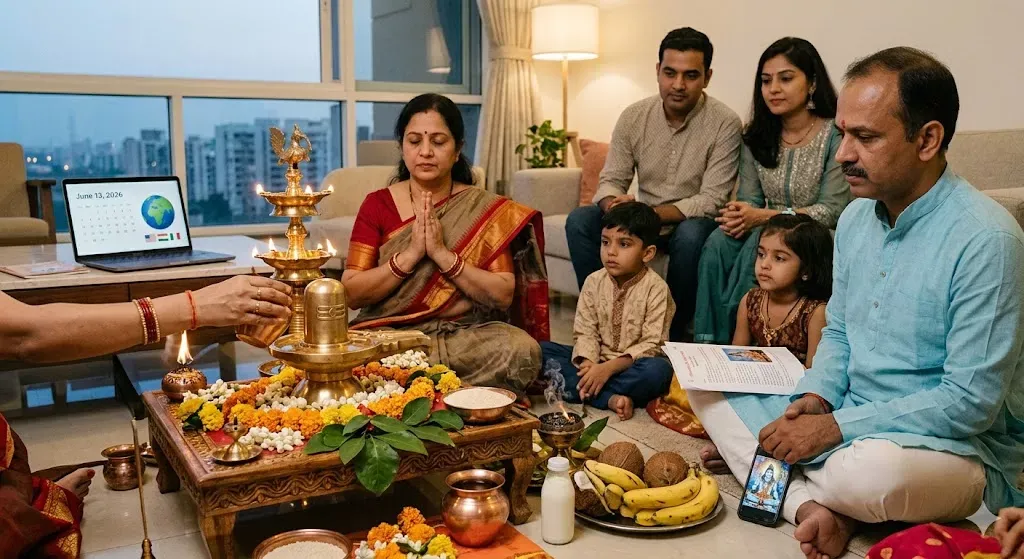
Sravana Masam Sunday (Adivaram) Rituals 2026: Surya Narayana Puja Vidhi, Dates & Arghyam
Sravana Masam Sunday (Adivaram) 2026 — dates (16, 23, 30 Aug, 6 Sep), Surya Narayana worship, the copper-vessel Arghyam method step by step, Aditya Hridayam, Om Hraam Hreem Hraum Sah Suryaya Namaha, no-salt no-oil fasting rules and the twelve-Sunday udyapanam.
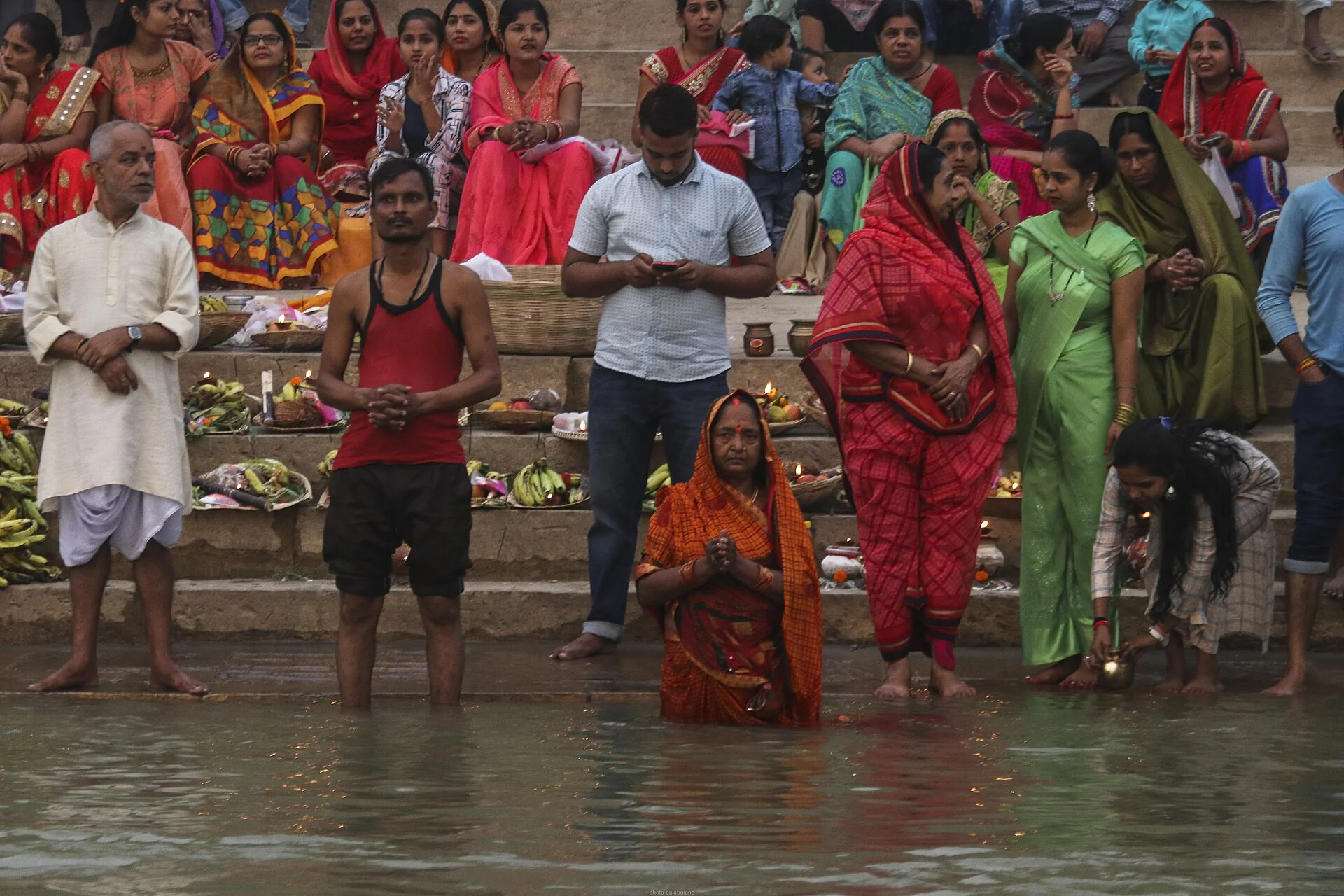
Sravana Masam Sunday (Adivaram) 2026 — dates (16, 23, 30 Aug, 6 Sep), Surya Narayana worship, the copper-vessel Arghyam method step by step, Aditya Hridayam, Om Hraam Hreem Hraum Sah Suryaya Namaha, no-salt no-oil fasting rules and the twelve-Sunday udyapanam.
Quick answer: Sravana Masam Sundays (Adivaram) 2026 fall on 16, 23, 30 August and 6 September. The day is dedicated to Surya Narayana (the Sun as Vishnu’s radiant form). Devotees wear red, offer Arghyam (water from a copper vessel to the rising sun), recite the Aditya Hridayam, and take one meal before sunset without salt or oil.
Quick answer: In 2026, Sravana Masam Sundays (Adivaramulu) fall on 16 August, 23 August, 30 August and 6 September in the Telugu Amanta calendar. The day is dedicated to Surya Narayana — the Sun God, the only deity visible to the naked eye. Devotees bathe before sunrise, wear red, offer Arghyam (water from a copper vessel to the rising sun), perform Surya Namaskaram, recite the Aditya Hridayam, chant Om Hraam Hreem Hraum Sah Suryaya Namaha, and take a single meal before sunset without salt or oil.
One thing sets Adivaram apart from every other vratam in Sravana Masam: you can see the deity. Shiva must be invoked in a lingam, Lakshmi in a kalasham — but Surya rises over your rooftop every morning, and the central act of the Sunday vratam (offering a stream of water from a copper vessel toward the rising sun) is the most direct, physical and visible act of worship in the Hindu calendar. And there is a quiet poetry in placing it in Sravana Masam, the deepest month of the monsoon, when the sun spends most of the month hidden behind cloud — worship of the light you cannot currently see.
Sravana Masam Adivaram 2026 dates
Sravana Masam 2026 runs 13 August–11 September (Telugu Amanta calendar), giving four Sundays:
| # | Date | Paksham | Note |
|---|---|---|---|
| 1 | 16 August 2026 (Sun) | Shukla | Coincides with Nagula Panchami |
| 2 | 23 August 2026 (Sun) | Shukla | |
| 3 | 30 August 2026 (Sun) | Krishna | |
| 4 | 6 September 2026 (Sun) | Krishna |
For North Indian devotees (Purnimanta calendar), Sawan 2026 runs 30 July–28 August, and the Shravan Ravivar dates are 2, 9, 16 and 23 August 2026. The most auspicious for beginning a sankalpam is the first Sunday of Shukla Paksham — 16 August 2026. Sravana Masam also contains Bhaskara Pavitraropanam (Surya Pavitrotsavam) on Shravana Shukla Saptami; check your panchangam as it does not fall on a Sunday. Note: tithi-based observances shift by a day between panchangams; confirm with your local panchangam.
Why Sunday matters in Sravana Masam
In Maharashtra and Gujarat the observance is Aditya Pujan, and its stated purpose is plain: arogyam — health. Where Guru gives wisdom and Lakshmi gives wealth, Surya gives the body that lets you use them. In Jyotisha, Surya is the karaka of arogyam (vitality, immunity, heart, bones, eyes, skin), atma (the soul — Surya is the atma-karaka), pitru (the father and paternal line) and adhikaram (authority, leadership, reputation). The classical prayer names this directly: Namah Suryaya Shantaya sarva-roga nivarine — "Salutations to Surya, the remover of all disease."
Surya is also not one deity but twelve. The Dwadasha Adityas — Dhata, Aryama, Mitra, Varuna, Indra, Vivasvat, Pusha, Parjanya, Anshu, Bhaga, Tvashta and Vishnu — preside over the twelve months and zodiac signs, which is why the traditional Ravivar Vratam is kept for twelve consecutive Sundays, one for each Aditya.
Which deity is worshipped on Sravana Adivaram?
(1) Surya Narayana (Pradhana Devata) — note the name: in this understanding Surya is not separate from Vishnu but is Vishnu in his most radiant, directly accessible form, which is why the Vishnu Sahasranama is appropriate and why Telugu households worship Sri Suryanarayana Swamy. (2) Goddess Saraswati — in several traditions, especially Maharashtra, Shravan Ravivar is dedicated jointly to Surya and Saraswati. (3) The rising sun itself — no murti is strictly required; a copper vessel, clean water, a red flower and an unobstructed view of the east are a complete vratam. Principal Surya temples: Sri Suryanarayana Swamy, Arasavalli (Srikakulam, AP); Konark (Odisha); Modhera (Gujarat); Suryanar Kovil (Tamil Nadu).
Sravana Masam Sunday puja vidhi: step by step
- Before sunrise — snanam and sankalpam: rise well before sunrise (the vratam depends on being ready AT sunrise), bathe in cool/lukewarm water with no oil, wear red (orange or white acceptable), apply a kumkum tilakam, and take sankalpam facing east, declaring your count of Sundays.
- Surya Arghyam (the central act, at sunrise): fill a copper vessel (tamra patra) with clean water, add kumkum, akshata and a red flower (hibiscus/japa kusuma), face east, raise the vessel to forehead height, and pour a slow unbroken stream so sunlight passes through the falling water. Chant "Namah Suryaya Shantaya sarva-roga nivarine | Ayur-arogyam aishwaryam dehi devah jagatpate." Repeat three times, then three pradakshinams and a prostration.
- Surya Namaskaram: perform twelve rounds, one for each Aditya, chanting the twelve names; if twelve are not possible, perform three, or chant the twelve names seated.
- Surya puja at the altar: place a Surya image or copper Surya yantra facing east; offer red flowers, rakta chandanam and kumkum, wheat grains (godhuma), jaggery, a ghee deepam and dhoopam; set a small kalasham beside it.
- Parayanam and mantra japam: recite the Aditya Hridayam (the hymn Sage Agastya taught Sri Rama before facing Ravana — the single most recommended recitation for Adivaram) and the Surya Ashtottara Shatanamavali; then chant Om Hraam Hreem Hraum Sah Suryaya Namaha 12, 21 or 108 times.
- Naivedyam, katha and aarti: offer the naivedyam, read the Ravivar Vrat Katha, perform karpura harati and three pradakshinams, and close with kshama prarthana.
- Midday daanam: charity on Adivaram is traditionally performed at midday (the sun at its zenith) — donate wheat, jaggery, red cloth, copper or ghee.
- Breaking the fast: the single meal is taken before sunset; some keep a full 24-hour fast, breaking it only after the next morning’s arghyam.
Naivedyam: what to offer
Surya’s offerings are wheat, jaggery, ghee and red: Chakkara Pongali (sweet pongal with jaggery and ghee — the classic Telugu Surya naivedyam), Godhuma Payasam, Godhuma Halwa/Wheat Kesari, plain jaggery and ghee in a copper vessel, red fruits (pomegranate, red apple, red grapes) and Bellam Paramannam. Prepare the naivedyam without salt, per the vratam rule, and avoid onion, garlic and tamasic ingredients.
Fasting rules: how to keep Adivaram Vratam
The Sunday vratam has two distinctive restrictions — no salt and no oil. It runs sunrise to sunset. Take one meal before sunset (eating after sunset breaks the vratam), without salt (alavana) and without oil (nistaila) — ghee is permitted, it is oil specifically that is avoided. Wheat-based and jaggery-sweetened foods are preferred; fruits, milk and water may be taken through the day. The stricter form is a full 24-hour fast broken after the next morning’s arghyam.
Who should not fast strictly: children, the elderly, pregnant and nursing women, diabetics, those with blood-pressure conditions under medical sodium management, and anyone on medication requiring food. Neither the salt restriction nor the sunset cut-off should be observed against medical advice — a diabetic cannot safely skip an evening meal, and the vratam has never required it. Perform the arghyam, chant the mantra, and eat as your health requires.
Do’s and don’ts on Sravana Masam Sunday
- DO: offer arghyam at sunrise (this alone constitutes the vratam if nothing else is possible); wear and offer red; use a copper vessel (Surya’s metal); donate wheat, jaggery, red cloth, copper or ghee at midday; feed a cow with jaggery and wheat; honour your father, or remember him if he has passed (Surya is the pitru-karaka); visit a Surya temple such as Arasavalli.
- DON’T: use oil (no oil bath, massage, food or hair — the defining Sunday restriction); eat salt in the vratam meal; eat after sunset; cut hair or nails; sleep in the daytime; speak ill of your father or elders; consume non-vegetarian food anywhere in the household.
Who should especially observe Sravana Adivaram
- Anyone recovering from illness or managing a chronic condition (arogyam is the stated purpose)
- Those with eye, skin, bone, heart or immunity concerns
- People seeking government service, public office or positions of authority
- Those with a weak, debilitated or afflicted Surya, or running Surya dasha/bhukti
- Anyone facing difficulty with their father, or seeking peace for a departed father
- Those lacking confidence or recognition (Surya is the atma-karaka); students of the Vedas and yoga practitioners
Sravana Adivaram for NRI devotees
Follow your local sunrise and sunset, not IST — this matters more for Adivaram than any other weekday vratam, because both the arghyam and the fast-breaking are tied to the actual solar horizon where you stand. Northern latitudes (UK, Canada, northern Europe) in August have very early sunrise and late sunset — keep the moderate form, not the 24-hour form, and break the fast at your local sunset without guilt. Overcast skies do not invalidate the arghyam: offer the water facing east at the calculated sunrise time; Surya is behind the cloud, and the offering reaches him. Substitute freely — any clean vessel works if copper is unavailable, and any red flower (or red kumkum in the water) serves for hibiscus.
Udyapanam: concluding the vratam
If you have kept Adivaram Vratam for the four Sundays of Sravana Masam, or the traditional twelve consecutive Sundays (one for each Aditya), close it with udyapanam: an extended puja with a full Aditya Hridayam parayanam recited three times; offer twelve red flowers and twelve arghyams, one per Aditya, chanting the twelve names; prepare chakkara pongali as the principal naivedyam; feed the prasadam to at least five people; donate wheat, jaggery, red cloth, ghee and a copper vessel with dakshina to a purohit; and where possible sponsor or attend an abhishekam at a Surya temple.
Every other vratam in Sravana Masam asks you to invoke a deity into an image. Adivaram asks only that you get up early enough, walk outside, and pour water toward the east while the light comes through it. Do that on 16 August. Use copper if you have it. Say Namah Suryaya Shantaya sarva-roga nivarine three times as the water falls. Eat once before dark, without salt and without oil. And if the monsoon sky is grey and you can see nothing at all — offer it anyway. Shubham Bhavatu.
Frequently Asked Questions
Which god is worshipped on Sunday in Sravana Masam?
Surya Bhagavan, also called Surya Narayana — the Sun God, understood as Vishnu in his radiant, life-sustaining form. In Maharashtra and Gujarat it is called Aditya Pujan, and several traditions honour Goddess Saraswati alongside Surya.
What are the Sravana Masam Sunday dates in 2026?
Telugu Amanta calendar: 16, 23 and 30 August, and 6 September 2026. North Indian Purnimanta calendar: 2, 9, 16 and 23 August 2026.
How exactly is Surya Arghyam offered?
Fill a copper vessel with water, add kumkum, akshata and a red flower. Face east at sunrise, raise it to forehead height, and pour a slow unbroken stream so sunlight passes through the falling water. Repeat three times, chanting Namah Suryaya Shantaya sarva-roga nivarine.
Why is oil avoided on Sunday?
Oil is regarded as connected to Shani, and Sunday belongs to Surya (Shani’s father and, in Puranic account, his adversary). Avoiding oil on Surya’s day — in food, baths and hair — is the traditional expression of that distinction, and one of the most consistently observed weekly restrictions.
What if it is cloudy or raining at sunrise?
Offer the arghyam anyway, facing east at the time of local sunrise. Sravana Masam is the height of the monsoon and the vratam was designed with that in mind — the sun’s presence is not conditional on your view of it.
Can I keep the vratam if I cannot do Surya Namaskaram physically?
Yes. Chant the twelve names of the Adityas seated and perform the arghyam. The namaskaram is meritorious but not the core of the vratam; the arghyam is.
How many Sundays should the vratam be kept?
Twelve consecutive Sundays is the classical count, one per Aditya; thirty is also prescribed. Keeping the four Sundays of Sravana Masam alone is entirely meritorious and the most common household observance.
Can I combine Adivaram puja with other Sravana Masam vratams?
Yes. Adivaram, Somavaram, Mangala Gauri, Budhavaram, Guruvaram and Sukravaram complement rather than compete. In 2026 the first Adivaram (16 Aug) coincides with Nagula Panchami — perform the Surya arghyam at sunrise and the Naga puja afterwards.
You might also like
Sravana Masam Wednesday (Budhavaram) Rituals 2026: Puja Vidhi, Dates, Mantras & Fasting
Sravana Masam Thursday (Guruvaram) Rituals 2026: Brihaspati Vrat Puja Vidhi, Dates & Mantras
Sravana Masam 2026 in Houston: Puja Timings, Temples & Varalakshmi Vratam