Ratan Tata — Life, Legacy & Dharmic Business Philosophy: The Industrialist Who Lived Hindu Values in 2026 Memorial
Ratan Tata (1937-2024) — life, leadership of Tata Group, philanthropic legacy, dharmic business philosophy. The industrialist who lived Hindu civilisational values.
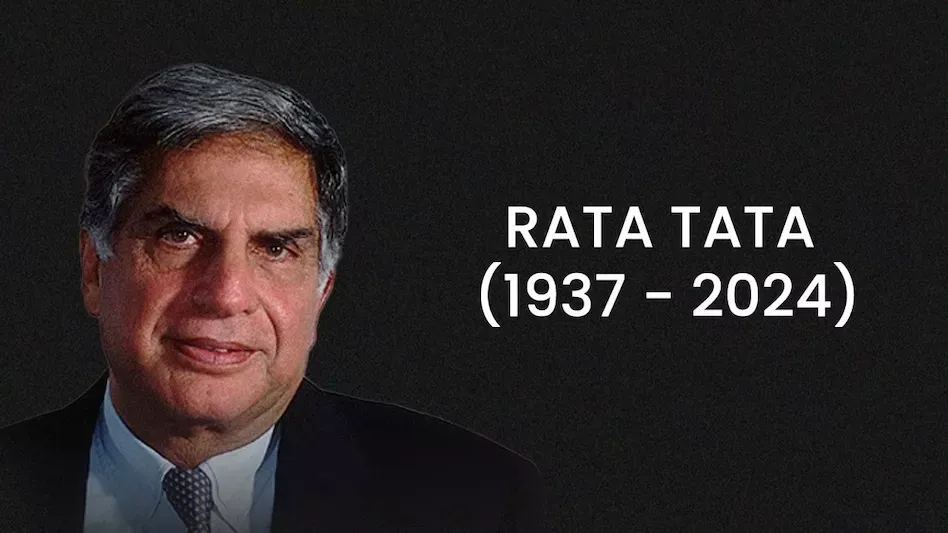
Ratan Tata (1937-2024) — life, leadership of Tata Group, philanthropic legacy, dharmic business philosophy. The industrialist who lived Hindu civilisational values.
Quick Answer: Ratan Naval Tata (1937-2024) was the chairman of Tata Sons (the holding company of the Tata Group) from 1991 to 2012, and again briefly in 2016-2017. Under his leadership, Tata Group transformed from a primarily India-focused conglomerate into a global enterprise with revenues exceeding $100 billion and operations across 100+ countries. Major acquisitions during his tenure included Tetley Tea, Corus Steel (the largest international acquisition by an Indian company), Jaguar Land Rover, and Eight O'Clock Coffee. Beyond business achievements, Ratan Tata embodied a distinctively dharmic approach to industry — 65%+ of Tata Sons is owned by Tata Trusts (charitable foundations), making the group structurally philanthropic. His death on October 9, 2024 at age 86 prompted national mourning across India and an outpouring from global business communities. Though Ratan Tata was a Parsi (not Hindu in strict religious sense), his life embodied civilisational values that the Hindu tradition recognises as deeply dharmic — earning him universal Indian veneration across religious lines.
1. Early Life and Education
Ratan Tata was born December 28, 1937 in Bombay (Mumbai) to Naval Tata and Sooni Commissariat. His parents separated when he was young; Ratan and his brother Jimmy were raised primarily by his grandmother Lady Navajbai Tata at the Tata Trust's "Tata Palace" in Bombay.
His education combined elite Indian and international institutions:
- Campion School, Mumbai (early schooling)
- Cathedral and John Connon School, Mumbai
- Bishop Cotton School, Shimla
- Riverdale Country School, New York (US high school)
- Cornell University — Bachelor's degree in architecture (1962)
- Harvard Business School — Advanced Management Program (1975)
This trans-Pacific education shaped his global outlook — a quality that proved essential to his later transformation of Tata Group into a global enterprise.
2. The Tata Family Lineage
The Tata family is among India's most respected industrial dynasties. Key predecessors:
- Jamsetji Tata (1839-1904) — the founder; established Empress Mills (1877), Tata Iron and Steel (1907), Indian Institute of Science (1909)
- Sir Dorabji Tata (1859-1932) — Jamsetji's son; led the early Tata Steel; established Tata Memorial Hospital
- JRD Tata (1904-1993) — Jehangir Ratanji Dadabhoy Tata; led the Tata Group from 1938 to 1991; pioneered Indian aviation (Air India); legendary figure
- Naval Tata (1904-1989) — Ratan's father
- Ratan Tata (1937-2024) — succeeded JRD as chairman in 1991
The succession from JRD to Ratan was a deliberate, multi-decade development — Ratan was not promoted because of family lineage alone but because he had earned the position through long industrial apprenticeship.
3. Joining Tata and the Long Apprenticeship
Ratan joined Tata Industries in 1962 at age 24. His initial postings were at Tata Steel in Jamshedpur — including time on the shop floor, loading limestone into blast furnaces alongside workers. This shop-floor experience shaped his understanding of industrial leadership: the leader must know what those they lead actually do.
His subsequent positions included:
- Director-in-Charge, National Radio and Electronics Company (NELCO) — initial leadership role
- Empress Mills — significant management responsibility
- Tata Industries Chairman (1981) — major step up
- Tata Sons Director — boardroom involvement
- Tata Sons Chairman (1991) — succeeding JRD Tata
The 29-year apprenticeship (1962-1991) before becoming chairman was longer than most modern corporate leadership paths. Ratan Tata learned the business from inside before assuming overall command.
4. Chairman of Tata Sons — 1991 to 2012
Ratan Tata's two-decade chairmanship transformed Tata Group:
Globalisation
Under Ratan Tata, Tata Group made transformative international acquisitions:
- Tetley Tea (UK) — 2000 — the largest Indian acquisition of a foreign company at the time
- Corus Steel (UK/Netherlands) — 2007 — $12 billion deal, making Tata Steel the world's fifth-largest steel producer
- Jaguar Land Rover (UK) — 2008 — purchase from Ford during the global financial crisis; subsequently a major Tata profit centre
- Eight O'Clock Coffee — 2006
- Multiple other international acquisitions
The acquisitions were strategic — moving Tata from being primarily an Indian industrial group into a genuinely global enterprise.
Consolidation and restructuring
Beyond expansion, Ratan Tata restructured Tata Group internally — consolidating the dozens of independent Tata companies under tighter Tata Sons coordination, professionalising management, and reducing legacy inefficiencies.
Tata Indica and Tata Nano
Tata Indica (1998) was India's first indigenously designed passenger car. Tata Nano (2008) was Ratan Tata's most personally driven project — an ultra-low-cost car (₹1 lakh / ~$2,500) intended to give middle-class Indian families safe motorised transport. The Nano was a commercial disappointment but a profound ethical statement.
Financial performance
Tata Group revenues grew from approximately $4 billion in 1991 to over $100 billion by 2012 — a transformative scale increase.
5. The Tata Trusts and Structural Philanthropy
The distinctively Tata feature is the Tata Trusts ownership structure: 65%+ of Tata Sons (the holding company) is owned by various Tata Trusts — primarily the Sir Dorabji Tata Trust and Sir Ratan Tata Trust. This means a majority of Tata Group's profits flow into philanthropic endowments rather than to private shareholders.
The Tata Trusts fund:
- Tata Memorial Hospital, Mumbai — major cancer treatment centre
- Tata Institute of Social Sciences (TISS)
- Tata Institute of Fundamental Research (TIFR)
- Indian Institute of Science (IISc) Bangalore — founded with Tata money in 1909
- Tata Medical Center, Kolkata
- Multiple universities, research institutes, schools, hospitals
The Tata business empire is therefore structurally a philanthropic enterprise — generating profits whose ultimate beneficiary is the Indian public. This structure has no exact parallel in global business; it is a distinctively Tata-Parsi-Indian innovation.
For Hindu civilisational reflection: the Tata structure embodies the dharmic economics principle articulated in the Bhagavad Gita and other texts — wealth as means rather than end; business as service rather than accumulation.
6. Personal Life and Character
Ratan Tata never married. He had companionships (his time at Cornell included a relationship that approached marriage; the relationship did not survive the geographic separation when he returned to India). His personal life remained intentionally modest — he lived in a relatively simple Mumbai apartment, drove unassuming cars, and avoided the lavish lifestyle typical of his peers.
Characteristics widely noted:
- Modesty — he avoided personal attention; rarely sought media coverage
- Empathy — he was known for personal kindness to subordinates, partners, and ordinary people he encountered
- Animal welfare — particularly devoted to dogs; the Tata Group office in Mumbai's Bombay House famously allows strays to enter and rest
- Photography — his personal artistic passion
- Long-term thinking — willing to bear short-term costs for long-term gains (the Nano, the Corus acquisition)
- Refusal of crony arrangements — Tata Group is famous for avoiding the bribery and political-favoritism networks that have characterized much Indian industry
7. The Tata Nano — and Ethical Industrialism
The Tata Nano deserves separate discussion. The story:
Ratan Tata, riding through Mumbai during monsoon, observed a family of four on a single motor-scooter — father driving, mother holding a young child, older child sandwiched between. The family had no safer means of transport.
Tata committed to building a car that this family could afford — the original target price ₹1 lakh (approximately $2,500). His engineers initially said it was impossible. Tata insisted: redesign every component, eliminate every non-essential, but deliver the price point.
The Nano debuted in 2008. Commercially it underperformed — the marketing positioned it as "the cheapest car" rather than "the safe family transport"; the working class did not want to drive India's cheapest car as identity statement; production faced multiple setbacks.
The Nano is therefore a complex legacy — financially disappointing but ethically magnificent. The willingness to invest billions in solving a problem of poverty is what defines dharmic industrialism. Whether it commercially succeeded is a different question from whether it was right to attempt.
8. Mentorship, Startup Investing, and Legacy
After stepping down as Tata Sons chairman in 2012, Ratan Tata became one of India's most prolific startup investors. His investments included:
- Ola (ride-hailing)
- Paytm (digital payments)
- Snapdeal (e-commerce)
- Bluestone (jewellery)
- CarDekho (auto)
- CureFit (fitness)
- Lenskart (eyewear)
- Many others — typically Series A/B investments, often with mentorship
His startup involvement shaped the Indian tech ecosystem of 2014-2024, particularly by validating early-stage Indian startups when many international investors were still skeptical.
He also remained engaged with strategic Tata Group decisions, including the brief 2016-2017 return as interim chairman following the Cyrus Mistry controversy.
9. October 2024 — Ratan Tata's Death
Ratan Tata died on October 9, 2024 at age 86 at Breach Candy Hospital, Mumbai. India observed a national day of mourning. His funeral procession through Mumbai drew millions of mourners. The Indian government accorded him a state funeral with full honours.
International tributes flowed from heads of state, business leaders, and ordinary citizens across the world. The breadth of the mourning — Indian Hindus, Muslims, Sikhs, Christians, Parsis, global business community, ordinary workers — reflected the universal respect Ratan Tata had earned.
He was succeeded as Tata Sons chairman by Natarajan Chandrasekaran (chairman since 2017, retained the position through Ratan Tata's death and into 2026).
10. Lessons for NRI Hindus in 2026
Lesson 1: Business as dharma
Ratan Tata demonstrated that business and dharma are not opposed. Industry that creates jobs, develops technology, exports goods, generates surplus for philanthropy is itself dharmic action. NRI Hindus in business — entrepreneurs, executives, investors, managers — can hold their work as service rather than mere wealth-pursuit.
Lesson 2: The Trust structure
The Tata Trusts model — majority ownership of business enterprise by philanthropic foundations — is structurally radical. Whatever scale of business an NRI Hindu builds, the model invites questions: who ultimately benefits? Can structures be designed such that success flows to community rather than only to family?
Lesson 3: Personal modesty matters
Ratan Tata's personal life remained modest despite immense wealth. The teaching: spiritual development is inversely correlated with lifestyle inflation. NRI Hindus accumulating wealth should consciously hold lifestyle modest as protection against the corrupting effects of wealth.
Lesson 4: Take risks for the right reasons
The Nano was a financial failure precisely because Ratan Tata took the risk for the right reason — to serve poor families. Some moral risks are worth taking even when they don't commercially succeed. The teaching: dharmic action is not validated by results alone.
Lesson 5: Long-term over short-term
The Tata model emphasizes multi-generational thinking. Quarterly results yield to decade-scale projects (Corus, JLR, IISc-style investments). NRI Hindus in corporate roles, family businesses, and investments can learn the dharmic discipline of long-term thinking.
Lesson 6: Cross-religious respect
Ratan Tata was Parsi. The Hindu community embraced him as one of its own civilisational figures. The teaching: Hindu civilisation has always recognised dharmic action across religious boundaries. The civilisational community is broader than the religious community.
Lesson 7: Mentorship as legacy
Ratan Tata's startup investments and personal mentorship of younger entrepreneurs were as significant as his direct business achievements. The teaching: the highest legacy is often not in what you do directly but in those you enable.
11. FAQs
Q: Was Ratan Tata Hindu?
A: He was Parsi (Zoroastrian) by religious tradition. He was universally embraced as a civilisational figure of India — Hindu, Muslim, Sikh, Christian, Buddhist Indians all considered him their own. Hindu civilisational principles deeply resonate with his life and approach.
Q: When was Ratan Tata born and when did he die?
A: Born December 28, 1937; died October 9, 2024.
Q: Who is the current Tata Sons chairman?
A: Natarajan Chandrasekaran (since 2017), retained through 2024-2026.
Q: What is the Tata Trusts structure?
A: 65%+ of Tata Sons is owned by various Tata Trusts (Sir Dorabji Tata Trust, Sir Ratan Tata Trust, others) — making the majority of Tata profits flow into philanthropic endowments.
Q: Why is Tata Group respected globally?
A: Combination of business performance ($100B+ revenue), ethical reputation (no bribery scandals; clean labour practices), philanthropic ownership structure, and long history (founded 1868).
Q: What were Ratan Tata's biggest business successes?
A: Corus Steel acquisition (2007), Jaguar Land Rover (2008), Tetley Tea (2000), Tata Consultancy Services growth (~$30B+ revenue today). JLR particularly turned around after Tata acquisition.
Q: What was the Tata Nano?
A: An ultra-low-cost car (originally targeted at ₹1 lakh / $2,500) introduced 2008 to provide safe transport for poor Indian families. Commercially underperformed but ethically iconic.
Q: Can NRI Hindus emulate Ratan Tata's life pattern?
A: Most likely not at the same scale. But the principles — business as service, lifestyle modesty, long-term thinking, philanthropic orientation, cross-religious respect — are scalable to any career.
Final Words
Ratan Tata's life offers Hindu civilisation (and the broader Indian civilisational community) a particular kind of model: the industrialist whose primary identity remained that of a servant of the community. The wealth created passed through his hands but ultimately to the Indian public via Tata Trusts. The corporate empire built carried the values of restraint, ethics, long-term thinking. The personal life remained modest amid immense resources.
For NRI Hindus in 2026 — building careers and businesses in foreign lands, accumulating wealth that exceeds what their parents could imagine, raising children in cultures that often equate worth with consumption — Ratan Tata's example asks the structural questions: What is the purpose of this wealth? Who is the ultimate beneficiary? What lifestyle is consistent with dharmic life? How do you orient business toward service?
The October 9, 2024 mourning across India was for many things — a beloved industrialist's death, the closing of an era of pre-2024 Indian business, the personal loss felt by millions who had been touched by his decisions. But it was also, in deeper sense, the celebration of a life that had embodied a kind of Indian-civilisational ideal: the leader who built great things while remaining a humble servant.
Yogah karmasu kaushalam.* — Bhagavad Gita 2.50
Yoga is skill in action.
Pranam Ratan Tata. Jai Bharat. Jai Tata Sons. May his model be sustained.
HinduTone Editorial Team · Tags: Ratan Tata 1937-2024, Tata Group, Tata Sons, Tata Trusts, Tata Nano, Corus Steel, Jaguar Land Rover, Dharmic Business, Indian Philanthropy, Modern Indian Industry
Frequently Asked Questions
What is Ratan Tata?
Ratan Naval Tata (1937-2024) was the chairman of Tata Sons (the holding company of the Tata Group) from 1991 to 2012, and again briefly in 2016-2017. Under his leadership, Tata Group transformed from a primarily India-focused conglomerate into a global enterprise with revenues exceeding $100 billion and operations across 100+ countries.
What are the key points about Ratan Tata?
Major acquisitions during his tenure included Tetley Tea, Corus Steel (the largest international acquisition by an Indian company), Jaguar Land Rover, and Eight O'Clock Coffee . Beyond business achievements, Ratan Tata embodied a distinctively dharmic approach to industry — 65%+ of Tata Sons is owned by Tata Trusts (charitable foundations
Why does Ratan Tata matter in Hinduism?
It reflects core values of Sanatana Dharma and offers practical and spiritual guidance that remains relevant across generations.
How can devotees apply Ratan Tata in daily life?
By reflecting on its teaching, incorporating the related practices or observances into daily routine, and approaching it with sincere devotion and understanding.
You might also like
Mantras for Happy Married Life — Shiva-Parvati & Lakshmi-Narayana Mantras for Love & Harmony
Mantras for NRIs — Visa Success, Settling Abroad & Business Growth
Complete MBBS Once in Life: The Spiritual Meaning of Mahabharata, Bhagavatam, Bhagavad Gita & Ramayana