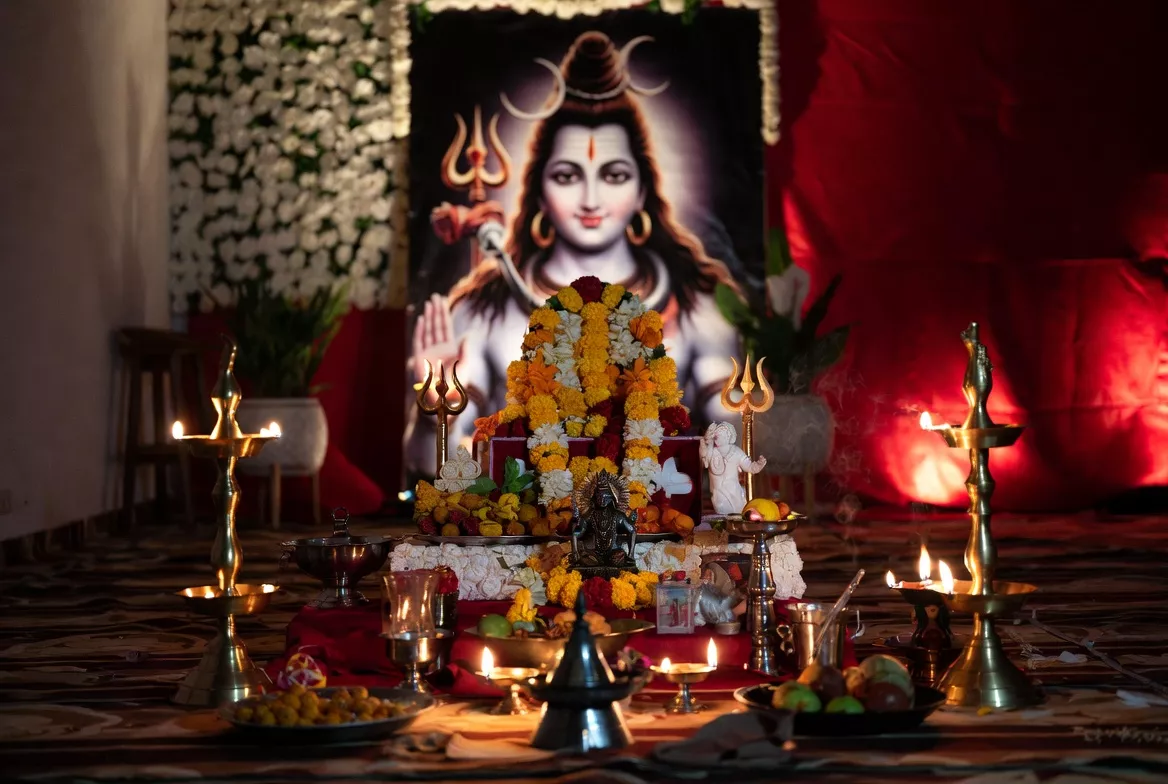
Isha Foundation's Mahashivratri 2026 Sets New Record as Most Viewed Celebration on YouTube
Coimbatore, February 17, 2026 – The Mahashivratri 2026 celebrations at the Isha Yoga Center in Coimbatore have etched their place in history as the most viewed…

Coimbatore, February 17, 2026 – The Mahashivratri 2026 celebrations at the Isha Yoga Center in Coimbatore have etched their place in history as the most viewed…
Coimbatore, February 17, 2026 – The Mahashivratri 2026 celebrations at the Isha Yoga Center in Coimbatore have etched their place in history as the most viewed Shivarathri event ever streamed on YouTube. The 12-hour nightlong extravaganza, filled with divine energy, explosive meditations, soul-stirring music, and spiritual discourses led by Sadhguru, drew millions of viewers worldwide, creating an unparalleled wave of devotion and inner transformation.
The event, which ran from 6 PM IST on February 15 to 6 AM on February 16, transformed the Isha Yoga Center into a vibrant spiritual powerhouse. Thousands gathered in person at the iconic 112-foot Adiyogi statue, while millions tuned in online through live streams on Sadhguru's official YouTube channel and other platforms. The official stream on Sadhguru's channel alone amassed over 4.5 million views shortly after the event, with combined views across reposts, multilingual streams, and highlights pushing it to record-breaking numbers—surpassing previous editions and establishing it as the most-watched Mahashivratri celebration globally on the platform.
Participants of all ages—from children to elders—joined the festivities, experiencing a profound sense of unity and divine presence. The night featured:
- Pancha Bhuta Kriya to balance the five elements
- Linga Bhairavi Maha Arati
- Addresses by Sadhguru and dignitaries, including Chief Guest Defence Minister Rajnath Singh
- Spectacular music, dance, and cultural performances by renowned artists
- Explosive guided meditations and nightlong satsang with Sadhguru
- Powerful chants, devotional songs, and the electrifying energy around the Adiyogi
This year's theme revolved around spiritual, cultural, and ecological reverence, with multilingual streams in over 20 languages—including English, Hindi, Tamil, Telugu, and international ones like Spanish, French, and Arabic—making it accessible to a truly global audience. Sign language interpretation was also provided for inclusivity.
Devotees described the atmosphere as transformative: "A night where sleep fades, time slows down, and thousands sit in stillness under the powerful presence of Sadhguru. The chants vibrate through your being, the music lifts your spirit, and the energy around the Adiyogi feels almost electric," shared one attendee.
Sadhguru's guidance through meditations and discourses created waves of ecstasy and inner silence, with participants reporting deep spiritual awakenings. The event's massive online reach highlights the growing global thirst for authentic spiritual experiences in a fast-paced world.
Isha Foundation's seamless streaming—supported by dedicated teams—ensured uninterrupted divine connection for viewers from living rooms across continents. As one source noted, "Behind every 'Shambho' echoing worldwide, there's a team delivering Adiyogi's presence."
This record-breaking viewership underscores Mahashivratri at Isha as not just a festival, but a powerful global movement of devotion, meditation, and celebration of Lord Shiva as the Adiyogi.
For more inspiring stories on Hindu spirituality, festivals, and Sadhguru's initiatives, visit www.hindutone.com. [image: 🕉️] [image: 🔱] [image: 🇮🇳]
Why is Mahashivratri a Night of Cosmic Significance in Hindu Tradition?
Mahashivratri, literally 'the great night of Shiva,' falls on the fourteenth night of the waning moon in the month of Phalguna (February–March). According to the Shiva Purana, this is the night when Lord Shiva performed the Tandava — the primordial cosmic dance that sustains and dissolves the universe. The Linga Purana further describes Mahashivratri as the night when the formless Shiva first manifested as the Jyotirlinga, an infinite pillar of light that pierced through both Brahma and Vishnu's planes of existence, signifying his supremacy beyond all creation.
Astronomically, this night corresponds to a rare alignment in which the northern hemisphere of the Earth is positioned such that human beings are believed to receive a natural upsurge of energy along the spine. Ancient rishis observed that staying awake, maintaining an upright posture, and engaging in spiritual practice on this night amplified the effects of meditation and devotion manifold. This is why the tradition of jagarana — an all-night vigil — is central to Mahashivratri observance across India and the wider Hindu world.
What is the Adiyogi Statue and Why Was it Chosen as the Focal Point of the Celebration?
The 112-foot Adiyogi statue at the Isha Yoga Center in Coimbatore, consecrated by Sadhguru in 2017, holds the Guinness World Record as the largest bust sculpture in the world. The figure depicts Adiyogi — the first yogi — whose form is traditionally identified with Shiva in his role as the Adi Guru, the originator of the yogic sciences. According to the Devi Bhagavata Purana and various Shaiva Agamas, Shiva first transmitted the knowledge of yoga to the Saptarishis (seven sages) on the banks of the Kantisarovara lake near Kedarnath, an event considered the foundational moment of the yogic tradition.
The number 112 is not incidental: it represents the 112 ways of attaining liberation described by Shiva to Devi Parvati in the Vigyana Bhairava Tantra, a key text of Kashmir Shaivism. Holding the Mahashivratri celebration at this site thus connects the digital-era event to a deep scriptural and symbolic heritage, reminding participants that the night is not merely cultural spectacle but an invitation to engage with transformative inner science.
What is Pancha Bhuta Kriya and What Are Its Roots in Shaiva Philosophy?
The Pancha Bhuta Kriya performed at the Isha Yoga Center is a ritual process that works with the five classical elements — earth (prithvi), water (jala), fire (agni), air (vayu), and space (akasha) — which together constitute the material world according to Sankhya philosophy and the Taittiriya Upanishad. In Shaiva Siddhanta, the tradition dominant in Tamil Nadu, Shiva himself is worshipped at five distinct temples across South India each representing one element: Chidambaram (akasha), Tiruvanaikaval near Tiruchirappalli (jala), Thiruvannamalai (agni), Kalahasti (vayu), and Kanchipuram (prithvi), collectively known as the Pancha Bhuta Stalas.
Engaging with these five elements through ritual and kriya on Mahashivratri is understood as a means of purifying the annamaya kosha (physical body) and the pranamaya kosha (energy body), aligning the individual's elemental constitution with the cosmic order. The inclusion of this practice at the Isha event situates the modern celebration firmly within the ancient Shaiva Agamic framework, offering participants an experiential rather than merely intellectual understanding of this cosmological teaching.
How Has the Global Reach of Mahashivratri Evolved Over Recent Decades?
Mahashivratri has been observed across the Indian subcontinent for centuries, with major celebrations historically centred at pilgrimage sites such as the Kashi Vishwanath temple in Varanasi, the Somnath temple in Gujarat, the Mahakaleshwar temple in Ujjain, and the Pashupatinath temple in Kathmandu, Nepal. Each of these Jyotirlinga and Shakti Pitha sites draws hundreds of thousands of pilgrims annually, and the night-long abhisheka (ritual bathing of the Shivalinga) with milk, honey, water, and bel leaves remains the core devotional act.
The digitisation of the celebration marks a significant new chapter. Streaming the nightlong event with multilingual commentary in over 20 languages — including Arabic and Spanish — signals that Mahashivratri is no longer experienced solely through physical pilgrimage or local temple attendance. This shift echoes the broader democratisation of sacred access, allowing diaspora communities in North America, Europe, and Southeast Asia to participate in real time, maintaining a living connection with Sanatana Dharma traditions regardless of geography.
The 4.5 million-plus direct views on a single YouTube channel in 2026 represents a remarkable leap even compared to pre-pandemic streaming figures for religious events globally. For context, this places the Isha Mahashivratri broadcast among the most-watched single-night religious livestreams of any faith tradition on the platform, underscoring the scale of contemporary interest in Hindu spiritual practice.
What Role Do Music and Cultural Performances Play on This Sacred Night?
The Sama Veda, the oldest musical scripture in the world, establishes the principle that sound — particularly sung sound — is among the most direct vehicles for approaching the divine. Shiva himself is described in the Shiva Purana as Nada Brahman, the absolute expressed as sound, and the damaru (drum) he carries symbolises the primordial sound from which creation emerged. Classical and devotional music performed on Mahashivratri is therefore not entertainment appended to ritual; it is itself a form of upasana (worship).
The Isha Mahashivratri event has consistently featured a blend of Carnatic classical compositions, Hindustani devotional forms, and contemporary spiritual music, reflecting the pan-Indian and pan-traditional character of Shaivism. Compositions rooted in the Tevaram — the seventh-century Tamil Shaiva devotional hymns composed by the Nayanmars — sit alongside Sanskrit stotras and modern musical arrangements, demonstrating the living continuity of a tradition that stretches from Thirugnana Sambandar in the seventh century to present-day artists performing before millions of online viewers.
What Practices Can Individuals Follow at Home to Observe Mahashivratri Authentically?
The Shiva Purana outlines four praharas (three-hour watches) of the night, during each of which a specific form of Shiva is worshipped through abhisheka with different substances — milk, yoghurt, ghee, and honey — accompanied by chanting of the Panchakshara mantra, 'Om Namah Shivaya.' This five-syllable mantra, rooted in the Krishna Yajurveda's Shri Rudram, is considered the most potent invocation of Shiva and is accessible to practitioners of all levels of initiation.
Upavasa (fasting) observed on Mahashivratri traditionally involves abstaining from grains and consuming only fruits, milk, and water — a practice that, according to Ayurvedic principles, lightens the digestive load and channels pranic energy upward rather than toward digestion. Staying awake through the night while engaging in japa (repetitive chanting), meditation, or listening to spiritual discourse is considered far more meritorious than sleep, as the Skanda Purana notes that even an accidental vigil on this night can dissolve accumulated karmas.
For those who cannot physically attend major centres such as the Isha Yoga Center or the Jyotirlinga temples, setting up a simple Shivalinga or an image of Adiyogi at home, offering bel (bilva) leaves — which are said in the Shiva Purana to be Shiva's most beloved offering — and maintaining silence or minimal speech through portions of the night can transform a household into a site of genuine sadhana during this auspicious period.
Frequently Asked Questions
How long was the Isha Mahashivratri 2026 celebration and when did it run?
The nightlong event ran for 12 hours, from 6 PM IST on February 15 to 6 AM on February 16, at the Isha Yoga Center in Coimbatore.
How many people watched the Isha Mahashivratri 2026 livestream?
The official stream on Sadhguru's YouTube channel alone passed 4.5 million views shortly after the event. Combined views across reposts, multilingual streams and highlights made it the most viewed Shivarathri celebration ever streamed on YouTube.
Can viewers abroad follow the Isha Mahashivratri livestream in their own language?
Yes. Streams were offered in over 20 languages, including English, Hindi, Tamil, Telugu, Spanish, French and Arabic, with sign language interpretation. This lets diaspora families in North America, Europe and Southeast Asia take part in real time.
What was included in the Isha Mahashivratri night programme?
The night featured Pancha Bhuta Kriya, Linga Bhairavi Maha Arati, guided meditations, nightlong satsang with Sadhguru, and music, dance and cultural performances. Defence Minister Rajnath Singh attended as Chief Guest.
Why is the Adiyogi statue the focus of the Isha celebration?
The 112-foot Adiyogi statue, consecrated by Sadhguru in 2017, depicts the first yogi, identified with Shiva as the Adi Guru. The number 112 is linked to the 112 ways to liberation described in the Vigyana Bhairava Tantra.
Why do devotees stay awake all night on Mahashivratri?
Mahashivratri falls on the fourteenth night of the waning moon in Phalguna. Tradition holds that staying awake with an upright posture and spiritual practice on this night amplifies meditation and devotion, which is why the jagarana vigil is central to the observance.
You might also like
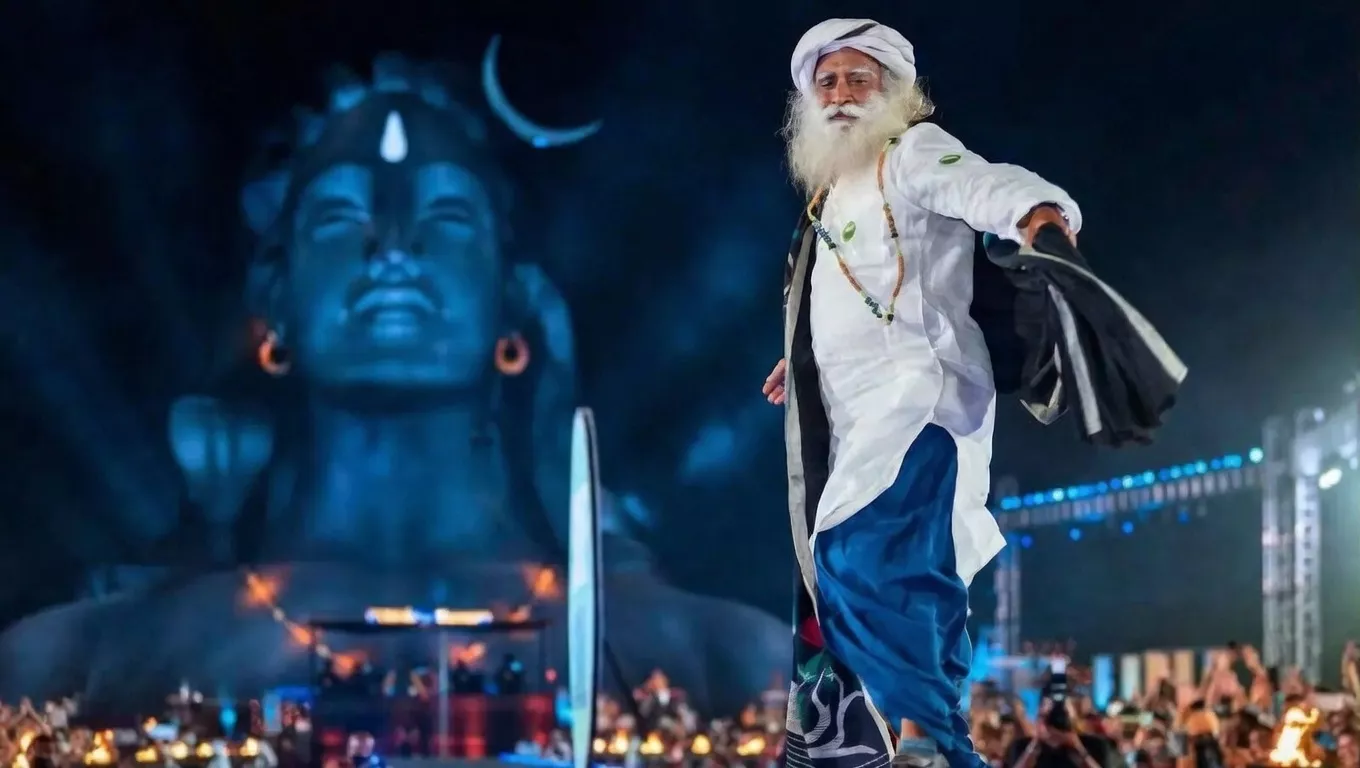
The 33rd Mahashivratri at Isha Yoga Center
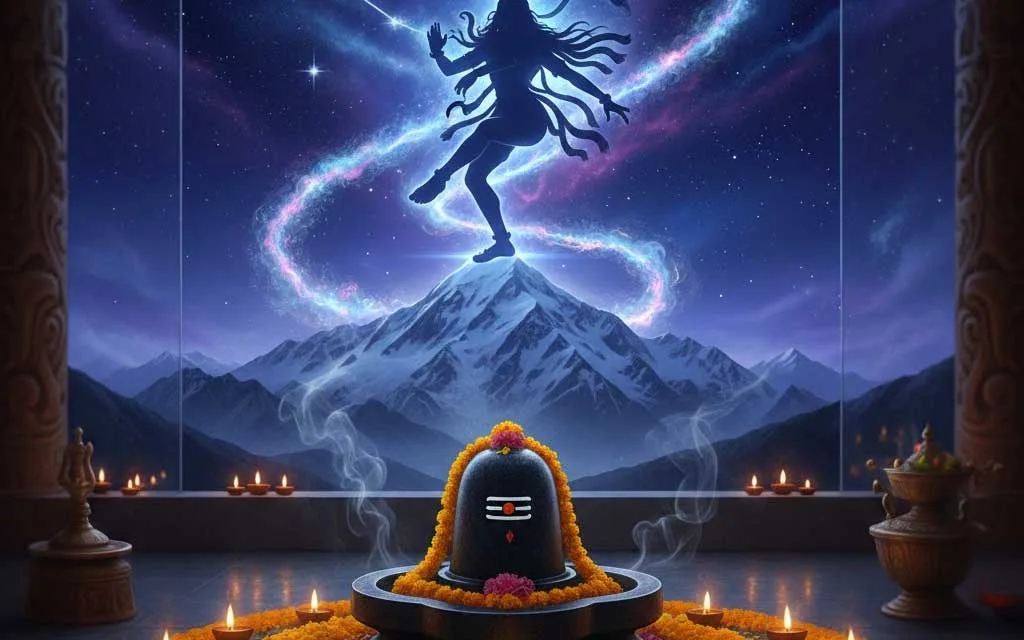
Maha Shivaratri 2026 Celebrations in New Zealand: How the Hindu Community Honored Lord Shiva Yesterday – A Complete Guide to Cities, Temples, and Events
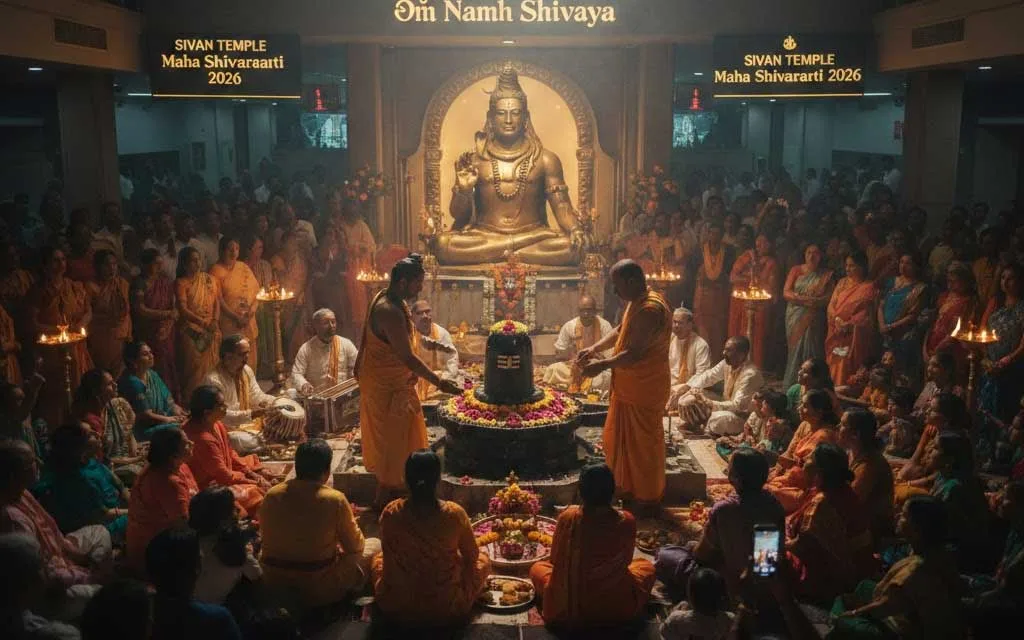
Maha Shivaratri 2026 Celebrations in Germany: How the Hindu Community Honored Lord Shiva Yesterday – A Complete Guide to Cities, Temples, and Events