

Shivaratri Night Meditation Guide: The Complete All-Night Vigil Practice
Last Updated: February 2026 | Reading Time: 10 minutes Maha Shivaratri—the Great Night of Shiva—stands as one of Hinduism's most spiritually charged…
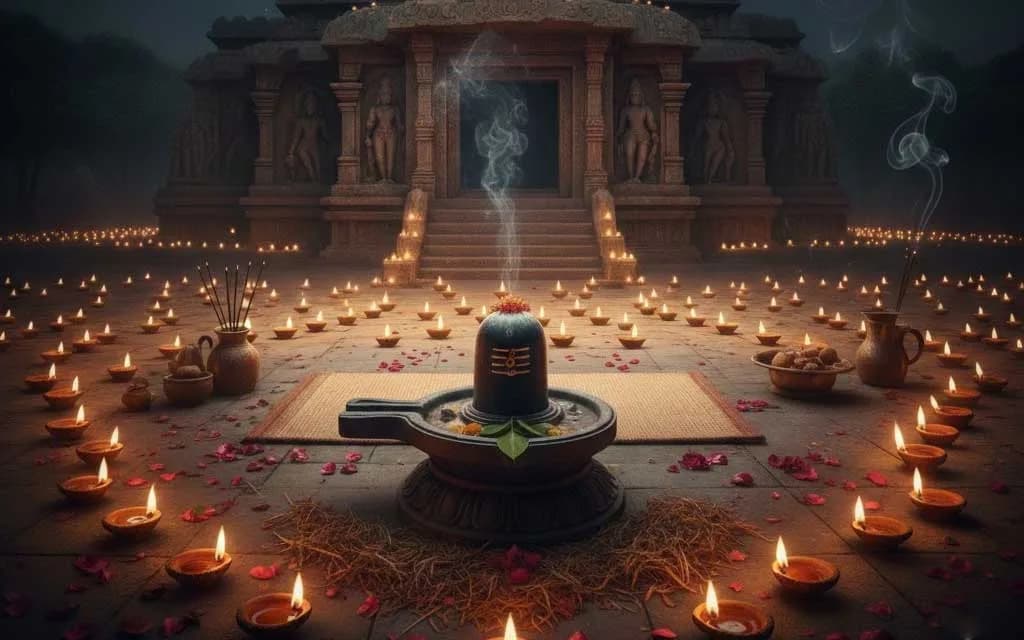
Last Updated: February 2026 | Reading Time: 10 minutes Maha Shivaratri—the Great Night of Shiva—stands as one of Hinduism's most spiritually charged…
Last Updated: February 2026 | Reading Time: 10 minutes
Maha Shivaratri—the Great Night of Shiva—stands as one of Hinduism's most spiritually charged observances. Unlike festivals celebrating divine birth or victory, Shivaratri honors the cosmic convergence when Shiva's transformative energy reaches its zenith on Earth. For devotees worldwide, this night offers a unique portal for spiritual acceleration through sustained meditation, mantra, and inner contemplation.
This guide provides a detailed roadmap for observing the traditional all-night vigil (jagran), structured around the four prahars (three-hour watches) that divide the sacred night. Whether you're preparing for your first Shivaratri meditation or seeking to deepen an established practice, this framework combines scriptural authenticity with practical accessibility for modern practitioners.
Understanding the Spiritual Significance of Shivaratri Night
According to Hindu cosmology, Shivaratri marks the night when Lord Shiva performed the Tandava, the cosmic dance of creation, preservation, and dissolution. The convergence of sun and moon positions creates what yogic science describes as a natural upward surge of energy within the human spine—an involuntary spiritual lift that meditation can harness and amplify.
The Shiva Purana describes this night as particularly auspicious because the planetary positions facilitate the downward flow of grace (anugraha shakti) while simultaneously supporting the upward movement of human consciousness (kundalini shakti). This bidirectional energy flow creates optimal conditions for spiritual breakthrough.
Additionally, Shivaratri falls during the waning moon phase (Krishna Paksha), specifically the fourteenth lunar day (Chaturdashi) when darkness reaches its peak before new moon. This darkness represents the unconscious mind, the repository of unresolved karmas and latent tendencies. Staying awake and aware through this night symbolizes consciousness illuminating the unconscious—a metaphor enacted literally through the vigil.
For NRIs and global Hindus, Shivaratri offers connection to cultural and spiritual roots regardless of geographic location. The practice transcends temple attendance, making it accessible wherever one can create sacred space and dedicate time to inner communion.
Pre-Meditation Preparation: Setting the Foundation
The quality of your Shivaratri meditation depends significantly on preparation begun days or even weeks before the actual night.
Physical Preparation (3-7 Days Before)
Dietary Adjustments: Start reducing heavy, tamasic foods (meat, alcohol, processed items) at least three days prior. Many practitioners adopt a sattvic (pure) diet emphasizing fresh fruits, vegetables, dairy, and whole grains. The traditional Shivaratri fast involves abstaining from grains and consuming only fruits, milk, and water, though modifications exist for those with health conditions.
Fasting serves multiple purposes: it lightens the physical body, reducing the torpor that normally follows meals; it generates tapas (disciplined heat) that purifies subtle channels; and it demonstrates sincere commitment to the practice. If complete fasting isn't feasible, even reducing food intake significantly enhances meditative capacity.
Sleep Banking: Contrary to popular belief, successful all-night meditation doesn't require sleep deprivation beforehand. Actually, arriving well-rested allows you to maintain alert awareness rather than fighting drowsiness. In the 2-3 days before Shivaratri, ensure adequate sleep. Some traditions recommend a brief afternoon nap on Shivaratri day itself to store energy for the night ahead.
Physical Exercise: Light yoga practice or walking in the days before helps prepare the body for prolonged sitting. However, avoid intense workouts on Shivaratri day itself, as they'll deplete energy needed for nighttime practice.
Mental and Emotional Preparation
Intention Setting: The Sanskrit concept of sankalpa (resolve or intention) directs spiritual practice. Spend time clarifying why you're observing this vigil. Are you seeking healing, spiritual awakening, overcoming obstacles, or simply deepening your connection with the Divine? Write your intention clearly. This becomes your anchor when energy wanes during difficult night hours.
Clearing Obligations: Ensure that the day after Shivaratri allows for rest and integration. Avoid scheduling important work commitments. Inform family members of your practice so they understand your unavailability. This external clearing creates internal spaciousness.
Study and Contemplation: Read sections from sacred texts—the Shiva Purana, Shiva Mahimna Stotra, or philosophical works on Shaivism. This intellectual engagement primes consciousness for deeper experiential understanding during meditation.
Creating Sacred Space
Whether practicing at home, in a temple, or outdoors, your environment significantly impacts practice quality.
Physical Space Setup:
- Clean the area thoroughly; cleanliness creates mental clarity
- Arrange a meditation seat (cushion, mat, or low bench) ensuring comfort for extended sitting
- Position a small altar with Shiva's image or Shivalinga, if available
- Include these elements if possible: a lamp or candle (representing consciousness), incense (purifying atmosphere), flowers (offering beauty), water (for ritual use)
- Ensure adequate temperature control—neither too hot nor too cold
- Have a shawl or blanket nearby, as body temperature drops during deep meditation
Minimizing Disturbances:
- Silence phones and electronic devices (or better yet, keep them in another room)
- Inform household members not to disturb you during specified hours
- If practicing with others, establish guidelines for maintaining meditative silence
- Consider using earplugs if noise is unavoidable
Lighting: Avoid harsh overhead lights. Soft lamp light, candles, or dim ambient lighting maintains a boundary between ordinary consciousness and meditative awareness while preventing complete darkness that induces sleep.
The Four Prahar Structure: Dividing the Sacred Night
Traditional Shivaratri observance divides the night into four prahars, each approximately three hours. This structure prevents monotony, provides natural break points, and acknowledges different qualities of night energy.
The timing begins after sunset on Shivaratri day (usually around 6-7 PM depending on location) and continues until sunrise. Each prahar has its own character and recommended practices.
First Prahar (Sunset to ~9:30 PM): Purification and Invocation
Character: This period transitions from daily consciousness to meditative awareness. External activities still hold influence, and the mind carries residue from the day.
Primary Focus: Purification, invocation, establishing devotional connection
Posture: Begin with Sukhasana (easy pose) or Vajrasana (kneeling pose). Keep spine erect but not rigid. Place hands in Anjali Mudra (prayer position) or Chin Mudra (thumb and index finger touching, representing union of individual and universal consciousness).
Breath Practice: Start with Nadi Shodhana (alternate nostril breathing) for 5-10 minutes:
- Close right nostril with right thumb
- Inhale through left nostril (count of 4)
- Close both nostrils briefly
- Release right nostril, exhale (count of 6-8)
- Inhale right nostril
- Exhale left nostril
- Complete 12-24 rounds
This practice balances ida and pingala nadis (lunar and solar energy channels), creating equilibrium for deeper meditation.
Mantra Practice: Chant Om Namah Shivaya 108 times (one mala) aloud. The vocalization engages body, speech, and mind simultaneously. Feel the vibration in your chest and throat. This establishes the primary energy pattern for the night.
Follow with the Shiva Panchakshari Stotram or recitation of Shiva's 108 names (Ashtottara Shatanamavali) if you know them.
Meditation: After mantra, sit in silence for 15-20 minutes. Simply observe breath, bodily sensations, and mental movements without judgment. Don't expect profound experiences yet—you're building the foundation.
Ritual Elements: Perform abhishekam (ritual bathing) of a Shivalinga or Shiva image with water, milk, honey, yogurt, and ghee if you have these available. Each substance carries symbolic meaning: milk (purity), honey (sweetness of devotion), yogurt (transformation), ghee (illumination).
Offer bilva (wood apple) leaves if available, or any flowers. The physical actions engage the body in worship, preventing restlessness.
Second Prahar (~9:30 PM to ~12:30 AM): Deepening Concentration
Character: This window marks the transition into night's depths. The body's natural circadian rhythm begins signaling sleep, making this period challenging but rewarding.
Primary Focus: Concentrated mantra practice, developing single-pointed awareness (ekagrata)
Posture: Shift to Padmasana (lotus) or Siddhasana (accomplished pose) if comfortable, as these create more stable energy patterns for extended practice. If these aren't accessible, remain in Sukhasana but refresh your seated position, adjusting cushions as needed.
Place hands in Dhyana Mudra (meditation gesture: right hand over left, thumbs touching, forming a triangle at the navel) or Shambhavi Mudra (keeping hands on knees in Chin Mudra while eyes gaze gently upward toward the third eye point).
Breath Practice: Practice Ujjayi Pranayama (victorious breath):
- Slightly contract the throat to create soft "oceanic" sound
- Breathe slowly through the nose
- Feel breath massaging the throat
- Continue for 5-10 minutes
This practice generates internal heat, combating drowsiness while maintaining meditative awareness.
Mantra Practice: This prahar is ideal for the Mahamrityunjaya Mantra:
Om Tryambakam Yajamahe Sugandhim Pushtivardhanam
Urvarukamiva Bandhanan Mrityor Mukshiya Maamritat
Chant 21 or 108 times slowly, taking 15-20 seconds per repetition. This death-conquering mantra addresses deep existential fears and karmic patterns. The longer recitation time per mantra allows each syllable to penetrate consciousness deeply.
Alternatively, practice Om Namah Shivaya in its extended form: begin with loud chanting (first 27 repetitions), transition to whisper (next 27), then mental repetition (final 54), completing 108 total.
Meditation: Enter deeper dhyana (meditation) for 30-40 minutes. Use the mantra as an anchor, returning to it whenever attention wanders. During this period, you may experience:
- Spontaneous breathwork patterns
- Inner visions or lights
- Deep silence between thoughts
- Emotional releases
- Profound peace
Welcome whatever arises without grasping or resistance.
Physical Challenges: Drowsiness peaks during this prahar. Counter it by:
- Opening eyes briefly to reset alertness
- Sprinkling cold water on face
- Standing for 2-3 minutes between sitting sessions
- Chanting more vigorously
- Gentle neck rolls or shoulder stretches
Third Prahar (~12:30 AM to ~3:30 AM): The Heart of Shivaratri
Character: This period, particularly the hours around midnight, represents Shivaratri's spiritual apex. The Shiva Purana specifically identifies midnight (nishita kala) as the moment of maximum divine presence. Cosmic and personal energy reach their most subtle, receptive state.
Primary Focus: Deep absorption, silent meditation, surrender
Posture: Maintain a meditative seat, but at this point, your body may naturally settle into deeper stillness. Some practitioners experience spontaneous kaya sthairyam (bodily steadiness) where the urge to move disappears entirely. Others may need to adjust position—honor your body's needs while maintaining upright alertness.
Advanced practitioners might adopt Siddhasana with Nasikagra Drishti (gazing at the nose tip) or Shambhavi Mudra (gazing at the third eye) to intensify internalization.
Breath Practice: Minimal pranayama during this period. Allow breath to find its natural rhythm. You might notice spontaneous breath retention (kumbhaka) occurring—moments where breath suspends naturally without effort. Don't force this; simply observe.
Some practitioners experience kevala kumbhaka (absolute retention), where breath stops completely for extended periods during deep meditative absorption. This happens spontaneously in advanced states and should never be forcefully induced.
Mantra Practice: Options for this most sacred prahar:
- Silent Om Repetition: Mentally repeat Om continuously, feeling it resonate in the third eye or heart center. No counting—simply let the vibration flow.
- So'ham Mantra: Coordinate with natural breath—"So" (That/Divine) on inhalation, "Ham" (I am) on exhalation. This spontaneous mantra reveals the truth: "I am That."
- Complete Silence: If your practice has deepened sufficiently, release all technique. Rest in pure awareness, the witness consciousness that observes thoughts, sensations, and breath without identifying with them.
Meditation: This prahar invites the deepest meditation of the night. Duration extends naturally—40 minutes to an hour or more. Key principles:
- Release all expectations and goals
- Allow experience to unfold organically
- Maintain witness awareness—the "watcher" observing all phenomena
- If profound stillness arises, rest in it completely
- If restlessness arises, return gently to mantra or breath
- Consider this period as offering yourself completely to the Divine
Mystical Experiences: Practitioners report various experiences during this window: visions of light, sensation of Shiva's presence, cosmic consciousness, dissolution of body boundaries, past life memories, or simply profound peace. Traditional teachers emphasize: don't grasp at experiences or consider them goals. They're signposts, not destinations.
Fourth Prahar (~3:30 AM to Sunrise): Integration and Completion
Character: This final watch approaches Brahma Muhurta (approximately 90 minutes before sunrise), considered the most auspicious time for spiritual practice in yogic tradition. Natural transition toward awakening begins, making this period less struggle with sleep but requiring conscious direction of renewed energy.
Primary Focus: Gratitude, integration, welcoming transformation
Posture: If you've maintained seated posture all night, your body may need adjustment. Stand for 2-3 minutes, perform gentle stretches, then resume seated meditation. Alternatively, some practitioners transition to walking meditation during part of this prahar, maintaining mantra awareness while moving slowly.
Breath Practice: Practice Kapalbhati (skull-shining breath) for 3-5 minutes if energy feels sluggish:
- Short, forceful exhalations through the nose
- Passive inhalations
- Creates alertness and vitality
- Follow with several minutes of normal breathing
Then return to simple breath awareness, allowing the body's natural awakening process to unfold.
Mantra Practice: Chant the Shiva Gayatri Mantra:
Om Tatpurushaya Vidmahe Mahadevaya Dhimahi
Tanno Rudrah Prachodayat
This Gayatri form invokes illumination and understanding. Chant 27 or 108 times, feeling gratitude for having sustained awareness through the night.
Conclude with Om Namah Shivaya 108 times, creating a circular completion—the same mantra that opened your vigil now closes it.
Meditation: Sit for 20-30 minutes in silent meditation. Rather than striving for experience, simply rest in the accumulated energy of the night's practice. Notice how awareness has shifted from when you began.
Welcoming the Dawn: If possible, position yourself to face east. As pre-dawn light appears, this represents consciousness emerging from the unconscious depths you've traversed. Some traditions recommend being in standing meditation or prayer posture as the first rays of sun appear, receiving the new day as a new birth.
Closing Ritual:
- Perform arati (light offering) with camphor or ghee lamp
- Offer flowers and water
- Recite final prayers or shanti mantras (peace invocations)
- Prostrate before the altar in full surrender (ashtanga namaskara)
- Sit quietly for a few minutes, dedicating the practice's merit to all beings
Posture Guidelines for Extended Sitting
Maintaining meditation postures for eight-plus hours challenges even experienced practitioners. Here's how to approach it skillfully:
The Foundation Principle: Stability with ease (sthira sukham asanam). Your seat should be steady enough to keep the spine erect and energy flowing, yet comfortable enough to maintain for extended periods without pain.
Recommended Primary Postures:
- Sukhasana (Easy Pose): Legs crossed comfortably, knees supported by cushions if needed. Most accessible for beginners and those with limited flexibility. Use adequate cushioning to elevate hips above knees.
- Siddhasana (Accomplished Pose): One heel presses the perineum, other foot rests against opposite ankle. Creates energetic seal that contains and directs prana. More stable than Sukhasana for extended sitting.
- Padmasana (Lotus): Each foot placed on opposite thigh. Most stable energetically, but requires significant hip flexibility. Only use if you can maintain comfortably for 20+ minutes without strain.
- Vajrasana (Thunderbolt/Kneeling Pose): Kneeling with buttocks on heels. Excellent for those with knee issues who find cross-legged sitting difficult. Use a folded blanket between calves and thighs if needed.
The Rotation Strategy:
Rather than forcing one posture all night, rotate between 2-3 compatible positions. For example:
- Prahar 1 & 3: Sukhasana
- Prahar 2 & 4: Siddhasana
- Brief standing or walking meditation between prahars
Spinal Alignment:
Proper alignment prevents pain and maintains energy flow:
- Pelvis slightly tilted forward (anterior tilt)
- Lumbar curve maintained naturally
- Chest open, shoulders relaxed back and down
- Chin slightly tucked, crown extending upward
- Imagine a thread pulling you up from the top of the head
Hand Positions (Mudras):
Different mudras affect energy differently:
- Chin Mudra: Thumb and index finger touching, directing energy upward
- Jnana Mudra: Same as Chin but palms facing up, receptive quality
- Dhyana Mudra: Right hand over left, thumbs touching, creates downward stabilizing energy
- Anjali Mudra: Palms together at heart, maintains devotional focus
Managing Physical Discomfort:
Pain is inevitable during all-night sitting. Distinguish between:
Type 1 - Adjustment Pain: Muscles unused to extended sitting experience fatigue. This gradually improves with practice. Respond with: brief stretches, position adjustments, conscious relaxation of tense areas.
Type 2 - Warning Pain: Sharp, shooting pain indicates potential injury. Respond with: immediate position change, gentle movement, possibly standing meditation. Don't push through this type.
Support Props:
- Meditation cushions (zafus) or folded blankets
- Knee support cushions
- Back support (wall or meditation bench) if needed
- Rolled towel for ankle support in lotus variations
Managing Energy Throughout the Night
Energy management determines whether you complete the vigil with awareness or deteriorate into drowsy endurance. Here's how to maintain vitality:
The Wave Pattern: Energy naturally fluctuates in waves. Typically: high energy at start, dip around 10-11 PM, recovery around midnight, second major dip around 2-3 AM, natural rise before dawn. Expect these patterns and work skillfully with them rather than being surprised.
When Energy is High:
- Deepen practice with longer meditation periods
- Engage more complex practices (visualization, deeper pranayama)
- Build energy reserves for difficult periods ahead
When Energy Drops:
- Return to basics: simple mantra, basic breath awareness
- Stand and practice briefly
- Chant more vigorously
- Open eyes and focus on external objects briefly
- Cold water on face, wrists, back of neck
- Gentle movement: neck rolls, shoulder circles
- Walk mindfully while maintaining mantra
The Sleep Temptation: Around 2-3 AM, overwhelming sleepiness may arise. This is the ultimate test. Strategies:
- Accept it fully: Rather than fighting, observe the sensation of tiredness without identifying with it. Sometimes full acceptance dissolves the compulsion.
- Activate energy: Brief standing practice, more vigorous pranayama, louder chanting.
- The permission strategy: Tell yourself, "I can sleep after sunrise." This psychological permission often paradoxically reduces the urgency.
- Brief standing rest: If absolutely necessary, stand for 5 minutes with eyes open rather than lying down.
The Final Rule: If you genuinely cannot maintain awareness and find yourself dozing off repeatedly despite all techniques, it's better to practice walking meditation or even take a brief 15-20 minute rest than to sit drowsily. Shivaratri honors consciousness, not unconscious endurance.
Benefits of Shivaratri Night Meditation
The all-night vigil offers benefits across physical, mental, emotional, and spiritual dimensions:
Immediate Physical Benefits:
- Reset of circadian rhythms, often improving subsequent sleep quality
- Activation of parasympathetic nervous system, reducing stress hormones
- Fasting combined with wakefulness triggers autophagy (cellular cleanup)
- Increased production of endorphins and serotonin
Mental and Emotional Effects:
- Enhanced mental clarity and focus in following days
- Emotional catharsis and release of suppressed material
- Increased confidence in your capacity for discipline
- Development of witness consciousness—ability to observe mental processes without identification
- Reduced anxiety through direct experience of stillness beneath mental fluctuations
Spiritual Transformation:
- Accelerated spiritual progress equal to months of regular practice
- Karmic cleansing through sustained awareness and tapas
- Direct experiential understanding of consciousness beyond body-mind
- Deepened devotional connection with the Divine
- Opening of subtle energy channels
- Spontaneous insights into life direction and purpose
Community and Cultural Connection: For NRIs and global Hindus, participating in Shivaratri vigil—even alone—creates connection to the worldwide sangha of practitioners observing simultaneously. You're part of an ancient tradition and contemporary community, linked across geography through shared practice.
Scientific Perspective: Research on meditation, fasting, and circadian disruption suggests that controlled all-night wakefulness combined with meditation produces measurable changes: increased slow-wave sleep in subsequent nights, enhanced neuroplasticity, reduced inflammatory markers, and improved emotional regulation. While science can't measure spiritual transformation, it validates that the practice produces real physiological and psychological effects.
Common Questions About Shivaratri Vigil
Can beginners attempt the full all-night vigil?
Yes, though modifying expectations helps. Consider these approaches:
- Complete vigil with more breaks between practices
- Partial vigil—stay awake until midnight or 2 AM, then rest
- Focus on quality over duration—three hours of alert awareness surpasses eight hours of drowsy sitting
- Practice with a group for mutual support and energy
What if I fall asleep during meditation?
This is common and nothing to feel guilty about. If you sleep sitting up, you'll likely wake naturally after brief rest. Simply acknowledge it without judgment and resume practice. The intention and effort matter tremendously—perfection isn't required.
Should I practice alone or with others?
Both approaches have merit:
- Alone: Greater depth, fewer distractions, personal pace
- With others: Collective energy, accountability, structured timing, inspiring presence of fellow practitioners
Many people combine: some prahars in group settings (temple or with family), some in solitary practice.
Can I drink water during the vigil?
Yes. Traditional fasting permits water. Stay hydrated, as dehydration increases fatigue. Some practitioners avoid water after midnight to maintain stricter observance, but this isn't mandatory.
What about bathroom breaks?
Take them as needed. Maintain mindfulness during these breaks—walking meditation to and from the bathroom, maintaining mantra awareness, viewing it as part of practice rather than interruption.
Is Shivaratri vigil only for Shaivites?
While rooted in Shaiva tradition, Shivaratri's universal principles—transcending sleep-state consciousness, sustained awareness, confronting darkness—apply across traditions. Many non-Shaivites adapt the structure for their own practice.
What if I have work the next day?
Ideally, avoid major commitments the day after. If unavoidable:
- Complete partial vigil (until 1-2 AM)
- Allow some sleep before work
- Maintain meditative awareness throughout the workday
- Rest deeply the following night
Can I listen to recorded mantras or music?
Personal preference varies. Some find recorded chanting supportive, especially during energy lows. However, maintain awareness—don't let background sound become white noise. Your own chanting, even imperfect, engages you more actively than passive listening.
How do I handle family members who don't understand?
Communicate your intentions clearly beforehand. Set boundaries lovingly. If complete solitude isn't possible, work with circumstances—perhaps practice in your room while family sleeps. The inner quality of devotion matters more than external conditions.
The Day After: Integration
The day following Shivaratri is as important as the vigil itself. You've traversed eight hours of deep inner work—integration allows the transformation to stabilize.
Physical Recovery:
- Sleep naturally, allowing body to reset fully
- Light, sattvic meals—avoid rushing back to heavy foods
- Gentle movement: walking, easy yoga, stretching
- Adequate hydration
Maintaining the Shift: The heightened awareness from night practice gradually integrates. Support this by:
- Maintaining morning and evening meditation
- Journaling insights or experiences from the vigil
- Expressing gratitude for the opportunity and grace received
- Continuing simplified versions of practices that resonated deeply
Avoid These Common Mistakes:
- Immediately returning to hectic schedules without transition
- Analyzing or over-intellectualizing experiences
- Comparing your experience to others or feeling inadequate
- Abandoning regular practice until next Shivaratri
Conclusion: Beyond One Night
Shivaratri's power lies not just in the single night but in how it transforms your ongoing spiritual practice. The vigil demonstrates that you're capable of far more discipline, awareness, and devotion than ordinary consciousness suggests. It provides direct experience of states—deep silence, transcendent joy, witness awareness—that become reference points for daily practice.
Lord Shiva represents consciousness itself, eternally awake, never identified with the dream of existence. By maintaining awareness through Shivaratri night, you participate in that eternal wakefulness, if only for a few hours. The practices outlined here—breath, posture, mantra, meditation—are vehicles for that consciousness to recognize itself.
Whether this is your first Shivaratri vigil or your fiftieth, approach it with fresh intention, realistic preparation, and deep surrender. The night itself will teach you what you need to learn. Trust the ancient structure, honor your individual needs, and allow transformation to unfold in its own time.
Om Namah Shivaya. Har Har Mahadev.
About This Guide: This article synthesizes traditional scriptural sources including the Shiva Purana, Skanda Purana, and yogic texts with contemporary practice adaptations. Information reflects both classical Indian spiritual traditions and accessible approaches for global practitioners in varied circumstances.
Disclaimer: This guide provides information about traditional spiritual practices. Consult healthcare providers regarding fasting or extended meditation if you have medical conditions. Seek guidance from qualified spiritual teachers for advanced practices.
Frequently Asked Questions
What is Shivaratri Night Meditation?
Last Updated: February 2026 | Reading Time: 10 minutes Maha Shivaratri —the Great Night of Shiva—stands as one of Hinduism's most spiritually charged observances. Unlike festivals celebrating divine birth or victory, Shivaratri honors the cosmic convergence when Shiva's transformative energy reaches its zenith on Earth.
What are the key points about Shivaratri Night Meditation?
For devotees worldwide, this night offers a unique portal for spiritual acceleration through sustained meditation, mantra , and inner contemplation. This guide provides a detailed roadmap for observing the traditional all-night vigil ( jagran ), structured around the four prahars (three-hour watches) that divide the sacred night.
Why does Shivaratri Night Meditation matter in Hinduism?
It deepens a devotee's connection with Lord Shiva and with the values of Sanatana Dharma — clarity, devotion and dharmic living.
How can devotees apply Shivaratri Night Meditation in daily life?
By reflecting on its teaching, incorporating the related practices or observances into daily routine, and approaching it with sincere devotion and understanding.
You might also like
Maha Shivratri 2026: Complete Puja Guide with Mantras, Four Prahara Vigil & Fast Rules
Shiva Vrats of June 2026: Kalashtami (June 8) & Masik Shivaratri (June 13)
Hindu Festival Calendar 2026 — Complete Guide for NRIs (Dates, Tithis, Puja)