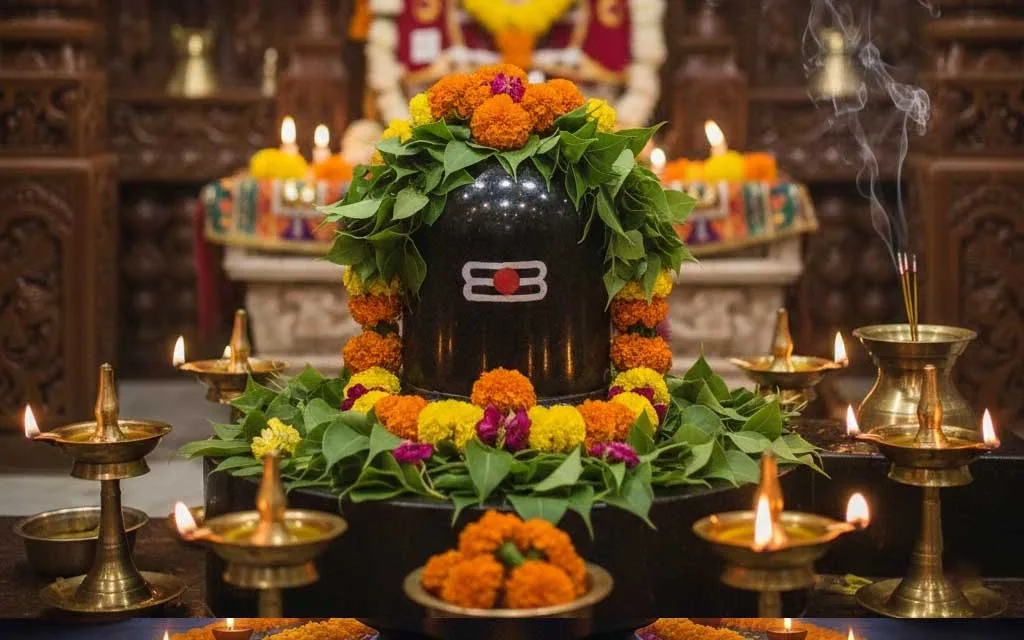
Maha Shivratri 2026: Complete Puja Guide with Mantras, Four Prahara Vigil & Fast Rules
Complete Maha Shivratri 2026 guide (18 February) — four prahara vigil, step-by-step puja, Maha Mrityunjaya Mantra, fast rules, regional variations, NRI guide. The greatest night of Lord Shiva.
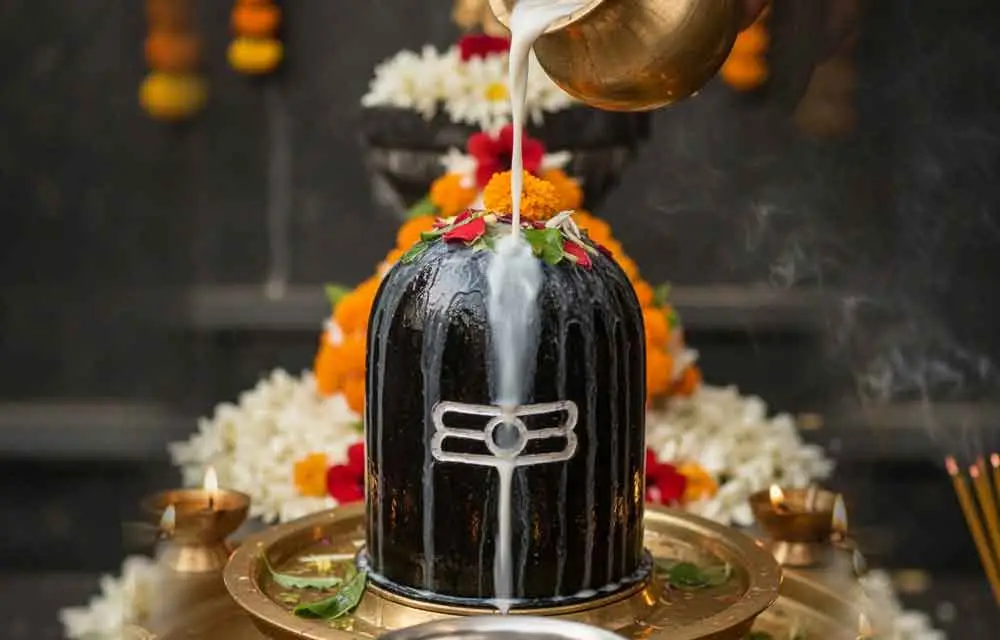
Complete Maha Shivratri 2026 guide (18 February) — four prahara vigil, step-by-step puja, Maha Mrityunjaya Mantra, fast rules, regional variations, NRI guide. The greatest night of Lord Shiva.
Among all the festivals of Hinduism, none holds the same singular intensity, devotional depth, and cosmic significance as Maha Shivratri — "The Great Night of Shiva." Falling on the 14th day of the dark fortnight (Krishna Paksha Chaturdashi) in the Hindu month of Phalguna (February-March), Maha Shivratri is the most sacred night of the year for Lord Shiva — the night when devotees stay awake through every prahara (3-hour watch), chant His name, perform abhishekam to the Linga, and offer Bilva leaves until dawn breaks at Brahma Muhurta.
This complete HinduTone guide covers everything about Maha Shivratri 2026 — the exact dates and timings, the four pre-Shivratri stories behind the festival, the four pradosha vrat windows of the night, step-by-step puja procedure, the most powerful mantras to chant, regional variations across India, NRI celebration guide, what to eat and avoid, and the seven greatest places to celebrate Maha Shivratri in person.
🔱 Om Namah Shivaya — Har Har Mahadev 🔱
Maha Shivratri 2026 — Date and Time
Maha Shivratri in 2026 falls on Wednesday, 18 February 2026. The Chaturdashi tithi (14th lunar day of Krishna Paksha) begins on the evening of 17 February and ends late on 18 February. The night-long vigil is observed from sunset on 18 February through Brahma Muhurta (4:00-6:00 AM) on 19 February.
Key timing reference points for Maha Shivratri 2026 (Hyderabad/Bangalore standard times — adjust for your city):
- Chaturdashi tithi begins — 17 February 2026, around 21:30 IST
- Chaturdashi tithi ends — 18 February 2026, around 19:30 IST
- Nishita Kala (midnight worship) — 23:55-00:45 on 18-19 February (the most sacred 50 minutes)
- Pratham Prahara (first watch) — sunset to 21:00
- Dwitiya Prahara (second watch) — 21:00 to 00:00
- Tritiya Prahara (third watch) — 00:00 to 03:00
- Chaturtha Prahara (fourth watch) — 03:00 to sunrise
- Brahma Muhurta — 04:00-05:30 on 19 February (concluding worship)
Always cross-verify the exact tithi start/end times for your city using the daily Drik Panchang or HinduTone's Panchang widget — Chaturdashi spans nearly 22 hours but the night-vigil window is fixed by sunset/sunrise.
Why Maha Shivratri Is the Greatest Night of the Year for Shiva
Maha Shivratri's supreme importance among all Shiva observances rests on five intersecting reasons documented across the Skanda Purana, Shiva Purana, Padma Purana, Garuda Purana, and the Linga Purana. Each is a separate divine event:
1. The Marriage of Shiva and Parvati
Hindu tradition holds that Maha Shivratri is the night when Lord Shiva and Mother Parvati were married. After Parvati's rigorous penance (Tapasya) to win Shiva's love — including her unbroken Somavar Vrat for many years — Lord Shiva finally accepted her as his bride on this night. The marriage symbolizes the union of consciousness and energy (Purusha and Shakti), the cosmic principle behind all creation. Married women observe Maha Shivratri vrat for their husband's long life; unmarried women observe it praying for a virtuous spouse like Lord Shiva.
2. The Night Shiva Performed the Tandava
On this night, Lord Shiva is said to have performed the Tandava — the cosmic dance of creation, preservation, and destruction. As Nataraja — the king of dancers — Shiva dances in the Chidambaram form, with one foot lifted and one foot grounded, surrounded by the flames of dissolution and rebirth. The night vigil reflects the eternal rhythm of cosmic existence — devotees stay awake to participate in this rhythm through chanting and meditation.
3. The Emergence of the Lingam
A famous Puranic story tells of a great dispute between Brahma (creator) and Vishnu (preserver) over who was the greatest. As they argued, an infinite column of fire appeared between them — a Linga with no visible beginning or end. Brahma flew upward as a hamsa (swan) to find the top; Vishnu burrowed downward as a varaha (boar) to find the bottom. Neither found the limit. They returned humbled, and Lord Shiva emerged from the pillar to declare His supremacy. This event is said to have occurred on the night of Maha Shivratri — making it the night when the formless Shiva first revealed Himself as the Jyotirlinga.
4. The Drinking of the Halahala Poison
During the cosmic churning of the milk ocean (Samudra Manthan), the deadly Halahala poison emerged threatening to destroy all three worlds. Lord Shiva accepted the poison into his throat to save creation, becoming Neelakantha (the blue-throated one). The devotee's night vigil on Maha Shivratri commemorates and honors this act of supreme compassion — staying awake with Shiva through the cosmic night.
5. The Anniversary of Creation
Some Shaivite traditions hold that creation itself began on the night of Maha Shivratri — when Lord Shiva, as Adi-yogi (the first yogi), opened his eyes after eons of meditation and the first cosmic vibration of Om emerged. The Sapta-rishis (seven sages) received their first teaching from Shiva on this night.
The Four Prahara of Maha Shivratri Night
The night of Maha Shivratri is divided into four three-hour watches (prahara), each with specific worship instructions, mantras, and offerings. Observing the four-prahara puja is considered the most complete form of Maha Shivratri devotion.
Pratham Prahara (First Watch — Sunset to 21:00)
The first prahara begins at sunset and is dedicated to Lord Shiva as Ishana — the supreme Lord. The puja during this watch focuses on Ishaana mantra and the offering of milk (kshira) as the first Abhishekam dravya. Devotees consciously transition from worldly day to sacred night.
- Abhishekam dravya: Milk (kshira)
- Mantra to chant: "Om Hraum Ishaanaya Namah" (108 or 1008 times)
- Bilva offering: 11 leaves with the first verse of Bilvashtakam
- Visualization: Lord Shiva seated on Mount Kailash, His matted hair dripping the Ganga, His third eye half-closed in meditation
Dwitiya Prahara (Second Watch — 21:00 to 00:00)
The second prahara is dedicated to Lord Shiva as Tatpurusha — the supreme self. Curd (dadhi) is offered. This watch contains the buildup to the most sacred Nishita Kala at midnight. Devotees gradually deepen their meditation as the night intensifies.
- Abhishekam dravya: Curd / yogurt (dadhi)
- Mantra: "Om Hreem Tatpurushaya Namah" (108 times)
- Bilva offering: 11 leaves
- Recitation: Lingashtakam, then a slow chanting of "Om Namah Shivaya" 540 times (5×108)
Tritiya Prahara (Third Watch — 00:00 to 03:00)
The third prahara contains the Nishita Kala (around 23:55-00:45 on Maha Shivratri 2026) — the single most sacred 50 minutes of the entire year. This is when Lord Shiva, in His Aghora form, accepts the devotee's deepest prayers. Devotees who have stayed awake through the first two prahara now intensify their devotion at the absolute peak.
- Abhishekam dravya: Ghee (clarified butter)
- Mantra: "Om Aim Aghoraya Namah" (108 or 1008 times)
- Bilva offering: 21 leaves (or 108 if observing the elaborate vrat)
- Recitation: Maha Mrityunjaya Mantra 108 times, then Shiv Tandava Stotram
- At Nishita Kala (around midnight): silent meditation for at least 30 minutes
Chaturtha Prahara (Fourth Watch — 03:00 to Sunrise)
The final prahara is dedicated to Lord Shiva as Sadyojata — the newborn form, representing renewal and the dawn of a new spiritual phase in the devotee's life. Honey (madhu) is offered. As Brahma Muhurta approaches (around 04:00-05:30), devotees conclude their vigil with gratitude and dedicate the merit of the night to all beings.
- Abhishekam dravya: Honey (madhu) and Panchamruta
- Mantra: "Om Lam Sadyojataya Namah"
- Bilva offering: Final 11 leaves
- Recitation: Bilvashtakam (full eight verses), final aarti with camphor
- Conclusion at sunrise: distribute Charanamruta (Abhishekam water) to family, break fast with sattvic food
Complete Step-by-Step Maha Shivratri Puja
Day Before — Preparation
- Take Sankalpa: "On the great night of Maha Shivratri, I, [name], dedicate this fast and worship to Lord Shiva for [purpose]"
- Clean and decorate the puja altar; arrange the Shiva Linga in the center
- Gather puja items: Bilva leaves (minimum 108, ideally 1008), water, milk, ghee, honey, curd, sugar, kumkum, vibhuti, sandalwood paste, dhatura/poison-apple flowers (sacred to Shiva but handle carefully), white flowers, camphor, incense, diya with sesame oil
- Plan your night — when each prahara begins, what mantras you'll chant, who in the family will join, when you'll alternate to rest
- Eat a light dinner of fruits or one phalahar meal (no grains/rice/wheat)
Morning of Maha Shivratri
- Wake before sunrise; bathe; wear clean white or yellow clothes
- Apply vibhuti and kumkum
- Begin a complete fast (nirjala if your health permits) OR a phalahar fast (fruits, milk, no grains)
- Visit a Shiva temple if possible; offer Bilva and water; recite Lingashtakam
- At home, perform a brief morning Abhishekam with water + Bilva leaves
- Spend the day in light activities — reading scriptures, listening to Shiva bhajans, meditation, mantra japa
Evening — Beginning of the Night Vigil
- Take a fresh bath at sunset and wear clean clothes
- Re-prepare the puja altar; light the diya and incense
- Place the Shiva Linga at the center; arrange the Bilva leaves, flowers, and Abhishekam ingredients
- Begin the Pratham Prahara at sunset — perform the milk Abhishekam
- Apply vibhuti to the Linga and offer Bilva leaves
- Recite the Lingashtakam, Bilvashtakam, and chant "Om Namah Shivaya" 108 times
- Move to the Dwitiya Prahara at the prescribed time, transitioning the Abhishekam dravya
- At Nishita Kala (around midnight), enter the Tritiya Prahara with the most intense devotion. Chant the Maha Mrityunjaya Mantra 108 times. Silent meditation for at least 30 minutes.
- Continue through Chaturtha Prahara with the final Abhishekam, mantras, and meditation
- At Brahma Muhurta (4:00-5:30 AM), perform the concluding aarti, distribute Prasadam, and break the fast
The Most Powerful Mantras for Maha Shivratri
1. Maha Mrityunjaya Mantra
Of all Shiva mantras, the Maha Mrityunjaya Mantra ("the great death-conquering mantra") is considered the most powerful for healing, longevity, and liberation. Chanting it 108 times during the Tritiya Prahara is considered equivalent to performing a full Rudra-yagna.
ॐ त्र्यम्बकं यजामहे सुगन्धिं पुष्टिवर्धनम् । उर्वारुकमिव बन्धनान् मृत्योर्मुक्षीय मामृतात् ॥
Om Tryambakam Yajamahe · Sugandhim Pushti-vardhanam · Urvarukamiva Bandhanan · Mrityor Mukshiya Mamritat
Meaning: We worship the three-eyed Lord Shiva, who is fragrant and who nourishes all beings. As a cucumber is liberated from its stem when ripe, may He liberate us from death and bestow upon us immortality.
2. Panchakshara Mantra
The five-syllable mantra "Om Namah Shivaya" — the most fundamental Shiva mantra. Chant it at least 108 times during each prahara; 1008 times if observing the elaborate vrat.
ॐ नमः शिवाय · Om Namah Shivaya
3. Rudra Mantra
The Vedic Rudra mantra invoking the fierce-compassionate aspect of Shiva:
ॐ नमो भगवते रुद्राय · Om Namo Bhagavate Rudraya
4. Shiv Tandava Stotram
Composed by Ravana in praise of Shiva's cosmic dance. Reciting this during the Tritiya Prahara is profoundly powerful. The grandeur and pace of the Sanskrit verses match the cosmic energy of Maha Shivratri night.
What to Eat and Avoid
Allowed (Phalahar Diet)
- Fruits — banana, apple, papaya, grapes, oranges
- Milk and milk products — yogurt, paneer, khoa
- Nuts and seeds — almonds, cashews, walnuts, peanuts
- Sabudana (tapioca pearls), kuttu (buckwheat), samak (barnyard millet)
- Sweet potato (shakkarkand)
- Rock salt (sendha namak) only
- Water, milk-based drinks (without regular sugar; use jaggery instead)
Avoid Strictly
- All grains — rice, wheat, bajra, jowar, oats
- Regular table salt; use only sendha namak
- Onion and garlic (tamasic foods)
- Non-vegetarian food (chicken, fish, eggs)
- Alcohol and any intoxicants
- Processed packaged foods (most contain forbidden ingredients)
- Heavy oily foods — keep meals sattvic and light
Health Considerations
Maha Shivratri's strict nirjala (waterless) fast is intense. Consult your doctor if you have diabetes, hypertension, pregnancy, or any chronic condition. Modified observance options:
- Diabetics — phalahar diet with controlled portions, no fasting
- Pregnant women — light satvik meals, no skipping food
- Children under 12 — modified phalahar; participate in puja but don't fast
- Elderly — Phalahar diet with regular water intake
- Those on medication — maintain medication schedule with adequate food
The Seven Most Powerful Places to Celebrate Maha Shivratri in Person
If you can travel for Maha Shivratri, these are the seven most spiritually charged locations in India:
- Kashi Vishwanath, Varanasi — The Mahasrshamashana, the cremation ground of liberation, hosts the most powerful Maha Shivratri celebration. The Ganga Aarti at Dashashwamedh Ghat is incomparable.
- Trimbakeshwar, Maharashtra — One of the 12 Jyotirlingas; the source of the Godavari river. The elaborate Maha Shivratri rituals attract millions.
- Mahakaleshwar, Ujjain — The unique Bhasma Aarti (sacred ash worship) tradition reaches its peak intensity on Maha Shivratri night.
- Kedarnath, Uttarakhand — In the high Himalayas. Maha Shivratri in February-March is bone-cold but the spiritual intensity is unmatched.
- Somnath, Gujarat — The first of the 12 Jyotirlingas; rebuilt and consecrated multiple times across history. Maha Shivratri sees lakhs of devotees.
- Pashupatinath, Nepal — Outside India but the most important Shiva pilgrimage outside India. Maha Shivratri at Pashupatinath draws sadhus, ascetics, and devotees from across Asia.
- Bhavnath Mahadev, Junagadh — The Bhavnath Mela in Junagadh on Maha Shivratri is unique — the only festival where Naga sadhus from the Ashtadasha (18) traditional ascetic orders gather openly. A 9-day spiritual event.
Regional Variations of Maha Shivratri Across India
North Indian Tradition (UP, Bihar, MP, Delhi)
Maha Shivratri is observed with the all-night vigil (jagran) at temples and homes. The Bhola Baba Ki Barat tradition — a procession celebrating Shiva's wedding to Parvati — is enacted by devotees. Sadhus from the 14 traditional Akhada orders converge at Haridwar, Allahabad, and Kashi.
South Indian Tradition (TN, KA, AP, KL)
The all-night Abhishekam tradition is most elaborate in South India — temples perform Rudra-abhishekam continuously through all four prahara. Telugu and Tamil devotees observe a strict night-vigil with bhajans, chanting, and meditation. The Karthikeya-Skanda connection is highlighted.
Maharashtra & Western India
Maharashtrian Shaivites observe Maha Shivratri with abhanga compositions specific to the night, the recitation of Dnyaneshwari and Ekanathi Bhagavad. Trimbakeshwar and Bhimashankar host elaborate celebrations.
Kashmiri Shaivism (Kashmir Pandits)
Maha Shivratri (called "Heyrath" in Kashmiri Pandit tradition) is the most important festival of the year. Family-based vigil with specific Kashmiri mantras, the worship of the Vatuk Bhairava form, and traditional Kashmiri preparations like the rohu fish (in some traditions) and walnut-based prasad.
Bengal & Odisha
Maha Shivratri at Bhuvaneshwar (Lingaraj Temple) and the Kalighat tradition in Bengal involves elaborate Shiva-Shakti integration. The Tantric Shaivism elements are more prominent here.
Maha Shivratri for NRI Hindus
NRI Hindus across USA, UK, Canada, UAE, Australia, Singapore can observe Maha Shivratri at home with full devotion. Adaptations:
- Set up a home puja altar with a Shiva Linga (or printed image), Bilva leaves (from Indian grocery stores or grow at home), and all standard puja items
- Calculate your local prahara timings — sunset varies dramatically across latitudes. In February, sunset in UK is around 5:00 PM; in USA East Coast around 5:30 PM
- Plan the night vigil around your work schedule — many NRIs take leave on the day for the daytime puja and stay up through the night
- Connect with local Hindu temples — BAPS Mandir (USA, UK, UAE), Hindu Temple of Atlanta, Brampton Hindu Sabha, ISKCON Dubai all hold Maha Shivratri programs with bhajans, abhishekam, and prasadam
- Stream HinduTone's Maha Shivratri playlist throughout the night — bhajans, Sanskrit chanting, Rudra-abhishekam audio
- Form a virtual sangat with NRI friends — many families do video-call jagrans together across time zones, sharing bhajans and recitation
Benefits of Observing Maha Shivratri
Spiritual Benefits
- Equivalent to performing 12 years of regular Shiva worship in a single night
- Direct connection with Lord Shiva at His most accessible cosmic moment
- Destruction of accumulated sins of countless lifetimes
- Steady progress toward liberation (moksha)
- Awakening of inner spiritual energies (Kundalini, in advanced sadhakas)
- Personal transformation — many devotees report feeling fundamentally renewed after a sincere Maha Shivratri vigil
Worldly Benefits
- Marriage for unmarried devotees (especially women observing the vrat for a virtuous spouse)
- Marital harmony and longevity of spouse
- Fertility and progeny for childless couples
- Family prosperity, removal of financial obstacles
- Protection from accidents, illness, and unforeseen calamities (Maha Mrityunjaya Mantra effect)
- Mental peace, freedom from anxiety
- Relief from astrological doshas — Shani, Mangal, Pitra, Kala Sarpa
Common Mistakes to Avoid
- Skipping the night vigil — Maha Shivratri's primary benefit comes from the all-night jagran
- Breaking the fast too early — wait until sunrise (Brahma Muhurta) on the next morning
- Sleeping during the night — even brief naps reduce the spiritual potency
- Performing the prahara at the wrong times — always sync with sunset, midnight, and your local Drik Panchang
- Eating non-vegetarian, alcohol, or grain-based food at any point on Maha Shivratri
- Wearing red clothes (red is not auspicious for Shiva worship)
- Skipping the Mahabharata-level intent — Maha Shivratri requires complete focus, no casual approach
- Comparing your experience with others — the Vrat is private; sincerity matters more than rigor
Maha Shivratri vs Other Shiva Observances
- Maha Shivratri — Once yearly (Phalguna Chaturdashi) — the greatest night
- Pradosham — Twice monthly (13th lunar day evening) — fortnightly Shiva worship
- Somavar Vrat — Every Monday — weekly Shiva devotion
- Sawan Somavar — Mondays of Shravan month (July-August) — most powerful Mondays
- Shivaratri (monthly) — 14th day of every dark fortnight (less powerful than the annual Maha)
Pro Tip: For maximum lifetime spiritual benefit, observe all five layers — daily mantra japa, weekly Somavar Vrat, fortnightly Pradosham, monthly Shivaratri, and the annual Maha Shivratri. Together they form a complete Shaivite sadhana.
Frequently Asked Questions
Q1. Can women observe Maha Shivratri Vrat?
Yes, absolutely. Married women particularly observe it for their husband's long life; unmarried women for a virtuous spouse. During menstruation, women modify the observance — chant mantras, read scriptures, but avoid direct contact with the Linga and don't enter the puja altar.
Q2. Can I observe Maha Shivratri without a Shiva temple nearby?
Yes. Home worship with a Linga (idol or image) is fully sufficient. The Shiva Purana explicitly states that home Shiva worship with sincere devotion equals temple worship in spiritual merit.
Q3. What if I cannot stay awake the entire night?
Most devotees alternate brief rest periods with the prahara worship. The minimum standard is being awake during each prahara puja (sunset, 21:00, midnight, 03:00) and the concluding sunrise puja. Some elderly or health-restricted devotees observe only the Nishita Kala (midnight) puja, which alone carries enormous merit.
Q4. Is fasting absolutely mandatory?
A fast is strongly recommended but the form is flexible. Strict nirjala (no water) is the most rigorous; phalahar (fruits, milk, dry foods) is the most common. The spiritual benefit comes from the discipline, not the harshness — adjust to your health.
Q5. Can I attend an online Maha Shivratri program?
Yes — many major temples livestream their Maha Shivratri programs. Following along with the live abhishekam, mantras, and bhajans creates an authentic spiritual connection. Watching is itself a form of worship (shravana — listening).
Q6. Why is the night vigil so important?
Maha Shivratri's entire spiritual mechanism centers on the cosmic night. Lord Shiva is awakened during this night for the devotee's prayers. Staying awake aligns the devotee's rhythm with the divine rhythm of cosmic awakening. It is not merely symbolic — it is the practical structure that channels the divine energy.
Q7. What is the best mantra to chant during the night?
Combine three: "Om Namah Shivaya" as the foundation (108 each prahara), the Maha Mrityunjaya Mantra at Nishita Kala for healing/longevity, and the Lingashtakam during Abhishekam moments. All three together create a complete devotional canopy.
Q8. What should I do if I cannot complete the entire Vrat?
Even partial observance — morning puja, Nishita Kala worship at midnight, and concluding sunrise puja — yields tremendous benefit. Lord Shiva sees sincerity, not perfection. Do what your circumstances permit, with complete devotion.
Plan Your Maha Shivratri 2026 Today
Maha Shivratri 2026 — Wednesday, 18 February — is approaching. The window for the greatest night of Shiva worship opens once a year. Mark your calendar. Plan your fast. Gather your puja items. Decide whether you will attend a temple, observe at home, or even travel to Kashi or one of the Jyotirlingas.
Whether you are at home in Hyderabad, on a metro commute in London, in a snowy Toronto apartment, or beneath the desert moon of Dubai — Lord Shiva, dancing the cosmic Tandava at Mount Kailash, awaits your devotion on this most sacred of all nights.
🔱 Har Har Mahadev — Om Namah Shivaya 🔱
Related Reading on HinduTone
- How to Chant Lingashtakam on Monday – Complete Guide
- Bilvashtakam Lyrics, Meaning, and Monday Puja Guide
- Best Shiva Songs and Bhajans for Monday Morning – NRI Guide
- Somavar Vrat Katha: The Complete Monday Fast Story
- Pradosham: Complete Guide to Monday Shiva Puja on the 13th Lunar Day
- Maha Mrityunjaya Mantra: How to Chant and Its Benefits
- Om Namah Shivaya: 108 Times Chanting Benefits & Method
- Shiv Tandava Stotram: Lyrics, Meaning & Power
You might also like
Maha Mrityunjaya Mantra: Lyrics, Meaning, Benefits, and How to Chant — Complete Guide
Maha Mrityunjaya Mantra — Complete Meaning, 32-Syllable Breakdown, Healing Science & 30-Day NRI Practice Guide for 2026
Somavar Vrat Katha: The Complete Monday Fast Story for Lord Shiva Devotees