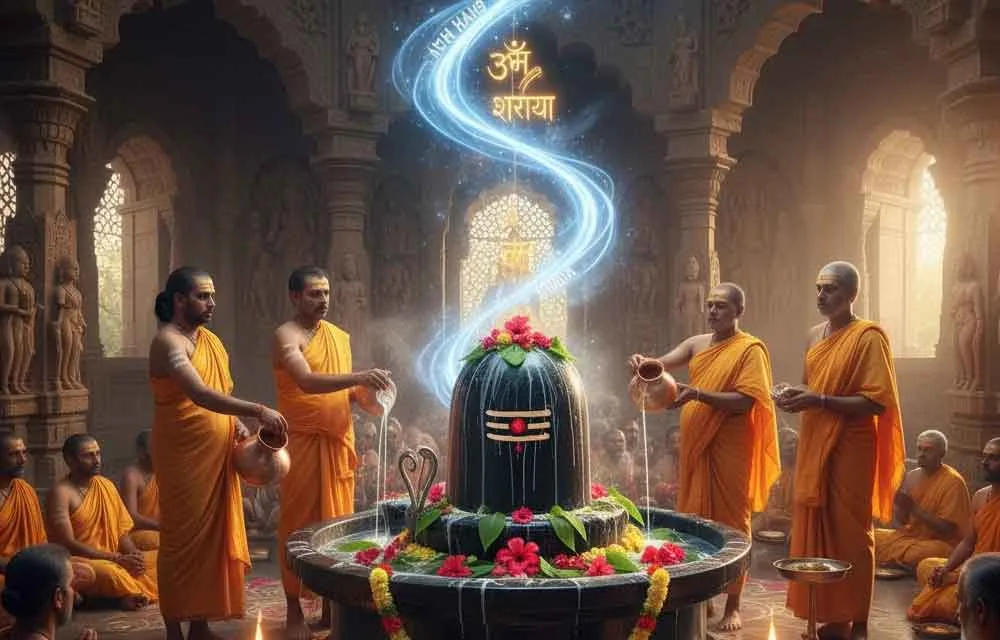
Maha Mrityunjaya Mantra: Lyrics, Meaning, Benefits, and How to Chant — Complete Guide
Complete guide to the Maha Mrityunjaya Mantra — Sanskrit text + Roman transliteration + word-by-word meaning + Markandeya origin story + step-by-step chanting method + benefits + scientific research + FAQ.
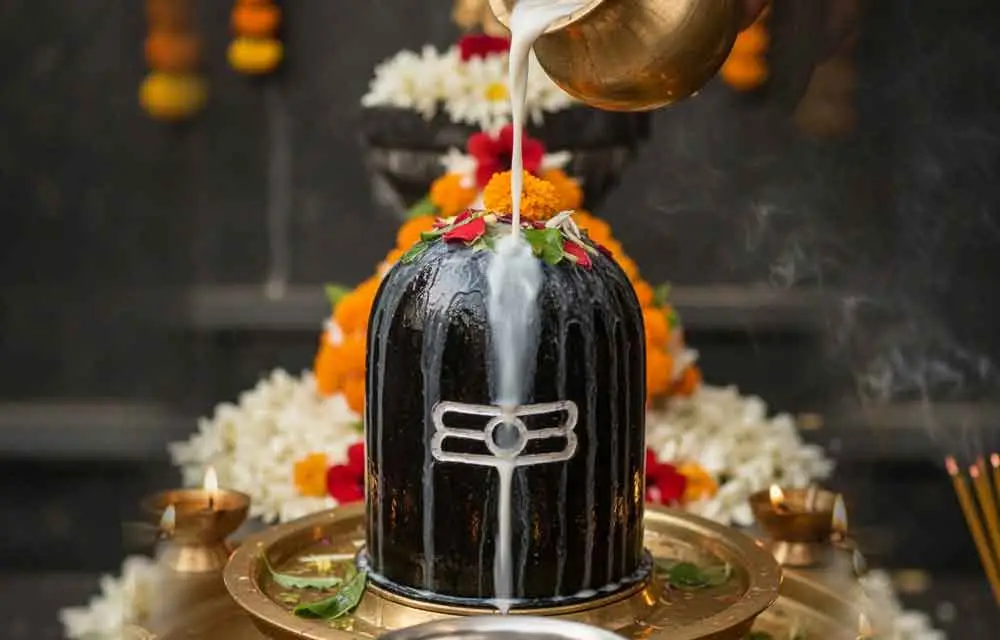
Complete guide to the Maha Mrityunjaya Mantra — Sanskrit text + Roman transliteration + word-by-word meaning + Markandeya origin story + step-by-step chanting method + benefits + scientific research + FAQ.
Of all the mantras in Hinduism, none carries the same urgency, healing power, or universal accessibility as the Maha Mrityunjaya Mantra — "the great death-conquering mantra." Composed by the rishi Markandeya from the Rig Veda (Mandala 7, Sukta 59, Verse 12) and dedicated to Lord Shiva in His Tryambakam (three-eyed) form, this 33-syllable Sanskrit mantra is chanted by millions of Hindus daily for protection from disease, accidents, untimely death, and the deepest fears of mortality.
This complete HinduTone guide covers everything you need to know about the Maha Mrityunjaya Mantra — the Sanskrit text, the rishi Markandeya story, word-by-word meaning, step-by-step chanting methodology, the 108-times and 1008-times traditions, best timings, benefits documented across scripture and modern science, and answers to the most frequently asked questions.
🔱 Om Tryambakam Yajamahe 🔱
The Complete Maha Mrityunjaya Mantra
Sanskrit (Devanagari)
ॐ त्र्यम्बकं यजामहे सुगन्धिं पुष्टिवर्धनम् । उर्वारुकमिव बन्धनान् मृत्योर्मुक्षीय मामृतात् ॥
Roman Transliteration (IAST)
Oṃ Tryambakaṃ Yajāmahe · Sugandhiṃ Puṣṭi-vardhanam · Urvārukam-iva Bandhanān · Mṛtyor Mukṣīya Māmṛtāt
Simple Roman (for everyday chanting)
Om Tryambakam Yajamahe · Sugandhim Pushti-vardhanam · Urvarukamiva Bandhanan · Mrityor Mukshiya Mamritat
Word-by-Word Meaning
- Om (ॐ) — The primordial sound of the universe; the cosmic vibration from which all creation emerges
- Tryambakam (त्र्यम्बकम्) — "Three-eyed one" — addressing Lord Shiva, whose three eyes represent sun, moon, and fire (also: past, present, future)
- Yajamahe (यजामहे) — "We worship / we offer reverence to"
- Sugandhim (सुगन्धिम्) — "The sweet-smelling / fragrant one" — referring to Shiva's pure spiritual fragrance
- Pushti-vardhanam (पुष्टि-वर्धनम्) — "The nourisher of life / the giver of strength and well-being"
- Urvarukam-iva (उर्वारुकमिव) — "Like a cucumber" (or ripened gourd, depending on translation)
- Bandhanan (बन्धनान्) — "From the bondage / from the stalk that holds it"
- Mrityor (मृत्योर्) — "From death"
- Mukshiya (मुक्षीय) — "May I be liberated / freed"
- Ma (मा) — "But not"
- Amritat (अमृतात्) — "From immortality / from the nectar of eternal life"
Complete Translation
"Om. We worship the three-eyed Lord Shiva, who is fragrant and who nourishes all beings. As the ripened cucumber detaches naturally from its stalk when fully ripe, may He liberate us from the bondage of death — but not from immortality."
The image of the ripened cucumber is profound: when the fruit is fully ripe, it falls from the vine effortlessly — no force, no pain, no struggle. The devotee asks Lord Shiva for the same gentle, natural liberation — from the bondage of death (fear, disease, untimely accident) — but not from amrita, the eternal nectar of the soul's immortal existence.
The Origin Story — Rishi Markandeya
The most famous Puranic story attached to the Maha Mrityunjaya Mantra is that of Rishi Markandeya — the immortal sage who conquered death through this mantra.
Mrikandu Rishi and his wife Marudvati were childless for many years. They performed intense penance to Lord Shiva, who appeared before them and offered a choice: a son who would be wise and virtuous but would live only sixteen years, or a son who would live a long life but be foolish and ignorant. Mrikandu Rishi, choosing wisdom over longevity, asked for the first. Shiva granted the boon, and Markandeya was born — a brilliant, devout child.
From his earliest days, Markandeya devoted himself to Lord Shiva. As his sixteenth birthday approached, his parents grew terrified. They told him about the fate awaiting him. Young Markandeya was not afraid. He told his parents: "I shall devote myself to Lord Shiva. He alone is the conqueror of death. He will protect me."
On the day of his sixteenth birthday, Markandeya went to a Shiva Linga and began chanting "Om Namah Shivaya" with complete devotion. As Yamaraja — the lord of death — approached with his messengers and his pasha (noose) to claim the boy's soul, Markandeya clung tightly to the Shiva Linga and intensified his chanting.
Yamaraja threw his noose. By divine arrangement, the noose missed the boy and instead caught around the Shiva Linga itself. Furious at this unintended sacrilege, Lord Shiva burst forth from the Linga as Kalantaka — "the destroyer of death" — and struck Yamaraja down with His foot. The lord of death was momentarily defeated.
The devatas pleaded with Lord Shiva to restore Yamaraja so the cosmic order would not collapse. Lord Shiva agreed, but granted Markandeya the boon of perpetual sixteen years — making him a Chiranjivi (immortal). To commemorate this victory over death, Markandeya is said to have composed the Maha Mrityunjaya Mantra and offered it to Lord Shiva — and to all future devotees who would seek divine protection from untimely death.
"He who chants the Tryambakam mantra with sincere devotion shall, like Markandeya, transcend the bondage of death."
When and How Many Times to Chant
Daily Practice
- Minimum — 11 times daily (during morning or evening puja)
- Standard — 21 times (every morning at Brahma Muhurta)
- Regular sadhana — 108 times (one mala) daily
- Deep practice — 1008 times daily for 40-day cycles
- Continuous japa — 11,000 times during Maha Mrityunjaya Yagna (special occasions)
Best Times of Day
- Brahma Muhurta — 4:00-6:00 AM (the most spiritually charged time)
- Sunrise — auspicious for daily chanting
- Pradosh Kala — 1.5 hours before to 1.5 hours after sunset
- Midnight (Nishita Kala) — especially powerful on Pradosham and Maha Shivratri
- During illness — chant whenever you can; the mantra works at any hour for healing
Best Days of the Week
- Monday (Somavar) — most sacred day for all Shiva mantras
- Pradosham (13th lunar day) — twice monthly
- Maha Shivratri — once yearly (Phalguna Chaturdashi)
- Saturday — for relief from Shani Dosha (Shiva is the master of Shani)
- During Mercury or Jupiter transits — favorable astrological windows
Step-by-Step Chanting Method
Preparation
- Take a bath and wear clean, preferably white clothes
- Sit on a clean asana (yoga mat, blanket, or wooden plank) facing East or North
- Light a ghee or sesame oil diya and incense
- Place a Shiva Linga (or image) before you
- Hold a Rudraksha mala (108 beads) in your right hand, or use a Tulsi mala if Rudraksha is unavailable
- Take three deep breaths to calm the mind
- Apply vibhuti (sacred ash) and a small mark of kumkum on your forehead
The Chanting Process
- Chant "Om Namah Shivaya" three times as invocation
- Take Sankalpa: "I, [name], chant the Maha Mrityunjaya Mantra 108 times for [your purpose — peace, health, protection, liberation, family welfare]"
- Begin chanting the full mantra slowly and clearly, with attention to each syllable
- After each completion, move one bead on the mala
- When you reach the Meru bead (the larger bead at the top), do not cross it — turn the mala and continue from the next bead in reverse
- Maintain steady rhythm; close your eyes if possible; keep your spine straight
- After completing 108 (one mala), pause and visualize Lord Shiva's three eyes opening, light radiating outward, blessing you and all beings
- Bow before the Linga; chant "Om Shanti Shanti Shantih" three times to conclude
Pronunciation Tips
- "Tryambakam" — three syllables: Try-am-ba-kam (slight pause after each)
- "Sugandhim" — "Su-gan-dhim", with a soft "dh" sound
- "Pushti-vardhanam" — "Push-ti var-dha-nam", emphasis on "push" and "var"
- "Urvarukamiva" — "Ur-va-ru-kam-i-va", with smooth flow
- "Bandhanan" — "Ban-dha-nan", with retroflex "dh"
- "Mrityor" — "Mri-tyor" (the "r" is soft)
- "Mukshiya" — "Muk-shi-ya"
- "Mamritat" — "Ma-am-ri-tat", with a clear "a-am" sound
Listen to Hindutone's reference recordings of the Maha Mrityunjaya Mantra to internalize the correct pronunciation and rhythm. Recordings by experienced priests and classical vocalists are available for free streaming.
The Three Levels of Mantra Practice
Level 1 — Vaikhari (Audible Chanting)
At the first level, the mantra is chanted out loud, clearly and at moderate volume. This is the beginner's level — the sound vibration alone carries spiritual potency. Recommended for the first 6-12 months of regular practice.
Level 2 — Madhyama (Whispered Chanting)
At the intermediate level, the mantra is whispered — soft enough that only you can hear it, but with active lip and tongue movement. The vibration becomes more refined; the mind learns to maintain focus without external sound cues. Recommended for years 1-3 of practice.
Level 3 — Manasika (Mental Chanting)
At the advanced level, the mantra is chanted entirely in the mind — no movement of lips or tongue, no audible sound. The vibration becomes purely internal. This is the deepest form of japa, said to grant the merit of all three combined.
Many advanced sadhakas alternate — vaikhari first thing in the morning to set energy, madhyama during the day for steady awareness, manasika at night before sleep.
Benefits Documented in Scripture
Spiritual Benefits
- Liberation from the cycle of birth and death (moksha)
- Direct protection from Lord Shiva — the conqueror of death
- Destruction of accumulated sins (papa-nashanam)
- Awakening of inner divine awareness
- Steady progress on the spiritual path
- Connection with the immortal Self (Atman)
Physical Health Benefits
- Protection from chronic illness and disease
- Faster recovery from existing illness when chanted by patient or family
- Strengthening of the immune system (per modern research on mantra meditation)
- Reduced risk of accidents and unforeseen calamities
- Increased longevity and vitality
- Better sleep and reduced anxiety
Mental & Emotional Benefits
- Reduction of fear of death — the deepest fear of human existence
- Calmness in the face of life crises
- Mental clarity and decision-making capacity
- Emotional resilience during difficult periods (grief, loss, illness)
- Increased self-discipline and willpower
- Sense of being protected by a higher power
When to Chant for Specific Purposes
- For your own health — chant 108 times daily for 40 days
- For a sick family member — chant 108 or 1008 times daily; visualize the person being bathed in healing light from Shiva's third eye
- For protection during travel — chant 11 times before leaving home
- For protection from accidents — chant 11 times morning and evening daily
- During grief or loss — chant continuously through the bereavement period; transforms grief into spiritual ascent
- During Shani Dosha (Saturn affliction) — chant 108 times on Saturdays for 40 weeks
- Before surgery — chant 21 times the night before and 11 times immediately before
- During pregnancy — chant 21 times daily; said to give the unborn child Shiva's protection
- After childbirth (40-day period) — mother and family chant 108 times daily
The Maha Mrityunjaya Yagna
In serious situations — chronic illness, life-threatening crisis, family astrological doshas — a formal Maha Mrityunjaya Yagna is performed. This involves:
- Engaging trained Vedic priests (at least 5; ideally 11)
- A sacred fire (homam) with offerings of ghee, herbs, sandalwood
- Chanting the mantra 11,000 or 21,000 or 1,25,000 times (depending on intensity)
- Total duration: 1 to 7 days (the longer the yagna, the more intense the merit)
- Conclusion with purnahuti (final offering) and distribution of prasadam
Maha Mrityunjaya Yagnas are conducted at major Shiva temples (Kashi Vishwanath, Trimbakeshwar, Mahakaleshwar, Shrishailam) and on commission at home by qualified pandits. They are considered one of the most powerful spiritual interventions for serious life challenges.
Modern Scientific Research
Beyond scriptural authority, modern research has begun documenting measurable effects of mantra chanting in general and the Maha Mrityunjaya Mantra in particular:
- Reduction in cortisol (stress hormone) levels after 20 minutes of mantra chanting (Indian Journal of Psychiatry, 2017)
- Improved heart rate variability (HRV) — a key marker of autonomic nervous system health (Indian Journal of Physiology, 2019)
- Activation of vagus nerve through controlled breathing during chanting — reduces inflammation, improves digestion
- Increased grey matter density in brain regions associated with attention and emotional regulation (Journal of Cognitive Enhancement, 2020)
- Lower blood pressure in regular practitioners (American Journal of Hypertension meta-analyses)
- Reduced symptoms of anxiety and depression in clinical trials
While these studies don't prove "death-conquering" in a literal sense, they establish that regular mantra chanting produces measurable improvements in the physiological systems that affect mortality risk — cardiovascular, immune, neurological, and psychological.
Common Mistakes to Avoid
- Chanting mechanically — without devotion or attention, the mantra loses its potency
- Mispronouncing words — practice with audio recordings until your pronunciation is clear
- Rushing the count — quality over quantity always; 21 careful chants beats 108 rushed ones
- Skipping the sankalpa — declaring your intention before chanting focuses the energy
- Treating the mantra as a magic spell — it is a spiritual practice, not a quick fix
- Stopping practice when life improves — the protection comes from consistent ongoing devotion
- Doubting the mantra during difficult times — faith intensifies the effect
- Chanting after consuming non-vegetarian food or alcohol on the same day — disrespectful to the spiritual energy
The Maha Mrityunjaya for NRI Hindus
NRI Hindus across USA, UK, Canada, UAE, Australia, Singapore, and beyond can chant the Maha Mrityunjaya Mantra with full devotion from any home. Adaptations:
- Establish a daily routine — even 11 chants before work creates spiritual continuity
- Use the morning commute — many NRIs play Maha Mrityunjaya recordings during their drive
- Combine with daily meditation app practices — 10 minutes of mantra is more potent than 30 minutes of generic meditation
- Family practice — teach children to chant; weekly family group chanting on Mondays is powerful
- During NRI specific stressors — work pressure, immigration concerns, health emergencies — intensify chanting to 108 or 1008 times daily
- Connect with local temples — most BAPS, ISKCON, Hindu temples in NRI hubs hold weekly Maha Mrityunjaya group chanting sessions
Combining with Other Shiva Practices
The Maha Mrityunjaya Mantra is most powerful when combined with broader Shiva devotion:
- Morning — 108 chants during Brahma Muhurta
- Monday — increase to 21 or 108 during Somavar Vrat
- Bilva offering — combine with Bilvashtakam recitation while offering leaves
- Pradosham — 108 chants during the evening Pradosh Kala window
- Maha Shivratri — chant continuously through the night vigil
- During illness — establish a 40-day mantra commitment
- During astrological transits — chant during Sade-sati or Ashtama Shani for protection
Frequently Asked Questions
Q1. Can women chant the Maha Mrityunjaya Mantra?
Yes, absolutely. The mantra is universally accessible. There is no scriptural restriction on women, in fact many traditions hold that women's prayers are heard more quickly than men's. Married women chant for their husbands' long life; mothers chant for their children's protection; unmarried women chant for their own well-being and future spouse.
Q2. Do I need initiation (diksha) to chant?
Formal initiation from a guru enhances the practice but is not required. The mantra is openly available in the Rig Veda and has been chanted by countless devotees without formal initiation. Sincere intent + correct pronunciation + consistent practice are the only true requirements.
Q3. Can children chant the mantra?
Yes — teaching children the Maha Mrityunjaya Mantra from age 5-6 is a beautiful Hindu tradition. The Sanskrit sound itself carries spiritual benefit even before the child understands the meaning. Many families recite together at dinnertime or bedtime.
Q4. Is it okay to chant during menstruation?
Traditional schools differ. Stricter traditions advise women to chant mentally only (manasika) during menstruation and avoid direct contact with the Linga or puja altar. More inclusive traditions permit full chanting at any time. Choose what feels right within your sampradaya.
Q5. Can I chant in a language I understand instead of Sanskrit?
The mantra's primary power is in the Sanskrit sound vibration, which has unique acoustic and energetic properties. Translations are wonderful for understanding but the Sanskrit form is the recommended chanting form. Listen to recordings to internalize correct pronunciation.
Q6. What if I miss a day of practice?
Don't worry — simply resume the next day. Don't try to "make up" by doubling. Consistency matters more than perfection. Lord Shiva is the most accessible deity (Bholenath) — he understands human imperfection.
Q7. How long until I see benefits?
Subtle benefits — calmness, improved sleep, reduced anxiety — often appear within 7-14 days. More significant benefits — health improvements, protection during travel, resolution of difficulties — manifest over 40-90 days of consistent practice. Major life-transforming results unfold over years.
Q8. Can I chant for someone else's healing?
Yes. Chanting for another person — a sick family member, a friend in distress, a deceased loved one's soul — is a powerful and selfless practice. Hold the person in your mind as you chant; visualize healing light from Shiva's third eye flowing to them. This is one of the highest forms of seva (service).
Begin Your Maha Mrityunjaya Practice Today
The Maha Mrityunjaya Mantra is among the most powerful and accessible spiritual practices in all of Sanatana Dharma. It requires no temple, no expensive items, no formal training — just a sincere heart and a few minutes of devotion each day. The 33-syllable Sanskrit verse, chanted at sunrise with intention, has protected and healed devotees for over 5,000 years.
Begin tomorrow. Wake before sunrise. Light a diya. Sit before a Shiva Linga or simply face East. Chant "Om Tryambakam Yajamahe Sugandhim Pushti-vardhanam, Urvarukamiva Bandhanan Mrityor Mukshiya Mamritat" 11 times. Continue daily. After 40 days, you will know the mantra is no longer just words on a page — it is the steady heartbeat of your spiritual life.
🔱 Om Namah Shivaya — Om Tryambakam Yajamahe 🔱
Related Reading on HinduTone
- How to Chant Lingashtakam on Monday – Complete Guide
- Bilvashtakam Lyrics, Meaning, and Monday Puja Guide
- Best Shiva Songs and Bhajans for Monday Morning – NRI Guide
- Somavar Vrat Katha: The Complete Monday Fast Story
- Pradosham: Complete Guide to Monday Shiva Puja on the 13th Lunar Day
- Maha Shivratri 2026: Complete Puja Guide with Mantras
- Om Namah Shivaya: 108 Times Chanting Benefits & Method
- Shiv Tandava Stotram: Lyrics, Meaning & Power
You might also like
Maha Mrityunjaya Mantra — Complete Meaning, 32-Syllable Breakdown, Healing Science & 30-Day NRI Practice Guide for 2026
Rudrashtakam Stotram: Tulsidas's 8-Verse Shiva Hymn — Lyrics, Meaning & Benefits
Om Namah Shivaya: 108 Times Chanting Benefits & Method — Complete Panchakshara Mantra Guide