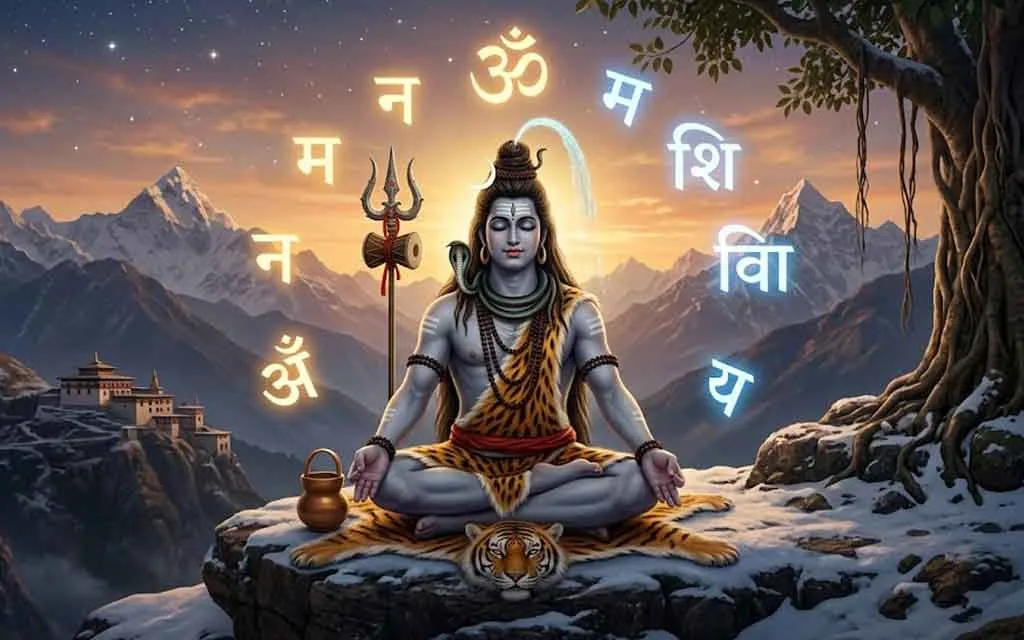
Maha Mrityunjaya Mantra for Hindus
Maha Mrityunjaya Mantra – Complete Meaning, Power & How to Chant | HinduTone HinduTone Home › Mantras › Maha Mrityunjaya ॐ Rigveda · 7th Mandala ·…
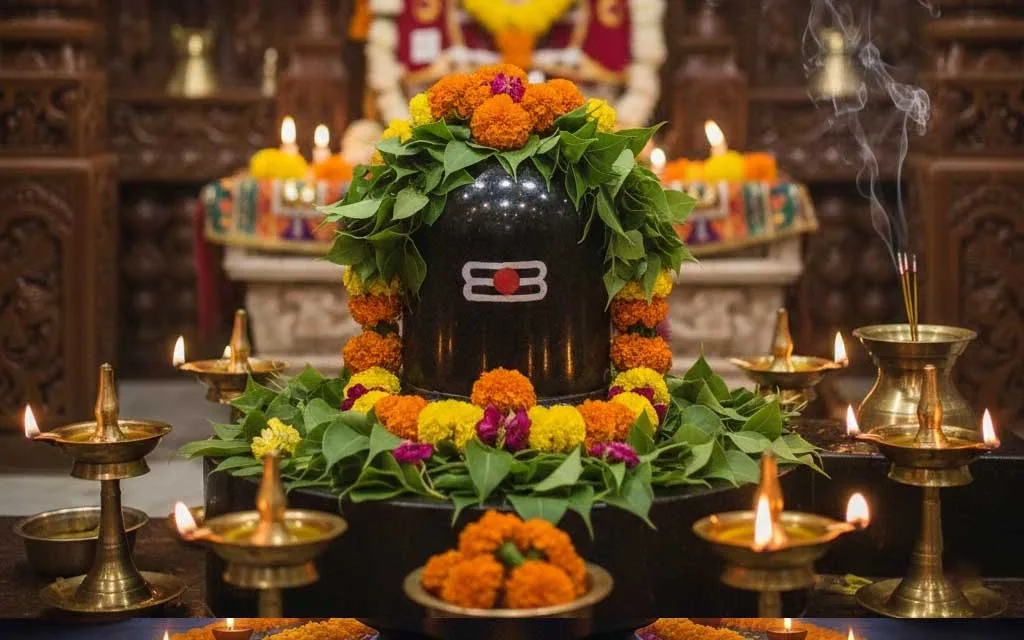
Maha Mrityunjaya Mantra – Complete Meaning, Power & How to Chant | HinduTone HinduTone Home › Mantras › Maha Mrityunjaya ॐ Rigveda · 7th Mandala ·…
Maha Mrityunjaya Mantra – Complete Meaning, Power & How to Chant | HinduTone
HinduTone Home › Mantras › Maha Mrityunjaya
ॐ Rigveda · 7th Mandala · Mritasanjivani Mantra
Maha Mrityunjaya Mantra
The Great Victory Over Death — Complete Meaning, Sacred Story & How to Chant
📿 HinduTone.com 🕉️ Ancient Vedic Knowledge 📖 Complete Guide
The Sacred Mantra — As Written in the Rigveda
ॐ त्र्यम्बकं यजामहे
सुगन्धिं पुष्टिवर्धनम्।
उर्वारुकमिव बन्धनान्
मृत्योर्मुक्षीय माऽमृतात्॥
Oṃ Tryambakaṃ Yajāmahe
Sugandhiṃ Puṣṭivardhanam
Urvārukamiva Bandhanān
Mṛtyormukṣīya Māmṛtāt
Table of Contents Introduction — What Is This Mantra? Origin & Source in the Vedas The Sacred Story — How the Mantra Was Born Word-by-Word Meaning & Translation Lord Shiva — The Tryambaka Spiritual Power & Benefits How to Chant — Complete Guide Best Time & Occasions to Chant Scientific Perspective Frequently Asked Questions I Introduction — What Is the Maha Mrityunjaya Mantra? Of all the mantras in the vast treasury of Hindu sacred literature, only one bears the immense title of Maha — the Great. The Maha Mrityunjaya Mantra, also called the Tryambakam Mantra or the Mritasanjivani Mantra (the mantra that revives the dead), is among the most ancient, most powerful, and most revered prayers ever composed by the human spirit. In Sanskrit, Maha means "great," Mrityun means "death," and Jaya means "victory" — so this is literally the Great Victory Over Death. It is a prayer addressed to Lord Shiva in his aspect as the three-eyed god (Tryambaka), calling upon him to free us from the binding cycle of birth and death — not by escaping life, but by attaining immortality through divine liberation. Unlike mantras that pray for wealth, health, or worldly blessings alone, the Maha Mrityunjaya Mantra reaches deeper. It prays for moksha — freedom from the ignorance that causes all suffering — while simultaneously offering protection, healing, and fearlessness in this very life. "This mantra is a prayer not merely against physical death, but against the deeper death of the soul — the death of awareness, of love, and of the eternal Self within us." — Sri Swami Sivananda It appears in the Rigveda (VII.59.12), one of the oldest texts in human civilization, the Yajurveda, and the Shiva Purana. Its antiquity, depth of meaning, and transformative power have kept it alive across thousands of years — chanted at births and deaths, at the bedside of the ill, at the start of pilgrimages, and in the silence of deep meditation. ✦ ✦ ✦ II Origin & Source in the Vedas Source ScriptureRigveda, Mandala 7, Sukta 59, Verse 12 Also Appears InYajurveda (3.60), Shiva Purana, Krishna Yajurveda Vedic RishiVasishtha (Rigveda); Shukracharya (as revealed legend) Deity AddressedLord Shiva (as Tryambaka — the Three-Eyed One) Chandas (Meter)Anushtup Chandas GotraMaruts / Rudra tradition ClassificationMahamrityunjaya / Mritasanjivani Vidya Estimated AgeOver 5,000 years (among the oldest living prayers) The Rigveda context places this mantra in the seventh Mandala, which is attributed to the great sage Vasishtha, one of the Saptarishis (seven great rishis). In this Sukta (hymn), Rudra — an older Vedic form of Shiva — is addressed as the life-giving, compassionate healer who can grant both physical immortality and spiritual liberation. The mantra is also closely related to the Mritasanjivani Vidya — the science of reviving the dead — which, according to the Shiva Purana and Devi Bhagavata Purana, was first revealed not to a mortal, but to the divine preceptor of the asuras, Shukracharya, after millennia of penance. This mythological layer gives the mantra its additional dimension as a secret, grace-given knowledge. ✦ ✦ ✦ III The Sacred Story — How the Mantra Was Born Every great mantra carries a story — a mythic memory of how divine knowledge descended into the world. The Maha Mrityunjaya Mantra has several interwoven origin stories, each illuminating a different facet of its power. The Legend of Markandeya — The Boy Who Conquered Death The most beloved origin story is that of Markandeya, the young sage born under a terrible omen. His parents, the devoted brahmin Mrikandu and his wife Marudmati, had long prayed for a child. Lord Shiva appeared and gave them a choice: a brilliant but short-lived son who would die at 16, or a dull, long-lived son. They chose the first. Their son Markandeya grew into a radiant, devoted child — deeply in love with Lord Shiva. As his 16th birthday approached and the shadow of Yama (the god of death) drew near, Markandeya clung to the Shivalinga and prayed with all his heart, chanting this very mantra ceaselessly. When Yama arrived and cast his noose, it fell around the Shivalinga as well — and Shiva himself burst forth in fury, defeated Yama, and declared that Markandeya would remain 16 years old for eternity. He became Chiranjivi — the eternally living. This story is the heart of the mantra's reputation as a Mrityu-nashini (destroyer of death) and Ayur-vardhini (increaser of life). The Story of Chandra (The Moon) and Shiva's Compassion In another account from the Shiva Purana, the moon god Chandra was afflicted by a powerful curse from the sage Daksha. Chandra was married to all 27 daughters of Daksha (the 27 Nakshatras — lunar mansions), but he showed extreme favoritism to one wife, Rohini, ignoring the others. Furious, Daksha cursed Chandra to waste away. The moon began to shrink — growing dimmer each night — and all of creation suffered, for the moon governs crops, tides, minds, and time. Desperate, Chandra performed intense penance at Prabhasa Tirtha (identified with modern Somnath, Gujarat) and chanted this mantra to Shiva. Moved by his devotion, Shiva wore the moon as an ornament upon his matted hair — which is why Shiva is called Chandrashekhara — and mitigated the curse. The moon would now wane and wax in a cycle rather than disappear forever. The monthly cycle of the moon is a living testament to the power of this mantra. Shukracharya and the Mritasanjivani Vidya In the cosmic war between the devas (gods) and asuras (titans), the asuras kept losing warriors while the devas had the divine physician Dhanvantari to heal them. To equalize this, the asura guru Shukracharya undertook supreme austerities — hanging upside down from a tree for 1,000 years, enduring smoke, surrounded by five fires — to obtain the Mritasanjivani Vidya (the knowledge of reviving the dead) from Lord Shiva. The Maha Mrityunjaya Mantra is the seed of this Vidya, making it not merely a prayer, but a living science of consciousness that touches the boundary between life and death. Together, these stories reveal the mantra's essential nature: it is for those at the edge — at the edge of death, illness, fear, or spiritual crisis. It is the prayer that calls the divine into the most desperate human moments. ✦ ✦ ✦ IV Word-by-Word Meaning & Complete Translation Every syllable of the Maha Mrityunjaya Mantra is a universe of meaning. Let us walk through the mantra word by word, layer by layer. ॐ (Oṃ) Om / Aum The primordial sound of creation. The vibration from which all existence arose. It represents Brahman — the ultimate reality. The alpha and omega of all mantras. त्र्यम्बकम् (Tryambakam) Tryambakam "The Three-Eyed One." Tri = three; ambaka = eye. Shiva's three eyes represent the sun, moon, and fire — or the past, present, and future. The third eye is the eye of wisdom that burns ignorance. यजामहे (Yajāmahe) Yajamahe "We worship / we honor." A collective prayer. Not "I" but "we" — this mantra is offered for all beings, not just the individual chanter. It is an act of communal devotion. सुगन्धिम् (Sugandhim) Sugandhim "The fragrant one / one of sweet fragrance." Just as a flower's fragrance spreads effortlessly, Shiva's divine presence nourishes and permeates all existence invisibly. पुष्टिवर्धनम् (Puṣṭivardhanam) Pushtivardhanam "The nourisher / increaser of strength." Pushti = nourishment, prosperity, fullness; vardhanam = one who increases. Shiva nourishes all creation — body, mind, and spirit. उर्वारुकम् इव (Urvārukamiva) Urvarukam-iva "Like a ripe cucumber." The urvaruka (cucumber) is used as a metaphor: when ripe, it detaches naturally from the vine without force. Liberation should come naturally, at the right time, with readiness. बन्धनात् (Bandhanāt) Bandhanat "From bondage / from the stem." Just as the ripe fruit detaches from its stem, may the soul detach from the bondage of birth-and-death, ego, attachment, and karmic entanglement. मृत्योर्मुक्षीय (Mṛtyormukṣīya) Mrityormukshiya "May you liberate me from death." Mrityor = from death; mukshiya = liberate/release. A direct prayer to be freed from the fear and cycle of death. मा अमृतात् (Māmṛtāt) Ma Amritat "Not from immortality." Ma = not/do not; amrita = immortality, nectar of eternal life. Do not separate me from immortality. Release me unto immortal consciousness. "O three-eyed Shiva, we worship and honor you — the fragrant one who nourishes all beings. As a ripe cucumber is effortlessly freed from its vine, liberate me from the bondage of death, and do not withhold from me the nectar of immortality." Notice the exquisite beauty of the cucumber metaphor. The mantra does not pray for a dramatic, violent escape from death — it prays for a natural, graceful release, like the ripe fruit that falls when its time has come. This is the Hindu vision of the ideal death (and the ideal liberation): not a tearing away, but a gentle, joyful return to the source. ✦ ✦ ✦ V Lord Shiva — The Tryambaka The mantra addresses Shiva as Tryambaka — "the three-eyed one." This epithet carries profound symbolic weight that unlocks the deeper meaning of the prayer. The Three Eyes of Shiva Right Eye (Sun — Surya): The eye of activity, the daytime, the present moment, the physical world, and conscious action.
Left Eye (Moon — Chandra): The eye of reflection, the nighttime, the emotional world, the subconscious, and creative energy.
Third Eye (Fire — Agni): Located in the center of the forehead, this is the eye of wisdom, the fire of higher knowledge, the destroyer of illusion. When Shiva opens his third eye, no falsehood can stand before it. Shiva as Tryambaka, therefore, is not limited by the perspectives of sun and moon — activity and rest, day and night, matter and mind. His third eye sees through all dualities into the unchanging truth beneath. When we call upon Tryambaka, we call upon the aspect of divine consciousness that is beyond our ordinary sight — that can see us, our suffering, our karma, our deepest need, with perfect clarity. Shiva is also called Mrityunjaya — the conqueror of death — not because he eliminates death from the universe (death serves a cosmic purpose), but because he reveals to the devotee that the true Self — the Atman — is deathless. The fear of death arises from identifying with the mortal body. Shiva's grace burns away this false identification, revealing the immortal awareness that was never born and can never die. ✦ ✦ ✦ VI Spiritual Power & Benefits of Chanting The Shiva Purana, the Skanda Purana, and the Yajnavalkya Smriti all enumerate the benefits of this mantra. Across traditions and centuries, these benefits have been grouped into three levels: Adhibhautika (physical), Adhidaivika (divine/karmic), and Adhyatmika (spiritual). 🛡️ Protection from Untimely Death The mantra's most famous benefit — it creates a protective shield around the chanter, believed to ward off accidents, grave illness, and sudden calamities. 💊 Healing & Recovery Widely chanted beside the ill and dying. The vibrations of the mantra are believed to stimulate pranic energy, support the body's healing, and bring peace to the suffering. 😰 Release from Fear & Anxiety Regular chanting dissolves deep-rooted fears — fear of death, fear of failure, fear of loss — by anchoring consciousness in something that cannot be lost. 🧘 Mental Clarity & Inner Peace The rhythmic repetition and specific sound frequencies calm the nervous system, quieten mental chatter, and create profound states of inner stillness. 🔗 Liberation from Karma At the deepest level, the mantra is an invocation of liberation from the karmic bondage — the recurring patterns of suffering that bind the soul across lifetimes. ✨ Spiritual Awakening Long-term devotional chanting opens the inner eye of wisdom, accelerating the journey toward self-realization and the direct experience of the immortal Self. 🌊 Aura Purification The sound vibrations are said to cleanse the subtle body, remove negative energies, and create a luminous aura that attracts divine grace. 🌱 Longevity & Vitality Regular chanting activates prana (life force), improves vitality, supports immunity, and is associated with a long, purposeful, spiritually rich life. 🏠 Family & Home Protection Chanting in the home creates a sanctified environment. Many families perform the mantra during times of family illness, negative energy, or difficulty. "The Maha Mrityunjaya Mantra is the Maha Sanjivani Mantra. It can cure diseases considered incurable. It gives life to dying persons. It is a sovereign remedy for all diseases." — Swami Sivananda, Divine Life Society ✦ ✦ ✦ VII How to Chant — Complete Step-by-Step Guide The mantra is accessible to all — there are no caste, gender, or sectarian restrictions. Anyone may chant with sincerity. However, certain traditional guidelines maximize the mantra's spiritual potency. 1 Purify Body & Space Bathe before your practice if possible. Wear clean, preferably white or saffron-colored clothing. Light a ghee lamp and incense (sandalwood or bilva-related fragrance is traditional for Shiva puja). Sprinkle water around your seat to purify the space. 2 Set Up Your Sacred Space Sit facing north or east — directions of spiritual receptivity. Place a Shivalinga, a picture of Lord Shiva, or a Rudraksha mala before you. You may also place bilva (bael) leaves, which are sacred to Shiva. 3 Sanctify with Achamana Sip water three times, uttering the names of Vishnu. This purifies the inner channels. Then perform a simple Ganesh invocation (Om Gam Ganapataye Namah) to remove obstacles before proceeding. 4 Hold a Rudraksha Mala A Rudraksha mala of 108 beads is ideal — Rudraksha (tears of Shiva) is the most potent bead for Shiva-related mantras. Hold the mala in your right hand, between thumb and middle finger. Do not use the index finger. Count each bead per repetition. 5 Begin with the Sankalpa (Sacred Intention) Mentally or verbally state your intention: whether you are chanting for healing, protection, liberation, or on behalf of someone. The sankalpa channels the mantra's energy toward a specific purpose. Be clear and sincere. 6 Chant 108 Times Per Round (Mala) Chant the complete mantra 108 times. This completes one mala. For specific purposes, traditional practice prescribes: 1 mala daily for general well-being; 3 malas (324 repetitions) for serious illness or crisis; 11 malas for a complete spiritual sadhana; 1,25,000 repetitions for a full anushthana (intensive practice). 7 Pronunciation Matters Sanskrit is a phonetic, vibrational language. Key pronunciation notes: Tryambakam (not "Triyambakam"); Sugandhim (long i); Urvārukam (stress on long ā); Mukṣīya (not "Mukshiya" — the retroflexion matters). Chant slowly, clearly, with feeling. 8 Conclude with Offering At the end of your chanting, offer the merit to all beings with the prayer: "Om Tat Sat — may all beings be free from suffering." This prevents ego-appropriation of the practice and expands its benefit universally. The Three Ways to Chant Vaikhari (Aloud): The lowest but most accessible form — chanting loudly, which fills the physical space with vibration. Good for beginners, communal worship, and those healing from illness.
Upanshu (Whisper): Chanting so quietly only you can hear — the vibration enters the subtle body more directly. More powerful than aloud chanting; suitable for private sadhana.
Manasika (Mental): The highest form — pure mental repetition with no movement of lips or tongue. Requires concentration but generates the most powerful spiritual energy. Master this after establishing the mantra in your practice. ✦ ✦ ✦ VIII Best Time & Sacred Occasions While the mantra may be chanted at any hour with good effect, Hindu tradition identifies specific times, tithis (lunar days), and occasions when its power is especially magnified. Brahma MuhurtaBefore sunrise (approximately 4:00–6:00 AM) — the most powerful time for any mantra sadhana. The mind is fresh, the world is quiet, and the veil between the human and divine is thinnest. Pradosh KalaThe hour of dusk — sacred to Shiva. Chanting during Pradosh (especially on Pradosh Vrat days) is considered exceptionally auspicious. MahashivaratriThe Great Night of Shiva — an all-night vigil of mantra chanting on this night is one of the most potent spiritual practices in the Hindu calendar. Shravan MonthThe entire month of Shravan (July–August) is dedicated to Shiva. Daily chanting during this month brings profound blessings. Chaturdashi TithiThe 14th lunar day of every fortnight is sacred to Shiva. Chanting on these days is particularly effective. During IllnessChant continuously or have someone chant beside a sick person. Even listening to the mantra is considered healing. During PregnancyChanting protects the mother and child and is said to bless the unborn with spiritual tendencies. At DeathChanting the mantra beside the dying or recently deceased is among the most sacred and compassionate acts — it guides the departing soul. ✦ ✦ ✦ IX The Scientific Perspective Modern research in neuroacoustics, psychoacoustics, and the neuroscience of contemplative practice has begun to illuminate what ancient rishis knew through direct experience: that sound and vibration profoundly affect the human nervous system, brain, and even cellular function. Studies on Vedic chanting have documented measurable changes in brain wave patterns — a shift from beta (active, anxious) to alpha and theta (calm, meditative) states during mantra recitation. The rhythmic, repetitive nature of the practice activates the parasympathetic nervous system, reducing cortisol (the stress hormone), lowering blood pressure, and improving heart rate variability. The specific sounds in the Maha Mrityunjaya Mantra — particularly the nasal consonants (m, n, ñ) and the extended vowel sounds (ā, ī) — create resonance in the skull and chest cavities that stimulates the vagus nerve, a key mediator of the body's healing response. The opening "Om" alone has been shown in multiple studies to synchronize both hemispheres of the brain. "The Sanskrit language was constructed to capture the vibrations of the universe. When we chant, we are not merely making sounds — we are tuning our own frequency to the frequency of existence itself." — Dr. Ramamurti Mishra (Swami Brahmananda Saraswati) It is important to note that science studies mechanism, not meaning. The rishis were not merely interested in relaxation or brain states — they were pointing toward a transformation of consciousness, a shift in identity from the mortal body-mind to the immortal awareness. The mantra's ultimate purpose lies in that deeper territory, which science is only beginning to approach. ✦ ✦ ✦ X Frequently Asked Questions Can women chant the Maha Mrityunjaya Mantra? Absolutely. The Maha Mrityunjaya Mantra has no gender restriction. Lord Shiva is the father of all creation and his grace is equally available to all. Women have chanted this mantra since ancient times. There is no valid scriptural basis for restricting it to any gender. Can it be chanted during menstruation? Opinions vary across traditions. Many contemporary teachers, including many Shankaracharyas, hold that mental chanting (manasika japa) is always permissible for all. Physical rituals around a Shivalinga may follow traditional observances. When in doubt, silent mental chanting during this period is universally accepted. How many times should I chant it daily? At minimum, 9 times daily is considered auspicious. 27 times is recommended for those seeking protection. 108 times (one mala) is the standard for a dedicated sadhana. However, even a single, deeply sincere repetition holds power. Consistency over time matters more than quantity in any single session. Is it safe to chant without a guru's initiation? The Maha Mrityunjaya Mantra is a Vedic mantra in the public domain of scripture — it is not a secret or restricted mantra that requires initiation. Anyone may chant it with sincerity. Initiation from a qualified guru, when available, deepens the practice by transmitting energized instruction, but is not a prerequisite for beginning. Can I chant it for someone who is ill or dying? Yes — and this is one of the most compassionate applications of the mantra. You may chant on behalf of another person, holding their face in your mind and dedicating the merit of your chanting to their healing, comfort, or peaceful transition. Many traditions recommend chanting continuously at the bedside of the critically ill. What is the difference between Maha Mrityunjaya Mantra and the Gayatri Mantra? Both are supreme Vedic mantras. The Gayatri Mantra (addressed to Savitri, the solar deity) prays for illumination of intellect and spiritual wisdom. The Maha Mrityunjaya Mantra (addressed to Shiva-Rudra) prays for liberation from death and immortal consciousness. The Gayatri is associated with Vishnu's solar energy; the Mrityunjaya with Shiva's lunar-destructive-liberating energy. Many practitioners chant both. What is a Maha Mrityunjaya Homa (Yajna)? A Homa is a fire ritual in which the mantra is offered into sacred fire along with ghee, bilva leaves, sesame seeds, and other sacred substances. The Maha Mrityunjaya Homa is performed during serious illness, at the time of accidents, during difficult planetary periods (especially Saturn or Rahu transits), and for the welfare of the departed. It amplifies the mantra's power many-fold and benefits the entire family and surrounding area. Does this mantra make one immortal in the physical sense? The immortality (amrita) spoken of in the mantra is primarily spiritual — the realization of the eternal, deathless Self (Atman). Physically, the mantra is believed to protect from premature death, extend life, and support healing. But the ultimate promise is immortal awareness, not an immortal body. This is the distinction between jivana (biological life) and amrita (deathless consciousness). ✦ ✦ ✦ ॐ त्र्यम्बकं यजामहे सुगन्धिं पुष्टिवर्धनम्।
उर्वारुकमिव बन्धनान् मृत्योर्मुक्षीय माऽमृतात्॥ The Maha Mrityunjaya Mantra is not simply a prayer. It is a conversation between the mortal and the eternal — a hand reaching from the darkness of fear and limitation toward the blazing light of divine grace. Every syllable is a step on the path from identification with the dying body to recognition of the undying Self. Whether you come to this mantra seeking physical healing, protection from harm, peace in grief, or the deepest liberation the human spirit can aspire to — come with an open heart. Shiva, the three-eyed one, nourishes all things with his fragrant presence. As the ripe fruit falls naturally from the vine, so too may you be gently released — into wholeness, into freedom, into the amrita that was always, already yours. Om Namah Shivaya — HinduTone.com | Jai Mahadeva HinduTone.com © 2025 HinduTone.com · Sacred Knowledge for the Modern Seeker · Om Namah Shivaya
Frequently asked questions
What does Maha Mrityunjaya mean?
Maha means great, Mrityun means death and Jaya means victory, so the name means the Great Victory Over Death. It is a prayer to Lord Shiva as the three-eyed Tryambaka for liberation from the cycle of birth and death.
Where does the Maha Mrityunjaya Mantra appear in the scriptures?
It appears in the Rigveda, Mandala 7, Sukta 59, Verse 12, attributed to the sage Vasishtha. It is also found in the Yajurveda (3.60) and the Shiva Purana.
What is the story of Markandeya and this mantra?
As commonly told, Markandeya was destined to die at 16. He clung to the Shivalinga chanting this mantra, and when Yama cast his noose, Shiva appeared, defeated Yama and let Markandeya remain 16 forever as Chiranjivi.
Why is it called the Mritasanjivani Mantra?
It is linked to the Mritasanjivani Vidya, the knowledge of reviving the dead. As told in the Shiva Purana, the asura guru Shukracharya obtained it from Lord Shiva after severe austerities.
What does the word Yajamahe mean in the mantra?
Yajamahe means "we worship" or "we honor". Being a collective prayer, it is offered for all beings and not only for the individual chanter.
What does the cucumber image in the mantra mean?
Urvarukam iva compares liberation to a ripe cucumber that detaches naturally from the vine without force. It expresses the hope of being freed from bondage at the right time, and from death into immortality.
You might also like
Mahishasura Mardini Stotra: Lyrics, English Meaning & Profound Spiritual Benefits
Powerful Mantras for Students & Parents Before Joining School
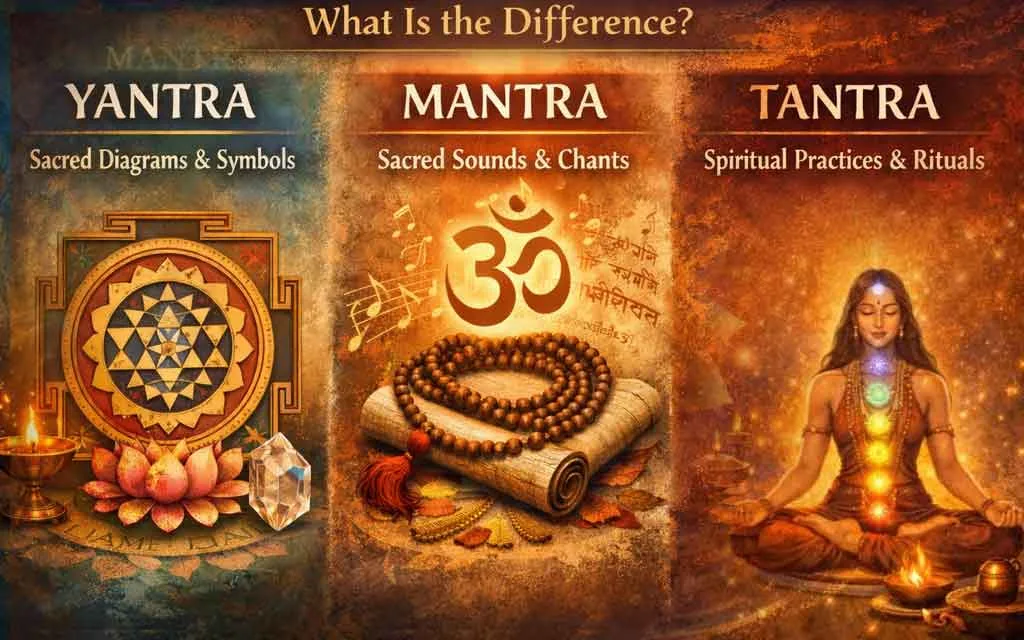
Yantra vs Mantra vs Tantra — What Is the Difference? | Complete Hindu Guide