Shiva Sahasranama : Every Hindu need to chant
Shiva Sahasranama — 1000 Names of Lord Shiva | HinduTone HinduTone.com — Sacred Texts & Devotion ॐ Shiva Sahasranamaश्री शिव सहस्रनाम The Thousand Sacred Names…
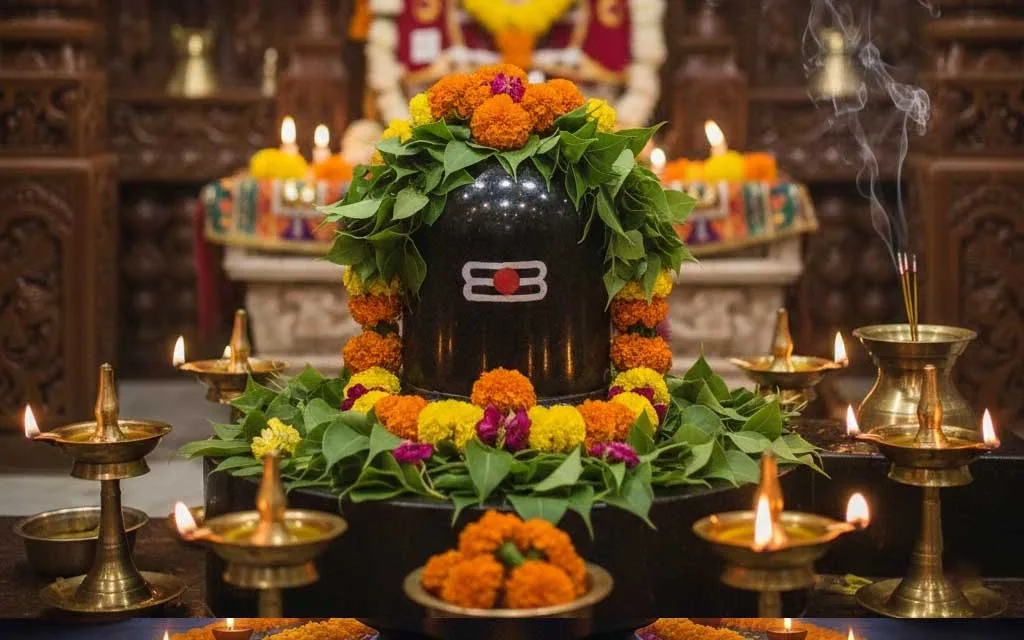
Shiva Sahasranama — 1000 Names of Lord Shiva | HinduTone HinduTone.
Shiva Sahasranama — 1000 Names of Lord Shiva | HinduTone HinduTone.com — Sacred Texts & Devotion ॐ Shiva Sahasranamaश्री शिव सहस्रनाम The Thousand Sacred Names of Lord Shiva · From the Mahabharata, Anushasana Parva 🔱
1000Sacred Names
∞Divine Grace
By Number Alphabetical 1000 names
The Shiva Sahasranama (शिव सहस्रनाम) is a sacred list of a thousand names of Lord Shiva, one of the principal deities of Hinduism. It appears in the Mahabharata (Anushasana Parva, Chapter 17), where Yudhishthira learns these names from Bhishma. Each name encapsulates a divine attribute of the Adiyogi — the first yogi, destroyer of evil, and lord of all creation.
ॐ Loading Sacred Names… ॐ
🔱 No names found. Please try a different search.
↑ ॐ नमः शिवाय 🔱 HinduTone.com 🔱
Har Har Mahadev · हर हर महादेव
Where in the Mahabharata does the Shiva Sahasranama appear, and who transmitted it?
The Shiva Sahasranama is preserved in the Anushasana Parva, the thirteenth book of the Mahabharata, specifically in Chapter 17 (sometimes numbered as Chapter 14–17 depending on the recension). The Anushasana Parva is the 'Book of Instruction,' where Bhishma, lying on his bed of arrows at Kurukshetra, imparts final teachings to King Yudhishthira on dharma, kingship, and devotion.
Yudhishthira, grief-stricken after the war, asks Bhishma how a mortal may attain liberation and overcome suffering. Bhishma responds by narrating a conversation between the sage Upamanyu and Lord Krishna, in which Upamanyu reveals the thousand names as taught to him directly by Shiva. This three-layered transmission — Shiva to Upamanyu, Upamanyu to Krishna, Krishna recounted by Bhishma to Yudhishthira — underscores the text's status as shruti-adjacent smriti, a teaching of the highest divine origin passed through an unbroken chain of realised souls.
What do the names of Shiva actually reveal about His nature?
The thousand names are not a mere list of epithets; they constitute a theological portrait of Shiva across every dimension of reality. Names such as Maheshvara (Great Lord), Tryambaka (Three-Eyed One), and Nilakantha (Blue-Throated One, who drank the Halahala poison at the churning of the cosmic ocean) point to his supreme sovereignty and self-sacrifice for creation. Names like Bhava (Pure Existence), Sharva (Destroyer of Evil), and Ishana (Ruler of the Northeast quarter) reflect his identity with the Panchabrahma — the five cosmic functions of creation, sustenance, dissolution, concealment, and grace.
A significant cluster of names reveals Shiva as the Adiyogi, the primordial teacher of yoga and wisdom: Yogeshvara (Lord of Yoga), Mahayogi (Great Ascetic), Jnanagamya (Reachable Only through Knowledge), and Vedanta-gamya (Realised through Vedanta). Another set — Pashupati (Lord of All Bound Souls), Rudra (the Roarer or the One who removes sorrow), and Ghora (the Formidable) — addresses his role as master of time, death, and transformation. Chanting these names therefore becomes an act of philosophical contemplation, not merely ritual repetition.
How does the Shiva Sahasranama compare with other Sahasranamas in Hindu tradition?
The most widely recited sahasranama in household worship is the Vishnu Sahasranama, also from the Mahabharata (Anushasana Parva and Shanti Parva), where Bhishma similarly lists a thousand names of Vishnu for Yudhishthira. The Lalita Sahasranama, embedded in the Brahmanda Purana, enumerates a thousand names of the Goddess Lalita Tripurasundari. Each of these texts belongs to the stotra genre and serves both as a liturgical hymn and a concise theological compendium.
The Shiva Sahasranama is distinctive in that several of its names appear verbatim in the Shri Rudram of the Krishna Yajurveda — one of the oldest Vedic hymns — establishing a textual continuity from Vedic to Epic literature. While the Vishnu Sahasranama is often set to musical raga in the Carnatic tradition and the Lalita Sahasranama forms the backbone of Shakta upasana, the Shiva Sahasranama holds special centrality in Shaiva Siddhanta practice, particularly among devotees in Tamil Nadu and Karnataka who pair it with chanting of the Tevaram hymns of the Nayanmars.
What are the prescribed methods and best times for chanting the Shiva Sahasranama?
Traditional Shaiva agamic texts recommend chanting the Sahasranama after completing the Panchamrita abhisheka (ritual bathing of the Shivalinga with milk, curd, honey, ghee, and sugar) and after reciting Om Namah Shivaya or the Panchakshara Mantra at least 108 times as a preparatory invocation. The chant is ideally performed facing east or north, seated in a stable asana, with a rudraksha mala held in the right hand. The mala of 108 beads corresponds to the 108 Upanishads and the 108 sacred Divya Kshetras recognised in the Shaiva tradition.
Pradosha Kala — the twilight period on the thirteenth lunar day (Trayodashi) of both fortnights — is considered the most auspicious time for Shiva worship, and recitation of the Sahasranama during this window is believed to yield manifold spiritual merit. Monday (Somavar), sacred to Shiva as Someshvara (Lord of the Moon), and the month of Shravan (July–August) are also preferred. For those unable to recite all thousand names daily, the tradition permits chanting the one hundred and eight names considered the most concentrated essence, or simply meditating on each name's meaning as a form of nama-japa.
Which major Shiva temples are traditionally associated with recitation of the Sahasranama?
Among the twelve Jyotirlingas — the self-manifested pillars of light representing Shiva's infinite nature — the Kashi Vishwanatha temple in Varanasi (Kashi) holds the highest ritual prestige for Sahasranama recitation. Pilgrims on the Panchakroshi Yatra, a circumambulation of 88 km around the sacred city, recite Shiva's names at each of the five main stopping points. Similarly, the Brihadeeswara Temple in Thanjavur, Tamil Nadu — built by the Chola king Raja Raja I in the 11th century CE — hosts daily parayana (systematic recitation) sessions where both the Shiva Sahasranama and the Devaram hymns are chanted by trained odhuvars (temple singers).
The Trimbakeshwar Jyotirlinga near Nashik, Maharashtra, is particularly associated with Rudra-related recitations including the Sahasranama, as it is near the source of the Godavari river and the site of the Kumbh Mela held every twelve years. At the Srikalahasti temple in Andhra Pradesh — one of the Paadal Petra Sthalams revered by the Nayanmars — the Vayulinga (Shiva as Air) is worshipped with continuous Sahasranama parayana, especially on Shivaratri and during the month of Karthika.
What spiritual fruits does the tradition promise to sincere devotees who chant these names?
The Mahabharata itself, within the Anushasana Parva passage, states that one who recites the Shiva Sahasranama with devotion is freed from fear, disease, and sin accumulated over many lifetimes. The text specifically mentions that the chanting bestows arogya (health), ayus (long life), dhana (prosperity), and moksha (liberation) — not as mechanical rewards but as natural fruits of a mind purified by constant contemplation of divine qualities. This promise mirrors the phala-shruti (fruit of listening) sections found at the end of most classical stotras.
More than material benefit, the deeper purpose articulated by Shaiva philosophers such as Abhinavagupta of the Kashmir Shaiva school is that nama-smarana (remembrance of the name) gradually dissolves the veil of maya. Each name, understood as a mantra-seed, generates a specific vibration that aligns the devotee's consciousness with that particular aspect of Shiva. Over sustained practice, the boundary between the chanter, the act of chanting, and Shiva himself — the chanted — begins to dissolve, which is what the tradition calls Shiva-sayujya, union with Shiva.
Frequently Asked Questions
What is the Shiva Sahasranama?
Shiva Sahasranama — 1000 Names of Lord Shiva | HinduTone HinduTone.com — Sacred Texts & Devotion ॐ Shiva Sahasranama श्री शिव सहस्रनाम The Thousand Sacred Names of Lord Shiva · From the Mahabharata, Anushasana Parva 🔱 1000 Sacred Names ॐ Om Namah Shivaya ∞ Divine Grace By Number Alphabetical 1000 names The Shiva Sahasranama (शिव सहस्रनाम) is a sacred list o
How many times should the Shiva Sahasranama be chanted?
It is traditionally chanted 108 times using a rudraksha or tulsi mala. Even 11 or 21 sincere repetitions daily are considered beneficial — steady, focused practice matters more than the count.
What is the best time to chant the Shiva Sahasranama?
Dawn (Brahma Muhurta) after a bath is considered ideal, though it may be chanted any time with a calm, focused mind. Many devotees keep a fixed daily time to build consistency.
Who can chant the Shiva Sahasranama?
Anyone may chant it with faith and a pure mind, regardless of age, gender or background. Beginners benefit from first hearing the correct pronunciation and understanding its meaning.
What are the benefits of chanting the Shiva Sahasranama?
Devotees chant it to invoke Lord Shiva's grace — for inner peace, protection, focus and spiritual progress.
You might also like
Mahishasura Mardini Stotra: Lyrics, English Meaning & Profound Spiritual Benefits
Kubera Mantra — Complete Guide for Wealth and Abundance | HinduTone
Chappan Bhog List — 56 Dishes for Govardhan Puja 2026