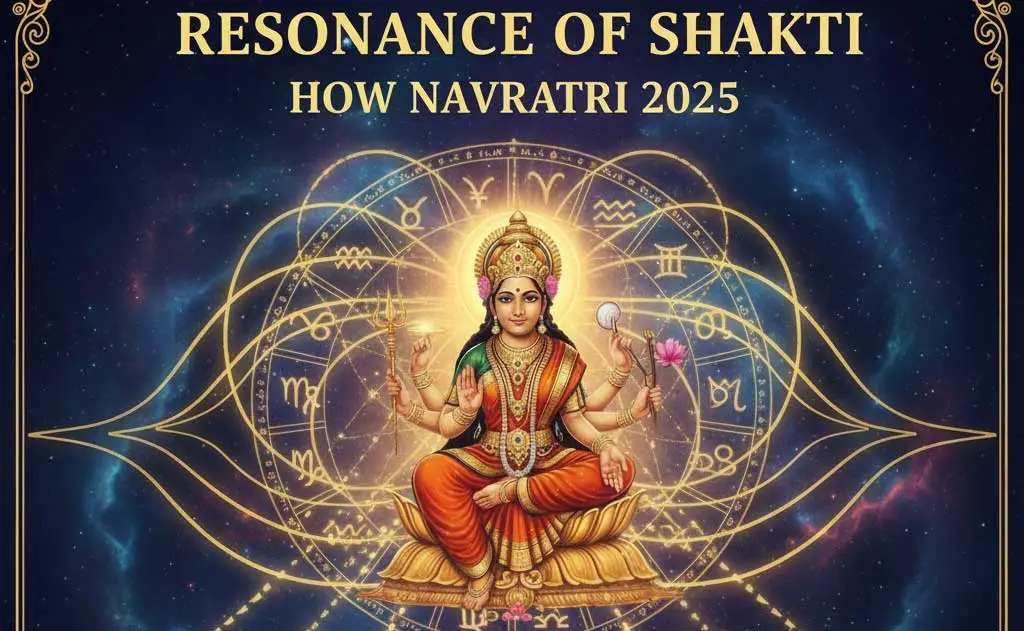
Durga Navaratri 2026 — The Complete Devotional Guide
Dates · 9 Goddesses · Colours · Puja Rituals · Mantras · Celebration "Ya Devi Sarva-Bhuteshu Shakti-Rupena Samsthita, Namas-tasyai Namas-tasyai Namas-tasyai…
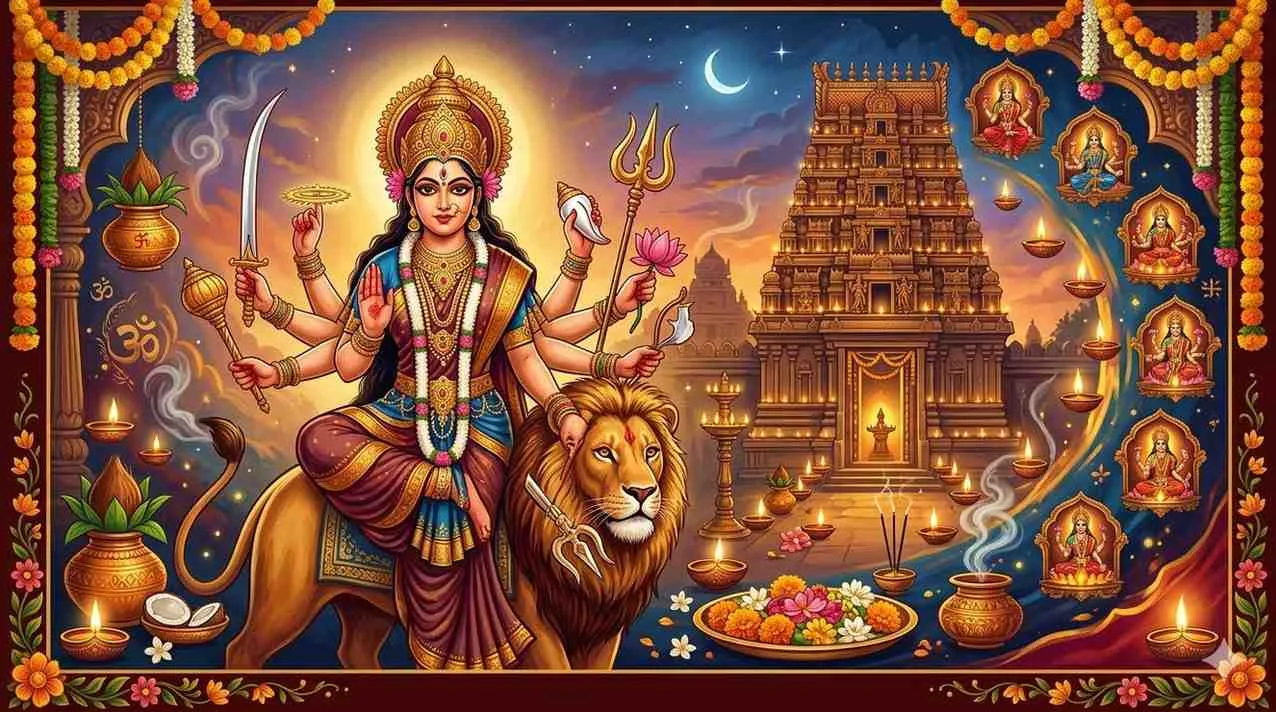
Dates · 9 Goddesses · Colours · Puja Rituals · Mantras · Celebration "Ya Devi Sarva-Bhuteshu Shakti-Rupena Samsthita, Namas-tasyai Namas-tasyai Namas-tasyai…
Dates · 9 Goddesses · Colours · Puja Rituals · Mantras · Celebration
"Ya Devi Sarva-Bhuteshu Shakti-Rupena Samsthita, Namas-tasyai Namas-tasyai Namas-tasyai Namo Namah."
"To that Goddess who abides in all beings as Power — I bow, I bow, I bow again and again." — Durga Saptashati, Chapter 5
[image: 🗓️] Navaratri 2026 — All Dates at a Glance
Navratri is celebrated 5 times a year as per Hindu traditions. Of these, two Navaratris are celebrated with the most grandeur across all of India:
[figure: 🌸]
[figure: 🍂]
2026 Special Note — Chaitra Navaratri: Durga Ashtami and Rama Navami fall on the same day — Thursday, March 26, 2026 — making this Navratri especially auspicious for devotees. This rare alignment multiplies the spiritual merit of the Ashtami puja and Sandhi Puja enormously.
[image: 🌸] Part One — Chaitra Navaratri 2026 (Spring Navaratri)
Complete Day-Wise Calendar
In 2026, Chaitra Navratri will begin on Thursday, March 19, 2026 at 6:52 AM, and conclude on Friday, March 27, 2026 at 10:06 AM, with Navratri Parana (fast-breaking) performed on the ninth day after the completion of the Navami tithi.
[figure: 🏔️]
[figure: 🟡]
[figure: 🧘]
[figure: 🟢]
[figure: 🔔]
[figure: 🔘]
[figure: ☀️]
[figure: 🟠]
[figure: 👶]
[figure: ⚪]
[figure: ⚔️]
[figure: 🔴]
[figure: 🌑]
[figure: 🔵]
[figure: 🌟]
[figure: 🩷]
[figure: 🌺]
[figure: 🟣]
[image: 🍂] Part Two — Sharad Navaratri 2026 (Maha Navaratri)
Shardiya Navratri is the most popular and significant Navratri of all Navratris. That's why Shardiya Navratri is also known as Maha Navratri. It falls in lunar month Ashwin during Sharad Ritu.
Navratri 2026 starts on Sunday, October 11th and ends 9 days later on Monday, October 19th, celebrating for Hindus a nine-day festival dedicated to the deity Durga.The final day, Vijaya Dashami (Dussehra), falls on October 20, 2026, symbolizing the victory of Goddess Durga over the demon Mahishasura and representing the triumph of righteousness.
Complete Day-Wise Calendar — Sharad Navaratri 2026
[figure: 🏔️]
[figure: 🔴]
[figure: 🧘]
[figure: 🔵]
[figure: 🔔]
[figure: 🟡]
[figure: ☀️]
[figure: 🟢]
[figure: 👶]
[figure: 🔘]
[figure: ⚔️]
[figure: 🟠]
[figure: 🌑]
[figure: ⚪]
[figure: 🌟]
[figure: 🩷]
[figure: 🌺]
[figure: 🟣]
[image: 🔱] The Profound Significance of Navaratri
According to Hindu religious belief, Goddess Durga is believed to be the savior of the universe and eradicator of all hindrances. 'Navratri' or 'Nava Durga Parva' is believed to be the most auspicious days of 'Sadhana' of 'Shakti' (the sublime and absolute energy) that propels God to create, restore and destroy.
The word Navaratri flows from Sanskrit — Nava (nine) + Ratri (nights). But why nights? Because in the Hindu tradition, night is the domain of the Divine Mother. The sun illuminates the outer world; the moon illuminates the inner world. Navaratri is a nine-night journey into the interior — into the vast, luminous depths of one's own consciousness, where the Mother Goddess eternally dwells.
[image: ⚡] The Cosmic Battle — Why Nine Days?
According to the Hindu scriptures, Mahishasura, the demon king, started a war against the Gods. Brahma, Vishnu, Shiva, and other Gods combined their powers to create Shakti, known as 'Devi Durga.' Goddess Durga defeated Mahishasura after nine days of battle. The tenth day, Vijaya Dashami, is marked as the date of defeating Mahishasura, which signifies the victory of good against evil.
The nine-day battle between Goddess Durga and the buffalo-demon Mahishasura is not merely mythology. It is a map of every soul's journey — the nine-day war against the buffalo-demon within: the nine vices of ego, pride, attachment, anger, greed, lust, envy, delusion, and fear. Each day of Navaratri, we worship a different form of the Goddess to help us slay a different inner demon. On the tenth day — Vijayadashami — we emerge victorious.
[image: 🌿] The Three Spiritual Phases of Navaratri
Navaratri is also understood in three sacred triptychs:
The journey from Durga to Lakshmi to Saraswati is the journey from raw power to refined grace to transcendent wisdom. This is the spiritual arc of Navaratri — and it mirrors the arc of every human life at its best.
[image: 🌺] The Nine Divine Forms — Navadurga
The nine incarnations of Maa Durga are: Maa Shailputri, Maa Brahmacharini, Maa Chandraghanta, Maa Kushmanda, Maa Skandamata, Maa Katyayani, Maa Kaalratri, Maa Mahagauri, and Maa Siddhidatri. Each form is a universe unto itself.
[image: 🏔️] Day 1 — Maa Shailputri | शैलपुत्री
Colour: Red (Sharad) / Yellow (Chaitra) · Mantra: Om Devi Shailputryai Namah
The name means Daughter of the Mountain (Shaila = mountain, Putri = daughter). Goddess Shailputri is the embodiment of Nature in her most primal, indomitable form — seated on a bull, holding a trident and lotus, radiating the calm confidence of the Himalayas. She represents the first step of spiritual life: rooting. Before the seeker can fly, they must first be grounded. She rules the Muladhara Chakra (root energy centre).
What She Teaches: Stability, foundation, connection to earth, acceptance of one's origin. Offering: White flowers, white sweets (kheer), cow's milk. Bhog: Ghee — offering ghee to Shailputri on Day 1 is believed to free the devotee from all ailments.
[image: 🧘] Day 2 — Maa Brahmacharini | ब्रह्मचारिणी
Colour: Green / Royal Blue · Mantra: Om Devi Brahmacharinyai Namah
Brahmacharini — she who walks the path of brahmacharya (devoted austerity). This is Sati/Parvati in her ascetic form, performing thousands of years of tapas (penance) to win Lord Shiva as her husband. Barefoot, clothed in simple white, holding a japa mala and kamandalu, she is the very image of determined, joyful spiritual discipline. She governs the Svadhishthana Chakra.
What She Teaches: Patience, tapas, willpower, the fruit that only sustained devotion can bring. Offering: Sugar, panchamrita, flowers. Bhog: Sugar — offering sugar to Brahmacharini is believed to grant long life and freedom from disease.
[image: 🔔] Day 3 — Maa Chandraghanta | चन्द्रघण्टा
Colour: Grey · Mantra: Om Devi Chandraghantayai Namah
She bears a crescent moon (Chandra) in the shape of a bell (Ghanta) on her forehead — the union of the soothing moon and the awakening bell. Ten-armed, riding a tiger, her ten hands hold weapons and a lotus. Her very sight inspires courage in devotees and terror in demons. The sound of the bell in her name symbolises the cosmic sound of Aum that dispels all negativity. She rules the Manipura Chakra (solar plexus).
What She Teaches: Courage, grace under pressure, fearlessness blended with beauty. Offering: Milk sweets, jasmine flowers. Bhog: Milk — devotees who offer milk to Chandraghanta are believed to be freed from all troubles and receive the Goddess's brave, graceful energy.
[image: ☀️] Day 4 — Maa Kushmanda | कूष्माण्डा
Colour: Orange · Mantra: Om Devi Kushmandayai Namah
Devi Kushmanda is honoured for creating the universe with her smile. With eight hands, she rides a lion holding a bow, kamandalu, arrow, trident, lotus, and a jar of nectar.</cite> Her name means the Cosmic Egg (Ku = little, Ushma = warmth/energy, Anda = egg) — she who created the universe from her divine smile during the age of cosmic darkness. She is the source of solar energy, residing within the sun itself. She governs the Anahata Chakra (heart centre).
What She Teaches: Creativity, divine joy, the power of a genuine smile to illuminate the world. Offering: Malpua (sweet pancakes), orange flowers. Bhog: Malpua — offered to Kushmanda for intelligence, health, and freedom from sorrow.
[image: 👶] Day 5 — Maa Skandamata | स्कन्दमाता
Colour: White · Mantra: Om Devi Skandamatayai Namah
On Panchami tithi, Devi Skandamata is worshipped for her loving nature. She rules over the planet Mercury or 'Budha'. The son of Lord Shiva and Goddess Parvati, Kartikeya, is called Skand, which denotes her name 'Skandamata'. She is the mother of the war-god Kartikeya (Skanda), seated on a lotus, holding her son on her lap with absolute maternal tenderness. She is the divine mother energy — fierce enough to destroy demons, yet infinitely tender in her love.
What She Teaches: Divine motherhood, selfless love, the power that flows from nurturing. Offering: Bananas, white flowers, lotus. Bhog: Banana — offering bananas ensures the fulfilment of all desires.
[image: ⚔️] Day 6 — Maa Katyayani | कात्यायनी
Colour: Red · Mantra: Om Devi Katyayanyai Namah
The Hindu scriptures state that Lord Brahma, Vishnu, and Shiva created this form of Durga by combining their energies. The sixth day of Navratri is dedicated to Devi Katyayani, also known as Mahishasurmardini. She is the wrathful, warrior form of Durga — born of the combined energies of the Trinity specifically to destroy Mahishasura. Her golden complexion blazes like the sun; she holds a sword, shield, lotus, and vessel. Unmarried women famously worship Maa Katyayani with the Katyayani Vrata to receive a good husband.
What She Teaches: Righteous anger, divine justice, the courage to confront and destroy evil. Offering: Honey, red flowers, red cloth. Bhog: Honey — offering honey to Katyayani is believed to make life sweeter and remove all adversities.
[image: 🌑] Day 7 — Maa Kalaratri | कालरात्रि
Colour: Royal Blue · Mantra: Om Devi Kalaratryai Namah
The most fearsome form. Dark as a moonless night, dishevelled hair like storm clouds, three eyes blazing like stars, she rides a donkey and breathes fire. Her name means Black Night — the destroyer of darkness itself. Yet her gesture is Abhaya and Varada (fearlessness and boons). What appears terrifying is profoundly liberating: Kalaratri destroys all fears, and the darkness She represents is not evil — it is the vast, formless potential that precedes all creation. She governs the Sahasrara Chakra (crown).
What She Teaches: That true fearlessness comes from facing and walking through darkness, not running from it. Offering: Jaggery, red flowers, sesame oil lamps. Bhog: Jaggery (Gur) — offered for protection from all evil, fearlessness, and liberation from sorrow.
[image: 🌟] Day 8 — Maa Mahagauri | महागौरी
Colour: Pink · Mantra: Om Devi Mahagauryai Namah
After years of fierce austerity, Parvati's skin became dark. Lord Shiva purified her with the waters of the Ganges — and she became Mahagauri: radiant as jasmine, white as snow, luminous as the full moon. She represents purification through devotion — the soul that has burned through its darkness in the fire of tapas and emerged as pure, blazing light. She holds a trident and damaru and rides a white bull.
What She Teaches: That no darkness is permanent. Through sincere spiritual practice, every soul can be purified and made radiant. Offering: Coconut, white flowers, jasmine. Bhog: Coconut — offering coconut to Mahagauri bestows intelligence, spiritual clarity, and purity. Note: The most sacred Sandhi Puja is performed during the junction between Ashtami and Navami.
[image: 🌺] Day 9 — Maa Siddhidatri | सिद्धिदात्री
Colour: Purple · Mantra: Om Devi Siddhidatryai Namah
The culminating form. Siddhi means supernatural accomplishment; Datri means the giver. Maa Siddhidatri bestows all eight siddhis (divine powers): Anima, Mahima, Garima, Laghima, Prapti, Prakamya, Ishitva, and Vashitva. Seated on a lotus, surrounded by siddhas (the perfected ones), she is the Goddess of ultimate fulfilment. Even Lord Shiva is said to have received his siddhis from Her — and it is said that the left half of Shiva's body became feminine through Her grace, making him the Ardhanarishvara (half-male, half-female deity).
What She Teaches: That the highest siddhi is complete surrender to the Divine Mother — after which all other powers follow spontaneously. Offering: Sesame seeds, purple/blue flowers, all nine grains. Bhog: Til (sesame) and all nine grains — offered for liberation, divine grace, and the fulfilment of all righteous desires.
[image: 🎨] Navaratri 2026 — Colours Day-Wise
Navratri colours are symbolic of the different forms of Maa Durga worshipped during the nine days. These colours represent the divine qualities of the Goddess and play an important role in spiritual practices.
Women, especially in Maharashtra and Gujarat, adorn themselves with nine different colours which are allocated to each day of Navratri. The colour of the day is decided on the weekday. Each weekday is ruled by one of the planets or Navgrahas and accordingly colours are assigned to each day.
Chaitra Navaratri 2026 — Day-Wise Colours
Since Chaitra Navratri 2026 starts on a Thursday, the traditional colour cycle for that year follows accordingly: Day 1 – Yellow, Day 2 – Green, Day 3 – Grey, Day 4 – Orange, Day 5 – White, Day 6 – Red, Day 7 – Royal Blue, Day 8 – Pink, Day 9 – Purple.
[figure: 🟡]
[figure: 🟢]
[figure: 🔘]
[figure: 🟠]
[figure: ⚪]
[figure: 🔴]
[figure: 🔵]
[figure: 🩷]
[figure: 🟣]
[image: 🏺] Ghatasthapana — The Sacred Ritual That Begins Everything
Ghatasthapana (also spelled Ghat Sthapana or Kalash Sthapana) is the most crucial ritual performed on the first day of Navratri. It involves installing a sacred Kalash (pot) filled with water, topped with coconut and mango leaves, symbolizing the invocation of Goddess Durga.
Why Ghatasthapana Matters
The Kalash is not merely a pot. It is a living, consecrated universe:
- The water inside = cosmic ocean, source of all life
- The mango leaves = the five elements
- The coconut = Goddess Herself (three eyes of Devi)
- The red thread = the bond of devotion between devotee and Goddess
- The soil and barley seeds = the earth's generative power
When the Ghatasthapana is performed correctly during the auspicious muhurat, Goddess Durga is formally invited into your home for the entire nine days. She is not a guest — She is the mistress of the house.
Ghatasthapana 2026 Muhurats
Ghatasthapana Step-by-Step
- Prepare the base: Fill a clay or copper pot with clean soil. Sow barley (jau) seeds in this soil — symbolising growth and abundance.
- Fill the Kalash: Fill a separate copper or silver pot with clean water. Add five types of leaves (mango, betel, palash, etc.), coins, a betel nut, and a red thread wrapped seven times around the pot.
- Place the coconut: Top the Kalash with a coconut wrapped in red cloth. This coconut represents the Goddess Herself.
- Invoke the Goddess: Place the Kalash on the soil-filled pot. Sprinkle Ganga jal. Chant the Kalash mantra and formally invite Goddess Durga with flowers, incense, and sandalwood.
- Light the Akhand Jyoti: Light a continuous flame (ghee lamp) beside the Kalash. This Akhand Jyoti must remain burning for all nine days — never extinguished until the Ghat Visarjan on Navami.
[image: 🪔] Complete Navaratri Puja Vidhi — Day by Day
Daily Puja Sequence (For All Nine Days)
Morning Ritual (Brahma Muhurta or Sunrise)
- Mangala Snan — Rise before sunrise, bathe with water infused with sesame oil or tulsi
- Sankalpa — Sit before the puja altar; declare your intention for the nine days
- Invocation — Light incense and ghee lamp; ring the bell three times to invoke divine presence
- Pushpa Archana — Offer fresh flowers and tulsi to the Kalash and to the day's Goddess
- Panchopachara Puja — Five offerings: Gandha (sandalwood), Pushpa (flowers), Dhupa (incense), Deepa (lamp), Naivedya (food)
- Day-Specific Mantra — Chant the specific mantra of that day's Goddess 108 times
- Durga Saptashati Path — Read at least one chapter daily (full 13 chapters over nine days is ideal)
Evening Ritual (Pradosh Kaal / After Sunset)
- Aarti — Perform Durga Aarti with ghee lamp; chant "Jai Ambe Gauri" or "Ambe Tu Hai Jagdambe Kali"
- Bhajan/Kirtan — Sing devotional songs to the Goddess; invite neighbours and family
- Dandiya/Garba (where traditional) — Sacred dance in honour of the Goddess
- Prasad distribution — Distribute day-specific bhog as prasad
[image: 🔹] Maha Ashtami — The Most Sacred Night
Maha Ashtami (Day 8) is the spiritual peak of Navaratri. Specific rituals on this day include:
Sandhi Puja — The 48-minute window at the junction of Ashtami and Navami is the most auspicious moment of all nine days. <cite index="4-1">This is a sacred time to worship Goddess Durga (often in the form of Chamunda) to commemorate the killing of demons Chanda and Munda.</cite> Offer 108 lotus flowers, perform a grand havan (sacred fire), and chant the Chamunda mantra with complete focus.
Kumari Puja / Kanya Puja — <cite index="2-1">On the eighth and ninth day, invite nine girls at your house. These nine girls represent nine forms of Goddess Durga. Wash their feet, offer them a clean and comfortable seat. Worship them, apply tilak on their foreheads, and serve them delicious food.</cite> The nine Kumaris (girls from 2 to 10 years old) represent the nine Navdurga forms. Serve them a full meal, gift new clothes, and offer dakshina. This ritual is among the most meritorious acts of Navaratri — for in the eyes of those pure young girls, you are seeing and serving the Goddess Herself.
[image: 🔹] Maha Navami — Ayudha Puja & Completion
Since ancient times, Ayudha Puja is performed on the occasion of Mahanavami of Maha Navratri. According to religious beliefs, on this day Goddess Durga defeated the demon Mahishasura after a fierce nine-day war. In South India, this festival is also celebrated as Saraswati Puja.
Ayudha Puja — On Navami, place your tools of profession before the Goddess: books, musical instruments, computers, vehicles, weapons (symbolically), and professional implements. Worship them as extensions of the Divine Mother's creative power. This act acknowledges that all work done in the right spirit is sacred worship.
[image: 🔹] Vijayadashami — The Day of Victory
Vijaya Dashami (Dussehra) symbolizes the victory of Goddess Durga over the demon Mahishasura and represents the triumph of righteousness.
On Vijayadashami: Carry out Ghat Visarjan. Say your prayers, offer flowers and rice to the deities and remove the Ghata from the altar. Immerse the Kalash water in a river, lake, or garden. Burn or symbolically let go of the Ravan effigy (symbolising the ego's destruction). Begin new ventures, studies, or projects — for Vijayadashami is the most auspicious day in the Hindu year to begin anything new.
[image: 📿] The Durga Saptashati — The Supreme Scripture of Navaratri
Chapters 81 to 93 in the Markandeya Purana talk about the slaying of demon Mahishasura by Durga, and it is referred to as Devimahatmya and is recited during the Navaratri and Durga Puja. It symbolizes the victory of good over evil. Devi-Mahatmya extols the greatness of Durga in 700 hymns grouped into 537 sections and is therefore also known as Durgasaptashati. It details the exploits of the goddess in her three major forms: Kali, Lakshmi and Saraswati, representing the three-fold energy: strength, wealth and wisdom.
A ritualistic reading of Durga Saptashati is part of the Navratri celebrations in the honor of the Goddess Durga. It is the base and root of the Shakta tradition.
How to Read the Durga Saptashati
The 13 chapters are divided into three Charitas (stories):
Ideal recitation schedule over nine days:
It is believed that whatever sankalpa the Saptashati is read with, will be fulfilled. Since Shakti is the basis for all iccha (desire), jnana (knowledge) and kriya (action), one cannot stay out of the realm of Shakti.
[image: 🕉️] Powerful Navaratri Mantras to Chant in 2026
[image: 🔸] The Supreme Durga Mantra
ॐ दुं दुर्गायै नमः
Om Dum Durgayai Namah
Meaning: I bow to Goddess Durga — the invincible, the remover of all difficulties. When: Chant 108 times daily throughout Navaratri. Most potent at sunrise and sunset.
[image: 🔸] Navadurga Universal Mantra
ॐ ऐं ह्रीं क्लीं चामुण्डायै विच्चे
Om Aim Hreem Kleem Chamundayai Vichche
Meaning: O Chamunda (the fierce combined form of Chanda and Munda's destroyer) — I invoke your triple power of wisdom (Aim = Saraswati), abundance (Hreem = Lakshmi), and divine love (Kleem = Kali). When: The most universally recited Durga mantra during Navaratri; highly potent during Sandhi Puja.
[image: 🔸] Durga Saptashati Beej Mantra
ह्रीं श्रीं क्लीं परमेश्वरि स्वाहा
Hreem Shreem Kleem Parameshwari Svaaha
Meaning: O Supreme Goddess — bearer of maya (Hreem), abundance (Shreem), and divine love (Kleem) — I offer this prayer into the sacred fire of your grace. When: During havan (fire ritual) on Ashtami and Navami.
[image: 🔸] Mahakali Mantra (Days 1–3)
ॐ क्रीं काल्यै नमः
Om Kreem Kalyai Namah
Meaning: I bow to Kali, the Divine Mother of time and transformation. When: Days 1–3 (Durga phase); excellent for removing deep-seated negative karmas and fears.
[image: 🔸] Mahalakshmi Mantra (Days 4–6)
ॐ श्रीं महालक्ष्म्यै नमः
Om Shreem Mahalakshmyai Namah
Meaning: I bow to Mahalakshmi, the Goddess of divine abundance and beauty. When: Days 4–6 (Lakshmi phase); ideal for prosperity, harmony, and relationship blessings.
[image: 🔸] Maha Saraswati Mantra (Days 7–9)
ॐ ऐं सरस्वत्यै नमः
Om Aim Saraswatyai Namah
Meaning: I bow to Saraswati, the Goddess of wisdom, speech, and the arts. When: Days 7–9 (Saraswati phase); ideal for students, teachers, artists, and all seekers of knowledge.
[image: 🔸] Devi Stuti — The Mantra Chanted Three Times a Day
या देवी सर्वभूतेषु शक्तिरूपेण संस्थिता।
नमस्तस्यै नमस्तस्यै नमस्तस्यै नमो नमः॥

Ya Devi Sarva-Bhuteshu Shakti-Rupena Samsthita
Namas-tasyai Namas-tasyai Namas-tasyai Namo Namah
Meaning: To that Goddess who abides in all beings in the form of Power — I bow, I bow, I bow again. When: The most universally chanted Navaratri shloka; recite morning, noon, and night during all nine days.
[image: 🔸] Argala Stotra (The Bolt Mantra — For Protection)
जयन्ती मङ्गलाकाली भद्रकाली कपालिनी।
दुर्गा क्षमा शिवा धात्री स्वाहा स्वधा नमोऽस्तुते॥

Jayanti Mangala Kali Bhadrakali Kapalini
Durga Kshama Shiva Dhatri Svaaha Svadhaa Namo'stute
Meaning: O Jayanti, Mangala, Kali, Bhadrakali, Kapalini, Durga, Kshama, Shiva, Dhatri — to you who are manifest as Svaaha and Svadha — I bow. When: Recited before and after the Durga Saptashati as part of the complete ritual framework.
[image: 🌿] Navaratri Fasting — Vrat Rules & Guidelines
Allowed foods during Navratri include fruits, milk, sabudana, samak rice, kuttu flour, singhara flour, potatoes, rock salt, nuts, and dairy products. Grains, onion, garlic, and non-vegetarian food are typically avoided.
Types of Navaratri Vrat
Navratri-Approved Foods (Vrat Thali)
The beauty of Navaratri fasting food is its richness:
- Grains: Sabudana (sago), Singhara (water chestnut flour), Kuttu (buckwheat flour), Samak rice, Rajgira (amaranth)
- Vegetables: Potatoes, sweet potatoes, arbi (colocasia), lauki (bottlegourd), tomatoes, cucumber
- Dairy: Milk, curd, ghee, paneer
- Sweeteners: Rock sugar (mishri), jaggery, honey
- Salt: Only sendha namak (rock salt) — regular iodised salt is avoided
- Fruits: All fresh fruits; dry fruits; coconut
Foods to Strictly Avoid
- All regular grains (wheat, rice, corn, lentils, pulses)
- Onion, garlic, ginger in many traditions
- Non-vegetarian food and eggs
- Regular salt and commercial spices
- Alcohol and tobacco
[image: 🎉] How to Celebrate Navaratri 2026 — Body, Mind & Soul
[image: 🏛️] Visit Shakti Peethas & Devi Temples
<cite index="6-1">Jammu witnesses the puja of Vaishno Devi while Durga Puja is celebrated in West Bengal.</cite> Navaratri is the ideal time to undertake a pilgrimage or simply visit your nearest Devi temple. The divine presence in Shakti temples during Navaratri is palpably intensified.
Sacred Devi Temples for Navaratri 2026:
- Vaishno Devi, Katra, J&K
- Kamakhya Temple, Guwahati, Assam
- Meenakshi Amman Temple, Madurai, Tamil Nadu
- Kanaka Durga Temple, Vijayawada, Andhra Pradesh
- Chamundeshwari Temple, Mysuru, Karnataka
- Jwaladevi Temple, Himachal Pradesh
- Lalitha Devi Temple, Nanded, Maharashtra
- Kolkata Durga Puja pandals, West Bengal
[image: 💃] Garba & Dandiya Raas — Sacred Dance as Devotion
Garba and Dandiya are traditional dances performed during Navratri, especially in Gujarat. These dances bring the community together, celebrating the power and vibrancy of Maa Durga.
Garba is not mere entertainment. The circular movement of Garba represents the cosmic cycle of time — birth, life, death, and rebirth — with the Goddess at the centre. Every circle danced is a meditation on the Divine Mother who is the still point around which all creation revolves. To dance Garba with devotion is to offer your body as an instrument of Shakti.
[image: 📿] Reading the Durga Chalisa Daily
Shri Durga Chalisa is a prayer consisting of 40 verses dedicated to Goddess Durga. Reciting it with devotion pleases the Mother Goddess and bestows her blessings. By the grace of Goddess Durga, devotees gain strength, courage, and bravery.
Recite the Durga Chalisa every morning and evening during Navaratri. Its 40 verses take approximately 10 minutes to recite, yet contain the essence of Devi's grace, story, and attributes. Each recitation is a complete act of surrender.
[image: 🕯️] Light Nine Lamps for Nine Goddesses
On each of the nine nights, light a specific lamp in honour of that day's Goddess:
[image: 🌺] Kanya Puja — Seeing the Goddess in Every Girl
These nine girls represent nine forms of Goddess Durga. Hence, wash their feet, offer them a clean and comfortable seat. Worship them, apply tilak on their forehead, and serve them delicious food.
The nine Kumaris should ideally be of ages 2 through 10, each representing one form of Navdurga:
Serve them halwa, puri, and chana. Gift new clothes and dakshina. As you bow your head to these young girls, know that you are performing one of the most direct acts of Goddess-worship possible — for in Hinduism, divinity is not above the world. It is the world.
[image: 🎊] Regional Celebrations of Navaratri 2026
[image: ❓] Durga Navaratri 2026 — Frequently Asked Questions
Q: When is Navaratri in 2026? There are two major Navaratris in 2026: Chaitra Navaratri — March 19 to 27, 2026 (ending on Rama Navami); and Sharad Navaratri (Maha Navaratri) — October 11 to 19, 2026, followed by Vijayadashami (Dussehra) on October 20.
Q: What is the Ghatasthapana muhurat for Chaitra Navaratri 2026? The Ghatasthapana Muhurat for Chaitra Navaratri 2026 is 6:52 AM to 7:43 AM on Thursday, March 19, 2026. If you miss this window, the Abhijit Muhurat from 11:49 AM to 12:37 PM is equally powerful as a backup.
Q: What is the significance of the nine colours of Navaratri? The colours represent the divine qualities of the Goddess and play an important role in spiritual practices. Each colour aligns with the specific energy and virtue of the Goddess worshipped that day. Wearing the day's colour is believed to attract the Goddess's specific blessing for that day.
Q: What is the most important day of Navaratri? All nine days are sacred, but Maha Ashtami (Day 8) is considered the spiritual pinnacle — it is when Sandhi Puja, Kumari Puja, and havan reach their peak intensity. Vijayadashami (Day 10) is the culmination — the day of divine victory.
Q: Can I observe Navaratri fast during pregnancy or illness? Consult your doctor and a trusted pandit. A partial fast (sattvic one meal per day) or a sankalpa vrat (vow of devotion without strict fasting) is always an honourable option. The Goddess values sincerity and good health above rigid austerity.
Q: Why is Durga Saptashati read during Navaratri? A ritualistic reading of Durga Saptashati is part of the Navratri celebrations in honor of the Goddess Durga. It is the base and root of the Shakta tradition. It is believed that whatever sankalpa the Saptashati is read with, will be fulfilled.
Q: What is Sandhi Puja and why is it important? Sandhi Puja is performed at the sacred 48-minute window at the junction of Ashtami and Navami. This is a sacred time to worship Goddess Durga in the form of Chamunda to commemorate the killing of demons Chanda and Munda.It is considered the single most potent moment of all nine days — the brief window when cosmic forces align to make any prayer extraordinarily powerful.
Q: What is Ghat Visarjan? On the last day after Durga Puja, carry out Ghat Visarjan. Say your prayers, offer flowers and rice to the deities and remove the Ghata (Kalash) from the altar. The Kalash water is poured at the base of a tree or in a river — returning the divine presence that was invoked nine days ago back to the larger cosmos, with gratitude.
[image: 🙏] A Devotional Closing — Nine Nights, One Eternal Truth
Nine nights. Nine goddesses. Nine battles within. Nine victories waiting.
Navaratri is the festival that says: You are not merely a seeker — you are Shakti herself, temporarily forgotten. The Goddess you are worshipping is not distant. She is the power in your heartbeat, the intelligence behind your breath, the love that rises in you when you see a child smile or a flower bloom. She was never absent. You simply forgot to look.
Every diya lit during Navaratri is a remembrance. Every mantra chanted is a recognition. Every act of Kanya Puja — bowing to a little girl with the same reverence you'd offer the cosmos itself — is the most radical, most beautiful, most true act of religion possible.
This Navaratri 2026, may you not just perform the rituals — may you become them. May the nine forms of the Goddess awaken within you: the mountain's stability, the ascetic's determination, the warrior's courage, the cosmic smile, the mother's love, the righteous fury, the dark night's fearlessness, the purified radiance, and finally — the fulfilment that needs nothing more.
"Sarva Mangala Mangalye, Shive Sarvartha Sadhike, Sharanye Tryambake Gauri, Narayani Namostute."
"O auspicious one, O Shiva, O giver of all, O refuge, O three-eyed one, O Gauri — O Narayani, I bow to you." — Durga Saptashati
[image: 🔱] Jai Mata Di! Jai Durge! Jai Jagdambe! [image: 🔱]
Published with devotion by HinduTone.com — Your Sacred Companion for Hindu Festivals, Devotional Music, Puja Guides, Mantras & Dharmic Living. Rooted in Tradition. Illuminated by Devotion.
You might also like
Dussehra 2026 (Vijayadashami) in New York, USA f
Navratri 2026: Complete Guide to the Nine Days of Worship, Dates, Colors, Goddesses & Rituals
How Hindus Should Celebrate Dussehra and Diwali 2026