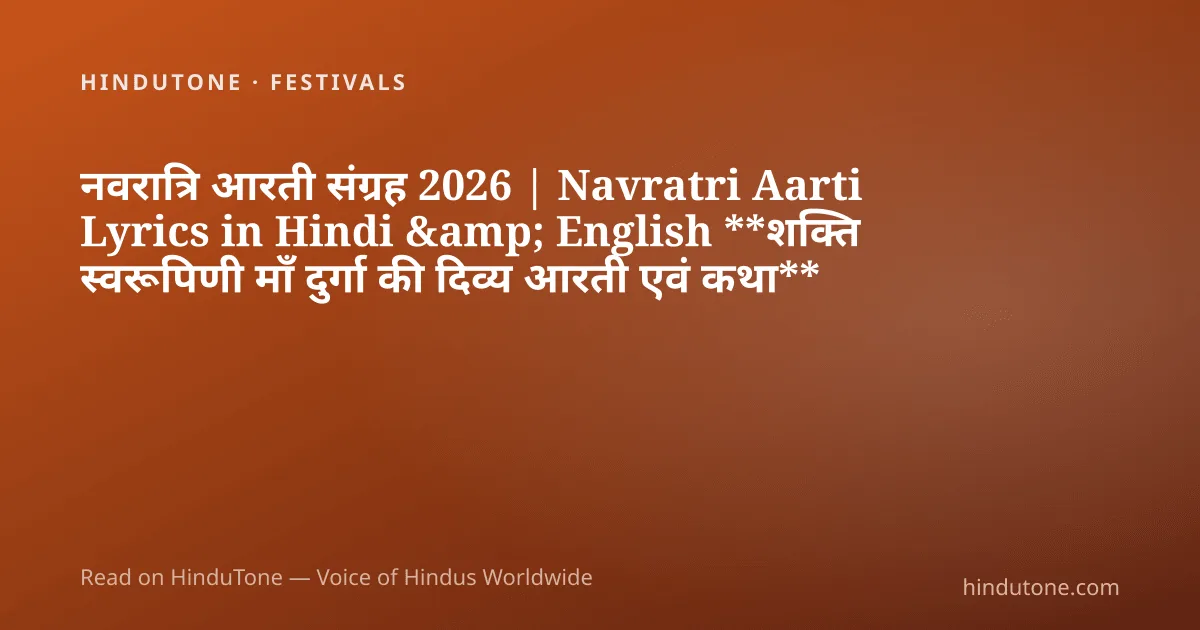
Navratri & Dussehra 2026 — Complete 9-Day Devi Worship Guide
Introduction to Navratri and Dussehra: The Celebration of Shakti and Victory of Good Over Evil Navratri, meaning "nine nights," is one of the most revered…
Introduction to Navratri and Dussehra: The Celebration of Shakti and Victory of Good Over Evil Navratri, meaning "nine nights," is one of the most revered…
Introduction to Navratri and Dussehra: The Celebration of Shakti and Victory of Good Over Evil
Navratri, meaning "nine nights," is one of the most revered Hindu festivals dedicated to the worship of Devi—the Divine Feminine energy, or Shakti. It honors Goddess Durga and her nine manifestations known as the Navadurga. The festival culminates on the tenth day as Vijayadashami or Dussehra, symbolizing the triumph of dharma (righteousness) over adharma (evil), light over darkness, and knowledge over ignorance.
In 2026, two main Navratri periods occur:
- Chaitra Navratri (Vasant Navratri): March 19 to March 27, 2026 (Thursday to Friday). This marks the Hindu New Year in many regions and aligns with spring renewal.
- Sharad Navratri (the most widely celebrated Maha Navratri): October 11 to October 20, 2026 (Sunday to Tuesday). Dussehra falls on Tuesday, October 20, 2026.
Sharad Navratri is the grander celebration across India and the diaspora, often featuring elaborate Durga Puja, Garba, and Dandiya. Chaitra Navratri is more introspective, coinciding with Ram Navami on the final day. Both emphasize Devi worship through fasting (vrat), puja, mantras, and devotional practices.
The core philosophy draws from the Devi Mahatmya (part of the Markandeya Purana), which narrates Goddess Durga's epic battle against the buffalo demon Mahishasura. This story underscores that the feminine divine power can accomplish what gods and men cannot, restoring cosmic balance.
For Hindus in the USA, UK, Canada, and Australia, Navratri serves as a vital cultural anchor. In bustling cities like New York, London, Toronto, or Sydney, community temples and associations organize large-scale events blending tradition with modern adaptations—Garba nights in community halls, virtual pujas, and family-friendly programs. These celebrations help preserve heritage amid diaspora life, fostering community bonds, teaching children about Shakti, and providing spiritual recharge. Many temples adapt timings for local time zones, offer live streams, and incorporate vegan or easy-to-source fasting options.
This comprehensive guide (designed for www.hindutone.com) provides the complete mythological story, day-by-day worship details, practical rituals adaptable for home or community settings, and specific tips for Western countries. It aims to exceed 6000 words in depth, empowering devotees to immerse fully in Devi's grace.
The Complete Story Behind Navratri and Dussehra: The Devi Mahatmya and Mahishasura's Defeat
The foundational narrative comes from the Devi Mahatmya, also called Durga Saptashati or Chandi Path—a 700-verse hymn recited during Navratri. It portrays the Devi as the supreme power underlying the universe, manifesting when the gods face existential threats.
Long ago, in the cosmic order, a demon named Mahishasura performed severe austerities to please Brahma. Granted a boon that no man or god could slay him, he grew arrogant and waged war on the heavens. He defeated Indra and the devas, driving them from Swarga. The gods, powerless individually, united their energies. From their combined tejas (radiance), a magnificent goddess emerged—Durga, the invincible one, with ten arms bearing divine weapons: trishul from Shiva, chakra from Vishnu, bow from Vayu, and more. She rode a lion (or tiger), embodying fearlessness.
Mahishasura, initially dismissive, sent his armies. Durga's roar shook the three worlds. Battle raged for nine days and nights. The demon's forces included shape-shifting warriors. Durga slew thousands with her sword, arrows, and spear. On the ninth day, Mahishasura himself attacked in buffalo form, using illusions and brute strength. He charged, but Durga trapped him in her noose. As he transformed into a lion, then a man with a sword, then an elephant, she severed his forms one by one. Finally, as he emerged from the buffalo's neck in human form, Durga pierced his heart with her trident, beheading him. The heavens rejoiced; the devas sang her praises.
This victory on the tenth day (Vijayadashami) symbolizes the annihilation of ego, ignorance, and tyranny. The nine nights represent the progressive destruction of inner demons—lust, anger, greed, etc.—through devotion.
Parallel stories enrich the festival:
- In North India, Dussehra emphasizes Lord Rama's victory over Ravana (from the Ramayana). Rama worshipped Durga for nine days before defeating the ten-headed demon on the tenth, teaching that divine grace aids righteous action.
- In Bengal and Eastern traditions, Durga Puja focuses on her homecoming as a married daughter visiting her parents, with emotional visarjan (immersion) on the tenth day.
- South Indian and Western celebrations blend both, with Kanya Puja (worship of young girls as Devi forms) and weapon/vehicle puja (Ayudha Puja).
The Devi appears in multiple forms across scriptures. As Parvati (Shiva's consort), she is gentle; as Kali or Chandika, fierce. The Navadurga represent her evolving aspects from creation to ultimate Siddhi (perfection).
Deeper symbolism: The battle is internal. Mahishasura represents the "buffalo-like" tamasic (inertial) ego. Durga's weapons are virtues—discernment (chakra), courage (sword). Reciting the Devi Mahatmya daily during Navratri invokes her protective energy.
For diaspora Hindus, this story resonates profoundly. In the USA or UK, where professional pressures and cultural dilution challenge identity, Devi worship reminds one of inner strength. Parents share the tale during Garba to instill values in children born abroad. Temples in Canada and Australia screen animated versions or enact plays, making ancient lore accessible.
The story extends to other demons slain by Durga: Shumbha-Nishumbha, Raktabeeja (whose blood drops created clones, slain by Kali's tongue), and more—illustrating that no evil persists against pure Shakti.
Philosophically, Advaita and Shakta traditions see Devi as Brahman itself. Navratri's three phases often divide into Durga (first three days: power), Lakshmi (next three: prosperity), and Saraswati (last three: wisdom).
Significance of the Nine Forms of Navadurga
Each day honors one form, progressing from foundational strength to enlightened fulfillment:
- Shailputri (Daughter of the Mountain): Embodiment of nature's purity and foundational power. Holds trident and lotus; rides a bull.
- Brahmacharini (Austere One): Symbolizes tapas (penance), knowledge, and self-control. Holds rosary and kamandalu; grants moksha.
- Chandraghanta (Bell of the Moon): Fierce protector with a half-moon on her forehead. Wards off evil; promotes courage.
- Kushmanda (Creator of the Universe): Radiant like the sun; creates cosmic eggs. Grants health and vitality.
- Skandamata (Mother of Skanda/Kartikeya): Nurturing motherly aspect; holds infant Skanda. Represents parental devotion.
- Katyayani (Warrior Form): Born to sage Katyayana; fierce slayer of demons. Grants fearlessness.
- Kalaratri (Dark Night): Most terrifying form, destroyer of ignorance and fear. Grants protection from calamities.
- Mahagauri (Radiant White): Pure and peaceful; washes away sins. Symbolizes forgiveness and beauty.
- Siddhidatri (Bestower of Siddhis): Grants supernatural powers and spiritual accomplishments. Seated on a lotus; worshipped for fulfillment.
Worshipping these sequentially purifies the devotee layer by layer.
Complete 9-Day Devi Worship Guide: Rituals, Puja Vidhi, Mantras, Colors, and Practices
General Preparations (Applicable to Both Chaitra and Sharad Navratri):
- Clean the home/temple space thoroughly.
- Set up a puja altar with Durga idol or picture, Navadurga images, kalasha (pot with water, coconut, mango leaves), flowers, incense, lamps, and offerings (fruits, sweets, coconut).
- Ghatasthapana (Kalasha installation): On Day 1 morning during auspicious muhurat. Fill a pot with water, place barley seeds or grains for sprouting (symbolizing growth), and invoke Devi.
- Fasting: Many observe partial or full fasts (fruits, milk, or one meal). In diaspora, adapt with local produce—avocados, nuts, yogurt. Avoid onion/garlic.
- Daily routine: Morning bath, puja, Devi Mahatmya or Durga Saptashati recitation (or listen to audio), aarti, bhajans.
- Evening: Garba/Dandiya (circular dance with sticks or clapping) for energy and joy.
- Colors: Wear or decorate with the day's recommended color for resonance.
For USA/UK/Canada/Australia: Source items from Indian stores (e.g., Patel Brothers in US, Tesco Asian sections in UK). Many temples provide kits. Use apps for muhurat in local time. Community events often include children's crafts, vegan prasadam, and professional Dandiya with live music.
Day 1: Worship of Maa Shailputri (Pratipada)
- Date (Sharad 2026): October 11, 2026.
- Color: Yellow (or as per regional lists; some use specific for each).
- Significance: Establishes foundation. She represents Parvati's first form, born to Himalaya.
- Puja Vidhi: Install kalasha. Offer yellow flowers, bananas, ghee lamp. Chant: Om Devi Shailputryai Namah (108 times). Recite first chapter of Devi Mahatmya.
- Beej Mantra: Om Aim Hreem Kleem Shailputryai Namah.
- Aarti: Jai Ambe Gauri...
- Offerings: Sweets like halwa, coconut.
- Diaspora Tip: In Australia or Canada, plant wheat/barley in a pot indoors for sprouting—symbol of new beginnings in a new land. Join temple Ghatasthapana live streams.
Day 2: Maa Brahmacharini
- Color: Green or white.
- Significance: Penance and discipline. She performed tapas to win Shiva.
- Puja: Offer green leaves, fruits. Chant rosary. Mantra: Om Devi Brahmacharinyai Namah.
- Focus: Self-control—ideal for professionals in UK/USA facing stress; meditate on inner resolve.
- Story Element: Her austerity moved the universe, teaching perseverance.
Day 3: Maa Chandraghanta
- Color: Grey or royal blue.
- Significance: Protector with bell-like courage. Her roar terrifies demons.
- Puja: Sound bells/conch. Offer milk sweets. Mantra for bravery.
- Diaspora: Evening Garba sessions in Toronto or Sydney halls build community courage against cultural challenges.
Day 4: Maa Kushmanda
- Color: Orange.
- Significance: Cosmic creator; her smile produces universes. Grants vitality.
- Puja: Sunflower or orange marigolds. Recite for health. She holds rosary, kamandalu, etc.
- Practical: Offer pumpkin (kushmanda) dishes if fasting allows.
Day 5: Maa Skandamata
- Color: White.
- Significance: Motherly love; holds Kartikeya.
- Puja: Worship with maternal devotion. Kanya Puja begins influence here—feed young girls.
- In West: Temples in New Jersey or London organize child-focused events, teaching respect for feminine energy.
Day 6: Maa Katyayani
- Color: Red.
- Significance: Warrior born from sages' yajna fire; slays Mahishasura's allies.
- Puja: Red flowers, sindoor. Fierce aarti for protection.
- Mantra: Om Devi Katyayanyai Namah.
Day 7: Maa Kalaratri
- Color: Royal blue or black.
- Significance: Destroys darkness and fear; most ferocious yet benevolent.
- Puja: Minimalist—focus on removing obstacles. Chant for safety.
- Relevance: In uncertain times (e.g., job markets in Australia), she grants fearlessness.
Day 8: Maa Mahagauri
- Color: Pink or white.
- Significance: Purity after penance; washes sins. Shiva bathed her in Ganga, making her radiant.
- Puja: Milk bath (abhishek) to idol. Offer white garments.
- Kanya Puja: Worship 8-9 girls as Devi forms with new clothes, fruits, dakshina.
Day 9: Maa Siddhidatri
- Color: Purple.
- Significance: Grants all siddhis (powers), including spiritual liberation. Worshipped with all gods.
- Puja: Conclude with full Durga Saptashati path. Offer puri, chana.
- Ram Navami (in Chaitra): Special Rama prayers.
Daily Mantras and Practices:
- Common Durga Mantra: Om Dum Durgayei Namah.
- Full Navadurga Stuti: Recite the 9 names daily.
- Aarti: Standard Durga Aarti or Lakshmi Saraswati hymns in later phases.
- Reading: Devi Mahatmya chapters progressively (or full on Ashtami/Navami).
- Bhajans: "Jai Mata Di," regional Devi songs. In diaspora, mix with English explanations for kids.
Dussehra / Vijayadashami (October 20, 2026):
- Puja: Ayudha Puja—worship tools, vehicles, books (symbolizing knowledge weapons). Burn Ravana effigy (in some communities) or perform Shami tree puja.
- Significance: Rama's victory; Durga's return or visarjan. Start new ventures, buy property symbolically.
- Celebrations: Processions, fairs (mela), feasts. In India, massive Ramlila; abroad, cultural programs.
- For Diaspora: In USA (e.g., New York, Houston), large Dussehra events with effigy burning or plays. UK temples in Leicester or Birmingham host fairs. Canada (Toronto) and Australia (Melbourne/Sydney) organize family picnics with Rama stories. Check local temples like BAPS, ISKCON, or regional associations for 2026 schedules—many announce months ahead.
Special Rituals Across Nine Days:
- Homa/Havan: Fire offerings with ghee, herbs for purification.
- Kanya Puja: On days 7-9, worship girls (2-10 years) as Navadurga forms—feed, gift, seek blessings.
- Fasting Rules: Satvik diet. Break on Dussehra with festive meals.
- Charity: Donate to women’s causes, education—embodying Devi's compassion.
Adapting for Hindus in USA, UK, Canada, Australia
The Hindu diaspora numbers millions, with vibrant communities maintaining traditions. In the USA, temples like those in Edison (NJ), Chicago, or California host mega Garba with thousands dancing under lights. Navratri 2026 events often span weekends for working professionals. Vegan adaptations are common; many use Zoom for family pujas across states.
In the UK, Leicester and London see street processions and Durga Puja pandals. Community centers adapt for weather—indoor Garba.
Canada (Toronto, Vancouver) features multicultural fusion: Dandiya with Canadian maple motifs or winter clothing layers. Temples emphasize youth involvement to counter assimilation.
Australia (Sydney, Melbourne) celebrates with beach or park Garba when weather permits, or hall events. Focus on sustainability—eco-friendly idols for visarjan (symbolic indoor).
Challenges: Time zone differences for muhurat (use apps like Drik Panchang with local settings). Sourcing: Online Indian grocery or temple shops. Work-life: Evening/weekend focus. Children: Storytelling sessions, coloring Navadurga, dance classes preserve culture.
Benefits: Mental health boost through devotion and dance; networking in professional circles; passing heritage to next generation born in the West.
Many organizations (e.g., Hindu American Foundation, UK Hindu Council) provide resources. Virtual pujas gained popularity post-pandemic, allowing global participation.
Additional Stories and Legends
- Rama and Durga: Before battling Ravana, Rama performed Durga Puja on Sharad Navratri advice from sages, gaining victory on Dussehra.
- Regional Variations: Gujarat—Garba; Bengal—artistic pandals and immersion; South—Doll exhibitions (Golu); North—Ramlila.
- Other Demons: Durga also slew Dhumralochana, Chanda-Munda, etc., in extended tales.
- Philosophical Depth: Navratri aligns with seasonal cycles—spring renewal (Chaitra) or post-monsoon harvest gratitude (Sharad).
Health, Spiritual, and Practical Tips
- Fasting: Consult doctors; hydrate. Spiritual fast from negativity.
- Meditation: Visualize Devi during chanting for inner transformation.
- Environment: Use natural colors, avoid plastic.
- For 2026: Monitor local temple websites closer to dates for exact muhurats and events.
Conclusion: Embracing Devi's Blessings
Navratri and Dussehra invite us to invoke the infinite power within. Through the nine days of disciplined worship, we slay our inner Mahishasuras and emerge victorious on the tenth. For Hindus worldwide, especially in the USA, UK, Canada, and Australia, these festivals are bridges—connecting roots to adopted homes, past wisdom to future generations.
May Maa Durga bless you with strength, prosperity, and wisdom. Jai Mata Di! Om Shanti
Frequently Asked Questions
When is Sharad Navratri and Dussehra in 2026?
Sharad Navratri runs from October 11 to October 20, 2026. Dussehra (Vijayadashami) falls on Tuesday, October 20, 2026.
When is Chaitra Navratri in 2026?
Chaitra Navratri, also called Vasant Navratri, runs from March 19 to March 27, 2026. It marks the Hindu New Year in many regions and coincides with Ram Navami on the final day.
Which nine forms of Durga are worshipped during Navratri?
The Navadurga are Shailputri, Brahmacharini, Chandraghanta, Kushmanda, Skandamata, Katyayani, Kalaratri, Mahagauri and Siddhidatri. One form is honoured each day, starting with Shailputri on Pratipada.
What is Ghatasthapana and how is it done?
Ghatasthapana is the installation of the kalasha on Day 1 morning during an auspicious muhurat. A pot is filled with water, barley seeds or grains are placed in it for sprouting, and Devi is invoked.
How can Hindus in the USA, UK, Canada or Australia observe Navratri?
Source puja items from Indian stores and use apps to find muhurat in local time. Many temples provide kits, live streams and Garba or Dandiya nights, and fasting can use local produce such as nuts, yogurt and avocados.
What foods are allowed during Navratri fasting?
Many devotees observe a partial or full fast of fruits and milk, or take one meal a day. Onion and garlic are avoided.
You might also like
Gita Jayanti 2026 Prasad Recipes — Tulsi-Honoring Sweets, Krishna's Favourites & December 20 Bhog Plate
Navratri 2026 — Sharad Navaratri Dates (October 11-19), 9 Goddess Forms, Garba Events & Complete NRI Celebration Guide
Maha Shivratri 2026 Vrat Recipes — Sabudana Khichdi, Singhada Halwa, Phalahara Foods Complete Fasting Guide