Hanuman Jayanti 2026 in Gulf Countries: Country-wise Guide
Hanuman Jayanti 2026 / Hanuman Janmotsava / Chaitra Purnima Vrat falls on Thursday, April 2, 2026.
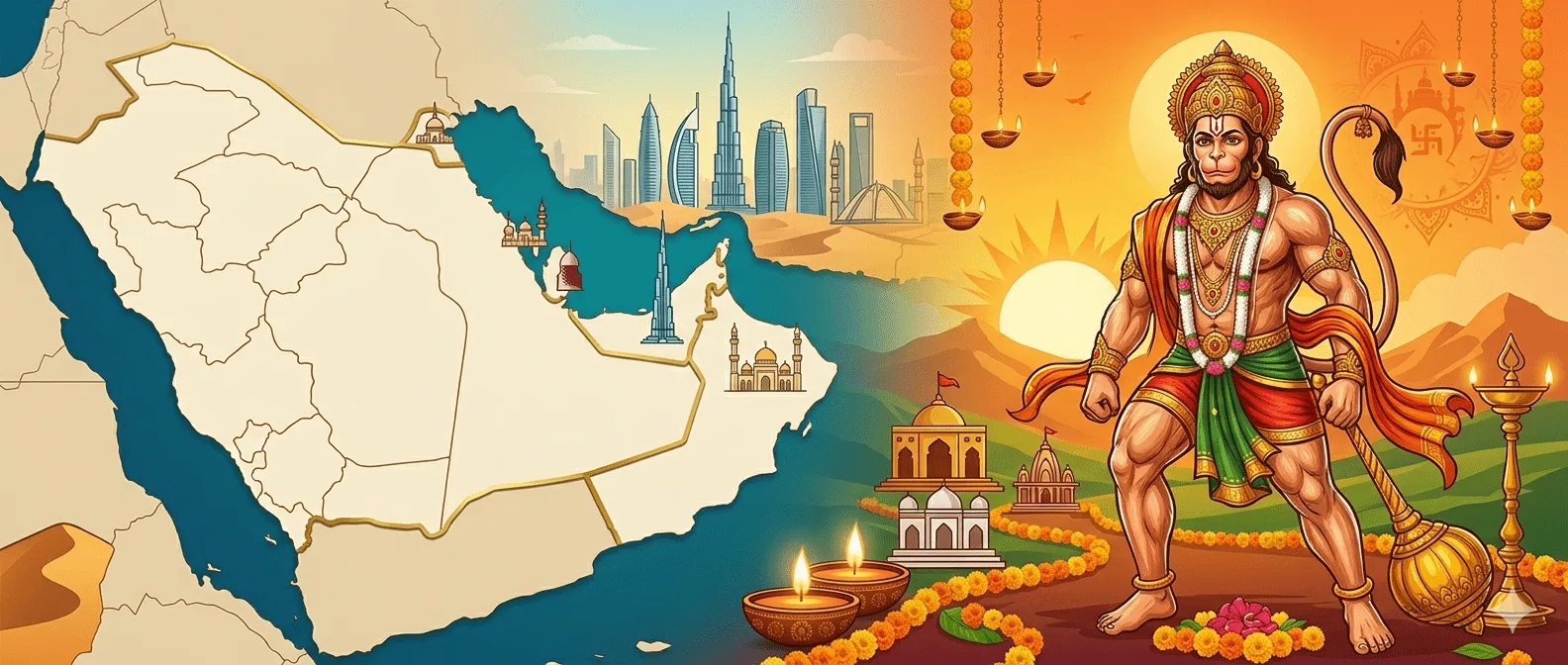
Hanuman Jayanti 2026 / Hanuman Janmotsava / Chaitra Purnima Vrat falls on Thursday, April 2, 2026.
Hanuman Jayanti 2026 / Hanuman Janmotsava / Chaitra Purnima Vrat falls on Thursday, April 2, 2026. This powerful festival celebrates the birth of Lord Hanuman (Bajrangbali, Pawan Putra, Anjaneya, Maruti) — the embodiment of immense strength, courage, selfless bhakti, loyalty, humility, and obstacle removal.
In North Indian traditions, it coincides with Chaitra Shukla Purnima. The large Indian expatriate community in the Gulf (GCC countries) observes the day with Chaitra Purnima Vrat, Hanuman Chalisa recitation, special pujas, bhajans, and community gatherings, adapting to local regulations.
Common Date & Timings for Gulf Countries (2026)
- Main Celebration Date: Thursday, April 2, 2026
- Purnima Tithi: Begins ~7:06 AM IST on April 1 | Ends ~7:41 AM IST on April 2
- Best Time for Puja & Vrat: Early morning to afternoon on April 2
- Moonrise: Evening of April 1 / early April 2
Adjust to local time (Gulf Standard Time – GST, UTC+4 for most countries).
Note: Public Hindu temples are limited in the Gulf. Celebrations are often held in designated temples (mainly in UAE, Bahrain, Oman) or through private/community halls. Always check temple pages for exact schedules and follow local laws.
Complete Story of Lord Hanuman’s Birth (Hanuman Janmotsava Katha)
According to the Valmiki Ramayana, Puranas, and Ananda Ramayana:
An apsara named Anjana (Anjani) was born on Earth as a vanara due to a curse. She married the brave vanara king Kesari. Longing for a child, Anjana performed rigorous tapasya to Lord Shiva. Pleased, Shiva blessed her with a son endowed with divine power.
Meanwhile, the gods prepared for Lord Vishnu’s incarnation as Sri Rama. They contributed portions of sacred payasam from King Dasharatha’s yajna. The Wind God Vayu carried a portion and placed it in Anjana’s hands.
Anjana consumed it reverently. Through divine grace, she conceived a glorious son.
On Chaitra Purnima, Anjana gave birth to a radiant baby boy. Hungry, the infant leaped toward the rising red sun.
Indra struck him with his Vajra. The baby’s jaw (hanu) was injured, hence named Hanuman.
Vayu withdrew air from the world. The gods granted boons: immense strength, speed, size-changing ability, invulnerability, wisdom, and protection.
Named Anjaneya, Maruti, Bajrangbali, and Pawan Putra, Hanuman’s legendary devotion to Lord Rama inspires millions in the Gulf.
General Puja Vidhi for Hanuman Jayanti 2026
- Vrat / Fasting: Full or partial fast (fruits, milk, sweets).
- Abhishekam: Bathe Hanuman murti/photo with panchamrita, Gangajal, rose water.
- Hanuman Chalisa: Chant 11, 21, 108+ times individually or in groups.
- Offerings: Sindoor, laddoos, betel leaves, coconut, red/saffron flowers.
- Mantras: “Om Hanumate Namah”, “Jai Bajrangbali”, Bajrang Baan.
- Sundara Kanda & Bhajans: Group recitation common in community events.
- Charity: Donate food discreetly.
Wear saffron or red clothes where possible. Many events are live-streamed.
Country-wise Guide for Gulf Countries
United Arab Emirates (UAE) The most vibrant celebrations in the Gulf occur here due to a large Indian population and dedicated temples.
- Hindu Temple Dubai (Jebel Ali): Hosts grand Hanuman Jayanti events with special abhishekam, mass Chalisa chanting, bhajans, and community programs.
- BAPS Hindu Mandir Abu Dhabi: Features beautiful murtis including Hanuman. Large-scale devotional programs with thousands participating. Celebrations are open and well-organized. Check temple websites for timings.
Bahrain Bahrain has a small but active Hindu community with a few temples.
- Shrinathji Temple and Guruvayurappan Temple (Manama/Adliya) often include Hanuman worship.
- ISKCON centre in Manama organizes bhajans and Chalisa recitations. Events are community-based and relatively low-key.
Oman Oman has historic Hindu temples.
- Motishwar Mandir (Shiva Temple) and Krishna Temple in Muscat/Darsait. Hanuman prayers are included during festivals.
- Indian community gatherings in Muscat feature group Chalisa and bhajans. Celebrations are quiet but sincere.
Qatar No dedicated public Hindu temples.
- Celebrations occur in private homes, Indian community halls, or through cultural associations in Doha.
- Small group pujas, online Chalisa chanting, and virtual events are common. Devotees often join UAE live streams.
Kuwait No official public Hindu temples.
- Private home pujas and small community gatherings in Kuwait City.
- Indian associations organize discreet bhajans and Hanuman Chalisa sessions. Focus is on personal devotion and online participation.
Saudi Arabia Public practice of non-Islamic religions is restricted.
- No public temples or open celebrations.
- Devotees perform quiet private pujas at home.
- Many join virtual/global live streams from UAE or India. Prioritize personal safety and local guidelines.
Tip for Gulf Devotees: In countries with temples (UAE, Bahrain, Oman), book visits or seva in advance. In others, connect via Indian embassy cultural events, WeChat/WhatsApp groups, or ISKCON contacts. Many temples provide live streaming.
Benefits of Observing Hanuman Jayanti
- Grants physical and mental strength
- Removes obstacles, fears, and planetary doshas
- Enhances focus, discipline, and unwavering devotion
- Brings family harmony, health, success, and divine protection
Jai Shri Ram! Jai Hanuman! Bajrangbali Ki Jai!
This country-wise guide for the Gulf is prepared for the Indian and Hindu community living in the region. Plan your participation (temple visit, home puja, or online) for a spiritually uplifting Hanuman Jayanti 2026 on April 2.
For hindutone readers: Share your experiences safely in the comments, download the Hanuman Chalisa, or join live events from UAE temples. Celebrate with family while staying rooted in traditions!
Wishing all Hindu families in the Gulf countries a blessed, powerful, and obstacle-free Hanuman Jayanti! [image: 🕉️] [image: 🙏]
Frequently Asked Questions
When is Hanuman Jayanti 2026 for Hindus in the Gulf?
Hanuman Jayanti falls on Thursday, April 2, 2026. The Purnima tithi begins around 7:06 AM IST on April 1 and ends around 7:41 AM IST on April 2, so adjust to Gulf Standard Time (UTC+4).
Where can Hindus in the Gulf celebrate Hanuman Jayanti at a temple?
The UAE has the most vibrant celebrations, at Hindu Temple Dubai (Jebel Ali) and BAPS Hindu Mandir Abu Dhabi. Bahrain and Oman also have temples, with lower-key events.
How do devotees celebrate Hanuman Jayanti in Qatar and Kuwait?
With no public Hindu temples, celebrations happen in private homes, Indian community halls or cultural associations. Small group pujas, bhajans, Chalisa sessions and online events are common.
Can Hindus celebrate Hanuman Jayanti publicly in Saudi Arabia?
Public practice of non-Islamic religions is restricted, so there are no public temples or open celebrations. Devotees perform quiet private pujas at home or join online live streams, following local guidelines.
What is the puja vidhi for Hanuman Jayanti?
Keep a full or partial fast, bathe the murti with panchamrita, Gangajal and rose water, and chant the Hanuman Chalisa. Offer sindoor, laddoos, betel leaves, coconut and red or saffron flowers.
Which mantras are chanted on Hanuman Jayanti?
Common choices are 'Om Hanumate Namah', 'Jai Bajrangbali' and the Bajrang Baan. The Hanuman Chalisa is chanted 11, 21 or 108 times, individually or in groups.
You might also like

Benefits of Chanting Hanuman Chalisa 7, 11, or 108 Times – Complete Spiritual & Practical Guide for 2026

Why Tuesday Is Dedicated to Lord Hanuman: Spiritual Meaning & Benefits

The Eternal Devotion: The Complete Spiritual Story of Lord Hanuman