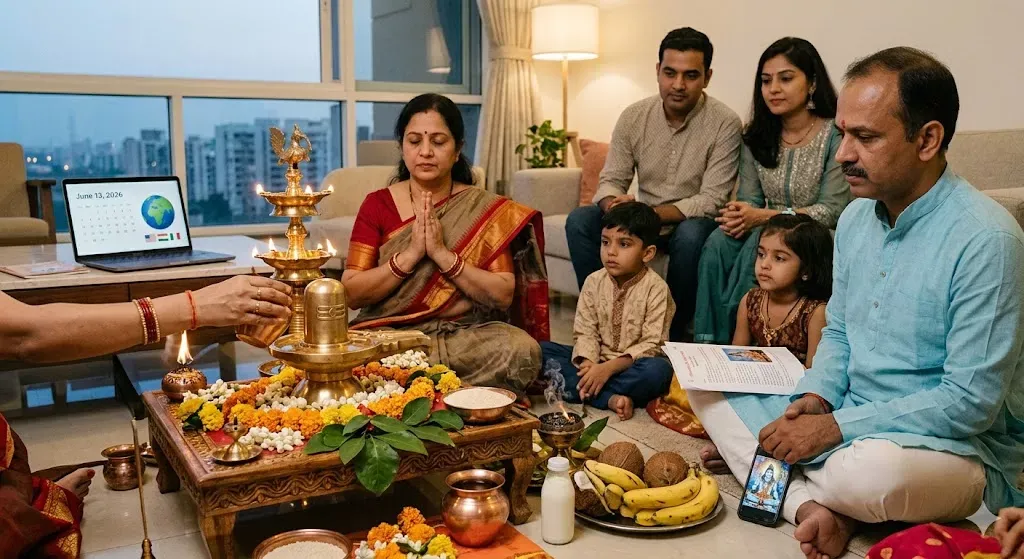
Gowri Vratam 2026: Importance, Rituals & How to Perform Swarna Gowri Vratam at Home
Swarna Gowri Vratam 2026 (Monday 14 September, Bhadrapada Shukla Tritiya) — significance, samagri list, step-by-step puja vidhi, the sixteen-knot Gauri Daara, Baagina dana, fasting rules and NRI adaptations. This year Gowri and Ganesha fall on the same morning.
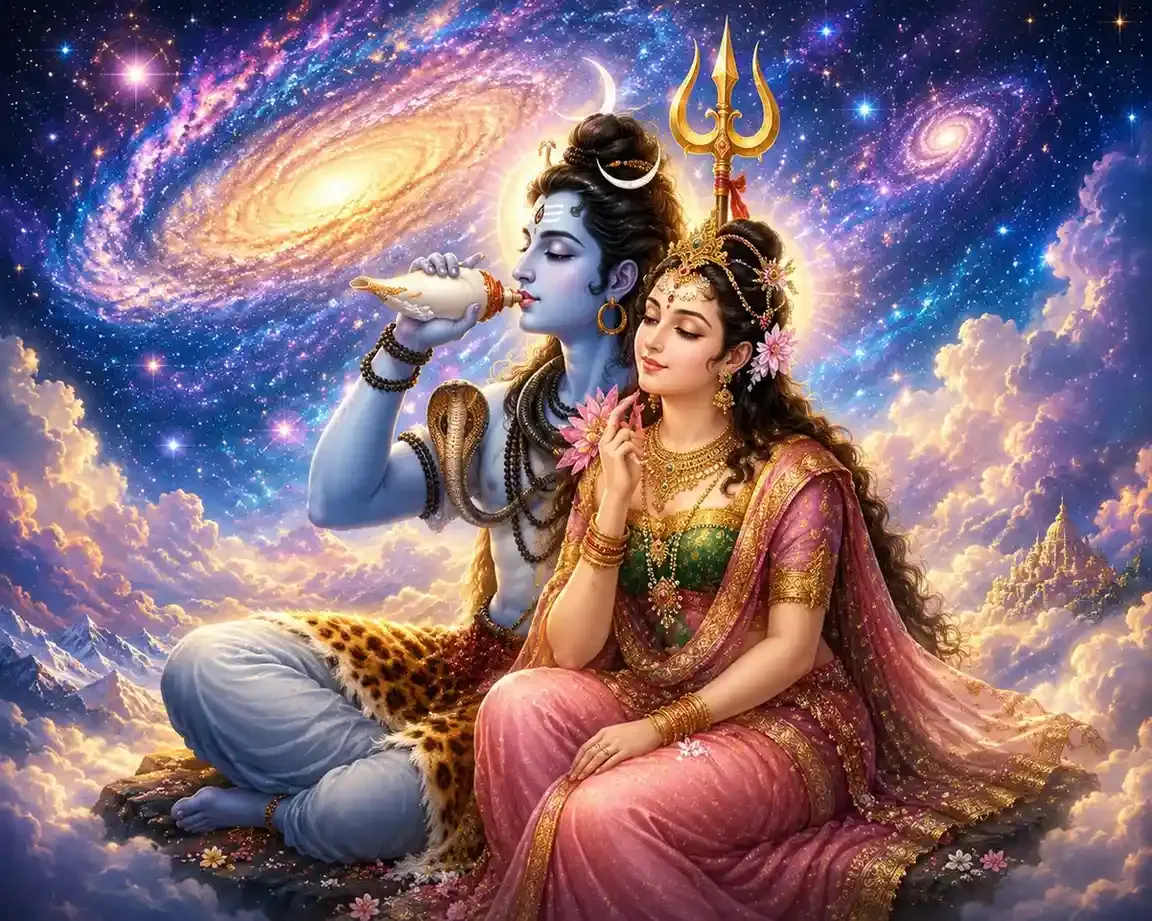
Swarna Gowri Vratam 2026 (Monday 14 September, Bhadrapada Shukla Tritiya) — significance, samagri list, step-by-step puja vidhi, the sixteen-knot Gauri Daara, Baagina dana, fasting rules and NRI adaptations. This year Gowri and Ganesha fall on the same morning.
Quick answer: Gowri Vratam (Swarna Gowri Vratam) 2026 falls on Monday, 14 September, on Bhadrapada Shukla Tritiya, with a Pratahkal puja window of about 6:11–7:06 AM as the tithi ends at 7:06 AM. Women worship Goddess Gowri (Parvati) with a hand-shaped turmeric murti, the sixteen-knot Gauri Daara and Baagina, for marital harmony and family wellbeing. In 2026 it shares the day with Vinayaka Chavithi.
Gowri Vratam 2026 falls on Monday, 14 September — and this year it carries an unusual urgency. The Bhadrapada Shukla Tritiya tithi ends at 7:06 AM that morning, which leaves a Pratahkal Gowri Puja window of roughly 6:11 AM to 7:06 AM. Fifty-five minutes.
In most years, Gowri arrives on one day and her son Ganesha on the next. In 2026 the tithis compress, and mother and son arrive on the same morning — Gowri at first light, Ganesha at midday. A household observing both must be awake before dawn. This is the complete guide: who Gowri is, why this vratam has been kept by women in Telugu, Kannada and Tamil households for centuries, exactly what you need, and precisely how to perform it.
Gowri Vratam 2026 at a glance
| Detail | Value |
|---|---|
| Date | Monday, 14 September 2026 |
| Tithi | Bhadrapada Shukla Tritiya |
| Tritiya begins | 7:08 AM, Sunday 13 September 2026 |
| Tritiya ends | 7:06 AM, Monday 14 September 2026 |
| Pratahkal puja muhurat | 6:11 AM – 7:06 AM (approx. 55 minutes) |
| Also known as | Swarna Gowri Vratam, Gowri Habba, Gowri Ganesha, Hartalika Teej |
| Observed in | AP, Telangana, Karnataka, Tamil Nadu; North India as Hartalika Teej |
| Next day | Vinayaka Chavithi — same day in 2026 |
| Month | Bhadrapada Masam 2026 (12 Sep – 10 Oct) |
A note on 13 vs 14 September: some panchangams list Gowri Habba on Sunday 13 September, because the Tritiya tithi runs through almost the whole of that day. Drik Panchang and most South Indian panchangams place it on Monday 14 September, because the Pratahkal window is still within Tritiya on the 14th. Both readings are defensible — follow your family’s panchangam or kula purohit. If no guidance exists, the 14th is the majority reading, and it also lets Gowri and Ganesha puja be completed in one morning. Timings are the India baseline; confirm your city’s Pratahkal window locally (see the NRI section).
Who is Gowri? The significance of the vratam
Gowri — Gauri, "the radiant one" — is the luminous, benevolent form of Parvati: daughter of Himavan, consort of Shiva, mother of Ganesha and Kartikeya, and in her own right the Adi Shakti from whom the universe proceeds. But the Gowri of this vratam is not primarily the cosmic goddess. She is a married daughter coming home.
That is the whole devotional heart of the observance. On Bhadrapada Shukla Tritiya, Gowri leaves Kailasa and returns to her mother’s house on earth. She is received the way any daughter is received — the house cleaned, a special seat prepared, new clothes laid out, her favourite food cooked, bangles and kumkum and a comb set before her. She stays for the day. And the next morning her son Ganesha arrives to walk her back home. Every woman who performs this puja is, for that morning, the mother welcoming her daughter — and also, quietly, the daughter being welcomed.
Why the vratam is observed: married women (sumangali) keep it for marital harmony and the long life of their husband; unmarried girls observe it praying for a worthy husband, following Parvati who won Shiva by tapasya; all devotees keep it for freedom from obstacles, health, progeny, relief from doshas in the marriage house of the horoscope, and the arrival of Lakshmi into the home. The Shiva Purana holds this to be the vrata by which Parvati herself obtained Shiva.
The two legends. The Hartalika legend (North Indian, older): Parvati, reborn as Himavan’s daughter, undertook terrible austerities for Shiva; when her father fixed her match with Vishnu instead, her closest friend carried her into the forest and hid her in a cave, where on Bhadrapada Shukla Tritiya she fashioned a Shivalinga of river sand, worshipped it through a waterless day and sleepless night, and Shiva appeared. The name records the rescue — harat (carried away) + aalika (the female friend): Hartalika Teej is named for the friend who made her devotion possible. The Gowri Habba legend (Southern): Gowri returns to her natal home to bless her devotees, and Ganesha — created from the turmeric of her own body — comes the next day to escort her back; here Shiva is absent, and it is a mother-and-son, mother-and-daughter story. Both are true.
Gowri Vratam samagri list
Assemble everything the previous evening — with a 55-minute window in 2026, nothing can be hunted for at 6:30 AM.
- For the Gowri murti: turmeric powder + a little water for the traditional Haridra Gowri shaped by hand; or a clay / silver / gold (swarna) image; a small wooden plank (peeta/mane) and fresh cloth.
- For the mandapam: banana stem and leaves, mango leaves, a new backdrop cloth, rangoli powder, flowers (jasmine, marigold, sevanthi, tulsi).
- For the puja: kalasham, raw rice, coconut, mango leaves; turmeric, kumkum, sandalwood, akshata, gandham; ghee diya, wicks, camphor, agarbatti; betel leaves and nuts, fruit, dakshina coins; panchamrita (milk, curd, ghee, honey, sugar).
- For the Gauri Daara: yellow turmeric-dyed cotton/silk thread tied with sixteen knots; sixteen flowers and sixteen durva blades for the thread puja.
- Sixteen articles of saubhagya: bangles, comb, mirror, kajal, kumkum, turmeric, sindoor, blouse piece, ribbon, mehendi, flowers, betel, fruit, coconut, sweets.
- For Baagina: winnowing trays (odd number, five or more), each with rice, toor dal, wheat, jaggery, turmeric root, kumkum, coconut, blouse piece, bangles, comb, mirror, dakshina.
- Naivedyam: obbattu/bobbatlu (holige), payasam, chitranna, kosambari, vada and pulihora; in Telugu homes undrallu and pulihora carry into the Vinayaka puja the same day.
How to perform Gowri Vratam: step-by-step puja vidhi
The night before (13 September 2026):
- Clean the house, especially the puja space; draw rangoli at the threshold.
- Build the mandapam — a small temporary shrine framed with banana stems and mango-leaf toranam.
- Prepare the Gauri Daara: smear yellow thread with turmeric and tie sixteen knots along its length.
- Fill the baagina trays and set them aside covered.
- Prepare what food can be made ahead; sleep early.
The morning of the vratam (14 September 2026, before 7:06 AM):
- Snana and sankalpa — rise before dawn, bathe applying turmeric, wear new/fresh clothes (a saree with full mangalya alankaram for married women), sit facing east and take the sankalpa (name, gotra, date, intention).
- Prepare the Gowri — mix turmeric with a few drops of water and shape a small conical Haridra Gowri by hand; place her on the rice-covered plank (or install a clay/swarna murti).
- Kalasha sthapana — fill the kalasham with water, turmeric, a coin, betel nut and akshata; five mango leaves at the mouth, a turmeric-smeared coconut on top.
- Prana pratishtha and dhyanam — light the diya, offer akshata, and invoke the goddess with the dhyana shloka.
- Shodashopachara puja — offer the sixteen services in order: asana, padya, arghya, achamana, snana (panchamrita abhisheka for a metal murti, symbolic sprinkling for a turmeric one), vastra, gandha, akshata, pushpa, dhupa, deepa, naivedya, tambula, namaskara.
- Alankaram — dress her: drape a cloth/blouse piece, place bangles, apply kumkum and turmeric, offer comb and mirror, set the sixteen articles of saubhagya before her, adorn with flowers.
- Gauri Daara puja — worship the sixteen-knot thread with sixteen flowers and akshata (one per knot, reciting Om Gauryai Namaha), then tie it on the right wrist (self-tied by a married woman or by an elder sumangali).
- Vrata katha — read or listen to the Swarna Gowri Vrata Katha; hearing the story is itself an angam of the vrata.
- Naivedyam and aarti — offer the food, then camphor aarti with Gowri/Mangala Gowri songs; circle the flame three times.
- Baagina dana — offer the first baagina to the goddess, then distribute the rest to married women (mother, mother-in-law, sisters, neighbours). This is the social heart of the vratam.
- Conclude — namaskaram, ask forgiveness for errors, take prasadam. If Vinayaka Chavithi follows the same day, the mandapam is extended and Ganesha installed beside his mother at Madhyahna.
Sarva mangala māngalye śive sarvārtha sādhike | Śaraṇye tryambake gauri nārāyaṇi namo’stu te || — "Auspiciousness of all that is auspicious, benevolent one, fulfiller of every aim, refuge, three-eyed Gauri, Narayani — salutations to you."
Fasting rules vary by region and family: nirjala (without food or water) through the day, broken next morning (the North Indian Hartalika standard); phalahara (fruit, milk, non-grain food), most common in the South; or a single meal after the puja. Adapt without guilt — traditional practice itself relaxes the fast for those who are pregnant, nursing, unwell, elderly, diabetic or travelling; a phalahara or single sattvic meal fully preserves the vrata. The shastra values sankalpa above severity, and a fast that endangers health earns no merit.
Gowri Vratam, Varalakshmi Vratam and Mangala Gowri Vratam — not the same
| Vratam | Deity | When | Observed for |
|---|---|---|---|
| Mangala Gowri Vratam | Gowri (Parvati) | Every Tuesday of Shravana Masam | Newly married women, first five years |
| Varalakshmi Vratam | Lakshmi | Friday before Shravana Purnima (21 Aug 2026) | Prosperity, family wellbeing |
| Swarna Gowri Vratam | Gowri (Parvati) | Bhadrapada Shukla Tritiya (14 Sep 2026) | Marital harmony; a good husband |
| Jyeshtha Gauri | Gauri, as invited guest | Bhadrapada Shukla, 17–19 Sep 2026 | Maharashtrian three-day observance beside Ganpati |
Gowri Vratam 2026 for NRI families
The Pratahkal window is tied to local sunrise, not Indian clock time — Drik Panchang and mypanchang publish city-specific Gowri Habba timings for the US, UK, Canada, Australia, Singapore and the Gulf; check yours rather than converting IST. Because the Tritiya tithi ends at 7:06 AM IST on 14 September (01:36 UTC), most of the Western hemisphere will observe on Sunday 13 September local date, when Tritiya runs at local sunrise; the Gulf, Singapore and Australia generally align with 14 September.
- Shape the Haridra Gowri from turmeric — available in every Indian grocery worldwide, and the most authentic form regardless.
- No banana stem? A wooden plank with a fresh cloth and a mango-leaf or betel-leaf toranam is sufficient.
- No sumangali to receive baagina? Offer one to the goddess and give the rest as annadanam — rice, dal and turmeric to a food bank in her name.
- Perform the puja at your local dawn, and call your mother in India afterwards. That call is, in a real sense, the vratam.
Of everything in this vratam, the detail worth holding onto is the smallest: you make the goddess yourself — not bought, not installed by a priest, but a pinch of turmeric, a few drops of water, and your own two hands shaping a small golden form. Parvati made a Shivalinga from river sand and won the Lord of the universe with it; Gowri made Ganesha from the turmeric of her own body. What is offered is not the substance. It is the making. Gowri Vratam 2026: Monday, 14 September. Be ready before six.
Frequently Asked Questions
When is Gowri Vratam 2026?
Monday, 14 September 2026, on Bhadrapada Shukla Tritiya. The Pratahkal Gowri Puja muhurat is approximately 6:11 AM to 7:06 AM, as the Tritiya tithi ends at 7:06 AM. Some panchangams list 13 September — follow your family tradition.
Why is Gowri Vratam on the same day as Vinayaka Chavithi in 2026?
The tithis compress this year. Tritiya ends at 7:06 AM on 14 September and Chaturthi follows immediately, so Gowri is worshipped at Pratahkal (dawn) and Ganesha at Madhyahna (11:02 AM–1:31 PM) the same day.
Can unmarried girls perform Gowri Vratam?
Yes. Unmarried girls observe it praying for a worthy husband, following Parvati’s own example. It is one of the vratas explicitly recommended for them.
Can a widow observe Gowri Vratam?
Practice varies by community. Many traditions welcome participation in the puja, japa and katha while the specifically saubhagya elements (the daara and baagina) are omitted. Devotion to the Devi is never closed to anyone; consult your family elders on local custom.
What is the Gauri Daara and which wrist does it go on?
A yellow, turmeric-dyed thread tied with sixteen knots representing sixteen forms of prosperity. It is tied on the right wrist and worn until it wears away naturally or until the next vratam.
What is Baagina?
A winnowing tray filled with rice, dal, turmeric, kumkum, coconut, bangles, comb, mirror and a blouse piece. The first is offered to Gowri; the rest are given to married women, traditionally in an odd number (five or more).
Is fasting compulsory for Gowri Vratam?
No single standard applies. Nirjala, phalahara or a single meal are all traditionally accepted, and the fast is relaxed for those who are pregnant, unwell or elderly. The sankalpa carries the vrata, not the severity.
How is Gowri Vratam different from Varalakshmi Vratam?
Varalakshmi Vratam is for Goddess Lakshmi, on the Friday before Shravana Purnima (21 August 2026). Swarna Gowri Vratam is for Goddess Parvati, on Bhadrapada Shukla Tritiya (14 September 2026).
You might also like
Mangala Gauri Vratam 2026: Complete NRI Guide for the USA, UK & Canada
Sravana Masam Wednesday (Budhavaram) Rituals 2026: Puja Vidhi, Dates, Mantras & Fasting
Sravana Masam 2026 in Houston: Puja Timings, Temples & Varalakshmi Vratam