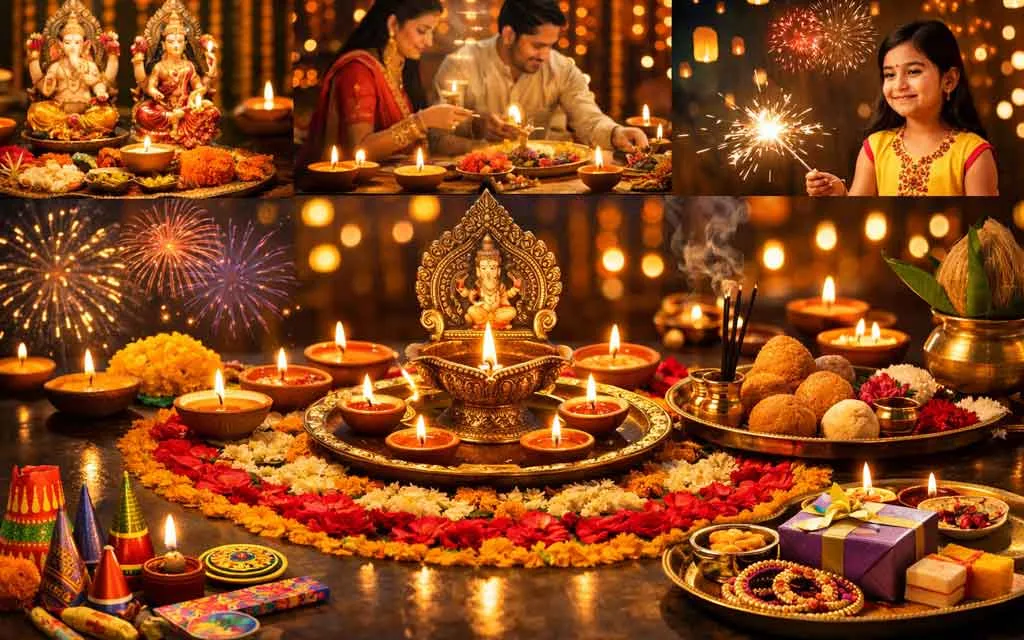
Diwali 2026 Legends Across Indian States: A Mythological Tour – Unveiling Devotional Tales of Light and Divinity
Embark on a Spiritual Journey Through India's Diwali Myths: State-by-State Devotional Stories of Triumph, Devotion, and Divine Grace November 8, 2026 – Diwali,…
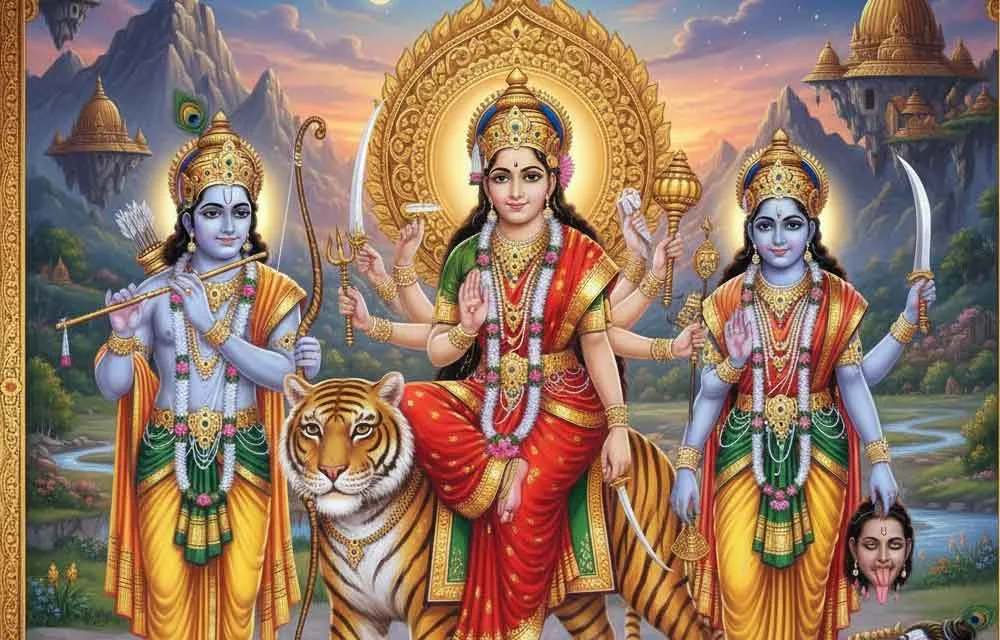
Embark on a Spiritual Journey Through India's Diwali Myths: State-by-State Devotional Stories of Triumph, Devotion, and Divine Grace November 8, 2026 – Diwali,…
Embark on a Spiritual Journey Through India's Diwali Myths: State-by-State Devotional Stories of Triumph, Devotion, and Divine Grace
November 8, 2026 – Diwali, the radiant Festival of Lights, ignites hearts and homes across India with its profound spiritual essence. Rooted in ancient Hindu scriptures and vibrant regional folklore, Diwali legends vary across states, weaving a rich tapestry of devotion, righteousness, and the eternal triumph of good over evil. As lamps flicker and fireworks light up the night sky, devotees invoke blessings from revered deities like Lord Rama, Goddess Lakshmi, Lord Krishna, and Goddess Kali. This mythological tour takes you through India’s diverse states, exploring devotional tales that inspire faith and unity. From the epic Ramayana in the north to the fierce battles of the south, these stories reflect dharma’s enduring light. Join us on this sacred journey, where every legend is a prayer, every victory a divine miracle, and Diwali’s glow unites the nation in eternal reverence.
Diwali legends offer a window into the soul of Hinduism, blending Puranic myths with local traditions. Whether it’s the return of exiled heroes or the slaying of demons, these narratives foster bhakti (devotion) and guide devotees toward spiritual enlightenment. As we traverse states like Uttar Pradesh, Tamil Nadu, West Bengal, and beyond, feel the divine presence in each retelling, invoking peace, prosperity, and protection for all.
Diwali Legend in Uttar Pradesh: Lord Rama's Triumphant Return to Ayodhya – A Saga of Dharma and Devotion
In the heart of northern India, Uttar Pradesh celebrates Diwali as Deepavali, commemorating Lord Rama’s victorious return after 14 years of exile. Drawn from the epic Ramayana, this legend embodies unwavering devotion to dharma (righteousness). Lord Rama, the seventh avatar of Lord Vishnu, was banished to the forests by his father, King Dasharatha, at Queen Kaikeyi’s behest. Accompanied by his devoted wife Sita and loyal brother Lakshmana, Rama faced trials that tested his resolve.
The climax unfolds in Lanka, where the demon king Ravana abducted Sita. With Hanuman’s unwavering bhakti and an army of vanaras (monkey warriors), Rama waged a fierce battle. Hanuman’s leap across the ocean to find Sita symbolizes selfless service, while the construction of the Ram Setu bridge reflects divine engineering guided by faith. In the final confrontation, Rama’s arrow pierced Ravana’s heart, marking the triumph of virtue over vice. As Rama, Sita, and Lakshmana returned to Ayodhya on the aerial chariot Pushpaka Vimana, citizens lit earthen lamps (diyas) to guide their path through the darkened night.
Devotees in Uttar Pradesh recreate this scene with vibrant Ramleela performances, where actors embody the gods, invoking Rama’s blessings for justice and harmony. Homes are adorned with rangolis depicting Rama’s footprints, and prayers to Lord Ganesha and Goddess Lakshmi seek the removal of obstacles and an influx of wealth. This legend teaches that true devotion, like Rama’s adherence to truth, illuminates life’s darkest paths. In temples like Ayodhya’s Ram Janmabhoomi, millions gather, chanting “Jai Shri Ram,” feeling the divine energy that unites families in eternal gratitude.
Diwali Myth in Tamil Nadu: Lord Krishna's Victory Over Narakasura – A Tale of Liberation and Maternal Devotion
Venturing south to Tamil Nadu, Diwali legends shift to the heroic exploits of Lord Krishna, the eighth avatar of Vishnu. Celebrated as Deepavali, the festival honors Krishna’s defeat of the demon Narakasura, a story steeped in themes of liberation and divine intervention. According to the Bhagavata Purana, Narakasura, son of Bhudevi (Mother Earth), was granted invincibility by Lord Brahma but turned tyrannical, imprisoning 16,000 princesses and stealing celestial treasures.
In a devotional twist, Bhudevi pleaded with Krishna to end her son’s reign of terror, embodying the ultimate maternal sacrifice for dharma. Krishna, riding his eagle mount Garuda alongside his consort Satyabhama (an incarnation of Bhudevi), stormed Pragjyotishapura. The battle was fierce; Narakasura hurled weapons infused with dark magic, but Krishna’s Sudarshana Chakra severed the demon’s head, freeing the captives and restoring balance.
Tamil Nadu’s observance includes early morning oil baths, symbolizing the cleansing of Narakasura’s sins, followed by offerings of sweets like adhirasam and murukku to invoke Krishna’s grace. Devotees visit temples like Tirupati, where Krishna’s idol is adorned with lamps, praying for protection from evil. This legend highlights bhakti’s power—Satyabhama’s arrow, guided by Krishna, shows that devotion empowers even the ordinary to achieve the extraordinary. Families light fireworks to mimic the divine battle’s sparks, fostering spiritual renewal and communal joy.
Karnataka's Diwali Folklore: The Slaying of Mahishasura by Goddess Durga – Echoes of Shakti and Valor
In Karnataka, Diwali intertwines with the worship of Shakti, particularly through the legend of Goddess Durga’s triumph over Mahishasura, often blended with Krishna’s narratives. Celebrated as Deepavali, the focus is on Durga’s fierce form.
The Devi Mahatmya narrates how Mahishasura, a buffalo demon with shape-shifting powers, terrorized the heavens, defeating the gods. In desperation, the trimurti (Brahma, Vishnu, Shiva) combined their energies to create Durga, armed with weapons from each deity. Mounted on a lion, she battled Mahishasura for nine days, each phase representing Navaratri’s nights. On the tenth day, Vijayadashami, Durga pierced his chest, symbolizing the victory of divine feminine power over ego and ignorance.
Karnataka devotees honor this with Golu doll displays depicting the battle, and rows of lamps representing Durga’s radiant energy. In Mysore, the Dasara procession echoes this legend, with elephants carrying the goddess’s idol. Prayers invoke Durga’s blessings for strength and prosperity, teaching that true devotion awakens inner shakti. Families prepare obbattu (sweet flatbreads) as offerings, sharing stories that inspire courage in daily life.
West Bengal's Diwali Devotion: Goddess Kali's Fierce Dance of Destruction and Creation
Eastern India’s West Bengal transforms Diwali into Kali Puja, a night of intense devotion to the fierce Goddess Kali, destroyer of evil. Rooted in Tantric traditions and the Devi Bhagavata Purana, the legend portrays Kali as an emanation of Durga, born to slay demons like Raktabija, whose blood spawned clones.
During Durga’s battle, Kali emerged from her forehead, her dark form embodying time and transformation. With a protruding tongue and garland of skulls, she drank Raktabija’s blood mid-fall, preventing regeneration, and danced victoriously on the battlefield. This dance turned chaotic, threatening the cosmos, until Lord Shiva lay down, calming her with his touch—a symbol of balance between destruction and preservation.
Bengali devotees perform midnight pujas with black sesame offerings and symbolic animal sacrifices, lighting fireworks to ward off darkness. Temples like Dakshineswar resonate with chants of “Jai Ma Kali,” invoking protection from fears. This legend teaches that devotion to Kali liberates the soul from illusions, fostering rebirth. Families prepare bhog like khichdi, sharing the goddess’s fierce love that nurtures through trials.
Maharashtra's Diwali Narrative: Lord Vishnu's Vamana Avatar and King Bali's Humility
In western Maharashtra, Diwali legends honor Lord Vishnu’s Vamana avatar and the humbling of King Bali, from the Bhagavata Purana. Bali, a benevolent yet ambitious asura king, conquered the three worlds through yajnas, alarming the gods.
Vishnu incarnated as Vamana, a dwarf Brahmin, approaching Bali for alms—three paces of land. Bali, devoted to dharma, agreed despite warnings. Vamana grew colossal, covering earth and heavens in two steps, placing the third on Bali’s head, banishing him to the netherworld but granting annual visits during Diwali.
Maharashtrians celebrate with faral snacks and Lakshmi Puja, lighting akash kandils (sky lanterns) to welcome Bali. This story emphasizes humility and charity, with devotees praying for Vishnu’s grace in overcoming pride. Temples in Pune host narrations, inspiring ethical living.
Gujarat's Diwali Myths: Goddess Lakshmi's Emergence from the Ocean of Milk
Gujarat’s Diwali focuses on Lakshmi Puja, tied to the Samudra Manthan legend where Lakshmi emerged from the churning ocean, choosing Vishnu as consort. This symbolizes prosperity’s birth from effort and devotion.
Gujaratis perform Chopda Pujan on new account books, invoking Lakshmi for wealth. The legend teaches that true devotion yields abundance, with families lighting diyas to attract her blessings.
Punjab's Diwali Legend: Guru Hargobind's Release and Bandi Chhor Divas
In Punjab, Diwali coincides with Bandi Chhor Divas, commemorating Guru Hargobind’s release from Mughal captivity in 1619, freeing 52 kings—a symbol of spiritual liberation.
Sikhs light the Golden Temple, emphasizing equality and devotion. This blends with Hindu legends, fostering interfaith harmony.
Rajasthan's Royal Diwali: Tales of Rajput Valor and Divine Protection
Rajasthan weaves Diwali with legends of royal devotion, like Maharana Pratap’s faith in Krishna amidst battles, echoing broader myths.
Palaces in Jaipur are lit, with pujas invoking protection.
Odisha's Ancestral Worship: Kaunriya Kathi and Badabadua Daka
Odisha’s Diwali includes invoking ancestors with burning jute stems, tied to Yama’s legend, blending with Lakshmi worship.
Kerala's Unique Twist: Lord Rama and Local Folklore
Kerala observes with Vilakku Puja, incorporating Rama’s legend with local Asura king Mahabali’s return, similar to Onam but devotional.
Conclusion: The Eternal Light of Diwali – Uniting India's Devotional Tapestry
As our mythological tour concludes, Diwali legends across Indian states reveal a unified divine thread: light conquering darkness, devotion triumphing over despair. From Rama’s dharma in Uttar Pradesh to Kali’s ferocity in Bengal, these stories inspire bhakti, guiding devotees toward spiritual awakening. In 2026, as India celebrates Diwali on Sunday, 8 November, may these tales kindle inner lamps, bringing peace, prosperity, and unity. Invoke the gods with pure hearts—Jai Shri Ram, Jai Ma Kali, Hari Om—and let Diwali’s glow illuminate your path forever.
Also read: Diwali 2026 state by state in India.
Related 2026 guides
- Diwali 2026: dates, Lakshmi Puja muhurat & 5-day guide
- Lakshmi Puja muhurat 2026 in 30 Indian cities
- Lakshmi Puja vidhi 2026: step-by-step
- Dhanteras 2026
- Diwali 2026 5-day calendar at a glance
Share the Diwali 2026 blessing
From Ayodhya's lamps welcoming Lord Rama home to Lord Krishna's victory over Narakasura in the south and Maa Kali's fierce grace in Bengal, every state tells Diwali's story in its own voice. Yet each legend, as commonly told, carries one truth: light triumphs over darkness. As you light your lamp this Diwali 2026, let it kindle the inner light of devotion and invite Maa Lakshmi's grace into your home. Share a blessing from India's many legends with your family today.
Deepa shloka: the lamp prayer
शुभं करोति कल्याणम् आरोग्यं धनसम्पदा। शत्रुबुद्धिविनाशाय दीपज्योतिर्नमोऽस्तु ते॥
Shubham karoti kalyanam arogyam dhana-sampada, shatru-buddhi-vinashaya deepa-jyotir namostu te.
Meaning: I bow to the light of the lamp, which brings what is auspicious and good, health and prosperity, and destroys ill-will. Many families recite it as they light the evening diya.
Lakshmi mantra for Diwali
ॐ श्रीं महालक्ष्म्यै नमः॥
Om Shreem Mahalakshmyai Namah.
Meaning: Salutations to Mahalakshmi. Shreem is the seed syllable traditionally associated with Lakshmi.
Diwali 2026 messages to share
🪔 From north to south, every Diwali legend speaks of light conquering darkness. May that light fill our family's home with love and peace. Happy Diwali! ✨ Share on WhatsApp
🙏 Dear elders, your stories of Rama, Krishna and Maa Kali kept our faith alive. May this Diwali bless you with health and deep contentment. 🪔🌸 Share on WhatsApp
✨ Happy Diwali, dear friend! Whichever legend your family cherishes, may its light guide your path and fill your heart with joy. 🪔 Share on WhatsApp
🪔 Wishing you and your colleagues a bright and blessed Diwali. May the triumph of good inspire honest work and steady progress for all of us. ✨ Share on WhatsApp
🌸 Maa Lakshmi, who rose from the ocean of milk, may you grace every home this Diwali with harmony, gratitude and peace. Jai Maa Lakshmi! 🪔 Share on WhatsApp
🙏 As lamps lined Ayodhya's streets to welcome Lord Rama home, may your home glow with dharma, devotion and joy. Jai Shri Ram! Happy Diwali 🪔 Share on WhatsApp
A short Diwali prayer
Maa Lakshmi and Lord Ganesha, I come before you with a humble heart. As the legends of this land remind me that light always overcomes darkness, help me walk the path of dharma. Remove the obstacles within me, grant my family good health and harmony, and fill our home with gratitude. Bless my efforts to be sincere and my words to be kind, and let the lamp I light today shine within me always.
Use the share buttons on this page to send these blessings to your family and friends.
Frequently Asked Questions
When is Diwali in 2026?
Diwali 2026 falls on Sunday, 8 November 2026, the date on which the legends in this article are celebrated across India.
Why is Diwali celebrated differently in different Indian states?
Each region links Diwali to its own legend, as commonly told: Lord Rama's return to Ayodhya in Uttar Pradesh, Lord Krishna's victory over Narakasura in Tamil Nadu, Kali Puja in West Bengal and King Bali's humility in Maharashtra. The shared theme is light conquering darkness.
What is the Diwali legend in Tamil Nadu?
Tamil Nadu celebrates Deepavali as Lord Krishna's defeat of the demon Narakasura, with Satyabhama at his side, as told in the Bhagavata Purana. Devotees take early morning oil baths and offer sweets like adhirasam and murukku.
Why is Kali Puja celebrated on Diwali in West Bengal?
In West Bengal, Diwali night is devoted to Goddess Kali, who is commonly told to have slain the demon Raktabija and danced in victory until Lord Shiva calmed her. Devotees perform midnight pujas and pray for protection from fear.
How can NRI families share these Diwali legends abroad?
Families outside India can light diyas, perform Lakshmi Puja, draw rangoli and retell the regional stories of Rama, Krishna, Kali and King Bali to children. Local temples and community groups often host Diwali gatherings and story sessions.
You might also like
Diwali 2026 Celebrations in London: Complete Guide to Events, Temples, and Grand Festivities in the UK Capital
Diwali 2026 Celebrations in Dubai: Complete Guide to Events, Temples, Fireworks & Festivities in the Desert City
Diwali 2026 Celebrations in New York: Complete Guide to Events, Temples, and Grand Festivities in the Big Apple