Nepal's Tihar Festival: The Unique Diwali Celebration with Animals
The Sacred Story Behind Tihar In the mystical valleys of Nepal, where the Himalayas touch the heavens, the festival of Tihar unfolds as a unique celebration…
The Sacred Story Behind Tihar In the mystical valleys of Nepal, where the Himalayas touch the heavens, the festival of Tihar unfolds as a unique celebration…
The Sacred Story Behind Tihar
In the mystical valleys of Nepal, where the Himalayas touch the heavens, the festival of Tihar unfolds as a unique celebration that honors not just the gods, but every living creature that shares our world. Known as the Nepali version of Diwali, Tihar is a five-day festival that weaves together ancient Hindu mythology with a profound reverence for animals, creating a celebration unlike any other.
The Divine Origins of Tihar
According to Hindu scriptures, Tihar commemorates the eternal bond between humans, animals, and the divine forces that govern life and death. The festival's origins are deeply rooted in the story of Yamraj, the God of Death, and his sacred relationship with his sister Yamuna, the goddess of the river.
The Legend of Yama and His Sister
Long ago, when the universe was young, Lord Yama was appointed as the keeper of dharma and the lord of death. His duty was solemn and lonely, for he resided in the dark realms of the afterlife, far from the joys of the mortal world. His sister Yamuna, who loved him dearly, would repeatedly invite him to visit her home, but Yama, bound by his cosmic responsibilities, could never find the time.
Years passed, and Yamuna's heart grew heavy with longing. She prayed to the gods that her brother would visit her at least once. Finally, moved by his sister's devotion, Yama decided to visit Yamuna on the second day of the bright fortnight of Kartik month.
Overjoyed, Yamuna prepared for his arrival with immense love and devotion. She cleaned her home, lit countless oil lamps to illuminate the path, created colorful rangoli patterns, and prepared a magnificent feast. When Yama arrived, she welcomed him with a tilak on his forehead, a garland of flowers around his neck, and worshipped him with all her heart.
Touched by his sister's pure love and devotion, Yama asked her to seek any boon she desired. Yamuna made a heartfelt request: "Brother, promise me that you will visit me every year on this day, and bless all brothers who receive tilak from their sisters with long life and protection from untimely death."
Yama, pleased with his sister's selfless wish, granted her request. He proclaimed that any brother who receives tilak, blessings, and worship from his sister on this day would be protected from his grasp and would live a long, prosperous life. This sacred promise became the foundation of Bhai Tika, the final and most important day of Tihar.
The Five Sacred Days of Tihar
Day One: Kaag Tihar (Crow Worship)
The festival begins with Kaag Tihar, the worship of crows. In Hindu mythology, crows are considered the messengers of Yama, the God of Death. According to ancient beliefs, crows can travel between the world of the living and the dead, carrying messages between these realms.
The Sacred Story: It is said that when Yama journeys through the mortal world, crows serve as his scouts, bringing him news of the living. By honoring crows on this day, devotees seek to appease Yama and ward off untimely death and misfortune from their homes.
On this day, Nepali families rise early and place offerings of sweets, rice, and special delicacies on their roofs and in their courtyards. They call out to the crows with devotional songs:
"Crow, oh crow, please accept our offerings, Bring us good news and blessings divine, Protect our home from grief and sorrow, May fortune and happiness forever be ours."
The belief holds that if a crow caws and accepts the offering, it brings good luck for the entire year. If the crow refuses the food, it is considered inauspicious, and the family performs additional prayers.
Day Two: Kukur Tihar (Dog Worship)
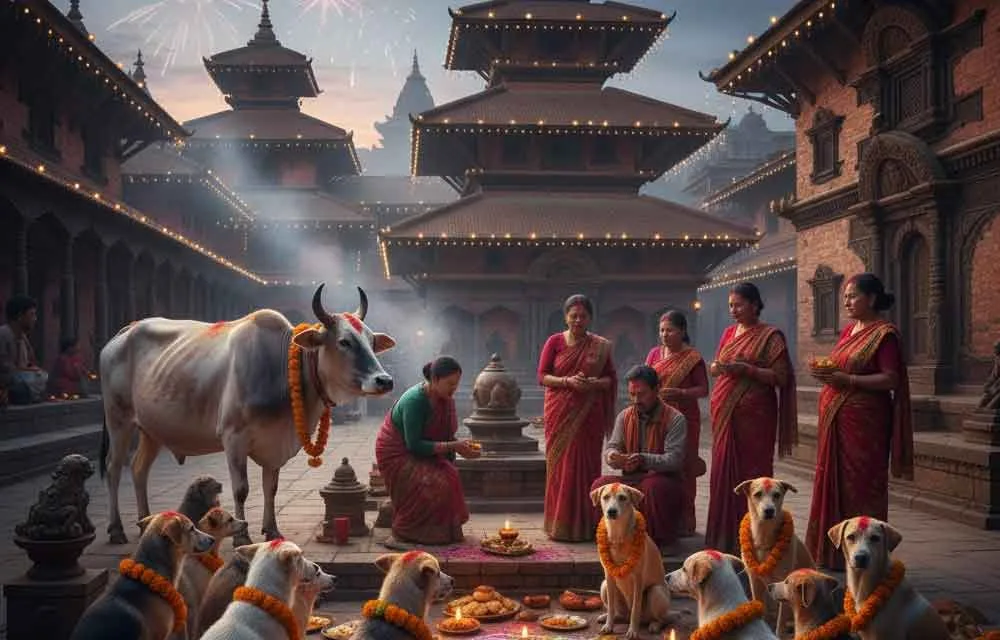
The second day celebrates Kukur Tihar, one of the most beloved aspects of this festival—the worship of dogs. This unique tradition recognizes dogs as faithful companions, guardians, and sacred beings.
The Divine Connection: In Hindu mythology, dogs hold a special place. They are the vahana (vehicle) of Bhairava, a fierce manifestation of Lord Shiva. At the gates of heaven, Yama Raja is accompanied by two four-eyed dogs named Shyama and Sabala, who guard the path to the afterlife and guide righteous souls.
The story goes that dogs possess the ability to see what humans cannot—they can perceive spirits, negative energies, and approaching danger. Their loyalty transcends lifetimes; it is believed that a dog's devotion to its master continues even after death, as they wait at the gates of heaven for their loved ones.
On Kukur Tihar, every dog—whether a cherished pet, a street dog, or a working dog—is honored as a representative of the divine. People:
- Bathe dogs and dry them with clean towels
- Place a tilak (red vermillion mark) on their foreheads
- Drape them with mala (flower garlands)
- Offer special meals including meat, milk, eggs, and quality dog food
- Sing songs praising their loyalty and protective nature
The tilak applied on dogs symbolizes their sacred status and the divine light within them. The garland represents gratitude for their unwavering companionship.
Day Three: Gai Tihar and Laxmi Puja (Cow Worship and Goddess Lakshmi)
The third day is dual-natured, beginning with Gai Tihar in the morning and culminating with Laxmi Puja in the evening.
Morning - Gai Tihar (Cow Worship):
Cows hold the most sacred position in Hindu tradition, revered as Gau Mata (Mother Cow). According to scriptures, cows embody 330 million gods and goddesses within their being.
The Mythological Significance: When the gods churned the cosmic ocean (Samudra Manthan), one of the divine treasures that emerged was Kamadhenu, the wish-fulfilling cow, who became the mother of all cows. It is believed that Lord Krishna himself manifested as a cowherd, demonstrating the sacred bond between humans and cows.
Cows are worshipped because:
- They provide sustenance through milk, which is transformed into various life-giving foods
- Their milk is used in all sacred rituals and offerings
- They represent purity, motherhood, and selfless giving
- According to the Bhagavata Purana, serving cows pleases all deities
On Gai Tihar, families:
- Clean and decorate cows with oil baths
- Apply tilak and turmeric paste
- Garland them with marigolds and other flowers
- Feed them special treats including rice pudding, vegetables, and fruits
- Walk around them in reverence (parikrama)
- Seek their blessings by touching their feet
Evening - Laxmi Puja:
As darkness falls, the focus shifts to Goddess Lakshmi, the deity of wealth, prosperity, and abundance. This aspect mirrors the Diwali celebration observed across India.
The Divine Story: According to legend, Goddess Lakshmi emerges from the cosmic ocean to bless the homes that are pure, clean, and illuminated with devotion. She wanders the earth on this night, entering only those homes that welcome her with light and cleanliness.
Homes are:
- Thoroughly cleaned and purified
- Decorated with intricate rangoli patterns made from colored rice powder
- Illuminated with countless oil lamps and candles
- Adorned with marigold flowers and lights
Families gather for elaborate puja ceremonies, chanting:
"Ya Devi Sarva Bhuteshu Lakshmi Rupena Samsthita Namastasyai Namastasyai Namastasyai Namo Namah"
(Salutations to the Goddess who resides in all beings in the form of Lakshmi)
Children and young girls go door-to-door singing traditional songs called Bhailo, and homeowners offer them gifts and treats, believing that receiving young visitors brings Lakshmi's blessings.
Day Four: Goru Tihar (Ox Worship) and Mha Puja
The fourth day varies based on cultural traditions within Nepal.
Goru Tihar: In many communities, oxen are worshipped as the tireless workers who help plow fields and transport goods. They represent the dignity of labor and the prosperity earned through honest hard work. Oxen are worshipped in the same manner as cows, with tilak, garlands, and special foods.
Mha Puja (Among the Newar Community): The Newar people of the Kathmandu Valley celebrate their New Year with Mha Puja, a unique ritual of self-worship. "Mha" means body, and this puja honors the soul within one's own body.
The Philosophy: This tradition is based on the Vedic principle that the divine resides within every being—"Aham Brahmasmi" (I am Brahman). By worshipping one's own body, one acknowledges the sacred temple of the soul and commits to its preservation and purification.
Elaborate mandalas are created on the floor, and family members sit within them while prayers are recited for health, longevity, and spiritual growth.
Day Five: Bhai Tika (Brother-Sister Love)
The festival culminates with Bhai Tika, the most emotionally significant day that celebrates the bond between brothers and sisters.
The Ritual: Sisters perform an elaborate ceremony for their brothers, which includes:
- Creating a sacred space with flower petals and oil lamps
- Preparing a special saptarangi (seven-colored) tilak made from seven colors representing the seven chakras
- Applying the tilak on the brother's forehead in a specific pattern
- Placing flower garlands around the brother's neck
- Offering sweets, fruits, and special delicacies
- Sprinkling holy water mixed with flowers
- Circling oil lamps around the brother (aarti)
- Reciting prayers for long life and prosperity
The sister chants:
"May you live as long as the stone endures, May you be as colorful as the tika, May you be as sweet as the sweets I offer, May you flourish as abundantly as the marigold flower, May you live as long as the tail of the Himal Ghodi (mythical horse)"
Brothers' Duty: In return, brothers offer gifts, money, and promises to always protect and support their sisters throughout life.
For those without biological siblings, the tradition extends to cousins, close friends, or even neighbors, emphasizing that the bond of love transcends blood relations.
The Deeper Spiritual Meaning
Tihar teaches profound spiritual lessons:
- Interconnected Existence: By honoring animals before humans, Tihar reminds us that we share this world with countless beings, each playing a vital role in the cosmic order.
- Gratitude and Reciprocity: The festival emphasizes acknowledging and appreciating the contributions of all creatures—from the messenger crow to the loyal dog to the nourishing cow.
- Light Over Darkness: Like Diwali, Tihar celebrates the victory of light over darkness, knowledge over ignorance, and good over evil.
- Family Bonds: The festival strengthens relationships, especially between siblings, emphasizing that these bonds are sacred and eternal.
- Prosperity Through Dharma: By inviting Goddess Lakshmi while honoring all beings, Tihar teaches that true prosperity comes when we live in harmony with all of creation.
Celebrating Tihar Today
Modern celebrations maintain these ancient traditions while adapting to contemporary life. Street dogs receive special attention, with animal welfare organizations hosting mass blessing ceremonies. Social media spreads awareness about the festival's unique animal worship, making it a global symbol of compassion.
The festival demonstrates Nepal's unique cultural identity—a celebration that honors the Hindu tradition while adding its own distinctive reverence for all living beings, making Tihar truly one of the most beautiful and inclusive festivals in the world.
May the lights of Tihar illuminate your path, may the blessings of all beings bring you prosperity, and may the bond of love strengthen your relationships. Happy Tihar!
Frequently Asked Questions
When is Nepal's Tihar Festival?
Nepal's Tihar Festival is observed on its traditional tithi in the Hindu lunar calendar; refer to the year's panchang for the exact date in your region.
What is the significance of Nepal's Tihar Festival?
The Sacred Story Behind Tihar In the mystical valleys of Nepal, where the Himalayas touch the heavens, the festival of Tihar unfolds as a unique celebration that honors not just the gods, but every living creature that shares our world. Known as the Nepali version of Diwali , Tihar is a five-day festival that weaves together ancient Hindu mythology with a pr
How is Nepal's Tihar Festival celebrated?
Devotees observe it with puja, fasting or special offerings, visiting temples, chanting mantras, and gathering with family. Customs vary by region and tradition.
What should devotees do on Nepal's Tihar Festival?
Take a sacred bath, perform the day's puja and charity (dana), observe any prescribed fast, and chant mantras with sincere devotion.
You might also like
Gita Jayanti 2026 Prasad Recipes — Tulsi-Honoring Sweets, Krishna's Favourites & December 20 Bhog Plate
Shani Deva Temples Worldwide & Must-Performed Rituals — Complete Devotee's Guide
Maha Shivratri 2026 Vrat Recipes — Sabudana Khichdi, Singhada Halwa, Phalahara Foods Complete Fasting Guide