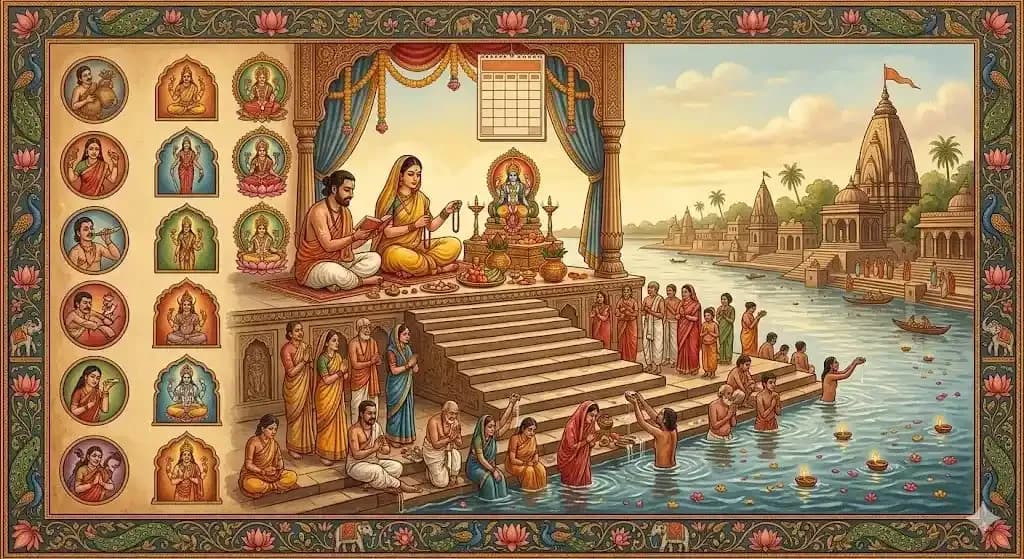
Ratha Saptami 2026 Tirumala Mini Brahmotsavam Guide
Ratha Saptami 2026 at Tirumala: The Mini Brahmotsavam – Sun God’s Divine Chariot Procession & Spiritual Significance By HinduTone Tirumala Pilgrimage…
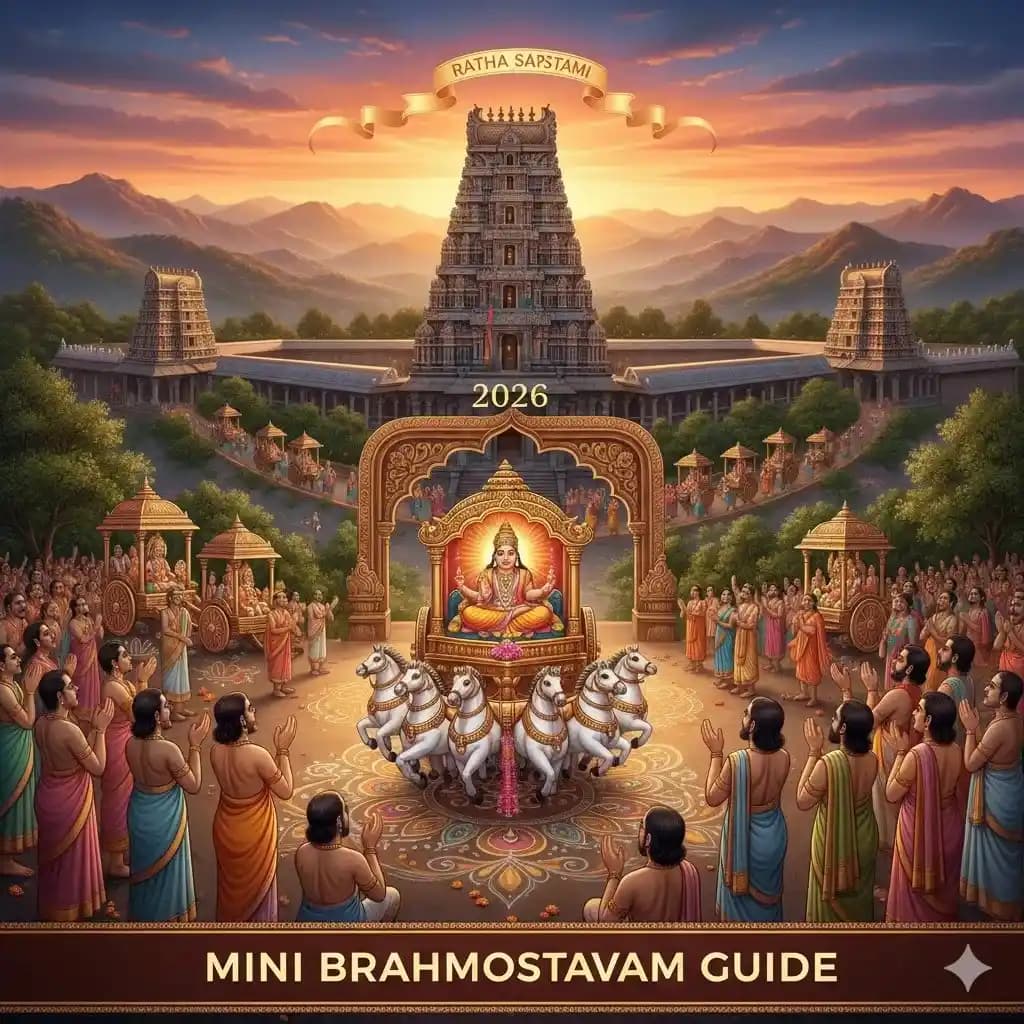
Ratha Saptami 2026 at Tirumala: The Mini Brahmotsavam – Sun God’s Divine Chariot Procession & Spiritual Significance By HinduTone Tirumala Pilgrimage…
Ratha Saptami 2026 at Tirumala: The Mini Brahmotsavam – Sun God’s Divine Chariot Procession & Spiritual Significance
By HinduTone Tirumala Pilgrimage Correspondent Published: February 10, 2026
Ratha Saptami, also revered as Surya Jayanti or the birthday of Lord Surya (the Sun God), is a highly auspicious Hindu festival celebrated on the seventh day (Saptami) of the bright fortnight (Shukla Paksha) in the Hindu month of Magha. In 2026, Ratha Saptami falls on February 13, 2026 (Friday), marking a radiant occasion dedicated to worshipping the Sun God as the source of life, health, prosperity, and removal of sins.
This festival holds special importance at the Tirumala Venkateswara Temple, where it is grandly observed as a "Mini Brahmotsavam"—a condensed version of the famous annual Brahmotsavam. Lord Venkateswara Swamy is taken out in seven magnificent vahana sevas (processions on divine vehicles) throughout the day, symbolizing the Sun God's chariot journey across the seven worlds (Sapta Lokas). Devotees believe that witnessing these sevas and offering arghya (water oblation) to Surya Bhagavan on this day cures ailments, grants longevity, and bestows good health and wealth.
The Tirumala Tirupati Devasthanams (TTD) makes elaborate arrangements, including special decorations, extended darshan slots, and massive annadanam (free meals) for lakhs of pilgrims. The day sees heightened spiritual energy on the hills, with the temple adorned in golden hues and floral splendor to honor both Lord Venkateswara and Surya.
Spiritual Significance of Ratha Saptami
According to the Bhavishya Purana and Skanda Purana, Ratha Saptami commemorates the day when Lord Surya was born to Aditi and Kashyapa, emerging on his seven-horse chariot driven by Aruna. Worshipping Surya on this tithi is said to destroy sins equivalent to the seven great sins (Saptamahapatakas), heal skin diseases, eye ailments, and chronic illnesses, and invoke the Sun God's blessings for vitality and success.
In the Tirumala tradition, the festival links Surya worship with Lord Venkateswara, who is considered the supreme form of Vishnu (Surya is Vishnu's eye). The seven vahana sevas represent the Sun's daily transit through the seven horses (symbolizing seven colors of light or chakras), aligning devotees with cosmic energy for physical and spiritual rejuvenation.
Devotees observe a fast (often phalahar or partial), perform Surya Namaskar, offer water to the rising Sun, and chant Aditya Hridayam Stotra or Gayatri Mantra. At Tirumala, the emphasis is on darshan during the vahana processions, believed to confer the merit of witnessing a full Brahmotsavam.
Key Rituals & Celebrations at Tirumala on February 13, 2026
TTD organizes a full-day schedule of vahana sevas for Sri Malayappa Swamy (processional deity of Lord Venkateswara), accompanied by Sridevi and Bhudevi:
- Surya Prabha Vahanam (Morning) – Lord on a radiant sun-chariot vahana, symbolizing the dawn of light.
- Chinna Sesha Vahanam – Serpentine vehicle, denoting protection and eternity.
- Garuda Vahanam – Eagle mount, representing swift divine grace.
- Hanumanta Vahanam – Monkey-god vehicle, invoking strength and devotion.
- Gaja Vahanam – Elephant mount, for royal splendor and wisdom.
- Ashwa Vahanam – Horse vehicle, signifying speed and vitality.
- Chandra Prabha Vahanam (Evening) – Moon-chariot, completing the celestial cycle.
Each seva features Vedic chants, nadaswaram music, temple orchestra, and floral/fireworks decorations. The processions circle the four mada streets around the temple, allowing devotees to have close darshan.
Other highlights:
- Special Snapana Tirumanjanam (aromatic bath) for the deities.
- Arghya offering to Surya from temple balconies.
- Extended Sarva Darshanam and Special Entry Darshan quotas.
- Free laddu prasadam distribution and enhanced medical/first-aid stations.
- Cultural programs with bhajans and discourses on Surya-Vishnu unity.
Crowd management includes special queues, shuttle buses from Tirupati, and online booking reminders via the TTD official portal. Authorities expect over 1 lakh devotees, with peak rush during morning and evening sevas.
Preparation & Pilgrim Tips for 2026
- Darshan Strategy: Arrive early (pre-dawn) for uninterrupted viewing of vahana sevas. Use free darshan or book ₹300 Special Entry Darshan if available.
- Accommodation: Book TTD cottages or Tirupati hotels well in advance; February sees moderate crowds post-Maha Shivaratri.
- Health & Observance: Fast if possible, carry water/sun protection (hilly weather can be sunny), and perform Surya arghya at sunrise.
- Travel: APSRTC special buses from Tirupati railway station; steps climb (9 km) for the spiritually inclined.
- Best Viewing Spots: Mada streets, Varaha Swamy temple area, or near Anjanadri for panoramic views.
Broader Traditions Across India
While Tirumala's observance is unique with vahana focus, other temples like Konark Sun Temple (Odisha) host chariot processions, and homes perform Surya puja with rangoli and tulsi offerings.
Spiritual Note
Ratha Saptami reminds us that just as the Sun dispels darkness daily, sincere devotion to Lord Venkateswara and Surya eradicates inner ignorance. As the Rig Veda praises: "Surya is the eye of the world." May this festival illuminate your path with health, wisdom, and divine grace.
For more on Tirumala's divine calendar:
- Tirumala Venkateswara Temple – Complete Guide
- Tirumala Tirupati Festival Calendar 2026: Complete Guide to Lord Venkateswara Celebrations
- Festivals of Tirumala: A Divine Calendar of 2026
- Tirumala Tirupati Temple Calendar 2026: Complete Month-Wise Events & Festivals Guide
Frequently Asked Questions
When is Ratha Saptami Tirumala Mini Brahmotsavam 2026?
Ratha Saptami Tirumala Mini Brahmotsavam 2026 falls on February 10, 2026.
What is the significance of Ratha Saptami Tirumala Mini Brahmotsavam?
Ratha Saptami 2026 at Tirumala : The Mini Brahmotsavam – Sun God’s Divine Chariot Procession & Spiritual Significance By HinduTone Tirumala Pilgrimage Correspondent Published: February 10, 2026 Ratha Saptami, also revered as Surya Jayanti or the birthday of Lord Surya (the Sun God), is a highly auspicious Hindu festival celebrated on the seventh day (Saptami
How is Ratha Saptami Tirumala Mini Brahmotsavam celebrated?
Devotees observe it with puja, fasting or special offerings, visiting temples, chanting mantras, and gathering with family. Customs vary by region and tradition.
What should devotees do on Ratha Saptami Tirumala Mini Brahmotsavam?
Take a sacred bath, perform the day's puja and charity (dana), observe any prescribed fast, and chant mantras with sincere devotion.
You might also like
Ratha Saptami 2026: Temple Celebrations & Significance
Gupt Navratri and Ratha Saptami in January 2026: Hidden Gems of Hindu Devotion

Tirumala Tirupati TTD — Complete Guide for NRIs (Darshan, Seva, Accommodation)