Regional Spotlight: How Different States Celebrate September Festivals
Introduction: India's September Festival Symphony September in India resonates with the rhythmic beats of diverse cultural celebrations that showcase the…
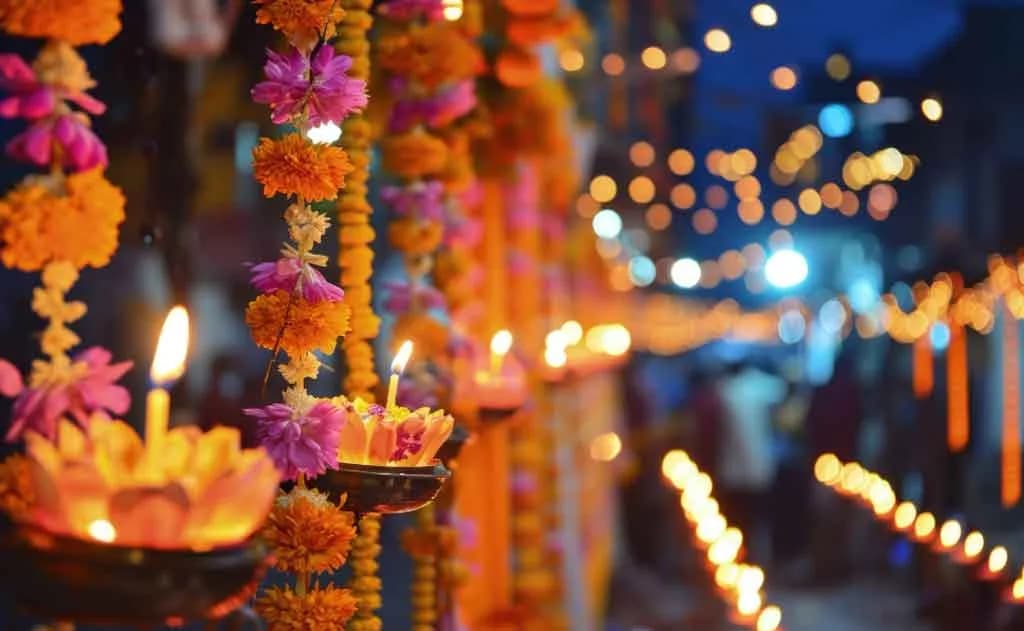
Introduction: India's September Festival Symphony September in India resonates with the rhythmic beats of diverse cultural celebrations that showcase the…
Introduction: India's September Festival Symphony
September in India resonates with the rhythmic beats of diverse cultural celebrations that showcase the country's incredible unity in diversity. As the monsoon bids farewell and the festive season begins, three magnificent celebrations illuminate different corners of our nation: the royal homecoming of Onam in Kerala, the floral devotion of Bathukamma in Telangana, and the divine craftsmanship honor of Vishwakarma Puja across North and Eastern India. Each festival carries its own unique fragrance of tradition, yet together they weave the rich tapestry of Indian heritage.
ONAM - Kerala's Golden Harvest Festival
The Legend of King Mahabali
In the verdant landscapes of Kerala, Onam celebrates the annual homecoming of the beloved demon king Mahabali (Maveli). According to ancient legends, King Mahabali was a just and benevolent ruler whose kingdom flourished in prosperity and equality. His reign was so exemplary that even the gods grew envious of his popularity among subjects.
The story unfolds when Lord Vishnu, in his Vamana avatar (dwarf Brahmin), approached King Mahabali during a grand yajna. When asked for a boon, Vamana requested just three paces of land. The generous king agreed, not knowing that Vamana would transform into his cosmic form. With one step, Vamana covered the earth; with the second, he covered the heavens. When asked where to place the third step, the noble Mahabali offered his own head, demonstrating ultimate devotion and sacrifice.
Impressed by Mahabali's righteousness, Lord Vishnu granted him the boon to visit his beloved Kerala once every year. Onam celebrates this annual royal visit, when the king returns to see his people living in harmony and prosperity.
Festival Timeline 2025
Onam 2025 is celebrated from August 26 to September 5, spanning ten magical days known as the "Onam Dasham." The main celebrations kick off on September 3, 2025, with cultural performances, traditional competitions, and festive parades across the state.
The Ten Days of Onam:
- Atham (Aug 26) - Festival begins, first Pookalam laid
- Chithira (Aug 27) - Pookalam designs become elaborate
- Chodhi (Aug 28) - Shopping begins for new clothes
- Vishakam (Aug 29) - Preparations for Onasadya start
- Anizham (Aug 30) - Snake Boat race or Vallamkali takes place
- Thriketa (Aug 31) - People who are away from their homes return to celebrate
- Moolam (Sep 1) - Temple festivals begin
- Pooradam (Sep 2) - Clay idols of Vamana and Mahabali installed
- Uthradom (Sep 3) - Final preparations, main Pookalam
- Thiruvonam (Sep 4) - The main day of Onam when people enjoy the grand Sadya feast, wear new clothes, play traditional games
Traditional Celebrations
Pookalam - The Floral Welcome Mat
The heart of Onam lies in the intricate floral carpets called Pookalam, created at the entrance of every home. These colorful arrangements use flowers like thumba, jamanthi (marigold), kanikkonna (golden shower), and chembarathi (hibiscus) arranged in concentric circles and geometric patterns. Each day, the Pookalam grows more elaborate, symbolizing the anticipation for Mahabali's arrival.
Onasadya - The Grand Feast
The festival ends with the Onam Sadhya, a big feast that shows the community's spirit and kindness. This vegetarian feast served on banana leaves includes:
- Rice varieties: Plain rice, ghee rice, and coconut rice
- Curries: Sambar, rasam, olan, kaalan, thoran
- Side dishes: Avial, kichadi, pachadi, pulissery
- Pickles and preserves: Naranga achar, manga achar
- Desserts: Payasam varieties (paal payasam, ada pradhaman, semiya payasam)
- Accompaniments: Banana chips, sharkaravaratti, pappadam
Cultural Performances
Festivities include Puli Kali (masked leopard dance) and traditional dance forms like Kaikotti Kali which are performed in various functions. Other performances include:
- Thiruvathira: Graceful women's dance around a lamp
- Pulikali: Tiger dance with elaborate body painting
- Kummatti Kali: Colorful mask dance
- Kathakali: Classical dance-drama performances
Boat Races and Games
The famous Nehru Trophy Boat Race in Alappuzha and various traditional games like Tug of War (Vadam Vali), swings (Unjal), and archery competitions add excitement to the celebrations.
Personal Stories from Kerala
Priya Nair, Thiruvananthapuram (Age 45, Teacher)
"For me, Onam begins three weeks before Thiruvonam with planning the Pookalam designs. My grandmother taught me that each flower has significance - thumba for prosperity, marigold for auspiciousness. Every morning, my daughter and I wake up at 5 AM to collect fresh flowers from our garden. The moment we lay the first pookalam on Atham, the whole house transforms. It's not just decoration; it's our prayer, our welcome mat for Maveli."
Ravi Kumar, Kochi (Age 38, IT Professional)
"Living abroad for ten years made me realize Onam's true value. When I returned to Kerala, my first Onasadya brought tears to my eyes. The taste of traditional olan and the sweetness of paal payasam - these aren't just foods, they're emotions. My mother says, 'Food made with love tastes different,' and during Onam, every dish is prepared with generations of love."
Lakshmi Menon, Kozhikode (Age 62, Homemaker)
"I've been making Onasadya for 40 years, and every year I learn something new. The secret is in the coconut oil - it must be pure, and the vegetables should be from our own soil. When the whole family sits on the floor, eating from banana leaves, sharing stories, that's when I see Mahabali's blessings. Onam teaches us that true wealth is in togetherness."
BATHUKAMMA - Telangana's Floral Devotion
The Divine Feminine Awakening
Bathukamma, meaning "Mother Goddess Come Alive," celebrates the divine feminine energy through Goddess Gauri, an incarnation of Parvati. The festival's origin traces back to the legend of a Chola princess who was brought back to life by Goddess Gauri's blessings. Another tale speaks of Goddess Gauri's own resurrection after intense penance, symbolizing the triumph of life over adversity.
The festival also connects to agricultural cycles, celebrating the abundance of nature post-monsoon when flowers bloom in full glory, representing prosperity and fertility.
Festival Schedule 2025
Bathukamma 2025 spans nine days from September 21-30, 2025:
- Engili Puvvula Bathukamma (Sep 21) - Made with sesame flowers
- Atkula Bathukamma (Sep 22) - Decorated with rice flakes
- Muddapappu Bathukamma (Sep 23) - Features lentil preparations
- Nanabiyyam Bathukamma (Sep 24) - Uses nine varieties of grains
- Atla Bathukamma (Sep 25) - Purely vegetarian preparations
- Aligina Bathukamma (Sep 26) - After purification rituals
- Vepakayala Bathukamma (Sep 27) - Includes neem flowers
- Vennamuddala Bathukamma (Sep 28) - White butter-like flowers
- Saddula Bathukamma (Sep 30) - Grand finale with all flowers
Ritual Process
Flower Stack Creation
Women create conical flower arrangements (Bathukamma) using:
- Tangedu (Cassia auriculata) - Primary flower
- Gunugu (Celosia) - For vibrant colors
- Chamanti (Chrysanthemum) - For fragrance
- Marigold - For brightness
- Tulasi - For sanctity
Evening Celebrations
Women gather in circles around their Bathukammas, singing traditional folk songs:
"Bathukamma Bathukamma Uyyalo Bangaru Bathukamma Uyyalo Raandi Koothuro Uyyalo"
The celebrations culminate with the immersion of Bathukammas in water bodies, symbolizing the return of the goddess to her celestial abode.
Local Voices from Telangana
Suma Reddy, Warangal (Age 52, Government Employee)
"Bathukamma is not just a festival; it's our identity. Every flower we pick tells a story. My mother taught me that when we arrange Tangedu flowers, we're inviting prosperity. When my daughters were young, they would wake up at dawn to help collect flowers. Now they're married and live in Hyderabad, but they return every year for Bathukamma. The songs we sing are the same my great-grandmother sang. It's our unbroken chain to our ancestors."
Rajesh Naik, Hyderabad (Age 41, Software Engineer)
"In our apartment complex, Bathukamma has become a cultural bridge. Families from different states participate, learning our songs, helping with flower arrangements. My Bengali neighbor, Mrs. Chatterjee, now makes better Bathukamma than some local women! Last year, she said, 'This festival taught me that devotion has no language.' It's beautiful to see how festivals unite us."
Anitha Goud, Nalgonda (Age 35, Farmer's Wife)
"For us rural women, Bathukamma is freedom. For nine days, we forget our daily struggles. We sing, dance, share our joys and sorrows. The songs we sing speak of everything - family problems, social issues, dreams for our children. When we immerse Bathukamma in the pond, we believe all our troubles go with it. Goddess Gauri takes our worries and gives us strength for the year ahead."
VISHWAKARMA PUJA - North India's Divine Craftsmanship Day
The Cosmic Architect's Glory
Vishwakarma, the divine architect and craftsman of the gods, holds a special place in Hindu mythology. According to scriptures, when there was no land, no sky, no water, and no existence, Lord Vishwakarma manifested and created the universe. He is regarded as the Adi Shilpi (the first architect) and the divine engineer.
The legends credit Vishwakarma with creating magnificent structures like:
- Lanka - Ravana's golden city
- Dwarka - Lord Krishna's capital
- Indraprastha - The Pandavas' magnificent palace
- Pushpaka Vimana - The divine flying chariot
Festival Date 2025
In 2025, Vishwakarma Jayanti will be observed on Wednesday, 17th September 2025, which coincides with Kanya Sankranti, the day when the Sun transits into Virgo.
Regional Celebrations
Industrial Heartlands
Vishwakarma Puja is celebrated across many states of India including Odisha, Jharkhand, West Bengal and Bihar, especially in industrial states with lots of factories and businesses.
Workplace Worship
Special prayers in markets, plants, offices and workplaces are conducted. These places are decorated with beautiful flowers and Lord Vishwakarma is worshipped by devotees along with tools.
Traditional Rituals
The idol Lord Vishwakarma is placed in decorative pandals where the main puja rituals are held. The families of the workers also participate in these rituals.
Devotional Practices
Morning Rituals
- Tool Worship: Workers clean and decorate their tools and machinery
- Workplace Decoration: Factories and workshops are adorned with flowers and rangoli
- Community Prayers: Collective prayers for prosperity and safety
Puja Vidhi
- Installation: Vishwakarma's idol placed on decorated altar
- Invocation: Chanting of Vishwakarma mantras
- Tool Blessing: Sprinkling of holy water on work instruments
- Aarti: Community worship with lamps and incense
- Prasad Distribution: Sharing of blessed food
Traditional Mantras
Vishwakarma Gayatri Mantra: "Om Vishwakarmaye Vidmahe Sarva Karmaye Dhimahi Tanno Visva Prachodayat"
Personal Experiences from North India
Ramesh Sharma, Kanpur (Age 48, Factory Owner)
"In our textile factory, Vishwakarma Puja is the most important day. We've been celebrating for 25 years. On this day, every machine is cleaned, decorated with marigolds, and blessed. We don't work on Vishwakarma Puja - it's about showing gratitude to the divine craftsman who guides our hands. My workers, Hindu, Muslim, Sikh - everyone participates. One of my Muslim workers, Saleem, says, 'Respect for skill and craft knows no religion.'"
Pradeep Kumar, Kolkata (Age 39, Automobile Mechanic)
"My garage becomes a temple on Vishwakarma Puja. I learned this from my father - he said, 'Your tools are your gods, respect them.' Every spanner, every machine part is worshipped. We make elaborate rangolis, hang flowers on cranes and lathes. The whole street resonates with mantras and bhajans. After puja, we don't touch any tool till next morning. It's our way of thanking the divine architect for our livelihood."
Sudha Devi, Patna (Age 44, Tailor)
"As a woman in tailoring business, Vishwakarma Puja is very special. I worship my sewing machine, scissors, measuring tape - everything that helps me earn. My grandmother taught me that Vishwakarma blesses both men and women equally. On puja day, I make special offerings and pray for all seamstresses worldwide. When my daughter learned stitching, her first lesson was on Vishwakarma Puja day. It's about inheriting not just skills, but reverence for craft."
Comparative Cultural Analysis
Common Threads
Unity Through Diversity
All three festivals showcase India's incredible ability to maintain regional uniqueness while sharing universal values:
- Community Bonding: Each festival brings people together across social barriers
- Cultural Preservation: Traditional arts, crafts, and customs are actively maintained
- Seasonal Harmony: All three festivals align with natural cycles and seasonal transitions
- Intergenerational Transfer: Knowledge passes from elders to youth through active participation
Women's Central Role
- Onam: Women lead Pookalam creation and Onasadya preparation
- Bathukamma: Exclusively women-centric festival celebrating feminine divine power
- Vishwakarma: Growing participation of women in traditionally male-dominated crafts
Economic Impact
- Flower Industry: All three festivals boost local flower cultivation and trade
- Tourism: Regional economies benefit from cultural tourism
- Artisan Support: Traditional craftspeople find renewed demand for their skills
Unique Regional Flavors
Kerala's Sophistication
Onam reflects Kerala's high literacy rates and cultural refinement through elaborate feasts, classical performances, and poetic traditions.
Telangana's Rural Authenticity
Bathukamma maintains strong connections to agricultural rhythms and village life, even as it adapts to urban settings.
North India's Industrial Integration
Vishwakarma Puja uniquely bridges traditional devotion with modern industrial practices, blessing contemporary workplaces.
Modern Adaptations
Urban Evolution
- Apartment Celebrations: All three festivals adapt to apartment living with community participation
- Social Media: WhatsApp groups coordinate celebrations, share recipes, and maintain connections
- Corporate Participation: Companies organize workplace celebrations, especially for Vishwakarma Puja
Global Reach
- Diaspora Celebrations: Indian communities worldwide maintain these festivals, adapting to local conditions
- Cultural Exchange: Non-Indians increasingly participate, learning about Indian traditions
- Educational Integration: Schools and colleges use these festivals to teach cultural appreciation
Festival Food Chronicles
Onam's Culinary Symphony
The Onasadya represents one of India's most elaborate vegetarian meals, with each dish carrying cultural significance:
Traditional Recipes Passed Down
Avial (Mixed Vegetable Curry) From Lakshmi Menon, Kozhikode: "My mother-in-law's avial recipe has 13 vegetables - each representing prosperity in different aspects of life. The secret is the coconut-curry leaf combination and gentle cooking."
Olan (Ash Gourd with Black-Eyed Peas) "The subtle flavors of olan represent life's gentle pleasures. Cooked in coconut milk with minimal spices, it teaches us that simplicity is divine."
Bathukamma's Ritual Foods
Each day of Bathukamma has specific food offerings:
- Day 1 (Engili): Sesame seed preparations
- Day 3 (Muddapappu): Special lentil varieties
- Day 4 (Nanabiyyam): Nine-grain preparations
- Final Day: Comprehensive feast with seasonal specialties
Vishwakarma's Workshop Prasad
The prasad varies by region but typically includes:
- Bengal: Fish curry and rice (respecting local preferences)
- Bihar: Litti-chokha and seasonal vegetables
- Industrial areas: Simple vegetarian meals shared by workers
Environmental Consciousness
Sustainable Celebration Trends
Eco-friendly Practices
- Onam: Organic flowers for Pookalam, banana leaf plates reduce waste
- Bathukamma: Natural flowers only, water immersion supports aquatic ecosystems
- Vishwakarma: Reducing artificial decorations, emphasizing plant-based offerings
Community Initiatives
- Kerala: "Green Onam" campaigns promote organic farming
- Telangana: Bathukamma flower gardens support local biodiversity
- Industrial states: Tree plantation drives on Vishwakarma Puja
Future of September Festivals
Preservation Challenges
Urbanization Impact
- Apartment living limits traditional celebration spaces
- Busy lifestyles reduce time for elaborate preparations
- Generation gaps in traditional knowledge transfer
Solutions and Adaptations
- Community centers hosting collective celebrations
- Online tutorials preserving traditional techniques
- School curricula incorporating festival education
Digital Age Integration
Technology's Role
- Virtual participation for diaspora communities
- Online marketplaces for traditional festival items
- Social media preserving and sharing cultural knowledge
Maintaining Authenticity
Despite digital integration, the essence remains unchanged:
- Personal devotion and family bonding
- Community participation and mutual support
- Respect for tradition while embracing beneficial change
Economic Dimensions
Festival Economy Impact
Direct Economic Benefits
- Flower Industry: September festivals drive 40% of annual flower sales
- Textile Sector: New clothing purchases spike during these festivals
- Food Industry: Special ingredients and preparations boost local economies
- Tourism: Cultural tourism peaks during festival seasons
Employment Generation
- Temporary employment in flower markets, decoration services
- Traditional artisans find increased demand for their crafts
- Service sectors (transportation, hospitality) benefit from increased activity
Regional Variations
- Kerala: Tourism-focused economic impact
- Telangana: Agricultural and rural economy boost
- Industrial states: Manufacturing and service sector benefits
Conclusion: The September Cultural Tapestry
As we traverse through India's September festival landscape, from Kerala's royal Onam celebrations to Telangana's divine feminine Bathukamma and North India's craftsmanship honoring Vishwakarma Puja, we witness the magnificent diversity that defines our nation. Each festival tells a unique story, yet together they narrate the eternal tale of Indian civilization - one that honors its past while embracing its future.
These celebrations remind us that India's strength lies not in uniformity but in unity - the unity that allows a software engineer in Hyderabad to find solace in ancient flower arrangements, a factory worker in Kanpur to see divinity in his tools, and a teacher in Kerala to discover prosperity in traditional feasts.
The personal stories shared by devotees across these regions reveal a common thread: these festivals are not mere ritualistic observances but living traditions that adapt, evolve, and endure. They serve as bridges between generations, connectors between communities, and guardians of cultural wealth.
As September unfolds each year, these three festivals create a symphony of celebration that resonates across the subcontinent, reminding us that in diversity lies our strength, in tradition lies our wisdom, and in unity lies our future.
Whether it's the floral welcome mat for King Mahabali, the divine feminine energy of Goddess Gauri, or the blessed tools of Lord Vishwakarma, these September festivals continue to weave the rich, colorful, and eternally beautiful tapestry of Indian culture - a tapestry that belongs not just to specific regions but to all of humanity as a testament to the power of faith, community, and celebration.
Jai Hind! Jai Bharat ki Sanskriti!
Frequently Asked Questions
When is Regional Spotlight?
Regional Spotlight is observed on its traditional tithi in the Hindu lunar calendar; refer to the year's panchang for the exact date in your region.
What is the significance of Regional Spotlight?
Introduction: India's September Festival Symphony September in India resonates with the rhythmic beats of diverse cultural celebrations that showcase the country's incredible unity in diversity. As the monsoon bids farewell and the festive season begins, three magnificent celebrations illuminate different corners of our nation: the royal homecoming of Onam i
How is Regional Spotlight celebrated?
Devotees observe it with puja, fasting or special offerings, visiting temples, chanting mantras, and gathering with family. Customs vary by region and tradition.
What should devotees do on Regional Spotlight?
Take a sacred bath, perform the day's puja and charity (dana), observe any prescribed fast, and chant mantras with sincere devotion.
You might also like
Shani Deva Temples Worldwide & Must-Performed Rituals — Complete Devotee's Guide
June 2026 Hindu Festival Calendar — Complete Dates, Vrat & Puja Guide for NRIs
Karthika Masam 2026: Dates, Rituals, Vrat, Festivals & North vs South India Guide