
Thai Pongal 2026: Spiritual Significance & Global Celebrations
Thai Pongal 2026: A Devotional Celebration of Gratitude, Harvest, and Abundance for Hindus Worldwide Oh, beloved devotees of Sanatana Dharma, as the winter's…
2027 update: In India, Thai Pongal 2027 is on Friday 15 January 2027, with Bhogi on 14 January and Mattu Pongal on 16 January; dates abroad can differ by a day. See Makar Sankranti and Pongal 2027 dates and timings.
Thai Pongal 2026: A Devotional Celebration of Gratitude, Harvest, and Abundance for Hindus Worldwide
Oh, beloved devotees of Sanatana Dharma, as the winter's chill gently fades and the sun's warmth heralds longer days, we are drawn into the sacred embrace of Thai Pongal, the radiant harvest festival of Tamil Nadu that overflows with gratitude, prosperity, and divine blessings. This four-day celebration, rooted in ancient Tamil traditions, honors Surya Bhagwan (the Sun God), nature's bounty, the hardworking farmers, and the noble cattle that sustain life. For Hindus across the globe, especially our NRI brothers and sisters in the USA, UK, Canada, and Australia, Pongal 2026 is a profound opportunity to reconnect with our cultural roots, perform timeless rituals, and invite abundance into our lives amidst modern challenges.
In this spiritually rich blog for www.hindutone.com, we explore the profound Pongal significance, its scriptural foundations, day-by-day rituals, the symbolic preparation of the sacred Pongal dish, and how Tamil Hindus worldwide celebrate this festival of overflowing grace. As we chant "Pongalo Pongal!" with joy, let us surrender to the Sun God's light, dissolving negativity like the overflowing milk that signifies endless prosperity. May Lord Surya illuminate your path to moksha and eternal bliss.
The Spiritual Essence of Thai Pongal in Hinduism
Dearest seekers of divine truth, Thai Pongal (also known as Pongal festival) derives its name from the Tamil word "pongu," meaning "to boil over" or "to overflow." This beautiful metaphor captures the essence of abundance – when freshly harvested rice, milk, and jaggery are cooked in a new earthen pot, the mixture overflows as a sign of prosperity, joy, and overflowing blessings from nature and the Divine.
Thai Pongal is celebrated as the Tamil New Year in many ways, marking the beginning of the auspicious Tamil month of Thai (corresponding to mid-January in the Gregorian calendar). It coincides with Makar Sankranti, the pan-Indian solar festival when Surya enters Makara Rashi (Capricorn), ushering in Uttarayan – the six-month northward journey of the sun, considered highly auspicious for spiritual endeavors, new beginnings, and harvesting the fruits of karma.
In Sanatana Dharma, Pongal embodies gratitude to the elements: the sun for light and energy, rain for nourishment, earth for fertility, and cattle for labor. It is a harvest festival that reminds us of our interdependence with nature, fostering humility, devotion, and community harmony. Unlike other festivals focused on lamps or colors, Pongal emphasizes the simple yet profound act of cooking and offering the first harvest to the Divine, symbolizing renewal and the cycle of life.
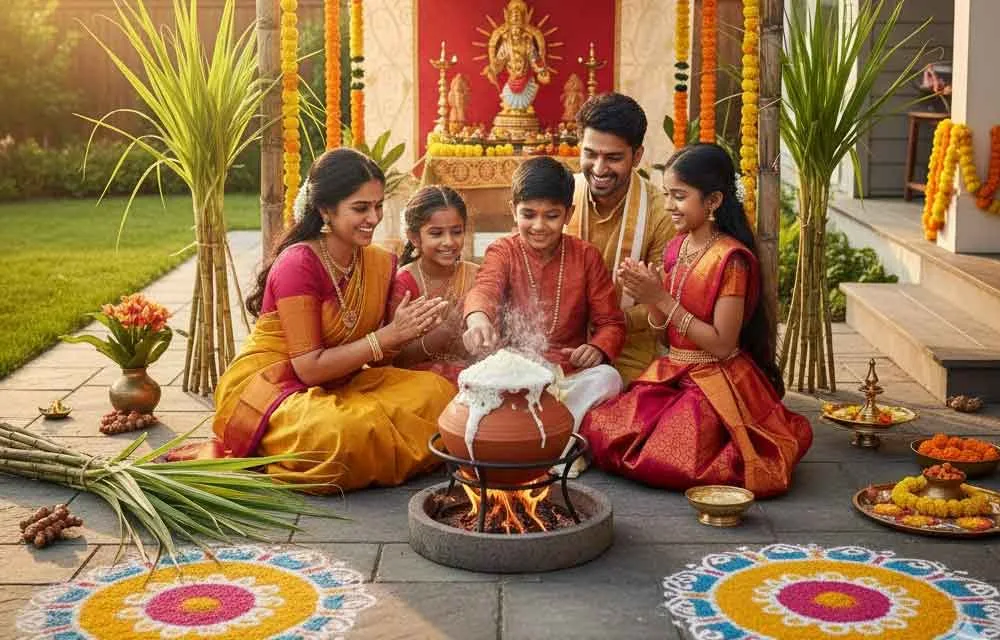
Oh faithful hearts, envision homes adorned with intricate kolams (rangoli made of rice flour), sugarcane stalks at doorways, fresh turmeric plants, and the sweet aroma of Pongal rising like prayers to the heavens. This festival, celebrated by Tamils worldwide, preserves Tamil heritage while inviting universal Hindu bhakti.
Scriptural References and Sanskrit Slokas for Pongal
Beloved children of the Divine, the sanctity of Pongal echoes in ancient Tamil literature and Hindu scriptures, emphasizing gratitude to Surya and nature. While Pongal has deep roots in the Sangam Age (200 BCE–300 CE), references appear in devotional works like Andal's Tiruppavai and Manickavachakar's Tiruvembavai, which invoke the sun during harvest times.
The festival aligns with Vedic worship of Surya, as in the Gayatri Mantra:
ओम भूर्भुवः स्वः तत्सवितुर्वरेण्यं भर्गो देवस्य धीमहि धियो यो नः प्रचोदयात् (Om Bhur Bhuvah Svah Tat Savitur Varenyam Bhargo Devasya Dhimahi Dhiyo Yo Nah Prachodayat)
This eternal sloka invokes the illuminating power of Savitr (Surya), perfect for Pongal's sun worship.
In the Rig Veda, Surya is praised as the giver of life and harvest. The Mahabharata and Puranas link Uttarayan to auspiciousness, as seen in Bhishma's choice to depart during this period for moksha.
A devotional sloka for Pongal:
सूर्याय नमः, प्रकृतये नमः धन्याय नमः, गोभ्यो नमः (Suryaya Namah, Prakritaye Namah Dhanyaya Namah, Gobhyo Namah)
Translation: Salutations to the Sun, to Nature, to the Grains, to the Cows.
These invocations affirm Pongal's place in Sanatana Dharma rituals, where gratitude multiplies merits and invites divine grace.
The Four Sacred Days of Pongal: Rituals and Traditions
O devoted souls, Pongal unfolds over four meaningful days, each with unique rituals blending devotion, renewal, and celebration.
Day 1: Bhogi Pongal (January 13, 2026) – Dedicated to renewal and Lord Indra (rain god). Families discard old items in bonfires, symbolizing cleansing of past negativity. Homes are cleaned, kolams drawn, and new beginnings embraced.
Day 2: Thai Pongal (January 14, 2026) – The heart of the festival, dedicated to Surya. At dawn, a new clay pot is placed outdoors facing east. Fresh rice, milk, and jaggery are cooked; when it overflows, devotees shout "Pongalo Pongal!" The sweet dish (Sakkarai Pongal) is offered to the Sun God with prayers for prosperity, then shared as prasad.
Day 3: Mattu Pongal (January 15, 2026) – Honoring cattle. Cows and bulls are bathed, adorned with garlands, turmeric, and vermilion, and fed special treats. This day recognizes animals' role in agriculture, with folk songs and sometimes traditional games.
Day 4: Kaanum Pongal (January 16-17, 2026) – A day of family reunions, picnics, and community bonding. Relatives visit, exchange gifts, and enjoy feasts, strengthening ties.
These rituals, performed with bhakti, align us with cosmic rhythms, granting health, wealth, and spiritual growth.
The Profound Benefits of Observing Pongal Rituals
Dear yearning souls, Pongal's benefits are as abundant as its overflowing pot. Spiritually, Surya worship energizes the soul, purifies karma, and invites moksha. The overflowing Pongal symbolizes limitless divine grace, erasing sins and attracting prosperity.
Physically, the fresh harvest ingredients nourish the body; emotionally, family gatherings foster love and harmony. Charity during the festival builds compassion, multiplying merits.
Scriptures promise that gratitude to nature and the Divine ensures bountiful harvests in life – material and spiritual.
Pongal 2026 Dates and Timings
Thai Pongal 2026 spans January 14 to January 17, with the main day (Thai Pongal) on January 14. Key timings include the auspicious Pongal moment around midday (consult local Tamil Panchang for precise muhurat).
Celebrating Pongal Abroad: Guidance for Global Hindus
For NRIs, Pongal bridges continents. In the USA, temples and Tamil associations host grand Thiruvizha with Pongal cooking, kolam competitions, cultural dances, and community feasts. In the UK, Canada, and Australia, similar events at Hindu temples preserve traditions through virtual pujas, home altars with Ganga Jal, and shared sweets.
Adapt rituals: Cook Pongal indoors facing east, draw kolams, offer to Surya, and join online satsangs. These observances keep Tamil heritage alive, uniting diaspora in bhakti.
For More Devotional Journey, Follow
- Temples
/temples/ - Tirumala Updates
/tirumala/ - Sabarimala Yatra
/category/sabarimala-yatra/ - Pooja, Slokas & Mantras
/pooja-slokas-and-mantras/ - Hindu Gods
/hindu-gods/
Conclusion: Overflowing with Pongal's Divine Grace
As we conclude this devotional journey, let Thai Pongal 2026 fill your homes with overflowing joy, gratitude, and prosperity. This sacred festival reminds us that true abundance flows from devotion to nature and the Divine. May Surya Bhagwan bless you with health, harmony, and moksha.
Pongalo Pongal! Hari Om Tat Sat!
Frequently Asked Questions
When is Thai Pongal 2026?
Thai Pongal 2026 spans January 14 to January 17, with the main day on January 14. Bhogi Pongal falls on January 13, and the exact Pongal moment around midday should be checked in a local Tamil Panchang.
What are the four days of Pongal?
Bhogi Pongal honors renewal and Lord Indra, Thai Pongal honors Surya, Mattu Pongal honors cattle, and Kaanum Pongal is for family reunions and picnics. In 2026 they fall from January 13 to the 16-17 window.
Why does the Pongal pot overflow?
The name comes from the Tamil word pongu, meaning to boil over. Rice, milk and jaggery cooked in a new clay pot overflow as a sign of prosperity, and devotees shout Pongalo Pongal.
How is Thai Pongal celebrated by NRIs in the USA, UK, Canada and Australia?
Temples and Tamil associations host Pongal cooking, kolam competitions, dances and community feasts. At home, families cook Pongal indoors facing east, draw kolams, offer it to Surya and join online satsangs.
How is Thai Pongal linked to Makar Sankranti?
It coincides with Makar Sankranti, when Surya enters Makara Rashi and Uttarayan, the sun's six-month northward journey, begins. This period is considered auspicious for new beginnings and spiritual endeavors.
What is done on Mattu Pongal?
Cows and bulls are bathed and adorned with garlands, turmeric and vermilion, then fed special treats. The day recognizes the role of cattle in agriculture, often with folk songs and traditional games.
Share this with family and friends
Send it on WhatsApp, post it, or copy the link.
More from Festivals
- Vasant Panchami 2027 (Saraswati Puja, Basant Panchami, Sri Panchami): Date, Panchami Tithi, Puja Muhurat by City, Vidhi and Story
- Holi 2027: Date, Holika Dahan Muhurat City-Wise, Bhadra Timings, Puja Vidhi and Holi Abroad
- Makar Sankranti 2027: Date, Punya Kaal Timings City-Wise, Bhogi, Pongal, Kanuma, Lohri and Uttarayan
- Dev Deepawali 2026 Varanasi: Date, Purnima Time, Ganga Aarti, Story, Puja Vidhi and Deep Daan
- Kartik Purnima 2026: Date, Purnima Time, Snan, Deep Daan, Puja Vidhi and Significance
You might also like
Pongal 2026 in Chicago: Midwestern Harvest Devotion & Community Celebrations
Hindu Pongal Celebrations in the USA – Tradition, Devotion & Cultural Unity
Pongal 2026 in Atlanta, Georgia: Southern Devotion and Harvest Festival Vibes
