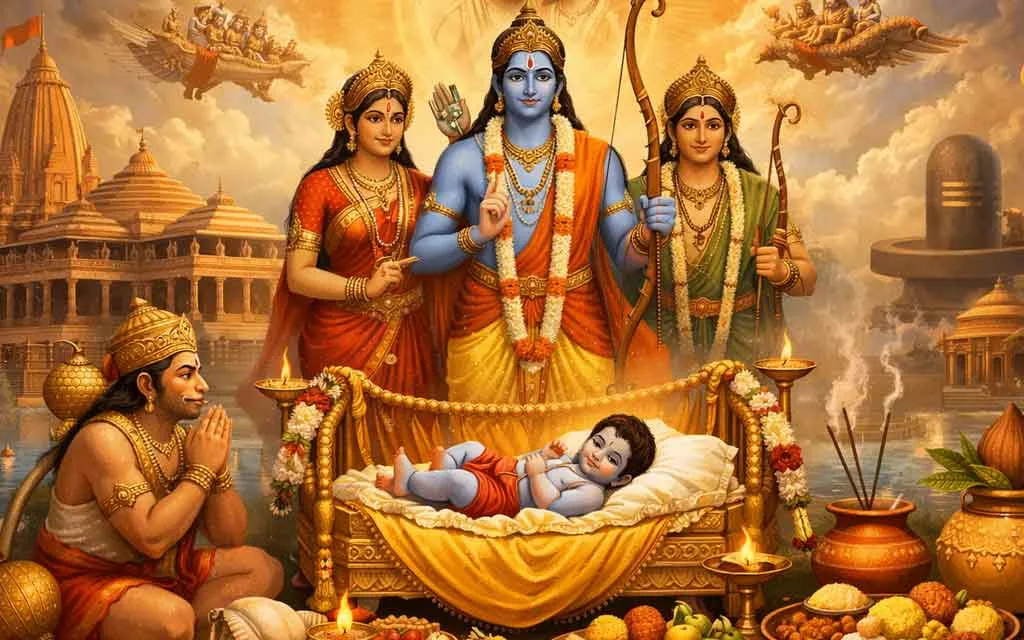
Science Behind Ekadashi Fasting & Temple-Based Practices
Science Behind Ekadashi Fasting & Temple-Based Practices Ayurveda, Ancient Wisdom & the Mind–Body–Spirit Connection “When the body is light, the mind becomes…

Science Behind Ekadashi Fasting & Temple-Based Practices
Ayurveda, Ancient Wisdom & the Mind–Body–Spirit Connection
“When the body is light, the mind becomes clear.
When the mind is pure, the soul hears the divine.”
— Ancient Vaishnava Teaching
Ekadashi is often spoken of as a religious fast, but for India’s rishis, temple architects, and Ayurvedic acharyas, it was far more — a scientifically designed spiritual discipline aligning cosmic rhythms, digestive cycles, mental clarity, and devotional consciousness.
From Vaikuntha Ekadashi vrata to temple-based jagaran, every aspect of Ekadashi has a deep physiological and psychological logic, refined over thousands of years.
This article explores the science behind Ekadashi fasting, referenced through Ayurveda, supported by temple practices, and elevated through the mind-body-spirit framework—all narrated in a devotional voice for Hindutone’s spiritually rooted audience.
1. Ekadashi: A Sacred Pause in the Human System
1.1 Why Ekadashi Comes Twice a Month
Ekadashi falls on the 11th lunar day of both waxing (Shukla Paksha) and waning (Krishna Paksha) phases of the moon.
Ancient Indian sciences recognized that:
- The human body is ~70% water
- The moon directly affects bodily fluids
- Lunar gravitational pull influences digestion, emotions, and mental stability
On Ekadashi, water levels in the body peak subtly, making digestion slower and mental restlessness higher.
[image: 👉] Fasting on Ekadashi prevents digestive overload and stabilizes the nervous system.
This is not superstition — it is biological lunar synchronization, understood long before modern chronobiology.
2. Ayurveda & Ekadashi Fasting: Classical Wisdom
2.1 Ekadashi in Ayurvedic Thought
Ayurveda does not prescribe fasting randomly. It recognizes Langhana (lightening therapies) as essential for health.
According to Ayurvedic principles:
- Ama (toxins) accumulate due to improper digestion
- Fasting allows Agni (digestive fire) to reset
- Ekadashi fasting acts as natural detox without medication
Ekadashi is considered ideal because:
- Digestive strength (Jatharagni) is naturally weak on lunar 11th day
- Eating grains (guru ahara) produces more ama on this day
- Light foods or fasting preserve dosha balance
2.2 Why Grains Are Avoided on Ekadashi
In Vaishnava tradition, grains are avoided — not merely as ritual discipline, but due to Ayurvedic energetics.
Ancient belief states that Papa Purusha resides in grains on Ekadashi — symbolically meaning:
- Grains ferment faster
- Increase heaviness (guru guna)
- Slow down digestion
- Disturb mental clarity (tamas)
From a scientific perspective:
Thus, Ekadashi fasting is a metabolic reset, not deprivation.
3. Temple-Based Practices: Spiritual Science in Architecture
Ancient temples were not just worship spaces — they were energy modulation centers.
3.1 Why Ekadashi Is Observed in Temples
Temples amplify Ekadashi benefits through:
- Mantra vibrations
- Sacred geometry (Vastu & Agama Shastra)
- Collective consciousness
When devotees fast and gather together, neurochemical alignment occurs, increasing serotonin, dopamine balance, and emotional calm.
3.2 Vaikuntha Dwar: A Symbol of Neuro-Spiritual Opening
On Vaikuntha Ekadashi, Vishnu temples open the Vaikuntha Dwar.
Symbolically:
- It represents entry into Vishnu’s abode
Scientifically:
- It mirrors activation of higher consciousness centers
- Comparable to the pineal gland awakening
Walking through the Vaikuntha Dwar after fasting:
- Mind is calm
- Body is light
- Breath is rhythmic
- Awareness is heightened
This creates a psychosomatic experience of transcendence.
[image: 👉] Liberation (moksha) is first felt internally before becoming spiritual reality.
4. Mind–Body–Spirit Alignment on Ekadashi
4.1 Body: Cellular Detox & Digestive Reset
Modern studies on fasting show:
- Reduced insulin spikes
- Enhanced autophagy (cell repair)
- Improved gut microbiome
Ekadashi fasting naturally:
- Reduces inflammation
- Clears metabolic waste
- Restores digestive intelligence
Ancient rishis achieved intermittent fasting long before it became a trend.
4.2 Mind: Mental Clarity & Emotional Balance
On Ekadashi:
- Heavy food = heavy thoughts
- Light food or fasting = clarity
Devotees report:
- Reduced anger
- Enhanced concentration
- Emotional stability
- Increased devotion
This aligns with Ayurveda’s understanding that mind and digestion share the same fire (Agni).
4.3 Spirit: Elevation of Consciousness
When the body is light and the mind is calm:
- Japa becomes effortless
- Bhakti deepens
- Intuition sharpens
Ekadashi is ideal for:
- Vishnu Sahasranama
- Bhagavad Gita reading
- Nama smarana
- Silent contemplation
This is why Vaishnava saints described Ekadashi as:
“A staircase from annamaya kosha to anandamaya kosha.”
5. Vaikuntha Ekadashi: The Pinnacle of Spiritual Physiology
Among all Ekadashis, Vaikuntha Ekadashi holds supreme importance.
5.1 Why Vaikuntha Ekadashi Is Special
Occurs during Dhanurmasa — the most sattvic period of the year.
Ayurvedically:
- Kapha dominance reduces
- Digestive fire stabilizes
- Ideal time for spiritual discipline
Spiritually:
- Vishnu consciousness is heightened
- Collective devotion peaks
- Temple energy fields are strongest
This is why millions instinctively fast — not due to fear, but inner resonance.
5.2 Night Vigil (Jagaran): Neuroscience Meets Bhakti
Staying awake on Ekadashi night is not punishment — it is neural activation.
Benefits include:
- Increased theta brain waves
- Heightened awareness
- Emotional purification
Temples encourage:
- Bhajans
- Discourses
- Kirtans
These sounds regulate breathing and synchronize heart rhythms — a living meditation.
6. Ekadashi Across Life Stages: Universal Relevance
Children
- Light fasting builds discipline
- Enhances mental focus
Adults
- Stress reduction
- Hormonal balance
- Emotional resilience
Elderly
- Gentle detox
- Spiritual fulfillment
- Inner peace
Ekadashi is not age-restricted — it is life-supportive.
7. Ekadashi as Preventive Medicine
Ancient India practiced spiritual preventive healthcare.
Ekadashi:
- Prevents lifestyle diseases
- Controls overeating
- Regulates circadian rhythm
- Encourages mindfulness
Modern medicine treats disease.
Ekadashi prevents imbalance.
8. Integrating Ekadashi into Modern Life (Hindutone Readers)
You don’t need to renounce life to observe Ekadashi.
Simple Modern Ekadashi Practice
- Avoid grains
- Eat fruits / milk
- Reduce screen time
- Chant Vishnu mantra
- Visit a nearby temple (or pray at home)
This aligns ancient wisdom with modern routines.
9. Internal Linking Strategy for Hindutone
To strengthen SEO & reader engagement, interlink with:
- Vaikuntha Ekadashi in Ancient Indian Inscriptions & Temple Records
- Role of Dharma in Daily Life
- Science of Mantras & Spiritual Healing
- Temple Architecture & Energy Science
- Ayurveda & Hindu Lifestyle Practices
This creates a Hindutone Ekadashi Knowledge Cluster.
For More Devotional Journey, Follow
- Temples
/temples/ - Tirumala Updates
/tirumala/ - Sabarimala Yatra
/category/sabarimala-yatra/ - Pooja, Slokas & Mantras
/pooja-slokas-and-mantras/ - Hindu Gods
/hindu-gods/
Conclusion: Ekadashi Is Sacred Science
Ekadashi is not blind faith.
It is biological intelligence refined by spiritual insight.
When Ayurveda, temple rituals, lunar cycles, and devotion align —
the human system naturally ascends toward harmony.
Vaikuntha is not somewhere far.
It begins when the body is purified, the mind is calm, and the heart remembers Vishnu.
“Ekadashi is the day the body rests,
the mind awakens,
and the soul walks toward Vaikuntha.”
Frequently Asked Questions
Where is Science Behind Ekadashi Fasting & Temple located?
Science Behind Ekadashi Fasting & Temple-Based Practices Ayurveda, Ancient Wisdom & the Mind–Body–Spirit Connection “When the body is light, the mind becomes clear. When the mind is pure, the soul hears the divine.” — Ancient Vaishnava Teaching Ekadashi is often spoken of as a religious fast , but for India’s rishis, temple architects, and Ayurvedic acharyas
Who is the presiding deity of Science Behind Ekadashi Fasting & Temple?
The temple's presiding deity and its significance are described in the guide above.
What are the timings and how do I reach Science Behind Ekadashi Fasting & Temple?
Temples typically open early morning and evening; confirm current darshan timings before visiting. The nearest airport, railway station and road routes are covered in the guide above.
What is the best time to visit Science Behind Ekadashi Fasting & Temple?
Major festival days and the cooler months are popular, though weekday mornings offer a calmer darshan. Plan around the temple's key festivals for the most vibrant experience.
Share this with family and friends
Send it on WhatsApp, post it, or copy the link.
More from Festivals
- Vasant Panchami 2027 (Saraswati Puja, Basant Panchami, Sri Panchami): Date, Panchami Tithi, Puja Muhurat by City, Vidhi and Story
- Holi 2027: Date, Holika Dahan Muhurat City-Wise, Bhadra Timings, Puja Vidhi and Holi Abroad
- Makar Sankranti 2027: Date, Punya Kaal Timings City-Wise, Bhogi, Pongal, Kanuma, Lohri and Uttarayan
- Dev Deepawali 2026 Varanasi: Date, Purnima Time, Ganga Aarti, Story, Puja Vidhi and Deep Daan
- Kartik Purnima 2026: Date, Purnima Time, Snan, Deep Daan, Puja Vidhi and Significance
You might also like
Sawan Somwar 2026: 4 Mondays, Vrat Vidhi & Mantras | HinduTone
Chaitra Navratri 2026 Dates, Day-Wise Puja Vidhi, Mantras, Colors, Fasting Rules & Complete Devotional Guide to Celebrate Maa Durga at Home | Hindutone
Durga Navratri 2026 USA Guide: Dates, Day-Wise Puja Vidhi, Mantras, Colors, Fasting Rules & Complete Devotional Celebration for Indian Families in America | Hindutone