Kanwar Yatra 2025
Millions Carry Ganga Water for Lord Shiva in Sacred Shravan Journey Every year, as the monsoon clouds gather and the holy month of Shravan arrives, India…
Millions Carry Ganga Water for Lord Shiva in Sacred Shravan Journey
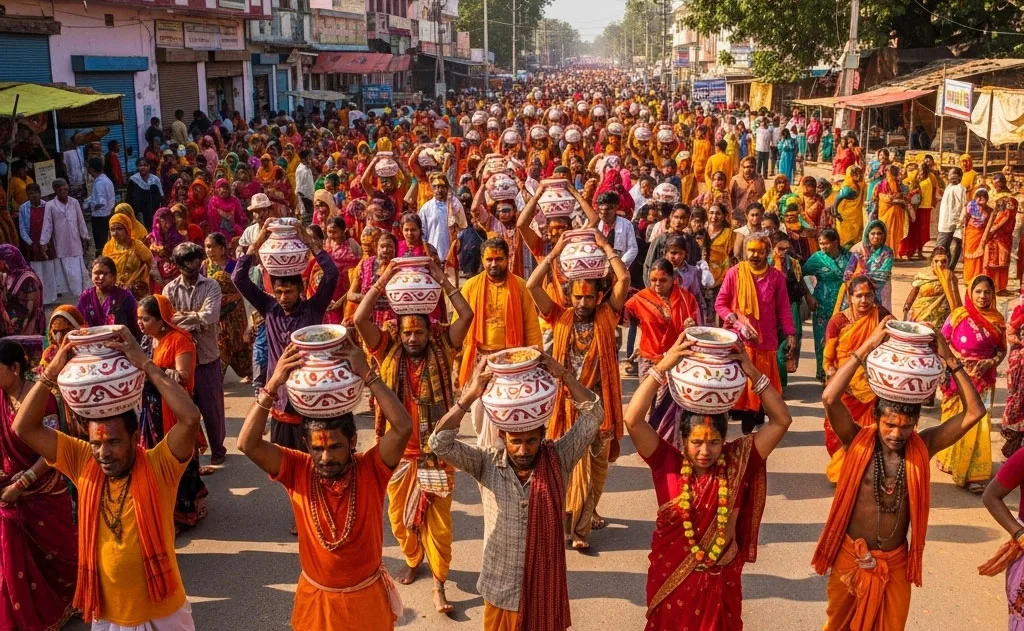
Every year, as the monsoon clouds gather and the holy month of Shravan arrives, India witnesses one of the largest religious pilgrimages in the world—Kanwar Yatra. Millions of saffron-robed devotees, called Kanwariyas, travel on foot, bicycles, or trucks, carrying Ganga Jal (sacred water from the River Ganga) in beautifully decorated bamboo structures known as kanwars. Their mission: to offer this water to Lord Shiva, the destroyer of evil, the lord of mercy, and the embodiment of ascetic power.
In 2025, the Kanwar Yatra is witnessing unprecedented enthusiasm, with over 30 million devotees participating from states like Uttar Pradesh, Bihar, Jharkhand, Haryana, Delhi, Rajasthan, Punjab, and West Bengal.
What is the Kanwar Yatra?
The Kanwar Yatra is a sacred Hindu pilgrimage that takes place during the month of Shravan, which typically falls between July and August. Devotees collect water from the holy River Ganga—mostly from locations like Haridwar, Gangotri, Rishikesh, Gaumukh, and Sultanganj—and carry it across hundreds of kilometers to offer it at Shiva temples, especially jyotirlingas and local shrines.
This offering is known as Jalabhishek and is performed with chants of “Om Namah Shivaya,” “Bam Bam Bhole,” and “Har Har Mahadev.”
The Mythological Roots of the Kanwar Yatra
The origins of the Kanwar Yatra are deeply rooted in Hindu mythology. According to ancient scriptures:
- During the Samudra Manthan (churning of the ocean), a deadly poison called Halahala emerged, threatening to destroy the universe.
- Lord Shiva, in his infinite compassion, consumed the poison to save all creation.
- To alleviate the burning sensation from the poison, the gods and sages brought water from the Ganga and poured it over Shiva’s head.
This act of devotion laid the foundation for the Jalabhishek ritual, which is re-enacted every Shravan by millions of devotees who seek to cool the cosmic fire by offering Ganga water at Shiva temples.
Who Are the Kanwariyas?
The Kanwariyas are ordinary men and women—young, old, rich, poor—all united by a common purpose: devotion to Bholenath (another name for Lord Shiva).
- Many of them take vows (mannat) and undertake the Yatra to fulfill a promise made to Lord Shiva.
- Others walk the path as a form of penance, to seek forgiveness for past sins, or to gain spiritual strength.
The Yatra is filled with emotion, sacrifice, and powerful bhakti. For some, it is a solitary, meditative experience; for others, it is a group celebration of divinity.
Types of Kanwars and Yatras
There are different types of Kanwar Yatras, each reflecting a specific level of devotion and austerity:
1. Dak Kanwar (Running Kanwar)
- The most stringent form.
- The devotee does not stop after picking up the water.
- The water is poured on the Shiva Linga without resting or placing the kanwar on the ground.
2. Sahaj Kanwar
- The water is carried in stages, and the Kanwariya takes breaks and rests during the journey.
3. Motor Kanwar
- In modern times, some devotees use trucks or bikes decorated with flags and loudspeakers blaring bhajans.
Despite varying practices, all forms are equally respected in the eyes of Shiva.
Major Routes and Destinations in 2025
The main pilgrimage sites for collecting Ganga water include:
- Haridwar – the most popular source for North Indian Kanwariyas.
- Gangotri and Gaumukh – for spiritually inclined devotees seeking Himalayan purification.
- Sultanganj (Bihar) – the only place where Ganga flows north, and devotees head toward Deoghar (Baidyanath Dham), one of the 12 jyotirlingas.
- Rishikesh and Sonprayag – for mountain seekers.
The final destinations often include:
- Kashi Vishwanath (Varanasi)
- Neelkanth Mahadev (Uttarakhand)
- Baijnath Dham (Jharkhand)
- Kartikeya Temple (Tamil Nadu)
- Local Shiva temples across villages and towns
The Journey: Austerity, Bhakti, and Brotherhood
The Kanwar Yatra is a test of physical endurance and spiritual resolve. Devotees walk barefoot under the scorching sun, singing bhajans, sleeping on roadsides, and depending on langars (free food services) provided by volunteers.
Yet, their faces radiate joy. Their voices echo with chants. Their hearts brim with purpose.
Thousands of Kanwar camps have been set up along the routes in 2025, offering:
- Medical aid
- Free meals and water
- Sleeping arrangements
- Phone charging stations
- Rest zones for women and elderly devotees
Volunteers serve the Kanwariyas selflessly, considering it a seva (divine service) to Lord Shiva.
Security and Administration for Kanwar Yatra 2025
Given the massive turnout, state governments have coordinated a multi-agency approach for managing the Yatra:
- Over 1 lakh police personnel deployed in UP, Uttarakhand, and Bihar.
- Drone surveillance and CCTV networks at sensitive points.
- Dedicated lanes and barricades for smooth passage of Kanwariyas.
- Emergency response teams, ambulances, and fire brigades on standby.
- Mobile toilets and sanitation camps across the route.
The Kanwar Yatra is not just a religious event—it’s a logistical miracle, made possible by a shared sense of faith and community effort.
Women and the Kanwar Yatra: Rising Participation
Although traditionally male-dominated, the Kanwar Yatra has seen a surge in female participation in recent years.
Many women Kanwariyas walk solo or in groups, often with children in tow, symbolizing Shakti (divine feminine power) walking alongside Shiva bhakti.
Voices from the Yatra: Devotion on the Road
Amit, 19, from Meerut:
“This is my third Kanwar Yatra. It gives me strength for the whole year. I feel free from all burdens after the Jalabhishek.”
Meena Devi, 46, from Jharkhand:
“I prayed for my daughter’s health. She recovered miraculously. I promised Baba I would walk to Baidyanath this year, and here I am.”
Ravi, 25, Delhi IT Professional:
“It’s a spiritual detox. I log out of social media, put on my saffron clothes, and just walk with Shiva in my heart.”
Cultural Impact and Social Harmony
Kanwar Yatra is also a symbol of unity in diversity:
- People from all backgrounds walk together—Hindus, tribal communities, and even some non-Hindus join in support.
- Local Muslim vendors often serve food and water to Kanwariyas, showing India’s pluralistic fabric.
- Many singers and composers release Kanwar bhajans and devotional songs during this time, making it a season of music, dance, and spiritual vibrance.
Eco-Friendly Kanwar Yatra in 2025
This year, NGOs and environmental groups have launched the #GreenKanwarYatra initiative, encouraging:
- Avoiding plastic bottles and bags
- Using clay pots and steel utensils
- Planting saplings along the route
- Cleaning Ganga ghats post-collection
Even the sacred journey respects Mother Earth, a true hallmark of Sanatana Dharma.
Conclusion: Shiva’s Path is the People’s Path
The Kanwar Yatra 2025 is not just a pilgrimage—it’s a moving expression of India's living spiritual tradition. It brings the divine into the streets, into the hearts of ordinary people, reminding us that God walks with those who walk in faith.
Whether it's the echo of “Har Har Mahadev” in the mountains of Uttarakhand or the humble offering of Ganga Jal in a small village temple, the Kanwar Yatra reminds us that devotion knows no limits—no fatigue, no caste, no class—only bhakti.
In this sacred month of Shravan, as the Kanwariyas flood the roads like a river of faith, let us bow to Mahadev and to the spirit of those who walk for Him.
Jai Bholenath! Har Har Mahadev! Om Namah Shivaya!
Frequently Asked Questions
Where is Kanwar Yatra located?
Millions Carry Ganga Water for Lord Shiva in Sacred Shravan Journey Every year, as the monsoon clouds gather and the holy month of Shravan arrives, India witnesses one of the largest religious pilgrimages in the world— Kanwar Yatra . Millions of saffron-robed devotees, called Kanwariyas , travel on foot, bicycles, or trucks, carrying Ganga Jal (sacred water
Who is the presiding deity of Kanwar Yatra?
The temple's presiding deity and its significance are described in the guide above.
What are the timings and how do I reach Kanwar Yatra?
Temples typically open early morning and evening; confirm current darshan timings before visiting. The nearest airport, railway station and road routes are covered in the guide above.
What is the best time to visit Kanwar Yatra?
Major festival days and the cooler months are popular, though weekday mornings offer a calmer darshan. Plan around the temple's key festivals for the most vibrant experience.
Share this with family and friends
Send it on WhatsApp, post it, or copy the link.
More from Spirituality
- Complete MBBS Once in Life: The Spiritual Meaning of Mahabharata, Bhagavatam, Bhagavad Gita & Ramayana
- Sri Medha Dakshinamurthy Swami Dhyanam | Meditation Sloka for Intelligence, Eloquence & Self-Realization
- What Is True Poverty? | Dharma Is the Greatest Wealth | Sanatana Dharma
- Correct Yourself First! | The Power of Constructive Criticism for Personal Growth
- Trees: Abodes of the Divine | Spiritual and Environmental Significance of Trees
You might also like

Daiva Sankalpam (Divine Will): The Story of the Sadhu on the Sinking Boat
Deeparadhana: Significance of Lighting the Lamp, Deepam Jyoti Parabrahma Meaning, Oil and Wicks

Chilkur Balaji 'Visa Balaji' Temple: The 11 and 108 Pradakshina Custom Explained for NRIs