
Why Andal’s Tiruppavai Is Called the “Tamil Vedas”: Deep Symbolism Explained
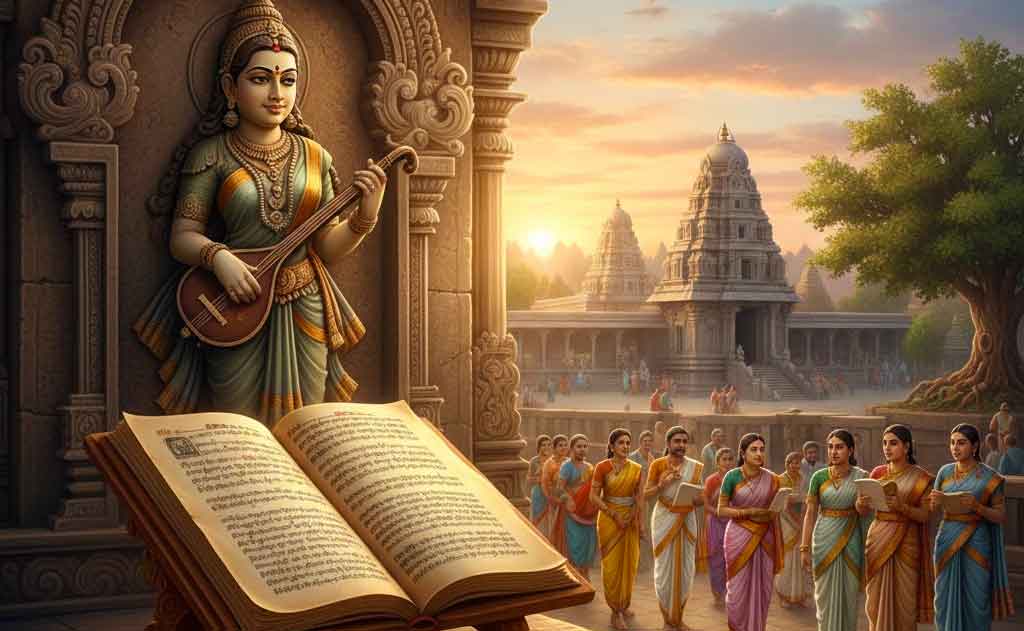
The Divine Poetess Who Became God’s Bride
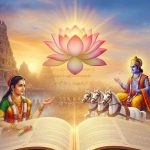
In the sacred town of Srivilliputtur in Tamil Nadu, a remarkable story unfolded over twelve centuries ago that would forever change the landscape of bhakti literature. Periyalvar, a devoted priest of Lord Vishnu, discovered an infant girl beneath a tulsi plant in his temple garden. This divine child, whom he named Kodhai, would grow to become Andal—the only female among the twelve Alvars and the sole woman saint in Hindu tradition to be elevated to the status of a deity.
From her earliest years, Andal’s devotion to Lord Krishna knew no bounds. She refused to marry any mortal man, declaring herself the bride of Lord Ranganatha. In her passionate longing for divine union, she composed the Tiruppavai, thirty sacred verses that have resonated through the centuries as one of Tamil literature’s most treasured spiritual works.
Understanding the “Tamil Vedas” Designation
The Tiruppavai’s elevation to the status of “Tamil Vedas” is no ordinary honorific—it represents a revolutionary moment in Hindu religious history. While the Sanskrit Vedas remained largely inaccessible to common people and especially to women and lower castes, Andal’s verses democratized divine wisdom. Written in the melodious Tamil language, they carried the essence of Vedantic philosophy wrapped in the sweetness of devotional poetry.
The four thousand verses composed by the Alvars, known collectively as the Nalayira Divya Prabandham, are revered as the Tamil Vedas or Dravida Vedas. Among these, Tiruppavai holds a special sanctity—it is the only work recited daily in all Vishnu temples during the auspicious month of Margazhi (mid-December to mid-January).
The Sacred Structure: Thirty Verses of Transformation
Tiruppavai consists of thirty pasurams (verses), each a perfect pearl strung on the thread of divine love. The surface narrative is deceptively simple: young gopis wake each other before dawn during the month of Margazhi to observe the Pavai Nombu, a vow undertaken to attain Krishna as their divine bridegroom.
But beneath this charming tale lies an ocean of philosophical depth. Each verse operates on multiple levels:
The Literal Level: Girls waking friends for a ritual bath and prayer
The Devotional Level: The soul’s yearning for union with the Divine
The Philosophical Level: The journey from individual consciousness to cosmic awareness
The Practical Level: Guidelines for righteous living and spiritual discipline
Deep Symbolism Woven Through the Verses
The Dawn Awakening
The repeated motif of waking sleeping friends before dawn carries profound symbolism. The darkness represents spiritual ignorance, while dawn symbolizes the awakening of divine knowledge. Each gopika being awakened represents a soul trapped in maya (illusion) being called to spiritual consciousness.
The month of Margazhi itself is symbolic—it is the darkest, coldest time of year, representing the depths of samsara (worldly existence). Yet it is precisely in this darkness that the devotees undertake their vow, suggesting that spiritual practice is most powerful when undertaken amidst life’s challenges.
The Sacred Bath
The daily pre-dawn bath in cold water represents purification—not merely physical, but of the mind and heart. Water symbolizes the cleansing power of devotion that washes away accumulated karmas and mental impurities. The cold water specifically represents the discipline and sacrifice required on the spiritual path.
The Butter-Thief Krishna
Andal repeatedly invokes Krishna as the butter thief, a seemingly playful epithet that carries deep meaning. Butter, the essence extracted from milk through churning, represents the soul’s essence extracted from the body through spiritual practice. Krishna, as the divine beloved, is the one who “steals” this essence—meaning he accepts the offering of the devotee’s purified heart.
The act of stealing rather than being given butter also suggests that God’s grace often comes unbidden, penetrating even the defenses of ego and reluctance.
The Divine Names and Epithets
Throughout Tiruppavai, Andal employs numerous names for the Divine: Narayana, Govinda, Madhava, Damadora, Keshava. Each name is carefully chosen to evoke specific attributes. This multiplicity of names reflects the Vedantic teaching that the Divine, while ultimately one and formless, manifests in infinite ways to meet devotees at their level of understanding.
The Gopika’s Request
The gopis don’t ask for wealth, power, or even moksha (liberation) directly. They ask only to serve Krishna, to be granted drums, conches, and other instruments to celebrate him. This represents the bhakti ideal of selfless love—the desire not for union that dissolves individuality, but for eternal relationship and service.
This is the unique contribution of Vaishnava philosophy: the goal is not merger but eternal, loving communion with the Divine.
Philosophical Depths: Vedantic Wisdom in Tamil Garb
Surrender and Saranagati
The concept of prapatti or complete surrender is woven throughout Tiruppavai. In verse after verse, Andal demonstrates absolute dependence on divine grace. This teaching mirrors the Vedantic path of devotion but makes it accessible through emotional, relatable poetry rather than abstract philosophical discourse.
The famous verse “Maargazhi thingal madhinirandanru” establishes from the outset that the devotees are undertaking their vow not for material gains but solely for the pleasure of the Divine—the essence of surrender.
The Unity of All Souls
When Andal wakes each friend, addressing them by name and describing their households, she creates a community of seekers. This reflects the Vedantic teaching that while individual souls appear separate, they are all manifestations of the same divine consciousness seeking reunion with their source.
The cooperative nature of the vow—no one can complete it alone; all must wake and bathe together—emphasizes that spiritual progress is both individual and communal. We are all interdependent on the path to the Divine.
Maya and Its Transcendence
The sleeping girls who must be awakened represent souls caught in maya, the illusion of separation from God. The darkness before dawn represents ignorance. The act of waking and bathing represents the twin processes of awakening wisdom and purifying the heart through devotion.
Andal shows that overcoming maya requires both knowledge (waking up to reality) and devotion (the loving practice that transforms the heart).
Why Tiruppavai Equals the Vedas
Several factors elevate Tiruppavai to Vedic status:
1. Completeness of Teaching
Like the Vedas, Tiruppavai offers a complete spiritual path. It contains:
- Jnana (knowledge) – understanding of the Divine nature
- Bhakti (devotion) – practices for cultivating love of God
- Karma (action) – guidelines for righteous living
- The goal of life – union with the Divine through love
2. Universal Accessibility
While Sanskrit Vedas were restricted, Tiruppavai in Tamil opened spiritual wisdom to everyone regardless of caste, gender, or education. This democratization of divine knowledge represents a spiritual revolution.
3. Divine Inspiration
The tradition holds that Andal’s verses were divinely inspired, just as the Vedas were “heard” by ancient rishis. Andal herself is worshipped as a form of Bhudevi (Earth Goddess), and her words are considered divine utterances.
4. Transformative Power
Countless devotees testify that reciting Tiruppavai brings the same spiritual benefits as Vedic study—mental peace, spiritual awakening, material prosperity, and ultimately divine grace leading to liberation.
5. Liturgical Authority
Tiruppavai’s daily recitation in temples, especially during Margazhi, and its use in important religious ceremonies gives it the same functional status as Vedic mantras in ritual worship.
The Margazhi Connection: Sacred Time
The recitation of Tiruppavai during Margazhi is deeply significant. In the Bhagavad Gita, Krishna declares, “Among months, I am Margazhi.” This month is considered the most auspicious for spiritual practices, particularly for women devotees.
The pre-dawn hours when Tiruppavai is recited are called Brahma Muhurta—the time when the veil between human and divine consciousness is thinnest. The combination of sacred time (Margazhi), sacred hour (dawn), and sacred text (Tiruppavai) creates optimal conditions for spiritual transformation.
Andal’s Radical Feminism: A Woman’s Voice for the Divine
In an era when women’s spiritual authority was severely limited, Andal’s elevation of female devotional voice was revolutionary. She didn’t write from a male perspective or adopt masculine religious authority—she celebrated feminine devotion in all its emotional richness.
Her identification with the gopis, Krishna’s cowherd girlfriends, validated women’s spiritual yearning and established feminine devotional love as a legitimate and powerful path to God. By becoming a deity herself, worshipped in temples alongside male gods, Andal broke through patriarchal constraints on women’s spirituality.
This makes Tiruppavai not just “Tamil Vedas” but perhaps more accurately “Women’s Vedas”—scripture that validates and elevates feminine spiritual experience.
Practical Wisdom for Daily Life
Beyond its spiritual heights, Tiruppavai offers practical guidance:
- Discipline: Waking before dawn, regular practice, self-control
- Community: The importance of spiritual friendship and collective practice
- Service: Focus on serving rather than demanding
- Humility: Recognition of one’s limitations and dependence on grace
- Devotion: Cultivating constant remembrance of the Divine
- Simplicity: The beauty of simple, heartfelt devotion over elaborate ritual
The Universal Appeal: Beyond Sectarian Boundaries
While rooted in Vaishnava tradition, Tiruppavai’s appeal transcends sectarian boundaries. Its themes—longing for the Divine, the sweetness of devotion, surrender to grace, spiritual friendship—resonate across different Hindu traditions and even beyond Hinduism.
The emotional authenticity of Andal’s yearning speaks to universal human spiritual hunger. Whether one worships Krishna, Shiva, Devi, or approaches the Divine through any path, the soul’s cry for union with its source remains the same.
Living Legacy: Tiruppavai Today
Over twelve centuries after Andal composed these verses, Tiruppavai remains vibrantly alive. Every Margazhi, millions wake before dawn to recite her words. Temples reverberate with her verses. Classical musicians compose elaborate renditions. Scholars write commentaries, each generation finding new depths.
Young girls still undertake Pavai Nombu, connecting with an unbroken chain of devotees stretching back to medieval Tamil Nadu. In a rapidly modernizing world, this ancient practice continues to offer spiritual grounding, cultural identity, and direct experience of the Divine.
Conclusion: Poetry That Transforms into Prayer
Tiruppavai is called the Tamil Vedas because it accomplishes what all true scripture must: it transforms the reader. These are not verses to be merely read but to be absorbed, recited, lived. Each word is a seed that, planted in the heart through devoted repetition, flowers into divine love.
Andal shows us that the highest philosophy need not be dry or abstract—it can sing, dance, and overflow with emotion. That the divine can be approached not just through renunciation but through passionate longing. That love, in its purest form, is the ultimate spiritual practice.
In making Vedic wisdom accessible, emotionally resonant, and practically applicable, Andal’s Tiruppavai truly deserves its status as Tamil Vedas—eternal truth expressed through the beauty of Tamil poetry, the devotion of a woman’s heart, and the timeless longing of the soul for the Divine.
As we recite “Margazhi thingal madhinirandanru,” we join our voices with countless devotees across centuries, all waking from the sleep of ignorance, bathing in the waters of devotion, and calling out to our beloved Lord to open the doors of His grace.
Om Namo Narayanaya
May the grace of Andal Nachiyar bless all who read and recite her sacred verses with pure devotion and spiritual awakening.
Related posts:
 “The Bhagavad Gita: Timeless Wisdom for Spiritual Growth” &Gita influence on Science and Technology
 The Spiritual Significance of Palgunam Masam: A Month of Devotion,Renewal, and Celebration in Hindu Tradition
 The Shukravar Vrat Katha
 The Divine Journey of Shuka
 Janmashtami Wishes, Quotes & Captions for 2025: Celebrate Krishna’s Birth with Devotion
 Bhadrapada Purnima and Amavasya: Sacred Lunar Rhythms of Prosperity and Peace
 Sankashti Chaturthi: Complete Guide
 Varanasi Sets New Record: 146.97 Million Visitors in 2025, Marking 25-Fold Surge Since 2014