

Monday Rituals for Hindus: Complete Guide to Somvar Vrat and Worship
Introduction to Monday (Somvar) in Hinduism
Monday, known as Somvar in Hindi, holds immense spiritual significance in Hindu tradition. Dedicated to Lord Shiva, the destroyer and transformer in the Hindu trinity, Monday is considered one of the most auspicious days for worship and spiritual practices. Millions of devotees across India and worldwide observe special rituals on this day to seek blessings, peace, and prosperity.
Why Monday is Sacred in Hinduism
Monday derives its Hindu name “Somvar” from “Som,” another name for Lord Shiva, and “var,” meaning day. The day is associated with the moon (Chandra), which Lord Shiva wears as an ornament on his head. Observing Monday rituals is believed to bring mental peace, remove obstacles, fulfill desires, and strengthen family bonds.
Essential Monday Rituals and Practices
1. Somvar Vrat (Monday Fasting)
Fasting on Monday is one of the most popular Hindu observances. Devotees undertake this fast to please Lord Shiva and seek his divine blessings.
Types of Monday Fasting:
- Complete Fast (Nirjala): Abstaining from food and water throughout the day
- Partial Fast (Phalahar): Consuming only fruits, milk, and light foods
- Single Meal Fast: Eating only once after evening prayers
Fasting Guidelines:
- Begin the fast at sunrise and break it after sunset or moonrise
- Avoid grains, salt, and regular meals during the fast
- Permitted foods include fruits, milk, nuts, sabudana (tapioca), and potatoes
- Women often observe this fast for 16 consecutive Mondays for marital happiness
2. Morning Rituals and Puja
Early Morning Practices:
- Wake up before sunrise and take a ritual bath
- Wear clean, preferably white or light-colored clothes
- Clean the puja area and prepare offerings
Shiva Puja Vidhi:
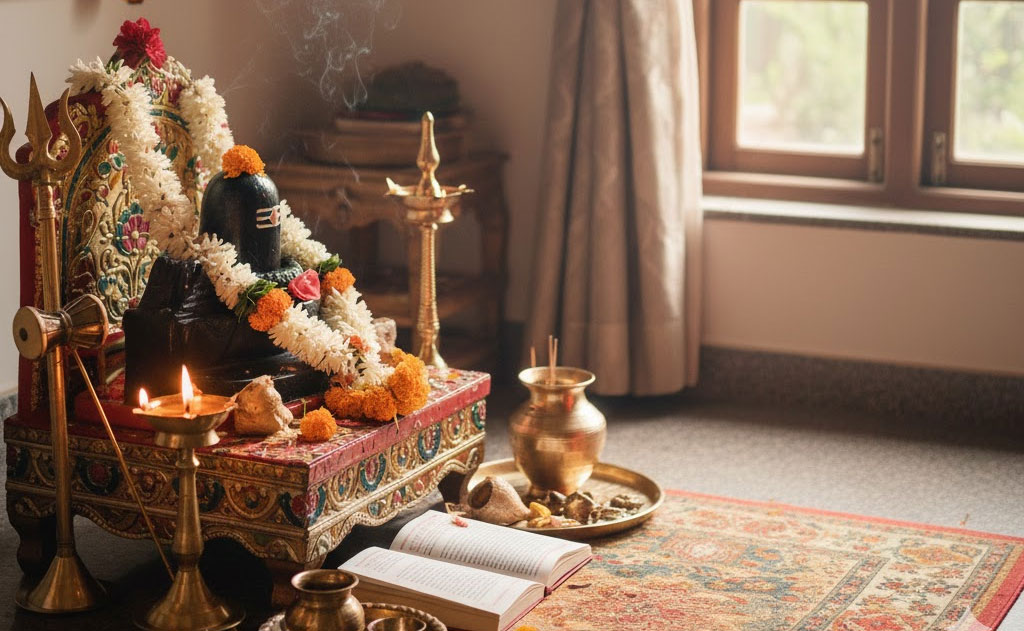
- Place a Shiva Linga or picture of Lord Shiva on the altar
- Offer water or milk to the Shiva Linga (Abhishekam)
- Apply sandalwood paste, kumkum, and vibhuti
- Offer bilva (bael) leaves, which are especially dear to Lord Shiva
- Light incense sticks and a ghee lamp
- Offer flowers, particularly white flowers and dhatura
- Present bhog (food offerings) such as fruits and sweets
3. Prayers and Mantras for Monday
Essential Shiva Mantras:
- Om Namah Shivaya: The most powerful Shiva mantra, chanted 108 times
- Mahamrityunjaya Mantra: For protection and healing
- Shiva Gayatri Mantra: For wisdom and enlightenment
Monday Prayers: Recite Shiva Chalisa, Shiva Stotram, or read stories from Shiva Purana. Many devotees also recite the 108 names of Lord Shiva (Shiva Ashtottara Shatanamavali).
4. Temple Visit
Visiting a Shiva temple on Monday is considered highly meritorious. Devotees participate in temple rituals, offer prayers, and receive prasad. Popular Shiva temples witness large gatherings of devotees on Mondays.
5. Charitable Acts
Performing acts of charity on Monday enhances the spiritual benefits. Common charitable practices include:
- Feeding the poor and needy
- Donating white items like rice, milk, or clothes
- Offering help to the less fortunate
- Feeding cows or stray animals
Monday Vrat Katha (Stories)
Reading or listening to Monday Vrat Katha is an integral part of the observance. These stories illustrate the power of devotion and the blessings that come from sincere worship. The most popular story involves a poor Brahmin woman whose devotion to Monday fasting brought prosperity and happiness to her family.
Foods for Breaking Monday Fast
When breaking the Monday fast, devotees typically consume:
- Fruits and fruit juices
- Milk-based dishes like kheer or sweet rice pudding
- Sabudana khichdi or vada
- Potato preparations without onion and garlic
- Sweets like halwa or ladoo
Benefits of Observing Monday Rituals
Regular observance of Monday rituals is believed to bring numerous spiritual and material benefits:
- Spiritual Growth: Deepens connection with the divine and enhances inner peace
- Mental Clarity: Reduces stress and anxiety, promoting emotional balance
- Obstacle Removal: Helps overcome challenges in personal and professional life
- Marital Harmony: Particularly beneficial for unmarried women seeking good life partners and married couples seeking harmony
- Health Benefits: Fasting promotes detoxification and digestive health
- Prosperity: Attracts wealth and success through divine grace
Special Monday Observances
Sawan Somvar
The Mondays falling in the Hindu month of Sawan (July-August) are considered especially auspicious. Devotees observe special fasts and perform elaborate rituals during these four or five Mondays, believing that Lord Shiva is particularly pleased with worship during this period.
Solah Somvar Vrat
This is a 16-week Monday fasting ritual undertaken primarily by women. The devotee observes fasts for 16 consecutive Mondays with complete dedication, believed to fulfill specific wishes and bring marital bliss.
Things to Avoid on Monday
To maintain the sanctity of Monday observance:
- Avoid non-vegetarian food and alcohol
- Refrain from negative thoughts and speech
- Do not cut hair or nails
- Avoid unnecessary conflicts and arguments
- Do not purchase iron items
- Minimize consumption of onion and garlic
Conclusion
Monday rituals in Hinduism offer a beautiful pathway to spiritual growth and divine connection. Whether you observe a complete fast, perform simple puja at home, or visit a temple, the key lies in sincere devotion and faith. These time-honored practices have been followed for generations, bringing peace, prosperity, and spiritual fulfillment to countless devotees.
By incorporating Monday rituals into your weekly routine, you embrace a tradition that connects you with millions of Shiva devotees worldwide and opens the door to divine blessings. Remember, the essence of any ritual lies not in its complexity but in the purity of intention and depth of devotion.
Frequently Asked Questions
Q: Can working professionals observe Monday fasting? A: Yes, you can observe a partial fast by consuming fruits and milk, which allows you to maintain your energy while honoring the tradition.
Q: Is it necessary to visit a temple on Monday? A: While temple visits are beneficial, you can perform all rituals at home with equal devotion.
Q: Can children observe Monday fasting? A: Children can participate in simplified versions of the fast, such as avoiding certain foods or eating only fruits, based on their age and health.
Q: What if I miss a Monday in my 16-Monday vrat? A: It’s believed you should restart the sequence, though sincere devotion matters most. Consult with a priest for guidance.
Q: Are there any restrictions during menstruation? A: Traditional practices vary, but devotion from heart is accepted in all states. Follow your family traditions and personal comfort.
Embrace the spiritual power of Mondays and experience the transformative blessings of Lord Shiva in your life.
Related posts:
 Jyestha Poornima: Harnessing the Power of Jyestha Nakshatra for Spiritual Growth*
 Pancha Bhoota Sthalas of Shiva: A Divine Journey Through the Five Elements
 The Sacred Significance of 108: A Devotional Journey Through Sanatan Dharma
 Bhadrapada Masam Sunday: Sacred Significance, Rituals, and Divine Blessings
 The Cultural Tapestry of Ashwin: How India Celebrates Unity in Diversity
 Complete Guide to Skanda Shashti 2025 Celebrations in Canada: Temples, Events, Rituals & Sacred Mantras
 The Connection Between Amavasya and Lord Shiva Worship
 Pushya Masam 2025 & 2026: Complete Guide with Dates, Festivals & Spiritual Significance | Telugu Calendar 2025–2026