The Connection Between Amavasya and Lord Shiva Worship
The Sacred Night of Spiritual Transformation In the rhythmic dance of celestial bodies, Amavasya—the new moon night—holds a uniquely sacred place in Hindu…
The Sacred Night of Spiritual Transformation In the rhythmic dance of celestial bodies, Amavasya—the new moon night—holds a uniquely sacred place in Hindu…
The Sacred Night of Spiritual Transformation
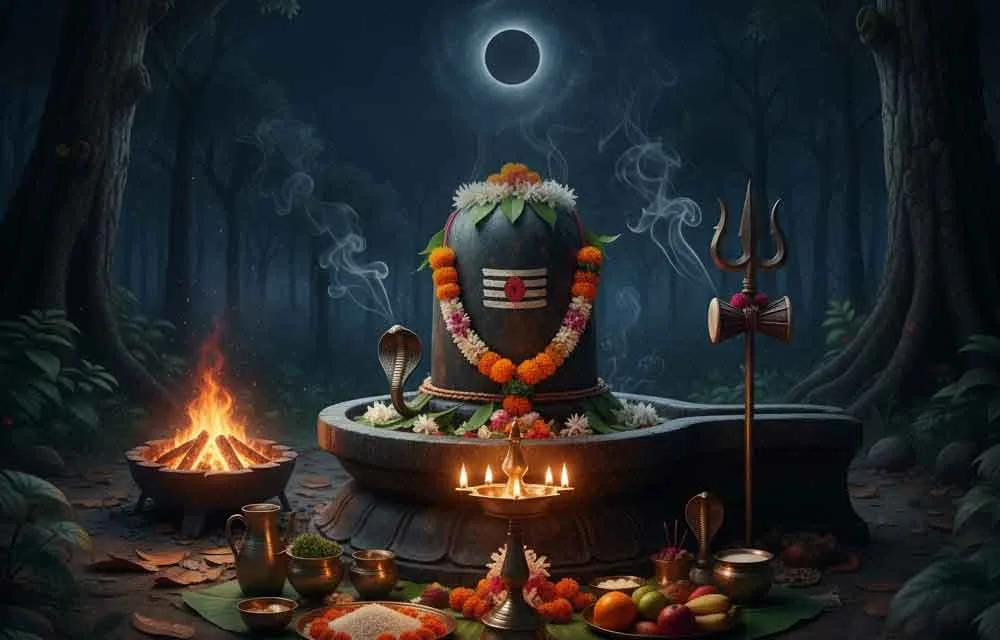
In the rhythmic dance of celestial bodies, Amavasya—the new moon night—holds a uniquely sacred place in Hindu spirituality. This moonless night, when darkness blankets the earth, is considered one of the most powerful times to worship Lord Shiva, the Supreme Consciousness who transcends all dualities. The profound connection between Amavasya and Shiva worship is woven through mythology, spiritual philosophy, and transformative practices that have guided seekers for millennia.
Understanding Amavasya: When Darkness Becomes Sacred
The Astronomical Phenomenon
Amavasya occurs when the moon aligns perfectly between the Sun and Earth, rendering it invisible from our planet. The word "Amavasya" derives from Sanskrit: "Ama" (together) and "Vasya" (to dwell)—describing how the Sun and Moon dwell together in the same celestial position.
The Spiritual Significance
In Vedic tradition, Amavasya represents more than astronomical alignment. It symbolizes:
- The Pause in Creation: A cosmic rest period between lunar cycles
- Ancestral Connection: A time when the veil between worlds grows thin
- Inner Journey: When external light diminishes, internal illumination becomes possible
- Karmic Resolution: An opportunity for releasing old patterns and beginning anew
The absence of moonlight creates a unique energetic atmosphere—one that can be challenging for the unprepared but profoundly transformative for spiritual practitioners.
Why Lord Shiva on Amavasya?
Shiva: The Lord of Paradoxes
Lord Shiva embodies seemingly contradictory qualities that make him the perfect deity for Amavasya worship:
The Destroyer and Transformer: While darkness might seem negative, Shiva teaches that destruction is necessary for transformation. Just as Amavasya marks the end of one lunar cycle and the birth of another, Shiva dissolves the old to make way for new spiritual growth.
The Dark and the Luminous: Shiva is called "Tamomaya" (encompassing darkness) and simultaneously worshipped as "Jyotirlinga" (pillar of infinite light). This paradox mirrors Amavasya itself—darkness that contains the seed of all light.
The Ascetic and the Householder: Living in meditation on Mount Kailash yet married to Goddess Parvati, Shiva bridges the transcendent and the mundane, just as Amavasya connects spiritual and material realms.
The Cosmic Dance of Dissolution
In Hindu cosmology, Shiva performs the Tandava—the cosmic dance of creation and dissolution. Amavasya represents a mini-dissolution within the lunar month, a momentary return to the void from which new creation emerges. By worshipping Shiva during this time, devotees align themselves with the cosmic rhythm of transformation.
Protection During Spiritual Vulnerability
Vedic texts suggest that Amavasya can be spiritually challenging due to increased tamasic (inertial, dark) energies. Lord Shiva, who consumed the Halahala poison to protect creation, is invoked on this night for protection against negative influences and to transmute spiritual darkness into light.
Rudrabhishekam: The Sacred Bathing Ritual
What is Rudrabhishekam?
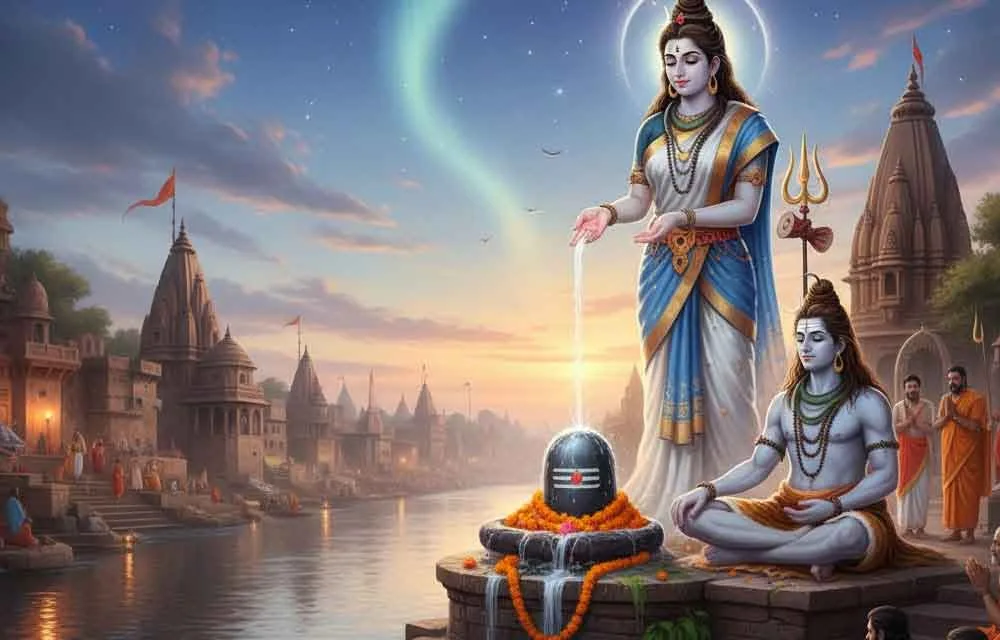
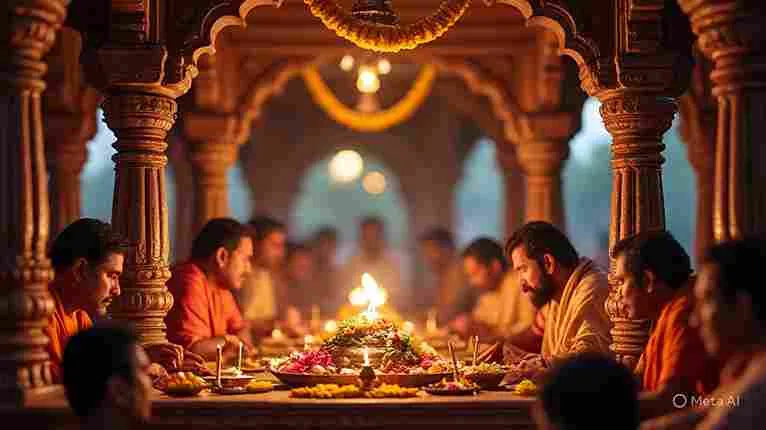
Rudrabhishekam is one of Hinduism's most powerful rituals—a ceremonial bathing of the Shiva Linga accompanied by chanting of the Rudram (ancient Vedic hymns). "Rudra" is Shiva's fierce form mentioned in the Rigveda, and "abhishekam" means ritual bathing or anointing.
The Ritual Components
A complete Rudrabhishekam involves:
- Sankalpa (Sacred Intention): Setting the spiritual purpose of the ritual
- Invocation: Calling upon Lord Shiva's presence
- Bathing with Sacred Substances: Using specific materials with symbolic meanings
- Mantra Recitation: Chanting Rudram and other Shiva hymns
- Offerings: Presenting Bilva leaves, flowers, fruits, and other items
- Aarti and Conclusion: Closing ceremony with lamp offering
The Sacred Substances
The Shiva Linga is bathed with various sacred materials, each carrying deep symbolism:
Water (Jala): Symbolizes purification and the flowing nature of consciousness. It represents removing impurities from body, mind, and soul.
Milk (Dugdha): Represents purity, nourishment, and the nurturing aspect of divinity. It symbolizes the desire for spiritual nourishment.
Yogurt (Dadhi): Signifies prosperity and the transformation that occurs in spiritual practice (just as milk transforms into yogurt).
Honey (Madhu): Symbolizes the sweetness of devotion and divine grace. It represents the nectar of spiritual realization.
Ghee (Ghrita): Represents illumination, clarity, and the burning away of ignorance through the fire of knowledge.
Sugar or Sugarcane Juice (Sharkara): Symbolizes the sweetness of the devotee-deity relationship and the joy of spiritual life.
Tender Coconut Water: Represents cooling the fires of material desires and achieving inner peace.
Panchamrita: A special mixture of milk, yogurt, ghee, honey, and sugar—combining all beneficial qualities.
Why Perform Rudrabhishekam on Amavasya?
Amplified Spiritual Potency: The unique energetic conditions of Amavasya multiply the effects of spiritual practices. Each mantra chanted, each offering made carries enhanced power.
Karmic Cleansing: Amavasya is traditionally associated with ancestors (Pitrs) and karmic accounts. Rudrabhishekam performed on this day helps clear ancestral debts and negative karmic patterns that may be affecting current life.
Mental Purification: The rhythmic chanting and systematic ritual of Rudrabhishekam creates profound mental clarity, especially valuable when the absence of moonlight can create psychological restlessness.
Protection from Negativity: The sacred mantras and ritual actions create a protective spiritual field around participants, shielding them from negative energies that may be more active during Amavasya.
Alignment with Cosmic Cycles: Just as nature observes a pause during the new moon, Rudrabhishekam on Amavasya represents a spiritual reset—cleansing the slate before the new lunar cycle begins.
Ancestral Liberation: Since Amavasya is connected with the spirit realm, performing Rudrabhishekam is believed to bring peace to departed ancestors and free them from lower planes of existence.
The Experience of Rudrabhishekam
Devotees who regularly perform or participate in Rudrabhishekam on Amavasya report:
- Deep sense of inner peace and clarity
- Release of emotional and mental burdens
- Increased spiritual sensitivity and intuition
- Feeling of divine protection and grace
- Resolution of persistent life obstacles
- Improved family harmony and relationships
- Enhanced meditation experiences
The Sacred Bilva Leaf: Shiva's Most Beloved Offering
The Botanical Wonder
The Bilva tree (Aegle marmelos), also known as Bael, is considered one of the most sacred trees in Hinduism. Its trifoliate leaves—three leaflets growing from a single stem—are especially dear to Lord Shiva.
Why Shiva Loves Bilva Leaves
Several scriptures explain Shiva's special affection for Bilva:
The Shiva Purana states: "One who offers Bilva leaves to Lord Shiva, knowingly or unknowingly, is freed from all sins committed in many births."
The Skanda Purana mentions: "The worship of Shiva with Bilva leaves destroys all sins and grants liberation."
According to mythology, Goddess Lakshmi once resided in the Bilva tree. When she moved to the lotus, Lord Shiva declared he would dwell in the Bilva tree forever, making it eternally sacred.
The Profound Symbolism
The three leaflets of the Bilva leaf carry multiple layers of meaning:
The Trinity (Trimurti):
- Brahma (the Creator)
- Vishnu (the Preserver)
- Shiva (the Transformer)
Offering the three-leafed Bilva represents surrendering to all three aspects of cosmic function.
The Three Gunas (Qualities of Nature):
- Sattva (purity, harmony, balance)
- Rajas (activity, passion, movement)
- Tamas (inertia, darkness, stability)
Offering Bilva leaves symbolizes transcending all three gunas to reach the state beyond qualities—pure consciousness.
The Three Debts (Rnas):
- Deva Rna (debt to the gods)
- Rishi Rna (debt to the sages)
- Pitru Rna (debt to the ancestors)
The Bilva offering represents fulfilling these sacred obligations.
The Three Times:
- Past (memories and karma)
- Present (current experience)
- Future (hopes and fears)
Offering Bilva means surrendering all of time to the timeless Lord.
Body, Mind, and Spirit: The three aspects of human existence offered in complete surrender to the divine.
The Three States of Consciousness:
- Waking (jagrat)
- Dreaming (swapna)
- Deep sleep (sushupti)
Transcending all three to reach Turiya—the fourth state of pure awareness.
Special Qualities of Bilva on Amavasya
Lunar Receptivity: The Bilva tree is believed to be highly sensitive to lunar energies. On Amavasya, when these energies are in a unique withdrawn state, Bilva leaves carry special spiritual potency.
Ancestral Peace: Since Amavasya connects with the ancestral realm, offering Bilva leaves to Shiva on this day is particularly effective for bringing peace to departed souls and clearing family lineage karma.
Completing Cycles: Just as Amavasya marks the completion of one lunar cycle, offering Bilva leaves represents completing karmic cycles and preparing for new spiritual chapters.
Enhanced Purification: The purifying properties of Bilva leaves are believed to be magnified on Amavasya, making them especially effective for cleansing negative energies.
The Proper Method of Offering
Traditional texts prescribe specific guidelines:
Selection: Choose fresh, green leaves without tears, holes, or insect damage. The ideal Bilva leaf has three complete leaflets on a single stem.
Number: Offer in sets of three, symbolizing the Trinity. Devotees often offer 3, 9, 21, 27, or 108 leaves.
Preparation: Wash the leaves gently with clean water. Some traditions recommend sprinkling them with water mixed with turmeric and sandalwood.
Placement: Place the leaves on the Shiva Linga with the stem facing you and the tip pointing toward the deity. This creates proper energy flow.
Intention: While offering, maintain focused devotion. Visualize offering not just the physical leaves but your entire being to Lord Shiva.
Mantras: Chant while offering:
- "Om Namah Shivaya" (the basic Shiva mantra)
- "Om Bilva Patram Shivarpanam" (I offer Bilva leaves to Shiva)
- Specific Bilva Ashtakam (eight-verse hymn praising Bilva)
The Bilva Ashtakam
This sacred hymn glorifies the Bilva tree and its leaves:
"Tridalam trigunakaram trinetram ca triyayudham, Trijanma papa samharam eka bilvam shivarpanam"
"The three-leafed Bilva with three qualities, offered to the three-eyed Lord who holds three weapons, destroys sins of three births—even one Bilva leaf offered to Shiva is enough."
Om Namah Shivaya: The Heart of Shiva Worship
The Panchakshari Mantra
"Om Namah Shivaya"—the five-syllable mantra—is perhaps the most widely chanted Shiva mantra in the world. It appears in the Yajurveda's Shri Rudram (also called Rudra Prashna), one of Hinduism's oldest hymns.
Decoding the Mantra
Om (ॐ): The primordial sound, the vibration from which all creation emanates. It represents Brahman—the ultimate reality. Om contains all sounds, all mantras, all creation within it.
Namah (नमः): This word has profound meanings:
- "Na" (not) + "Mah" (mine) = "Not mine" or "Nothing is mine" (ego dissolution)
- Salutation, bowing down, honoring
- Surrender of individual will to divine will
- Recognition of the Supreme in all
Shivaya (शिवाय): "To Shiva" or "For Shiva"
- Shiva means "the auspicious one"
- Represents the Supreme Consciousness
- The destroyer of ignorance
- The eternal, unchanging reality
Complete Meaning: "I bow to Shiva" or "Salutations to the auspicious one" or, more deeply, "I surrender my ego-self to the Supreme Consciousness that is ever-auspicious."
The Five Elements Connection
Each syllable of "Na-Mah-Shi-Va-Ya" corresponds to one of the five great elements (Pancha Mahabhutas) that comprise all physical existence:
- Na (न): Earth (Prithvi) - stability, foundation, manifestation
- Mah (म): Water (Jala) - fluidity, emotion, purification
- Shi (शि): Fire (Agni) - transformation, digestion, illumination
- Va (व): Air (Vayu) - movement, breath, life force
- Ya (य): Ether/Space (Akasha) - expansion, consciousness, potential
Chanting this mantra harmonizes all five elements within the practitioner's body and consciousness, creating balance between the physical and spiritual dimensions.
The Neurological and Energetic Effects
Modern research into mantra chanting reveals fascinating effects:
Brain Wave Patterns: Regular chanting creates coherent brain wave patterns, particularly in the alpha and theta ranges associated with deep relaxation and meditation.
Vagus Nerve Stimulation: The vibrations from chanting stimulate the vagus nerve, which regulates the parasympathetic nervous system, reducing stress and promoting healing.
Neuroplasticity: Consistent mantra practice literally rewires the brain, strengthening neural pathways associated with focus, emotional regulation, and spiritual awareness.
Vibrational Medicine: Each syllable creates specific vibrational frequencies that resonate with different chakras (energy centers) in the body:
- Na: Muladhara (root chakra)
- Mah: Svadhisthana (sacral chakra)
- Shi: Manipura (solar plexus chakra)
- Va: Anahata (heart chakra)
- Ya: Vishuddha (throat chakra)
Om resonates with the Ajna (third eye) and Sahasrara (crown) chakras.
Why Chant Om Namah Shivaya on Amavasya?
Magnified Spiritual Power: The energetic configuration of Amavasya amplifies the effects of all spiritual practices. Each repetition of the mantra carries enhanced potency during this time.
Mental Stabilization: The absence of moonlight can create psychological restlessness, anxiety, or disturbed sleep patterns. The rhythmic chanting of Om Namah Shivaya creates profound mental peace and stability.
Karmic Acceleration: This mantra is known as a "taraka mantra"—one that helps souls cross the ocean of samsara (the cycle of birth and death). On Amavasya, when karmic energies are particularly active and ancestral connections are strong, chanting accelerates karmic resolution and spiritual evolution.
Protection and Grace: The mantra creates a protective spiritual shield around the practitioner. This is especially valuable on Amavasya when subtle negative influences may be more active.
Ancestral Liberation: Chanting Om Namah Shivaya on Amavasya is believed to bring immense peace to departed ancestors and invoke their blessings upon the family lineage.
Elemental Harmony: Since the mantra balances the five elements, chanting it on Amavasya—a time of natural elemental shift—creates powerful internal harmony.
Consciousness Expansion: Amavasya represents the dissolution phase of the lunar cycle. Chanting this dissolution mantra during this time aligns the practitioner with cosmic rhythms, facilitating ego dissolution and expansion into universal consciousness.
Methods of Practice
The mantra can be practiced in various ways, each offering unique benefits:
Japa (Repetitive Chanting): Using a rudraksha mala (108 prayer beads), devotees complete traditional counts:
- 108 repetitions (one mala) - basic practice
- 216 repetitions (two malas) - intermediate practice
- 432 repetitions (four malas) - advanced practice
- 1,080 repetitions (ten malas) - intensive practice
- 10,800 repetitions - special occasions
Kirtan (Devotional Singing): Group chanting with musical accompaniment creates collective spiritual energy. The communal vibration multiplies the individual effect.
Ajapa Japa (Continuous Mental Repetition): Silent mental repetition synchronized with natural breath:
- Inhale: Om Namah
- Exhale: Shivaya This creates continuous awareness throughout daily activities.
Likhita Japa (Written Repetition): Writing the mantra repeatedly in a notebook as a form of moving meditation. This engages visual, kinesthetic, and mental faculties simultaneously.
Manasika Japa (Mental Repetition): Silent mental chanting during meditation, creating the most subtle and powerful effect on consciousness.
The Sacred Stories: Mythology of Amavasya and Shiva
The Churning of the Cosmic Ocean
One of Hinduism's most significant myths connects Shiva with protection during crisis—a theme directly relevant to Amavasya worship.
The Story: When gods (Devas) and demons (Asuras) churned the cosmic ocean to obtain Amrita (nectar of immortality), the first thing that emerged was Halahala—the deadliest poison that threatened to destroy all creation.
No one could contain or neutralize this poison. In desperation, the Devas approached Lord Shiva. Out of compassion for all beings, Shiva consumed the poison. Goddess Parvati, fearing for his life, held his throat, preventing the poison from descending. The poison remained in Shiva's throat, turning it blue, earning him the name "Neelkanth" (blue-throated one).
Connection to Amavasya: This story metaphorically explains why devotees worship Shiva on Amavasya. Just as Shiva protected the universe from poison during a cosmic crisis, devotees worship him on the challenging new moon night to protect themselves from:
- Negative karmic influences ("poison" from past actions)
- Ancestral troubles (unresolved family karma)
- Mental disturbances (psychological "poison")
- Spiritual obstacles on the path
Shiva's ability to hold poison without being destroyed symbolizes the spiritual power to transform darkness into light, suffering into liberation.
Shiva and the Moon: A Divine Relationship
The Curse and Redemption:
King Daksha Prajapati had 27 daughters whom he married to the Moon God (Chandra). Chandra was supposed to treat all wives equally, but he showed excessive favoritism toward Rohini, his most beautiful wife.
The other 26 wives complained to their father, who warned Chandra repeatedly. When Chandra didn't change his behavior, Daksha cursed him with a wasting disease that caused him to lose his luster progressively.
Chandra, in great distress and steadily waning, sought refuge in Lord Shiva. He performed intense austerities and worship at the site that later became the famous Somnath Temple in Gujarat (Soma = Moon, Nath = Lord).
Pleased with his devotion, Lord Shiva partially modified the curse. He decreed that Chandra would wane for fifteen days but then wax for fifteen days, establishing the lunar cycle we observe today. As a symbol of his grace, Shiva adorned his matted locks with a crescent moon, where Chandra found permanent refuge.
Connection to Amavasya Worship:
On Amavasya, when the moon is completely dark—the culmination of the waning period—devotees worship Shiva who wears the moon on his head. This worship invokes:
- Shiva's grace to overcome the challenging dark period
- Protection during the moon's weakest phase
- Hope for renewal and waxing (spiritual growth)
- Recognition that even in complete darkness, the moon rests in Shiva's presence
The story teaches that even in our darkest times (symbolized by Amavasya), taking refuge in Shiva provides protection and ensures eventual renewal.
The Infinite Pillar of Light
The Story of the Jyotirlinga:
Once, Brahma and Vishnu were engaged in a dispute about who was superior. Each claimed to be the ultimate creator and sustainer of the universe.
Suddenly, a massive, blazing pillar of light appeared between them—extending infinitely upward and downward. A voice proclaimed: "Whoever finds the beginning or end of this pillar is indeed the greatest."
Brahma transformed into a swan and flew upward to find the top. Vishnu became a boar and dug deep into the earth to find the bottom. They searched for thousands of years.
Eventually, Vishnu humbly admitted he couldn't find the end. However, Brahma, driven by ego, falsely claimed he had found the top and even brought a Ketaki flower as false evidence.
The pillar then revealed itself as Lord Shiva. Shiva praised Vishnu's humility but cursed Brahma to not be worshipped in temples for his falsehood. The pillar became the Jyotirlinga—the symbolic representation of Shiva's infinite, formless nature.
Connection to Amavasya:
The infinite pillar of light manifesting in the void parallels the spiritual opportunity of Amavasya:
- When external light (moon) disappears, the internal light (consciousness/Shiva) can be more directly experienced
- The darkness of Amavasya is like the void in which the Jyotirlinga appeared
- True spiritual light doesn't depend on external conditions
- Amavasya teaches that Shiva (consciousness) is the unchanging reality underlying all changing phenomena
The story reminds us that on Amavasya, when we can't rely on the reflected light of the moon (representing the mind), we must seek the original source of light—pure consciousness itself.
Shiva and Sati: The Birth of Sacred Sites
The Tragic Story:
Lord Shiva's first consort was Sati, daughter of Daksha Prajapati. Despite Daksha's disapproval, Sati married Shiva out of deep love and devotion.
Daksha organized a grand yajna (fire ceremony) and invited all gods except Shiva and Sati, deliberately insulting them. Against Shiva's advice, Sati attended the ceremony. When Daksha publicly humiliated Shiva, Sati couldn't bear the insult to her beloved husband. She immolated herself in the sacrificial fire.
Grief-stricken and enraged, Shiva created the fearsome Virabhadra who destroyed Daksha's yajna. Shiva then carried Sati's body and wandered the universe in sorrow. To end his grief and restore cosmic balance, Lord Vishnu used his Sudarshan Chakra to dismember Sati's body.
52 parts of Sati's body fell to earth, each creating a Shakti Peetha—sacred sites of Goddess worship. Where Sati's heart fell became Kamakhya Temple; where her feet fell became Kalighat; and so on.
Connection to Amavasya:
This story connects to Amavasya through:
- The theme of death, dissolution, and sacred transformation
- Shiva's role as the great mourner and transformer of sorrow
- The creation of sacred pilgrimage sites from loss
- The dark period (Shiva's wandering) before renewal (Sati's rebirth as Parvati)
Many devotees visit Shakti Peethas on Amavasya, combining Goddess and Shiva worship, recognizing their inseparable relationship.
Scientific and Yogic Perspectives
Lunar Influence on Human Physiology
Modern science has confirmed what ancient yogis knew: lunar cycles significantly affect human biology.
Water Content: The human body is approximately 60-70% water. Just as the moon's gravitational pull creates ocean tides, it affects the water within our bodies.
Brain Function: The brain, being approximately 73% water, is particularly susceptible to lunar influences. Studies have shown:
- Sleep patterns change around new moon (Amavasya)
- Dream intensity varies with lunar phases
- Emotional volatility can increase during Amavasya
- Mental restlessness is common on new moon nights
Hormonal Cycles: Research indicates lunar phases affect:
- Melatonin production (sleep hormone)
- Cortisol levels (stress hormone)
- Reproductive cycles
Psychiatric Observations: Some studies in emergency psychiatry note increased psychiatric emergency visits around new moon periods, though research remains debated.
Yogic Understanding: Nadis and Amavasya
In yogic physiology, thousands of energy channels (nadis) exist within the subtle body. Three are primary:
Ida Nadi:
- Represents lunar, cooling, receptive, feminine energy
- Governs the parasympathetic nervous system
- Associated with the left nostril and right brain hemisphere
- Connected with mental and emotional processes
Pingala Nadi:
- Represents solar, heating, active, masculine energy
- Governs the sympathetic nervous system
- Associated with the right nostril and left brain hemisphere
- Connected with physical action and analytical thinking
Sushumna Nadi:
- The central channel along the spine
- Associated with spiritual awakening and higher consciousness
- Normally dormant, activated through yoga and spiritual practice
Amavasya's Effect:
On Amavasya, the lunar influence (Ida) is at its minimum. This creates several effects:
- Energetic Imbalance: Without the moon's cooling influence, many people experience:
- Increased Pingala (solar) energy leading to restlessness
- Difficulty in calming the mind
- Disturbed sleep patterns
- Emotional volatility
- Spiritual Opportunity: For prepared practitioners, reduced Ida influence offers:
- Easier activation of Sushumna (central channel)
- Enhanced meditation depth
- Reduced mental modifications (vrittis)
- Greater access to formless awareness
- Why Shiva Practices Help:
- Shiva represents the state beyond Ida-Pingala duality
- Mantra chanting balances the nadis
- Rudrabhishekam's cooling substances balance excess Pingala
- Shiva worship activates the central channel (Sushumna)
Kundalini and Amavasya
Kundalini Shakti—the dormant spiritual energy at the base of the spine—is intimately connected with lunar cycles.
The Lunar Connection:
- Kundalini rises through the Sushumna channel
- Full moon (Purnima) represents fully risen Kundalini reaching the crown
- New moon (Amavasya) represents Kundalini resting at the base
- The lunar cycle mirrors Kundalini's potential ascent and descent
Amavasya as Spiritual Reset:
- The new moon represents return to the source (Muladhara chakra)
- It's an opportunity to begin a fresh spiritual cycle
- Shiva, as the lord of Kundalini yoga, is worshipped to:
- Awaken the dormant Kundalini
- Guide its safe ascent
- Protect the practitioner during transformation
- Stabilize higher states of consciousness
The Pineal Gland: Scientific Meeting Point
The pineal gland, located deep in the brain, has fascinated both scientists and mystics:
Scientific Understanding:
- Produces melatonin, regulating sleep-wake cycles
- Responds to light/dark cycles
- Affected by electromagnetic fields
- May be sensitive to lunar phases
Yogic Understanding:
- Corresponds to the Ajna chakra (third eye)
- Seat of intuition and higher perception
- Associated with Shiva's third eye
- Gateway to transcendent consciousness
Amavasya Connection:
- Darkness of Amavasya affects pineal function
- Shiva worship and meditation stimulate the pineal gland
- Mantra chanting creates vibrations that resonate with this region
- Enhanced melatonin production during Amavasya meditation supports deep spiritual states
Practical Guidelines for Amavasya Shiva Worship
Preparation: Purifying Body and Mind
Physical Preparation:
- Bathing: Rise early (ideally before sunrise) and take a purifying bath. Adding a pinch of turmeric, rock salt, or a few drops of Ganga water to the bath water enhances purification.
- Fasting: Many devotees observe complete or partial fast on Amavasya:
- Complete fast: Only water, occasionally fruits
- Partial fast: One meal, avoiding grains
- Sattvic diet: Avoiding tamasic foods (meat, alcohol, onion, garlic, mushrooms)
- Clothing: Wear clean, preferably new or recently washed clothes. Traditional colors include:
- White (purity, Shiva's favored color)
- Saffron/orange (renunciation, spiritual aspiration)
- Red (shakti, divine energy)
- Earth tones (grounding, stability)
- Space Preparation: Clean your worship area thoroughly. If possible, purify with:
- Sprinkling Ganga water
- Incense smoke (frankincense, sandalwood)
- Ringing bells to clear stagnant energy
Mental Preparation:
- Sankalpa (Intention): Clearly set your intention:
- "I worship Lord Shiva for spiritual evolution"
- "I seek liberation from karmic patterns"
- "I pray for family wellbeing and ancestral peace"
- Forgiveness: Before worship, mentally seek forgiveness:
- From those you may have harmed
- For yourself, releasing self-judgment
- For ancestors, acknowledging their struggles
- Gratitude: Cultivate thankfulness for:
- The opportunity to worship
- Spiritual teachings received
- Life itself and its challenges
Setting Up the Altar
Essential Items:
- Shiva Linga or Image: Place on a clean platform or altar
- Kalasha (Water Pot): For abhishekam, filled with clean water
- Bilva Leaves: Fresh, preferably from your own gathering
- Flowers: White or pink roses, jasmine, dhatura (use carefully - poisonous)
- Incense: Sandalwood, frankincense, or special Shiva incense
- Lamp: Ghee lamp or oil lamp (sesame oil traditional)
- Offerings: Fruits (especially ber/jujube), sweets, panchamrita
- Bell: For invoking divine presence
- Rudraksha Mala: For japa (mantra repetition)
Optional Items:
- Sandalwood paste
- Vibhuti (sacred ash)
- Honey, milk, yogurt for abhishekam
- White cloth for covering the Linga
- Sacred texts (Shiva Purana, Rudram)
Step-by-Step Worship Sequence
1. Purification and Invocation (10 minutes)
- Light the lamp and incense
- Ring the bell three times
- Sit comfortably facing east or north
- Take three deep breaths, centering yourself
- Sprinkle water around the altar three times (clockwise)
- Apply tilak (sandalwood paste or vibhuti) on your forehead
Chant the invocation: "Om Gan Ganapataye Namah" (removing obstacles) "Om Gurubhyo Namah" (honoring teachers) "Om Namo Bhagavate Vasudevaya" (honoring Vishnu) "Om Namah Shivaya" (invoking Shiva)
2. Sankalpa (Sacred Intention) (2 minutes)
Hold flowers or rice in your hands and state your intention:
"Today, on this holy Amavasya, in the presence of Lord Shiva, I perform this worship for . May this worship be successful and bear spiritual fruit."
3. Dhyana (Meditation on Shiva's Form) (5 minutes)
Visualize Lord Shiva:
- Seated in deep meditation on Mount Kailash
- Ash-covered body glowing with spiritual radiance
- Third eye of wisdom on his forehead
- Crescent moon adorning his matted locks
- Sacred Ganga flowing from his hair
- Blue throat holding the cosmic poison
- Serpent coiled around his neck
- Tiger skin wrapped around his waist
- Trishul (trident) in one hand, damaru (drum) in another
- Peaceful, compassionate expression
- Surrounded by divine light
Chant the dhyana sloka: "Karpur Gauram Karunavtaram, Sansara Saram Bhujagendra Haram Sada Vasantam Hridayaravinde, Bhavam Bhavani Sahitam Namami"
(I bow to Shiva and Parvati, who are camphor-white, the embodiment of compassion, the essence of the world, wearing serpents as ornaments, eternally dwelling in the lotus of the heart.)
4. Abhishekam (Ritual Bathing) (15-20 minutes)
This is the heart of Rudrabhishekam. If you don't have all substances, even water alone is sufficient with devotion.
With Water: Pour water over the Linga in a steady stream while chanting: "Om Namah Shivaya" (108 times minimum) or recite Rudram if you know it
With Milk: Chant: "Om Dugdhabhi Shekaya Namah" Visualize purification and spiritual nourishment
With Yogurt: Chant: "Om Dadhyabhi Shekaya Namah" Visualize prosperity and transformation
With Honey: Chant: "Om Madhwabhishekaya Namah" Visualize sweetness of devotion
With Ghee: Chant: "Om Ghritabhishekaya Namah" Visualize illumination of consciousness
With Sugar/Sugarcane Juice: Chant: "Om Sharkarabhishekaya Namah" Visualize joy and divine love
Final Water Abhishekam: Pour clean water to wash away all previous substances Chant: "Om Apah Abhishekaya Namah"
Important: Collect the abhishekam water (after it flows over the Linga) in a clean vessel. This becomes "theertham" (blessed water) and can be consumed or sprinkled around your home for purification.
5. Alankara (Decoration) (5 minutes)
After abhishekam:
- Gently dry the Linga with a clean cloth
- Apply sandalwood paste or vibhuti
- Offer a beautiful white cloth (vastra)
- Decorate with fresh flowers
- Place a garland if you have one
6. Bilva Patra Archana (Offering Bilva Leaves) (10-15 minutes)
This is the most sacred part for Shiva worship on Amavasya.
Take Bilva leaves (ideally 108, or 27, or at minimum 3) and offer them one at a time on the Shiva Linga, chanting:
"Om Trayambakam Yajamahe, Sugandhim Pushti Vardhanam Urvarukamiva Bandhanan, Mrityor Mukshiya Maamritat"
(We worship the three-eyed one , who is fragrant and nourishes all beings. May he liberate us from death for the sake of immortality, just as a ripe cucumber is released from its bondage to the vine.)
Or chant the Bilva Ashtakam or simply: "Om Namah Shivaya" with each leaf
While offering, focus intensely on:
- Surrendering your ego, desires, and limitations
- Offering your body, mind, and spirit to Shiva
- Releasing karmic patterns and ancestral burdens
- Opening to divine grace and transformation
7. Shodashopachara (16 Traditional Offerings)
If time permits, offer these traditional items:
- Asana (seat): Offer a seat mentally
- Swagata (welcome): Welcome Lord Shiva to your altar
- Padya (water for feet): Offer water
- Arghya (water for hands): Offer water
- Achamana (water for sipping): Offer water
- Snana (bath): The abhishekam you performed
- Vastra (cloth): Offer cloth or visualize
- Yajnopaveeta (sacred thread): Offer or visualize
- Gandha (sandalwood paste): Apply paste
- Pushpa (flowers): Offer fresh flowers
- Dhupa (incense): Wave incense
- Deepa (lamp): Wave lamp in circular motion
- Naivedya (food): Offer fruits, sweets
- Tambula (betel leaves): Offer or visualize
- Dakshina (offering): Place coins or donation
- Pranama (prostration): Bow down fully
8. Mantra Japa (Chanting) (20-30 minutes)
This is the most important practice for Amavasya. Sit comfortably with your rudraksha mala and chant:
"Om Namah Shivaya"
Complete at least one mala (108 repetitions), ideally more:
- 108 (one mala): Basic practice
- 216 (two malas): Beneficial
- 432 (four malas): Powerful
- 1080 (ten malas): Highly auspicious for Amavasya
Technique:
- Hold the mala in your right hand
- Use thumb and middle finger to count beads
- Don't cross the "meru" (head bead); reverse direction
- Chant with awareness, not mechanically
- Synchronize with breath if possible
- Keep eyes closed or softly gazing at the Linga
- If mind wanders, gently return to the mantra
Alternative mantras:
- Mahamrityunjaya Mantra: Especially powerful for protection and healing
- Rudram: If you know this Vedic hymn
- Shiva Panchakshari Stotram: Five-letter praise hymn
- Lingashtakam: Eight verses praising the Linga
9. Aarti (Waving of Lamps) (5 minutes)
Light a camphor or ghee lamp and wave it before Lord Shiva in circular motions:
- Seven circles in front of the face
- Three circles around the body
- Wave to the four directions
Sing or chant the Shiva Aarti:
"Om Jai Shiva Omkara, Swami Jai Shiva Omkara Brahma Vishnu Sadashiva, Ardhangi Dhara Om Jai Shiva Omkara..."
Or the shorter version: "Jai Shiva Shankara, Bom Bom Hara Hara Gange Cha Jamuna Cha, Godavari Sarswati Narmade Sindhu Kaveri, Jalesmin Sannidhim Kuru..."
Ring the bell continuously during aarti.
10. Pushpanjali (Final Flower Offering) (2 minutes)
Take flowers in both hands, hold them at heart level, and offer them to Shiva with a prayer:
"Yena kenapi bhavena, Sarva doshai samiyutah Namami tava padabjam, Parama karunika prabho"
(Whatever be my state, filled with all imperfections, I bow to your lotus feet, O Lord of Supreme Compassion)
Offer the flowers at Shiva's feet.
11. Pradakshina (Circumambulation) (2 minutes)
Walk around the altar or Linga in a clockwise direction:
- Ideally 3, 7, or 11 times
- Keep your right side toward the deity
- Keep hands folded in namaste
- Focus on Shiva's presence
If space is limited, simply turn in place clockwise.
12. Prarthana (Prayer) (5 minutes)
Offer your personal prayers. This is your intimate communication with Lord Shiva. Speak from your heart:
- Express gratitude for blessings received
- Ask for guidance on your spiritual path
- Pray for family wellbeing
- Request removal of obstacles
- Seek peace for ancestors
- Ask for karmic cleansing
- Pray for world peace and wellbeing
Conclude with a traditional prayer:
"Karacharana Kritam Vak Kayajam Karmajam Va Shravana Nayanajam Va Manasam Vaparadham Vihitamavihitam Va Sarvametat Kshamasva Jaya Jaya Karunabdhe Shri Mahadeva Shambho"
(Whatever sins I have committed through actions of my hands and feet, through words, through my body, through my ears and eyes, through my mind, whether sanctioned or unsanctioned, please forgive all. Victory to you, O ocean of compassion, Mahadeva Shambho!)
13. Prostration and Gratitude (2 minutes)
Perform full prostration (if physically able):
- Lie flat on the ground with arms extended toward the deity
- Touch forehead to the floor
- Surrender completely
Or simply bow deeply with folded hands.
Mentally thank:
- Lord Shiva for his presence and grace
- Your gurus and teachers
- Your ancestors
- The opportunity to practice
14. Prasad Distribution (5 minutes)
Offer the naivedya (food offerings) to Shiva one final time, then distribute as prasad:
- Keep some for yourself
- Share with family members
- Can be given to those in need
- The theertham (abhishekam water) should be sipped with reverence
15. Silent Sitting (10-15 minutes)
After the formal worship, sit quietly in meditation:
- Absorb the spiritual vibrations created
- Rest in the silence after mantra
- Allow insights to arise naturally
- Simply be present with Shiva's grace
This silent period is often when the deepest spiritual experiences occur.
For Those Visiting Temples
If you're visiting a Shiva temple on Amavasya instead of home worship:
Preparation:
- Same bathing, fasting, and dress guidelines apply
- Bring offerings: Bilva leaves, flowers, fruits, coconut, incense
- Carry your rudraksha mala for japa
- Go early morning if possible (4-6 AM is ideal)
At the Temple:
- Remove shoes before entering
- Ring the bell at entrance
- Circumambulate the temple before entering sanctum
- Wait patiently in line for darshan
- When you reach the sanctum:
- Offer your items to the priest or place them yourself if allowed
- Receive vibhuti and prasad with reverence
- Spend time in prayer and mantra chanting
- Sit in the temple hall and complete your mala japa
- Participate in any group aarti or puja
- Donate according to your capacity
- Circumambulate the temple again before leaving
Famous Shiva Temples for Amavasya:
- Kashi Vishwanath (Varanasi, Uttar Pradesh)
- Somnath (Gujarat) - especially significant for moon connection
- Kedarnath (Uttarakhand) - one of the 12 Jyotirlingas
- Rameshwaram (Tamil Nadu) - southern Jyotirlinga
- Omkareshwar (Madhya Pradesh)
- Mahakaleshwar (Ujjain, Madhya Pradesh)
- Tryambakeshwar (Nashik, Maharashtra)
- Bhimashankar (Maharashtra)
- Mallikarjuna (Andhra Pradesh)
- Vaidyanath (Jharkhand)
- Nageshwar (Gujarat)
- Grishneshwar (Maharashtra)
Special Considerations for Amavasya
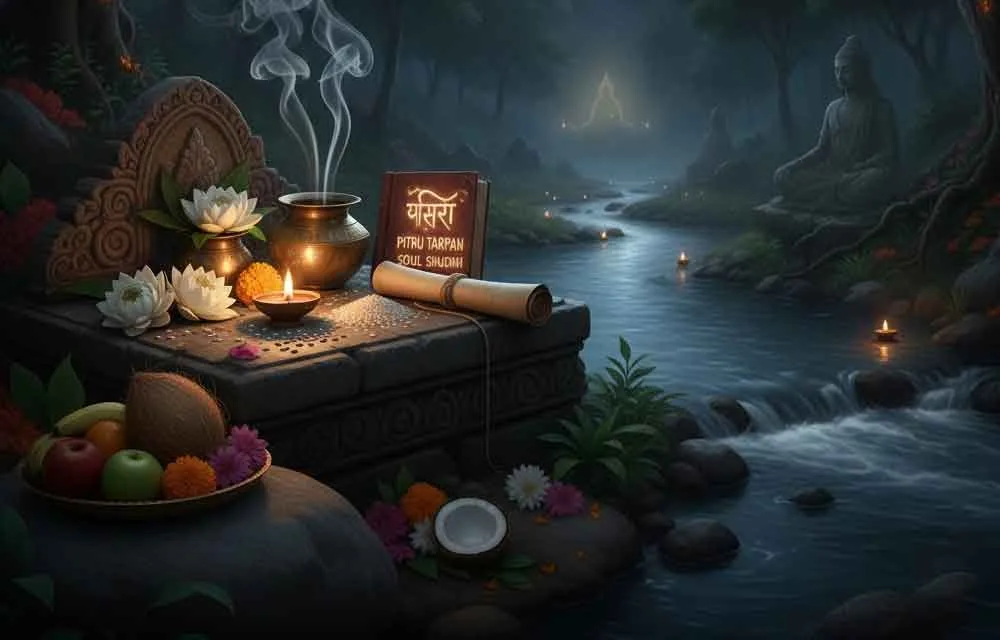
Ancestral Rituals (Pitru Karya):
Amavasya is particularly associated with honoring ancestors. Consider adding:
- Tarpan (Water Offering):
- Offer water mixed with sesame seeds to ancestors
- Face south (direction of Yama, lord of death)
- Chant: "Om Pitru Devatabhyo Namah"
- This brings peace to departed souls
- Food Offering:
- Prepare simple food (rice, dal, vegetables)
- Offer it to ancestors before eating
- Place a portion outside for birds and animals
- This satisfies ancestral hunger
- Charity:
- Feed the poor or homeless
- Donate to temples or spiritual causes
- Give food to animals
- This creates merit that benefits ancestors
Protection Practices:
Since Amavasya can have challenging energies:
- Protective Mantras:
- "Om Namah Shivaya" creates a protective shield
- "Om Namo Bhagavate Rudraya" invokes Shiva's fierce protection
- "Om Tryambakam Yajamahe..." (Mahamrityunjaya) offers comprehensive protection
- Vibhuti Application:
- Apply sacred ash on forehead, throat, and chest
- Creates energetic protection
- Reminds you of Shiva's presence
- Maintaining Sattvic Environment:
- Keep your space clean and purified
- Use incense (sage, frankincense, sandalwood)
- Keep lights on in the evening
- Play devotional music or mantras
Fasting Guidelines:
Different levels of fasting for different constitutions:
Complete Fast (only for healthy adults):
- Only water throughout the day
- Break fast after sighting the next moon
- Suitable for experienced practitioners
Fruit Fast:
- Fresh fruits and fruit juices
- No cooked food
- Suitable for most people
Sattvic Meal:
- One meal of simple vegetarian food
- No grains (use sabudana, potatoes, peanuts)
- Avoid tamasic items (onion, garlic, etc.)
- Suitable for everyone including children and elderly
No Fasting:
- Those who are ill, pregnant, very young, or very old
- Can still observe sattvic diet
- The spiritual practice is more important than fasting
Special Amavasyas Throughout the Year
While every Amavasya is auspicious for Shiva worship, certain ones hold exceptional significance:
1. Maha Shivaratri Amavasya
Though Maha Shivaratri actually falls on Chaturdashi (14th lunar day), when it coincides with or is near Amavasya, it's exceptionally powerful.
Significance:
- Celebrates Shiva's cosmic dance
- Night when Shiva and Parvati were married
- Most important Shiva festival of the year
- Night-long vigil and worship
Special Practices:
- Complete night-long fast
- Four prahar pujas (worship at four 3-hour intervals)
- Continuous chanting and bhajans
- Many devotees don't sleep entire night
- Special abhishekam with elaborate offerings
2. Somavati Amavasya
When Amavasya falls on Monday (Somavar—Shiva's day), it's called Somavati Amavasya.
Significance:
- Double auspiciousness (Shiva's day + Amavasya)
- Particularly beneficial for women devotees
- Special connection with moon energy
- Ideal for beginning new spiritual practices
Special Practices:
- Many married women observe vrat for family wellbeing
- Special worship of Shiva and Parvati together
- Offering milk-based items
- Visiting pipal trees (sacred to both sun and moon)
Mythological Connection: According to tradition, Lord Rama worshipped Shiva on Somavati Amavasya during his exile, receiving blessings for success.
3. Mahalaya Amavasya
Occurs in September-October (Ashwin month), marking the beginning of Pitru Paksha (fortnight dedicated to ancestors).
Significance:
- Most important day for ancestral worship
- Gateway to the realm of departed souls opens
- Ideal for resolving ancestral karma
- Combines Shiva worship with Pitru rituals
Special Practices:
- Elaborate tarpan (water offerings) to ancestors
- Pind daan (rice ball offerings) at holy rivers
- Special Shiva worship for ancestral liberation
- Charity and feeding the poor
- Many visit Gaya, Varanasi, or Prayagraj
Why Shiva Worship: Lord Shiva as Mrityunjaya (conqueror of death) helps ancestors transcend lower realms and achieve higher states.
4. Kartik Amavasya (Diwali Amavasya)
Falls in October-November, coinciding with Diwali celebrations.
Significance:
- Most auspicious month (Kartik) + Amavasya
- Victory of light over darkness theme
- Associated with Goddess Lakshmi and Lord Shiva
- New year in many Hindu traditions
Special Practices:
- Home decoration with lights and lamps
- Lakshmi puja in evening, Shiva worship at dawn
- Special sweets and offerings
- Lighting of lamps (deepa)
- Prosperity and spiritual growth combined
5. Ashadha Amavasya
Falls in June-July, during the monsoon season.
Significance:
- Month when many saints practice intense sadhana
- Associated with Guru Purnima preparations
- Cooler weather supports longer practices
- Natural purification through rains
Special Practices:
- Extended meditation sessions
- Rudrabhishekam with rainwater
- Outdoor worship if weather permits
- Planting tulsi or bilva trees
6. Pausha Amavasya
Falls in December-January, during winter.
Significance:
- Month of spiritual introspection
- Cold weather supports tapas (austerity)
- Connection with nature's dormant phase
- Preparation for Makar Sankranti
Special Practices:
- Early morning worship (despite cold)
- Sesame-based offerings
- Charity of warm clothing
- Extended fasting
The Transformative Benefits: What Devotees Experience
Spiritual Transformation
Regular Amavasya Shiva worship creates profound spiritual changes:
1. Accelerated Spiritual Growth: Devotees report:
- Deeper meditation experiences
- More vivid spiritual dreams and visions
- Intuitive insights during daily life
- Spontaneous understanding of scriptures
- Growing detachment from material concerns
- Natural increase in devotion and faith
2. Karmic Cleansing: Observable effects:
- Sudden resolution of long-standing problems
- Unexpected positive changes in circumstances
- Release from repetitive negative patterns
- Improved relationships with family members
- Feeling lighter, as if burden lifted
- Synchronicities and divine timing in life events
3. Inner Peace and Stability: Psychological benefits:
- Reduced anxiety and worry
- Greater emotional resilience
- Ability to remain calm during challenges
- Decreased reactivity to provocations
- Natural contentment independent of circumstances
- Deeper sense of life purpose
4. Awakening of Higher Consciousness: Advanced experiences:
- Direct perception of divine presence
- Moments of ego dissolution
- Experience of unity with all existence
- Spontaneous jhanas or samadhi states
- Kundalini awakening symptoms
- Opening of third eye (ajna chakra)
Material and Worldly Benefits
While spiritual growth is primary, traditional texts and devotee testimonials mention worldly improvements:
1. Obstacle Removal:
- Career advancements and opportunities
- Resolution of legal or financial issues
- Clearing of misunderstandings in relationships
- Success in educational pursuits
- Overcoming seemingly insurmountable challenges
2. Health Improvements:
- Recovery from chronic conditions
- Increased vitality and energy
- Better sleep quality
- Reduced stress-related ailments
- Enhanced immune function
- Mental clarity and cognitive improvement
3. Family Harmony:
- Improved relationships with spouse and children
- Resolution of family conflicts
- Peace with in-laws and extended family
- Ancestral blessings manifesting
- Protection of family members from harm
4. Prosperity and Abundance:
- Unexpected financial gains
- Business growth and stability
- Property acquisitions
- Debt clearance
- Resource availability when needed
5. Protection:
- Escape from accidents or dangers
- Protection during travel
- Safety from negative energies
- Shield from jealousy and evil eye
- Divine intervention in crisis moments
Psychological and Emotional Benefits
1. Mental Clarity:
- Better decision-making capacity
- Reduced mental fog and confusion
- Enhanced focus and concentration
- Clearer life direction
- Improved problem-solving abilities
2. Emotional Balance:
- Less prone to depression
- Reduced mood swings
- Greater emotional intelligence
- Ability to process difficult emotions
- Healthy emotional expression
3. Relationship Improvements:
- Better communication skills
- Increased empathy and compassion
- Ability to forgive and let go
- Attracting positive people
- Natural leadership qualities
4. Confidence and Self-Worth:
- Reduced self-doubt
- Healthy self-esteem
- Courage to pursue goals
- Acceptance of oneself
- Freedom from people-pleasing
Common Mistakes to Avoid
Ritual Mistakes
1. Mechanical Practice:
- Performing rituals without devotion or awareness
- Chanting mantras while mind wanders elsewhere
- Going through motions out of obligation
- Solution: Quality over quantity; one mindful offering is better than hundred distracted ones
2. Improper Timing:
- Starting worship late in the day
- Missing the brahma muhurta (pre-dawn) period
- Rushing through practices
- Solution: Wake early, allocate sufficient time, plan the day around worship
3. Using Improper Materials:
- Wilted flowers or damaged Bilva leaves
- Impure water for abhishekam
- Stale food offerings
- Solution: Ensure freshness and purity of all offerings; when in doubt, simple is better
4. Breaking Fasting Rules:
- Eating restricted foods during fast
- Breaking fast at wrong time
- Overeating after fast
- Solution: Understand your capacity, follow guidelines appropriate for your health
5. Neglecting Cleanliness:
- Not bathing before worship
- Unclean worship space
- Dirty vessels or implements
- Solution: Prioritize physical and spatial cleanliness as part of spiritual practice
Spiritual Mistakes
1. Transactional Approach:
- Worshipping only when wanting something
- Bargaining with God
- Expecting immediate material results
- Solution: Cultivate devotion for its own sake; see worship as privilege, not transaction
2. Comparison and Competition:
- Comparing your practice with others
- Feeling superior due to longer practices
- Judging others' devotion
- Solution: Focus on your own sincere practice; everyone's path is unique
3. Spiritual Materialism:
- Accumulating spiritual experiences as ego achievements
- Using practices to feel special or superior
- Attachment to siddhis (supernatural powers)
- Solution: Remember the goal is ego dissolution, not ego enhancement
4. Neglecting Integration:
- Behaving badly after worship
- Not applying spiritual insights to daily life
- Creating separation between spiritual and worldly
- Solution: Let worship transform your character; ethics and kindness are true fruits
5. Rigid Fundamentalism:
- Believing your method is the only correct one
- Judging or condemning other approaches
- Losing the essence in obsession with forms
- Solution: Honor tradition while remembering the essence is love and consciousness
Practical Mistakes
1. Overexertion:
- Fasting beyond your capacity
- Staying awake entire night when body needs rest
- Extreme practices causing health problems
- Solution: Spiritual practice should energize, not deplete; adjust to your capacity
2. Neglecting Responsibilities:
- Ignoring family needs for worship
- Avoiding work duties
- Using spirituality to escape life
- Solution: Balance spiritual practice with worldly duties; both are sacred
3. Isolating Yourself:
- Avoiding all social interaction
- Creating separation from family
- Becoming asocial in name of spirituality
- Solution: True spirituality enhances relationships; find balance between solitude and community
Deepening Your Practice Over Time
For Beginners (First Year)
Focus: Establishing consistent practice
Recommendations:
- Start with simple home worship (30-45 minutes)
- One mala (108) of Om Namah Shivaya
- Basic offerings: water, Bilva leaves, flowers
- Read one chapter of Shiva Purana monthly
- Visit nearby Shiva temple on important Amavasyas
- Observe sattvic diet rather than complete fast
- Join beginner-friendly satsangs or groups
Expectation: Building familiarity with rituals, developing devotional feeling, creating habit
For Intermediate Practitioners (2-5 Years)
Focus: Deepening practice and understanding
Recommendations:
- Extended worship (1-2 hours)
- Multiple malas (2-4) of Om Namah Shivaya
- Learn and recite Rudram or other advanced hymns
- Occasional complete fasting
- Visit major Shiva temples at least annually
- Study Shiva philosophy (Kashmir Shaivism, Shaiva Siddhanta)
- Consider night vigil on special Amavasyas
- Develop personal meditation practice
- Teach or share practices with interested seekers
Expectation: Noticeable life transformations, deeper experiences, growing steadiness in practice
For Advanced Practitioners (5+ Years)
Focus: Realization and service
Recommendations:
- Intensive practices (3+ hours)
- High repetitions (10+ malas or 1,080+ mantras)
- Regular complete fasting
- Advanced techniques (inner worship, chakra meditation)
- Pilgrimage to all 12 Jyotirlingas
- Deep study of scriptures and philosophy
- Night vigils become regular practice
- Possible initiation into formal traditions
- Service to community through teaching
- Integration of practice into every moment
Expectation: Stable higher states, spontaneous devotion, wisdom arising naturally, desire to serve
The Deeper Philosophy: Amavasya as Metaphor
Beyond the literal practice, Amavasya worship of Shiva carries profound philosophical meaning:
The Death of the Ego
Just as the moon "dies" on Amavasya, the practice invites us to experience ego death. The moon represents the reflective mind—borrowing light from the sun (pure consciousness) just as ego borrows identity from awareness.
When the moon disappears, we're invited to:
- Stop depending on reflected light (borrowed identity)
- Experience the source directly (pure consciousness)
- Recognize that what we think we are (ego) is temporary
- Rest in what we truly are (Shiva consciousness)
The Void as Womb
Amavasya represents the fertile void—the pregnant darkness that contains all potential. This is Shiva's teaching: emptiness is not nothing; it's everything before manifestation.
The practice asks us to:
- Become comfortable with emptiness
- Release our need to constantly "do"
- Trust the creative power of stillness
- Recognize that new growth requires periods of dormancy
Light Within Darkness
The paradox of lighting lamps on the darkest night teaches:
- External darkness reveals internal light
- True illumination is independent of conditions
- Consciousness (Shiva) shines regardless of circumstances
- We carry our own source of light
The Cycle of Death and Rebirth
Amavasya monthly reminds us that:
- Death is not the end but transformation
- Every ending contains a new beginning
- Dissolution is necessary for evolution
- Nothing is permanent except consciousness itself
This is Shiva's essential teaching—he is both the destroyer and the eternal, that which remains when everything else changes.
Conclusion: The Invitation of Darkness
The connection between Amavasya and Lord Shiva worship offers one of Hinduism's most sophisticated spiritual technologies—a systematic method for transformation that works with cosmic rhythms, ancestral connections, and the very structure of consciousness itself.
When we worship Shiva on Amavasya, we're not just performing a ritual; we're participating in an ancient dialogue between darkness and light, death and immortality, the temporal and the eternal. We're acknowledging that the moonless night is not a void to fear but a portal to the infinite.
Whether through the elaborate ceremony of Rudrabhishekam, the simple offering of Bilva leaves, or the heartfelt repetition of Om Namah Shivaya, we're engaging with a tradition refined over thousands of years—one that recognizes the extraordinary spiritual potential hidden within the challenging darkness of the new moon.
For modern seekers, these practices offer not superstition but profound psychology—methods for working with lunar influences on body and mind, techniques for karmic transformation, and pathways to direct experience of consciousness beyond all conditions.
As we honor Lord Shiva each Amavasya, we honor:
- The light within our own darkness
- The consciousness that remains when everything else fades
- The truth that death itself cannot touch
- The eternal reality that we ultimately are
The darkness of Amavasya is not the absence of light but the invitation to discover the source of all light—the infinite, unchanging, blissful consciousness that is Lord Shiva, and that is ultimately our own true nature.
In the words of the ancient sages:
"Shivoham, Shivoham"
I am Shiva, I am Shiva
May your Amavasya practices lead you to this ultimate realization—that the seeker and the sought, the devotee and the deity, are ultimately one.
Om Namah Shivaya
Har Har Mahadev
Quick Reference Guide
Minimum Practice (15-20 minutes)
- Bath and clean clothes
- Light lamp and incense
- Offer water and Bilva leaves to Shiva
- Chant Om Namah Shivaya (108 times)
- Brief prayer and prostration
Standard Practice (45-60 minutes)
- Morning bath and preparation
- Setup altar with offerings
- Simple abhishekam with water
- Bilva leaf offering with mantras
- One mala of Om Namah Shivaya
- Aarti and prasad distribution
Extended Practice (2-3 hours)
- Pre-dawn waking and preparation
- Complete altar setup
- Full Rudrabhishekam with multiple substances
- Elaborate Bilva patra archana
- Multiple malas of mantras
- Meditation and scripture reading
- Complete puja sequence
Amavasya Calendar for
Essential Mantras
Basic: Om Namah Shivaya
Protection: Om Tryambakam Yajamahe...
Fierce: Om Namo Bhagavate Rudraya
Peace: Om Shanti Shanti Shantih
May this guide serve as a companion on your spiritual journey. May Lord Shiva's grace illuminate your path, and may each Amavasya bring you closer to the ultimate truth of your own divine nature.
For the benefit of all beings.
Aum
Frequently Asked Questions
Why is Lord Shiva worshipped on Amavasya?
Shiva embodies both darkness and light, and as Neelakantha who consumed the Halahala poison he is invoked on this night for protection. Amavasya is seen as a mini-dissolution within the lunar month, matching his role as transformer.
What is Rudrabhishekam and what does it involve?
Rudrabhishekam is the ritual bathing of the Shiva Linga while the Rudram is chanted. Its steps are sankalpa, invocation, bathing with sacred substances, mantra recitation, offerings of Bilva leaves and flowers, and aarti.
Which substances are used to bathe the Shiva Linga?
Water, milk, yogurt, honey, ghee, sugar or sugarcane juice, and tender coconut water are used. Panchamrita is a mixture of milk, yogurt, ghee, honey and sugar.
Why are Bilva leaves offered to Shiva?
The three leaflets are said to represent the Trimurti, the three gunas and the three debts. As commonly told, Lakshmi once resided in the Bilva tree, and Shiva then declared he would dwell there forever.
How does Amavasya relate to ancestors?
Amavasya is traditionally associated with the Pitrs. Rudrabhishekam on this day is believed to bring peace to departed ancestors and help clear ancestral debts.
Is Amavasya considered a difficult time spiritually?
Vedic texts suggest tamasic energies increase on Amavasya, so Shiva is worshipped for protection. The absence of moonlight can also bring psychological restlessness, which chanting and ritual are said to calm.