

Hindu Beliefs on the Supreme God: A Devotional Journey into the Infinite Divine

Table of Contents
- A Devotional Invocation: Before We Begin
- Introduction: The Ocean with a Thousand Names
- Brahman: The Supreme Reality Beyond All Form
- Ishvara: The Personal Face of the Infinite
- The Trimurthi: Brahma, Vishnu, and Shiva
- Vaishnavism: Lord Vishnu as the Supreme Being
- Shaivism: Lord Shiva as the Supreme Consciousness
- Shaktism: The Divine Mother as Supreme Power
- Smartism: All Deities as One Supreme God
- Advaita Vedanta: Non-Dual Vision of the Supreme
- Is Hinduism Monotheistic, Polytheistic, or Something Beyond?
- The Supreme God in the Bhagavad Gita
- The Supreme God in the Upanishads
- Devotional Paths to the Supreme: Bhakti and the Heart’s Journey
- Frequently Asked Questions
- A Devotional Closing: The Supreme in Every Breath
1. A Devotional Invocation: Before We Begin {#invocation}
Aum. Purnamadah purnamidam purnaat purnamudachyate. Purnasya purnamaadaaya purnameva vashishyate.
That is whole. This is whole. From the Whole, the whole arises. When the whole is taken from the Whole, the Whole alone remains. — Isha Upanishad
Before we speak of the Supreme God in Hinduism, let us pause in reverence. This is not merely an academic inquiry. It is a pilgrimage — a turning of the heart toward the Infinite. In the Hindu understanding, to seek the Supreme is itself an act of grace, for only by the will of the Divine does the soul turn toward the Divine.
Namo namah. We bow. We listen. We begin.
2. Introduction: The Ocean with a Thousand Names {#introduction}
Imagine an ocean so vast it has no shore, no floor, no horizon. Now imagine a thousand rivers flowing into it — each named differently, each arising from a different mountain, each tasting of different earth along the way. Yet when each river reaches the ocean, it becomes the ocean. It loses its name. It loses its boundary. It becomes the Whole.
This is perhaps the most beautiful metaphor for how Hinduism understands the Supreme God.
Hinduism is the world’s oldest living spiritual tradition — a river of wisdom flowing for over five thousand years. And at its heart lies a question that every human heart eventually asks: Who or what is the Source of all existence? Is there a God? What is God’s nature?
Hinduism answers this question with breathtaking depth and philosophical sophistication — not with a single, rigid answer, but with a vast, luminous vision of the Divine that simultaneously embraces the personal and the impersonal, the infinite and the intimate, the formless and the formed.
To the Hindu seeker, God is not a distant monarch sitting in judgment. God is the very ground of being. God is the silence within sound, the stillness within movement, the awareness within thought. God is closer to you than your own breath.
The ancient seers called this Supreme Reality by many names: Brahman. Ishvara. Paramatma. Parabrahma. Parameshvara. Bhagavan. Different words. One Truth.
Ekam Sat Vipraha Bahudha Vadanti — “Truth is One; the wise call it by many names.” (Rig Veda 1.164.46)
This is the compass by which we navigate our devotional journey today.
3. Brahman: The Supreme Reality Beyond All Form {#brahman}
The Ground of All Being
In the deepest philosophical layer of Hinduism — the Upanishads and Vedanta — the Supreme is called Brahman (not to be confused with Brahma, the creator deity, or Brahmin, the priestly caste). Brahman comes from the Sanskrit root bṛh, meaning “to expand” or “to grow.” Brahman is that which is infinitely vast — the ultimate, self-existent, unconditioned Reality that underlies all existence.
Brahman is not a God “out there.” Brahman is the very fabric of existence itself — the consciousness in which all worlds arise, exist, and dissolve, just as waves arise in, dance within, and return to the ocean.
What Brahman Is Not
The ancient sages were careful in their approach. They taught the Supreme through Neti, Neti — “Not this, not this.” Brahman cannot be adequately described by any attribute, because every attribute limits, and Brahman is limitless. Brahman is not material. Not mental. Not emotional. Not even personal in the ordinary sense.
Brahman is:
- Sat — Pure Existence, absolute being, that which simply is
- Chit — Pure Consciousness, the light of awareness itself
- Ananda — Pure Bliss, unconditional joy that needs no cause
Sat-Chit-Ananda. Being-Consciousness-Bliss. This sacred triad is the closest the Hindu sages came to defining the indefinable Supreme.
Brahman Is Not Far Away
Here is the most astonishing devotional revelation of the Upanishads: Brahman is not separate from you. The individual soul (Atman) and the Universal Soul (Brahman) are ultimately one. The Chandogya Upanishad delivers this truth in one of the most celebrated utterances of world philosophy:
“Tat Tvam Asi” — “That Thou Art.”
You are not a small, limited being searching for God somewhere in the distance. You are, in your deepest essence, a ray of the infinite sun of Brahman. The spiritual journey is not about reaching God — it is about recognizing what you have always been.
This is the devotional fire that has burned in Hindu hearts for millennia.
4. Ishvara: The Personal Face of the Infinite {#ishvara}
While Brahman is the formless, attributeless Absolute, most human hearts need something they can relate to, love, pray to, and feel loved by. This is where Ishvara enters — the Supreme God with qualities and form, the Personal God.
Ishvara (from Sanskrit ish, “to rule” or “to possess power”) is Brahman as seen through the lens of maya — the divine creative power. Ishvara is the Lord of Creation — omniscient, omnipotent, omnipresent, and above all, personal.
Ishvara is the God who hears your prayers. The God who responds to your tears. The God whose grace can dissolve the hardest karma and illumine the darkest night of the soul.
In devotional Hinduism, Ishvara wears many faces:
- The loving Lord Vishnu, who descends again and again in human form to restore righteousness
- The all-transcending Lord Shiva, who destroys illusion and grants liberation
- The fierce and tender Divine Mother, who creates, sustains, and ultimately reclaims all
The great philosopher Adi Shankaracharya beautifully reconciled these two understandings: Brahman (the Absolute) and Ishvara (the Personal God) are the same Reality — one seen from the perspective of transcendence, the other from the perspective of devotion. The difference is in the seeker, not the Sought.
5. The Trimurthi: Brahma, Vishnu, and Shiva {#trimurthi}
One of the most iconic images in Hindu theology is the Trimurthi — the divine trinity representing the three cosmic functions of the Supreme:
Brahma: The Creator
Lord Brahma is the cosmic creator — the divine intelligence that brings forth the universe at the dawn of each cosmic cycle (kalpa). Brahma wields the four Vedas, one in each of his four hands, symbolizing that creation flows from sacred knowledge. His consort is Saraswati, goddess of wisdom and speech.
Though vital to the cosmic order, Brahma is rarely worshipped independently in contemporary Hinduism. The most famous Brahma temple in the world stands at Pushkar, Rajasthan — a rare and sacred site.
Vishnu: The Preserver
Lord Vishnu is the great Preserver — the divine guardian who sustains the universe and maintains cosmic order (dharma). Radiant as a blue sky, bearing the lotus, conch, discus, and mace, Vishnu is the very embodiment of grace, mercy, and love.
When righteousness declines and darkness threatens to overwhelm the world, Vishnu descends in avatars — divine incarnations — to restore balance. The ten principal avatars (Dashavatara) include:
- Matsya (Fish), Kurma (Tortoise), Varaha (Boar) — the primal forms
- Narasimha — half-lion, half-man, the fierce protector
- Vamana — the dwarf who reclaimed the three worlds
- Parashurama — the warrior-sage
- Rama — the ideal king, hero of the Ramayana
- Krishna — the divine charioteer, teacher of the Bhagavad Gita
- Buddha — the compassionate enlightened one
- Kalki — the future avatar yet to come, who will usher in a new age of righteousness
Shiva: The Destroyer and Liberator
Lord Shiva is the great Destroyer — but Hindu wisdom reveals that destruction is not an ending. It is transformation. Shiva destroys illusion, ego, and the accumulated burden of ages so that renewal can occur. He is simultaneously the cosmic ascetic and the loving householder, the fearsome Mahakala (Lord of Time) and the tender Bholenath (the innocent one).
Shiva’s symbols are among the most profound in world spirituality:
- The third eye — the inner eye of wisdom that sees beyond appearances
- The crescent moon — mastery over time and mind
- The River Ganges flowing from his matted locks — the grace that purifies all
- The serpent around his neck — conquered ego and mastery of primal energy
- The Damaru (drum) — the primordial sound from which creation arises
- The Trishula (trident) — the three qualities of nature under his mastery
6. Vaishnavism: Lord Vishnu as the Supreme Being {#vaishnavism}
Vaishnavism is one of Hinduism’s largest and most devotionally rich traditions, with hundreds of millions of followers worldwide. Vaishnavas hold Lord Vishnu — and his most beloved avatars, Rama and Krishna — as the Supreme Being, the highest personal expression of God.
The Theology of Divine Love
For Vaishnavas, the relationship between the soul and the Supreme is not one of cold philosophy but of burning, tender love. The soul longs for God as:
- A servant longs for a beloved master (dasya bhava)
- A friend longs for a cherished companion (sakhya bhava)
- A parent longs for a divine child (vatsalya bhava)
- A lover longs for the beloved (madhurya bhava)
This last relationship — the love between the soul and God as between lovers — reaches its supreme expression in the devotion of Radha for Krishna, the divine love story that fills the Bhagavata Purana and the poetry of saints like Mirabai, Surdas, and Jayadeva.
Krishna: The Complete Avatar
Of all Vishnu’s avatars, Lord Krishna is considered the most complete (Purna Avatar) — the fullest manifestation of the Divine. In the Bhagavad Gita, Krishna reveals himself as the eternal, infinite, all-pervading Supreme:
“I am the source of all spiritual and material worlds. Everything emanates from Me. The wise who know this perfectly engage in My devotional service and worship Me with all their hearts.” — Bhagavad Gita 10.8
Great Vaishnava Saints and Teachers
The Vaishnava tradition has been carried forward by luminous saints:
- Ramanujacharya — the great philosopher of Vishishtadvaita (qualified non-dualism)
- Madhvacharya — teacher of Dvaita (pure dualism between soul and God)
- Chaitanya Mahaprabhu — the ecstatic saint of Bengal who taught that chanting God’s names is the supreme spiritual practice for this age
- Tulsidas — the poet-saint who composed the beloved Ramcharitmanas
- Mirabai — the princess-saint whose bhajans overflow with love for Krishna
7. Shaivism: Lord Shiva as the Supreme Consciousness {#shaivism}
Shaivism is one of Hinduism’s oldest and most philosophically profound traditions. For Shaivas, Lord Shiva is not merely the destroyer in a cosmic trinity — he is the Supreme Consciousness itself, the source and ground of all existence, the first and the last, the all-pervading awareness in whom the universe arises and dissolves like a dream.
Kashmir Shaivism: The Philosophy of Divine Recognition
The Kashmir Shaivism school, articulated by the sage Abhinavagupta in the 10th century, presents one of the most sophisticated theologies in world philosophy. In this tradition:
- Shiva is Paramashiva — the Supreme, pure, infinite, self-luminous Consciousness
- The universe is not an illusion but a genuine expression of Shiva’s creative freedom (Svatantra Shakti)
- The individual soul is Shiva himself, temporarily contracted into a limited form
- Liberation (moksha) is Shiva’s recognition of himself in the soul — a sudden awakening to one’s own divine nature
Shiva’s Grace: Panchakritya
Lord Shiva performs five cosmic acts (Panchakritya) that together constitute the drama of existence:
- Srishti — Creation
- Sthiti — Preservation
- Samhara — Dissolution
- Tirobhava — Concealment (the grace of forgetting that enables spiritual growth)
- Anugraha — Revelation (the grace of awakening)
The cosmic dance of Nataraja — Shiva as the Lord of Dance — is the supreme visual expression of these five acts. Every movement of Nataraja’s dance is the universe breathing.
The Twelve Jyotirlingas
Across the Indian subcontinent, twelve supreme temples mark the sites where Shiva is said to have manifested as a pillar of infinite light (jyotirlinga). From Somnath in Gujarat to Kedarnath in the Himalayas to Rameshwaram at the southern tip of India — these sacred sites draw millions of pilgrims who come to dissolve their limitations in the presence of the Infinite.
8. Shaktism: The Divine Mother as Supreme Power {#shaktism}
In Shaktism, the Supreme is feminine. The ultimate reality is not a God but a Goddess — Devi, the Divine Mother, the primordial energy (Shakti) that is the power behind all existence.
Who Is the Divine Mother?
The Divine Mother is worshipped in countless forms:
- Durga — the warrior goddess who vanquishes the demons of ego, fear, and ignorance
- Kali — the fierce liberator who destroys time itself and grants fearless liberation
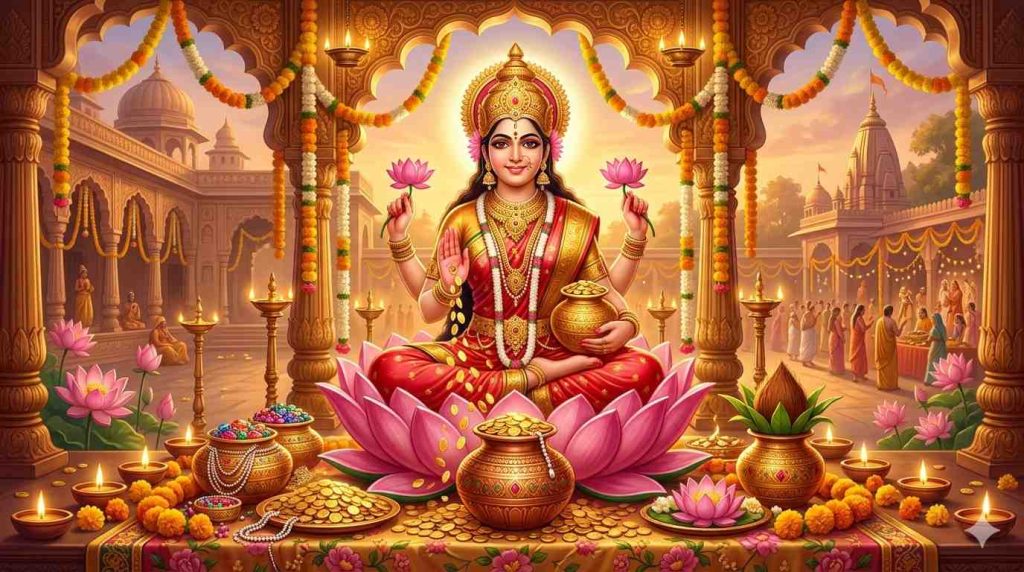
- Lakshmi — the radiant goddess of abundance, beauty, grace, and spiritual wealth
- Saraswati — the luminous goddess of wisdom, speech, learning, and the arts
- Parvati — the gentle, devoted wife of Shiva, embodiment of love and devotion
- Tripura Sundari — the beautiful goddess of the Tantric tradition, the supreme awareness of the Sri Chakra
Shakti: The Power That Makes God Possible
In Shaktism, Shakti is not subordinate to Shiva — she is the Supreme. Without Shakti, Shiva is shava — a corpse. It is the Divine Mother’s energy that animates all things, from the spinning of galaxies to the beating of your heart to the arising of a single thought.
This is a profoundly feminine theology of the Divine — one that honors creation, embodiment, and the sacred power of life itself as expressions of the Supreme.
Navratri: Nine Nights of the Divine Mother
Every year, Hindus across the world celebrate Navratri — nine sacred nights of worship, fasting, music, and devotion to the Divine Mother in her many forms. Navratri is among the most beloved of all Hindu festivals, a time when the veil between the human and the Divine is said to be at its thinnest.
9. Smartism: All Deities as One Supreme God {#smartism}
Smartism is a broad, philosophically inclusive tradition within Hinduism, largely shaped by the teachings of Adi Shankaracharya (8th century CE). Smartas worship five — or sometimes six — principal deities as equally valid manifestations of the one Brahman:
- Ganesha — the remover of obstacles, lord of beginnings
- Vishnu — the preserver
- Shiva — the destroyer and liberator
- Devi (Shakti) — the divine mother
- Surya — the sun, the visible form of divine light
- Skanda (Murugan) — the divine warrior and lord of wisdom
For Smartas, to argue about whether Shiva or Vishnu is “more supreme” is to miss the point entirely. All are faces of the one Brahman. The form of God you are drawn to is simply the form through which the Infinite has chosen to reveal itself to you.
10. Advaita Vedanta: Non-Dual Vision of the Supreme {#advaita}
Advaita Vedanta — the philosophy of non-duality — is perhaps the most widely studied and globally influential school of Hindu philosophy. Taught with supreme clarity by Adi Shankaracharya and in the modern era by Swami Vivekananda, Ramana Maharshi, and Nisargadatta Maharaj, Advaita presents the most radical and liberating vision of the Supreme:
There is only One. Brahman alone exists. Everything else — the multiplicity of gods, worlds, souls, and experiences — arises within Brahman through the mysterious power of maya (cosmic creative illusion) and has no ultimate independent existence.
The Mahavakyas: Great Sayings of the Upanishads
Advaita Vedanta is crystallized in four Mahavakyas (great utterances) drawn from the four Vedas:
| Mahavakya | Meaning | Source |
|---|---|---|
| Prajnanam Brahma | “Consciousness is Brahman” | Aitareya Upanishad (Rig Veda) |
| Aham Brahmasmi | “I am Brahman” | Brihadaranyaka Upanishad (Yajur Veda) |
| Tat Tvam Asi | “That Thou Art” | Chandogya Upanishad (Sama Veda) |
| Ayam Atma Brahma | “This Self is Brahman” | Mandukya Upanishad (Atharva Veda) |
These four statements are not philosophical theories to be debated. They are direct transmissions of the Supreme Truth — pointers to the living reality of your own deepest nature. To truly understand even one of these sayings is said to be equivalent to liberation itself.
Ramana Maharshi: The Modern Sage of Non-Duality
In the 20th century, the sage Ramana Maharshi of Tiruvannamalai, Tamil Nadu, lived and taught the living reality of Advaita. His teaching was simple and devastatingly direct: inquire into who you are. Ask “Who am I?” at the root of every thought and feeling. Follow every apparent experience back to its source. What you find at the source — the pure awareness that witnesses all thoughts without being a thought itself — that is Brahman. That is the Supreme. That is what you have always been.
11. Is Hinduism Monotheistic, Polytheistic, or Something Beyond? {#monotheism}
This is one of the most commonly asked questions about Hinduism, and the answer illuminates the tradition’s extraordinary spiritual intelligence.
Hinduism is often mischaracterized as polytheistic — the worship of many gods. This is a misunderstanding. Hindu theology can be more accurately described as:
Monistic — At the deepest philosophical level (Advaita Vedanta), there is only one Reality: Brahman. All apparent multiplicity is an expression of this One.
Monotheistic — In devotional traditions (Vaishnavism, Shaivism, Shaktism), there is one Supreme Personal God — whether understood as Vishnu, Shiva, or Devi — and all other deities are understood as subordinate aspects or manifestations.
Henotheistic — A term coined by the scholar Max Müller to describe the Vedic practice of treating whichever deity is being worshipped in the moment as the Supreme, without denying the reality of other deities.
Panentheistic — God contains the universe within Godself but also transcends it — a view held in traditions like Vishishtadvaita.
But perhaps the most honest answer is that Hinduism transcends all these Western theological categories. It is beyond the beyond — a tradition large enough to embrace all genuine visions of the Divine, from the simplest image of a beloved deity to the most rarefied philosophical understanding of pure, undivided Consciousness.
12. The Supreme God in the Bhagavad Gita {#bhagavad-gita}
The Bhagavad Gita — the Song of God — is Hinduism’s most beloved scripture, a jewel of spiritual wisdom that has illumined the hearts of seekers for millennia. In it, Lord Krishna — the Supreme Himself in human form — reveals his true nature to his devotee Arjuna on the battlefield of Kurukshetra.
Krishna’s Self-Revelation
Throughout the Gita’s eighteen chapters, Krishna reveals himself as the Supreme Being, the source and ground of all existence:
“I am the taste of water, O son of Kunti. I am the light of the sun and the moon. I am the sacred syllable Om in the Vedic mantras. I am the sound in ether, and ability in man.” — Bhagavad Gita 7.8
“Of all that is material and spiritual in this world, know for certain that I am both its origin and dissolution.” — Bhagavad Gita 7.6
The climax of this revelation comes in Chapter 11 — the Vishvarupa Darshana — when Krishna grants Arjuna divine eyes to behold his cosmic form: infinite, blazing like a thousand suns, containing within himself all gods, all worlds, all time, all creatures. Arjuna trembles in awe and prays:
“You are the original personality, the Godhead. You are the only sanctuary of this manifested cosmic world. You know everything, and You are all that is knowable. You are above the material modes. O limitless form, this whole cosmic manifestation is pervaded by You!” — Bhagavad Gita 11.38
The Gita’s Supreme Teaching
After all his revelations, Krishna delivers the supreme teaching — the very heart of the Gita:
“Abandon all varieties of dharmas and simply surrender unto Me alone. I shall liberate you from all sinful reactions. Do not fear.” — Bhagavad Gita 18.66
This is the supreme grace of the Supreme God: not doctrine, not ritual, not even philosophy — but surrender. The complete, loving surrender of the soul to the Divine, and the Divine’s complete, unconditional embrace of the surrendered soul.
13. The Supreme God in the Upanishads {#upanishads}
The Upanishads are the philosophical heart of the Vedas — 108 ancient texts recording the direct spiritual experiences and teachings of the sages (rishis) who dwelt in the forests and mountains of ancient India. They are not theology imposed from outside but wisdom arising from the depths of inner experience.
Key Upanishadic Insights on the Supreme
From the Chandogya Upanishad: “In the beginning, my dear, this world was just Being — One only, without a second.”
From the Mundaka Upanishad: “He who is the eternal witness — pure, unborn, the innermost Self of all beings — he is Brahman, the Supreme.”
From the Kena Upanishad: “That which is not thought by the mind, but by which the mind thinks — know that alone as Brahman, not this which people here worship.”
From the Mandukya Upanishad: “Om — this syllable is all this. The past, the present, the future — all this is the syllable Om. And whatever transcends the three times — that too is Om.”
The Upanishads reveal a God who cannot be grasped by the intellect, captured by words, or confined to any image — yet who is closer to you than your own heartbeat. The Supreme is the Witness of all your experiences, the light by which you know anything at all, the silence in which every thought arises and dissolves.
14. Devotional Paths to the Supreme: Bhakti and the Heart’s Journey {#bhakti}
For millions of Hindu devotees across the ages, the theological subtleties of Brahman and Ishvara matter far less than one burning, beautiful truth: I love God, and God loves me.
This is the path of Bhakti — devotion, love, surrender, and the heart’s direct relationship with the Supreme.
The Nine Forms of Bhakti
The Bhagavata Purana describes nine forms of devotional practice (Navavidha Bhakti):
- Shravana — Listening to the glories of the Lord
- Kirtana — Singing the Lord’s praises
- Smarana — Constant remembrance of the Lord
- Pada-sevana — Service at the Lord’s feet
- Archana — Ritual worship and offerings
- Vandana — Bowing and prayer
- Dasya — Serving as a devoted servant
- Sakhya — Befriending the Lord with trust and intimacy
- Atma-nivedana — Complete self-surrender to the Lord
The Bhakti Saints: Love Letters to the Supreme
Throughout Hindu history, the Supreme has drawn forth extraordinary expressions of devotion from the saints:
Mirabai sang: “O my King, my Beloved, take me to You. This life without You is no life at all.” She poured her entire being into her love for Krishna, composing bhajans of such beauty that they have never been surpassed.
Tukaram of Maharashtra cried out: “What care I for the learned? Let the Vedas dispute among themselves. My God is Vitthal of Pandharpur, and my heart is His temple.”
Ramakrishna Paramahamsa wept daily before the image of Mother Kali, experiencing her as a living presence — not stone, not symbol, but the living, breathing, loving Supreme Reality herself.
Swami Vivekananda proclaimed to the world: “Each soul is potentially divine. The goal is to manifest this Divinity within.”
These are not stories of men and women who believed in God. These are stories of men and women who knew God — who touched the hem of the Infinite and were forever transformed.
The Name of God: The Power of Mantra
In the Bhakti tradition, chanting the name of God (Nama Japa) is considered one of the most direct and powerful paths to the Supreme. The name of God, the Hindu sages teach, is not merely a symbol of God — it is God, vibrating in sound.
“Hare Krishna, Hare Krishna, Krishna Krishna, Hare Hare. Hare Rama, Hare Rama, Rama Rama, Hare Hare.”
“Om Namah Shivaya.”
“Om Sri Maha Lakshmyai Namah.”
“Jai Mata Di.”
These are not words. They are living bridges between the human heart and the Supreme heart of existence.
15. Frequently Asked Questions {#faq}
Q: Who is the Supreme God in Hinduism? The answer depends on one’s tradition. In Vaishnavism, the Supreme God is Lord Vishnu (or his avatar Krishna). In Shaivism, it is Lord Shiva. In Shaktism, it is the Divine Mother. In Advaita Vedanta, the Supreme is the formless Brahman — pure Consciousness — beyond all names and forms. All these traditions agree that there is one ultimate Reality; they differ in how they approach and understand it.
Q: Do Hindus believe in one God or many gods? At the philosophical level, Hinduism is strictly non-dual — there is only one Reality, Brahman. The many deities are understood as different aspects, manifestations, or windows into this one Supreme Reality. Hinduism is often described as “one God with many faces.”
Q: What is the difference between Brahman and God in Hinduism? Brahman is the impersonal, formless, ultimate Reality — pure Being-Consciousness-Bliss. “God” in the personal sense is called Ishvara — Brahman as perceived through the lens of devotion, with qualities like love, omniscience, and grace. Brahman and Ishvara are ultimately the same Reality viewed from different perspectives.
Q: Is Om the name of the Supreme God? Om (Aum) is considered the primordial sound — the sonic symbol of Brahman itself. The Mandukya Upanishad identifies Om with the entirety of existence. It is not exactly a “name” of God but rather the vibration from which all existence emanates. Chanting Om is considered a direct approach to the Supreme.
Q: What do Hindus say about other religions’ God? Hindu philosophy is broadly inclusive and recognizes that sincere seekers in all traditions are approaching the same ultimate Reality through different paths. The Rig Veda’s principle — Ekam Sat Vipraha Bahudha Vadanti (“Truth is One; the wise call it by many names”) — is the foundational Hindu stance toward religious diversity.
Q: Can the Supreme God be reached through devotion alone? Yes. The path of Bhakti Yoga — the yoga of love and devotion — is considered by many Hindu teachers, including Lord Krishna in the Bhagavad Gita, to be the most accessible and complete path to the Supreme. Pure, sincere love for God is itself the highest form of worship.
Q: What is the significance of the Hindu concept of avatars? An avatar (Sanskrit: avatara, “descent”) is a direct incarnation of the Supreme into human or other form for a divine purpose — usually to restore cosmic order (dharma) and guide souls toward liberation. Avatars are a uniquely Hindu theological concept expressing the compassionate, personal nature of the Supreme.
16. A Devotional Closing: The Supreme in Every Breath {#closing}
We have traversed vast landscapes of sacred thought — from the formless infinity of Brahman to the tender eyes of Krishna, from the cosmic dance of Nataraja to the ferocious love of Kali, from the philosophical heights of the Upanishads to the burning tears of Mirabai.
And yet all of it — every word, every concept, every scripture, every tradition — is only a finger pointing at the moon. The moon itself is beyond pointing. The Supreme cannot be captured in any system, however beautiful. It can only be lived, loved, and surrendered to in the immediacy of this very moment.
The great sages teach us that the Supreme is not waiting for you at the end of a long spiritual journey. The Supreme is here. Now. Breathing through you. Loving through you. Knowing through you. The search for God and the Searcher are ultimately one and the same.
Sarve bhavantu sukhinah. May all beings be happy. Sarve santu niramayah. May all beings be free from illness. Sarve bhadrani pashyantu. May all beings know what is good. Ma kashchid-duhkha-bhag-bhavet. May no one suffer.
Aum Shanti. Shanti. Shanti.
Peace. Peace. Peace.
This article is a devotional offering from the heart of HinduTone to seekers everywhere.
Tags: Hindu beliefs on supreme God, Brahman in Hinduism, Ishvara, who is supreme God in Hinduism, Vishnu supreme God, Shiva supreme God, Divine Mother Shakti, Advaita Vedanta, Bhagavad Gita God, Upanishads Brahman, Hindu monotheism, sattvic devotion, bhakti yoga, Om meaning, Hindu spirituality, Hindu philosophy
Related Articles on HinduTone:
- The 10 Avatars of Vishnu: Dashavatara Explained
- Lord Shiva: The Complete Guide to the Destroyer and Liberator
- Devi: Understanding the Divine Mother in Hinduism
- What Is Bhakti Yoga? The Path of Devotion Explained
- The Bhagavad Gita: A Chapter-by-Chapter Summary and Guide
- Advaita Vedanta: Shankaracharya’s Vision of Non-Duality
Published on HinduTone.com — Your devotional home for Hindu spirituality, culture, and sacred wisdom. © HinduTone | www.hindutone.com
Related posts:
 Here are some engaging blog ideas on Hindu Gods that cater to diverse interests, from mythology and spirituality to cultural significance:
 Shiva’s Many Forms: From Nataraja to Bhairava
 Embodying the Divine Feminine: Unleashing the Power Within
 Butter Offerings to Hanuman: Ramayana Origins & Spiritual Meaning
 Lessons from Hanuman: A Guide for the Spiritual Seeker
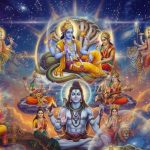 How Many Gods Are There in Hinduism? Understanding the Divine Purpose
 Om Namah Shivaya Chanting Guide 2026: Benefits & Practice
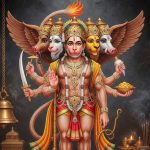 Pancha Mukhi Anjaneya: The Five-Faced Divine Guardian
