Pancha Mukhi Anjaneya: The Five-Faced Divine Guardian
Discover the Sacred Power of Five-Faced Lord Hanuman Among the many divine manifestations of Lord Hanuman, the Pancha Mukhi Anjaneya holds a uniquely powerful…
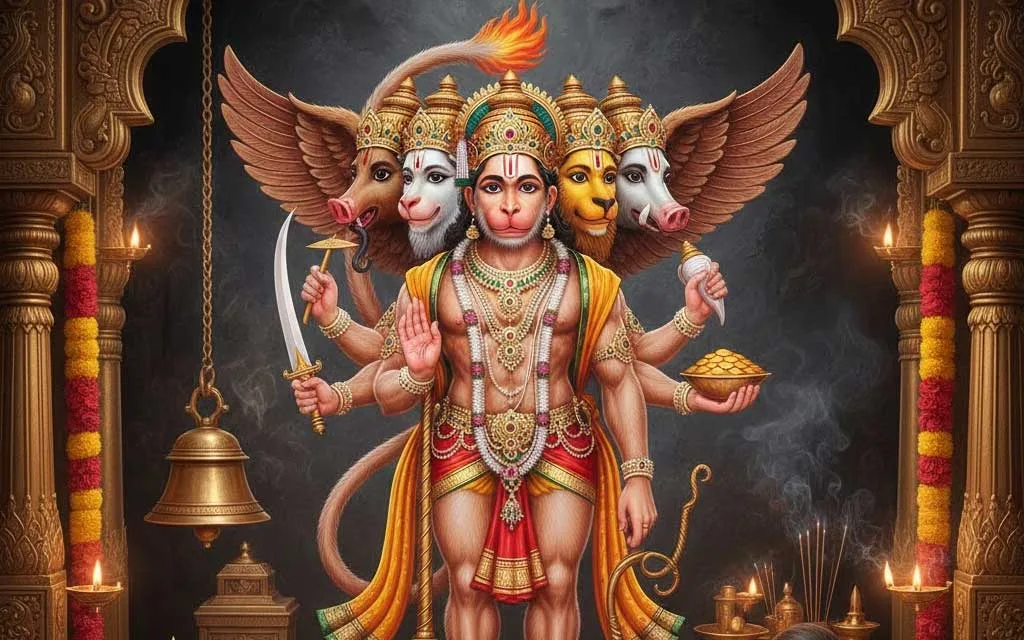
Discover the Sacred Power of Five-Faced Lord Hanuman Among the many divine manifestations of Lord Hanuman, the Pancha Mukhi Anjaneya holds a uniquely powerful…
Discover the Sacred Power of Five-Faced Lord Hanuman
Among the many divine manifestations of Lord Hanuman, the Pancha Mukhi Anjaneya holds a uniquely powerful position in Hindu devotion. This extraordinary form reveals the supreme warrior deity with five distinct faces, each representing a different cosmic aspect and offering specific divine protection to devotees. Understanding and worshipping Pancha Mukhi Hanuman can transform your spiritual journey, providing protection from negative energies, removing obstacles, and blessing you with strength, wisdom, and prosperity.
What is Pancha Mukhi Anjaneya?
Pancha Mukhi means five-faced, and Anjaneya refers to the son of Anjana Devi, another name for Lord Hanuman. This sacred form emerged during the Ramayana when Lord Rama was caught in a dire situation created by the demon Mahiravana, who kidnapped Rama and Lakshmana to the underworld (Patala). To rescue them, Hanuman assumed this formidable five-faced form, combining the powers of five divine manifestations to defeat the evil forces.
The Five Sacred Faces and Their Divine Significance
Each face of Pancha Mukhi Anjaneya represents a different deity and offers unique blessings:
1. Sri Hanuman Face (East Direction)
The central face is that of Sri Hanuman himself, facing east. This primary face represents courage, strength, and unwavering devotion to Lord Rama. Worshipping this face removes fear, grants physical strength, and protects from enemies and evil spirits. It symbolizes the destruction of ignorance and the awakening of spiritual consciousness.
2. Sri Narasimha Face (South Direction)
The fierce lion-man avatar of Lord Vishnu faces south. This face represents divine protection against negative forces and removal of obstacles. Narasimha's ferocious energy destroys black magic, evil eye, and removes fear of death. Devotees seeking victory over enemies and protection from supernatural threats particularly worship this face. It guards devotees against all forms of danger and grants fearlessness.
3. Sri Garuda Face (West Direction)
The divine eagle mount of Lord Vishnu faces west. Garuda represents liberation from suffering, diseases, and negative planetary influences. This face is especially powerful in removing the ill effects of snake bites (both physical and astrological Kala Sarpa Dosha), black magic, and poisoning. Worshipping Garuda mukha grants healing from chronic illnesses and removes obstacles in spiritual practices.
4. Sri Varaha Face (North Direction)
The boar incarnation of Lord Vishnu faces north. Varaha represents wealth, prosperity, and material abundance. This face is worshipped for financial growth, agricultural success, and acquisition of property. It removes poverty, grants prosperity, and ensures that devotees have abundance in all aspects of life. Those facing financial difficulties and seeking material security find solace in worshipping this face.
5. Sri Hayagriva Face (Upward/Sky Direction)
The horse-faced incarnation of Lord Vishnu looks upward toward the heavens. Hayagriva is the deity of knowledge, wisdom, and learning. This face blesses students, scholars, and spiritual seekers with intelligence, memory power, and academic excellence. It removes ignorance, grants clarity of thought, and ensures success in education and competitive examinations. Artists, teachers, and those in intellectual pursuits worship this face for divine wisdom.
Spiritual Importance and Benefits of Worshipping Pancha Mukhi Anjaneya
The worship of Pancha Mukhi Hanuman offers comprehensive protection and blessings across all dimensions of life:
• Complete Protection: Guards devotees from all directions against negative energies, evil spirits, black magic, and supernatural threats
• Victory Over Enemies: Grants courage and strength to overcome adversaries, competitors, and those who wish you harm
• Removal of Obstacles: Clears all hurdles in personal, professional, and spiritual life, ensuring smooth progress
• Health and Healing: Protects from diseases, removes chronic health issues, and grants vitality and longevity
• Wealth and Prosperity: Attracts financial abundance, ensures business success, and removes poverty
• Knowledge and Wisdom: Enhances intellectual abilities, memory, concentration, and academic success
• Spiritual Growth: Deepens devotion, accelerates spiritual evolution, and grants divine grace
• Peace of Mind: Removes anxiety, fear, and mental disturbances, bringing inner tranquility
• Family Harmony: Resolves domestic conflicts and ensures peace and happiness in the household
Powerful Pancha Mukhi Hanuman Mantras
Chanting these sacred mantras invokes the divine energy of Pancha Mukhi Anjaneya. For maximum benefit, chant during Hanuman-favorable times (Tuesdays, Saturdays, and Hanuman Jayanti).
Pancha Mukhi Hanuman Maha Mantra
ॐ पञ्चमुखाय विद्महे वज्रनखाय धीमहि । तन्नो हनुमत् प्रचोदयात् ॥
Om Panchamukhaaya Vidmahe Vajranakhaaya Dheemahi | Tanno Hanumat Prachodayaat ||
Meaning: We meditate upon the five-faced Lord, the one with diamond-like nails. May that Hanuman illuminate our minds and inspire us.
Pancha Mukhi Hanuman Moola Mantra
ॐ ह्रीं श्रीं क्रों ह्रीं क्रों श्रीं ह्रीं फट् पञ्चमुख हनुमते राम दूताय नमः ॥
Om Hreem Shreem Krom Hreem Krom Shreem Hreem Phat Panchamukha Hanumate Rama Dootaya Namah ||
This powerful beej mantra invokes the complete energy of all five faces, providing ultimate protection and blessings.
Raksha Mantra (Protection)
पूर्वं कपिमुखं कृष्णं पिङ्गलायत लोचनम् । दक्षिणे नारसिंहं च लोहिताक्षं करालकम् ॥ पश्चिमे गारुडं वक्त्रं वैनतेयं महाबलम् । उत्तरे वाराहं वक्त्रं श्वेतं रक्तांबुजेक्षणम् ॥ ऊर्ध्वं हयग्रीवं वक्त्रं प्रलयानलसन्निभम् ॥
This mantra describes the five faces in all directions and creates a protective shield around the devotee.
Daily Worship Mantra
ॐ पञ्चमुख महाबाहो सर्वदुष्ट विनाशन । भक्ता भीष्ट प्रदायक प्रणमामि सदा हनुमन् ॥
Om Panchamukha Mahabaaho Sarvadushtva Vinaashana | Bhakta Abeeshta Pradayaka Pranamamee Sada Hanuman ||
Meaning: O five-faced mighty-armed Hanuman, destroyer of all evil, fulfiller of devotees' wishes, I salute you always.
How to Perform Pancha Mukhi Hanuman Pooja at Home
Performing regular worship of Pancha Mukhi Anjaneya brings immense spiritual benefits. Follow this complete guide for authentic home worship:
Best Days and Times for Worship
• Tuesdays and Saturdays are most auspicious for Hanuman worship
• Early morning before sunrise (Brahma Muhurta) is ideal
• Sunset time (Sandhya Kala) is also powerful
• Hanuman Jayanti (Chaitra Purnima) for special elaborate worship
• Full Moon days (Purnima) and New Moon days (Amavasya)
Pooja Items Required
• Pancha Mukhi Hanuman idol or picture (preferably facing east)
• Red cloth (Hanuman's favorite color)
• Sindoor (vermillion)
• Flowers: Marigold, jasmine, or red flowers
• Incense sticks (agarbatti) and camphor
• Oil lamp (preferably ghee or sesame oil)
• Fruits (especially banana)
• Betel leaves and betel nuts
• Coconut
• Panchamrit (mixture of milk, curd, ghee, honey, sugar)
• Tulsi leaves
• Prasad: Laddu or jaggery-based sweets
• Bell (ghanti)
• Water in a kalash (vessel)
Step-by-Step Pooja Procedure
Step 1: Purification and Preparation
Take a bath and wear clean, preferably red or saffron-colored clothes. Clean the pooja area thoroughly and place a red cloth on the altar. Sprinkle water mixed with a few drops of Ganga jal (holy water) around the area for purification.
Step 2: Idol Placement and Invocation
Place the Pancha Mukhi Hanuman idol or picture on the altar facing east. Light the oil lamp and incense sticks. Ring the bell and invoke the presence of Lord Hanuman with folded hands: "Om Hanumate Namah - I invite Lord Hanuman to grace this pooja with his divine presence."
Step 3: Dhyana (Meditation)
Close your eyes and meditate on the five-faced form of Hanuman. Visualize each face protecting you from all directions. Focus on the central Hanuman face and feel his divine energy filling your heart with devotion.
Step 4: Panchamrit Abhishekam
If you have a small idol, perform abhishekam (sacred bath) with panchamrit while chanting "Om Hanumate Namah." Pour the mixture gently over the deity. Follow with pure water. Wipe the idol clean with a soft cloth. For pictures, skip this step.
Step 5: Alankara (Decoration)
Apply sindoor to the idol or picture. Offer fresh flowers while chanting each face's specific mantra. Place tulsi leaves at the feet of the deity. Drape a small red cloth if appropriate.
Step 6: Offerings (Naivedya)
Offer fruits, especially bananas, as they are Hanuman's favorite. Present betel leaves and nuts. Offer the prasad (laddu or jaggery sweets) with devotion. Place a coconut before the deity. Chant: "Om Namo Bhagavate Pancha Mukha Hanumate Mahaprabho Swaahaa" while making offerings.
Step 7: Mantra Chanting
Chant the Pancha Mukhi Hanuman mantras mentioned earlier. For daily worship, minimum 11, 21, or 108 repetitions are recommended. Use a rudraksha or tulsi mala (rosary) for counting. The more you chant with devotion, the greater the benefits.
Step 8: Aarti
Perform aarti with camphor or the ghee lamp, moving it in circular clockwise motion. Sing Hanuman Aarti ("Aarti Kije Hanuman Lala Ki") or any Hanuman devotional song. Ring the bell throughout the aarti.
Step 9: Pradakshina and Namaskara
Circumambulate the deity three times in clockwise direction (if space permits). Prostrate before the deity or bow with folded hands. Seek blessings for protection, strength, and wisdom.
Step 10: Prayers and Conclusion
Offer your personal prayers and requests to Pancha Mukhi Anjaneya. Chant the concluding mantra: "Om Tat Sat, Brahmaarpanam Astu." Distribute the prasad to family members. Keep some sindoor from the pooja for daily protection (apply a small dot on your forehead).
Daily Worship Practices
For regular devotees, these daily practices enhance connection with Pancha Mukhi Hanuman:
• Light a lamp before the deity every morning and evening
• Chant "Om Hanumate Namah" 108 times daily
• Read Hanuman Chalisa every Tuesday and Saturday
• Apply sindoor to the deity or picture regularly
• Offer fresh flowers when possible
• Maintain cleanliness around the altar
• Fast on Tuesdays (consume only one meal or fruits)
Famous Pancha Mukhi Hanuman Temples to Visit
Visiting these sacred temples amplifies your devotion and provides powerful darshan of Pancha Mukhi Anjaneya:
1. Panchamukhi Anjaneya Temple, Tirumala (Andhra Pradesh)
Located in Tirumala near the famous Tirupati temple, this ancient shrine houses a powerful Pancha Mukhi Hanuman deity. The idol faces east and is considered extremely powerful for removing obstacles and granting wishes. Thousands of devotees visit daily, especially on Tuesdays and Saturdays.
Location: Tirumala, Tirupati District, Andhra Pradesh Best Time to Visit: Early morning or during Hanuman Jayanti Special Features: Ancient temple with powerful spiritual vibrations
2. Panchamukhi Hanuman Temple, Rameswaram (Tamil Nadu)
This sacred temple in Rameswaram features a magnificent five-faced Hanuman idol. Being located in the holy island of Rameswaram, where Lord Rama worshipped Lord Shiva, adds immense spiritual significance. The temple is famous for performing special abhishekams and pujas.
Location: Rameswaram, Ramanathapuram District, Tamil Nadu Best Time to Visit: During Ram Navami and Hanuman Jayanti Special Features: Located on sacred Rameswaram island, elaborate abhishekam services
3. Panchamukhi Hanuman Mandir, Kumbakonam (Tamil Nadu)
An ancient temple in the temple town of Kumbakonam, this shrine is renowned for its powerful Pancha Mukhi Hanuman deity. The temple architecture reflects traditional Tamil style and the deity is known for blessing devotees with protection and prosperity.
Location: Kumbakonam, Thanjavur District, Tamil Nadu Best Time to Visit: Tuesday evenings and Saturdays Special Features: Traditional Tamil architecture, daily special pujas
4. Panchamukhi Anjaneya Temple, Thiruvallur (Tamil Nadu)
Located in Thiruvallur district, this temple houses a majestic Pancha Mukhi Hanuman idol that stands tall and impressive. The deity is especially known for granting courage and removing fear. Regular abhishekams and special pujas are performed for devotees' benefit.
Location: Thiruvallur District, Tamil Nadu Best Time to Visit: Hanuman Jayanti and Tuesdays Special Features: Tall imposing deity, special protection pujas
5. Panchamukhi Hanuman Temple, Mantralayam (Telangana)
Near the famous Guru Raghavendra Swamy Math in Mantralayam, this temple attracts devotees from across South India. The Pancha Mukhi Hanuman here is believed to be especially powerful for removing negative energies and black magic.
Location: Mantralayam, Kurnool District, Telangana Best Time to Visit: During annual celebrations and Hanuman Jayanti Special Features: Proximity to Guru Raghavendra temple, powerful protective deity
6. Panchamukhi Hanuman Temple, Bangalore (Karnataka)
One of the most visited Hanuman temples in Bangalore, this shrine features a prominent Pancha Mukhi Hanuman deity. The temple is easily accessible and performs daily rituals with great devotion. Special pujas on Tuesdays and Saturdays attract large crowds.
Location: Various locations in Bangalore (notable ones in Indiranagar and Jayanagar) Best Time to Visit: Early morning or evening Special Features: Urban accessibility, regular special abhishekams
7. Panchamukhi Anjaneya Swamy Temple, Pondicherry
This coastal temple combines spiritual significance with scenic beauty. The Pancha Mukhi Hanuman deity here is known for blessing seafarers and travelers with safety. The temple's peaceful environment enhances meditation and worship.
Location: Pondicherry (Puducherry) Best Time to Visit: During festival days and weekends Special Features: Coastal location, serene atmosphere for worship
8. Panchamukhi Hanuman Temple, Chennai (Tamil Nadu)
Multiple Pancha Mukhi Hanuman temples serve Chennai's devotees, with the one in Vadapalani being particularly famous. These urban temples provide convenient access for daily worship and conduct regular special pujas and abhishekams.
Location: Vadapalani, T. Nagar, and other localities in Chennai Best Time to Visit: Tuesday evenings for special darshan Special Features: Multiple locations across the city, daily elaborate rituals
9. Panchamukhi Hanuman Temple, Hyderabad (Telangana)
Several prominent temples in Hyderabad house Pancha Mukhi Hanuman deities, serving the city's large devotee population. These temples are known for their organized worship services and special occasion celebrations.
Location: Various areas in Hyderabad (including Charminar area and Secunderabad) Best Time to Visit: Tuesdays and Saturdays Special Features: Well-organized temple services, large devotee gatherings
10. Panchamukhi Hanuman Temple, Kolkata (West Bengal)
Bringing the South Indian tradition of Pancha Mukhi Hanuman worship to Eastern India, Kolkata's temples serve Bengali devotees with authentic rituals. The temples conduct special pujas during Hanuman Jayanti with great enthusiasm.
Location: Various localities in Kolkata Best Time to Visit: During Hanuman Jayanti and Dussehra Special Features: Fusion of South and North Indian worship traditions
Tips for Temple Visits
• Visit on Tuesdays or Saturdays for special blessings
• Arrive early morning for peaceful darshan
• Wear traditional attire as a mark of respect
• Carry offerings: flowers, coconut, bananas, and laddu
• Participate in abhishekam if the temple offers this service
• Maintain silence and devotional attitude in the temple premises
• Take prasad with reverence and share with family
Additional Devotional Practices for Enhanced Benefits
Fasting (Vrata)
Observing fasts on Tuesdays and Saturdays pleases Pancha Mukhi Hanuman greatly. During the fast, consume only one meal (usually in the evening after worship) or eat only fruits. Avoid non-vegetarian food, alcohol, and negative thoughts. Break the fast only after performing evening aarti.
Hanuman Chalisa Recitation
While reciting Hanuman Chalisa, visualize the five faces protecting you from all directions. The 40 verses composed by Tulsidas carry immense spiritual power. Regular recitation, especially 11 times on Tuesdays, brings miraculous results in overcoming obstacles and enemies.
Seva (Service)
Hanuman loves selfless service. Feed monkeys (Hanuman's representatives) with bananas and jaggery on Tuesdays. Help the poor and needy. Support temple activities. These acts of compassion please the deity and bring abundant blessings.
Dhyana (Meditation)
Spend 10-15 minutes daily meditating on Pancha Mukhi Hanuman's form. Visualize the five faces clearly. Imagine divine energy flowing from each face, filling your being with their respective qualities—courage, protection, healing, prosperity, and wisdom.
Conclusion: Embrace the Divine Protection
Pancha Mukhi Anjaneya represents the ultimate divine protection available to sincere devotees. His five faces guard us from all directions, blessing us with courage, wisdom, health, wealth, and spiritual growth. Whether you worship at home or visit sacred temples, approaching Lord Hanuman with pure devotion and faith transforms your life.
Remember that true devotion lies not just in elaborate rituals but in cultivating Hanuman's qualities—unwavering faith, selfless service, humility, and dedication to righteousness. When you embody these virtues while maintaining regular worship practices, Pancha Mukhi Hanuman becomes your eternal guardian, removing all obstacles and leading you toward both worldly success and spiritual liberation.
May Pancha Mukhi Anjaneya bless you with his divine grace, protect you from all harm, and guide you on the path of dharma. Jai Hanuman! Jai Shri Ram!
Frequently Asked Questions
Who is Pancha Mukhi Anjaneya?
Discover the Sacred Power of Five-Faced Lord Hanuman Among the many divine manifestations of Lord Hanuman, the Pancha Mukhi Anjaneya holds a uniquely powerful position in Hindu devotion. This extraordinary form reveals the supreme warrior deity with five distinct faces, each representing a different cosmic aspect and offering specific divine protection to de
How is Pancha Mukhi Anjaneya worshipped?
Through daily puja, mantra chanting, aarti and offerings of flowers, lamps and prasad — on dedicated days and festivals associated with the deity.
What are the benefits of worshipping Pancha Mukhi Anjaneya?
Devotees seek blessings for protection, prosperity, health, wisdom and inner peace, and a deeper connection with the divine.
Which day is dedicated to Pancha Mukhi Anjaneya?
Each deity has an associated day and festivals; worshipping on that day, with fasting and mantra, is considered especially auspicious (see the guide above).
You might also like

Hanuman Chalisa: Complete Meaning, Scientific & Spiritual Benefits, and a 30-Day Daily Practice for NRIs
Hidden Science Behind the Hanuman Chalisa: Neuroscience, Sound, Quantum & the Earth-Sun Verse

Hanuman Worship on Saturday: Powerful Rituals & Remedies for Shani Dosha