Lord Venkateswara's Rashi and Janma Nakshatra: Astrological Insights into Tirumala's Supreme Deity
In the realm of Hindu astrology and devotion, Lord Venkateswara, the presiding deity of the iconic Tirumala Tirupati temple, holds a special place.
In the realm of Hindu astrology and devotion, Lord Venkateswara, the presiding deity of the iconic Tirumala Tirupati temple, holds a special place.
In the realm of Hindu astrology and devotion, Lord Venkateswara, the presiding deity of the iconic tirumala/" class="auto-interlink" data-interlink="1">Tirumala Tirupati temple, holds a special place. Known as Balaji or Srinivasa, this incarnation of Lord Vishnu attracts millions of devotees seeking blessings for prosperity, health, and spiritual growth. But have you ever wondered about Lord Venkateswara's Rashi and Janma Nakshatra? These astrological elements not only deepen our understanding of the deity's divine attributes but also guide devotees in aligning their worship with cosmic energies. In this comprehensive guide, we explore the Rashi and Janma Nakshatra of Tirumala Venkateswara Swamy, their significance, and how they influence Hindu rituals and remedies.
Understanding Rashi and Nakshatra in Hindu Astrology
Before diving into the specifics of Lord Venkateswara's astrological profile, let's clarify these key terms for better context:
- Rashi (Zodiac Sign): In Vedic astrology, Rashi refers to one of the 12 zodiac signs that influence personality, life events, and planetary alignments. Each Rashi is ruled by a planet and corresponds to elemental qualities like earth, fire, water, or air.
- Janma Nakshatra (Birth Star): Nakshatras are lunar constellations that divide the zodiac into 27 segments. The Janma Nakshatra is the star under which an individual (or deity) is "born," affecting traits, destiny, and auspicious timings for rituals.
These concepts are deeply embedded in Hindu traditions, helping devotees choose muhurtas (auspicious times) for poojas, weddings, and pilgrimages. For deities like Lord Venkateswara, knowing their Rashi and Nakshatra enhances the spiritual connection during darshan at Tirumala.
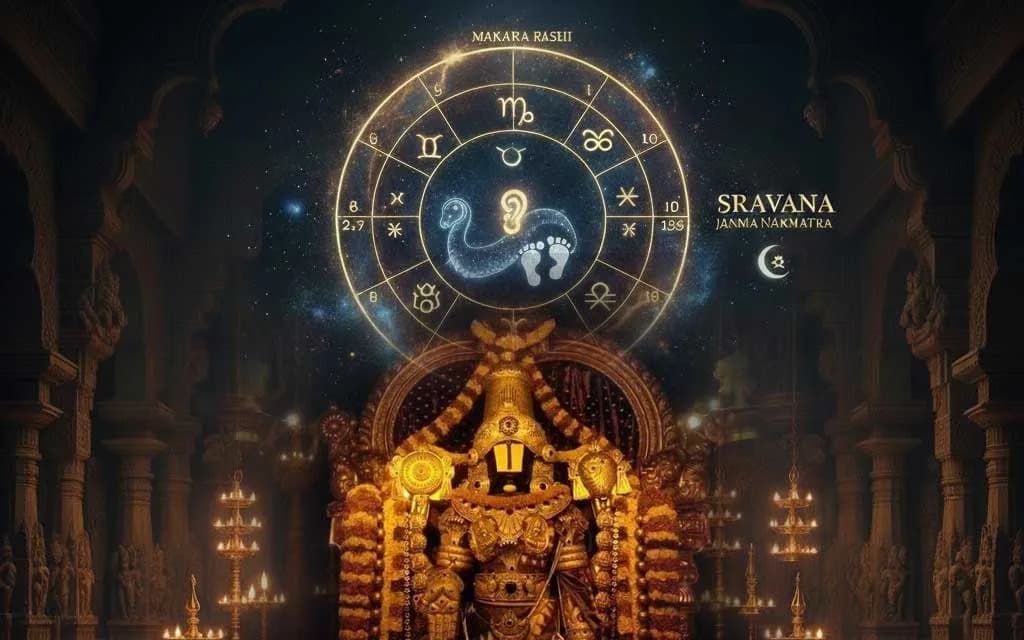
Lord Venkateswara's Rashi: Makara (Capricorn)
Lord Venkateswara's Rashi is Makara (Capricorn), an earth sign ruled by Saturn (Shani). This association is rooted in ancient scriptures and temple lore, symbolizing discipline, perseverance, and material abundance—qualities that resonate with the deity's role as the "Kaliyuga Varadha" (bestower of boons in the current age).
- Why Makara Rashi? According to Vedic texts and astrological interpretations, Lord Venkateswara's manifestation aligns with Capricorn's energies. Saturn's influence here emphasizes karma, hard work, and long-term rewards, mirroring the arduous pilgrimage to Tirumala hills that devotees undertake for divine grace.
- Astrological Significance: Devotees with afflictions in their horoscopes, especially related to Shani dosha (Saturn's malefic effects), often visit Tirupati for remedies. Offering prayers to Lord Venkateswara is believed to mitigate delays, financial hurdles, and health issues associated with Capricorn's grounded yet ambitious nature.
If you're a Makara Rashi native, incorporating Tirumala darshan into your spiritual routine can amplify positive planetary influences, leading to career stability and familial harmony.
Lord Venkateswara's Janma Nakshatra: Sravana (Shravana)
The Janma Nakshatra of Tirumala Venkateswara Swamy is Sravana (Shravana), the 22nd lunar constellation. Governed by the Moon and associated with Lord Vishnu himself, Sravana Nakshatra embodies listening, learning, and connectivity—traits that define the deity's compassionate outreach to devotees.
- Key Attributes of Sravana Nakshatra: This star is symbolized by an ear (representing attentive hearing) and three footprints (linked to Vishnu's Trivikrama avatar). It falls within the Capricorn zodiac, blending lunar sensitivity with Saturn's structure. Keywords like "wealth," "movable," and "connection" highlight why Lord Venkateswara is revered as the remover of troubles and granter of prosperity.
- Mythological Connection: Legends from the Puranas describe Lord Venkateswara's avatar under Sravana Nakshatra, particularly in the context of the Vimana Venkateswara Murthy at Tirupati. This form, depicted with symbols like the monkey (Hanuman), eagle (Garuda), and Kubera, illustrates the Nakshatra's themes of devotion, wealth, and divine linkage.
For devotees, performing rituals on Sravana Nakshatra days—such as Ekadashi or Fridays—can enhance the efficacy of prayers at Tirumala, especially for those seeking knowledge, family unity, or relief from debts.
The Spiritual and Astrological Importance for Devotees
Knowing Lord Venkateswara's Rashi and Janma Nakshatra isn't just trivia; it's a tool for deeper devotion:
- Remedies and Rituals: If your birth chart shows weak Saturn or Moon placements, a pilgrimage to Tirumala can act as a powerful parihara (remedy). Offerings like tonsuring hair, donating to the temple, or chanting Vishnu Sahasranama under Sravana Nakshatra amplify benefits.
- Auspicious Timings: Plan your Tirupati visit during Capricorn season (December-January) or on Sravana star days for heightened spiritual energy. Festivals like Brahmotsavam align with these cosmic cycles, making darshan more transformative.
- Personal Horoscope Alignment: Consult a Vedic astrologer to see how Lord Venkateswara's astrological profile interacts with your own Rashi and Nakshatra. For instance, Capricorn or Sravana natives may experience profound blessings in career and relationships after seeking Balaji's grace.
Devotees worldwide flock to Tirumala not just for material gains but for moksha (liberation), and these astrological insights add layers to that sacred journey.
Conclusion: Embrace the Divine Astrology of Tirumala Venkateswara
Lord Venkateswara's Rashi (Makara) and Janma Nakshatra (Sravana) reveal the profound interplay between cosmology and devotion in Hinduism. As the supreme deity of Tirumala, Balaji's astrological essence guides us toward discipline, wisdom, and abundance. Whether you're planning a pilgrimage or seeking remedies for life's challenges, aligning with these celestial elements can bring unparalleled blessings.
At Hindutone, we delve into such timeless Hindu wisdom to enrich your spiritual life. Share your experiences in the comments below—have you felt the power of Lord Venkateswara's darshan? For personalized astrological consultations or more on Hindu astrology, explore our resources. Govinda! Govinda!
Frequently Asked Questions
What does this Lord Venkateswara's Rashi and Janma Nakshatra cover?
In the realm of Hindu astrology and devotion, Lord Venkateswara , the presiding deity of the iconic Tirumala Tirupati temple, holds a special place. Known as Balaji or Srinivasa, this incarnation of Lord Vishnu attracts millions of devotees seeking blessings for prosperity, health, and spiritual growth.
Should I read my Sun sign or Moon sign?
Vedic astrology uses your Janma Rashi — your natal Moon sign — not the Western Sun sign. Read the predictions for your Moon sign for the most accurate guidance.
Are these predictions guaranteed?
Vedic predictions indicate general tendencies and supportive remedies, not certainties. They are best used as guidance alongside sincere effort and devotion.
What remedies are suggested?
Common supportive practices include relevant mantra chanting, fasting on the appropriate day, charity (dana), and temple worship; specifics depend on your birth chart.
You might also like
Anant Ambani Donates 25 Electric Buses to Tirumala TTD | ₹27.5 Crore Mahā Kānuka
Tirumala June 2026: Special Darshan, Sevas & Complete Pilgrim Guide

Tirumala Tirupati TTD — Complete Guide for NRIs (Darshan, Seva, Accommodation)