Shani Deva Is Not Evil — He Is the Cosmic Judge of Karma
Shani Deva is not the god of suffering — he is the cosmic judge of karma and the purifier of the soul. Discover the true meaning of Sade Sati, Shani’s lessons, powerful remedies, and why the darkest phase becomes the doorway to the deepest awakening.
Shani Deva is not the god of suffering — he is the cosmic judge of karma and the purifier of the soul. Discover the true meaning of Sade Sati, Shani’s lessons, powerful remedies, and why the darkest phase becomes the doorway to the deepest awakening.
A spiritual guide by HinduTone Editorial · Updated May 23, 2026 · ~12 min read
“Shani Deva is not evil. He is the cosmic judge of karma. The remover of arrogance. The purifier of consciousness. Sade Sati is painful for the ego… but transformative for the soul.”
Introduction: The Most Misunderstood God in Hinduism
Of all the deities in the Hindu pantheon, none is more feared — and more misunderstood — than Shani Deva. The mere mention of his name sends people rushing to astrologers, wearing blue sapphires, and lighting mustard oil lamps in panic.
But what if everything you feared about Shani was wrong? What if Shani Deva is not the god of suffering — but the god of truth, justice, and profound spiritual transformation?
This article is for every soul going through Shani’s Sade Sati, Shani Mahadasha, or Shani Dhaiya — and feeling crushed by the weight of it. You are not being punished. You are being purified.
Who Is Shani Deva? The Truth Behind the Fear
Shani Deva (also written Shani Dev or Saturn) is one of the Navagrahas — the nine planetary deities of Vedic astrology. He is the son of Surya Deva (the Sun God) and Chhaya (the goddess of shadow), and the brother of Yama, the god of death.
In Sanskrit, “Shani” (शनि) means “the slow-moving one” — a reference to Saturn’s slow orbit around the Sun, which takes approximately 29.5 years. In deeper Vedic meaning, Shani is also derived from the root “shana” — meaning that which is gradual, that which teaches through time.
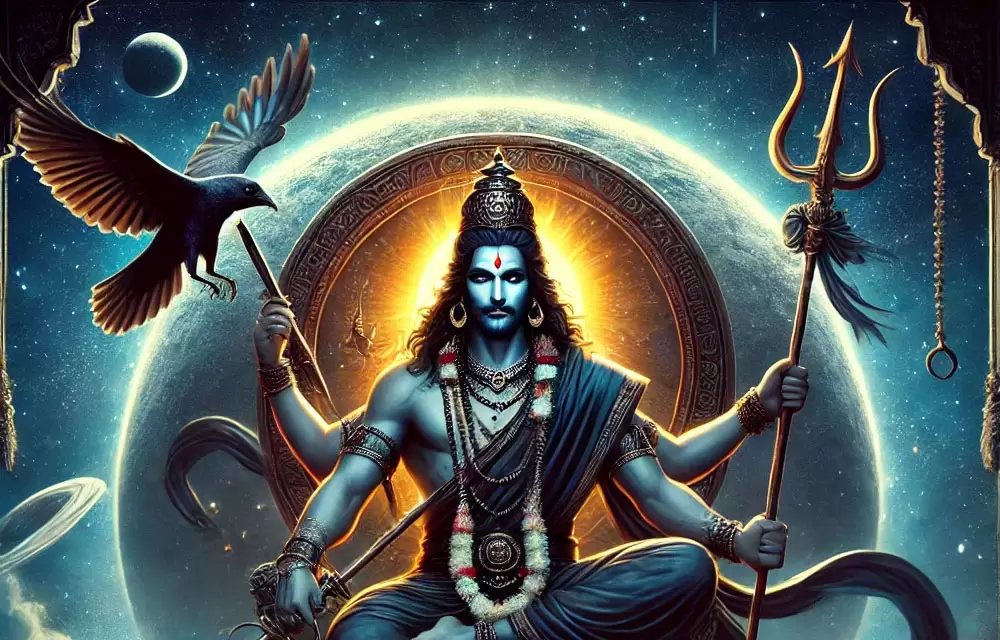
His iconography is deeply intentional:
He rides a crow or vulture — symbols of patience, perception and the ability to see truth beneath the surface.
He holds a sword, trident and arrow — representing justice, the power to cut through illusion, and directed karma.
He is dressed in blue or black — colours of depth, discipline and the vast cosmos.
His gaze is said to be so powerful that even Lord Shiva, Ganesha and the Sun have felt its force.
Shani is not a deity of cruelty. He is the deity of consequence — the cosmic force that ensures every action, every word, every intention meets its rightful fruit. This is not punishment. This is dharmic law.
Shani Deva as the Cosmic Judge of Karma
In Vedic philosophy, karma is not fate — it is accounting. Every thought, word and deed creates a karmic imprint that must eventually be balanced. Shani Deva is the divine accountant who ensures this balance is maintained with perfect, impartial precision.
Unlike other planetary deities who may be moved by prayer, flattery or offerings alone, Shani responds only to one thing: truth. He cannot be bribed. He cannot be manipulated. He will not favour the wealthy over the poor, the king over the peasant, the learned over the simple. Before Shani Deva, all souls are equal — and all karma must be settled.
What Shani Rewards
Discipline and sincere hard work.
Humility and the absence of ego.
Service to the poor, the sick and the marginalised.
Honesty in speech, thought and action.
Patience and perseverance through difficulty.
What Shani Corrects
Pride and arrogance.
Exploitation of others.
AdvertisementLaziness and avoidance of responsibility.
Deception and dishonesty.
Taking shortcuts in life and in spirituality.
This is why Shani’s grace is not given — it is earned. And those who have earned it through genuine transformation often say that Shani’s period was the greatest turning point of their lives.
The Remover of Arrogance — Why Shani Humbles the Mighty
History — both mythological and real — is filled with stories of mighty souls brought to their knees by Shani’s gaze. Not out of cruelty, but out of cosmic necessity.
Ravana and Shani
The great scholar-king Ravana, in his supreme arrogance, imprisoned all nine planets — including Shani — to prevent any unfavourable position at his son Meghanada’s birth. Shani, even imprisoned, turned his gaze downward — and that glance alone was enough to ensure Ravana’s eventual fall.
Surya Deva and Shani
Shani’s own father, the Sun God, initially rejected Chhaya (Shani’s mother) and showed little love to Shani himself. It was through Shani’s cosmic position that even Surya Deva was made to feel the consequence of cold-heartedness within family.
King Vikramaditya and Shani
The legendary emperor Vikramaditya — at the height of his power and pride — was told by the planets that Shani’s period would bring him loss. He refused to believe it. Over the years of Shani’s transit, he lost his throne, his wealth, his identity. But when he emerged — he had gained something no throne could give him: wisdom, empathy and true kingship of the self.
The pattern is unmistakable. Shani does not target the humble — he targets the inflated. He does not break the soul — he breaks the false self that the soul has mistaken for itself.
What Is Sade Sati? The 7.5-Year Cosmic Examination
Sade Sati (साढ़े साती) literally means “seven and a half” — referring to the approximately 7.5 years that Saturn (Shani) takes to transit through three consecutive zodiac signs (rashis): the sign before your moon sign, your moon sign itself, and the sign after.
The Three Phases of Sade Sati
Rising Phase — Shani enters the sign before your moon sign. External challenges begin: relationships, finances and career disruptions.
Peak Phase — Shani transits your moon sign directly. The deepest internal transformation — identity, emotions and beliefs are tested.
Setting Phase — Shani moves to the sign after your moon sign. Gradual release, lessons consolidating, a new foundation forming.
Who Is Currently in Sade Sati?
Check a current Vedic astrology calendar or a Shani Transit Guide for which Moon signs (rashis) are presently under Sade Sati. Saturn completes one full zodiac cycle in approximately 29.5 years, meaning each person experiences Sade Sati approximately 2–3 times in a lifetime.
Is Sade Sati Always Negative?
No. This is one of the greatest misconceptions. Sade Sati’s effects depend entirely on:
Your natal Saturn position (how strongly Shani sits in your birth chart).
Your accumulated karma (what Shani is here to balance).
Your response to the lessons (resistance increases suffering; acceptance accelerates growth).
Your spiritual practices (Shani rewards sincere devotion and discipline).
Many of history’s greatest achievers — scientists, saints, artists and leaders — made their most transformative contributions during Sade Sati.
Why Sade Sati Is Painful for the Ego but Transformative for the Soul
Here is the truth that most astrologers are afraid to tell you:
Sade Sati does not destroy your life. It destroys the illusions you built your life upon.
And that is uncomfortable — because we are deeply attached to those illusions.
What Sade Sati Strips Away
False relationships that were never grounded in truth.
Careers and paths chosen for approval rather than purpose.
The ego identity built on status, money and external validation.
Spiritual bypassing — the comfortable version of faith that never required real surrender.
The belief that you are in control of everything.
What Sade Sati Reveals
Who truly loves you — without conditions or advantage.
What work is truly yours — aligned with your dharma, not just your desires.
The depth of your own resilience, patience and inner strength.
A relationship with the divine that is forged in fire, not formed in comfort.
Your authentic self — stripped of performance and pretence.
“Sometimes, the darkest phase of life becomes the doorway to the deepest awakening.”
The Spiritual Science Behind Sade Sati’s Pain
In Vedic thought, the ego (ahamkara) is the root of suffering. It is the part of us that says “I deserve better than this,” “This should not be happening to me,” and “I am more than this.”
Shani’s transit directly challenges the ego’s foundations. The more rigidly we cling to our ego identity, the more Sade Sati hurts. The more willingly we surrender to the lessons, the more rapidly the transformation unfolds. This is why Shani is deeply connected to Saturn’s themes in Jungian psychology — the Shadow Self, the integration of rejected parts of the self, and the maturation of the psyche through trials.
Famous Personalities Who Transformed During Sade Sati
History and mythology are filled with individuals whose greatest transformations — and greatest achievements — coincided with Shani’s most demanding periods.
Nala and Damayanti
The great king Nala, a paragon of virtue, lost his kingdom, his family and his identity during a period governed by Shani’s influence. He wandered in exile, stripped of everything. But it was in this exile that he discovered his deepest wisdom, his true character — and was eventually restored, transformed.
Harishchandra
The legendary king of truth was tested so severely that he lost his kingdom, his family and his freedom before being restored. Shani’s test for him was not destruction — it was the revelation of whether his truth could survive when it cost him everything.
The Universal Pattern
A soul grows comfortable, perhaps proud.
Shani’s influence arrives, stripping away the comfortable.
The soul is forced to find its ground in something deeper.
What emerges is not what was before — it is something greater.
The Darkest Phase Is the Doorway to the Deepest Awakening
In the mystical traditions of both Vedanta and Sufism, there is a concept known as the “dark night of the soul” — a period of profound spiritual crisis that precedes the deepest levels of awakening. In the Vedic tradition, Shani’s transit is often exactly this dark night.
When everything external fails — when the career falters, the relationship breaks, the health struggles, the finances strain — the seeker is left with only one question:
“Who am I when all of this is gone?”
This question, when genuinely asked, is the beginning of liberation. The answer is not the ego’s answer. It is the Atman’s answer — the self that was never born and can never die. The consciousness that needs no title, no approval, no possession to be whole.
How to Work With Shani’s Energy Rather Than Against It
Voluntarily simplify your life before Shani forces it.
Be honest about your shortcomings before Shani reveals them.
Serve others — especially the poor and suffering — because service is Shani’s love language.
Develop genuine spiritual practice — not to appease Shani, but to find your own centre.
Accept that this phase is temporary and purposeful, not permanent and random.
How to Honour Shani Deva — Rituals, Mantras & Remedies
Honouring Shani Deva is not about fear — it is about alignment. When you align yourself with Shani’s values — truth, discipline, service and humility — his energy transforms from a trial into a teacher.
The Shani Beej Mantra
Recite 108 times every Saturday, preferably at dusk:
ॐ प्रां प्रीं प्रौं सः शनैश्चराय नमः · Om Praam Preem Praum Sah Shanaischaraya Namah
The Shani Gayatri Mantra
ॐ शनैश्चराय विद्महे छायापुत्राय धीमहि, तन्नो मन्दः प्रचोदयात् · Om Shanaischaraya Vidmahe Chaayaputraya Dheemahi, Tanno Mandah Prachodayaat
Saturday Shani Puja — Step by Step
What You Need
Mustard oil lamp (sarson ka tel diya).
Black sesame seeds (kala til).
Black urad dal.
Blue or black flowers (if available).
Iron vessel or Shani idol/image.
Puja Steps
Wake before sunrise on Saturday and take a bath.
Wear blue or black clothing as an offering of devotion to Shani.
Light a mustard oil lamp in front of Shani’s image.
Offer black sesame seeds, urad dal and blue flowers.
Recite the Shani Beej Mantra 108 times.
Read or listen to the Shani Chalisa.
Donate to the poor — food, clothing or oil — as an act of Shani’s service.
Powerful Shani Remedies for Sade Sati
Every Saturday: feed black sesame laddoos or urad dal to the poor or birds (especially crows).
Shani Temples: visit a Shani temple on Saturdays and offer mustard oil.
Service: volunteer at orphanages, serve the elderly or donate to those with disabilities.
Hanuman Puja: Hanuman Chalisa recitation is a deeply honoured remedy for Shani’s intensity — Hanuman and Shani Dev share a profound mythological connection. See our Hanuman Chalisa science guide.
Avoid: alcohol, non-vegetarian food, dishonesty and ego-driven decisions during Sade Sati.
Wear: blue sapphire (Neelam) only after consultation with a qualified Vedic astrologer.
Shani Chalisa — When and How to Recite
The Shani Chalisa should be recited every Saturday, ideally during Shani’s hora (hour). It narrates Shani’s divine nature, his power of karma, and invokes his grace for protection, patience and the strength to undergo necessary transformation. See related: Shani Jayanti 2026: Date, Significance, Rituals & Mantras.
Shani Deva’s Lessons: What He Truly Wants From You
If Shani Deva could speak to every soul currently in the grip of his transit, he would say:
“I am not here to destroy you. I am here to show you what is real.”
Here are the seven core lessons that Shani’s influence is always teaching:
Karma is real and exact. Every action has a consequence. Live accordingly.
Humility is strength, not weakness. The tallest trees are the first to break in a storm. The grass survives.
Time is the greatest teacher. Patience is not passive — it is the most powerful form of trust in the universe.
Service is the highest worship. What you give to the suffering, you give to the divine.
Truth always wins — even when it is slow. Shani moves slowly for a reason. Truth does not need to rush.
Suffering is the ego’s experience, not the soul’s. The soul was never broken. Only the ego believes it was.
The darkest night carries the brightest dawn. Shani does not end chapters — he begins new ones.
Frequently Asked Questions
Is Shani Deva evil or inauspicious?
No. This is one of the most harmful misconceptions in popular Hindu culture. Shani Deva is the god of karma, justice, discipline and spiritual transformation. He is deeply revered in the Vedic tradition as a deity of great power and ultimate fairness. He rewards the righteous and corrects the arrogant — there is nothing evil in that. Fear of Shani often comes from misunderstanding his role.
How do I know if I am in Sade Sati right now?
Sade Sati occurs when Saturn (Shani) transits through the zodiac sign before your moon sign, your moon sign, and the sign after — a total of approximately 7.5 years. Check your current Sade Sati status using a Vedic astrology calculator or a Shani Transit Guide. Enter your moon sign (rashi) and cross-reference it with Saturn’s current position.
Does Sade Sati always bring bad results?
No — and this is crucial. Sade Sati brings transformation, not necessarily destruction. Its effects depend on your natal Saturn, your accumulated karma, and your response to the lessons. Many people experience major professional success, spiritual awakening or deep personal growth during Sade Sati. Resistance to the lessons increases difficulty; acceptance accelerates growth.
What is the best remedy for Sade Sati?
The most effective remedies for Sade Sati are not gemstones or rituals alone — they are behavioural and spiritual. Practise honesty, serve the poor and suffering, observe Shani puja every Saturday, recite the Hanuman Chalisa and Shani Chalisa, simplify your life, and cultivate genuine humility. These align you with Shani’s values and ease the friction of his transit.
Are Shani Dev and Saturn the same?
Yes. In Vedic astrology, Shani Deva is the divine personification of the planet Saturn. Shani is the consciousness — the divine intelligence — that governs Saturn’s karmic function in the cosmos. While Western astrology studies Saturn as a planetary influence, Vedic tradition recognises Shani as a sentient, divine being who can be propitiated, honoured and related to as a spiritual teacher.
Can worship of Hanuman reduce Shani’s effects?
Yes — this is one of the most widely accepted and spiritually grounded remedies in the Vedic tradition. There is a profound mythological bond between Hanuman and Shani Dev. Hanuman is said to have freed Shani from Ravana’s prison, and in gratitude Shani Dev blessed that his devotees who sincerely worship Hanuman would receive his protection during Saturn’s transit. Reciting the Hanuman Chalisa every day — and especially on Saturdays — is considered one of the most powerful Shani remedies.
How long does Sade Sati last?
Sade Sati lasts approximately 7.5 years in total — three years in the sign before your moon sign, three years in your moon sign, and approximately 1.5 years in the sign after. The intensity varies significantly across the three phases. Most people find the middle phase (Shani directly on the moon sign) to be the most intense emotionally and psychologically.
Conclusion: Fear Not Shani — Surrender to the Lesson
Shani Deva does not come to break you.
He comes to break what is false in you — the arrogance you have mistaken for confidence, the rigidity you have called strength, the illusions you have called your life.
When he is done — and he will be done, because Shani always moves forward — what remains is the most authentic, most resilient, most spiritually alive version of yourself. The soul that has passed through Shani’s fire does not fear darkness. It becomes light.
So if you are in the middle of Sade Sati today — if life feels heavy, uncertain and relentless — know this:
You are not being punished. You are being prepared.
Jai Shani Dev.
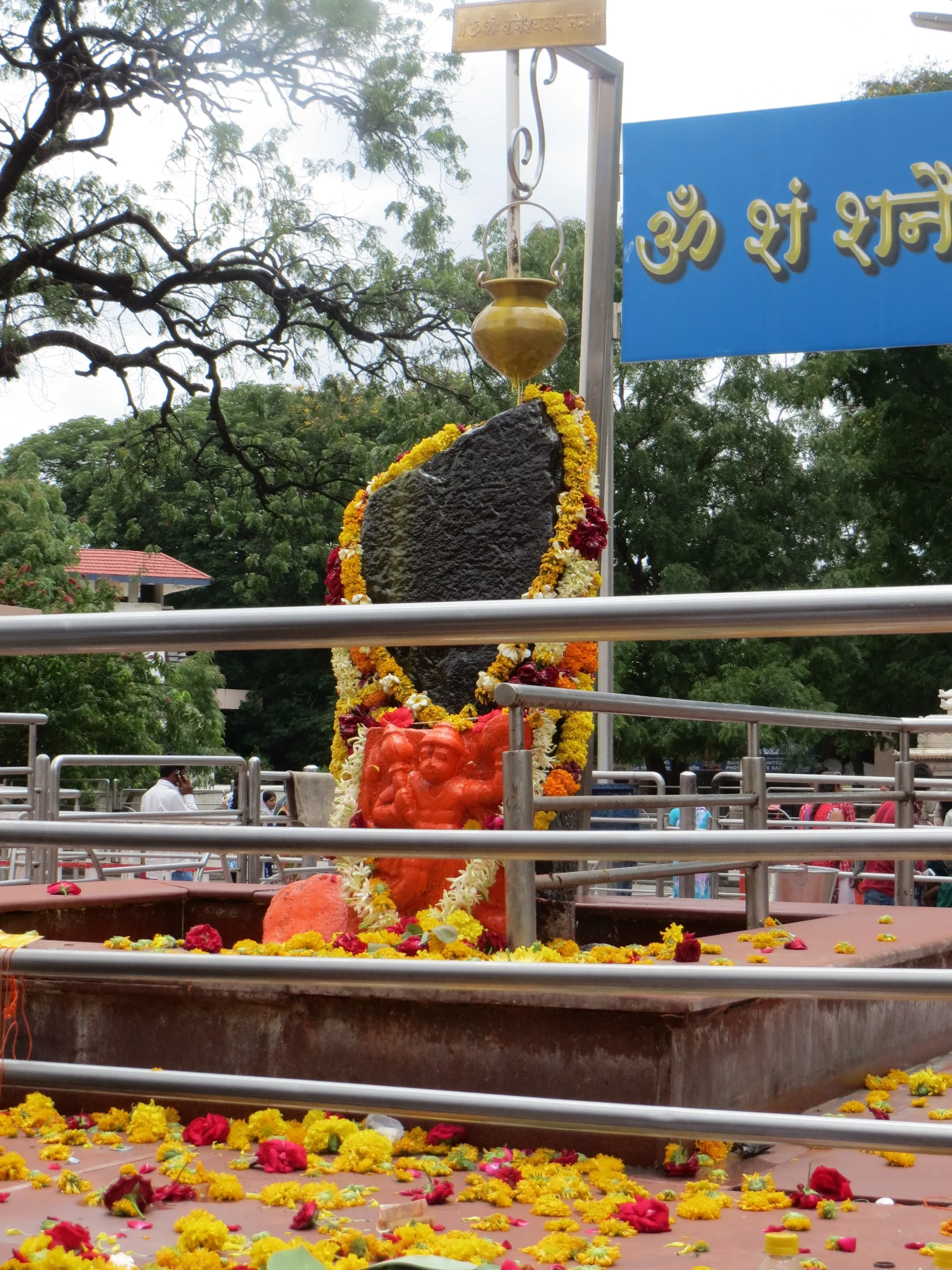
Image: Lord Shani at Shani Shingnapur, Maharashtra. Photo by Booradleyp1 via Wikimedia Commons, licensed CC BY-SA 4.0.
You might also like
Importance of Saturday in Hinduism: Shanivar Vrat, Shani Dev Worship, Sade Sati Remedies & Hanuman Connection

Shani Dev Remedies & Upay: Powerful Relief for Shani Dosha & Sade Sati
June 2026 Monthly Horoscope — Vedic Moon Sign Predictions for All 12 Rashis