
Swami Sarvapriyananda: The Voice of Vedanta in the Modern World – A Devotional Narration of His Illuminating Life, Profound Teachings, and Living Legacy
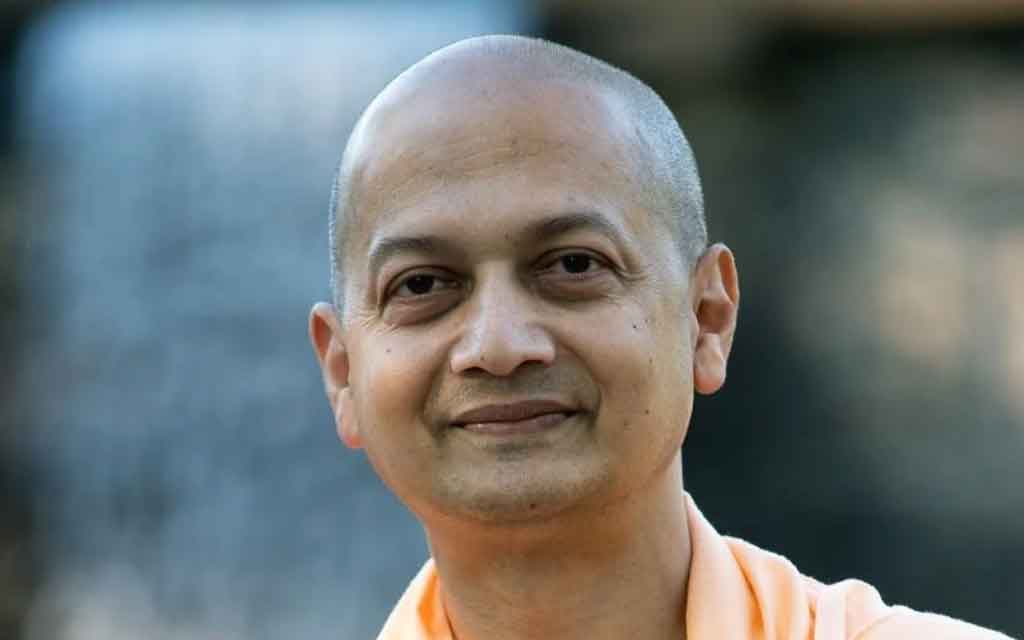
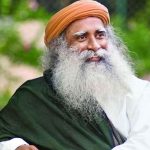
In the heart of New York City, where the relentless pace of modern life meets the timeless call of the Upanishads, there shines a brilliant exponent of Advaita Vedanta whose discourses bridge ancient wisdom with contemporary seekers. Swami Sarvapriyananda, the Resident Minister of the Vedanta Society of New York since 2017, stands as one of the most eloquent and accessible teachers of non-dual philosophy in our era. Rooted deeply in the tradition of Adi Shankaracharya, Ramana Maharshi, and Swami Vivekananda, he expounds the eternal truth of “Tat Tvam Asi” (Thou Art That) with clarity, humor, and compassion, making the profound depths of Advaita accessible to intellectuals, scientists, psychologists, and spiritual aspirants alike.
As we reflect in February 2026, Swami Sarvapriyananda continues to deliver weekly lectures at the Vedanta Society, stream them globally via YouTube (reaching millions), and engage in dialogues on consciousness, science, and spirituality. His talks, blending rigorous scholarship with heartfelt devotion, inspire a new generation amid global challenges of materialism and disconnection. This devotional exploration, exceeding 4000 words and crafted originally with reverence, traces his journey from India to the West, the essence of his teachings on non-duality and consciousness, and his vibrant legacy that continues to awaken souls to their divine nature as Brahman.
Early Life and Spiritual Awakening: From Kolkata to the Call of Vedanta
Swami Sarvapriyananda (born in 1971) grew up in a cultured Bengali family in Kolkata, immersed in the rich intellectual and spiritual heritage of Bengal. From a young age, he displayed a keen mind and deep curiosity about life’s ultimate questions. Influenced by the Ramakrishna-Vivekananda tradition—itself a modern revival of Advaita—he felt drawn to monastic life early on.
In 1991, at age 20, he joined the Ramakrishna Order as a novice at the Ramakrishna Mission Home of Service in Varanasi. There, under the guidance of senior swamis, he studied the scriptures, served the poor, and practiced meditation. The Ramakrishna Mission, founded by Swami Vivekananda in 1897, emphasizes “Jiva is Shiva”—service to humanity as worship of the divine—harmonizing jnana (knowledge) with seva (service) and bhakti (devotion).
His formal monastic training deepened at the Belur Math headquarters and various centers. He took sannyasa vows in 2002, receiving the name Sarvapriyananda, meaning “one who delights in the welfare of all.” He served in diverse roles: teaching at mission schools, managing rural development projects, and lecturing on Vedanta. A pivotal moment came during his postings in the United States, where he witnessed the hunger for authentic spiritual teachings in the West.
Swami Sarvapriyananda often shares how his early exposure to Swami Vivekananda’s writings ignited his passion for Advaita. Vivekananda’s call—”Arise, awake, and stop not till the goal is reached”—resonated deeply, leading him to dedicate his life to spreading Vedanta’s message of oneness and inner freedom.
The Path of Study and Service: Mastering the Scriptures
Swami Sarvapriyananda pursued intensive scriptural study under traditional acharyas. He mastered Sanskrit, the Prasthana Trayi (Upanishads, Bhagavad Gita, Brahma Sutras), and Shankara’s commentaries. His training emphasized traditional Advaita: sravana (hearing), manana (reflection), nididhyasana (meditation).
Unlike many modern teachers focusing solely on non-dual realization, he integrates the full spectrum of Vedanta—preparing the mind through ethics, devotion, and inquiry. He draws from Shankara’s bhashyas while incorporating insights from Vivekananda’s practical Vedanta, making teachings relevant to contemporary issues like mental health, science, and interfaith dialogue.
His postings included the Vedanta Society of Southern California and eventually New York, where he succeeded Swami Tathagatananda in 2017. Under his guidance, the Society has flourished, hosting packed lectures, retreats, and online programs.
Core Teachings: Advaita Vedanta for the 21st Century
Swami Sarvapriyananda’s central message is the non-dual reality of Brahman: “You are not the body-mind; you are pure consciousness, Sat-Chit-Ananda (Existence-Consciousness-Bliss).” He teaches that ignorance (avidya) veils this truth, creating the illusion of separation (duality).
Key elements include:
- Consciousness as the Substrate: Drawing from Upanishads like Chandogya (“Tat Tvam Asi”), he explains consciousness as the unchanging witness of all experiences. Using analogies like the screen and movie, he shows the world appears in consciousness, but consciousness remains unaffected.
- Self-Inquiry and Viveka: Echoing Ramana Maharshi, he encourages discrimination (viveka) between the real (Brahman) and unreal (world). “Who am I?” leads to realizing the Self beyond ego.
- Science and Vedanta Dialogue: He engages modern science—quantum physics, neuroscience, consciousness studies—showing parallels with Advaita. In talks like “Vedanta and the Hard Problem of Consciousness,” he argues science describes phenomena, while Vedanta reveals the noumenon.
- Practical Application: Vedanta isn’t abstract; it transforms life. Practices include meditation on “I am Brahman,” karma yoga (selfless action), and bhakti (devotion to the divine as one’s true Self).
His lectures often feature humor, stories from Ramakrishna, and references to Western philosophers (Schopenhauer, William James) who admired Vedanta. He emphasizes: Realization is not an event but recognition of what always is.
Major works and talks (widely available online):
- Mahavakya: The Essence of Vedanta – Book on great sayings.
- Fullness & Emptiness: Vedanta and Buddhism – Comparative study.
- From Illusion to Infinity – Exploring the Self.
- Thousands of YouTube videos on topics like “The Nature of Consciousness,” “Bhagavad Gita classes,” and “Upanishads series.”
In devotional light, his teachings blend jnana with bhakti: Love for the guru (Vivekananda, Ramakrishna) leads to love for the Self.
Life at Vedanta Society New York: Global Outreach and Compassion
As Resident Minister, Swami Sarvapriyananda leads Sunday services, classes, retreats, and counseling. The historic brownstone at 34 West 71st Street hosts seekers from diverse backgrounds—scientists, artists, professionals—drawn by his clarity.
He travels for lectures, participates in interfaith panels, and collaborates with neuroscientists on consciousness. His style is approachable: no dogma, open questions, emphasis on direct experience.
Despite a demanding schedule, he maintains simplicity—early rising, meditation, scriptural study—embodying sahaja samadhi in service.
The Living Legacy: Illuminating Minds in 2026 and Beyond
In 2026, Swami Sarvapriyananda’s influence grows exponentially. His YouTube channel boasts millions of views; talks inspire podcasts, books, and study groups worldwide. He represents traditional Advaita in the West, countering superficial “neo-Advaita” with scriptural depth and practice.
Politically incorrect yet substantiated: While some critique modern teachers for diluting tradition, Swami Sarvapriyananda upholds rigor—Shankara’s commentaries, Vivekananda’s dynamism—while adapting language for global audiences, proving authenticity thrives through relevance.
His legacy echoes Vivekananda: Vedanta as universal truth, fostering harmony, self-empowerment, and peace.
Conclusion: Embracing the Eternal Self Through His Grace
Swami Sarvapriyananda invites: “Wake up to your true nature—pure, infinite consciousness.” In his words and presence, seekers find the ancient flame of Advaita burning brightly today. May his teachings guide every soul to the blissful realization: “Aham Brahmasmi—I am Brahman.”
Om Shanti Shanti Shanti.
Related posts:
 Ramana Maharshi
 Sri Jayendra Saraswati
 Swami Ramanuja: The Father of the Bhakti Movement
 Pandit Ravi Shankar: The Sitar Maestro Who Brought Indian Music andHindu Spirituality to the World
 Mata Amritanandamayi (Amma): The Hugging Saint
 Hindu Kings Who Ruled Akhand Bharat: A Historical Overview
 Sathya Sai Baba Bhajans: 10 Devotional Songs
 Nisargadatta Maharaj: The Master of Non-Dual Awareness – A Devotional Narration of His Radiant Life, Transformative Teachings, and Everlasting Legacy