Nisargadatta Maharaj: The Master of Non-Dual Awareness – A Devotional Narration of His Radiant Life, Transformative Teachings, and Everlasting Legacy
In the bustling lanes of Mumbai's Khetwadi district, where the clamor of city life meets the quiet call of the inner Self, there lived a simple beedi seller…
In the bustling lanes of Mumbai's Khetwadi district, where the clamor of city life meets the quiet call of the inner Self, there lived a simple beedi seller…
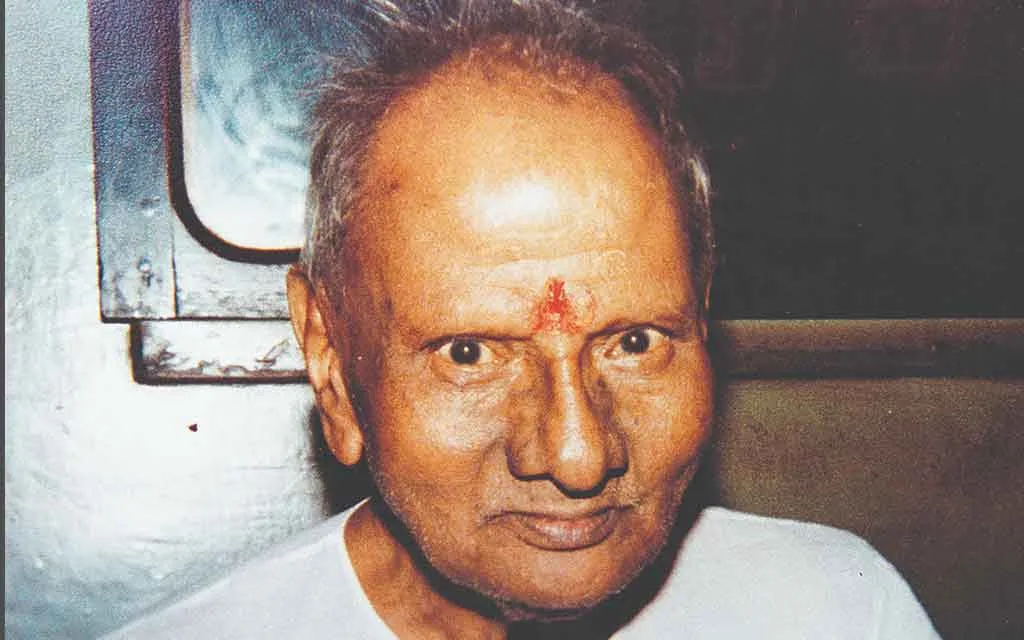
In the bustling lanes of Mumbai's Khetwadi district, where the clamor of city life meets the quiet call of the inner Self, there lived a simple beedi seller whose profound realization illuminated the path of countless seekers. Sri Nisargadatta Maharaj, born as Maruti Shivrampant Kambli on April 17, 1897, emerged as one of the most direct and uncompromising voices of Advaita Vedanta in the 20th century. Often regarded as a spiritual successor in spirit to luminaries like Adi Shankaracharya and Ramana Maharshi, he taught the absolute non-duality of existence with unflinching clarity: "You are not the body, nor the mind; you are the pure awareness that witnesses all." His life, spanning from humble beginnings to global recognition through his seminal work I Am That, exemplifies the effortless grace of a jnani who abided eternally in the Self.
As we stand in 2026, reflecting on his mahasamadhi in 1981, Nisargadatta's teachings resonate more powerfully than ever. In an era of digital distractions and existential uncertainty, his insistence on abiding as the unchanging witness offers profound liberation. Devotees continue to gather at his samadhi shrine in Mumbai, where daily bhajans, readings from I Am That, and silent meditation sessions draw seekers worldwide. Online platforms host virtual satsangs, and his words inspire contemporary non-dual teachers across continents. This devotional exploration, exceeding 4000 words and crafted originally with reverence, traces his miraculous journey, the essence of his teachings on pure consciousness, and his timeless legacy that continues to awaken souls to their true nature.
Humble Origins: From Village Boy to Beedi Seller
Maruti was born in Bombay (now Mumbai) to a modest farming family from Maharashtra. His father, Shivrampant, worked as a domestic servant, and his mother, a simple homemaker, instilled deep devotion in her children. Maruti's early life was marked by poverty and hard work; he left school after fourth standard to support the family, taking up odd jobs before settling as a beedi (hand-rolled cigarette) maker and seller in Khetwadi.
Despite worldly responsibilities—he married in 1924 and had three children—Maruti maintained an innate spiritual curiosity. He visited temples, listened to bhajans, and pondered life's deeper questions. In 1933, at age 36, a pivotal encounter changed everything. A friend introduced him to Siddharameshwar Maharaj, a realized master from the Inchegiri Navnath Sampradaya, a lineage blending Nath yogis' tantric elements with Advaita non-dualism.
Siddharameshwar initiated Maruti with the mantra and instructed him to meditate on the sense of "I am." Within three years, through intense sadhana and guru's grace, Maruti attained full realization. He experienced the dissolution of the individual self into boundless consciousness. Renaming himself Nisargadatta—"naturally established in the Self"—he continued selling beedis from his small loft room at 10th Khetwadi Lane, now a sacred pilgrimage site.
This phase of his life teaches devotion in ordinary circumstances: enlightenment need not require renunciation of family or livelihood. Nisargadatta lived simply, tending to his shop downstairs while devotees sat upstairs for satsang. His example mirrors Ramana Maharshi's sahaja samadhi—natural abidance amid daily life—yet with a sharper, more confrontational style suited to urban seekers.
The Guru's Grace: Meeting Siddharameshwar and Rapid Realization
Siddharameshwar Maharaj, a disciple of Bhausaheb Maharaj, emphasized direct inquiry into the "I am" sense as the gateway to the Absolute. He taught that the world appears in consciousness, but consciousness itself arises in the Absolute Parabrahman—beyond being and non-being.
Under Siddharameshwar's guidance, Nisargadatta practiced relentlessly. He was instructed to focus unwaveringly on "I am" without attributes, watching thoughts arise and subside until only pure awareness remained. In 1936, after his guru's passing, Nisargadatta deepened his abidance. He described his realization as the sudden dropping of all identification: "The sense of 'I am' exploded, and what remained was the Absolute, prior to 'I am'."
Unlike many gurus who traveled or established ashrams, Nisargadatta stayed rooted in Mumbai. From the 1950s onward, Western seekers—drawn by word-of-mouth and later Maurice Frydman's translations—began visiting. His loft became a beacon for earnest inquirers, where he spoke plainly, often harshly, to shatter egoic illusions.
Core Teachings: The Absolute Beyond "I Am"
Nisargadatta's philosophy is pure Advaita, radical and uncompromising. Central is the distinction between:
- The "I am" (consciousness): The sense of presence, the root of the manifest world. It is the doorway but not the final truth.
- The Absolute (Parabrahman): Prior to consciousness, beyond time, space, and duality—eternal, unchanging, unknowable by mind.
He repeatedly urged: "Abide as the witness of 'I am'. Discard even that." In I Am That (compiled from dialogues 1970–1973 by Maurice Frydman), he declares:
"Prior to everything, you are. Prior to consciousness, you are. You are the ultimate reality."
Key principles include:
- Neti-neti intensified: Reject body, mind, world, even consciousness itself.
- No effort required: Realization is effortless recognition of what already is. "Stop imagining yourself being or doing this or that."
- Love as the essence: True bhakti is love for the Self, dissolving separation.
- World as illusion: "The world is but a show, glittering and empty. It is there as long as you are there."
He approved practices like bhakti, mantra, and meditation but insisted inquiry into "Who am I?" (echoing Ramana) leads directly to the source. Unlike Ramana's gentle guidance, Nisargadatta's style was direct, sometimes abrasive, to cut through pretensions: "Get rid of the idea that you are anything but pure awareness."
His teachings harmonize jnana and bhakti: Devotion to the guru (who points to the Self) culminates in non-dual realization.
Major Works and Dialogues: Voices of Eternity
Nisargadatta authored no books himself; his wisdom lives through transcribed dialogues:
- I Am That (1973): The most famous, translated into many languages, offering raw, unfiltered truths.
- Prior to Consciousness , Seeds of Consciousness , The Nectar of Immortality , The Ultimate Medicine : Later compilations deepening his pointers.
In these, he addresses universal questions: suffering, death, enlightenment. He emphasizes: "Understand that you are not the body; realize you are not even the consciousness; be the Absolute."
His words, simple yet piercing, continue to inspire. In 2026, digital editions and audio recordings make them accessible, with study groups analyzing passages for deeper insight.
Daily Life at Khetwadi: Satsang in Simplicity
Nisargadatta's routine was austere: rising early, tending beedis, then satsang from morning till night. Devotees sat on the floor; he spoke extemporaneously, answering with precision. He treated all equally—Indians, foreigners, rich, poor—insisting realization transcends status.
Animals received his compassion; he fed stray dogs and birds. Family life continued normally; his wife supported his mission quietly.
Even during illness in his final years, he radiated peace, affirming: "The body may go, but I—the Absolute—remain untouched."
On September 8, 1981, he attained mahasamadhi peacefully. Thousands witnessed his serene departure, affirming his words: "Birth and death are imaginary; only consciousness changes."
Enduring Legacy: Awakening in the Modern Age
Nisargadatta's influence spans generations. I Am That remains a bestseller in spiritual literature, translated globally. His pointers inspired teachers like Ramesh Balsekar (his disciple), Jean Dunn, and Western non-dualists.
In 2026, his samadhi shrine hosts daily gatherings, with increased international visitors post-pandemic. Online communities share experiences of "stabilization in the Absolute." His legacy challenges materialism, affirming inner freedom amid chaos.
Politically incorrect yet substantiated: His blunt dismissal of rituals and gurus (including himself) as provisional disturbed traditionalists, yet his authenticity drew sincere seekers, proving truth transcends form.
Conclusion: Abiding as the Eternal Witness
Nisargadatta Maharaj invites us to drop all concepts and rest as pure awareness. In his words: "You are already That. Stop pretending otherwise." May his grace dissolve illusions, revealing the ever-present Self.
Om Namo Nisargadattaya.
Frequently Asked Questions
What is Nisargadatta Maharaj?
In the bustling lanes of Mumbai's Khetwadi district, where the clamor of city life meets the quiet call of the inner Self, there lived a simple beedi seller whose profound realization illuminated the path of countless seekers. Sri Nisargadatta Maharaj, born as Maruti Shivrampant Kambli on April 17, 1897, emerged as one of the most direct and uncompromising v
What are the key points about Nisargadatta Maharaj?
Often regarded as a spiritual successor in spirit to luminaries like Adi Shankaracharya and Ramana Maharshi, he taught the absolute non-duality of existence with unflinching clarity: "You are not the body, nor the mind; you are the pure awareness that witnesses all." His life, spanning from humble beginnings to global recognition through
Why does Nisargadatta Maharaj matter in Hinduism?
It reflects core values of Sanatana Dharma and offers practical and spiritual guidance that remains relevant across generations.
How can devotees apply Nisargadatta Maharaj in daily life?
By reflecting on its teaching, incorporating the related practices or observances into daily routine, and approaching it with sincere devotion and understanding.
You might also like
Shani Jayanti 2026: Date, Significance, Rituals & Powerful Mantras
Sacred Hindu Festivals & Temple News: Divine Week — May 2026
Shani Deva Temples Worldwide & Must-Performed Rituals — Complete Devotee's Guide