
How India Celebrated Hanuman Jayanti 2026 — Devotion, Rituals & Grand Processions
“Jai Hanuman Gyaan Gun Sagar, Jai Kapis Teehun Lok Ujagar”
— Opening verse of the Hanuman Chalisa
Introduction: A Nation United in Devotion
On Thursday, April 2, 2026 — the sacred Chaitra Purnima full moon — millions of devotees across India and the world came together to celebrate Hanuman Jayanti 2026, the birth anniversary of Lord Hanuman, the immortal Vanara warrior, the supreme devotee of Lord Rama, and the eternal protector of bhaktas in Kalyug.
From the banks of the Saryu in Ayodhya to the shores of the Thames in London, chants of “Jai Bajrangbali!” and “Jai Shri Ram!” echoed with unmatched fervour, reaffirming the living pulse of Sanatan Dharma across continents.
 Hanuman Jayanti 2026 — Date & Auspicious Timing
 Hanuman Jayanti 2026 — Date & Auspicious Timing
| Detail | Information |
|---|---|
| Festival Date (North India) | Thursday, April 2, 2026 |
| Tithi | Chaitra Purnima (Full Moon) |
| Most Auspicious Puja Time | Early morning after sunrise & Abhijit Muhurat |
| Best for Hanuman Chalisa Path | Sunrise to midday |
| Sindoor Offering Time | Morning puja & aarti windows |
Note: In Andhra Pradesh and Telangana, Hanuman Jayanthi is observed as a 41-day spiritual Deeksha starting from Chaitra Purnima. In Tamil Nadu and Kerala, it is celebrated as Hanumath Jayanthi during Margashirsha Amavasya (December–January).
The Spiritual Significance of Hanuman Jayanti
 The Spiritual Significance of Hanuman Jayanti
Lord Hanuman — also reverently called Bajrangbali, Sankat Mochan (remover of obstacles), Pavan Putra (son of the Wind God), and Mahavir — is among the most widely worshipped deities in Hinduism.
His qualities of unwavering devotion (bhakti), extraordinary strength (shakti), humility, and selfless service (seva) make Him a timeless guide for navigating the challenges of modern life.
Celebrating Hanuman Jayanti is believed to:
- Bestow protection from negative energies and obstacles
- Grant courage, confidence, and mental clarity
- Bring success in righteous endeavours
- Strengthen one’s surrender to Lord Rama and deepen spiritual practice
Temple Celebrations Across India
 Temple Celebrations Across India
Ayodhya — The Sacred Birthplace of Devotion
The Hanumangarhi Temple in Ayodhya — one of the most revered Hanuman shrines in India — was the epicentre of grand celebrations. A Shri Hanuman Janmotsava was organised in magnificent style, drawing lakhs of pilgrims who arrived from across the country for darshan. The air resonated with the sounds of conches, bells, and collective chanting of the Hanuman Chalisa.
Delhi — Capital of Devotion
The iconic Hanuman Mandir at Connaught Place witnessed devotees lining up for darshan from the early hours of the morning. The temple premises were adorned with saffron flags and marigold garlands, and special aartis were performed at every puja slot throughout the day.
Varanasi — The Eternal City
At the Shri Sankat Mochan Hanuman Temple in Varanasi, spiritual discourses commenced at dawn — a tradition rooted in the belief that Lord Hanuman was born at sunrise. Prasadam (sacred food) was distributed to all devotees, and continuous bhajan sessions ran through the day.
Gujarat — Kashtabhanjan Dev at Salangpur
The famous Kashtabhanjan Dev Hanuman Temple in Salangpur, Gujarat, witnessed massive crowds with thousands of devotees seeking relief from hardships through Lord Hanuman’s divine grace. Special abhishekams (ritual bathing of the idol) and large-scale community feasts were organised.
Hyderabad & Bengaluru — South India’s Grand Observances
Major Hanuman temples in Hyderabad and Bengaluru saw heavy footfall, with devotees queuing for darshan from early morning. In Telangana and Andhra Pradesh, devotees who had been observing the 41-day Deeksha since Chaitra Purnima engaged in special completion rituals, marking the spiritual culmination of their intense practice.
Maharashtra
Temples in Mumbai, Pune, and Nashik observed Hanuman Jayanti with traditional Maharashtra-style celebrations, featuring special abhishekam, offerings of modaks and laddus, and all-night bhajan sessions.
Key Rituals & Traditions Observed Nationwide
 Key Rituals & Traditions Observed Nationwide
Across India, common rituals on Hanuman Jayanti 2026 included:
- Temple decorations with saffron flags, marigold garlands, and images of Lord Hanuman
- Fasting or consuming sattvic food (fruits, milk, no grains, onion, or garlic)
- Applying sindoor to Hanuman idols — rooted in the legend of Sita’s sindoor and Hanuman’s devotion to Lord Rama
- Offering laddus, jaggery, bananas, and betel leaves at temples
- Reciting the Hanuman Chalisa — many devotees completed 108 recitations
- Akhand Path — continuous, uninterrupted recitation of sacred texts including the Sundara Kanda and Ramayana
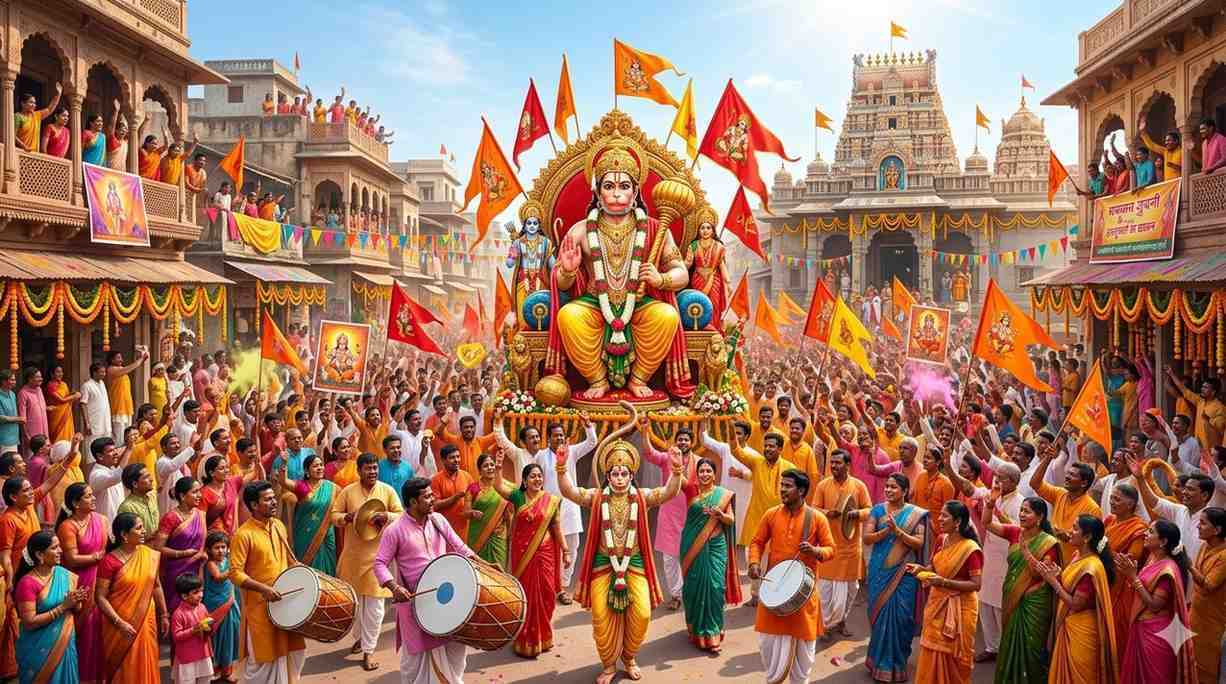
- Shobha Yatras (Processions) — colourful processions with decorated tableaux, bhajan groups, and echoing chants of “Jai Shri Ram” and “Jai Bajrangbali” passing through city streets
- Fancy dress competitions for children dressed as Lord Hanuman
- Community langars and prasadam distribution outside temples
Global Celebrations by the Hindu Diaspora
 Global Celebrations by the Hindu Diaspora
The spirit of Hanuman Jayanti 2026 transcended borders. The Indian diaspora in the USA, UK, Canada, Australia, and the Middle East celebrated the festival with traditional zeal and community togetherness.
Temples and Hindu organisations across the globe organised:
- Mass Hanuman Chalisa recitations
- Sundara Kanda Path sessions
- Cultural programs highlighting Hanuman’s ideals of bhakti, shakti, and seva
- Discourse evenings on Hanuman’s role in the Ramayana and relevance in modern life
- Community feasts and prasadam distribution
Communities emphasised Lord Hanuman’s message of courage, discipline, and devotion as a guiding light for navigating modern-day challenges — from professional pressures to personal setbacks.
A Specially Divine Moment: Ramayana Teaser Unveiled
 A Specially Divine Moment: Ramayana Teaser Unveiled
In a moment that united devotion and culture, the first glimpse of director Nitesh Tiwari’s highly anticipated film ‘Ramayana’ — starring Ranbir Kapoor as Lord Rama — was unveiled on Hanuman Jayanti 2026. The auspicious timing of the teaser release was widely praised as fitting and deeply symbolic, drawing massive responses from devotees and film enthusiasts alike.
Regional Variations Across India
 Regional Variations Across India
One of the most unique aspects of Hanuman Jayanti is how it is celebrated on different dates in different regions, reflecting the richness of India’s diverse spiritual traditions:
| Region | Celebration Date/Season |
|---|---|
| North India (most states) | Chaitra Purnima (March–April) |
| Andhra Pradesh & Telangana | 41-day Deeksha starting Chaitra Purnima |
| Maharashtra | Chaitra Purnima (full moon) |
| Tamil Nadu & Kerala | Margashirsha Amavasya (December–January) |
| Karnataka | Margashirsha or Vaishakha (Shukla Paksha Trayodashi) |
The Eternal Message of Bajrangbali
 The Eternal Message of Bajrangbali
As chants of “Jai Hanuman” echoed in temples and streets across India and abroad, Hanuman Jayanti 2026 served as a powerful reminder of what Lord Hanuman embodies:
- The power of pure devotion that moves even the impossible
- The importance of selfless service — doing one’s duty without ego or expectation
- The strength that flows from surrender to a higher purpose
- The protection that comes from righteous living
From schoolchildren participating in fancy dress competitions to elderly grandmothers narrating stories from the Ramayana, the festival brought together people across all age groups, regions, and backgrounds under one shared wave of devotion.
Frequently Asked Questions (FAQs)
 Frequently Asked Questions (FAQs)
Q1. When was Hanuman Jayanti 2026 celebrated in North India?
Hanuman Jayanti 2026 was observed on Thursday, April 2, 2026, coinciding with Chaitra Purnima.
Q2. How is Hanuman Jayanthi different in Andhra Pradesh and Telangana?
In AP and Telangana, it is celebrated as a 41-day Deeksha (spiritual observance) starting on Chaitra Purnima and concluding on the tenth day of Krishna Paksha in Vaishakha month.
Q3. Can women visit Hanuman temples on Hanuman Jayanti?
Yes. Women can visit Hanuman temples and observe the fast with full devotion. There is no religious restriction when worship is performed with sincere faith.
Q4. What are the most important rituals on Hanuman Jayanti?
Fasting, applying sindoor to Hanuman idols, reciting the Hanuman Chalisa (ideally 108 times), attending aarti, offering laddus and bananas, and participating in Shobha Yatras are the key rituals.
Q5. What foods are eaten on Hanuman Jayanti fasting day?
Devotees consume sattvic foods — fruits, milk, and dry fruits — and avoid grains, onion, garlic, and non-vegetarian food throughout the day.
Conclusion
Hanuman Jayanti 2026 was a magnificent testament to the living, breathing devotion that unites Hindus across India and the world. In temples old and new, in homes and on streets, the invincible spirit of Pavan Putra Hanuman — the embodiment of strength, loyalty, and grace — was celebrated with unmatched reverence.
At HinduTone.com, we salute every devotee who lit a lamp, folded their hands in prayer, and chanted the holy name on this sacred day.
Jai Bajrangbali! Jai Shri Ram!
Published by the HinduTone Editorial Team | hindutone
Voice of Hindus Worldwide — Unity in Diversity
Related posts:
 A Complete Guide to Permissions for Setting Up Ganesh Mandapams in India
 Ayodhya Diwali 2024: A Historic Deepotsav Celebration That Illuminated the World
 Nepal’s Tihar Festival: The Unique Diwali Celebration with Animals
 Nagula Chavithi 2025 in Middle East: Complete Celebration Guide for Hindu Diaspora in UAE, Qatar, Oman & Gulf Countries
 Hindu Festivals in Margashira Masam 2025: Complete Guide with Dates & Significance
 Vaikuntha Ekadashi 2025 in UK and Ireland: Complete Guide for Hindus
 Difference Between Indian Panchang & USA Ekadashi Dates – A Complete Guide for NRIs
 Vaikunta Ekadashi 2025 – Complete USA Guide: City-wise & State-wise Celebrations, Temples, Timings, Rituals & Devotee Handbook