Hanuman Jayanti 2026 in Australia: Indian Diaspora Celebrates Bajrangbali with Grand Devotion and Community Spirit
April 3, 2026 – The Indian community in Australia came together in large numbers to celebrate Hanuman Jayanti 2026 on Thursday, April 2, with heartfelt…
April 3, 2026 – The Indian community in Australia came together in large numbers to celebrate Hanuman Jayanti 2026 on Thursday, April 2, with heartfelt…
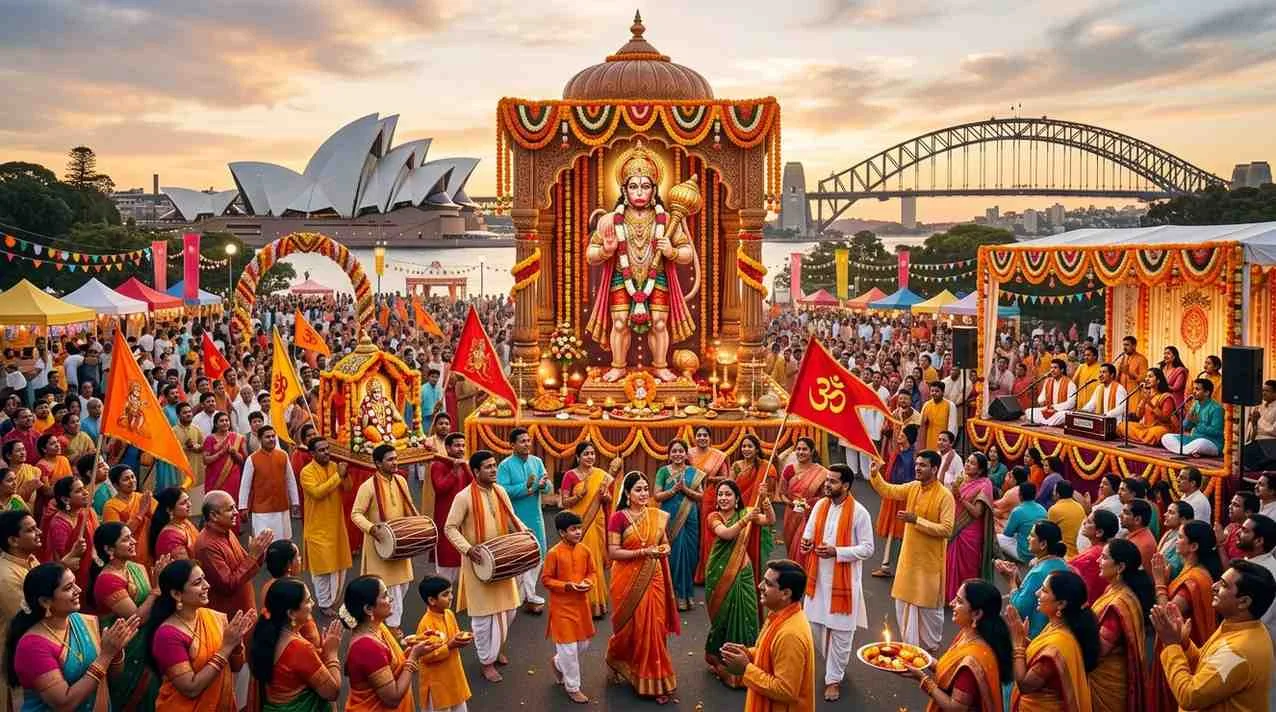
April 3, 2026 – The Indian community in Australia came together in large numbers to celebrate Hanuman Jayanti 2026 on Thursday, April 2, with heartfelt devotion, vibrant rituals, and a strong sense of cultural unity. The festival, marking the birth of Lord Hanuman — the epitome of strength, courage, loyalty, and selfless service — was observed with great enthusiasm across major cities including Sydney, Melbourne, Adelaide, Perth, and Brisbane.
Falling on Chaitra Purnima, Hanuman Jayanti 2026 saw temples beautifully decorated and packed with devotees from early morning. Special muhurat timings guided the auspicious rituals as families sought blessings for protection, inner strength, and success.
Highlights of Hanuman Jayanti Celebrations in Australia
Sydney
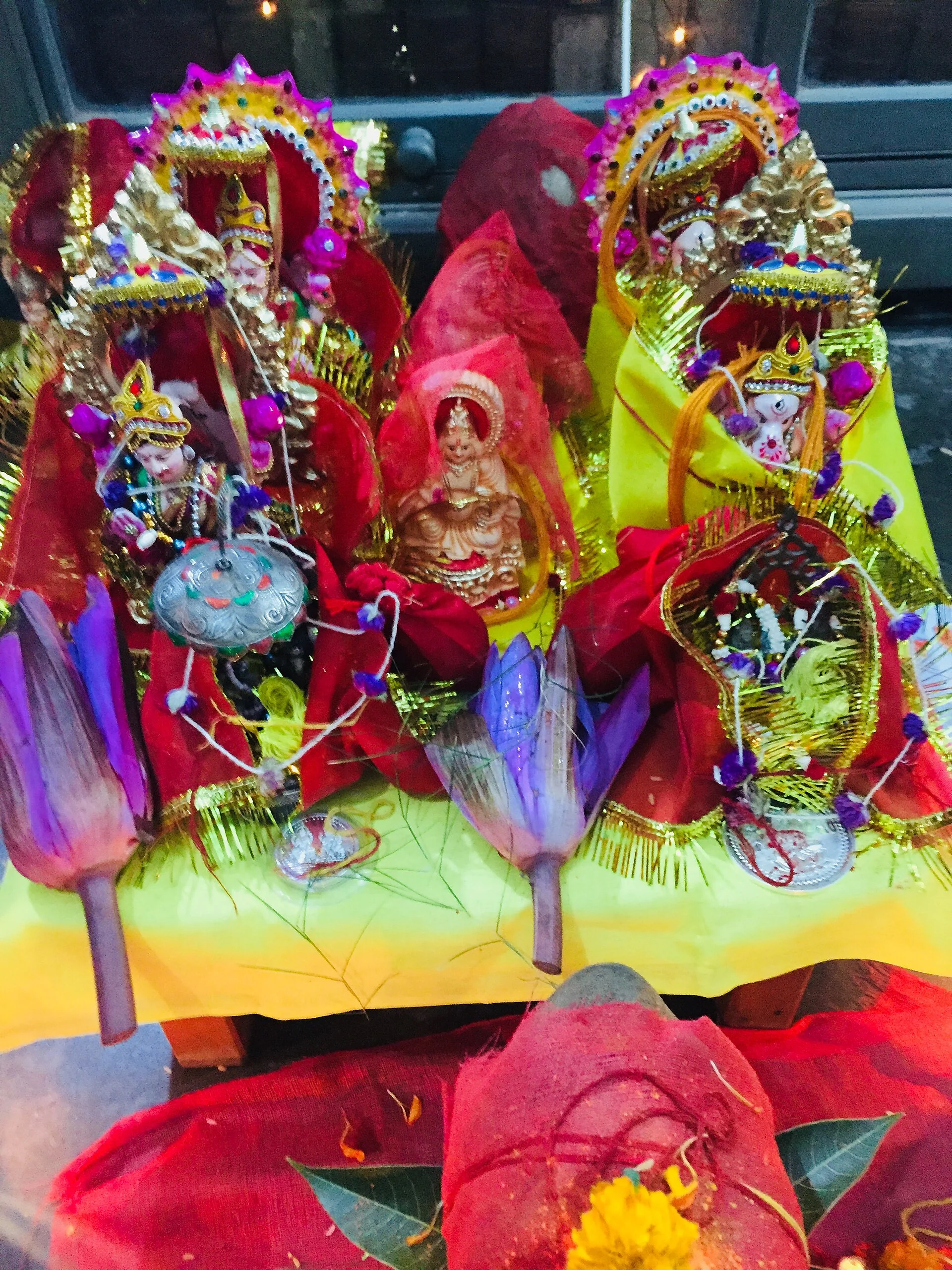
- Hanuman Mandir Sydney (Liverpool) hosted a grand all-day celebration from 7 AM to 9 PM. The program included 108 recitations of the Hanuman Chalisa, powerful kirtans, bhajans, and a community bhandara (free prasad meal). Devotees offered sindoor, flowers, laddoos, and red cloth to Lord Hanuman.
- Chinmaya Mission organized special Hanuman Havan and chanting sessions as part of their ongoing Chinmaya Hanuman Yatra, spreading the message of devotion and service.
Melbourne
- Sri Durga Temple held vibrant Hanuman Janmotsav celebrations with Dhwajarohan (flag hoisting) at 3:00 PM, followed by Sunderkand Path from 5:00 PM to 7:00 PM and a grand langar/bhandara.
- The Chinmaya Hanuman Festival brought the community together with collective Hanuman Chalisa chanting, cultural performances, kids’ activities, and delicious Indian food stalls, creating a joyful family atmosphere.
Adelaide
- Hanuman Mandir South Australia transformed into a vibrant spiritual hub. Devotees participated in special prayers, devotional music, group recitations, and community worship, reinforcing bonds of faith and heritage among the South Australian Hindu community.
Other Cities In Perth and Brisbane, local temples and Hindu associations organized puja, aarti, and community gatherings. Many households observed fasts, performed home puja with ghee lamps, and recited the Hanuman Chalisa multiple times for divine protection.
Common Rituals Observed by the Indian Diaspora
- Early morning holy baths and special puja with sindoor, jasmine oil, bananas, and sweets.
- Recitation of Hanuman Chalisa, Sundar Kand, and powerful mantras.
- Temple visits, group aartis, and bhajans.
- Community bhandaras and acts of seva (selfless service), reflecting Hanuman ji’s ideals.
- Many devotees kept vrat (fast) and broke it only after evening prayers.
Spiritual Message Resonating Down Under
For the Indian community in Australia, Hanuman Jayanti is more than a religious festival — it is a celebration of values that transcend borders: strength in adversity, unwavering devotion, humility, and selfless service. In a fast-paced multicultural society, Lord Hanuman’s message inspires professionals, students, and families to face challenges with courage and positivity.
This year’s celebrations highlighted the growing vibrancy of Hindu traditions in Australia, where temples serve as important cultural and spiritual anchors for the diaspora.
Jai Shri Ram! Jai Bajrangbali!
hindutone extends warm greetings to the entire Indian and Hindu community in Australia on this auspicious occasion. May Lord Hanuman bless you with good health, success, protection from obstacles, and boundless inner strength.
Popular Hashtags: #HanumanJayanti2026 #HanumanJayantiAustralia #JaiBajrangbali #HanumanChalisa #IndianInAustralia #HinduFestivalAustralia #BharatCulture
Stay tuned to Hindutone for more stories on global Hindu celebrations, festivals, and the rich spiritual heritage of the Indian diaspora.
Why is Hanuman Jayanti observed on Chaitra Purnima, and what does scripture say about his birth?
According to the Valmiki Ramayana and the Shiva Purana, Lord Hanuman was born on the full moon day of the month of Chaitra — known as Chaitra Purnima — to Anjana Devi and Kesari, blessed by the wind-god Vayu. The Ananda Ramayana further elaborates that the birth took place at sunrise, which is why the predawn hours and early morning muhurat hold special significance in Hanuman Jayanti observances worldwide.
The Sanskrit name 'Hanumat' is often etymologically traced to 'Hanu' (jaw) and 'mat' (having), referencing the childhood episode in which the young Anjaneya leapt toward the sun, mistaking it for a ripe fruit, and was struck by Indra's vajra. This very story, narrated in both the Kishkindha Kanda of the Valmiki Ramayana and the Uttara Kanda, establishes Hanuman's divine invulnerability and marks him as a chiranjivi — one of the seven immortal beings in Hindu tradition. Devotees chanting the Hanuman Chalisa on his birthday invoke these qualities of fearlessness and indestructibility for themselves and their families.
What is the spiritual significance of the 108 Hanuman Chalisa recitations performed at Sydney Hanuman Mandir?
The number 108 holds deep cosmological meaning across Vedic and Puranic traditions. The Mukha Upanishad records 108 principal Upanishads; the distance between the Earth and the Sun is approximately 108 times the Sun's diameter — a correspondence that ancient rishis recognised as sacred. Performing any stotra or nama-japa in multiples of 108 is therefore considered a complete, cosmically aligned offering, intensifying the devotee's sankalpa (spiritual resolve).
The Hanuman Chalisa, composed by the 16th-century poet-saint Tulsidas in the Awadhi dialect of Hindi, consists of 40 chaupais (verses) framed by two dohas. The opening doha invokes Shri Guru's grace, and the text systematically praises Hanuman's attributes — his gyan (wisdom), bal (strength), vikram (valour), and bhakti (devotion) — making a single recitation a complete meditation. Reciting it 108 times in a single sitting, as done at Sydney Hanuman Mandir in Liverpool, transforms the event into a collective yagna of sound, said in the Narada Bhakti Sutras to purify the atmosphere and elevate the consciousness of all participants.
What role does Sunderkand Path play in Hanuman Jayanti, and why did Melbourne's Sri Durga Temple feature it prominently?
The Sunderkand is the fifth book of the Valmiki Ramayana, describing Hanuman's solo journey across the ocean to Lanka, his meeting with Sita Mata in the Ashoka Vatika, and his display of divine power before Ravana's court. Unlike any other kanda of the Ramayana, the Sunderkand is named for its inherent auspiciousness — 'Sundar' meaning beautiful — and is traditionally recited as an independent text to invoke protection, remove obstacles, and restore hope in difficult circumstances.
In the diaspora context, the communal Sunderkand Path held at Melbourne's Sri Durga Temple from 5:00 PM to 7:00 PM serves a dual purpose: it is a rigorous devotional practice and simultaneously an act of cultural transmission. Families gather across generations, elders leading the Sanskrit-inflected Awadhi verses while children follow along, creating an oral continuity that mirrors how the text was transmitted through gurukula settings in India for centuries. The recitation is typically preceded by the Dhwajarohan — flag hoisting — which itself symbolises the planting of dharma in a new land, echoing Hanuman's act of planting Rama's name in every territory he entered.
How does the tradition of offering sindoor to Hanuman connect to Puranic lore, and why is red cloth significant?
The offering of sindoor (vermilion) to Hanuman traces directly to an episode narrated in the Uttara Kanda of the Ramayana. Hanuman observed Sita Devi applying sindoor to her hair parting and asked its purpose; she explained it was for the long life and well-being of her husband Shri Rama. Hearing this, Hanuman smeared sindoor across his entire body in an act of supreme devotion, resolving that if a pinch could benefit Rama, his whole form as an offering surely would. Lord Rama, deeply moved, blessed Hanuman with the boon that any devotee who applied sindoor to his image would receive his protection and grace.
The gifting of red cloth (lal vastra) to the deity on Hanuman Jayanti is an extension of this same symbolism. Red in the Shakta and Vaishnava traditions simultaneously represents shakti (divine energy), courage, and auspiciousness — qualities central to Hanuman's identity as both a bhakta (devotee) and a warrior. At temples across Sydney, Melbourne, Adelaide, Perth, and Brisbane, the combination of sindoor, lal vastra, jasmine garlands, and laddoo prasad forms a complete pancha-upachara offering that aligns with Agama Shastra protocols for Hanuman puja.
What is the Chinmaya Hanuman Yatra, and how does it connect Australian celebrations to a broader global movement?
The Chinmaya Hanuman Yatra is an initiative of Chinmaya Mission, the global Vedanta organisation founded by Swami Chinmayananda, designed to re-introduce devotees to the full depth of Hanuman's significance through structured study, chanting camps, havans, and seva activities. Rather than treating Hanuman Jayanti as a single-day festival, the Yatra frames it as part of an extended period of sadhana — spiritual discipline — that unfolds over several weeks and connects Mission centres across continents.
In Australia, both Sydney's Chinmaya Mission chapter and Melbourne's Chinmaya Hanuman Festival arm of the Yatra emphasise the integration of gyaan (knowledge) and bhakti (devotion), consistent with Swami Chinmayananda's teaching that ritual without understanding is hollow. Participants are guided through the philosophical dimensions of the Hanuman Chalisa alongside the experiential dimension of collective chanting, havan, and community bhandara — ensuring that the Indian diaspora's second and third generations receive both the cultural heritage and the intellectual framework needed to sustain it far from the Indian subcontinent.
How does the community bhandara reflect Hanuman's own example of nishkama seva?
The bhandara — a free communal meal served to all attendees regardless of background — is among the most theologically consistent acts performed on Hanuman Jayanti. Hanuman's entire life as depicted in the Ramayana is a model of nishkama karma (desireless action) and seva (selfless service): he crossed an ocean, burned Lanka, and carried a mountain not for personal gain but purely out of love for Rama and compassion for Sita. The bhandara enacts this principle in miniature, dissolving social hierarchies in the act of shared eating, a practice that also resonates with the langar tradition maintained at many North Indian temple complexes.
At Sri Durga Temple Melbourne and Hanuman Mandir South Australia in Adelaide, the langar-bhandara on Hanuman Jayanti 2026 drew hundreds of attendees, many of whom were not of Indian origin, reflecting the universal accessibility that seva-based festivals cultivate in multicultural societies. The Bhagavata Purana's twelfth skandha identifies feeding the hungry as one of the highest forms of worship — 'nara seva is narayana seva' — a principle that Hanuman embodies absolutely and that the Australian Hindu community demonstrates publicly through this annual tradition.
Frequently Asked Questions
When is Hanuman Jayanti in Australia 2026?
Hanuman Jayanti in Australia 2026 falls on April 3, 2026.
What is the significance of Hanuman Jayanti in Australia?
April 3, 2026 – The Indian community in Australia came together in large numbers to celebrate Hanuman Jayanti 2026 on Thursday, April 2, with heartfelt devotion, vibrant rituals, and a strong sense of cultural unity. The festival, marking the birth of Lord Hanuman — the epitome of strength, courage, loyalty, and selfless service — was observed with great ent
How is Hanuman Jayanti in Australia celebrated?
Devotees observe it with puja, fasting or special offerings, visiting temples, chanting mantras, and gathering with family. Customs vary by region and tradition.
What should devotees do on Hanuman Jayanti in Australia?
Worship Lord Hanuman, perform the day's puja and offerings, observe the fast where prescribed, and chant the associated mantras with devotion.
You might also like
Gita Jayanti 2026 Prasad Recipes — Tulsi-Honoring Sweets, Krishna's Favourites & December 10 Bhog Plate
Maha Shivratri 2026 Vrat Recipes — Sabudana Khichdi, Singhada Halwa, Phalahara Foods Complete Fasting Guide
Shani Deva Temples Worldwide & Must-Performed Rituals — Complete Devotee's Guide