Hindu Days of the Week: Gods, Mantras, Puja, Fasting and Rituals
Each Hindu weekday is linked to a graha and a deity: Sunday Surya, Monday Shiva, Tuesday Hanuman, Wednesday Ganesha, Thursday Vishnu, Friday Lakshmi and Saturday Shani. This guide compares all seven days with their mantras, offerings, fasts and regional variations, gives the verified Navagraha verse for each day, and links to a full guide for every day.
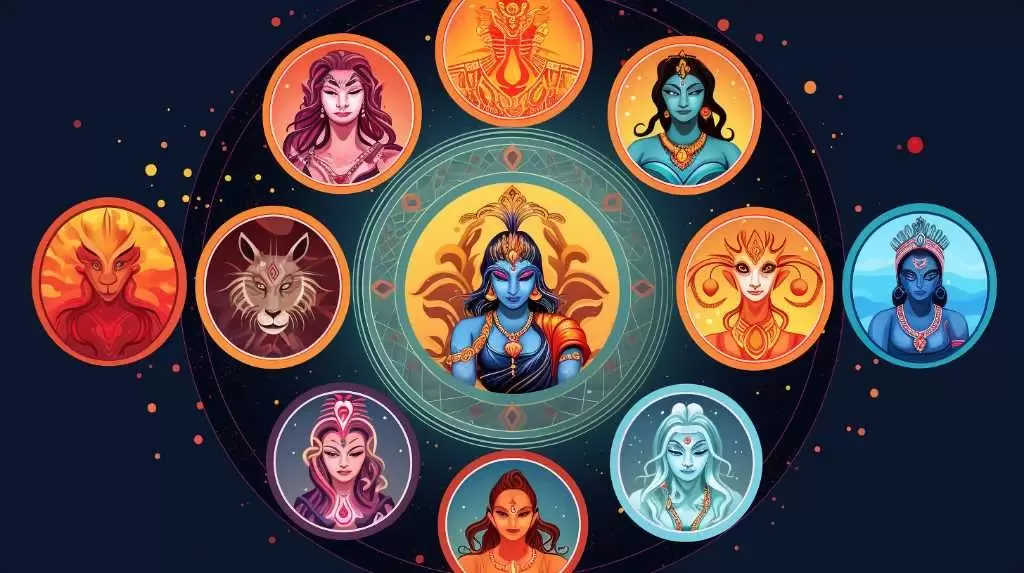
Quick answer: In Hindu tradition each weekday is linked to a graha and a deity. The most common pattern is Sunday, Surya; Monday, Shiva; Tuesday, Hanuman (with Durga and Murugan in some regions); Wednesday, Ganesha (with Vishnu and Krishna in some traditions); Thursday, Vishnu and Brihaspati; Friday, Lakshmi and the Goddess; and Saturday, Shani and Hanuman. You can honour each with a lamp, a short mantra and a simple offering; fasting is optional.
Last updated: 10 October 2026. This is the hub of HinduTone's days-of-the-week series. Each day has its own detailed guide with puja vidhi, verified mantras, fasting and food, temples and family ideas.
Day-by-day guides
- Sunday: Surya puja vidhi, mantras and Ravivar vrat
- Monday: Shiva puja, Somvar vrat and Om Namah Shivaya
- Tuesday: Hanuman puja, Mangalvar vrat and Hanuman Chalisa
- Wednesday: Ganesha puja and Budhvar vrat
- Thursday: Vishnu and Brihaspati puja, Guruvar vrat
- Friday: Mahalakshmi puja and Shukravar vrat
- Saturday: Shani Dev and Hanuman worship, Shanivar vrat
Looking for a deity by need rather than by day? See which god to pray to for job, marriage, health, money or studies.
The seven weekday names
Every Hindu weekday ends in -vara (Sanskrit vāsara or vāra, 'day'). The first part is the graha's name, and most days have more than one Sanskrit name.
| English | Hindi | Sanskrit (transliteration) | Other common names |
|---|---|---|---|
| Sunday | रविवार (Ravivar) | Ravivāsara | Bhānuvāsara, Ādityavāra; Aadivaram in Telugu |
| Monday | सोमवार (Somvar) | Somavāsara | Induvāsara, Chandravāra; Somavaram in Telugu, Thingal in Tamil |
| Tuesday | मंगलवार (Mangalvar) | Maṅgalavāsara | Bhaumavāsara, Aṅgārakavāra; Chevvai in Tamil |
| Wednesday | बुधवार (Budhvar) | Budhavāsara | Saumyavāsara; Budhavaram in Telugu |
| Thursday | गुरुवार (Guruvar) | Guruvāsara | Bṛhaspativāsara; Brihaspativar in Hindi; Lakshmivaram in Telugu |
| Friday | शुक्रवार (Shukravar) | Śukravāsara | Bhṛguvāsara; Velli in Tamil |
| Saturday | शनिवार (Shanivar) | Śanivāsara | Sthiravāsara, Mandavāra; Shanivaram in Telugu |
Why the week runs in this order
Indian astronomy lists the seven visible grahas in order of their apparent speed against the stars, from slowest to fastest: Saturn, Jupiter, Mars, Sun, Venus, Mercury, Moon. Each day is divided into 24 horas (hours), and each hora is ruled by the next graha in that list. The graha ruling the first hora at sunrise names the day. Because 24 hours move the sequence on by three places each day, the day lords fall into the familiar order: Sun, Moon, Mars, Mercury, Jupiter, Venus, Saturn.
Classical jyotisha texts such as the Surya Siddhanta use these lords of the day and hour, and the hora system is still how many panchangs choose auspicious hours. Historians generally trace the planetary week to Hellenistic astrology, from which it reached India in the early centuries CE; by the late centuries of the first millennium weekday names were in regular use in Indian inscriptions. Hindu tradition absorbed the week and gave each day a devotional character of its own, which is what the rest of this guide describes. To place the vara among the other limbs of the calendar, see what a panchang is.
All seven days at a glance
| Day | Deity | Mantra | Common offering | Observance |
|---|---|---|---|---|
| Sunday | Surya | Om Suryaya Namah | Water arghya at sunrise, red flowers, wheat and jaggery | Ravivar vrat: one meal before sunset, often saltless |
| Monday | Shiva (also Chandra, Parvati) | Om Namah Shivaya | Water or milk abhishekam, bilva leaves, white flowers | Somvar vrat; Solah Somvar (16 Mondays) |
| Tuesday | Hanuman; Durga; Murugan in Tamil Nadu | Om Ham Hanumate Namah | Sindoor, red flowers, gram with jaggery, boondi | Mangalvar vrat; often 21 Tuesdays |
| Wednesday | Ganesha; Vishnu or Krishna in some traditions | Om Gam Ganapataye Namah | Durva grass, modak or laddu, green moong | Budhvar vrat |
| Thursday | Vishnu, Brihaspati; Dattatreya and Sai Baba in some regions | Om Namo Narayanaya | Yellow flowers, chana dal, bananas, turmeric | Guruvar or Brihaspativar vrat; banana-plant puja |
| Friday | Lakshmi, Durga, Santoshi Mata | Om Shreem Mahalakshmyai Namah | Lotus or red flowers, kheer, white sweets | Shukravar vrat; Santoshi Mata and Vaibhav Lakshmi vrats |
| Saturday | Shani, Hanuman; Venkateswara in many South Indian homes | Om Sham Shanaishcharaya Namah | Sesame-oil lamp, black sesame, urad | Shanivar vrat; lamp under a peepal tree |
Traditional colours follow the grahas: red or orange for Sunday, white for Monday, red for Tuesday, green for Wednesday, yellow for Thursday, white or pink for Friday and black or dark blue for Saturday. Wear them if you enjoy it; they are customs, not requirements.
The Navagraha verse and short mantra for each day
The Navagraha Stotram attributed to Vyasa gives one verse to each of the nine grahas, and its first seven verses follow the weekdays exactly. Reciting the day's verse each morning is one of the simplest ways to follow the week. The texts below come from our verified source files (sanskritdocuments.org editions) and are inserted without retyping; each is followed by a short name-mantra of that day's deity. The full hymn, including Rahu, Ketu and the closing verses, is in our Navagraha Stotram guide.
Sunday: Surya (Sun)
जपाकुसुमसंकाशं काश्यपेयं महाद्युतिम् ।
तमोऽरिं सर्वपापघ्नं प्रणतोऽस्मि दिवाकरम् ॥ १॥
japākusumasaṃkāśaṃ kāśyapeyaṃ mahādyutim |
tamo'riṃ sarvapāpaghnaṃ praṇato'smi divākaram || 1||
Meaning: I bow to Divakara, glowing like the hibiscus flower, the radiant son of Kashyapa, enemy of darkness, dispeller of all wrongdoing.
Short mantra for Surya:
ॐ सूर्याय नमः॥
oṃ sūryāya namaḥ||
Full guide: Sunday puja, mantras and vrat.
Monday: Chandra (Moon)
दधिशङ्खतुषाराभं क्षीरोदार्णवसंभवम् ।
नमामि शशिनं सोमं शम्भोर्मुकुटभूषणम् ॥ २॥
dadhiśaṅkhatuṣārābhaṃ kṣīrodārṇavasaṃbhavam |
namāmi śaśinaṃ somaṃ śambhormukuṭabhūṣaṇam || 2||
Meaning: I bow to Soma, white as curd, conch and snow, born of the ocean of milk, the jewel on Shambhu's crown.
Short mantra for Shiva:
ॐ नमः शिवाय॥
oṃ namaḥ śivāya||
Full guide: Monday puja, mantras and vrat.
Tuesday: Mangala (Mars)
धरणीगर्भसंभूतं विद्युत्कान्तिसमप्रभम् ।
कुमारं शक्तिहस्तं तं मङ्गलं प्रणमाम्यहम् ॥ ३॥
dharaṇīgarbhasaṃbhūtaṃ vidyutkāntisamaprabham |
kumāraṃ śaktihastaṃ taṃ maṅgalaṃ praṇamāmyaham || 3||
Meaning: I bow to Mangala, born of the Earth, shining like lightning, the youth who holds the spear.
Short mantra for Hanuman:
ॐ हं हनुमते नमः॥
oṃ haṃ hanumate namaḥ||
Full guide: Tuesday puja, mantras and vrat.
Wednesday: Budha (Mercury)
प्रियङ्गुकलिकाश्यामं रूपेणाप्रतिमं बुधम् ।
सौम्यं सौम्यगुणोपेतं तं बुधं प्रणमाम्यहम् ॥ ४॥
priyaṅgukalikāśyāmaṃ rūpeṇāpratimaṃ budham |
saumyaṃ saumyaguṇopetaṃ taṃ budhaṃ praṇamāmyaham || 4||
Meaning: I bow to Budha, dark like the priyangu bud, of matchless form, gentle and full of gentle virtues.
Short mantra for Ganesha:
ॐ गं गणपतये नमः॥
oṃ gaṃ gaṇapataye namaḥ||
Full guide: Wednesday puja, mantras and vrat.
Thursday: Brihaspati (Jupiter)
देवानां च ऋषीणां च गुरुं काञ्चनसंनिभम् ।
बुद्धिभूतं त्रिलोकेशं तं नमामि बृहस्पतिम् ॥ ५॥
devānāṃ ca ṛṣīṇāṃ ca guruṃ kāñcanasaṃnibham |
buddhibhūtaṃ trilokeśaṃ taṃ namāmi bṛhaspatim || 5||
Meaning: I bow to Brihaspati, teacher of gods and sages, golden in hue, wisdom itself, lord of the three worlds.
Short mantra for Vishnu:
ॐ नमो नारायणाय॥
oṃ namo nārāyaṇāya||
Full guide: Thursday puja, mantras and vrat.
Friday: Shukra (Venus)
हिमकुन्दमृणालाभं दैत्यानां परमं गुरुम् ।
सर्वशास्त्रप्रवक्तारं भार्गवं प्रणमाम्यहम् ॥ ६॥
himakundamṛṇālābhaṃ daityānāṃ paramaṃ gurum |
sarvaśāstrapravaktāraṃ bhārgavaṃ praṇamāmyaham || 6||
Meaning: I bow to Bhargava (Shukra), white as snow, jasmine and lotus fibre, supreme teacher of the daityas, expounder of all the shastras.
Short mantra for Lakshmi:
ॐ श्रीं महालक्ष्म्यै नमः॥
oṃ śrīṃ mahālakṣmyai namaḥ||
Full guide: Friday puja, mantras and vrat.
Saturday: Shani (Saturn)
नीलांजनसमाभासं रविपुत्रं यमाग्रजम् ।
छायामार्तण्डसंभूतं तं नमामि शनैश्चरम् ॥ ७॥
nīlāṃjanasamābhāsaṃ raviputraṃ yamāgrajam |
chāyāmārtaṇḍasaṃbhūtaṃ taṃ namāmi śanaiścaram || 7||
Meaning: I bow to Shanaishchara, dark as collyrium, son of Ravi, elder brother of Yama, born of Chhaya and Martanda.
Short mantra for Shani:
ॐ शं शनैश्चराय नमः॥
oṃ śaṃ śanaiścarāya namaḥ||
Full guide: Saturday puja, mantras and vrat.
A simple daily routine for any weekday
Weekday worship works best on top of a small daily habit. This routine takes ten minutes in the morning and five in the evening.
Morning
- On waking, look at your palms and recite the karadarshana verse below before reaching for your phone.
- After bathing, light a lamp at your home altar, offer a flower or a little water, and chant the day's Navagraha verse or short mantra from the section above.
- On Sunday, add arghya to the rising sun; on Monday, water on the Shivalinga; on Tuesday and Saturday, a Hanuman prayer; on Wednesday, durva for Ganesha; on Thursday, a yellow flower for Vishnu; on Friday, a lamp for Lakshmi.
- Close with a moment of silence and a prayer for everyone's welfare.
कराग्रे वसते लक्ष्मीः करमध्ये सरस्वती ।
करमूले तु गोविन्दः प्रभाते करदर्शनम् ॥
karāgre vasate lakṣmīḥ karamadhye sarasvatī |
karamūle tu govindaḥ prabhāte karadarśanam ||
Meaning: Lakshmi dwells at the tips of the fingers, Saraswati in the middle of the palm, and Govinda at its base: so look at your hands in the morning. The verse reminds us that the day's work is itself sacred.
Evening
- At dusk, light a lamp near the entrance or altar (sandhya deepam). Many families do this daily and never miss it on their weekday deity's day.
- Recite the day's mantra 11 or 108 times, or read a stotra or chalisa associated with the deity.
- Close the day with this prayer for universal welfare:
ॐ सर्वेषां स्वस्तिर्भवतु । सर्वेषां शान्तिर्भवतु ।
सर्वेषां पूर्णं भवतु । सर्वेषां मङ्गलं भवतु ।
oṃ sarveṣāṃ svastirbhavatu | sarveṣāṃ śāntirbhavatu |
sarveṣāṃ pūrṇaṃ bhavatu | sarveṣāṃ maṅgalaṃ bhavatu |
Meaning: Om. May all be well. May all be at peace. May all be fulfilled. May all be blessed with auspiciousness.
If even this feels like too much, our five-minute daily puja for busy people shows how to compress it.
Weekday fasting: customs and caveats
Weekday fasts (vara vratas) are among the most common Hindu fasts. They are simpler than Ekadashi or Navratri fasts, and most share the same pattern: no food or only fruit and milk during the day, puja in the evening, then one simple vegetarian meal.
| Day | Typical fast | Food notes |
|---|---|---|
| Sunday | One meal before sunset | Often saltless; wheat, ghee and jaggery |
| Monday | Fruit and milk by day, meal after evening puja | Sabudana, potato, kuttu or singhara flour with rock salt |
| Tuesday | One meal after evening puja | Often saltless; wheat and jaggery, gram, boondi |
| Wednesday | One meal, often green foods | Green moong dishes are customary |
| Thursday | One meal of yellow foods | Chana dal, besan, bananas; many avoid washing hair and cutting nails |
| Friday | One meal; for Santoshi Mata, no sour food | Kheer, white sweets; gram and jaggery for Santoshi Mata |
| Saturday | One meal after sunset | Urad dal and black sesame dishes; many avoid oil-heavy food during the day |
Caveats: These are common north and central Indian patterns; your family's custom may differ, and that is fine. Fasting is never compulsory. Choose one day rather than several, and a gentle form rather than a strict one. If you cannot fast, a vegetarian day, one skipped meal, a donation of food or an act of service are traditional alternatives.
Health note: Consult a doctor before fasting if you have diabetes, low or high blood pressure, kidney or heart disease, or a history of eating disorders; if you are pregnant or breastfeeding; or if you take regular medication. Children and older people should not keep strict fasts. Drink water through the day unless your doctor agrees otherwise, and be careful with saltless fasts in hot weather.
Regional and sampradaya differences
The table above is a common pattern, not a universal rule. Some of the best-known variations:
- Tuesday: Hanuman in north and west India; Durga and the Goddess as Mangala Gauri or Mangala Chandi in Maharashtra, the Telugu states, Bengal and Odisha; Murugan in Tamil Nadu.
- Wednesday: Ganesha in Maharashtra and much of the north; Vishnu, Krishna or Vitthal (Vithoba) in other households; Ayyappa for some Kerala families.
- Thursday: Vishnu and Brihaspati widely; Dattatreya in Maharashtra and Karnataka; Sai Baba and Raghavendra Swamy for many devotees; Lakshmi on the Thursdays of Margashirsha in Odisha and the Telugu states.
- Friday: Lakshmi in most homes; Durga, Santoshi Mata and Vaibhav Lakshmi in the north; Amman and Devi temples in Tamil Nadu and Kerala.
- Saturday: Shani and Hanuman in the north; Venkateswara (Perumal) in many Telugu, Tamil and Kannada homes, especially during Purattasi or Shravana.
- Monday: Shiva everywhere, with Parvati in the vrat stories; Telugu and Kannada families stress the Mondays of Karthika, north India those of Shravan.
Sampradaya shapes the week too. Smarta households often worship five deities daily (the panchayatana) and use the weekday only as an emphasis. Many Vaishnava communities centre their calendar on Ekadashi and Vishnu's festivals rather than weekday deities. Shaiva households give special weight to Monday and Pradosham, Shakta households to Tuesday and Friday. None of these is more correct than the others; follow your family and teacher.
Weekday worship, tithi, vrat and festivals
The vara is only one of the five limbs of the panchang. Most major Hindu festivals and vrats are set by the tithi, the lunar day, which does not follow the weekly cycle. Ekadashi, Pradosh, Sankashti Chaturthi, Purnima and Amavasya can fall on any weekday, and they generally take precedence over a weekday fast. Learn more in what a tithi is.
When a tithi or nakshatra coincides with a particular weekday, tradition treats the combination as especially valuable:
- Somvati Amavasya: new moon on a Monday.
- Soma Pradosh, Bhauma Pradosh, Shani Pradosh: Pradosh on Monday, Tuesday or Saturday.
- Angaraki Chaturthi: Sankashti Chaturthi on a Tuesday, sacred to Ganesha.
- Bhanu Saptami: Saptami on a Sunday, for Surya.
- Guru Pushya and Ravi Pushya: the Pushya nakshatra on a Thursday or Sunday, valued for beginnings and purchases.
- Shani Amavasya: new moon on a Saturday.
Sacred months also add weight to particular weekdays: Shravan Mondays, Karthika Mondays, Margashirsha Thursdays, Ashada Fridays and Purattasi Saturdays. For dates, see our Hindu festival calendar 2026.
The Bhagavad Gita gives the spirit behind all of this. Regular, steady devotion matters more than any single ritual:
अनन्याश्चिन्तयन्तो मां ये जनाः पर्युपासते ।
तेषां नित्याभियुक्तानां योगक्षेमं वहाम्यहम् ॥
ananyāścintayanto māṃ ye janāḥ paryupāsate |
teṣāṃ nityābhiyuktānāṃ yogakṣemaṃ vahāmyaham ||
Meaning: Those who worship me with undivided minds, constantly devoted: for them I carry what they lack and preserve what they have (Bhagavad Gita 9.22).
Getting started: beginners, families, kids and the diaspora
Beginners
Do not try to follow all seven days at once. Pick the day of the deity you feel closest to, or the day that is easiest in your schedule, and keep it for a month: a lamp, the day's verse and one minute of silence. Add a second day only when the first feels natural.
Families
A weekly rhythm works well with children and busy parents. Rotate who lights the lamp; give each child 'their' day to lead the prayer; cook the day's traditional dish together, such as kheer on Friday or yellow dal on Thursday; and keep fasts for the adults who want them. A family that also follows needs-based prayer can combine both; our which-god guide maps deities to common needs.
Kids
Use stories: Surya's chariot on Sunday, the crescent on Shiva's head on Monday, baby Hanuman and the Sun on Tuesday, Ganesha's broken tusk on Wednesday, Vishnu's avatars on Thursday, Lakshmi rising from the ocean on Friday, and Shani's slow, patient walk on Saturday. Children should not fast; let them offer a fruit instead. More ideas: raising children with Hindu values abroad.
Diaspora
Keep the weekday of the country you live in, and calculate sunrise, sunset and Rahu Kalam from your own location. Weekend temple visits fall naturally on the Saturday and Sunday deities; see the weekend Saturday and Sunday puja guide. For temples near you, start with our guides for the USA, Canada and Australia and New Zealand.
Seven-day checklist
- Sunday: arghya at sunrise; Om Suryaya Namah; call or visit your parents.
- Monday: water and a bilva leaf for Shiva; 108 Om Namah Shivaya; a calm day of speech.
- Tuesday: Rama's name, then the Hanuman Chalisa; one act of service.
- Wednesday: durva grass and a modak for Ganesha; begin a pending task.
- Thursday: a yellow flower for Vishnu; thank a teacher; read a verse of the Gita.
- Friday: a lamp and a sweet for Lakshmi; tidy the home and the altar.
- Saturday: a sesame-oil lamp; the Navagraha verse for Shani; help someone who is struggling.
Curated reading on HinduTone
- Which god to pray to for job, marriage, health, money or studies
- Navagraha Stotram with meaning
- The Navagrahas explained: the nine planetary deities
- What is a panchang? Tithi, vara, nakshatra, yoga and karana
- The 12 Jyotirlingas of Lord Shiva
- Hindu gods and goddesses
Also read: Sabarimala and Dharma Sastha temples.
Also read: Aditya Hridayam (Sunday), Lingashtakam (Monday), Hanuman Chalisa (Tuesday and Saturday), Kanakadhara Stotram (Friday) and Durga Chalisa (Tuesday and Friday).
Also read: Ganapati Atharvashirsha (Wednesday), Sri Suktam (Friday) and Venkatesa Suprabhatam (Saturday).
Frequently asked questions
Which god is worshipped on each day of the week in Hinduism?
The most widespread pattern is: Sunday, Surya; Monday, Shiva; Tuesday, Hanuman (and Durga or Murugan in some regions); Wednesday, Ganesha (and Vishnu or Krishna in some traditions); Thursday, Vishnu and Brihaspati; Friday, Lakshmi and the Goddess; Saturday, Shani and Hanuman. Regions and families vary, and all deities may be worshipped on any day.
Why does the Hindu week have seven days in this order?
Each weekday is named after one of the seven visible grahas. In jyotisha each day is divided into 24 horas, each ruled by a graha in a fixed sequence, and the graha ruling the first hora at sunrise gives the day its name. This produces the order Sun, Moon, Mars, Mercury, Jupiter, Venus, Saturn.
Do I have to fast on the day of my chosen deity?
No. Fasting is an optional discipline. A lamp, a short mantra and a moment of attention are complete worship. If you fast, choose a gentle form, and consult a doctor first if you have a health condition, are pregnant or take regular medication.
When does a Hindu weekday begin?
In the panchang a vara runs from one sunrise to the next, not from midnight. For religious purposes, use your local sunrise. Families abroad keep the weekday of the country they live in, not India's.
What if a festival or Ekadashi falls on a weekday I normally observe?
Festivals and tithi-based vrats such as Ekadashi, Pradosh and Sankashti generally take precedence, and many combine with the weekday to form especially valued days, such as Somvati Amavasya or Angaraki Chaturthi. Follow the festival's rules and add your weekday prayer.
Can I worship only one deity every day?
Yes. Many devotees worship their ishta devata, their chosen deity, every day and simply add the weekday deity's name or verse. Weekday worship is a helpful rhythm, not an obligation.
Which day is best for starting something new?
Traditional muhurta practice judges the tithi, nakshatra and other factors together, not just the weekday. Thursday and Monday are widely considered gentle days, and many people begin with a Ganesha prayer on any day. For important events, consult a panchang or a priest.
Editor's note (10 October 2026)
This guide was rewritten and expanded on 10 October 2026 as the hub of our days-of-the-week series. The Navagraha verses, short mantras, morning and evening verses and Gita verse are inserted from our verified source files; meanings are our own translations. The history of the planetary week is summarised with care, as scholars debate its details. Weekday customs vary by region and family, and benefits are those traditionally believed, not promised. Please take medical advice before fasting.
Share this with family and friends
Send it on WhatsApp, post it, or copy the link.
More from Hinduism
- AI and the Sanskrit Revival in 2026: Language Models, Manuscript OCR, Translation Tools and What AI Still Gets Wrong
- GitaGPT and AI Bhagavad Gita Chatbots: How Accurate Are They, and What Does Hindu Tradition Say?
- Robotic Elephants and AI in Hindu Temples: Kerala's Mechanical Tuskers, Tirumala's AI Command Centre and the Debate
- Quantum Computing Explained for Hindus: Qubits, Superposition and Entanglement, with Vedanta Analogies (Not Equivalences)
- Madhava of Sangamagrama and the Kerala School: The Infinite Series for Pi, Sine and Arctangent, Worked Out Step by Step
You might also like

Sacred Hindu Festivals & Temple News: Divine Week — May 2026

Can a Robot Perform Puja? Robot Aarti, AI in Rituals and What Hindu Tradition Says

Annaprashan Ceremony: A Complete Guide to Baby's First Rice Feeding, Rituals and Regional Customs