Nashik Kumbh Mela 2026-2028: Dates, Shahi Snan, Pilgrim Guide & Spiritual Significance
The Divine Confluence: Where Heaven's Nectar Touched Earth In the sacred city of Nashik, where the holy Godavari River flows through ancient ghats and the air…
The Divine Confluence: Where Heaven's Nectar Touched Earth In the sacred city of Nashik, where the holy Godavari River flows through ancient ghats and the air…
The Divine Confluence: Where Heaven's Nectar Touched Earth
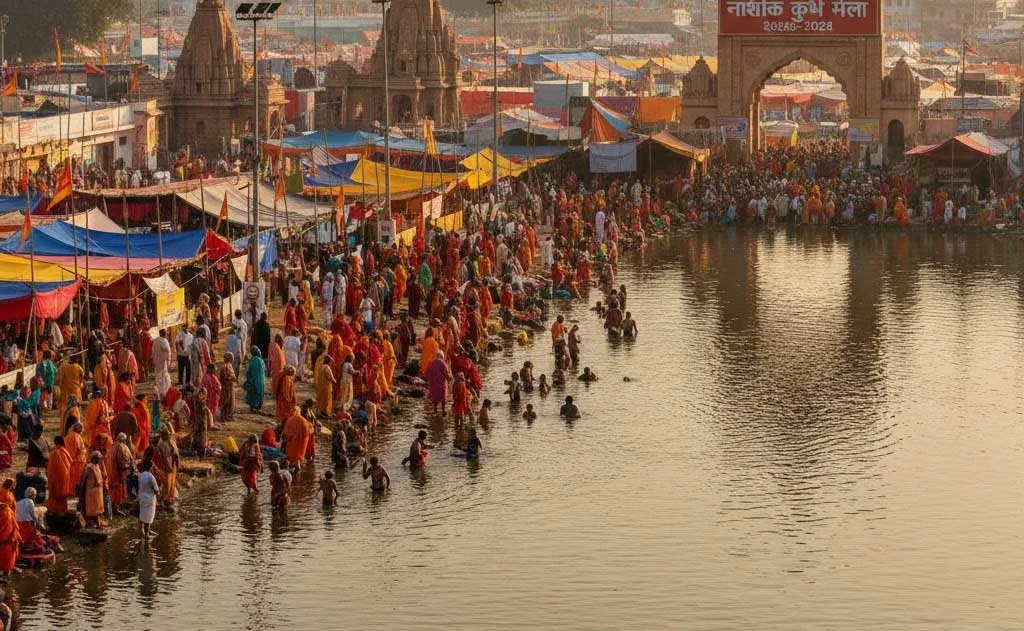
In the sacred city of Nashik, where the holy Godavari River flows through ancient ghats and the air resonates with Vedic chants, millions of devotees will gather once again for the Simhastha Kumbh Mela beginning October 31, 2026. This once-in-twelve-years spiritual congregation represents one of humanity's largest peaceful gatherings and oldest living traditions, rooted in a celestial mythology that bridges the mortal and divine realms.
The Mythological Origins: The Samudra Manthan
The Kumbh Mela's origins lie in one of Hinduism's most captivating legends—the Samudra Manthan, or the churning of the cosmic ocean. According to ancient scriptures, the Devas (celestial beings) and Asuras (demons) once joined forces to churn the primordial ocean of milk, seeking Amrit, the nectar of immortality that would grant eternal life.
Using Mount Mandara as the churning rod and the serpent Vasuki as the rope, with Lord Vishnu himself taking the form of a tortoise to support the mountain, they churned the cosmic ocean for a thousand years. From these depths emerged fourteen precious treasures, including Goddess Lakshmi, the divine physician Dhanvantari, the celestial elephant Airavata, and finally, the Kumbh—a golden pitcher containing the Amrit.
When Dhanvantari emerged bearing the sacred Kumbh, a fierce battle erupted between the Devas and Asuras, each side desperate to claim immortality for themselves. For twelve divine days and nights—equivalent to twelve human years—the Devas fled across the heavens with the precious pitcher while the Asuras pursued relentlessly.
During this celestial chase, drops of the immortal nectar fell at four sacred locations on Earth: Prayagraj (Allahabad), Haridwar, Ujjain, and Nashik-Trimbakeshwar. These drops sanctified the rivers at these sites—the Ganges, Yamuna, and Saraswati at Prayagraj; the Ganges at Haridwar; the Shipra at Ujjain; and the Godavari at Nashik. It is believed that during specific astrological configurations, these rivers still carry the essence of that divine nectar, making a holy dip during Kumbh Mela spiritually transformative.
Why Nashik? The Godavari's Sacred Grace
Nashik-Trimbakeshwar holds a unique position among the four Kumbh sites. The Godavari River, revered as Dakshin Ganga (Ganges of the South), originates from the Brahmagiri mountain in Trimbakeshwar, approximately 28 kilometers from Nashik city. This origin point itself houses one of the twelve Jyotirlingas of Lord Shiva, adding layers of sanctity to the region.
Hindu scriptures proclaim that bathing in the Godavari during Kumbh Mela destroys sins accumulated across lifetimes, breaks the cycle of rebirth, and grants moksha—liberation from the eternal wheel of karma. The river's waters are believed to transform into liquid Amrit during the auspicious bathing dates, particularly during the Shahi Snan ceremonies when celestial alignments recreate the cosmic conditions of that ancient divine event.
Nashik's connection to the Ramayana further enhances its spiritual significance. It was in the forests near Nashik, then known as Panchavati, that Lord Rama, Sita, and Lakshmana spent part of their exile. The Godavari witnessed their presence, and the surrounding landscape holds countless temples and sites associated with episodes from this epic.
Nashik-Trimbakeshwar Simhastha Kumbh Mela 2026-2028: Key Dates and Timeline
The Simhastha (meaning "when Jupiter is in Leo") Kumbh Mela at Nashik-Trimbakeshwar operates on a celestial calendar, determined by the positions of Jupiter (Brihaspati), the Sun, and the Moon. The congregation spans approximately three months, though the complete cycle of activities extends longer.
Official Commencement and Duration
Start Date: October 31, 2026 (Kartik Purnima)
Main Period: November 2026 – February 2027
Conclusion: Late February 2027
The exact official dates are typically announced by the Kumbh Mela administration approximately one year before the event, based on precise astrological calculations by learned pandits and astronomers. However, based on traditional patterns and preliminary calculations, pilgrims can expect the following timeline.
The Sacred Shahi Snan Dates (Royal Bathing Days) 2027
The Shahi Snan—royal bathing ceremonies—represent the most auspicious moments of the entire Kumbh Mela. During these designated times, millions of pilgrims converge on the ghats, with the Naga Sadhus (ascetic warriors) leading the sacred procession into the waters at precisely calculated moments.
Anticipated Major Shahi Snan Dates for 2027:
- Makar Sankranti (Mid-January 2027): The first major royal bath, marking the Sun's transition into Capricorn. This day attracts tens of millions of devotees.
- Mauni Amavasya (Late January/Early February 2027): The most significant bathing day, falling on the new moon. Tradition holds that maintaining silence (maun) on this day while bathing multiplies spiritual benefits. This typically sees the largest crowds.
- Basant Panchami (Late January/Early February 2027): Celebrating the arrival of spring and honoring Goddess Saraswati, this royal bath marks another peak of spiritual fervor.
- Maghi Purnima (Mid-February 2027): The full moon bath that often concludes the major royal bathing sequence.
Additional important bathing dates throughout the Kumbh period include:
- Paush Purnima (December 2026): Opening full moon bath
- Various Ekadashis: The eleventh day of each lunar fortnight
- Mahashivratri (If falling within the period): The great night of Shiva
- All Amavasyas and Purnimas: New moons and full moons throughout the event
The Amrut Snan: The Ultimate Sacred Dip
Among all bathing occasions, the Amrut Snan represents the pinnacle of spiritual potency. This bath is scheduled at the astronomically precise moment when the planetary alignment most closely mirrors the original cosmic configuration during the Samudra Manthan. Taking a holy dip at this exact muhurat (auspicious time) is believed to bestow the full benefits of the divine nectar itself—purification of infinite karmic debts and direct progress toward moksha.
The Amrut Snan for Nashik Kumbh 2026-2028 is expected to occur during Mauni Amavasya 2027, though the exact date and time will be announced by the official Kumbh authorities based on precise Panchang calculations.
Spiritual Significance: Beyond the Physical Pilgrimage
The Kumbh Mela transcends ordinary religious gatherings. It represents a living tradition of spiritual seeking, philosophical discourse, and collective purification that has continued unbroken for over two millennia.
The Science of Sacred Bathing: Purification and Liberation
Hindu philosophy views existence as cyclical—the soul (atman) undergoes countless births and deaths, accumulating karma (the consequences of actions) that binds it to the material world. The Kumbh Mela's holy dip is not merely symbolic; it is considered a powerful spiritual technology for burning away karmic debts.
The convergence of specific astrological conditions, the sacred geography of the sites where Amrit fell, the collective spiritual energy of millions of sincere seekers, and the intense devotional atmosphere creates what practitioners describe as a "thin veil" between the material and spiritual realms. In this charged environment, the act of ritual bathing—accompanied by prayers, mantras, and genuine repentance—can accelerate spiritual evolution that might otherwise take lifetimes.
The ritual typically involves:
- Sankalpa: Taking a sacred vow or resolve before entering the water
- Pranayama: Controlled breathing to purify subtle energy channels
- Mantra Japa: Repetition of sacred mantras, often "Om Namah Shivaya" or "Hare Krishna"
- Immersion: Three complete dips while facing the sun, symbolizing the trinity of creation, preservation, and dissolution
- Tarpan: Offering water to ancestors and deities
- Dakshina: Charitable giving to priests, sadhus, and the needy
The Gathering of Realized Souls: Sadhus and Saints
Perhaps the most extraordinary aspect of Kumbh Mela is the congregation of India's diverse spiritual traditions. Thousands of sadhus, ascetics, yogis, and realized masters emerge from remote Himalayan caves, dense forests, and isolated ashrams to attend this sacred gathering.
The Akharas: Thirteen principal monastic orders, known as Akharas, organize the Kumbh. These include:
- Shaiva Akharas: Devoted to Lord Shiva, including the famous Naga Sadhus who renounce even clothing as a symbol of complete detachment
- Vaishnava Akharas: Followers of Lord Vishnu in his various incarnations
- Udaseen Akharas: Founded by Sri Chand, son of Guru Nanak, bridging Hindu and Sikh traditions
The Naga Sadhus, smeared in sacred ash and carrying tridents, lead the processions to the bathing ghats in spectacular displays that have remained unchanged for centuries. Their fierce appearance belies profound spiritual accomplishment—many have undergone decades of intense austerities and meditation.
Beyond the organized Akharas, solitary masters and yogis appear, some maintaining silence for years, others performing extraordinary austerities. The Kumbh provides seekers a rare opportunity to receive darshan (sacred viewing) and teachings from these illumined souls.
Philosophical Discourses and Spiritual Education
The Kumbh transforms into a vast open-air university of spiritual wisdom. Throughout the congregation, countless programs feature:
- Pravachans: Scriptural discourses on texts like the Bhagavad Gita, Upanishads, and Ramayana
- Satsangs: Group spiritual discussions and devotional singing
- Yoga and Meditation Camps: Teachings on various spiritual practices
- Philosophical Debates: Traditional shastrartha where scholars debate fine points of theology and metaphysics
- Bhajans and Kirtans: Continuous devotional music filling the atmosphere
For millions of ordinary pilgrims with limited access to spiritual teachers in their daily lives, the Kumbh represents an intensive spiritual retreat—a chance to immerse themselves completely in sacred atmosphere, learn from masters, and deepen their practice.
Comprehensive Pilgrim Guide: Preparing for Your Sacred Journey
Attending the Nashik Kumbh Mela requires careful preparation, combining spiritual readiness with practical planning. Here's everything you need to know:
Planning Your Visit: Timing Considerations
For the Most Auspicious Experience:
- Arrive at least 2-3 days before major Shahi Snan dates
- Plan to stay through at least one major royal bathing day
- If possible, attend multiple important bathing dates to experience different aspects
For a Balanced Experience:
- Visit during mid-week periods between major bathing dates for smaller crowds
- Weekdays (Tuesday-Thursday) generally see reduced pilgrim numbers
- Early December 2026 or mid-February 2027 offer authentic experiences with more manageable crowds
Duration Recommendation:
- Minimum: 2-3 days for a quick pilgrimage focused on the holy bath
- Ideal: 5-7 days to attend spiritual programs and absorb the atmosphere
- Extensive: 10-15 days for those seeking deep immersion in spiritual practices
Accommodation: Where to Stay
The Nashik-Trimbakeshwar region transforms into a temporary city during Kumbh, with accommodation options ranging from basic pilgrim camps to comfortable hotels.
Government and Organization Camps:
- The Kumbh Mela administration establishes vast tent cities with basic but clean facilities
- Advance booking typically opens 6-8 months before the event through official websites
- Facilities include dormitory-style tents, basic sanitation, and subsidized food
- Cost: ₹200-800 per person per night
Private Camps:
- Numerous spiritual organizations and tour operators offer premium camping experiences
- Amenities include attached bathrooms, cots, electricity, and organized meals
- Often include transportation to ghats and guided spiritual programs
- Cost: ₹1,500-5,000 per person per night
Hotels in Nashik City:
- Book at least 6 months in advance for main Shahi Snan dates
- Expect rates to increase 300-500% during peak periods
- Hotels range from budget lodges to mid-range accommodations
- Distance from main ghats: 2-8 km (requires local transport)
- Cost: ₹2,000-10,000 per night
Dharamshalas and Ashrams:
- Religious trusts operate pilgrim guesthouses with basic facilities
- Must book well in advance; some have restricted booking periods
- Often the most authentic spiritual atmosphere
- Cost: ₹300-1,000 per person per night, some accept donations
Homestays in Surrounding Villages:
- Local families in nearby villages often host pilgrims
- Provides cultural immersion and supports local communities
- Requires advance coordination, often through travel agents
- Cost: ₹800-2,000 per person per night
Pro Tips:
- Book accommodation immediately after official dates are announced
- Stay flexible with locations—being 10-15 km away but with confirmed accommodation beats having nothing during peak dates
- Join organized pilgrim groups from your region for better arrangements and spiritual guidance
Travel and Transportation: Reaching Nashik-Trimbakeshwar
By Air:
- Nashik Airport (Ozar): 25 km from city center, operates limited flights from Mumbai and select cities
- Mumbai Airport (BOM): 165 km away, best international gateway with extensive domestic connections
- Pre-book airport transfers as taxis become scarce during Kumbh
By Train:
- Nashik Road Railway Station: Major junction with trains from all parts of India
- Book train tickets 3-4 months in advance for Shahi Snan periods
- Special pilgrim trains operate during Kumbh from major cities
- The railway station is approximately 8 km from the main ghats
By Road:
- Well-connected by state and private buses from Mumbai (4-5 hours), Pune (4 hours), and other Maharashtra cities
- National Highway 60 provides excellent connectivity
- Self-driving is possible but parking becomes extremely challenging during peak dates
- Consider hiring vehicles with drivers familiar with Kumbh logistics
Local Transportation During Kumbh:
- Shuttle Services: Government operates free or subsidized shuttle buses from accommodation zones to ghats
- Auto-rickshaws: Available but expect surge pricing and long waits during peak times
- Walking: During major Shahi Snan, walking (often 3-5 km) can be faster than vehicles due to traffic restrictions
- Bicycle Rentals: Eco-friendly option for non-peak periods
- Organized Group Transportation: Many camps arrange dedicated vehicles for their guests
What to Pack: Essential Items Checklist
Spiritual Essentials:
- Small idol or image of your chosen deity
- Prayer beads (mala) for japa
- Sacred texts if you wish to read during downtime
- Offerings for puja (flowers, incense if allowed, coconut)
Clothing:
- Modest, comfortable cotton clothing in light colors (white, saffron, yellow are traditional)
- At least 2-3 sets of clothes for changing after holy bath
- Warm shawl or light jacket for early morning (October-February can be cool)
- Extra set for emergencies
- Footwear that can get wet and is easy to remove (many areas require barefoot walking)
Bathing Requirements:
- Large towel or lightweight cotton cloth for drying
- Small cloth bag for wet clothes
- Biodegradable soap and shampoo (if bathing facilities allow)
- Plastic bag for keeping belongings dry
- Extra undergarments
Health and Safety:
- Prescribed medications with extra supply
- First aid kit with bandages, antiseptic, pain relievers
- Hand sanitizer and wet wipes
- Water purification tablets or portable filter
- Sun protection: hat, sunglasses, sunscreen
- Mosquito repellent (evenings near river)
- Face masks for dust protection in crowded areas
Practical Items:
- Waterproof pouch or bag for valuables and documents
- Photocopies of ID proofs (keep separate from originals)
- Sufficient cash in small denominations (ATMs overwhelmed during peak times)
- Mobile phone with fully charged power bank
- Flashlight or headlamp for dark hours
- Small lock for securing bags at accommodation
- Plastic mat or small cloth for sitting during programs
- Reusable water bottle (many water stations available)
- Minimal jewelry (best left at home for safety)
What to Avoid:
- Expensive electronics beyond phone
- Fancy cameras (unless you're a serious photographer; basic phone cameras suffice)
- Excessive luggage (you'll carry it through crowds)
- Leather items near temple areas
- Non-vegetarian food or alcohol (not available and culturally inappropriate)
Navigating the Kumbh: Dos and Don'ts
DO:
- Arrive at ghats at least 2-3 hours before the exact muhurat of Shahi Snan
- Follow instructions from security personnel and volunteers
- Respect all sadhus and saints; seek blessings respectfully
- Give way to Akhara processions during royal baths
- Stay hydrated and eat regular meals despite excitement
- Keep valuables secured; use money belts or neck pouches
- Maintain cleanliness; use designated sanitation facilities
- Respect photography restrictions near sadhus and in certain areas
- Keep emergency contact numbers readily accessible
- Stay with your group; establish clear meeting points if separated
- Wear identification wristbands if provided by authorities
- Contribute to charitable activities (anna daan, feeding the poor)
- Participate in evening aartis and satsangs for full spiritual experience
DON'T:
- Enter the water immediately at the exact muhurat on Shahi Snan days (allow Akhara processions to bathe first)
- Swim or venture into deep or fast-flowing water
- Consume intoxicants of any kind
- Eat non-vegetarian food or carry such items
- Smoke or use tobacco products in public areas
- Touch or disturb sadhus in meditation
- Take photographs of sadhus without permission (many prefer privacy; some may demand money)
- Litter or pollute the river
- Engage in heated arguments or violent behavior
- Wander alone late at night in isolated areas
- Bring excessive valuables or display wealth
- Bathe with soaps and shampoos directly in the Godavari (use designated bathing facilities)
- Disrespect any religious tradition or engage in sectarian disputes
- Ignore health issues; seek medical help at designated camps if needed
Health and Safety Protocols
Medical Facilities:
- The Kumbh Mela administration establishes numerous medical camps throughout the grounds
- Major hospitals in Nashik are on high alert with dedicated Kumbh sections
- Health helpline numbers are published and should be saved in phones
- Ambulance services patrol continuously during Shahi Snan days
Crowd Management:
- Follow designated routes; never move against crowd flow
- If in a surge, protect your chest and maintain breathing space with bent arms
- Move toward the periphery if feeling overwhelmed
- Parents should keep children securely held or consider leaving very young children with trusted caregivers
- Elderly pilgrims should visit during off-peak times if possible
Water Safety:
- Only drink from marked potable water stations or sealed bottles
- The Godavari bathing areas are clearly marked; respect depth warnings
- Non-swimmers should bathe at designated shallow areas with safety ropes
- Never attempt to retrieve dropped items from flowing water
- If you feel unwell after bathing, immediately seek medical attention
Food Safety:
- Eat at established langars (community kitchens) run by reputed organizations
- Avoid street vendors during peak times when hygiene may be compromised
- Stick to freshly cooked, hot food
- Carry some packed snacks for emergencies
- Wash hands before eating or use sanitizer
Personal Security:
- Travel in groups when possible
- Keep photocopies of documents separate from originals
- Use hotel safe deposit boxes when available
- Be wary of pickpockets in extremely crowded areas
- Report any suspicious activity to security personnel immediately
- Save Kumbh helpline numbers and local police station contacts
Lost and Found:
- Dedicated lost and found counters operate throughout the Kumbh grounds
- Lost persons announcements are made regularly at central points
- Parents can register children's details at police assistance booths
- Pre-plan meeting points with your group in case of separation
- Consider using mobile tracking apps with your travel companions
Special Considerations for International Pilgrims
Documentation:
- Ensure valid visa; Indian e-visa available for citizens of eligible countries
- Carry passport photocopies separately from the original
- Register with your embassy if planning extended stay
- Keep travel insurance details readily accessible
Cultural Adjustment:
- The Kumbh can be overwhelming; give yourself time to adjust to crowds, climate, and intensity
- Learn basic Hindi phrases for communication
- Understand that personal space norms differ significantly
- Be prepared for intense sensory experiences (sounds, smells, sights)
Currency and Banking:
- Carry sufficient Indian Rupees; exchange before arriving if possible
- ATMs may have long lines or run out of cash during peak periods
- Major denominations (₹500, ₹200) most useful
- Keep some ₹10, ₹20 notes for small donations and purchases
Communication:
- Indian SIM cards readily available in Nashik city
- Major providers: Airtel, Jio, Vi (Vodafone-Idea)
- Kumbh grounds usually have good mobile connectivity
- Free WiFi spots available at some accommodation zones
The Modern Kumbh: Infrastructure and Technology
The Nashik Kumbh Mela 2026-2028 will showcase significant advancements in managing one of the world's largest gatherings while preserving its ancient spiritual essence.
Urban Transformation and Infrastructure
The Maharashtra government, in coordination with the Nashik Municipal Corporation and Kumbh Mela administration, undertakes massive infrastructure development projects:
Ghat Development:
- Renovation and expansion of traditional bathing ghats along the Godavari
- Construction of additional temporary bathing platforms to accommodate millions
- Improved steps, railings, and non-slip surfaces for safety
- Enhanced lighting for early morning and evening bathing
Sanitation Revolution:
- Installation of tens of thousands of eco-friendly toilet complexes
- Sewage treatment plants to prevent river pollution
- Massive cleanliness campaigns with dedicated sanitation workforce
- Biodegradable waste management systems
Water Supply:
- Dedicated pipelines ensuring potable water at thousands of distribution points
- Regular water quality testing
- Storage facilities to maintain supply during peak demand
- Tanker services for remote accommodation zones
Transportation Networks:
- Creation of temporary roads and pedestrian pathways
- Traffic management with GPS-enabled monitoring
- Designated parking zones on the periphery with shuttle services
- Special barricading and crowd-control systems for Shahi Snan days
Electricity and Communications:
- Temporary power grids illuminating the entire Kumbh zone
- Mobile tower reinforcements ensuring uninterrupted connectivity
- LED display boards for information dissemination
- PA systems for announcements and crowd management
Technology Integration
Digital Initiatives:
- Official Kumbh Mela mobile app providing:
- Live updates on auspicious bathing times
- Interactive maps with GPS navigation
- Accommodation and facility locators
- Emergency contact numbers and helplines
- Lost and found registration
- Live streaming of major events
CCTV and AI-Powered Surveillance:
- Hundreds of high-resolution cameras monitor crowd density
- Artificial intelligence algorithms predict surge patterns
- Automated alerts to control rooms for immediate response
- Drone surveillance during Shahi Snan days
RFID and Biometric Systems:
- Lost person tracking using RFID wristbands (optional registration)
- Biometric registration for sadhus and pilgrims seeking specific accommodations
- Electronic documentation reducing paperwork
Social Media and Information Dissemination:
- Official handles on Twitter, Facebook, and Instagram for real-time updates
- WhatsApp groups for pilgrim assistance
- Multi-language support (Hindi, Marathi, English, major Indian languages)
Environmental Sustainability Measures
Green Kumbh Initiatives:
- Ban on single-use plastics throughout Kumbh grounds
- Massive tree plantation drives
- Solar power installations for lighting and water heating
- Biodegradable plates and utensils at community kitchens
- Composting facilities for organic waste
River Protection:
- Strict enforcement against direct pollution of the Godavari
- Designated bathing areas with filtration systems
- Regular river cleaning operations
- Monitoring of water quality parameters throughout the event
Security and Emergency Response
Multi-Layered Security:
- Maharashtra Police deployment with special Kumbh units
- CCTV surveillance network covering all sensitive areas
- Bomb disposal squads and anti-sabotage checks
- Coordination with intelligence agencies
Emergency Services:
- Dedicated ambulance corridors and air evacuation facilities
- Fire service stations positioned throughout
- Quick response teams for medical emergencies
- Disaster management protocols with regular drills
Lost and Found Operations:
- Centralized command centers with databases
- Announcements via public address systems at regular intervals
- Dedicated helpdesks at multiple locations
- Reunification protocols especially for children and elderly
The Spiritual Experience: Beyond the Bath
While the sacred dip forms the centerpiece of the Kumbh pilgrimage, the true essence of the gathering extends far beyond the physical act of bathing.
The Atmosphere of Divine Grace
Pilgrims describe the Kumbh atmosphere as "charged"—a palpable spiritual energy that permeates the air. The continuous chanting of mantras, the devotional songs echoing from countless camps, the visual spectacle of orange-clad sadhus and colorfully dressed pilgrims, the fragrance of incense and sacred fires—all combine to create an otherworldly experience.
Many report heightened states of consciousness, spontaneous emotional releases, and profound inner peace. The collective intention of millions focused on spiritual purification and liberation creates what Vedic science calls a "sankalpa shakti"—a powerful field of manifestation where sincere spiritual aspirations gain momentum.
Darshan of Realized Masters
One of Kumbh's greatest gifts is the opportunity to receive darshan and teachings from authentic spiritual masters. These rare souls, who ordinarily remain in seclusion, emerge for the Kumbh specifically to bless seekers and share their wisdom.
Approaching Sadhus and Saints:
- Observe their demeanor; some welcome interaction, others prefer solitude
- Approach with genuine humility and respect
- Traditional greeting: "Jai Gurudev" or "Hari Om"
- If offering pranaam (prostration), do so sincerely
- Listen more than you speak; their presence itself is teaching
- If asking questions, make them sincere and spiritually oriented
- Accept prasad (blessed food) if offered
- Offering dakshina (monetary donations) is appropriate but not mandatory
- Never photograph without explicit permission
Participation in Sacred Rituals
Maha Aarti: The grand evening prayer ceremony on the Godavari banks, with thousands of oil lamps floating on the water, creates an unforgettable spectacle. The synchronized chanting and the sight of the illuminated river at sunset provide a profound meditative experience.
Yajnas and Havans: Continuous fire ceremonies conducted by learned priests invoke divine blessings. Pilgrims can participate by offering samagri (sacred materials) into the fire while chanting mantras.
Kirtan and Bhajan Sessions: Devotional singing goes on day and night at various camps. Joining these sessions—even without knowing the words—immerses you in the devotional current.
Pravachan and Discourse: Daily spiritual discourses by accomplished teachers cover scriptures, philosophy, and practical spirituality. These are usually free and open to all.
The Practice of Seva (Selfless Service)
The Kumbh provides exceptional opportunities for seva, which many consider as spiritually valuable as the sacred bath itself:
Anna Daan (Food Distribution): Numerous organizations operate massive community kitchens feeding tens of thousands daily. Volunteering in these langars—chopping vegetables, serving food, cleaning utensils—cultivates humility and compassion.
Cleaning Campaigns: Join organized efforts to maintain cleanliness in public spaces and along the river.
Assistance to Elderly and Disabled: Help those with mobility challenges reach bathing areas or navigate the grounds.
Free Medical Service: If you have medical skills, volunteer at health camps.
Translation and Guide Services: If multilingual, assist pilgrims who struggle with local languages.
Silence and Meditation
Amidst the bustling crowds, finding moments of stillness amplifies your Kumbh experience:
- Wake before dawn for solitary walks along the Godavari
- Find quiet corners for meditation during mid-day when crowds thin
- Practice mindful walking while observing the diverse expressions of devotion
- Maintain maun (silence) for portions of your stay
- Use the nighttime hours for introspection and prayer
Visiting Sacred Sites Around Nashik-Trimbakeshwar
Trimbakeshwar Jyotirlinga (28 km from Nashik): One of the twelve most sacred Shiva temples in India, marking the source of the Godavari. The unique Linga here represents the trinity of Brahma, Vishnu, and Shiva. Plan a full day for this pilgrimage.
Panchavati (Within Nashik): The sacred five-banyan-tree area where Lord Rama resided during exile. Includes:
- Kalaram Temple with ancient black stone idols of Rama, Sita, and Lakshmana
- Sita Gufa (Sita's Cave) where She is believed to have rested
- Tapovan where Lakshmana cut off Surpanakha's nose
Ramkund: The specific bathing ghat where Lord Rama is said to have bathed, and where the cremated ashes of departed souls are immersed. Highly sacred and always crowded.
Muktidham Temple: Constructed entirely of white marble, featuring 18 chapters of the Bhagavad Gita inscribed on its walls. A relatively modern structure but architecturally impressive.
Someshwar Temple: Ancient temple along the Godavari dedicated to Lord Shiva, offering peaceful surroundings away from main crowds.
Conclusion: The Journey Within
The Nashik-Trimbakeshwar Simhastha Kumbh Mela 2026-2028 is far more than a religious festival or cultural spectacle. It is a living bridge between the ancient and modern, the individual and cosmic, the mundane and transcendent. For those who come with open hearts and sincere spiritual aspiration, the Kumbh offers transformation that echoes across lifetimes.
As you plan your pilgrimage to this once-in-twelve-years convergence of the sacred, remember that the external journey to Nashik mirrors an internal journey to your own divine essence. The holy dip in the Godavari symbolizes immersion in the river of consciousness itself—washing away not merely the dirt of the body but the accumulated impurities of ego, ignorance, and separation.
Whether you come for a single day or immerse yourself for weeks, whether you seek blessings from enlightened masters or simply wish to witness humanity's oldest living tradition, the Kumbh welcomes all. In the words of an ancient sadhu: "The Kumbh is where heaven touches earth, where time becomes eternity, and where the drop realizes it was always the ocean."
May your pilgrimage be blessed. May the divine nectar of the Godavari purify your consciousness. May you return home transformed, carrying within you the light and grace of this sacred gathering.
Hari Om Tat Sat
Quick Reference Information
Kumbh Mela Official Website: Check www.kumbh.gov.in and www.simhasthakumbh.com closer to the event dates for official announcements.
Emergency Helplines: To be announced; typically include police control room, medical emergency, lost and found, and general information.
Best Months to Visit: November 2026 (opening ceremonies), January-February 2027 (main Shahi Snan dates)
What Makes Nashik Unique: The only Kumbh held on the Godavari (Southern Ganges), Trimbakeshwar Jyotirlinga proximity, association with Ramayana, less commercialized than some other Kumbh sites.
Key Takeaway: Come with devotion
Frequently Asked Questions
What is Nashik Kumbh Mela?
The Divine Confluence: Where Heaven's Nectar Touched Earth In the sacred city of Nashik, where the holy Godavari River flows through ancient ghats and the air resonates with Vedic chants, millions of devotees will gather once again for the Simhastha Kumbh Mela beginning October 31, 2026. This once-in-twelve-years spiritual congregation represents one of huma
What are the key points about Nashik Kumbh Mela?
The Mythological Origins: The Samudra Manthan The Kumbh Mela's origins lie in one of Hinduism's most captivating legends—the Samudra Manthan, or the churning of the cosmic ocean. According to ancient scriptures, the Devas (celestial beings) and Asuras (demons) once joined forces to churn the primordial ocean of milk, seeking Amrit, the ne
Why does Nashik Kumbh Mela matter in Hinduism?
It reflects core values of Sanatana Dharma and offers practical and spiritual guidance that remains relevant across generations.
How can devotees apply Nashik Kumbh Mela in daily life?
By reflecting on its teaching, incorporating the related practices or observances into daily routine, and approaching it with sincere devotion and understanding.
You might also like

Gita Jayanti 2026 Prasad Recipes — Tulsi-Honoring Sweets, Krishna's Favourites & December 10 Bhog Plate
Shani Deva Temples Worldwide & Must-Performed Rituals — Complete Devotee's Guide
Maha Shivratri 2026 Vrat Recipes — Sabudana Khichdi, Singhada Halwa, Phalahara Foods Complete Fasting Guide