
Mount Kailash: The Eternal Abode of Lord Shiva – Myths, Beliefs, and Why No One Climbs It

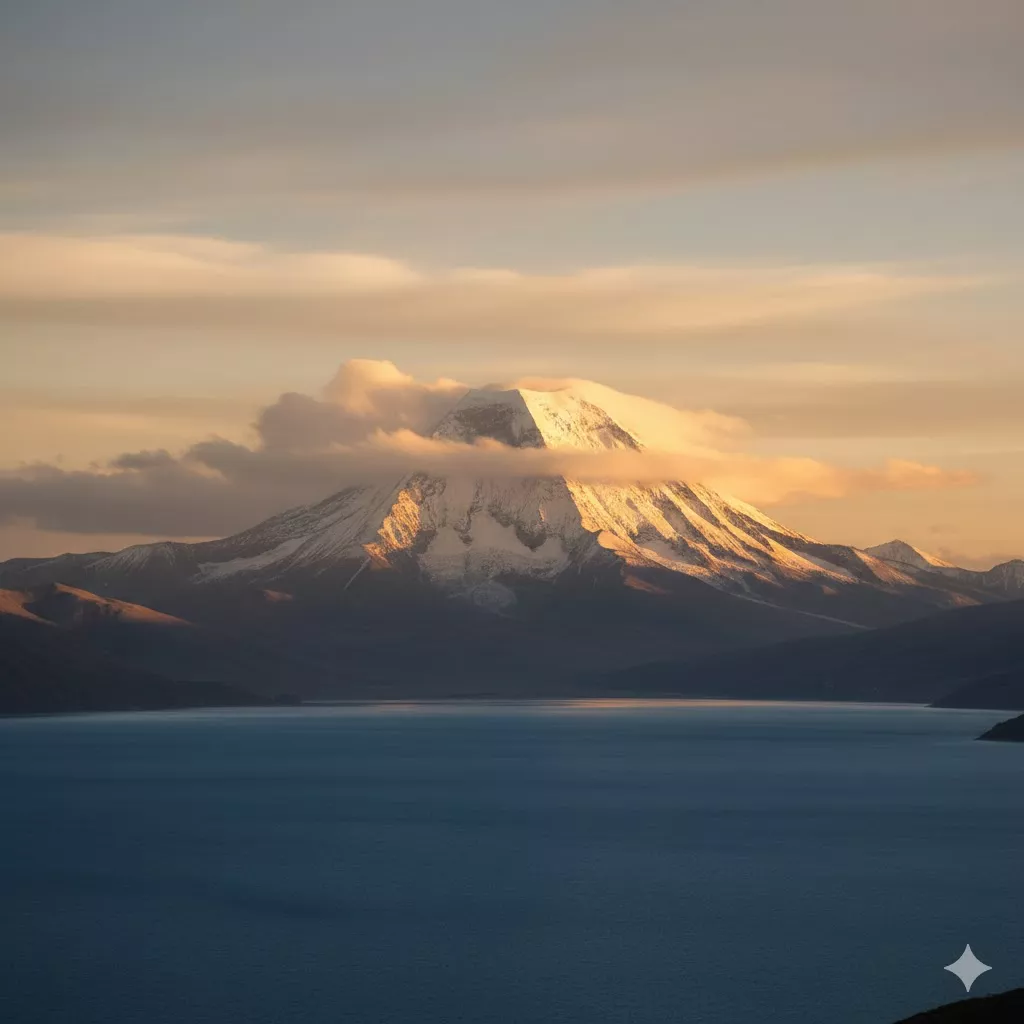
The moment I first glimpsed Mount Kailash rising from the Tibetan plateau, my breath caught in my throat. The perfectly symmetrical pyramid of snow and ice seemed to glow with an otherworldly radiance against the cobalt sky.
The moment I first glimpsed Mount Kailash rising from the Tibetan plateau, my breath caught in my throat. The perfectly symmetrical pyramid of snow and ice seemed to glow with an otherworldly radiance against the cobalt sky. It wasn't just a mountain—it was a presence. As our jeep rounded the final bend and the sacred peak revealed itself in full majesty, I felt an inexplicable stillness wash over me, as though Lord Shiva himself sat in eternal meditation above, his divine consciousness radiating through every particle of air. The Himalayan silence here wasn't empty; it was pregnant with the hum of cosmic energy, the very breath of the universe frozen in stone and snow. At that moment, standing before the throne of Mahadev, I understood why countless pilgrims across millennia have traversed impossible distances to bow before this sacred mountain—Mount Kailash, the eternal abode of Lord Shiva, where heaven touches earth.
The Sacred Geography: Where Gods Dwell Among Mortals
Mount Kailash, standing at 6,638 meters (21,778 feet) in the remote Tibetan Autonomous Region, isn't merely one of the world's most striking peaks—it is the spiritual axis of the universe. Hindu scriptures identify Kailash as the earthly manifestation of Mount Meru, the cosmic mountain at the center of all physical and metaphysical universes. Here, according to the Shiva Purana, Lord Shiva resides with his consort Parvati, their sons Ganesha and Kartikeya, and the divine assembly of gods and celestial beings.
The mountain's distinctive four-sided pyramidal structure, with nearly vertical walls of crystalline black rock crowned with perpetual snow, has inspired awe across religious traditions. Hindus, Buddhists, Jains, and Bon practitioners all consider it sacred, though for Hindus, it holds unparalleled significance as the abode of Lord Shiva—the destroyer, transformer, and regenerator within the cosmic trinity.
Ancient Scriptures Speak: Kailash in Hindu Sacred Texts
The Shiva Purana: Throne of the Supreme
The Shiva Purana describes Kailash as the supreme mountain, where Shiva sits in perpetual meditation, his matted locks containing the Ganga, his third eye closed in peaceful contemplation. The text elaborates that Kailash is constructed of crystal and precious stones, invisible to ordinary human perception but revealed to those with spiritual vision. It is here that Shiva imparts the highest knowledge to Parvati, their divine conversations forming the basis of Tantric philosophy.
According to these ancient texts, Kailash exists simultaneously in multiple dimensions—as a physical mountain, as a celestial realm, and as a state of consciousness. The scriptures declare that merely thinking of Kailash with devotion purifies the mind, while circumambulating it physically erases the sins of lifetimes.
The Skanda Purana: Source of Sacred Rivers
The Skanda Purana identifies Kailash as the source point of four of Asia's greatest rivers—the Indus, Sutlej, Brahmaputra, and Karnali (a major tributary of the Ganga). This geographical reality mirrors the spiritual truth that Shiva is the source of all life-giving forces. The text describes how the celestial Ganga first descended to Kailash, where Shiva caught her torrential force in his locks before gently releasing her to earth—a myth that elevates Kailash as the bridge between heaven and earth.
Ramayana References: The Ravana Episode
The Ramayana contains one of the most powerful legends associated with Mount Kailash—the story of Ravana's arrogance and subsequent humbling. The demon king Ravana, blessed with immense strength from his years of tapasya, attempted to lift Mount Kailash itself to transport it to Lanka. As the mountain trembled, Parvati grew frightened, but Shiva merely pressed down with his toe, trapping Ravana beneath the mountain's weight.
In agony, Ravana sang praises to Shiva for a thousand years, composing the Shiva Tandava Stotram—one of Hinduism's most powerful hymns. Moved by this devotion, Shiva not only released Ravana but also blessed him, an event commemorated in the Ravana-anugraha murti iconography found in temples across India. This legend illustrates a profound truth: Mount Kailash is not merely rock and ice, but the very body of Shiva, immovable and absolute, yet compassionate to sincere devotees.
The Crystal Lingam: Spiritual Symbolism of Kailash
Hindu mystics describe Mount Kailash as a natural crystal lingam—the symbolic representation of Shiva's formless, infinite nature. The mountain's unique four-sided structure represents the four faces of Shiva, each radiating specific energies:
- South Face (Lapis Lazuli): Represents the aspect of Shiva as the destroyer of ignorance
- West Face (Ruby): Embodies Shiva's creative power
- North Face (Gold): Symbolizes Shiva as the preserver of dharma
- East Face (Crystal): Represents Shiva's transcendent, formless reality
The horizontal and vertical striations across Kailash's faces, clearly visible even from great distances, resemble the sacred markings devotees apply to lingams with sandalwood paste. Nature itself has created a perfect temple, requiring no human construction or embellishment.
The mountain radiates what spiritual practitioners describe as destroyer-transformer energy—a powerful vibration that simultaneously dissolves old patterns and catalyzes spiritual evolution. Pilgrims report profound psychological shifts during and after the Kailash journey, as though the mountain's energy field accelerates their inner transformation.
Miraculous Phenomena: The Mystical Powers of Kailash
Countless pilgrims and researchers have documented unusual phenomena surrounding Mount Kailash:
Accelerated Biological Changes
Many visitors report that their hair and nails grow noticeably faster during the parikrama (circumambulation) of Kailash. While scientific studies remain inconclusive, devotees interpret this as evidence of powerful energy fields emanating from the mountain, accelerating not just physical growth but spiritual evolution.
Time Distortion
Several climbers and travelers have noted experiencing time differently near Kailash—moments that feel like hours, or days that pass like minutes. This phenomenon aligns with Hindu cosmology's understanding that sacred sites exist partially outside ordinary time-space.
Instant Sin Cleansing and Inner Awakening
The scriptures promise that one circumambulation of Mount Kailash erases the sins of one lifetime, while 108 circuits grant moksha (liberation). While this might sound like hyperbole, numerous pilgrims describe experiencing profound spiritual awakenings during the arduous three-day trek around the mountain—releasing long-held guilt, finding forgiveness, or experiencing sudden clarity about life's purpose.
Weather and Atmospheric Anomalies
Kailash creates its own weather patterns. Pilgrims frequently observe the mountain peak generating swirling cloud formations, which devotees interpret as the smoke from Shiva's sacred chillum (pipe). The mountain face sometimes appears illuminated even when no direct sunlight should reach it, a phenomenon locals attribute to the divine presence.
The Unclimbed Sacred Peak: Why No One Reaches the Summit
Unlike Mount Everest and other Himalayan giants that attract hundreds of climbers annually, Mount Kailash remains unclimbed—and this isn't due to technical impossibility. The primary reason is sacred prohibition.
Religious Sanctity
For Hindus, climbing Kailash would be the ultimate sacrilege—equivalent to trampling on the body of Lord Shiva himself. The Chinese government, which controls the region, respects these religious sentiments and has officially banned mountaineering expeditions to the summit. This policy enjoys overwhelming support from Hindu, Buddhist, Jain, and Bon communities worldwide.
In 2001, when Spanish mountaineer Jesus Martinez announced plans to climb Kailash, international outcry from religious communities forced him to abandon the attempt. The incident reinforced the understanding that some peaks are meant to remain inviolate.
The Legend of Milarepa
Tibetan Buddhist tradition tells of the saint Milarepa, who allegedly reached the summit through supernatural means during a spiritual contest with a Bon master. This story emphasizes that Kailash can be "conquered" only through spiritual attainment, not physical climbing—and that such conquest is itself a form of service to the divine, not ego gratification.
Technical Challenges
Even setting aside religious prohibitions, Kailash presents formidable climbing challenges. The steep, smooth faces offer few natural holds, and the mountain's weather is notoriously unpredictable. The summit appears deceptively close but is protected by complex ridges and dangerous glaciers. Some mountaineers have speculated that serious attempts would require extreme technical skill—yet no one has ever been granted permission to try.
The Kailash Parikrama: Circuit of Transformation
The Kailash Parikrama (or Kora) is a 52-kilometer circuit around the mountain, typically completed in three days. This pilgrimage is considered one of Hinduism's most sacred journeys.
The Route and Its Sacred Points
Day 1: Darchen to Dirapuk Monastery (20 km)
Pilgrims begin in Darchen, the starting point for the parikrama. The trail follows the Lha Chu valley, offering increasingly spectacular views of Kailash's north face. The night is spent near Dirapuk Monastery, where devotees wake before dawn to witness the sunrise illuminating the mountain—a moment many describe as darshan (sacred viewing) of Shiva himself.
Day 2: Dirapuk to Zutulpuk via Dolma La Pass (18 km)
This is the most challenging day, crossing the 5,630-meter Dolma La Pass. Pilgrims traditionally leave behind an item of clothing or personal significance at the pass, symbolizing the death of their old self. Many prostrate themselves in the snow, surrendering completely to Shiva's will. The descent passes the sacred Gauri Kund lake, where Parvati is said to have bathed.
Day 3: Zutulpuk to Darchen (14 km)
The final day brings pilgrims back to Darchen, completing the sacred circuit. Many report feeling physically exhausted but spiritually renewed, as though they've undergone a profound internal pilgrimage alongside the physical one.
Spiritual Benefits of the Parikrama
Hindu tradition ascribes specific spiritual benefits to the Kailash circumambulation:
- One circuit: Erases the sins of one lifetime
- Ten circuits: Erases sins of one kalpa (cosmic cycle)
- 108 circuits: Achieves liberation (moksha) in this very lifetime
While few people complete 108 circuits (which would require several years of continuous pilgrimage), even a single parikrama is considered life-transforming. Pilgrims speak of returning home with a deeper sense of purpose, reduced attachment to material concerns, and enhanced spiritual sensitivity.
Preparing for the Sacred Journey
Physical Preparation
The Kailash Parikrama takes place at extreme altitude, with the Dolma La Pass exceeding 5,600 meters. Altitude sickness is a serious risk. Pilgrims should:
- Undertake cardiovascular training for at least 2-3 months before departure
- Spend several days acclimatizing in Lhasa or Kathmandu before beginning the trek
- Walk slowly and steadily, avoiding overexertion
- Stay well-hydrated and recognize symptoms of altitude sickness
The high-altitude environment is unforgiving. Even physically fit individuals can struggle with the thin air, sudden temperature drops, and harsh UV radiation. Preparation isn't just physical—it's a spiritual discipline of building stamina and resilience.
Permits and Logistics
Traveling to Mount Kailash requires navigating complex bureaucratic procedures:
- Chinese Visa and Tibet Travel Permit: Required for all foreign travelers
- Alien's Travel Permit: Needed specifically for the Kailash region
- Military Permit: For certain restricted areas near the border
- Organized Tour Requirement: Independent travel is not permitted; visitors must join organized groups
Most pilgrims arrange their journey through specialized tour operators who handle permits, transportation, accommodation, and guide services. The journey typically begins in either Kathmandu (Nepal) or Lhasa (Tibet), with overland travel to the Kailash region taking several days through stunning but rugged terrain.
Best Time to Visit
The Kailash pilgrimage season runs from May to September, when snow has melted sufficiently to make the parikrama route passable. June through August offers the most stable weather, though monsoon rains can occasionally reach the region. September provides clear skies and fewer pilgrims, though nights become extremely cold.
Winter visits are possible for viewing the mountain from Darchen but the parikrama route is impassable due to deep snow and life-threatening cold.
Lake Mansarovar: The Companion Sacred Site
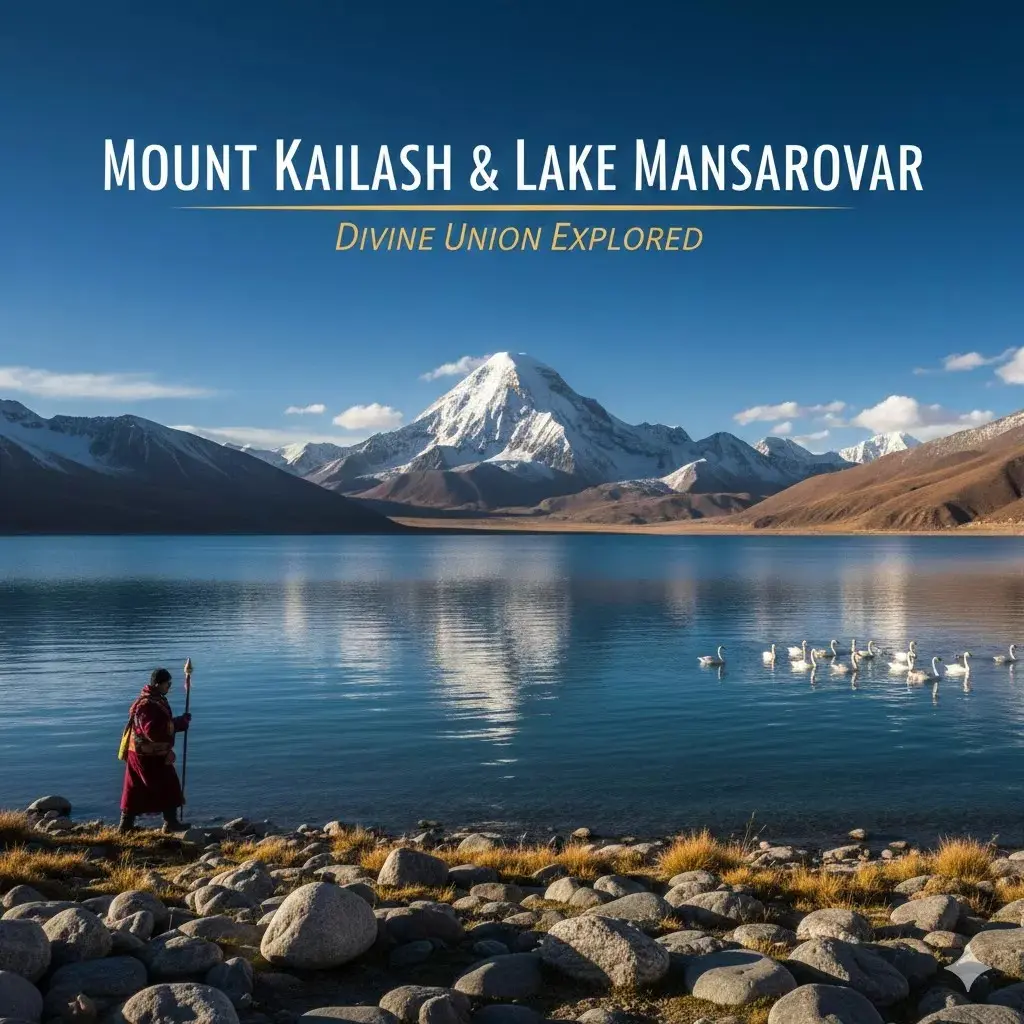
No discussion of Kailash is complete without mentioning Lake Mansarovar, located 30 kilometers from the mountain. This stunning high-altitude lake, sitting at 4,590 meters, is believed to have been created from the mind of Brahma (Manas = mind, Sarovar = lake).
Hindu scriptures declare that bathing in Mansarovar cleanses all sins, while drinking its water brings spiritual merit. Pilgrims typically visit Mansarovar either before or after the Kailash parikrama, completing a ritual bath and performing pujas on the lake's shores. The sight of Kailash reflected in Mansarovar's turquoise waters is considered especially auspicious—a moment when the divine reveals itself through nature's perfect mirror.
The Deeper Meaning: Kailash as Inner Journey
While the physical pilgrimage to Mount Kailash is profoundly meaningful, advanced Hindu philosophy teaches that the ultimate Kailash exists within. The arduous outer journey mirrors the difficult inner path of self-realization. Just as pilgrims circle the mountain, surrendering their ego at Dolma La Pass, spiritual seekers must circumambulate the Kailash of consciousness within their own being—acknowledging, confronting, and ultimately transcending their limitations.
The unclimbed summit represents the highest state of consciousness, which cannot be "conquered" through force or ego but only realized through devotion, surrender, and grace. Shiva's meditation atop Kailash symbolizes the eternal stillness at the core of awareness, accessible not through external journey but through interior awakening.
Many spiritual teachers suggest that one should first undertake the inner Kailash journey through meditation and self-inquiry before attempting the outer pilgrimage. When both journeys align—the outer steps reflecting inner transformation—the pilgrimage becomes not just a religious obligation but a living sadhana (spiritual practice).
Personal Transformation: Stories from Pilgrims
I met Ramesh, a software engineer from Bangalore, at a guesthouse in Darchen. He had come to Kailash after a personal crisis—a failed marriage, professional burnout, and a deep existential confusion about life's meaning. "I didn't expect miracles," he told me. "I just needed to be somewhere that felt bigger than my problems."
On the second day of his parikrama, struggling up to Dolma La Pass, Ramesh experienced a profound moment of clarity. "I was exhausted, barely breathing in the thin air, and I just stopped fighting it. I sat down in the snow and looked up at Kailash. And somehow, I knew—really knew—that everything was going to be okay. Not because my problems would disappear, but because there was something in me stronger than any problem. I felt Shiva's presence, not as some distant god, but as the deepest truth of my own being."
Such stories are common among Kailash pilgrims. The mountain doesn't solve external problems, but it catalyzes an internal shift—a recognition of one's eternal nature beyond temporary circumstances. This is the true blessing of the abode of Lord Shiva.
Connecting Your Spiritual Journey
Your spiritual exploration needn't end with Kailash. India's sacred landscape is dotted with powerful Shiva temples and pilgrimage sites that extend the transformative energy you might experience at the sacred mountain.
Deepen your connection to Lord Shiva by exploring the 10 Must-Visit Lord Shiva Temples: A Divine Journey Through India's Sacred Sites, where each temple offers unique darshan of Mahadev's diverse manifestations.
For those seeking the blessings of Shiva in his most ancient form, the Shri Kashi Vishwanath Temple Nautapa Abhishek with Fruit Juices Brings Relief to Devotees offers a powerful experience of devotion and divine grace in the sacred city of Kashi, where Shiva is eternally present.
Conclusion: The Call of the Sacred Mountain
Standing before Mount Kailash, one doesn't just see a mountain—one encounters the living presence of the divine. Whether you undertake the physical pilgrimage or connect with Kailash through meditation and devotion from afar, this sacred peak represents the ultimate destination of the spiritual journey: union with the eternal, unchanging consciousness that Shiva embodies.
The mountain remains unclimbed not because we lack the technology or skill, but because we possess the wisdom to recognize that some spaces must remain sacred, some summits untouched by human ambition. In protecting Kailash from conquest, we protect something essential about the human spirit—our capacity for reverence, our ability to acknowledge powers greater than ourselves, our willingness to bow before the divine.
Mount Kailash calls to pilgrims across centuries and continents, not with promises of conquest, but with an invitation to transformation. The journey to Kailash—whether physical or spiritual—is ultimately a journey home to your deepest self, to the eternal Shiva consciousness that resides in every heart.
Embark on your Kailash yatra with Hindutone inspiration—let the sacred mountain guide you toward your own awakening. Har Har Mahadev!
Have you experienced the divine presence of Mount Kailash? Share your spiritual journey in the comments below, and explore more sacred pilgrimage destinations with Hindutone—your guide to India's eternal spiritual heritage.
You might also like
Mount Kailash & Mansarovar – Shiva’s Divine Abode
Mount Kailash & Lake Mansarovar – Divine Union Explored

Mysteries of Mount Kailash: Unexplained Energies, Shiva Face, and Why It's the Ultimate Abode of Lord Shiva
