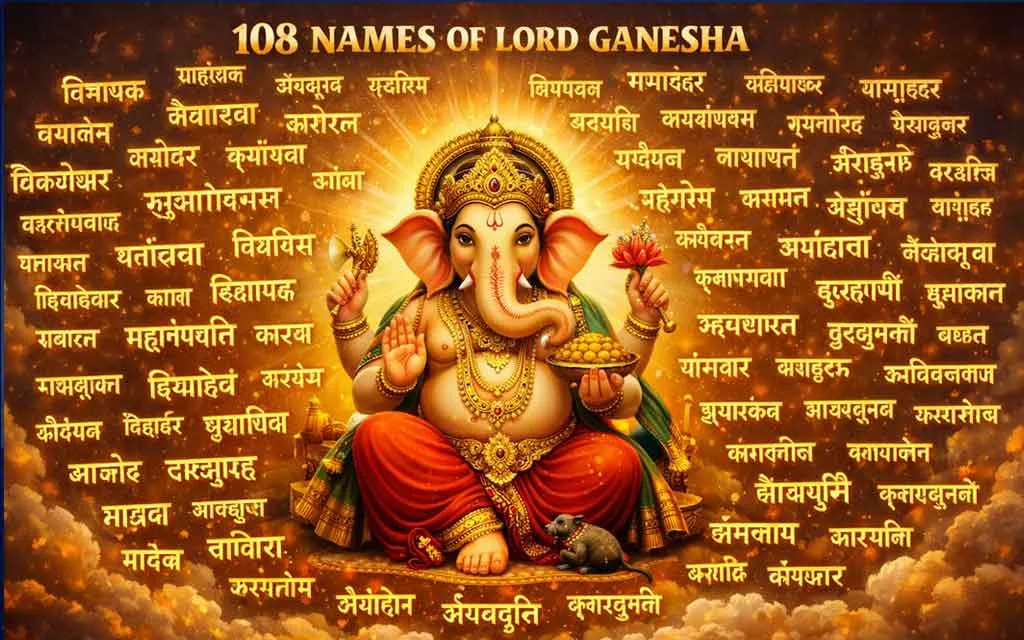
Om Gan Ganapataye Namah: Meaning, Source, How to Chant and Traditional Benefits
Om Gan Ganapataye Namah, the mantra of Lord Ganesha: its source in verse 7 of the Ganapati Atharvashirsha, word-by-word meaning, pronunciation, a simple chanting vidhi with samagri, recommended counts, upcoming Sankashti Chaturthi dates and what tradition says it brings.
Om Gan Ganapataye Namah is the mantra most Hindus say before any new beginning, from a household puja to the start of a journey, an exam or a new job. It honours Lord Ganesha, the remover of obstacles (Vighnaharta). This guide gives its source text, meaning, pronunciation, a simple way to chant it at home, and what tradition says it brings.
Last updated: 25 October 2026. We added the verified source verse from the Ganapati Atharvashirsha, a samagri list and a step-by-step chanting vidhi, a table of counts and the next Sankashti Chaturthi dates from Drik Panchang. We removed quotations we could not trace to a text and claims about health and business results.
Origin and scriptural source
The mantra comes from the Ganapati Atharvashirsha, an Upanishad of the Atharva Veda tradition recited daily in many homes, especially in Maharashtra. Verse 7 describes how the seed syllable is built: "ga" first, then "a", then the anusvara (nasal), calls this the Ganesha vidya, names the seer (Ganaka), metre (nichrid gayatri) and deity (Ganapati), and ends with the mantra itself:
गणादिं पूर्वमुच्चार्य वर्णादिं तदनंतरम् ॥
अनुस्वारः परतरः ॥ अर्धेन्दुलसितम् ॥ तारेण ऋद्धम् ॥
एतत्तव मनुस्वरूपम् ॥ गकारः पूर्वरूपम् ॥
अकारो मध्यमरूपम् ॥ अनुस्वारश्चान्त्यरूपम् ॥
बिन्दुरुत्तररूपम् ॥ नादः संधानम् ॥
संहितासंधिः ॥ सैषा गणेशविद्या ॥
गणकऋषिः ॥ निचृद्गायत्रीच्छंदः ॥
गणपतिर्देवता ॥ ॐ गं गणपतये नमः ॥ ७॥
gaṇādiṃ pūrvamuccārya varṇādiṃ tadanaṃtaram ||
anusvāraḥ parataraḥ || ardhendulasitam || tāreṇa ṛddham ||
etattava manusvarūpam || gakāraḥ pūrvarūpam ||
akāro madhyamarūpam || anusvāraścāntyarūpam ||
binduruttararūpam || nādaḥ saṃdhānam ||
saṃhitāsaṃdhiḥ || saiṣā gaṇeśavidyā ||
gaṇakaṛṣiḥ || nicṛdgāyatrīcchaṃdaḥ ||
gaṇapatirdevatā || oṃ gaṃ gaṇapataye namaḥ || 7||
Meaning: Having first uttered the beginning of "gaṇa" and then the first letter, with the anusvara after it, adorned with the crescent and joined with Om: this is the form of your mantra. "Ga" is the first part, "a" the middle, the anusvara the last, the bindu the upper form, the nada the joining. This is the Ganesha vidya; the seer is Ganaka, the metre nichrid gayatri, the deity Ganapati. Om gam ganapataye namah.
Verse 8 of the same text gives the Ganesha Gayatri, often chanted alongside it:
एकदंताय विद्महे । वक्रतुण्डाय धीमहि ॥
तन्नो दंतिः प्रचोदयात् ॥ ८॥
ekadaṃtāya vidmahe | vakratuṇḍāya dhīmahi ||
tanno daṃtiḥ pracodayāt || 8||
Meaning: We know the one-tusked one; we meditate on the one with the curved trunk. May that tusked one inspire us.
Why Ganesha is invoked first
Ganesha is "prathama pujya", the first to be worshipped, because he is the lord of beginnings, the remover of obstacles and the giver of success (Siddhidata). Every puja, wedding and griha pravesh traditionally begins with his name. For a full study of the Upanishad, see Ganapati Atharvashirsha: meaning and full text.
Full Sanskrit text and transliteration
ॐ गं गणपतये नमः॥
oṃ gaṃ gaṇapataye namaḥ||
Pronunciation: "Om Gum Ga-na-pa-ta-yay Na-mah". Say "Gam" with a short "a", as in "gum", closed with a soft nasal hum.
Word-by-word meaning
Om — the cosmic primordial sound.
Gaṁ — the bija (seed-syllable) of Ganesha; contains the entire essence of his form and energy in a single nasalised sound.
Gaṇapataye — to Ganapati (literally "lord of the ganas" — the divine attendants).
Namaḥ — I bow, I salute, I surrender.
"Om — to the lord of the ganas, Ganesha (whose seed-syllable is Gam), I bow."
Pronunciation guide for beginners
- Om: deep and slow, "Aaa-uuu-mmm".
- Gaṃ: "Gum" with a nasal hum at the end; the dot marks the anusvara.
- Gaṇapataye: "Ga-na-pa-ta-yay", five syllables; the "ṇ" is said with the tongue curled back.
- Namaḥ: "Na-mah", ending in a soft breath (visarga).
What tradition says the mantra brings
These are traditional beliefs and devotees' experiences, not promises. The Atharvashirsha itself praises its own recitation in its closing verses (phalashruti):
एतदथर्वशीर्षं योऽधीते ॥ स ब्रह्मभूयाय कल्पते ॥
स सर्वतः सुखमेधते ॥ स सर्व विघ्नैर्नबाध्यते ॥
स पंचमहापापात्प्रमुच्यते ॥
सायमधीयानो दिवसकृतं पापं नाशयति ॥
प्रातरधीयानो रात्रिकृतं पापं नाशयति ॥
सायंप्रातः प्रयुंजानो अपापो भवति ॥
सर्वत्राधीयानोऽपविघ्नो भवति ॥
धर्मार्थकाममोक्षं च विंदति ॥
इदमथर्वशीर्षमशिष्याय न देयम् ॥
यो यदि मोहाद्दास्यति स पापीयान् भवति
सहस्रावर्तनात् यं यं काममधीते
तं तमनेन साधयेत् ॥ ११॥
etadatharvaśīrṣaṃ yo'dhīte || sa brahmabhūyāya kalpate ||
sa sarvataḥ sukhamedhate || sa sarva vighnairnabādhyate ||
sa paṃcamahāpāpātpramucyate ||
sāyamadhīyāno divasakṛtaṃ pāpaṃ nāśayati ||
prātaradhīyāno rātrikṛtaṃ pāpaṃ nāśayati ||
sāyaṃprātaḥ prayuṃjāno apāpo bhavati ||
sarvatrādhīyāno'pavighno bhavati ||
dharmārthakāmamokṣaṃ ca viṃdati ||
idamatharvaśīrṣamaśiṣyāya na deyam ||
yo yadi mohāddāsyati sa pāpīyān bhavati
sahasrāvartanāt yaṃ yaṃ kāmamadhīte
taṃ tamanena sādhayet || 11||
In part it says that whoever studies it "is not troubled by obstacles" and "attains dharma, artha, kama and moksha". Devotees apply the same faith to the short mantra:
New ventures and work
Before a business launch, a new job or a big decision, people chant it as a prayer that the path ahead be clear. It supports, but does not replace, planning and effort.
Exams, interviews and learning
Ganesha is also honoured as a lord of learning and intellect (buddhi). Many students chant 11, 21 or 108 times before study or an exam to settle the mind.
Obstacles and life transitions
The mantra is chanted at moving home, changing careers and other turning points, as a prayer to Vighnaharta to remove what blocks the way.
Calm and focus
Slow, steady repetition with attention on the breath is calming for many people. If you are dealing with stress, anxiety or illness, chant alongside proper care from a doctor or counsellor, not instead of it.
Samagri for a simple Ganesha japa
| Item | Use | If you do not have it |
|---|---|---|
| Picture or murti of Ganesha | Focus for the japa | Visualise Ganesha |
| A lamp (ghee or oil) and incense | Light before you begin | A single lamp |
| Durva grass and red flowers | Traditional offerings to Ganesha | Any fresh flowers |
| Modak, laddu, jaggery or fruit | Naivedya | A piece of fruit or a little jaggery |
| A 108-bead mala (rudraksha, tulasi or sphatika) | Counting | Count on the finger joints |
| A clean mat or cloth to sit on | Asana | Any clean seat |
How to chant: a simple vidhi
- Time: early morning after a bath, or at sunrise. Wednesday and Sankashti Chaturthi are traditional Ganesha days.
- Seat: sit facing east or north-east with a straight back.
- Light the lamp: offer a flower, a few blades of durva and the naivedya.
- Sankalpa: state your intention in your own words, for example: "I chant Om Gan Ganapataye Namah for the removal of obstacles in [my work], and for the welfare of all."
- Japa: chant slowly with a mala, one bead per repetition; 108 takes about 12 to 15 minutes. Do not cross the larger "meru" bead; turn the mala and continue.
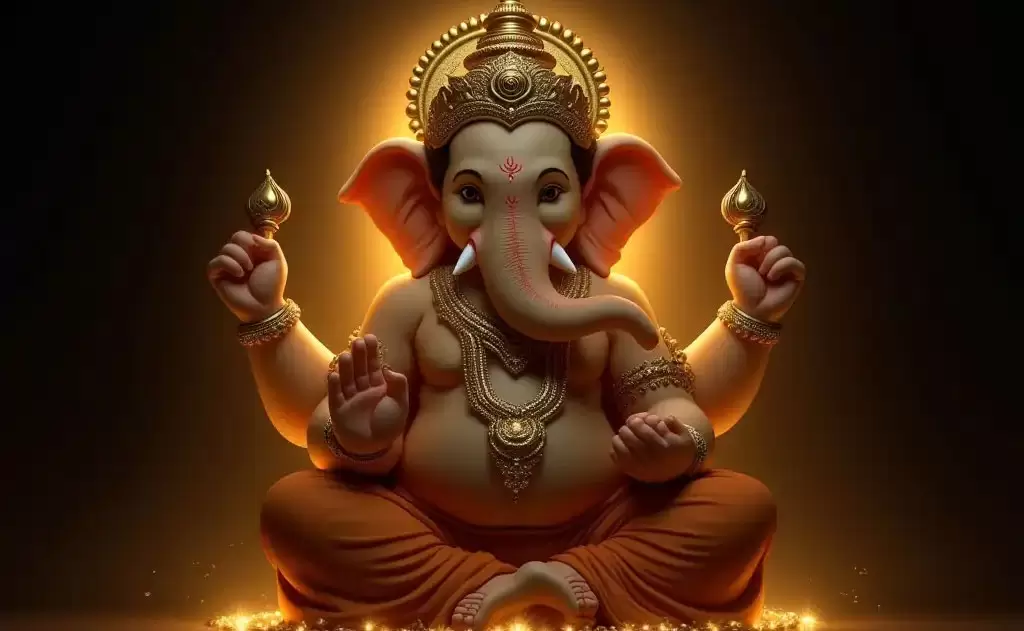
- Visualise: picture Ganesha with his elephant head, a modak in his hand and the other hand raised in blessing.
- Close: bow, offer the naivedya, end with "Om Shanti Shanti Shanti" and share the prasad.
Recommended chanting count
| Situation | Count often used | Time needed (about) |
|---|---|---|
| Beginners | 11 or 21 a day | 2 to 3 minutes |
| Daily practice | 108 (one mala) | 12 to 15 minutes |
| Before a new venture or exam | 108 on the morning of the event | 15 minutes |
| Wednesdays and Sankashti Chaturthi | 108 or 1,008 | 15 minutes to about 2 hours |
| A 40-day vow (mandala) | 108 a day for 40 days | 15 minutes a day |
Upcoming Ganesha days in 2026
| Day | Date | Moonrise, Hyderabad (Drik) |
|---|---|---|
| Vakratunda Sankashti Chaturthi | Thursday 29 October 2026 | 8:41 PM |
| Ganadhipa Sankashti Chaturthi | Friday 27 November 2026 | 8:39 PM |
| Akhuratha Sankashti Chaturthi | Saturday 26 December 2026 | 8:32 PM |
On Sankashti many devotees fast until moonrise and then offer arghya to the moon. Fasting is optional: pregnant women, people with diabetes or other conditions, children and the elderly should not fast strictly and can simply chant and offer naivedya. Abroad, check Drik Panchang for your own city, as the date and moonrise can differ. See Ganadhipa Sankashti 2026 and Akhuratha Sankashti 2026.
Common mistakes to avoid
- Rushing: a slow, clear 21 is better than a hurried 108.
- Chanting only when you want something: a daily habit is the heart of japa.
- Skipping the offering: even a glass of clean water or a flower is enough.
- Mispronouncing "Gaṇapataye": keep all five syllables, "Ga-na-pa-ta-yay".
A fact worth knowing
The name Ganapati is ancient. Rigveda 2.23.1 begins "gaṇānāṃ tvā gaṇapatiṃ havāmahe" ("we invoke you, lord of the hosts"). In the Rigveda that hymn is addressed to Brahmanaspati, but the verse is recited at the start of Ganesha pujas to this day.
Conclusion
Om Gan Ganapataye Namah means, in one line, "Om, I bow to Ganapati, the lord of the hosts". Chant it with attention before any new beginning, alongside honest effort, as generations of Hindus have done.
Share this guide with anyone embarking on a new chapter, and continue with our companion guides on Gayatri Mantra, Om Namah Shivaya, Mahamrityunjaya Mantra and Hare Krishna Maha Mantra.
Frequently asked questions
Where does Om Gan Ganapataye Namah come from?
The exact words "oṃ gaṃ gaṇapataye namaḥ" close verse 7 of the Ganapati Atharvashirsha, an Upanishad of the Atharva Veda tradition. The same verse explains how the seed syllable "gaṃ" is formed and calls it the Ganesha vidya.
How many times should I chant Om Gan Ganapataye Namah daily?
108 (one mala) is the usual daily count. Beginners can start with 11 or 21 and build up. Many devotees chant more on Wednesdays and on Sankashti Chaturthi. Steady practice matters more than the number.
When is the best time to chant?
Early morning after a bath is traditional, and sunrise is also popular. Wednesday is widely kept as Ganesha's day, and Sankashti Chaturthi, the fourth lunar day after the full moon, is a monthly Ganesha observance. The next ones are Thursday 29 October and Friday 27 November 2026 (Drik).
What does "Gam" mean and how do I pronounce it?
"Gaṃ" is the bija (seed syllable) of Ganesha. Say "Ga" with a short "a", as in "gum", and close it with a soft nasal hum (the dot under or above the m marks the anusvara).
Can I chant before a new business, exam or job?
Yes. Invoking Ganesha before any new beginning is one of the oldest Hindu customs. Many people chant 108 times on the morning of the event. It is a prayer for a clear path, not a guarantee of results.
Can children chant Om Gan Ganapataye Namah?
Yes. It is short and easy to learn, and many families teach it to children as their first mantra.
Do I need a Ganesha murti or picture to chant?
It helps but is not required. You can chant facing a picture or murti of Ganesha, or simply picture him in your mind.
Editor's note (25 October 2026): This guide was revised for accuracy. The source verse (Ganapati Atharvashirsha 7), the Ganesha Gayatri (verse 8) and the phalashruti lines (verse 11) are copied from our verified text (sanskritdocuments.org). Sankashti dates and moonrise times are from Drik Panchang (Hyderabad). We removed four quotations we could not trace to the texts named, claims about companies and numbers of people, and claims that the mantra improves digestion or nerve function. Benefits are described as traditional belief.
Explore HinduTone
Continue your reading across HinduTone's May 2026 publishing cluster — every post in this hub is interlinked for a complete devotional and informational journey.
🪔 Festivals & Vrats: Hindu Festivals in May 2026 — Complete Vrats & Puja Guide · Ganga Dussehra 2026 — Story, Muhurat & Home Vidhi · Adhik Maas 2026 — Purushottam Maas Dates & Rules.
🌟 Vedic Horoscopes: May 2026 Monthly Horoscope — All 12 Rashis · Weekly Horoscope May 11–17, 2026 · Weekly Horoscope May 18–24, 2026.
👤 Famous Hindus — Biographies: Narendra Modi Biography · Swami Vivekananda Biography · Sadhguru Biography — Jaggi Vasudev · Mata Amritanandamayi (Amma) Biography.
🕉️ Powerful Mantras: Gayatri Mantra — Meaning, Benefits & Chanting · Om Namah Shivaya — Meaning & Power · Mahamrityunjaya Mantra — Healing Mantra · Hare Krishna Maha Mantra.
Share this with family and friends
Send it on WhatsApp, post it, or copy the link.
More from Pooja, Slokas and Mantras
- Kubera Puja on Friday: Why Families Choose Shukravar, a Simple Home Worship and Mantras
- Kubera Mantra for Business: Shop and Office Worship Customs, Chopda Puja and New Account Books
- Rajadhirajaya Prasahya Sahine: Full Text, Transliteration, Meaning and Source in the Mantrapushpam
- Kubera Yantra: Meaning, Symbolism and Traditional Worship at Home
- Kubera Gayatri Mantra: Sanskrit Text, Transliteration, Meaning, Variants and How It Is Chanted
You might also like
Ganesh Chaturthi 2026 Home Puja & Eco-Visarjan: Complete NRI Guide for UK, Canada, Australia & UAE
Hare Krishna Maha Mantra: Meaning & Benefits
Ganesh Mantra Benefits — The Complete Guide for NRIs in USA, UK & Canada