





Pushya Masam 2025-2026: Complete Guide to Dates, Significance & Spiritual Importance for Hindus
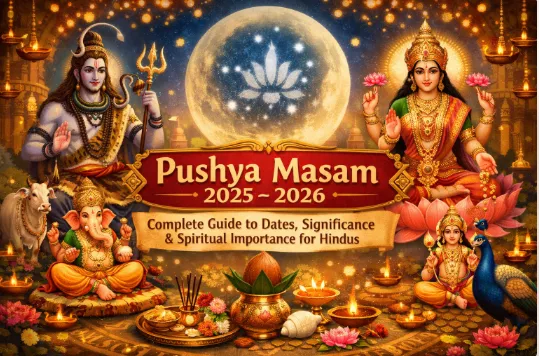
Pushya Masam 2025-2026: Complete Guide to Dates, Significance & Spiritual Importance for Hindus
What is Pushya Masam?
Pushya Masam, also known as Pausa Masam or Paush Maas, is the tenth month in the traditional Hindu lunar calendar followed across India, particularly in Andhra Pradesh, Telangana, Karnataka, Maharashtra, Gujarat, and Goa. This sacred month holds immense spiritual significance for Hindus worldwide and is dedicated to Lord Vishnu (Lakshmi Narayana Swamy) and Goddess Lakshmi.
Pushya Masam Dates: 2025 & 2026
Pushya Masam 2025
Duration: December 31, 2024 – January 29, 2025 (30 days)
Shukla Paksha (Waxing Moon Phase): December 31, 2024 – January 13, 2025 Krishna Paksha (Waning Moon Phase): January 14 – January 29, 2025
Important Dates in Pushya Masam 2025:
| Date | Event | Significance |
|---|---|---|
| January 2, 2025 | Pausha Putrada Ekadashi | For progeny and fulfillment of desires |
| January 6, 2025 | Kumbha Sankranti | Sun enters Aquarius |
| January 8, 2025 | Pradosham | Shiva worship for removing obstacles |
| January 13, 2025 | Pushya Purnima / Shakambari Jayanti | Full moon, Goddess Shakambari’s birth |
| January 14, 2025 | Bhogi | Beginning of harvest celebrations |
| January 15, 2025 | Makara Sankranti | Major festival – Sun’s northward journey |
| January 16, 2025 | Kanuma | Celebration of cattle and animals |
| January 17, 2025 | Mukkanuma / Sankatahara Chavithi | Ganesh worship day |
| January 22, 2025 | Masik Shivaratri | Monthly Shiva fasting day |
| January 29, 2025 | Pushya Amavasya (Mauni Amavasya) | New moon, ancestral worship, Shani puja |
Pushya Masam 2026
Duration: December 20, 2025 – January 18, 2026 (30 days)
Shukla Paksha (Waxing Moon Phase): December 20, 2025 – January 3, 2026 Krishna Paksha (Waning Moon Phase): January 4 – January 18, 2026
Important Dates in Pushya Masam 2026:
| Date | Event | Significance |
|---|---|---|
| December 22, 2025 | Pausha Putrada Ekadashi | Ekadashi for children and prosperity |
| December 28, 2025 | Shakambari Navratri Begins (Banadashtami) | Start of 9-day Goddess worship |
| January 2, 2026 | Purnima Vrat | Fasting on Purnima eve |
| January 3, 2026 | Pushya Purnima / Shakambari Purnima | Full moon, end of Shakambari Navratri |
| January 6, 2026 | Sankatahara Chavithi | Ganesh Chaturthi for removing obstacles |
| January 11, 2026 | Masik Shivaratri | Monthly Shiva worship |
| January 14, 2026 | Makara Sankranti / Bhogi | Harvest festival |
| January 15, 2026 | Kanuma | Cattle festival |
| January 16, 2026 | Mukkanuma | Conclusion of three-day harvest celebrations |
| January 18, 2026 | Pushya Amavasya (Mauni Amavasya) | New moon, Tarpan, Shani puja |
Quick Comparison: 2025 vs 2026
| Aspect | 2025 | 2026 |
|---|---|---|
| Duration | 30 days | 30 days |
| Start Date | Dec 31, 2024 | Dec 20, 2025 |
| End Date | Jan 29, 2025 | Jan 18, 2026 |
| Purnima | Jan 13 | Jan 3 |
| Sankranti | Jan 15 | Jan 14 |
| Amavasya | Jan 29 | Jan 18 |
| Shakambari Navratri | Not in 2025 | Dec 28, 2025 – Jan 3, 2026 |
The Name and Origin of Pushya Masam
The month is named after the Pushya Nakshatra (constellation), one of the 27 nakshatras in Vedic astrology. When the full moon coincides with Pushya Nakshatra, that month is designated as Pushya Masam. The term “Pushya” means nourishment, symbolizing prosperity, growth, and divine blessings.
Spiritual Significance of Pushya Masam
1. Month of Lord Vishnu and Lakshmi
Lord Sri Lakshmi Narayana is the presiding deity who governs this month, making it especially auspicious for Vaishnava devotees. Worship of Vishnu-Lakshmi during this period is believed to bring spiritual merit and divine grace.
2. Soubhagya Lakshmi Masam – The Month of Prosperity
Pushya Masam is also called Soubhagya Lakshmi Masam (Month of Fortunate Lakshmi) because farmers traditionally receive payment for their harvested crops during this time. The month symbolizes abundance as farmers receive their crops, making it a period of wealth and thanksgiving.
3. Governed by Lord Shani (Saturn)
Saturn is the ruling planet of Pushyami star, with Jupiter as the presiding deity. Worshipping Lord Shani during this month is considered highly meritorious and can help reduce the malefic effects of Saturn, including Shani Sade Sati and Shani Dosh.
4. Connection to Lord Rama
According to Hindu mythology, Bharata, the brother of Lord Rama in the Ramayana, was born during Pushya Masam. The month’s connection to Pushya Nakshatra also relates to Lord Rama’s birth, making it sacred for Rama devotees.
Religious Practices and Rituals During Pushya Masam 2025-2026
Daily Spiritual Practices
1. Morning Rituals
- Wake up during Brahma Muhurta (approximately 1.5 hours before sunrise)
- Take holy bath and wear clean clothes
- Light lamp (diya) before deity
- Perform Sandhyavandanam (for those initiated)
- Offer prayers to Lakshmi-Narayana
2. Daily Worship of Vishnu-Lakshmi
Pushya Masam is governed by Lord Lakshmi Narayana, making daily worship essential for prosperity and spiritual growth.
Simple Daily Puja:
- Clean the puja area
- Light incense and lamp
- Offer flowers, tulsi leaves, and fruits
- Recite Vishnu Sahasranama or Lakshmi Ashtottara
- Perform aarti
- Distribute prasadam
Important Vratams (Fasts) and Observances
1. Satyanarayana Vratam
Performing this vratam during Pushya Masam, especially on Purnima days, brings enhanced benefits:
- 2025: Best on January 13 (Pushya Purnima)
- 2026: Best on January 3 (Shakambari Purnima)
Benefits:
- Fulfillment of desires
- Removal of obstacles
- Family harmony and prosperity
- Protection from evil influences
Procedure:
- Early morning bath
- Fasting until puja completion
- Invoke Lord Satyanarayana
- Listen to/recite Satyanarayan Katha
- Offer panchamrit, fruits, and flowers
- Distribute prasadam to all
2. Ekadashi Fasting (Pausha Putrada Ekadashi)
- 2025: January 2
- 2026: December 22, 2025
Types of Fasting:
- Complete fast: No food or water until next sunrise
- Partial fast: Only fruits and milk
- Single meal: One meal after sunset
Rules:
- Begin fast at sunrise on Ekadashi
- Break fast during appropriate muhurat on Dwadashi (12th day)
- Worship Lord Vishnu throughout the day
- Chant Vishnu mantras and read scriptures
- Avoid grains, beans, onions, and garlic
3. One Meal a Day (Ekabhukta)
Taking only one meal per day throughout Pushya Masam brings fortune, beauty, and spiritual merit.
Guidelines:
- Eat only once, preferably at noon or sunset
- Consume sattvic (pure) vegetarian food
- Avoid tamasic foods (meat, alcohol, onion, garlic)
- Maintain cleanliness and purity
4. Shani Puja and Remedies
Since Saturn governs Pushya Nakshatra, worshipping Shani during this month is highly effective for reducing planetary afflictions.
Best Days for Shani Puja in 2025-2026:
- Every Saturday during Pushya Masam
- Pushya Amavasya 2025: January 29
- Pushya Amavasya 2026: January 18
Shani Puja Procedure:
- Wear black or dark blue clothes
- Offer black sesame seeds, black cloth, and mustard oil
- Light a mustard oil lamp
- Chant Shani mantras 108 times
- Donate to the poor and needy
Shani Remedies:
- Feed crows and dogs
- Donate iron, black cloth, or black sesame
- Avoid alcohol and non-vegetarian food on Saturdays
- Help the disabled and elderly
5. Mauni Amavasya Observances
- 2025: January 29
- 2026: January 18
Special Practices:
- Observe complete or partial silence (Mauna Vrata)
- Holy bath in rivers, especially Triveni Sangam
- Tarpan and Shraddha for ancestors
- Charity: Til danam, vastra danam, anna danam
- Shani puja for planetary peace
Charity and Donations (Danam)
Pushya Masam is highly auspicious for charitable activities. The following donations are especially recommended:
1. Til Danam (Sesame Seeds Donation)
- Reduces Saturn’s malefic effects
- Best on Saturdays and Amavasya
- Donate raw sesame seeds or til laddoos
2. Vastra Danam (Clothing Donation)
- Donate new clothes, especially black for Saturn relief
- Especially beneficial on Pushya Amavasya
- Give warm clothes during winter season
3. Anna Danam (Food Donation)
- Feed the poor and hungry
- Organize community meals (Annadanam)
- Extremely meritorious during entire month
4. Other Recommended Donations:
- Blankets to homeless during winter
- Educational materials to students
- Medicines to the sick
- Money to temples and charitable organizations
- Cow feeding (go-seva)
Ancestor Worship (Pitru Tarpan)
Pushya Masam, especially Pushya Amavasya, is ideal for performing rituals for deceased ancestors.
Shraddha and Tarpan Procedures:
- Perform on Amavasya tithi
- Offer water mixed with black sesame and barley
- Prepare food offerings (especially rice, dal, vegetables)
- Feed Brahmins and crows
- Donate in the name of ancestors
Benefits:
- Ancestral blessings
- Relief from Pitru Dosha
- Family prosperity and harmony
- Spiritual evolution of departed souls
Temple Visits and Pilgrimages
Recommended Temples for Pushya Masam:
- Vishnu temples: Tirupati, Guruvayur, Padmanabhaswamy
- Lakshmi temples: Mahalakshmi Mumbai, Ashtalakshmi Chennai
- Shani temples: Shingnapur, Tirunallar
Sacred Bathing Places:
- Triveni Sangam, Prayagraj (during Magh Mela)
- Haridwar (Ganga)
- Nashik (Godavari)
- Ujjain (Shipra)
- Any holy river or tank
Special Pushya Masam Practices
1. Lakshmi Puja on Fridays
- Dedicate Fridays to Goddess Lakshmi
- Offer lotus flowers, turmeric, kumkum
- Light ghee lamps
- Chant Lakshmi mantras
2. Tulsi Puja
- Water tulsi plant daily
- Circumambulate tulsi plant
- Offer prayers morning and evening
- Light lamp near tulsi
3. Scripture Reading
- Vishnu Purana
- Bhagavad Gita
- Ramayana
- Lakshmi Stotras
4. Meditation and Yoga
- Practice daily meditation
- Pranayama (breathing exercises)
- Chanting Om or Vishnu mantras
- Maintain inner silence
Family and Community Practices
1. Collective Worship
- Organize family puja sessions
- Participate in community bhajans and kirtans
- Attend temple festivals
2. Cultural Activities
- Organize Ramayana or Bhagavata recitations
- Arrange spiritual discourses
- Participate in music and dance dedicated to deities
3. Environmental Care
- Plant trees
- Feed birds and animals
- Maintain cleanliness in surroundings
- Practice water conservation
Major Festivals During Pushya Masam 2025-2026
1. Pausha Putrada Ekadashi
- 2025: January 2
- 2026: December 22, 2025
This Ekadashi is especially significant for married couples desiring children. The name “Putrada” means “giver of sons” but the vrat brings blessings for progeny and fulfillment of desires. Devotees observe strict fasting and worship Lord Vishnu with devotion.
Observances:
- Complete fast or single meal
- Worship Lord Narayana
- Recite Vishnu Sahasranama
- Donate to Brahmins and the needy
2. Shakambari Jayanti / Shakambari Purnima
- 2025: January 13 (Shakambari Jayanti)
- 2026: January 3 (Shakambari Purnima)
Celebrates the birth of Goddess Shakambari, who manifested to save the world from a severe drought by providing vegetables and food grains. She is worshipped for food security, health, and prosperity.
Special Significance:
- Worship with green vegetables and leafy greens
- Fasting and prayer for abundance
- Donation of food grains
3. Shakambari Navratri (Pushya Navratri)
- 2025: Not observed (occurs in alternate years)
- 2026: December 28, 2025 – January 3, 2026
This unique nine-day festival dedicated to Goddess Shakambari is different from other Navaratris as it begins on Ashtami (8th day) instead of Pratipada and concludes on Purnima.
Days of Worship in 2026:
- Day 1 (Dec 28): Banadashtami – Start of Navratri
- Day 2 (Dec 29): Navami
- Day 3 (Dec 30): Dashami
- Day 4 (Dec 31): Ekadashi
- Day 5 (Jan 1): Dwadashi
- Day 6 (Jan 2): Trayodashi – Purnima Vrat begins
- Day 7 (Jan 3): Purnima – Shakambari Jayanti, culmination
4. Bhogi
- 2025: January 14
- 2026: January 14
The first day of the three-day harvest festival celebrated across South India, especially in Andhra Pradesh, Telangana, Tamil Nadu, and Karnataka. It marks the end of Dhanurmasam and the beginning of Uttarayana.
Traditions:
- Lighting of Bhogi Mantalu (bonfire)
- Discarding old items symbolizing new beginnings
- Decorating homes with rangoli
- Traditional music and dance
- Preparing special dishes
5. Makara Sankranti (Pongal)
- 2025: January 15
- 2026: January 14
One of the most important Hindu festivals marking the Sun’s transition into Capricorn (Makara Rashi) and the beginning of Uttarayana (northward journey of the Sun). This is considered highly auspicious for spiritual practices.
Regional Names:
- Tamil Nadu: Pongal
- Punjab: Lohri/Maghi
- Assam: Magh Bihu
- Gujarat: Uttarayan
- Karnataka: Makara Sankramana
Celebrations:
- Holy dips in sacred rivers (Ganga, Yamuna, Godavari, Krishna)
- Kite flying in Gujarat and Rajasthan
- Preparing til-gul (sesame-jaggery sweets)
- Pongal preparation in Tamil Nadu
- Charity and donations (especially til danam)
6. Kanuma
- 2025: January 16
- 2026: January 15
The third day of the Sankranti festival, dedicated to cattle and farm animals. Farmers worship their livestock as a thanksgiving for their role in agriculture and livelihood.
Observances:
- Decorating cattle with colors and garlands
- Special prayers and offerings
- Cock fights (traditional, though now restricted)
- Community feasts
7. Mukkanuma
- 2025: January 17
- 2026: January 16
The fourth and final day of the harvest festival celebrations, marking the conclusion of festivities.
8. Sankatahara Chavithi (Ganesh Chaturthi)
- 2025: January 17
- 2026: January 6
This monthly Ganesh Chaturthi falls on Krishna Paksha Chaturthi and is dedicated to Lord Ganesha for removing obstacles and bringing success.
Rituals:
- Moonrise fasting (break fast after seeing moon)
- 21 Durva grass offerings to Ganesha
- Chanting Ganesh mantras
- Offering modak and ladoos
9. Masik Shivaratri
- 2025: January 22
- 2026: January 11
Monthly Shivaratri observed on Krishna Paksha Trayodashi, dedicated to Lord Shiva.
Practices:
- Night-long vigil
- Fasting
- Abhishekam to Shiva Linga
- Chanting Om Namah Shivaya
10. Pushya Amavasya (Mauni Amavasya)
- 2025: January 29
- 2026: January 18
The new moon day of Pushya Masam, also known as Mauni Amavasya, is extremely auspicious for:
- Ancestral worship (Tarpan, Shraddha)
- Shani puja for Saturn remedies
- Charity (til danam, vastra danam, anna danam)
- Holy bath in sacred rivers, especially at Prayagraj during Magh Mela
Special Significance: Many saints and devotees observe silence (Mauna Vrata) on this day for spiritual purification. Bathing at the Triveni Sangam (confluence of Ganga, Yamuna, and Saraswati) in Prayagraj is considered highly meritorious.
11. Thyagaraja Aradhana
Held annually in Thiruvaiyaru, Tamil Nadu, during Pushya Masam (typically on Pushya Bahula Panchami), this is a major Carnatic music festival commemorating Saint Thyagaraja, one of the Trinity of Carnatic music.
Celebrations:
- Musicians gather to sing Thyagaraja’s compositions
- Thousands of artists perform in unison
- Cultural programs and concerts
- Spiritual discourses
Astrological Importance
Pushya Nakshatra Benefits:
Pushya Nakshatra is considered one of the most auspicious constellations in Vedic astrology, known as a Maharatnakara Nakshatra (great jewel-bearing star). Activities performed during Pushya Nakshatra are believed to yield:
- Success in new ventures
- Financial prosperity
- Spiritual growth
- Divine protection
- Removal of obstacles
Planetary Influences:
- Saturn (Shani): Ruling planet requiring worship for relief from afflictions
- Jupiter (Brihaspati): Star deity bringing wisdom and righteousness
- Favorable for reducing effects of Rahu, Ketu, and Kaal Sarp Dosha
What NOT to Do During Pushya Masam
While Pushya Masam is highly auspicious for spiritual practices, certain activities are traditionally avoided:
- No Marriages: The month is considered Sunya Masam (void period) for weddings
- No Griha Pravesh: House warming ceremonies are avoided
- No Upanayanam: Sacred thread ceremonies are postponed
- No New Construction: Starting home construction brings fear of theft and thieves
Note: These restrictions apply only to specific ceremonial events. Daily worship, business activities, and spiritual practices are highly encouraged.
Health and Wellness During Pushya Masam
The winter climate during Pushya Masam (December-January) requires special attention to health:
- Consume warming, nourishing foods
- Practice regular meditation and yoga
- Maintain proper sleep schedules
- Engage in charitable acts for holistic well-being
Scientific and Cultural Perspectives
Agricultural Connection:
Pushya Masam coincides with the post-harvest period in India, when farmers reap the benefits of their hard work. This agricultural abundance is reflected in the month’s designation as Soubhagya Lakshmi Masam.
Astronomical Alignment:
The transition of the Sun from Sagittarius (Dhanus) to Capricorn (Makara) during this month marks Makara Sankranti, celebrated for the Sun’s northward journey (Uttarayana), which is considered highly auspicious in Hindu tradition.
Holy Bathing and Pilgrimages
Makara Sankranti marks the beginning of Magha Mela at Triveni Sangam in Prayagraj, one of Hinduism’s most sacred pilgrimage sites. According to tradition, bathing at holy rivers during this period—especially at Prayagraj, Haridwar, Nashik, and Ujjain—washes away sins and brings spiritual merit.
Regional Celebrations
Andhra Pradesh & Telangana:
- Bhogi-Sankranti-Kanuma three-day harvest festival
- Haridasu performances
- Traditional rangoli and bonfires
Karnataka:
- Paryaya festival at Udupi Sri Krishna Temple (once in two years)
- Aradhana celebrations for saints
- Sankranti with sugarcane and til-gul distribution
Maharashtra & Gujarat:
- Makara Sankranti with kite flying
- Til-gul exchange with the saying “Til-gul ghya, god god bola” (Take til-gul and speak sweetly)
Benefits of Observing Pushya Masam 2025-2026
Devotees who sincerely observe the spiritual practices of Pushya Masam can expect numerous benefits across different aspects of life:
Spiritual Benefits
- Enhanced Devotion and Faith
- Deepened connection with Lord Vishnu and Goddess Lakshmi
- Increased spiritual awareness and consciousness
- Greater clarity in life purpose
- Karmic Purification
- Reduction of past life karmas
- Relief from planetary doshas (Shani, Rahu, Ketu)
- Freedom from Pitru Dosha (ancestral afflictions)
- Divine Grace
- Blessings from deities for spiritual progress
- Protection from negative energies
- Guidance in spiritual practices
- Meditation and Inner Peace
- Improved concentration and focus
- Mental clarity and calmness
- Stress relief and emotional balance
Material and Financial Benefits
- Wealth and Prosperity
- Attraction of Goddess Lakshmi’s blessings
- Financial stability and growth
- Success in business ventures
- Removal of debt obstacles
- Career Advancement
- Professional growth and recognition
- Success in job interviews and promotions
- Favorable work environment
- Enhanced professional relationships
- Agricultural Abundance
- Good harvest for farmers
- Prosperity from agricultural activities
- Protection of crops and cattle
- Property and Assets
- Favorable for property matters
- Acquisition of wealth and assets
- Protection of existing property
Health and Well-being
- Physical Health
- Protection from diseases and ailments
- Quick recovery from illness
- Longevity and vitality
- Strength and immunity
- Mental Health
- Relief from anxiety and depression
- Emotional stability
- Positive thinking patterns
- Mental clarity
- Protection from Premature Death
- Shani worship provides longevity
- Protection from accidents
- Safety during travel
Family and Relationships
- Marital Harmony
- Strengthened bond between couples
- Resolution of marital conflicts
- Mutual understanding and love
- Family Peace
- Harmony among family members
- Resolution of family disputes
- Unified family goals
- Progeny Blessings
- Pausha Putrada Ekadashi grants children
- Health and well-being of children
- Children’s success in education
- Ancestral Blessings
- Grace from departed ancestors
- Freedom from ancestral curses
- Generational prosperity
Astrological Benefits
- Saturn (Shani) Relief
- Reduction of Shani Sade Sati effects
- Relief from Shani Dhaiya
- Mitigation of Saturn’s malefic effects
- Smoother life transitions
- General Planetary Peace
- Harmonization of all planetary influences
- Reduction of Rahu-Ketu afflictions
- Balance of planetary energies
- Favorable Timing
- Activities during Pushya Nakshatra bring success
- Auspicious period for important decisions
- Enhanced results from spiritual practices
Social and Community Benefits
- Enhanced Social Standing
- Respect and recognition in society
- Improved reputation
- Leadership opportunities
- Charitable Merit
- Accumulation of good karma through donations
- Satisfaction from helping others
- Community service recognition
- Cultural Preservation
- Maintaining traditional practices
- Passing heritage to next generation
- Community bonding through festivals
Educational and Intellectual Benefits
- Wisdom and Knowledge
- Enhanced learning capacity
- Better memory and retention
- Success in examinations
- Intellectual growth
- Decision-Making Ability
- Clarity in choices
- Wisdom in judgment
- Intuitive guidance
Specific Benefits by Practice
Daily Vishnu-Lakshmi Worship:
- Prosperity, happiness, spiritual progress
Satyanarayana Vratam:
- Fulfillment of desires, obstacle removal, family welfare
Ekadashi Fasting:
- Spiritual merit equal to great sacrifices, health benefits
Shani Puja:
- Relief from Saturn afflictions, career stability, longevity
Til Danam:
- Saturn pacification, ancestral blessings, wealth
Vastra Danam:
- Good health, protection from cold, social respect
Anna Danam:
- Food security, prosperity, ancestral satisfaction
Tarpan/Shraddha:
- Ancestral peace, family harmony, resolution of Pitru Dosha
Mauni Amavasya Observance:
- Inner peace, spiritual insight, mental discipline
Long-term Benefits
- Karmic Progress
- Advancement on spiritual path
- Movement toward moksha (liberation)
- Positive future births
- Generational Impact
- Blessings for future generations
- Family legacy of spirituality
- Accumulated merit for descendants
- Life Transformation
- Overall improvement in quality of life
- Shift from material to spiritual focus
- Greater life satisfaction and contentment
How to Maximize Spiritual Benefits
Daily Routine Suggestions:
Morning:
- Wake up during Brahma Muhurta (before sunrise)
- Perform ablutions and wear clean clothes
- Light a lamp and offer prayers to Lakshmi-Narayana
- Chant Vishnu Sahasranama or Lakshmi Ashtottara
Daytime:
- Engage in charitable activities
- Read scriptures like Bhagavad Gita or Ramayana
- Practice meditation and pranayama
- Limit meals (one or two per day if possible)
Evening:
- Perform aarti to deities
- Spend time in bhajan or kirtan
- Reflect on spiritual teachings
Special Days:
- Observe complete fast on Ekadashi
- Visit temples on Purnima and Amavasya
- Perform Shani puja on Saturdays
Mantras for Pushya Masam
Lakshmi Narayana Mantra:
ॐ नमो भगवते वासुदेवाय नमः
Om Namo Bhagavate Vasudevaya Namah
Lakshmi Mantra:
ॐ श्रीं महालक्ष्म्यै नमः
Om Shreem Mahalakshmyai Namah
Shani Mantra:
ॐ शं शनैश्चराय नमः
Om Sham Shanaishcharaya Namah
Vishnu Gayatri:
ॐ नारायणाय विद्महे वासुदेवाय धीमहि
तन्नो विष्णुः प्रचोदयात्
Om Narayanaya Vidmahe Vasudevaya Dhimahi
Tanno Vishnuh Prachodayat
🌸 For More Devotional Journey, Follow
- Temples
https://hindutone.com/temples/ - Tirumala Updates
https://hindutone.com/tirumala/ - Sabarimala Yatra
https://hindutone.com/category/sabarimala-yatra/ - Pooja, Slokas & Mantras
https://hindutone.com/pooja-slokas-and-mantras/ - Hindu Gods
https://hindutone.com/hindu-gods/
Frequently Asked Questions About Pushya Masam 2025-2026
General Questions
Q1: What is the exact duration of Pushya Masam 2025 and 2026?
- 2025: December 31, 2024 to January 29, 2025 (30 days)
- 2026: December 20, 2025 to January 18, 2026 (30 days)
Q2: Why does Pushya Masam begin and end on different dates each year? The Hindu lunar calendar is based on moon phases, not the solar calendar. Pushya Masam starts when the full moon occurs in Pushya Nakshatra, which varies annually according to astronomical calculations.
Q3: Which deity should I primarily worship during Pushya Masam? Lord Lakshmi Narayana (Vishnu and Lakshmi together) is the presiding deity. However, you can also worship Lord Shani for planetary remedies, Goddess Shakambari during her festival, and Lord Ganesha on Sankatahara Chavithi.
Q4: Can I start Pushya Masam observances from any day? Yes, you can begin your spiritual practices on any day during Pushya Masam. However, starting from the first day (Pratipada) gives you the full benefit of the entire month.
Festival-Specific Questions
Q5: When should I perform Satyanarayana Vratam for maximum benefit?
- 2025: January 13 (Pushya Purnima)
- 2026: January 3 (Shakambari Purnima) Purnima days are most auspicious, but you can perform it on any Thursday or Purnima during the month.
Q6: What is special about Shakambari Navratri in 2026? Unlike other Navaratris that start on Pratipada (1st day), Shakambari Navratri uniquely begins on Ashtami (8th day) and ends on Purnima. In 2026, it runs from December 28, 2025 to January 3, 2026.
Q7: Why is Makara Sankranti celebrated on different dates? Makara Sankranti is based on the solar calendar and marks the Sun’s entry into Capricorn. It typically falls on January 14-15, with slight variations based on astronomical calculations. In 2025 it’s on January 15, and in 2026 it’s on January 14.
Q8: What should I do on Pushya Amavasya?
- Perform Tarpan and Shraddha for ancestors
- Worship Lord Shani for planetary relief
- Donate sesame seeds, clothes, and food
- Take holy bath in sacred rivers
- Observe silence (Mauna Vrata) if possible
Rituals and Practices
Q9: Can I eat non-vegetarian food during Pushya Masam? It’s recommended to follow a strictly vegetarian (sattvic) diet during Pushya Masam for maximum spiritual benefit, especially if you’re observing fasts and performing special pujas.
Q10: I cannot fast completely on Ekadashi. What alternatives do I have? You can:
- Have only fruits and milk
- Take one meal without grains
- Consume only water and avoid solid food
- Fast partially according to your health capacity Even partial observance brings spiritual merit.
Q11: How should I break my Ekadashi fast? Break the fast on Dwadashi (next day) during the appropriate muhurat, typically between sunrise and midday. Avoid breaking during Hari Vasara (first quarter of Dwadashi). Consume light, easily digestible food.
Q12: Can women observe fasts during menstruation? According to various traditions, women can participate in prayers and mantras but may skip fasting during menstruation. They can resume normal religious activities afterward. However, practices vary by family and regional customs.
Q13: What are the best mantras to chant during Pushya Masam?
- Vishnu Sahasranama (1000 names of Vishnu)
- Lakshmi Ashtottara (108 names of Lakshmi)
- Shani Stotram on Saturdays
- Om Namo Bhagavate Vasudevaya
- Om Shreem Mahalakshmyai Namah
Astrological Questions
Q14: I have Shani Sade Sati. How can Pushya Masam help me? Worshipping Lord Shani during Pushya Masam is highly effective for Sade Sati relief because Saturn rules Pushya Nakshatra. Perform:
- Saturday Shani puja throughout the month
- Til danam (sesame donation)
- Feed crows and help the needy
- Observe Pushya Amavasya with special devotion
Q15: Can Pushya Masam help with Pitru Dosha? Yes, performing Shraddha and Tarpan, especially on Pushya Amavasya, helps reduce Pitru Dosha effects. Offer water with sesame seeds to ancestors and feed Brahmins in their name.
Q16: Is it good to buy property during Pushya Masam? While Pushya Masam is spiritually auspicious, it’s traditionally avoided for Griha Pravesh (housewarming). You can purchase property but postpone the housewarming ceremony until an auspicious month like Chaitra or Vaishakha.
Ceremonial Questions
Q17: Can I get married during Pushya Masam? No, Pushya Masam is considered “Sunya Masam” (void period) for marriages, Upanayanam (sacred thread ceremony), and Griha Pravesh. These ceremonies are postponed to more auspicious months.
Q18: What activities are favorable during Pushya Masam? Highly favorable activities include:
- All spiritual practices and worship
- Charity and donations
- Starting spiritual disciplines
- Business activities (not new ventures that require muhurat)
- Education and learning
- Medical treatments
Q19: What activities should be avoided? Avoid:
- Weddings and engagements
- Housewarming ceremonies
- Sacred thread ceremonies (Upanayanam)
- Starting construction of new houses
Practical Questions
Q20: I work full-time. How can I observe Pushya Masam? You can:
- Wake up 30 minutes early for morning prayers
- Keep a small altar at home or work
- Observe Ekadashi and Amavasya fasts on weekends
- Listen to devotional music during commute
- Practice evening prayers before dinner
- Donate online or through workplace programs Even small sincere efforts bring benefits.
Q21: Can I observe Pushya Masam practices if I’m not Hindu? Spiritual practices transcend religious boundaries. Anyone interested in meditation, charity, ethical living, and self-improvement can benefit from Pushya Masam observances. Universal principles like compassion, discipline, and devotion are valuable for all.
Q22: What if I miss some days of observation? Don’t be discouraged. Start or resume whenever you can. Spiritual practice is about sincerity and consistency, not perfection. Even partial observance throughout the month brings merit.
Q23: Should I consult an astrologer before starting Pushya Masam practices? General Pushya Masam observances don’t require astrological consultation. However, for specific remedies for planetary afflictions or personal muhurat for important activities, consulting a Vedic astrologer can be helpful.
Donation and Charity Questions
Q24: What is the minimum donation amount for Pushya Masam? There’s no minimum amount. Charity is measured by sincerity, not quantity. Donate according to your capacity – even a handful of sesame seeds or one meal to a hungry person is valuable.
Q25: Where should I make donations?
- Local temples
- Annadana centers
- Old age homes
- Orphanages
- Schools for underprivileged children
- Direct help to needy individuals
- Gaushalas (cow shelters) Choose reputable organizations or direct help where you can see the impact.
Q26: Can I donate online during Pushya Masam? Yes, online donations to verified charitable organizations are acceptable. The intention and act of giving matter more than the method.
Health and Diet Questions
Q27: What foods are recommended during Pushya Masam? Sattvic foods include:
- Fresh fruits and vegetables
- Whole grains (rice, wheat)
- Dairy products (milk, ghee, paneer)
- Nuts and dry fruits
- Honey and jaggery
- Mild spices
Avoid:
- Meat and eggs
- Alcohol and tobacco
- Onion and garlic (for strict observers)
- Processed and packaged foods
- Heavy, oily foods
Q28: I have health conditions. Can I still fast? Consult your doctor first. Fasting can be modified:
- Drink fruit juices instead of complete fasting
- Have light meals
- Skip dinner only
- Focus on spiritual practices rather than physical austerity Health comes first; sincere prayer without fasting is also meritorious.
Regional and Cultural Questions
Q29: Are Pushya Masam practices the same across India? Core practices remain similar, but regional variations exist:
- South India: More emphasis on Lakshmi Narayana worship
- North India: Greater focus on Makara Sankranti and Magh Mela
- Maharashtra/Gujarat: Sankranti celebrations with kite flying
- Tamil Nadu: Pongal festival prominence All regions honor the spiritual significance while adding local traditions.
Q30: What is the connection between Pushya Masam and Magh Mela? Magh Mela begins during Pushya Masam at Triveni Sangam, Prayagraj. Bathing during Makara Sankranti marks the opening of this month-long festival, with Mauni Amavasya being the most auspicious bathing day.
Conclusion: Embrace the Spiritual Energy of Pushya Masam 2025-2026
Pushya Masam stands as one of the most spiritually potent periods in the Hindu calendar, offering devotees a precious opportunity for spiritual advancement, material prosperity, and divine connection. Whether you’re observing the month in 2025 (December 31, 2024 – January 29, 2025) or 2026 (December 20, 2025 – January 18, 2026), the cosmic energies during this sacred month create ideal conditions for transformation and growth.
The Essence of Pushya Masam
This holy month represents the perfect blend of spiritual discipline and material abundance. Named after the auspicious Pushya Nakshatra and governed by Lord Lakshmi Narayana, it symbolizes nourishment—both material and spiritual. The agricultural significance of receiving harvests parallels the spiritual harvest of divine grace and blessings that devotees can reap through sincere observance.
Key Takeaways for 2025-2026
For Pushya Masam 2025:
- Begin observances on December 31, 2024
- Mark January 13 for Pushya Purnima and Shakambari Jayanti
- Celebrate Makara Sankranti with devotion on January 15
- Observe Mauni Amavasya on January 29 for ancestral worship and Shani remedies
For Pushya Masam 2026:
- Start preparations on December 20, 2025
- Experience the rare Shakambari Navratri (December 28, 2025 – January 3, 2026)
- Honor Shakambari Purnima on January 3, 2026
- Celebrate Makara Sankranti on January 14, 2026
- Conclude with powerful Mauni Amavasya on January 18, 2026
The Path Forward
Success in Pushya Masam observances doesn’t require elaborate rituals or expensive ceremonies. What matters most is:
- Sincere Devotion: Approach spiritual practices with genuine faith and love for the divine
- Consistent Practice: Maintain daily worship and ethical living throughout the month
- Selfless Service: Engage in charity and help those in need without expectation
- Inner Transformation: Focus on personal growth, character development, and spiritual evolution
- Family Participation: Involve family members to multiply blessings and strengthen bonds
Special Significance of the 2025-2026 Period
The years 2025 and 2026 hold special significance as we navigate through changing global circumstances. Pushya Masam offers:
- Stability in uncertain times through spiritual anchoring
- Prosperity through Lakshmi worship and Saturn remedies
- Health through sattvic living and disciplined practices
- Peace through meditation and devotional activities
- Community bonding through shared festivals and celebrations
Making the Most of Pushya Masam
To maximize benefits during these sacred months:
Spiritual Level:
- Commit to daily Vishnu-Lakshmi worship
- Observe at least one major fast (Ekadashi or Amavasya)
- Chant mantras and read sacred texts
- Practice meditation and pranayama
Material Level:
- Perform Shani puja for career stability
- Make charitable donations regularly
- Practice ethical business dealings
- Maintain harmonious family relationships
Social Level:
- Participate in community celebrations
- Organize or attend bhajan sessions
- Help organize temple activities
- Share knowledge with others
The Gift of Pushya Masam
Pushya Masam is truly a divine gift—a period when the veil between the material and spiritual worlds thins, making it easier to connect with higher consciousness. The combined blessings of Lord Vishnu, Goddess Lakshmi, Lord Shani, and Goddess Shakambari create a powerful spiritual atmosphere conducive to:
- Breaking free from karmic cycles
- Overcoming planetary afflictions
- Achieving material goals with ethical means
- Developing deeper spiritual understanding
- Securing ancestral blessings
- Building lasting prosperity
A Message of Hope and Transformation
As you embark on your Pushya Masam journey in 2025 or 2026, remember that transformation begins with small, consistent steps. You don’t need to be perfect; you need to be sincere. Whether you’re facing challenges with Saturn’s influence, seeking prosperity through Lakshmi’s grace, or pursuing spiritual liberation through Vishnu’s guidance, Pushya Masam opens doors to solutions and blessings.
The sacred waters that flow during Magh Mela, the harvest celebrations of Sankranti, the devotional atmosphere of Shakambari Navratri, and the reflective silence of Mauni Amavasya all combine to create a tapestry of spiritual opportunities. Each ritual, each prayer, each act of charity during these thirty days accumulates merit that extends far beyond the month itself.
Final Blessings
May your observance of Pushya Masam 2025-2026 bring:
- Divine Grace from Lord Lakshmi Narayana
- Material Abundance from Goddess Lakshmi
- Karmic Relief from Lord Shani
- Nourishment from Goddess Shakambari
- Ancestral Blessings from your forefathers
- Inner Peace from spiritual practices
- Family Harmony from shared devotion
- Universal Love from expanded consciousness
As the ancient wisdom teaches: “Pushyami nakshatra sambhavam masam param mangalam” (The month born under Pushya Nakshatra is supremely auspicious). Embrace this divine period with open heart and dedicated practice.
Om Namo Bhagavate Vasudevaya
Om Shreem Mahalakshmyai Namah
Om Sham Shanaishcharaya Namah
May Lord Lakshmi Narayana bless you with prosperity, wisdom, and spiritual fulfillment throughout Pushya Masam 2025-2026 and beyond. May all your righteous desires be fulfilled, and may you progress steadily on the path of dharma toward ultimate liberation.
Plan Your Pushya Masam Observances
2025 Checklist
- [ ] Start preparations by December 30, 2024
- [ ] Set up home altar by December 31, 2024
- [ ] Mark January 2 for Pausha Putrada Ekadashi
- [ ] Plan Purnima celebrations for January 13
- [ ] Prepare for Sankranti festival on January 14-17
- [ ] Arrange donations for Mauni Amavasya on January 29
- [ ] Schedule temple visits throughout the month
2026 Checklist
- [ ] Begin preparations by December 19, 2025
- [ ] Observe Pausha Putrada Ekadashi on December 22, 2025
- [ ] Prepare for Shakambari Navratri (December 28, 2025 – January 3, 2026)
- [ ] Celebrate Shakambari Purnima on January 3, 2026
- [ ] Mark Sankranti celebrations for January 14-16
- [ ] Plan Mauni Amavasya observances for January 18, 2026
- [ ] Coordinate family participation throughout the month
Share this article: Help others discover the spiritual treasures of Pushya Masam by sharing this comprehensive guide with family and friends. Knowledge shared is blessing multiplied.
Related posts:
 Raksha Bandhan
 The Ultimate Ganesh Songs Playlist for Your Mandapam
 Telugu Calendar December 2025 – Complete Panchangam, Festivals & Fasting Dates
 Vaikuntha Ekadashi 2025 USA: Full Guide to Fasting, Pooja, Vrat Katha & Devotion
 Vaikunta Ekadashi 2025 in Detroit: Temples, Events & Devotee Guide
 Makar Sankranti 2026: Date, Muhurat, Traditional Recipes, and Celebration Ideas for Hindus in China


 ︎
︎

