Bangladesh Violence: Hindu Teacher’s House Set on Fire
Bangladesh Horror: Hindu Teacher Birendra Kumar Dey's House Burnt in Sylhet Amid Rising Violence The home of Birendra Kumar Dey, a respected Hindu school…

Bangladesh Horror: Hindu Teacher Birendra Kumar Dey's House Burnt in Sylhet Amid Rising Violence
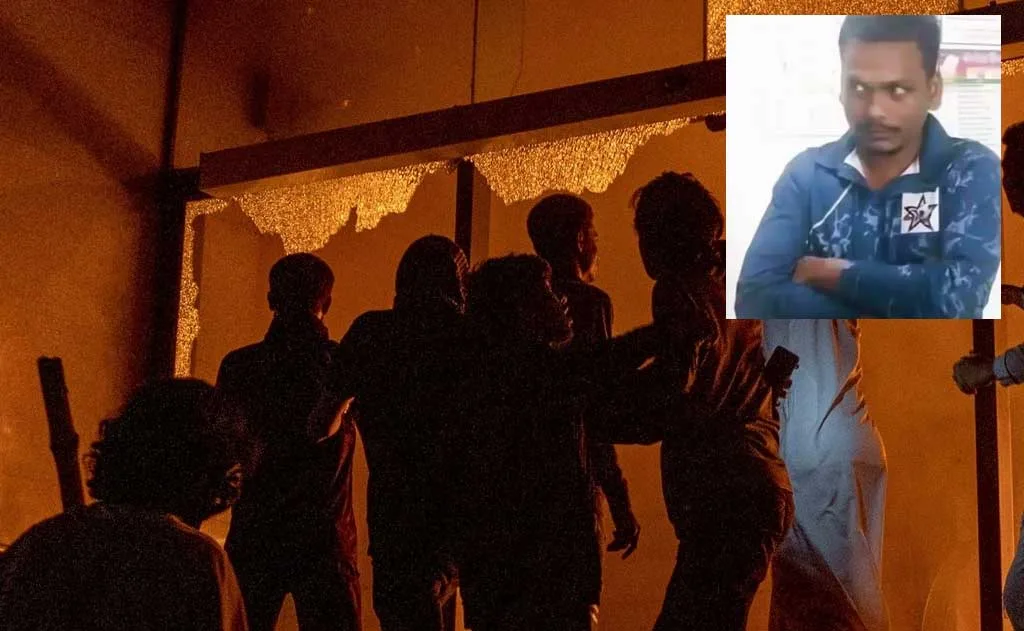
The home of Birendra Kumar Dey, a respected Hindu school teacher popularly known as Jhunu Sir in his community, was severely damaged by fire in Bahor village, Nandirgaon union, Gowainghat upazila of Sylhet district, Bangladesh. The incident occurred recently, with reports emerging around January 15-16, 2026.
According to multiple Indian media sources, including News18 and Times Now, the blaze is suspected to be a case of arson targeting the Hindu minority. A dramatic video circulating online shows intense flames engulfing the house, with family members seen fleeing and attempting to salvage belongings amid the chaos. Firefighters eventually responded and brought the fire under control, but the home was heavily ravaged. The family lost valuable household items, documents, and other possessions, though fortunately, no injuries or fatalities were reported.
Birendra Kumar Dey is described as a local school teacher known affectionately as Jhunu Sir. Some reports suggest this may not be the first attack on him or his property, with prior incidents of threats or attempts mentioned in passing, though details remain limited.
This event unfolds against a backdrop of ongoing concerns for Bangladesh's Hindu minority, which constitutes about 8% of the population. Since the ouster of former Prime Minister Sheikh Hasina in August 2024 amid widespread protests and political upheaval, reports of violence against minorities—including temple vandalism, mob attacks, killings, looting, and arson—have surged across various districts. Indian outlets have highlighted this incident as part of a pattern of targeted attacks on Hindus, fueling fears of escalating communal tensions under the interim government led by Muhammad Yunus.
Bangladeshi police and mainstream local media have not issued detailed official comments on this specific case as of the latest reports, with investigations presumably ongoing. No arrests or confirmed motives have been publicly detailed yet.
The incident coincided roughly with the Hindu festival of Makar Sankranti, adding to the sense of vulnerability among the community. Advocacy groups and observers continue to call for stronger protections, swift justice, and accountability to prevent further escalation.
For the latest developments, monitoring official Bangladeshi sources or international human rights reports is recommended, as the situation remains fluid amid broader law-and-order challenges in the country.
For More Devotional Journey, Follow
- Temples
/temples/ - Tirumala Updates
/tirumala/ - Sabarimala Yatra
/category/sabarimala-yatra/ - Pooja, Slokas & Mantras
/pooja-slokas-and-mantras/ - Hindu Gods
/hindu-gods/
Who is Birendra Kumar Dey and Why Were Teachers Targeted?
Birendra Kumar Dey, widely addressed as 'Jhunu Sir' by students and neighbours in Bahor village, represents a category of Hindu minority professionals in rural Bangladesh who occupy visible community roles — as educators, priests, or local leaders — and have historically been singled out during periods of communal unrest. Teachers in Hindu communities in Bangladesh often serve a dual function: beyond academic instruction, they act as custodians of cultural and religious continuity, organizing local puja committees, assisting with scripture readings, and maintaining ties between younger generations and their Dharmic heritage.
The targeting of identifiable community figures such as teachers, priests (purohits), and landowners is a documented pattern in communal violence across South Asia. When a respected figure's home is attacked, the psychological effect on the wider minority community is disproportionate — it signals that no one, regardless of social standing or contribution, is safe. This intimidation dynamic has been noted by human rights organizations monitoring the situation in Bangladesh since August 2024.
The Geography of Vulnerability: Sylhet's Hindu Minority Communities
Sylhet district, located in northeastern Bangladesh, has a historically significant Hindu population, including communities of Vaishnavas, Shaktas, and Brahmin families who have maintained temples and cultural institutions for centuries. The region is home to several important pilgrimage sites and math establishments connected to the lineage of Sri Chaitanya Mahaprabhu's devotional movement, making it spiritually significant to Bengali Hindus on both sides of the border.
Gowainghat upazila, where the attack on Birendra Kumar Dey's home occurred, is a semi-rural area bordering Meghalaya, India. Its relative remoteness from major urban centers like Sylhet city means minority families in villages such as Bahor have limited access to rapid law enforcement response and are more exposed to localized mob actions with little immediate accountability. This geographic isolation amplifies the vulnerability of Hindu households in such regions during politically unstable periods.
A Pattern of Arson: How Fire Is Used as a Tool of Communal Terror
Arson holds a particularly devastating place in the history of communal violence against Hindus in Bangladesh. Unlike vandalism or looting, fire destroys not only physical property but also irreplaceable items: family deity idols (murti), ancestral documents proving land ownership, horoscopes and birth records, and religious texts. The loss of land documents is especially consequential, as it has historically been used to dispossess minority families of property through subsequent legal manipulation.
The Valmiki Ramayana and various Puranas describe fire (Agni) as a witness (sakshi) to sacred ceremonies and a purifier — a principle that makes the deliberate use of fire to destroy a Hindu home a particularly symbolic act of desecration in the cultural understanding of those targeted. Reports since August 2024 have documented dozens of arson attacks on Hindu homes and temples across districts including Comilla, Chattogram, Khulna, and now Sylhet, suggesting a coordinated or at minimum emboldened pattern rather than isolated incidents.
The Broader Crisis: Hindu Minority Decline in Bangladesh Since 1947
At the time of India's Partition in 1947, Hindus constituted approximately 28% of the population of what is now Bangladesh. By the 2022 census, that figure had fallen to roughly 8%. This dramatic demographic decline — representing millions of people — is attributed to successive waves of violence, the Vested Property Act (formerly the Enemy Property Act) which allowed state seizure of Hindu-owned land, forced conversions, and sustained emigration driven by insecurity.
The current wave of attacks follows the political transition of August 2024, when Prime Minister Sheikh Hasina's government collapsed amid mass protests. Human rights groups have documented over 2,000 incidents of violence against minorities in the weeks immediately following that transition. The interim government led by Muhammad Yunus has faced international criticism for an inadequate response, while Hindu organizations both within Bangladesh and in the global diaspora have appealed to the United Nations and foreign governments for intervention and protection mechanisms.
Dharmic Concept of Abhaya: The Religious Imperative to Protect the Vulnerable
The Sanskrit concept of Abhaya — fearlessness, or the granting of safety — is one of the oldest and most emphasized values in Sanatana Dharma. The Rigveda contains prayers for Abhaya from all directions (Abhayam mitrad abhayam amitraat — 'may there be fearlessness from friend and foe alike'). The granting of Abhaya to those who seek refuge is considered among the highest acts of Dharma, and its denial — particularly to the vulnerable — is treated in the Dharmashastra literature as a grave moral failing of a ruler or governing authority.
When minority communities like the Hindus of Bangladesh are forced to flee their homes or live under constant threat, the governing authority's failure to provide Abhaya constitutes what classical texts would call Adharma — a collapse of the ruler's primary obligation to protect all subjects regardless of faith. This framing resonates deeply within the Hindu community's understanding of what is being lost: not merely property, but the foundational condition of dignified, fearless existence on ancestral soil.
What Can the Global Hindu Community and India Do?
India shares a 4,156-kilometre border with Bangladesh and has treaty obligations as well as cultural and civilizational ties to the Hindu minority there. The Indian government has periodically raised concerns about minority safety in Bangladesh through diplomatic channels, and the Ministry of External Affairs has issued statements calling for protection of minorities following the August 2024 political transition. However, Hindu advocacy organizations argue that diplomatic statements alone are insufficient and have called for concrete mechanisms such as fast-tracked minority visas, bilateral agreements on minority protection, and formal monitoring frameworks.
At the grassroots level, organizations such as the Vishwa Hindu Parishad and various diaspora bodies have set up relief funds for displaced Hindu families from Bangladesh. Individuals wishing to support affected families can contribute through verified charitable channels associated with organizations that maintain on-ground presence in the region. Beyond financial aid, sustained documentation of incidents — names, locations, dates — is critical to building an evidentiary record that can be presented to international human rights bodies, as has been done successfully in other minority protection campaigns globally.
Frequently Asked Questions
Who is Birendra Kumar Dey and what happened to his house?
Birendra Kumar Dey, known as Jhunu Sir, is a Hindu school teacher in Bahor village, Gowainghat upazila, Sylhet. His house was severely damaged by fire, with reports emerging around January 15-16, 2026.
Was anyone hurt in the Sylhet house fire?
No injuries or fatalities were reported. The family lost valuable household items, documents and other possessions before firefighters brought the blaze under control.
Has anyone been arrested for the fire at Jhunu Sir's home?
No arrests or confirmed motives have been publicly detailed. Bangladeshi police and mainstream local media have not issued detailed comments, and the fire is suspected to be arson.
How large is the Hindu population in Bangladesh today?
Hindus make up about 8% of Bangladesh's population, down from roughly 28% at Partition in 1947. The decline is attributed to violence, the Vested Property Act, forced conversions and emigration.
Why is the loss of documents in a house fire so serious for Hindu families?
Fire destroys family deity idols, ancestral land documents, horoscopes, birth records and religious texts. Loss of land papers is especially serious because it has historically been used to dispossess minority families of property.
How can the global Hindu community and diaspora respond?
Hindu organizations in Bangladesh and the diaspora have appealed to the United Nations and foreign governments for protection mechanisms. Advocacy groups call for stronger protections, swift justice and accountability.
Share this with family and friends
Send it on WhatsApp, post it, or copy the link.
More from News
- Aurora Hindu Temple Shooting Plot Foiled: Illinois Teen Charged After Rifle Jammed, Police Say
- Hindu Temples Abroad News, October 2026: Neasden's 42-Foot Tapomurti, Maha Annakut, Paris Mandir Hosts UNESCO Diplomats, Abu Dhabi Prayers
- Hindu Temple News, October 2026: Tirumala Navaratri Brahmotsavam, Sabarimala Security, Kashi's New CEO and Puri Updates
- Hindu Festival News, October 2026: Kullu Dussehra, Bastar, Delhi Ramlila, Gujarat Garba, Bathukamma, Chhath and Ayodhya Deepotsav
- Festival Special Trains 2026: Dasara, Diwali and Chhath Specials Announced So Far, Route by Route
You might also like
Brutal Lynching in Bangladesh 2025: Hindu Worker Dipu Das Targeted Amid Unrest
Shani Jayanti 2026: Date, Significance, Rituals & Powerful Mantras
Anti-Conversion Laws in India: Complete State-Wise Guide Every Hindu Must Know and Share in 2026