Ugadi 2026: Complete Guide to Hindu New Year Celebrations
Ugadi 2026: Complete Guide to Hindu New Year Celebrations Ugadi 2026 Date Ugadi 2026 will be celebrated on Tuesday, March 31, 2026.

Ugadi 2026: Complete Guide to Hindu New Year Celebrations
Ugadi 2026 Date
Ugadi 2026 will be celebrated on Tuesday, March 31, 2026. This auspicious day marks the beginning of the Telugu New Year and is observed with great enthusiasm across Karnataka, Andhra Pradesh, Telangana, and parts of Maharashtra.
Ugadi, also known as Yugadi, falls on the first day of Chaitra month (Chaitra Shukla Pratipada) according to the Hindu lunisolar calendar, typically occurring in March or April of the Gregorian calendar.
What is Ugadi? Understanding the Hindu New Year
Ugadi literally means "the beginning of a new age" derived from the Sanskrit words "Yuga" (age) and "Adi" (beginning). This festival celebrates the start of a new year and signifies the arrival of spring, a season of new beginnings, growth, and prosperity.
According to Hindu mythology, Lord Brahma began creation on this day, making it one of the most spiritually significant occasions in the Hindu calendar. The festival is particularly important in South India, where it is celebrated as the traditional New Year.
Ugadi 2026 Rituals and Traditions
Early Morning Preparations
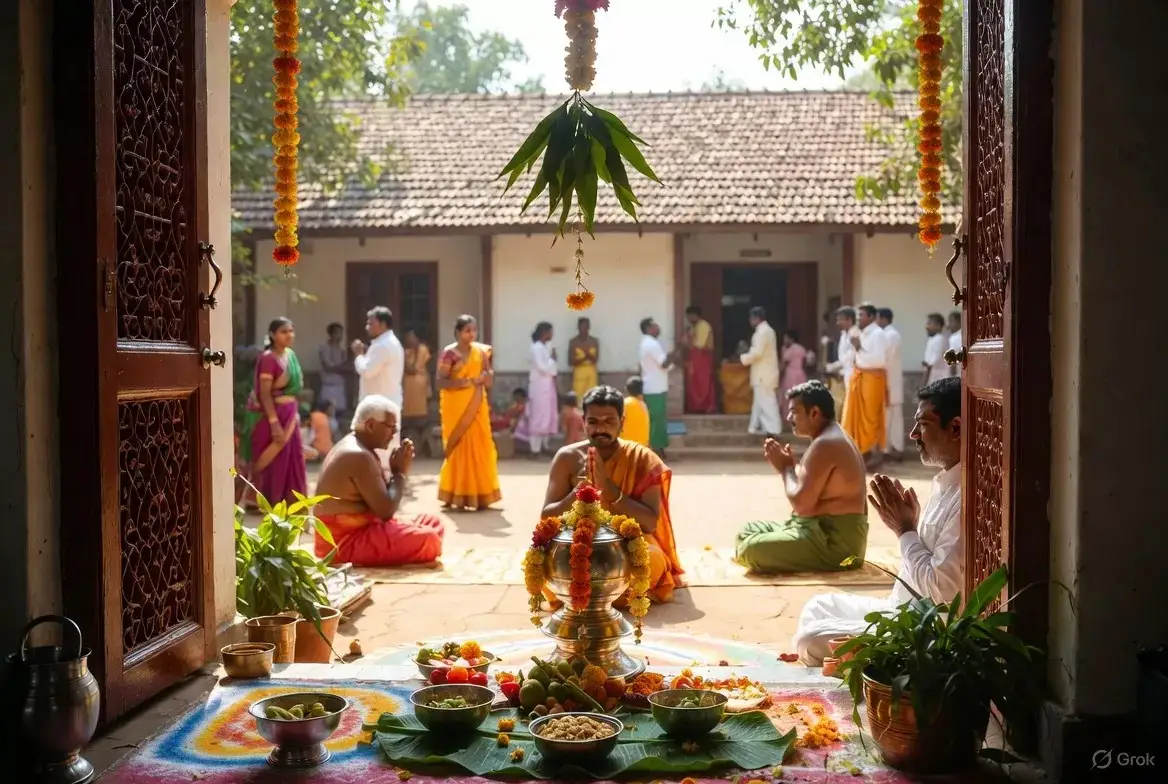
The day begins before sunrise with devotees taking an oil bath (Abhyanga Snan), which is believed to cleanse the body and soul. Homes are thoroughly cleaned and decorated with fresh mango leaves (Toranalu) hung on doorways, symbolizing prosperity and good harvest. Colorful rangoli designs, known as Muggu or Kolam, adorn the entrance of homes to welcome positive energy.
Traditional Ugadi Puja Vidhi
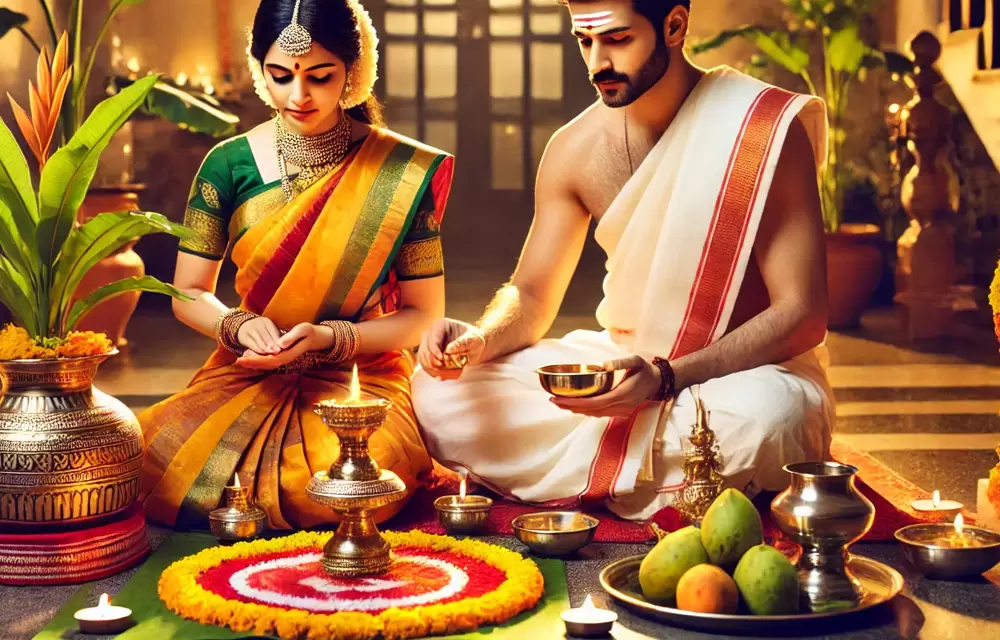
The Ugadi puja is performed with devotion and includes several key elements. Devotees wake up early and take a holy bath, then wear new or clean traditional clothes. The puja room is decorated with flowers, mango leaves, and lamps.
A special puja is offered to Lord Brahma, the creator, along with other deities. The puja thali typically includes items such as kumkum, turmeric, flowers, incense sticks, oil lamps, coconut, fruits, betel leaves and nuts, and neem flowers.
Families gather to listen to the Panchanga Sravanam, the reading of the new year's almanac, which predicts the fortunes for the coming year. This includes astrological predictions for rainfall, crop yields, political climate, and overall prosperity.
Ugadi Pachadi: The Six-Taste Prasad
The highlight of Ugadi is the preparation and consumption of Ugadi Pachadi, a unique chutney that symbolizes life's various experiences. This special prasad contains six different tastes representing different emotions and experiences in life:
- Neem flowers (Bitter) - signifying sadness and challenges
- Jaggery or Raw sugar (Sweet) - representing happiness and joy
- Tamarind (Sour) - symbolizing surprises and unexpected events
- Green chili (Spicy) - denoting anger and passion
- Salt (Salty) - representing fear and anxiety
- Raw mango (Tangy) - signifying disgust and disappointment
This mixture teaches the philosophical lesson that life brings all flavors, and one must accept them with equanimity and grace.
Ugadi Vratas and Fasting
Many devotees observe fasting (vrata) on Ugadi day to invoke divine blessings for the new year. The fasting practices vary from complete fasting (consuming only water) to partial fasting where devotees eat fruits and milk-based products.
Some common vrata practices include Nirjala Vrata, where no food or water is consumed until the puja is complete, Phalahar Vrata, which allows consumption of fruits, milk, and light foods, and Ekahara Vrata, eating only once during the day after completing puja.
The fast is typically broken after offering prayers and consuming Ugadi Pachadi as prasad. Devotees believe that observing this vrata with sincerity brings prosperity, health, and spiritual growth throughout the year.
Traditional Ugadi Celebrations and Customs
Community Gatherings
Ugadi is not just a family affair but a community celebration. People visit temples to offer prayers and seek blessings. Cultural programs featuring classical music, dance performances, and devotional songs are organized in communities. Many participate in charitable activities by donating food, clothes, and money to the needy.
Special Ugadi Feast
After the puja and rituals, families prepare an elaborate feast featuring traditional South Indian delicacies. Popular dishes include Bobbatlu (Puran Poli), sweet flatbread stuffed with lentils and jaggery, Pulihora (Tamarind Rice), tangy and flavorful rice dish, Mango Pachadi, a variation of Ugadi Pachadi, Vada and Payasam, lentil fritters and sweet rice pudding, and various vegetable curries and traditional sweets.
Exchange of Gifts
Exchanging gifts among family and friends is an integral part of Ugadi celebrations. New clothes, sweets, fruits, and household items are commonly gifted, symbolizing good wishes for prosperity in the new year.
Spiritual and Cultural Significance of Ugadi
Astronomical Importance
Ugadi has deep astronomical significance as it marks the transition of the sun into the Mesha Rashi (Aries), signifying the spring equinox. This period is considered highly auspicious for new beginnings, making it an ideal time to start new ventures, investments, and important life decisions.
Philosophical Teachings
The festival embodies several profound philosophical teachings. The Ugadi Pachadi serves as a reminder to maintain balance and accept all aspects of life with grace. The practice of reading Panchanga emphasizes planning and preparation for the future. Cleaning and decorating homes symbolizes letting go of the past and welcoming new opportunities.
Connection to Nature
Ugadi celebrates the arrival of spring when nature is in full bloom. The use of neem flowers and mango leaves in rituals connects the celebration to agricultural cycles and the natural world, reminding us of our dependence on nature's bounty.
Regional Variations of New Year Celebrations
While Ugadi is predominantly celebrated in Karnataka, Andhra Pradesh, and Telangana, other regions celebrate the Hindu New Year on the same or similar dates with different names. In Maharashtra, it's known as Gudi Padwa, in Kashmir as Navreh, in Manipur as Sajibu Nongma Panba, and in Rajasthan and North India as Chaitra Navratri begins.
Despite different names and minor variations in rituals, the underlying theme remains the same - celebrating new beginnings, seeking divine blessings, and embracing life's journey with optimism.
How to Celebrate Ugadi 2026
Preparation Checklist
To fully embrace the Ugadi spirit in 2026, start preparations a few days in advance. Clean and decorate your home with rangoli and mango leaf torans. Purchase ingredients for Ugadi Pachadi and festive cooking. Buy new clothes for the family. Prepare the puja items and thali. Plan your menu for the festive feast.
Puja Timings
Consult your local Panchanga for the exact auspicious timings (muhurat) for performing Ugadi puja in your region. Generally, the morning hours after sunrise are considered most auspicious for the New Year rituals.
Making it Special
Involve children in decorating the home and preparing for the festival to pass on traditions. Organize virtual celebrations if family members are in different locations. Practice eco-friendly celebrations using natural decorations. Take time for self-reflection and set positive intentions for the year ahead.
Ugadi 2026: Embracing New Beginnings
As we prepare to welcome Ugadi 2026 on March 31st, let us embrace the festival's core message of renewal, acceptance, and hope. Whether you observe all the traditional rituals or incorporate a few meaningful practices into your celebration, Ugadi offers a beautiful opportunity to reset, reflect, and rejoice.
The festival reminds us that just as nature renews itself every spring, we too have the power to begin afresh, leaving behind past burdens and stepping forward with optimism. May this Ugadi bring joy, prosperity, health, and success to you and your loved ones.
🌸 For More Devotional Journey, Follow
- Temples
/temples/ - Tirumala Updates
/tirumala/ - Sabarimala Yatra
/category/sabarimala-yatra/ - Pooja, Slokas & Mantras
/pooja-slokas-and-mantras/ - Hindu Gods
/hindu-gods/
Conclusion
Ugadi is more than just a New Year celebration; it is a profound reminder of life's cyclical nature and our connection to cosmic rhythms. The rituals, especially the Ugadi Pachadi with its six tastes, teach us valuable life lessons about accepting both challenges and joys with equanimity.
As you celebrate Ugadi 2026, may you be blessed with the wisdom to navigate life's varied experiences, the strength to overcome obstacles, and the grace to appreciate every moment. Wishing everyone a very Happy Ugadi!
Frequently Asked Questions
When is Ugadi 2026?
Ugadi 2026 falls on Tuesday, March 31, 2026. It is observed on Chaitra Shukla Pratipada, the first day of Chaitra in the Hindu lunisolar calendar.
What is Ugadi Pachadi and what do its six tastes mean?
Ugadi Pachadi is a chutney prasad with six tastes: neem flowers for sadness, jaggery for joy, tamarind for surprises, green chilli for anger, salt for fear and raw mango for disappointment. It teaches that life brings every flavour.
Which deity is worshipped on Ugadi and how does the day begin?
As commonly told, Lord Brahma began creation on this day, so a special puja is offered to him. The day starts before sunrise with an oil bath, a cleaned home with mango leaf toranas, and rangoli at the entrance.
What is Panchanga Sravanam?
It is the family reading of the new year's almanac. It includes predictions for rainfall, crop yields, political climate and general prosperity for the coming year.
How is the Hindu New Year known in other regions?
Maharashtra calls it Gudi Padwa, Kashmir Navreh and Manipur Sajibu Nongma Panba. In Rajasthan and North India, Chaitra Navratri begins around this time.
How do I find the Ugadi puja time and celebrate it far from home?
Check your local Panchanga for the exact muhurat, as the morning hours after sunrise are generally considered most auspicious. If family members are in different locations, virtual celebrations are an option.
Share this with family and friends
Send it on WhatsApp, post it, or copy the link.
More from Festivals
- Mirabai Jayanti 2026: A Living Symbol of Krishna Bhakti – Life, Significance and Bhajans
- Masik Shivaratri 2027 Dates: Monthly Shivaratri List, Nishita Kaal Times and Dates Abroad
- Sankashti Chaturthi 2027 Dates and Moonrise Times: Full List for India and Abroad
- Pradosh Vrat 2027 Dates: All 25 Pradosham Days, Pradosh Kaal Times and Dates Abroad
- Amavasya 2027 Dates: New Moon Days, Darsha Amavasya, Tithi Times and Dates Abroad
You might also like
Ugadi 2026 Celebrations in India: Traditions, Rituals and Auspicious Beginnings
Ugadi 2026 Celebrations Guide: Rituals, Recipes & Global Observance

Ugadi Celebrations in the UAE: Emirate-Wise, City-Wise Guide for Indian Diaspora & NRIs – 2026 Edition