




What Kids Can Learn from Ganesh Chaturthi: Life Lessons Through Festival Celebrations
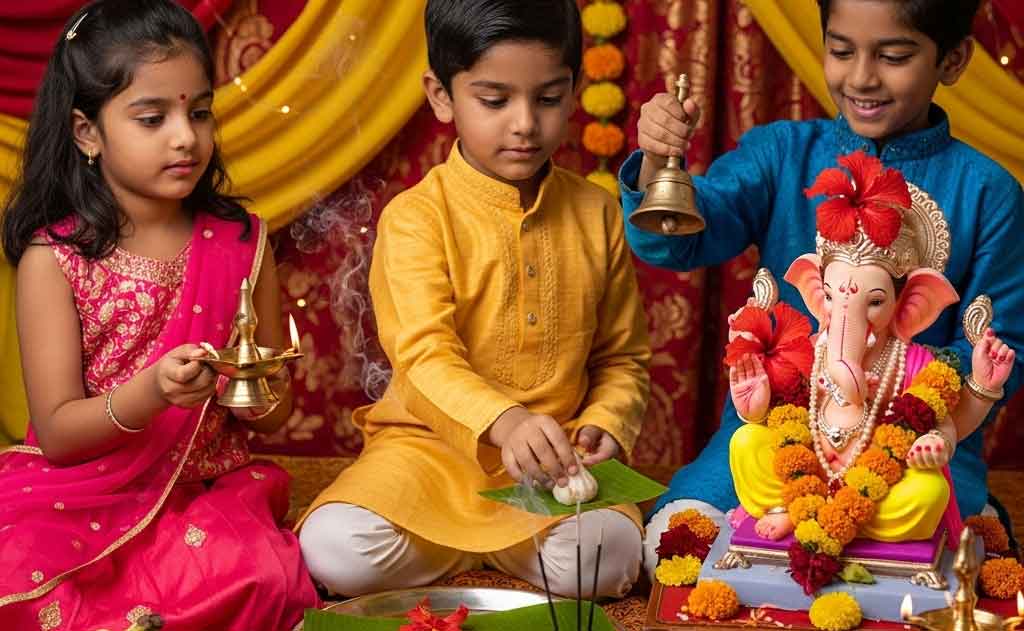
Ganesh Chaturthi, one of India’s most beloved festivals, offers children far more than just colorful celebrations and delicious modaks. This vibrant Hindu festival, dedicated to Lord Ganesha, the remover of obstacles and patron of arts and sciences, provides countless opportunities for young minds to absorb valuable life lessons while participating in joyful traditions.
The Story Behind Ganesh Chaturthi: Teaching Cultural Heritage
When children learn about Ganesh Chaturthi’s origins, they connect with their cultural roots and understand the importance of tradition. The festival celebrates Lord Ganesha’s birth and his role as the beloved elephant-headed deity who brings wisdom, prosperity, and good fortune.
Teaching kids the stories of how Ganesha got his elephant head, his love for modaks, and his role as the scribe of the Mahabharata helps them appreciate the rich mythology and cultural heritage that shapes their identity.
Environmental Consciousness Through Eco-Friendly Celebrations
Modern Ganesh Chaturthi celebrations increasingly emphasize environmental responsibility, teaching children crucial lessons about sustainability:
Clay Idol Making: When families create Ganesha idols using natural clay, children learn about biodegradable materials and their positive impact on water bodies during visarjan (immersion ceremonies).
Natural Decorations: Using flowers, leaves, and organic materials for pandal decorations shows kids how to celebrate beautifully while respecting nature.
Water Conservation: The traditional practice of bringing Ganesha home teaches children about mindful consumption and the sacred relationship between humans and natural resources.
Community Spirit and Social Values
Ganesh Chaturthi exemplifies community participation, offering children valuable lessons in social cooperation:
Neighborhood Pandals: When kids participate in community pandal preparations, they learn teamwork, collective responsibility, and the joy of working together toward a common goal.
Inclusive Celebrations: The festival welcomes people from all backgrounds, teaching children about acceptance, diversity, and unity in celebration.
Helping Others: Many communities organize food distribution and charitable activities during Ganesh Chaturthi, showing children the importance of giving back to society.
Creativity and Artistic Expression
The festival provides numerous outlets for children’s creativity:
Rangoli Making: Creating colorful floor designs develops artistic skills, patience, and attention to detail.
Decoration Crafts: Making paper flowers, garlands, and ornaments enhances fine motor skills and creative thinking.
Cultural Performances: Singing bhajans, dancing, and participating in cultural programs builds confidence and preserves traditional arts.
Spiritual and Moral Development
Ganesh Chaturthi introduces children to important spiritual concepts in an accessible way:
Prayer and Devotion: Daily aarti and prayers teach children about gratitude, focus, and spiritual discipline.
Obstacle Removal: Understanding Ganesha as the remover of obstacles helps children develop resilience and faith in overcoming challenges.
Wisdom and Learning: As the patron of arts and sciences, Ganesha inspires children to value education and seek knowledge.
Planning and Organization Skills
Festival preparations naturally teach children valuable organizational abilities:
Time Management: Planning activities for the 10-day festival helps kids understand scheduling and time allocation.
Resource Planning: Organizing materials for decorations and offerings teaches budgeting and resource management.
Event Coordination: Participating in family and community event planning develops leadership and coordination skills.
Cultural Exchange and Communication
In today’s globalized world, Ganesh Chaturthi helps children become cultural ambassadors:
Sharing Traditions: Explaining festival customs to friends from different backgrounds improves communication skills and cultural pride.
Storytelling: Learning and retelling Ganesha’s stories develops narrative abilities and public speaking confidence.
Language Learning: Festival prayers, songs, and stories often introduce children to Sanskrit and regional languages.
Mathematical and Scientific Learning
The festival offers practical applications for academic concepts:
Measurement and Geometry: Creating symmetrical rangoli patterns reinforces mathematical concepts.
Chemistry Understanding: Observing clay idol dissolution during visarjan provides basic chemistry lessons about materials and reactions.
Cultural Mathematics: Understanding lunar calendar dates and festival timing introduces children to different numbering systems.
Food Culture and Healthy Eating
Ganesh Chaturthi’s culinary traditions teach children about nutrition and cultural food practices:
Traditional Recipes: Learning to make modaks, puran poli, and other festival foods connects children to ancestral knowledge.
Offering Significance: Understanding why specific foods are offered to deities teaches about nutritional values and food as medicine.
Community Cooking: Participating in large-scale festival cooking teaches collaboration and food preparation skills.
Emotional Intelligence and Empathy
The festival’s emotional aspects contribute significantly to children’s social-emotional development:
Letting Go: The visarjan ceremony beautifully teaches children about impermanence and the ability to let go with grace.
Joy in Giving: The tradition of offering prayers and sharing with others develops generosity and empathy.
Family Bonding: Multi-generational festival participation strengthens family relationships and emotional connections.
Digital Age Balance
Modern Ganesh Chaturthi celebrations can teach children healthy technology relationships:
Virtual Participation: Online darshan options during recent years taught children about adapting traditions while maintaining spiritual connections.
Photography and Documentation: Capturing festival moments teaches children about preserving memories while staying present in experiences.
Social Media Awareness: Sharing festival celebrations responsibly introduces children to positive social media usage.
Making Festival Learning Interactive
Parents and educators can enhance children’s festival learning through:
Story Dramatization: Acting out Ganesha stories helps children internalize moral lessons.
Festival Journals: Documenting daily festival activities develops writing skills and personal reflection.
Comparative Studies: Learning about similar festivals worldwide broadens cultural understanding.
Craft Projects: Creating festival-themed crafts reinforces learning through hands-on activities.
Conclusion: Lifelong Lessons from Ganesh Chaturthi
Ganesh Chaturthi offers children a comprehensive learning experience that extends far beyond religious observance. Through active participation in festival traditions, children develop environmental consciousness, social skills, creativity, spiritual awareness, and cultural pride.
The festival’s emphasis on removing obstacles and embracing new beginnings provides children with powerful metaphors for approaching life’s challenges with optimism and determination. By understanding and participating in Ganesh Chaturthi celebrations, children gain invaluable tools for personal growth, community engagement, and cultural continuity.
As families continue to celebrate this beloved festival, the lessons learned during these formative experiences shape children into culturally aware, socially responsible, and spiritually grounded individuals who carry forward the best of their heritage while adapting to contemporary life.
Celebrate Ganesh Chaturthi with your family and discover the rich learning opportunities this beautiful festival offers to children of all ages. For more insights into Hindu festivals and their educational value, explore our comprehensive guides at HinduTone.com.
Related posts:
 The Business of Ganesh Chaturthi: Market Trends & Economic Impact
 Anant Chaturdashi 2025: The Divine Confluence of Lord Vishnu’s Infinite Grace and Ganesh Visarjan
 The Ultimate Ganesh Songs Playlist for Your Mandapam
 Pune Ganesh Celebrations 2025: A Vibrant Tapestry of Faith, History, and Culture
 How NRIs Celebrate Ganesh Chaturthi Worldwide: A Global Hindu Festival Guide 2025
 The Sacred Dance of Ganesh Chaturthi and Rain: A Divine Monsoon Connection



 ︎
︎

