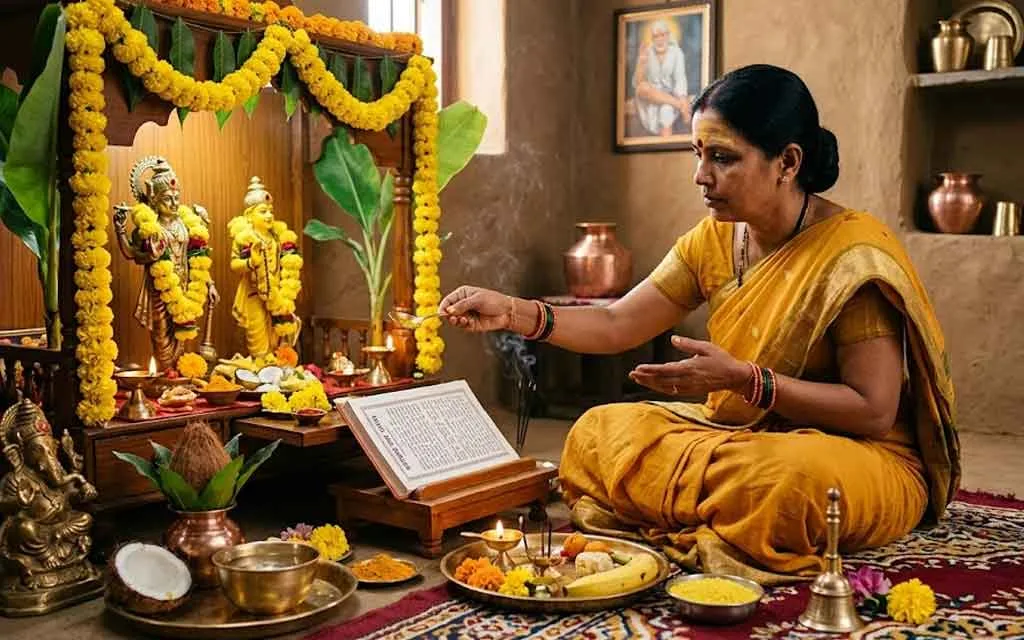
Tuesday Hanuman Puja: Mangalvar Vrat, Hanuman Chalisa and Mantras
Tuesday (Mangalvar) is Hanuman's day in much of India, and also a day for Durga and, in Tamil Nadu, Murugan. Offer sindoor, red flowers and gram with jaggery, recite the Hanuman Chalisa or a short mantra and, if you wish, keep the Mangalvar vrat. Here is the puja step by step, verified mantras, fasting food, Mangal dosha without fear, temples and regional customs.
Quick answer: In most of north and west India Tuesday is Hanuman's day. Devotees offer sindoor, red flowers and a lamp, recite the Hanuman Chalisa or a short mantra such as Om Ham Hanumate Namah, and many keep the Mangalvar vrat with a single simple meal. Tuesday also belongs to Mangala (Mars), to Durga and the Goddess in many homes, and to Murugan in Tamil Nadu.
Last updated: 10 October 2026. This is the Tuesday chapter of our Hindu days of the week guide, which compares the deity, mantra and observance of every day.
Read on for why Tuesday is Hanuman's day, a home puja step by step, what to offer, verified mantras with meaning, the Mangalvar fast and its food, a calm look at Mangal dosha, temples with checked facts, ideas for children and the very different Tuesday customs of Lucknow, Pune, Hyderabad, Chennai and Kolkata.
Why Tuesday is Hanuman's day
Tuesday is Mangalavara, named after Mangala, the red graha we call Mars. Mangala is also called Bhauma or Angaraka, 'son of the Earth' and 'the glowing coal', and in jyotisha he stands for courage, energy, physical strength and decisive action. The word mangala itself means auspicious, which is why the day is called Mangalvar rather than by one of the planet's sterner names.
No deity embodies those Mars qualities better than Hanuman: the son of Anjana and the wind god Vayu, who leapt the ocean to Lanka, carried a mountain of herbs to save Lakshmana, and yet stayed the humblest servant of Rama. Over centuries Tuesday became his day across north and west India. Popular belief holds that he was born on a Tuesday, and his sindoor-coated images share Mangala's colour. A well-loved folk story explains the sindoor: seeing Sita apply sindoor for Rama's long life, Hanuman covered his whole body in it so that Rama would live for ever. It is a devotional tale rather than a scene from Valmiki's Ramayana, but it captures what Hanuman means to his devotees.
Hanuman is counted among the chiranjivis, the immortals, and devotees believe he is present wherever the Ramayana is recited. That belief shapes Tuesday practice: a Hanuman puja almost always begins and ends with Rama's name. Learn more on our Lord Hanuman page.
Tuesday has other deities too. The Navagraha verse for Mangala describes him as a youth holding a spear (kumāraṃ śaktihastaṃ), an image close to that of Murugan with his vel, and in Tamil Nadu many families keep Tuesdays for Murugan. Across India the Goddess is worshipped on Tuesday as Durga, Mangala Gauri or Mangala Chandi. You will find these traditions in the regional section below.
What you need for Tuesday puja
- A picture or small image of Hanuman, ideally with Rama, Sita and Lakshmana nearby, or a Ram Darbar picture.
- Sindoor (orange-red vermilion) and a little jasmine (chameli) oil, or simply kumkum.
- Red flowers such as hibiscus or red roses, and a garland if you have one.
- A lamp with ghee or sesame oil, and incense.
- Naivedya: roasted gram with jaggery, boondi or besan laddu, bananas, or a wheat-and-jaggery sweet.
- A red cloth or thread for the altar, and a few betel leaves if available.
Step-by-step Tuesday Hanuman puja at home
This takes about twenty minutes, longer if you recite the Chalisa more than once. Morning or evening both work; many people do the main puja at dusk.
- Bathe and wear clean clothes. Red or orange is customary on Tuesday, but any clean clothes are fine.
- Begin with Rama. Light the lamp and chant Shri Rama Jaya Rama Jaya Jaya Rama a few times, or bow to the Ram Darbar picture. Hanuman worship traditionally starts with his Lord.
- Sankalpa. Sit facing the image, fold your hands and say your intention in your own words: courage for a hard week, protection for the family, or simply devotion.
- Offer sindoor. Apply a tilak of sindoor mixed with a drop of jasmine oil to the image, or to its feet if it is a picture. In temples, the full sindoor coating (chola) is done by priests.
- Flowers and incense. Offer the red flowers or garland and wave the incense.
- Recite. Read the Hanuman Chalisa once, three times or eleven times, or chant Om Ham Hanumate Namah 108 times. Add the Sankat Mochan Hanuman Ashtak or Bajrang Baan if that is your practice.
- Naivedya. Offer the gram and jaggery, laddu or bananas, and a betel leaf.
- Aarti. Perform aarti with the lamp, singing Aarti Kije Hanuman Lala Ki if you know it.
- Close with Rama again. End with Rama's name and a moment of silence, then share the prasad.
Offerings and their meaning
| Offering | Traditional meaning | Simple alternative |
|---|---|---|
| Sindoor with jasmine oil | Hanuman's colour; the folk story of devotion to Rama's long life | A tilak of kumkum |
| Red flowers | Mangala's colour, energy and love | Any fresh flower |
| Gram with jaggery (chana-gur) | Strength-giving food of ordinary people, Hanuman's favourite in folk tradition | Any jaggery sweet |
| Boondi or besan laddu | The classic temple prasad in north India | Fruit |
| Sesame-oil or ghee lamp | Light against fear and darkness | Any safe lamp |
| Betel leaf | Respect, as offered to an honoured guest | Leave it out |
Verified Tuesday mantras with meaning
The texts below are inserted from our checked source files, not retyped.
1. Shri Rama Jaya Rama
श्री राम जय राम जय जय राम॥
śrī rāma jaya rāma jaya jaya rāma||
Meaning: Victory to Shri Rama, victory, victory to Rama. Devotees chant Rama's name first because it is the mantra Hanuman himself is said to love above all.
2. Om Ham Hanumate Namah
ॐ हं हनुमते नमः॥
oṃ haṃ hanumate namaḥ||
Meaning: Om, salutations to Hanuman; 'ham' is the seed syllable used with his name. A short daily mantra for courage and steadiness, suitable for children and beginners.
3. Sankat Mochan Hanuman Ashtak, verse 1
बाल समय रबि भक्षि लियो तब तीनहुँ लोक भयो अँधियारो ।
ताहि सों त्रास भयो जग को यह संकट काहु सों जात न टारो ।
देवन आनि करी बिनती तब छाँड़ि दियो रबि कष्ट निवारो ।
को नहिं जानत है जगमें कपि संकटमोचन नाम तिहारो ॥ १ ॥
bāla samaya rabi bhakṣi liyo taba tīnahu~ loka bhayo a~dhiyāro |
tāhi soṃ trāsa bhayo jaga ko yaha saṃkaṭa kāhu soṃ jāta na ṭāro |
devana āni karī binatī taba chā~r̤i diyo rabi kaṣṭa nivāro |
ko nahiṃ jānata hai jagameṃ kapi saṃkaṭamocana nāma tihāro || 1 ||
Meaning: As a child you swallowed the Sun, and the three worlds fell into darkness. The world was terrified, and no one could lift this crisis. When the gods came and pleaded, you released the Sun and ended their distress. Who in the world does not know your name, O Kapi, Sankat Mochan, reliever of troubles?
The eight-verse Sankat Mochan Hanuman Ashtak, in Awadhi, is traditionally attributed to Tulsidas. Read all eight verses with meaning in our Sankat Mochan Hanuman Ashtak guide.
4. Navagraha Stotram, verse for Mangala
धरणीगर्भसंभूतं विद्युत्कान्तिसमप्रभम् ।
कुमारं शक्तिहस्तं तं मङ्गलं प्रणमाम्यहम् ॥ ३॥
dharaṇīgarbhasaṃbhūtaṃ vidyutkāntisamaprabham |
kumāraṃ śaktihastaṃ taṃ maṅgalaṃ praṇamāmyaham || 3||
Meaning: I bow to Mangala, born from the womb of the Earth, shining like lightning, the youth who holds the spear.
5. The Hanuman Chalisa (named, not reproduced)
The Hanuman Chalisa is a forty-verse hymn in Awadhi by Tulsidas, with two opening dohas and a closing doha, and it is the single most recited prayer on Tuesdays. We have not yet verified a full text against a reliable edition, so we do not print it here. Read it with English meaning in our Hanuman Chalisa with meaning or the Hanuman Chalisa guide. Many devotees also recite the Bajrang Baan or the 108 names of Hanuman on Tuesdays.
6. For the Goddess on Tuesday
ॐ दुं दुर्गायै नमः॥
oṃ duṃ durgāyai namaḥ||
Meaning: Om, salutations to Durga; 'dum' is her seed syllable.
या देवी सर्वभूतेषु शक्तिरूपेण संस्थिता ।
नमस्तस्यै नमस्तस्यै नमस्तस्यै नमो नमः ॥
yā devī sarvabhūteṣu śaktirūpeṇa saṃsthitā |
namastasyai namastasyai namastasyai namo namaḥ ||
Meaning: To the Goddess who dwells in all beings in the form of power (shakti): salutations to her, salutations to her, salutations to her, again and again. This refrain comes from the Devi Mahatmya (5.32 to 34). For a longer Devi practice, see our Durga Chalisa guide and Durga page.
The Mangalvar vrat
The Tuesday fast is kept for courage, protection, the health of the family and, for many, as a traditional remedy suggested by an astrologer. Its common forms:
- One meal after the evening puja. The most common form. Water, milk and fruit are taken during the day.
- Saltless Tuesday. Many families avoid salt entirely on Tuesday and eat wheat and jaggery dishes instead.
- Twenty-one Tuesdays. A popular vow is to fast on twenty-one consecutive Tuesdays and close with an udyapan: a puja, a meal for guests and a donation of red cloth, wheat or jaggery.
- Mangala Gauri vratam. On the Tuesdays of Shravan, newly married women in Maharashtra and the Telugu states worship Gauri for a happy married life. See our Sravana Mangala Gowri vratam guide and the Mangala Gowri vrat katha.
What to eat
- Common Tuesday foods: churma or sweet wheat roti with ghee and jaggery, roasted gram, boondi, halwa, bananas and other fruit, milk and curd.
- Usually avoided: salt (in strict observance), meat, eggs, fish, alcohol, onion and garlic.
- Breaking the fast: after the evening aarti, starting with the prasad.
For a full menu see what to eat and avoid on a Tuesday fast and our Tuesday fasting rules and vrat menu.
If you cannot fast
Hanuman is the god of service, so a Tuesday of service is a fitting alternative: help someone, donate food, or volunteer at a temple kitchen. You can also eat a simple vegetarian meal, skip salt at one meal, or recite the Chalisa once at night. None of these is a lesser form of devotion.
Health note: A saltless or one-meal day is not safe for everyone. Check with a doctor first if you have diabetes, low or high blood pressure, kidney disease or a history of eating disorders, if you are pregnant or breastfeeding, or if you take regular medication. Children and older people should not keep strict fasts. Drink enough water, especially in hot weather.
Mangal dosha, calmly
Many people first come to Tuesday worship because an astrologer has mentioned Mangal dosha, a placement of Mars in a birth chart that is traditionally considered when matching horoscopes for marriage. A few facts keep it in proportion:
- Astrologers define and weigh Mangal dosha in different ways, and many recognise conditions that cancel or soften it.
- It is common: a large share of birth charts show some form of it under the broad definitions.
- Hanuman puja, the Tuesday fast and the Navagraha verse for Mangala are traditional remedies. They are believed to help; they do not guarantee any outcome.
- No ritual should be used to frighten a family, delay a good match or pressure anyone.
For remedies in detail, see our Mangal dosha remedies on Tuesday.
Do's and don'ts for Tuesday
Customs differ widely. Treat these as family traditions, not as rules that bring bad luck when broken.
- Do begin and end with Rama's name.
- Do use the day for discipline: exercise, honest effort, keeping your word. These are the Hanuman qualities devotees try to cultivate.
- Do visit a Hanuman or Devi temple if you can, even briefly.
- Many families avoid haircuts and shaving, starting new loans or lending money on Tuesday. These are regional customs; follow your elders if they matter to your household.
- Avoid quarrels and harsh speech. Mangala's energy is meant for courage, not anger.
- Avoid fear-based messages that threaten harm for skipping a Tuesday ritual. They have no place in Hanuman bhakti.
More customs are collected in things Hindus traditionally avoid on Tuesday.
Stories told on Tuesday
Families keeping the Mangalvar vrat read a vrat katha each week. The best known tells of a devout couple who longed for a child and kept the Tuesday fast faithfully until Hanuman blessed them; their patience through hardship is the heart of the story. Another favourite comes from the Mahabharata's forest book, where the proud Bhima meets an old monkey lying across his path and cannot lift its tail. The monkey is Hanuman, his elder brother through their common father Vayu, who teaches him humility.
A popular legend also says that Tulsidas, imprisoned by the emperor Akbar, recited the Hanuman Chalisa and was freed when an army of monkeys overran the palace. No historical record supports this, and scholars do not agree even on when the Chalisa was written. Tell it as a story of faith, not as dated history.
Common mistakes
- Skipping Rama. Hanuman worship without Rama's name misses the point of his devotion.
- Racing through the Chalisa. One slow, attentive recitation is better than eleven rushed ones. Learn the meaning verse by verse.
- Treating Hanuman as only a remedy for planets. He is first a bhakta and a teacher of service.
- Over-strict fasting. A saltless day with no water in summer can make you ill. Choose the form that suits your health.
- Copying Chalisa text from unchecked images. Typos are common. Use a reliable book or our linked guides.
- Believing promises of guaranteed results. Devotion is traditionally believed to bring strength and protection, but no puja is a contract.
Hanuman, Devi and Murugan temples
These temples have source-checked pages on HinduTone. Always confirm current timings with the temple before visiting.
Hanuman
- Hanuman Garhi, Ayodhya: local tradition says Hanuman lived here and guarded Ayodhya, so pilgrims to the city's Rama shrines visit him too. The present fort-like temple took shape in the 18th century.
- Salasar Balaji, Rajasthan: the image was installed in Vikram Samvat 1811 (about 1754 CE), according to the temple. Devotees tie coconuts with red thread as part of a vow and offer savamani, a large food offering.
- Jakhoo Temple, Shimla: on the hill where, by tradition, Hanuman rested on his way to fetch the Sanjeevani herb. A 108-foot statue of Hanuman was unveiled there in 2010.
The Goddess
- Vaishno Devi, Jammu and Kashmir: darshan is of three natural rock forms, the Pindis, in a cave on the Trikuta hills.
- Kamakhya, Guwahati: the great Shakti shrine on the Nilachal hill, served for centuries by its hereditary priest families.
- Patteeswaram Durgai, near Kumbakonam: a peaceful form of Durga said to have been the guardian deity of the Chola kings; lemon garlands and lamps in lemon halves are common offerings.
Murugan
- Palani: its panchamirtham was the first temple prasadam in Tamil Nadu to receive a GI tag, in 2019.
- Tiruttani: where, by tradition, Murugan's anger cooled; the deity holds a vajra instead of the usual vel.
- Swamimalai: a raised hill temple reached by 60 steps, one for each year of the Tamil calendar cycle.
- Thiruparankundram: a cave shrine where five deities are worshipped together.
- Kukke Subrahmanya, Karnataka: a major centre for serpent-related rites, where Subrahmanya is worshipped with the serpent Vasuki.
Tuesday at a temple abroad
Hanuman shrines are found in almost every Hindu temple in the USA, Canada, the UK, Europe, Australia, Singapore and the Gulf, and many hold a Tuesday Hanuman Chalisa or abhishekam in the evening. Some practical points:
- Check the temple's website or social media for the Tuesday programme; group Chalisa recitations are often held after work hours.
- Offerings such as sindoor are often applied only by priests; buy the prasad or flowers the temple sells.
- Tamil and Sri Lankan temples often hold Durga puja during Tuesday Rahu Kalam; calculate it from local sunrise, not India's.
- Ask whether the temple runs youth Chalisa groups or seva on Tuesday evenings.
Our Tuesday rituals NRI temple guide and Hanuman temple visit guide have more detail. To find a temple, start with our guides for the USA, Canada and Australia and New Zealand.
Tuesdays with children
Children love Hanuman: he is strong, funny, loyal and brave. Use that.
- A story each Tuesday. Baby Hanuman leaping at the Sun (the subject of the Sankat Mochan verse above), the leap to Lanka, the burning tail, the mountain of herbs, opening his chest to show Rama and Sita in his heart.
- Chalisa together. Learn two lines a week as a family; in five months the children will know the whole hymn.
- Strength with kindness. Make Tuesday the day for sport or a family walk, and for one act of help, as Hanuman served Rama.
- No fasting for children. Let them offer a banana or laddu and share it as prasad.
For wider ideas see raising children with Hindu values abroad.
Regional Tuesday traditions
- Lucknow and Awadh: Bada Mangal, the Tuesdays of the month of Jyeshtha, when the city fills with Hanuman bhandaras, free meals served by devotees on the streets.
- Rajasthan and the Hindi belt: Tuesday crowds at Balaji temples, with chola offerings of sindoor and silver foil, and Chalisa recitations through the evening.
- Maharashtra: Mangala Gaur, celebrated by new brides on Shravan Tuesdays with an all-night gathering of songs and games.
- Telugu states: Mangala Gowri vratam on Shravan Tuesdays, and Hanuman Jayanti on Vaishakha Bahula Dashami rather than the north Indian Chaitra Purnima.
- Tamil Nadu: Tuesday is Murugan's day for many families, and Durga puja with lemon lamps is held during Rahu Kalam on Tuesdays and Fridays. Hanumath Jayanthi falls in Margazhi.
- Bengal and Odisha: the Goddess as Mangal Chandi is worshipped by women on Tuesdays, especially in the month of Jaishtha.
- Panchang combinations: a Sankashti Chaturthi on Tuesday is Angaraki Chaturthi, especially sacred to Ganesha, and Pradosh on a Tuesday is Bhauma Pradosh.
Festivals that deepen Tuesday devotion include Hanuman Jayanti, Navratri and Skanda Sashti. Seasonal Tuesday customs are covered in Margashirsha Masam Tuesday rituals.
Also read: famous Hanuman temples in India and the Arupadai Veedu and other Murugan temples.
Also read: Subrahmanya Bhujangam with meaning.
Related reading on HinduTone
- Hindu days of the week: all seven days compared
- Which god to pray to for job, marriage, health or studies
- Kartikeya (Murugan): history, significance and worship
- The Navagrahas explained
Frequently asked questions
Why is Tuesday dedicated to Hanuman?
Tuesday is Mangalavara, the day of Mangala (Mars), the red graha of courage and energy. Hanuman, the strongest and most fearless devotee of Rama, came to be worshipped on this day across north and west India. Popular belief also holds that Hanuman was born on a Tuesday, and his sindoor-red form matches Mangala's colour.
What should I offer Hanuman on Tuesday?
Sindoor mixed with a little jasmine (chameli) oil, red flowers, a lamp of ghee or sesame oil, roasted gram with jaggery (chana-gur), boondi or besan laddu, bananas and betel leaves are the traditional offerings. At home, a lamp, a red flower and a sweet offered with the Chalisa are enough.
What can I eat during the Mangalvar vrat?
Most people eat once, after the evening puja, choosing simple vegetarian food. Wheat dishes with jaggery, such as churma or sweet roti, gram, boondi, fruit and milk are common. Many families avoid salt for the day, and meat, eggs, alcohol, onion and garlic are avoided.
Is Tuesday worship only for Hanuman?
No. Many families worship Durga or another form of the Goddess on Tuesday, married women in Maharashtra and the Telugu states keep Mangala Gauri vratam on the Tuesdays of Shravan, and in Tamil Nadu Tuesday is a day for Murugan and for Durga puja during Rahu Kalam.
Can women recite the Hanuman Chalisa and keep the Tuesday fast?
Yes. Women across India recite the Hanuman Chalisa and keep the Mangalvar vrat. Some individual temples have customs about who may touch the image or apply the sindoor chola, so follow the priest's guidance there.
Does Tuesday worship remove Mangal dosha?
Hanuman puja and the Tuesday fast are traditional remedies that astrologers suggest for Mangal dosha, and many devotees find them steadying. They are believed to help, not guaranteed to change anything. Mangal dosha is also judged very differently by different astrologers, so do not let it frighten you.
Which mantra should beginners chant on Tuesday?
Start with Om Ham Hanumate Namah or Shri Rama Jaya Rama Jaya Jaya Rama, 11 or 108 times. Both are short and given on this page. Add the Hanuman Chalisa when you are ready.
Continue through the week
Previous day: Monday: Shiva puja and Somvar vrat · Next day: Wednesday: Ganesha puja and Budhvar vrat · Back to the seven-day overview.
Editor's note (10 October 2026)
This guide was rewritten on 10 October 2026. The story of Tulsidas and Akbar, previously presented with dates as history, is now told only as a legend. Mantra texts are inserted from our verified source files; the Hanuman Chalisa is named and linked but not reproduced until its text is verified. Temple facts come from HinduTone's source-checked pages. Benefits are described as traditionally believed, not guaranteed; please take medical advice before fasting.
Share this with family and friends
Send it on WhatsApp, post it, or copy the link.
More from Pooja, Slokas and Mantras
- Narmadashtakam (Sabindu Sindhu) by Adi Shankaracharya: Full Text in Sanskrit with Meaning
- Hari Stotram (Jagajjalapalam) by Swami Brahmananda: Full Text in Sanskrit with Meaning
- Ganeshashtakam (Yato Anantashakteh) from the Ganesha Purana: Full Text with Meaning
- Kashi Vishwanath Ashtakam (Gangataranga Ramaniya Jatakalapam): Full Text with Meaning
- Shivashtakam (Prabhum Prananatham Vibhum Vishvanatham): Full Text with Meaning
You might also like
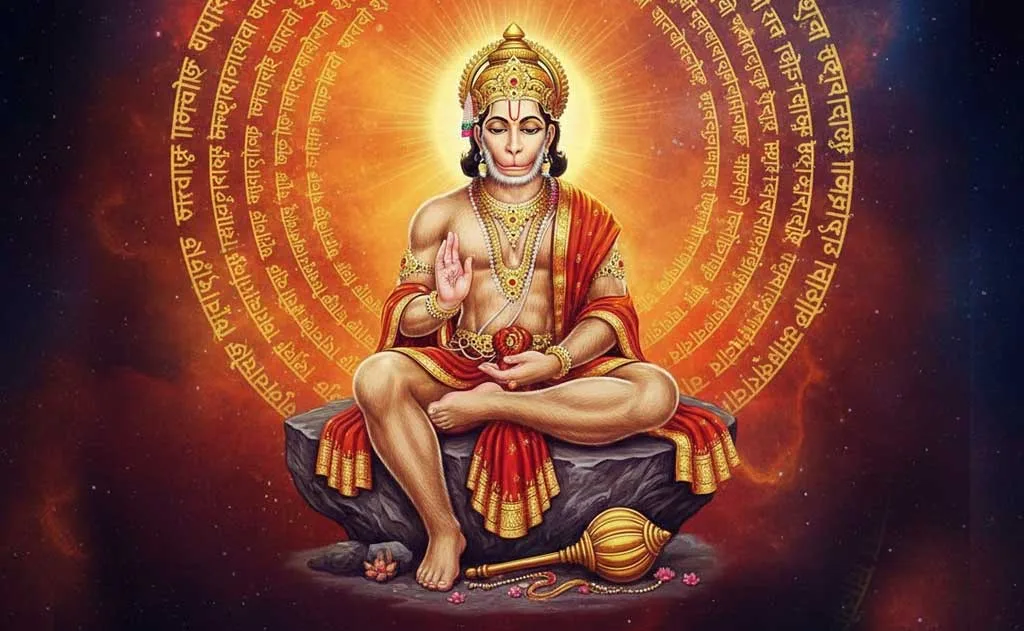
Hanuman Chalisa on Tuesday: Powerful Benefits & Correct Way to Chant
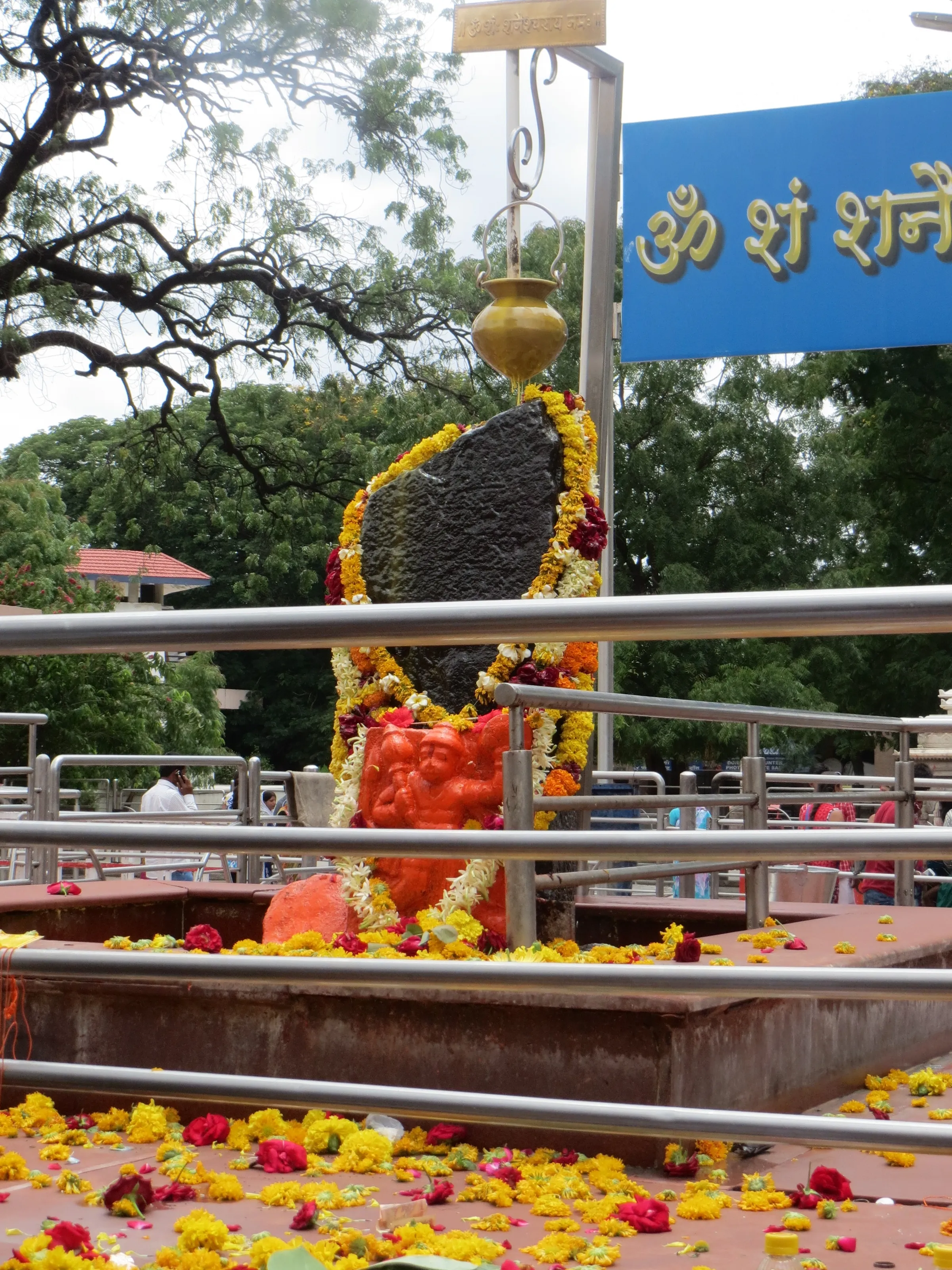
Saturday Shani Puja: Shani Dev Mantra, Hanuman Worship and Vrat Rules
Friday Lakshmi Puja: Shukravar Vrat, Lakshmi Mantra and Rituals