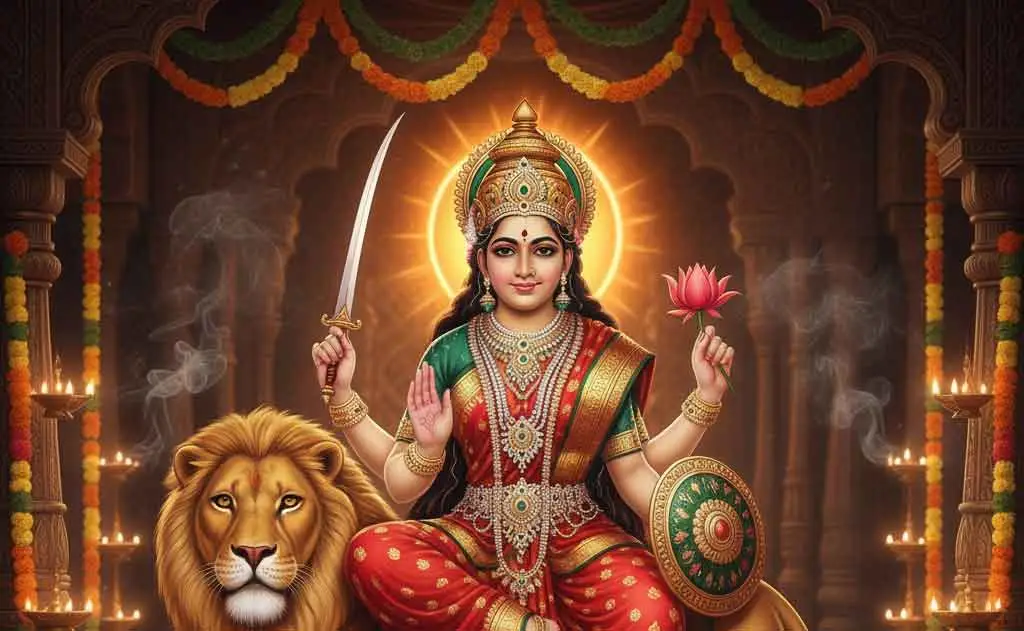
Hari Stotram (Jagajjalapalam) by Swami Brahmananda: Full Text in Sanskrit with Meaning
The Hari Stotram beginning 'jagajjalapalam calatkanthamalam' is the eight-verse hymn to Vishnu in which every verse ends 'bhaje'ham bhaje'ham', I worship, I worship. Here is the full text with its phalashruti in Devanagari and IAST from sanskritdocuments.org, which names Swami Brahmananda as the composer, with our own plain-English meaning and when it is traditionally recited.
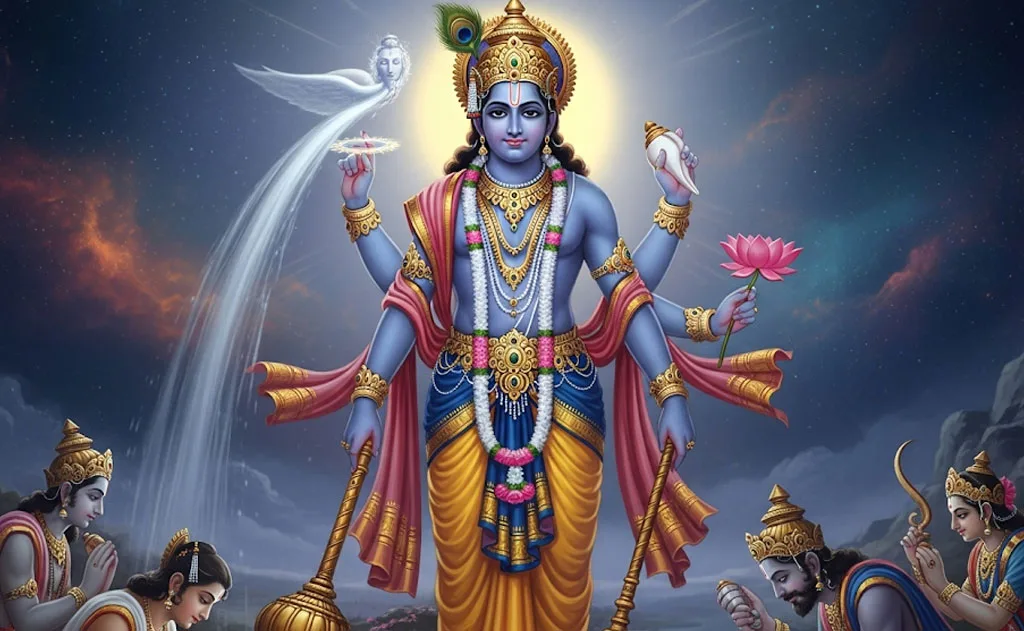
Quick answer: The Hari Stotram beginning 'jagajjālapālaṃ calatkaṇṭhamālaṃ' is a hymn of 8 verses to Vishnu (Hari) with a phalashruti. Every verse ends 'bhaje'haṃ bhaje'ham' ('I worship, I worship'). The text on sanskritdocuments.org names Swami Brahmananda as its composer. It is recited daily and especially on Thursdays, on Ekadashi and in the month of Kartik.
Last updated: 21 October 2026. The Sanskrit below is the text published by sanskritdocuments.org (file haristotra.itx, encoded and proofread by DPD), converted to Devanagari and IAST by software from the source, with no word typed by hand and no letter changed. Our own plain-English meaning follows every verse.
Hari Stotram: full text with meaning
Each verse appears in Devanagari and then in IAST transliteration, followed by its meaning. Each verse is a chain of names in the accusative ('him who...'), and the refrain answers: him I worship.
Vishnu's form and glory (verses 1 to 4)
Verse 1
जगज्जालपालं चलत्कण्ठमालं
शरच्चन्द्रभालं महादैत्यकालम् ।
नभोनीलकायं दुरावारमायं
सुपद्मासहायं भजेऽहं भजेऽहम् ॥ १॥
jagajjālapālaṃ calatkaṇṭhamālaṃ
śaraccandrabhālaṃ mahādaityakālam |
nabhonīlakāyaṃ durāvāramāyaṃ
supadmāsahāyaṃ bhaje'haṃ bhaje'ham || 1||
Meaning: The protector of the web of worlds, whose garland sways at his neck, whose forehead shines like the autumn moon, who is death to the great demons; whose body is blue as the sky, whose maya is hard to cross, the companion of the lovely Padma (Lakshmi): Him I worship, him I worship.
Verse 2
सदाम्भोधिवासं गलत्पुष्पहासं
जगत्सन्निवासं शतादित्यभासम् ।
गदाचक्रशस्त्रं लसत्पीतवस्त्रं
हसच्चारुवक्त्रं भजेऽहं भजेऽहम् ॥ २॥
sadāmbhodhivāsaṃ galatpuṣpahāsaṃ
jagatsannivāsaṃ śatādityabhāsam |
gadācakraśastraṃ lasatpītavastraṃ
hasaccāruvaktraṃ bhaje'haṃ bhaje'ham || 2||
Meaning: He who dwells for ever in the ocean, whose smile is like falling blossoms, in whom the world has its home, who shines like a hundred suns; who bears the mace and the discus as weapons, who wears a shining yellow garment, whose lovely face is smiling: Him I worship, him I worship.
Verse 3
रमाकण्ठहारं श्रुतिव्रातसारं
जलान्तर्विहारं धराभारहारम् ।
चिदानन्दरूपं मनोज्ञस्वरूपं
धृतानेकरूपं भजेऽहं भजेऽहम् ॥ ३॥
ramākaṇṭhahāraṃ śrutivrātasāraṃ
jalāntarvihāraṃ dharābhārahāram |
cidānandarūpaṃ manojñasvarūpaṃ
dhṛtānekarūpaṃ bhaje'haṃ bhaje'ham || 3||
Meaning: The necklace at the throat of Rama (Lakshmi), the essence of all the Vedas, who moves within the waters, who removes the burden of the earth; whose form is consciousness and bliss, whose nature is charming, who has taken many forms: Him I worship, him I worship.
Verse 4
जराजन्महीनं परानन्दपीनं
समाधानलीनं सदैवानवीनम् ।
जगज्जन्महेतुं सुरानीककेतुं
त्रिलोकैकसेतुं भजेऽहं भजेऽहम् ॥ ४॥
jarājanmahīnaṃ parānandapīnaṃ
samādhānalīnaṃ sadaivānavīnam |
jagajjanmahetuṃ surānīkaketuṃ
trilokaikasetuṃ bhaje'haṃ bhaje'ham || 4||
Meaning: He who is free of old age and birth, full of the highest bliss, absorbed in deep meditation (samadhi), ever ancient (the source's sandhi reads sada eva anavinam, 'never new', that is, without beginning); the cause of the world's birth, the banner of the hosts of gods, the one bridge across the three worlds: Him I worship, him I worship.
Vishnu as refuge and as the Absolute (verses 5 to 8)
Verse 5
कृताम्नायगानं खगाधीशयानं
विमुक्तेर्निदानं हरारातिमानम् ।
स्वभक्तानुकूलं जगद्वृक्षमूलं
निरस्तार्तशूलं भजेऽहं भजेऽहम् ॥ ५॥
kṛtāmnāyagānaṃ khagādhīśayānaṃ
vimukternidānaṃ harārātimānam |
svabhaktānukūlaṃ jagadvṛkṣamūlaṃ
nirastārtaśūlaṃ bhaje'haṃ bhaje'ham || 5||
Meaning: He whose praise the Vedas sing, whose mount is Garuda, lord of the birds, the very source of liberation, who takes away the pride of his enemies; who is kind to his own devotees, the root of the tree of the world, who drives away the pain of the suffering: Him I worship, him I worship.
Verse 6
समस्तामरेशं द्विरेफाभकेशं
जगद्बिम्बलेशं हृदाकाशदेशम् ।
सदा दिव्यदेहं विमुक्ताखिलेहं
सुवैकुण्ठगेहं भजेऽहं भजेऽहम् ॥ ६॥
samastāmareśaṃ dvirephābhakeśaṃ
jagadbimbaleśaṃ hṛdākāśadeśam |
sadā divyadehaṃ vimuktākhilehaṃ
suvaikuṇṭhagehaṃ bhaje'haṃ bhaje'ham || 6||
Meaning: The lord of all the gods, whose hair is dark as a swarm of bees, of whom the world is only a small reflection, whose dwelling is the space within the heart; whose body is ever divine, who is free of every craving, whose home is beautiful Vaikuntha: Him I worship, him I worship.
Verse 7
सुरालिबलिष्ठं त्रिलोकीवरिष्ठं
गुरूणां गरिष्ठं स्वरूपैकनिष्ठम् ।
सदा युद्धधीरं महावीरवीरं
महाम्भोधितीरं भजेऽहं भजेऽहम् ॥ ७॥
surālibaliṣṭhaṃ trilokīvariṣṭhaṃ
gurūṇāṃ gariṣṭhaṃ svarūpaikaniṣṭham |
sadā yuddhadhīraṃ mahāvīravīraṃ
mahāmbhodhitīraṃ bhaje'haṃ bhaje'ham || 7||
Meaning: The mightiest among the hosts of gods, the most excellent in the three worlds, the greatest of the great, established only in his own true nature; ever steady in battle, hero among great heroes, who dwells by the great ocean: Him I worship, him I worship.
Verse 8
रमावामभागं तलानग्रनागं
कृताधीनयागं गतारागरागम् ।
मुनीन्द्रैः सुगीतं सुरैः सम्परीतं
गुणौधैरतीतं भजेऽहं भजेऽहम् ॥ ८॥
ramāvāmabhāgaṃ talānagranāgaṃ
kṛtādhīnayāgaṃ gatārāgarāgam |
munīndraiḥ sugītaṃ suraiḥ samparītaṃ
guṇaudhairatītaṃ bhaje'haṃ bhaje'ham || 8||
Meaning: He who has Rama (Lakshmi) at his left side and the serpent with him (the compound 'talanagranagam' is hard to construe; it names a naga, most likely Shesha, on whom Vishnu rests), to whom every sacrifice is offered, who has gone beyond attachment and detachment; well sung by the great sages, surrounded by the gods, beyond the floods of qualities (gunas): Him I worship, him I worship.
Phalashruti (verse 9)
Verse 9 (phalashruti)
इदं यस्तु नित्यं समाधाय चित्तं
पठेदष्टकं कण्ठहारं मुरारेः ।
स विष्णोर्विशोकं ध्रुवं याति लोकं
जराजन्मशोकं पुनर्विन्दते नो ॥ ९॥
idaṃ yastu nityaṃ samādhāya cittaṃ
paṭhedaṣṭakaṃ kaṇṭhahāraṃ murāreḥ |
sa viṣṇorviśokaṃ dhruvaṃ yāti lokaṃ
jarājanmaśokaṃ punarvindate no || 9||
Meaning: Phalashruti: whoever recites this hymn of eight verses every day with a collected mind, a necklace for Murari (Vishnu), surely reaches the sorrowless world of Vishnu and does not again meet the sorrow of old age and birth.
Colophon
इति श्रीमत्परमहंसस्वामिब्रह्मानन्दविरचितं
श्रीहरिस्तोत्रं सम्पूर्णम् ॥
iti śrīmatparamahaṃsasvāmibrahmānandaviracitaṃ
śrīharistotraṃ sampūrṇam ||
Meaning: Thus ends the Sri Hari Stotram composed by the revered paramahamsa Swami Brahmananda.
What the hymn says about Vishnu
The Hari Stotram moves from Vishnu's visible form to his nature beyond form. The first verses describe the blue-bodied Lord with Lakshmi, the mace and discus, the yellow garment and the ocean home; the later verses call him consciousness and bliss, free of birth and old age, the root of the world-tree and beyond the gunas. It is a compact picture of the preserver of the Trimurti.
| Verse | Main images of Vishnu |
|---|---|
| 1 | protector of the worlds, moon-bright forehead, sky-blue body, companion of Lakshmi |
| 2 | dwelling in the ocean, bright as a hundred suns, mace and discus, yellow garment |
| 3 | Lakshmi's necklace, essence of the Vedas, lifts the earth's burden, many forms (avatars) |
| 4 | free of birth and age, bliss, cause of the world, bridge of the three worlds |
| 5 | praised by the Vedas, rides Garuda, source of liberation, root of the world-tree |
| 6 | lord of the gods, dwelling in the heart, home in Vaikuntha |
| 7 | greatest in the three worlds, steady in battle, hero of heroes |
| 8 | with Lakshmi at his left, resting on the serpent, beyond the gunas |
When to recite the Hari Stotram
- Every evening: at the lamp (sandhya deepam), after the day's puja.
- On Thursdays: Vishnu's day in many homes; see the guide to Thursday (Brihaspativar).
- On Ekadashi: Rama Ekadashi on Thursday 5 November 2026 and Devutthana (Prabodhini) Ekadashi on Friday 20 November 2026, when Vishnu is said to wake from his four-month rest (India dates; some places abroad keep these a day later).
- Through Kartik: the North Indian month of Kartik runs from Tuesday 27 October to Kartik Purnima on Tuesday 24 November 2026, and the Telugu Karthika Masam from Tuesday 10 November to Tuesday 8 December. It is the month of Kartik Snan and Deepdaan, and many devotees add the Damodarashtakam to their evening prayers.
- On Vaikuntha Chaturdashi: Monday 23 November 2026, the day of Hari-Hara worship.
How to recite it at home
- Light a ghee lamp before an image of Vishnu, Krishna or Lakshmi-Narayana and offer a tulsi leaf and a flower.
- Recite the eight verses slowly; the family can join in the refrain 'bhaje'haṃ bhaje'ham'.
- Add the phalashruti (verse 9) and close with aarti.
- On a longer day, add the 108 names of Vishnu, the Vishnu Shatpadi or the Narayana Kavacham.
- For the Vedic hymn to Narayana, see the Narayana Suktam guide; for more Kartik chants, see Karthika Masam mantras.
Pronunciation help
- The metre is bhujangaprayata: four groups of 'da-DUM-DUM' in every line, as in 'ja-GAJ-JĀ / la-PĀ-LAṂ'.
- The apostrophe in 'bhaje'haṃ' marks a dropped 'a' (bhaje ahaṃ); say it 'bhajeham'.
- A line over a vowel (ā, ī, ū) means it is held twice as long; ṃ is a nasal hum; ś and ṣ are 'sh' sounds; c is 'ch' as in 'church'.
Traditional beliefs about the Hari Stotram
The phalashruti praises the hymn as a 'necklace for Murari', worn by the devotee who recites it daily. Devotees traditionally believe that reciting it with a collected mind:
- steadies the mind for the evening puja;
- keeps Vishnu's names and qualities in daily memory, which the Bhakti tradition values above all;
- is, as the hymn says, a step towards Vishnu's 'sorrowless world'.
These are matters of faith and devotion, not guarantees of health, wealth or any worldly result.
Tips for NRI families
- Learn one verse a week. In eight weeks a child can recite the whole hymn; the rhythm makes it easy to memorise.
- Use the table above. Ask children to find the mace, the discus, Garuda and Lakshmi in a picture of Vishnu as you read each verse.
- Keep it short on weekdays. Verse 1 and the refrain, recited once at the evening lamp, is a complete daily practice.
- Pair it with a river hymn in Kartik. Many families add the Narmadashtakam for the Kartik bath.
Frequently asked questions
Who wrote the Hari Stotram 'jagajjalapalam'?
The sanskritdocuments.org text names Swami Brahmananda in its Author field, and its colophon reads 'iti shrimat-paramahamsa-svami-Brahmananda-virachitam shri-Hari-stotram sampurnam', composed by the revered paramahamsa Swami Brahmananda. The file gives no further detail about him, so we add none.
What does 'bhaje'ham bhaje'ham' mean?
'Bhaje aham' means 'I worship' (or 'I take refuge in'). It is said twice at the end of every verse, after a string of names that describe Vishnu: his form, his weapons, his home in Vaikuntha and his nature as the Absolute.
Is it 'chalat kanthamalam' or 'kachat kanthamalam'?
The source prints 'calatkanthamalam' (whose garland sways) and marks 'kacatkanthamalam' (whose garland gleams) as a variant reading. Both are heard in recitation; we print the main reading and note the variant.
When is the Hari Stotram traditionally recited?
Many families recite it daily at the evening lamp, and especially on Thursdays, on Ekadashi and through the month of Kartik. In 2026 that includes Rama Ekadashi on Thursday 5 November and Devutthana (Prabodhini) Ekadashi on Friday 20 November (India dates).
How long does it take to recite?
About three to four minutes at a steady pace. The metre is bhujangaprayata, a 'snake-gait' rhythm of short-long-long syllables, which makes it easy to learn and to sing as a family.
What does the phalashruti promise?
It says that whoever recites the hymn daily with a collected mind reaches Vishnu's sorrowless world and is not born again into old age and grief. Devotees hold this as an expression of faith in Vishnu's grace; it is a matter of devotion, not a guarantee of any result.
Editor's note (21 October 2026)
This page was published on 21 October 2026 at the address readers and search engines were already requesting. The Sanskrit is the text of Hari Stotram on sanskritdocuments.org (file haristotra.itx), whose Author field and colophon name Swami Brahmananda. In verse 1 the source prints the main reading 'calatkaṇṭhamālaṃ' and gives 'kacatkaṇṭhamālaṃ' on a separate line as a variant; we print the main reading and record the variant here. The source's caption 'phalashrutih' is shown as the label of verse 9. sanskritdocuments.org has many other hymns called Hari Stotram, from the Lakshminarayana Samhita, the Brahmavaivarta and Kalika Puranas and by Vedanta Deshika, but they are different texts, so there is no second copy of this one to compare with, and no letter is changed. The meanings are our own; where a compound is hard to construe (verse 8, 'talānagranāgaṃ'), we say so rather than guess. Festival dates are from Drik Panchang for India.
Related guides
Share this with family and friends
Send it on WhatsApp, post it, or copy the link.
You might also like
Ardhanarishvara Stotram (Champeya Gaurardha Sharirakayai) by Adi Shankaracharya: Full Text with Meaning
Shatpadi Stotram (Vishnu Shatpadi, Avinayam Apanaya Vishno) by Adi Shankaracharya: Full Text with Meaning
Ganga Stotram (Devi Sureshvari Bhagavati Gange) by Adi Shankaracharya: Full Text with Meaning