
Kartik Snan and Deepdaan 2026 (Karthika Snanam and Deepa Daanam): Dates from 27 October, Rules, Tulsi Puja and Akash Deep
North Indian (purnimanta) Kartik begins on Tuesday 27 October 2026 and ends with Kartik Purnima on Tuesday 24 November, while the Telugu, Kannada, Marathi and Gujarati (amanta) Karthika Masam runs from Tuesday 10 November to Tuesday 8 December. Here is why the two calendars differ, how to keep the Kartik snan (Karthika Snanam) and daily deepdaan (Deepa Daanam), Tulsi puja and the akash deep, key dates of the month and practical tips for Hindus in the USA, UK, Canada, Australia, the UAE, Singapore and Malaysia.
Quick answer: The North Indian (purnimanta) month of Kartik begins on Tuesday 27 October 2026 and ends with Kartik Purnima on Tuesday 24 November 2026 (Drik Panchang lists 'Kartika Begins (North)' on 27 October). The Telugu, Kannada, Marathi and Gujarati (amanta) Karthika Masam runs from Tuesday 10 November to Tuesday 8 December 2026, starting the day after Diwali. Kartik snan (Karthika Snanam) and deepdaan (Deepa Daanam) are kept every day of whichever month your family follows.
Last updated: 18 October 2026. This guide has been rewritten with Drik Panchang dates for both calendars, a clear explanation of why they differ, and practical guidance for Hindus abroad.
Kartik is loved across India as the month of lamps, early baths and Vishnu worship. North Indian families call it Kartik maas and keep the Kartik snan and a daily lamp to Tulsi and Damodara; Telugu families keep Karthika Masam with Somavaram fasts, Shiva worship and the akasha deepam. This page explains the shared practices. For the Telugu month in depth, see our Karthika Masam 2026 guide and the Karthika Masam day-by-day calendar.
Kartik month 2026 dates: two calendars, one season
| Calendar | Month begins | Month ends | Who follows it |
|---|---|---|---|
| Purnimanta (North Indian) Kartik | Tue 27 October 2026 | Tue 24 November 2026 (Kartik Purnima) | Uttar Pradesh, Bihar, Rajasthan, Madhya Pradesh, Punjab, Haryana, Delhi and most Hindi-speaking families |
| Amanta Karthika Masam | Tue 10 November 2026 | Tue 8 December 2026 (Karthika Amavasya) | Andhra Pradesh, Telangana, Karnataka, Maharashtra, Gujarat |
Source: Drik Panchang day panchang for Hyderabad and New Delhi, as compiled in HinduTone's October to December 2026 calendar. In India the Purnima tithi ends at 9:41 AM IST on Monday 26 October, and Krishna Pratipada is the tithi at sunrise on Tuesday 27 October, so Drik starts the North Indian Kartik on the 27th. Some Vaishnava and ISKCON calendars count the Damodar month from 26 October; our Damodar month 2026 guide explains that reckoning.
Amanta and purnimanta: why Kartik starts on different days
Every Hindu lunar month has a bright half (Shukla paksha, waxing moon) and a dark half (Krishna paksha, waning moon). The two calendars agree on every tithi; they only disagree on where a month begins.
- Purnimanta (full-moon ending): the month ends on Purnima. After Sharad Purnima on 25 and 26 October, the dark fortnight that follows is already called Kartik Krishna paksha. Diwali, on the new moon of 8 November, is therefore 'Kartik Amavasya' in North India.
- Amanta (new-moon ending): the month ends on Amavasya. The same dark fortnight is still Ashwayuja (Ashwin) Krishna paksha, and Diwali closes Ashwayuja. Karthika Masam begins with the bright half on 10 November.
- The overlap: from 10 to 24 November both calendars call the fortnight Kartik Shukla paksha. Dev Uthani Ekadashi, Tulsi Vivah and Kartik Purnima fall in this shared window.
- After the full moon: North India moves into Margashirsha on 25 November, while the Telugu Karthika Masam continues through the dark fortnight to Karthika Amavasya on 8 December, with Somavarams on 16, 23 and 30 November and 7 December.
So a Telugu family in Hyderabad and a Hindi-speaking family in Delhi light the same Kartik Purnima lamps on 24 November, even though one is in the middle of its month and the other is at the end. Our North and South India Karthika guide compares the regional customs, and the Kartika month in Odisha guide covers Habisha and Panchuka.
Key dates in Kartik 2026
| Date | Observance (Drik Panchang, India) |
|---|---|
| Tue 27 Oct | Kartik begins (North, purnimanta) |
| Thu 29 Oct | Karwa Chauth |
| Sun 1 Nov | Ahoi Ashtami, Radha Kunda Snan |
| Thu 5 Nov | Rama Ekadashi, Govatsa Dwadashi |
| Fri 6 Nov | Dhanteras, Yama Deepam |
| Sun 8 Nov | Diwali, Lakshmi Puja, Narak Chaturdashi |
| Tue 10 Nov | Govardhan Puja; amanta Karthika Masam begins |
| Wed 11 Nov | Bhai Dooj |
| Fri 13 Nov | Nagula Chavithi |
| Sun 15 Nov | Chhath Puja, Skanda Sashti |
| Wed 18 Nov | Akshaya Navami |
| Fri 20 Nov | Devutthana (Dev Uthani) Ekadashi; Bhishma Panchak begins |
| Sat 21 Nov | Tulasi Vivah, Vaishnava Devutthana Ekadashi |
| Mon 23 Nov | Vaikuntha Chaturdashi, Manikarnika Snan |
| Tue 24 Nov | Kartik Purnima, Dev Diwali, Karthigai Deepam, Pushkara Snana; Bhishma Panchak ends |
| Tue 8 Dec | Karthika Amavasya; amanta Karthika Masam ends |
For the observances themselves see our guides to Dev Uthani Ekadashi 2026, Tulsi Vivah 2026, Bhishma Panchak 2026, Tripurari Purnima and Dev Diwali and the Diwali 2026 five-day guide.
Kartik snan (Karthika Snanam): how to keep it
Kartik snan is the practice of rising early and bathing before sunrise every day of the month, followed by prayer. In North India many families take the vow on Sharad Purnima or on the first day of Kartik and complete it on Kartik Purnima, when crowds gather for a holy dip at Pushkar, Garhmukteshwar, Haridwar, Varanasi and other tirthas. In Andhra Pradesh and Telangana, Karthika Snanam runs through the amanta month, with river and temple-tank baths especially on Somavarams and Karthika Pournami.
- Wake in the early morning, ideally in the period before sunrise that many families call Brahma muhurta.
- Bathe at a river, lake or temple tank only where it is clean, permitted and safe; otherwise bathe at home. Some families add a few drops of Ganga jal or a Tulsi leaf to the water.
- Take a short sankalp: your name, the month and your intention to keep the Kartik vow for the family's wellbeing.
- After the bath, offer water to the rising sun, water the Tulsi plant and light a lamp at the home shrine.
- Chant a short mantra or read a chapter of a scripture your family follows, such as the Bhagavad Gita or the Vishnu Sahasranama.
Common observances during the month, which vary by family and region: sattvic vegetarian food, and many avoid onion, garlic, alcohol and meat; some take one meal a day; some sleep on the floor or keep extra charity and silence. None of these is compulsory. Our Karthika Masam rules, food and dos and don'ts page lists the regional customs in detail.
Health note: cold baths before dawn are not safe for everyone. Elderly people, children, pregnant women and anyone with heart, blood-pressure or respiratory conditions should use warm water and skip river bathing in cold weather. Do not swim in unfamiliar rivers or lakes, especially in winter abroad.
Deepdaan (Deepa Daanam): the daily lamp offering
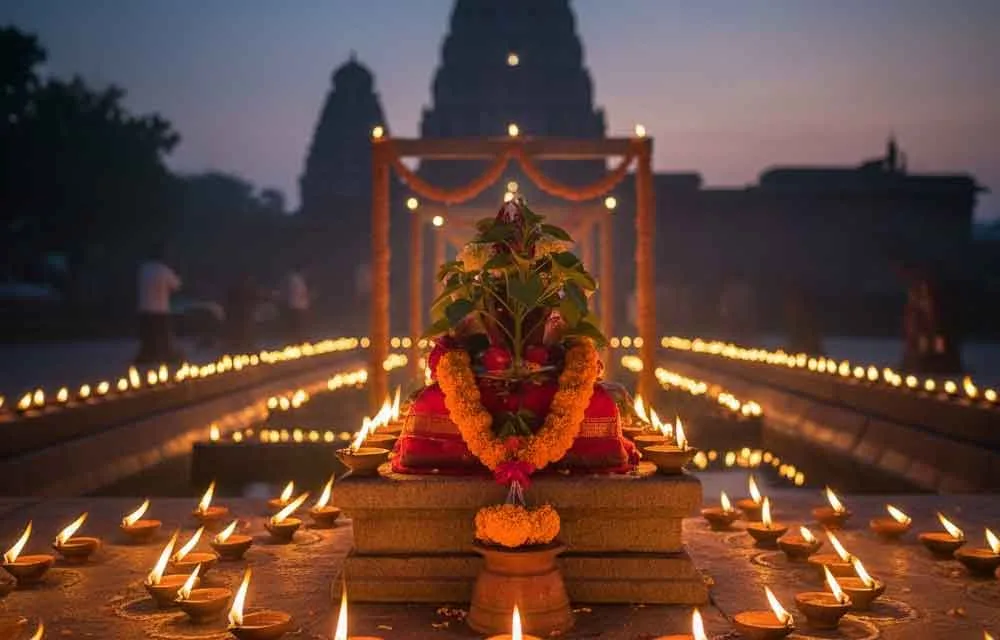
Deepdaan, the gift of a lamp, is the signature of Kartik. Traditional accounts praise even a single lamp offered with devotion in this month. Families light a ghee or sesame-oil diya each evening:
- At the home shrine, to Vishnu or Krishna as Damodara, or to Shiva in families that follow Karthika Masam.
- Beside the Tulsi plant, often with a short circumambulation.
- At the main door or on the balcony, to welcome light into the home.
- At temples, where many families offer lamps on Ekadashis, Somavarams and Kartik Purnima.
- On water on Kartik Purnima, where local rules allow it, as at the Varanasi ghats on Dev Diwali.
Lamp offerings also mark Yama Deepam on Dhanteras evening (6 November), when a south-facing lamp is lit for Yama; see our Yama Deepam 2026 guide. Gaudiya Vaishnavas offer the lamp to Damodara while singing the Damodarashtakam; our Damodar month guide gives its first verse and meaning.
Tulsi puja through Kartik
Tulsi (holy basil) is worshipped daily in Kartik because the month leads up to Tulsi Vivah, her ceremonial marriage to Vishnu as Shaligram or Krishna, on Saturday 21 November 2026 (Drik). A simple daily routine:
- Morning: offer water at the base of the plant after your bath.
- Evening: light a small lamp near it, offer kumkum or turmeric and a flower, and walk around it if space allows.
- Many families do not pluck Tulsi leaves on Ekadashi or after sunset; follow your family's custom.
- Abroad, keep Tulsi indoors near a sunny window once nights turn cold; Tulsi is sensitive to frost.
Our Tulasi pooja in Karthika Masam guide has the full daily vidhi and plant care, and the Tulsi Vivah 2026 guide explains the wedding ceremony.
Akash deep: the lamp in the sky
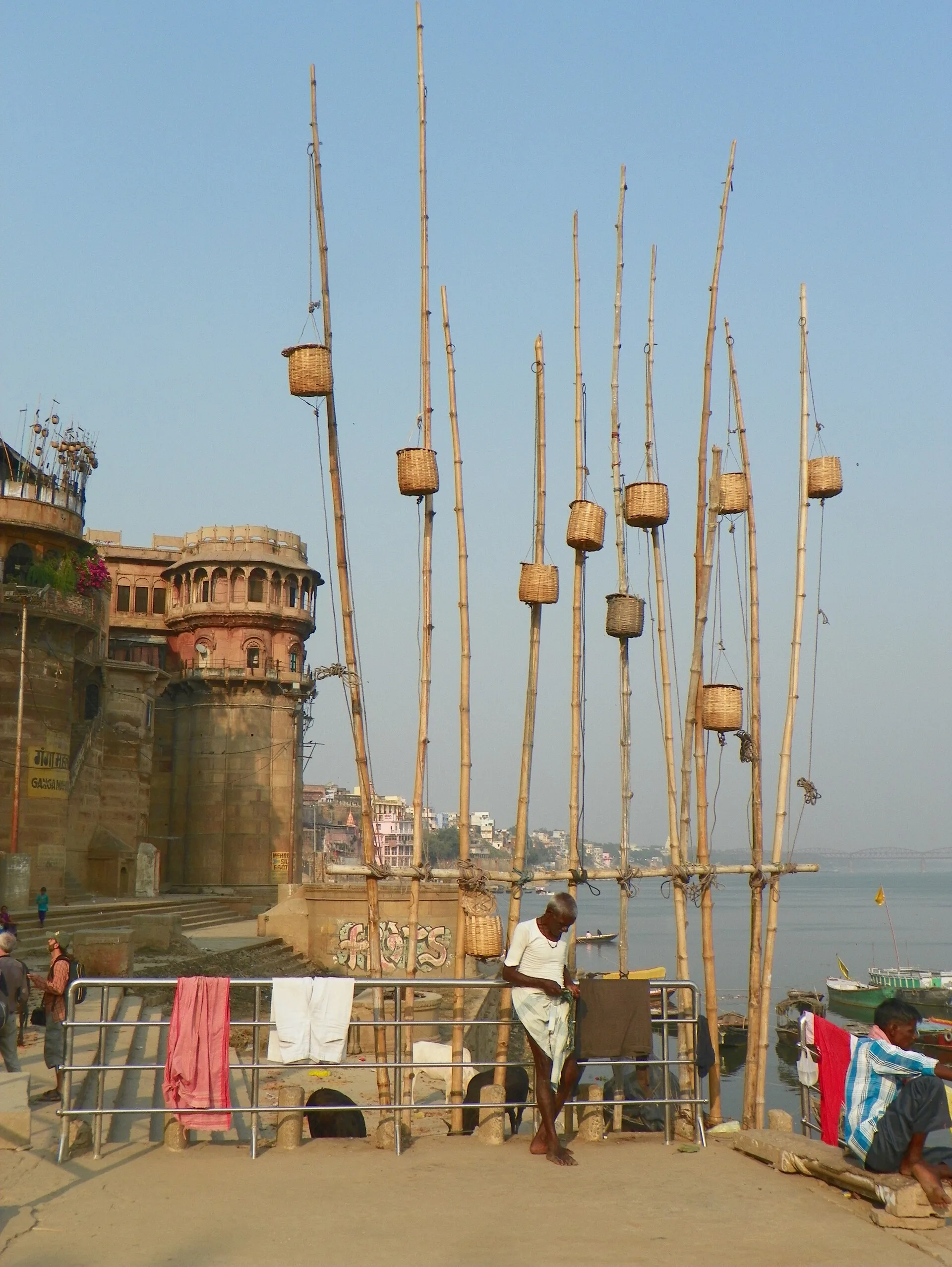
The akash deep (akasha deepam) is a lamp raised high, in a lantern on a tall pole or at the top of the house, and lit every evening of the month. As traditionally described it is offered to Vishnu as Damodara, and many families also see it as a light for departed ancestors. In Andhra Pradesh and Telangana it is a familiar sight in temples through Karthika Masam. Our Akasha Deepam guide explains how to hoist it and what to keep in mind.
Mantras for Kartik
Kartik worship centres on Vishnu, and in the Telugu tradition equally on Shiva. Two short, well-known mantras suit the daily bath and lamp:
For Vishnu (Narayana):
ॐ नमो नारायणाय॥
oṃ namo nārāyaṇāya||
For Shiva:
ॐ नमः शिवाय॥
oṃ namaḥ śivāya||
Chanting is an act of devotion and gratitude; it does not promise any particular result.
Hindus abroad: Kartik 2026 in the USA, UK, Canada, Australia, the UAE, Singapore and Malaysia
Because a tithi changes at one moment worldwide, the first day of Kartik can fall on a different local date abroad. The table shows the tithi at local sunrise from HinduTone's panchang calculator, validated against Drik Panchang. Follow your temple's calendar if it differs.
| Country (reference city) | Purnimanta Kartik begins | Amanta Karthika Masam begins | Kartik Purnima |
|---|---|---|---|
| USA (New York) | Mon 26 Oct | Mon 9 Nov | Tue 24 Nov |
| Canada (Toronto) | Mon 26 Oct | Mon 9 Nov | Tue 24 Nov |
| UK (London) | Mon 26 Oct | Mon 9 Nov | Tue 24 Nov |
| India | Tue 27 Oct | Tue 10 Nov | Tue 24 Nov |
| UAE (Dubai) | Tue 27 Oct | Tue 10 Nov | Tue 24 Nov |
| Australia (Sydney) | Tue 27 Oct | Tue 10 Nov | Tue 24 Nov |
| Singapore | Tue 27 Oct | Tue 10 Nov | Tue 24 Nov |
| Malaysia (Kuala Lumpur) | Tue 27 Oct | Tue 10 Nov | Tue 24 Nov |
In North America and the UK, the Ashwina Purnima tithi ends in the small hours of Monday 26 October local time, so Krishna Pratipada is already running at Monday's sunrise. Never convert India's times to your clock; use your city's panchang. Country guides: USA, UK, Canada, Australia, UAE and Singapore.
- Smoke alarms: a daily diya can trigger detectors. Keep lamps away from alarms and curtains, never leave a flame unattended, and never disable an alarm.
- Renters and apartments: many leases and building rules restrict open flames. A sealed glass diya or an LED lamp keeps the practice without the risk.
- Akash deep: hang a covered lantern or LED light at the highest safe point of a balcony or porch, and check strata, HOA or council rules.
- Rivers and lakes: floating lamps in public waters usually needs permission; many temples hold group deepdaan instead.
- Early mornings: a pre-sunrise bath before a commute is the realistic Kartik snan for most working families; a short prayer is enough.
Kartik Purnima: the month's finale
Kartik Purnima on Tuesday 24 November 2026 closes the North Indian month and is the high point of the Telugu Karthika Masam. In India the Purnima tithi runs from 11:42 PM IST on Monday 23 November to 8:23 PM IST on Tuesday 24 November (Drik). It is Dev Diwali in Varanasi, the day of the Pushkar and Sonepur fairs, and Karthika Pournami in Telugu homes. See our Kartik Purnima melas 2026 guide, the Pushkar Kartik Purnima snan guide and the Karthika Pournami 2026 guide.
Also read: Damodarashtakam: full text with meaning and Tulasi Stotram with meaning.
Also read: Narmadashtakam with meaning and Hari Stotram with meaning.
Frequently asked questions
When does Kartik month start in 2026?
In the North Indian purnimanta calendar, Kartik begins on Tuesday 27 October 2026, the day after Ashwina Purnima, and ends with Kartik Purnima on Tuesday 24 November (Drik Panchang). In the Telugu, Kannada, Marathi and Gujarati amanta calendar, Karthika Masam begins on Tuesday 10 November, the day after the Diwali new moon, and ends on Tuesday 8 December.
Why do North Indian and Telugu calendars give different Kartik dates?
Both use the same lunar fortnights but name the months differently. The purnimanta calendar ends a month on the full moon, so Kartik starts after Sharad Purnima. The amanta calendar ends a month on the new moon, so Karthika starts after Diwali. The bright half from 10 to 24 November is Kartik Shukla in both.
Can I take the Kartik snan at home?
Yes. Most families abroad, and many in Indian cities, take the early-morning bath at home with a short sankalp, a prayer, and sometimes a few drops of Ganga jal in the water. A river or temple tank is traditional where one is close and safe, but it is not required.
Do I have to bathe in cold water before sunrise?
No. Rising early and bathing before the morning prayer is the core of the custom. In a cold climate, or if you are elderly, unwell or pregnant, use comfortably warm water. Devotion does not depend on cold water.
What is deepdaan in Kartik?
Deepdaan means offering a lamp. Through Kartik, devotees light a ghee or sesame-oil lamp each evening at the home shrine, near the Tulsi plant, at the door and at temples, and many offer lamps on water on Kartik Purnima. In the Vaishnava tradition the lamp is offered to Krishna as Damodara.
When does Kartik begin in the USA, UK and Canada?
By tithi at local sunrise, Kartik Krishna Pratipada falls on Monday 26 October 2026 in New York, Toronto and London, a day before India, and on Tuesday 27 October in Sydney, Dubai, Singapore and Kuala Lumpur. These are HinduTone calculator values validated against Drik Panchang; follow your temple's calendar.
Which days of Kartik are most important?
Rama Ekadashi (5 Nov), Diwali (8 Nov), Dev Uthani Ekadashi (20 Nov), Tulsi Vivah (21 Nov), the five days of Bhishma Panchak (20 to 24 Nov) and Kartik Purnima (24 Nov) in North India; in the amanta calendar, the Somavarams and Karthika Pournami are central.
Editor's note (18 October 2026)
This post was upgraded in place on 18 October 2026. It replaces a short earlier version with Drik Panchang dates for both the purnimanta and amanta Kartik months, an explanation of the two calendars and dates abroad from HinduTone's panchang calculator, validated against Drik Panchang. Regional and family customs vary; follow your family tradition, priest or temple.
Related guides
Share this with family and friends
Send it on WhatsApp, post it, or copy the link.
More from Festivals
- Vasant Panchami 2027 (Saraswati Puja, Basant Panchami, Sri Panchami): Date, Panchami Tithi, Puja Muhurat by City, Vidhi and Story
- Holi 2027: Date, Holika Dahan Muhurat City-Wise, Bhadra Timings, Puja Vidhi and Holi Abroad
- Makar Sankranti 2027: Date, Punya Kaal Timings City-Wise, Bhogi, Pongal, Kanuma, Lohri and Uttarayan
- Dev Deepawali 2026 Varanasi: Date, Purnima Time, Ganga Aarti, Story, Puja Vidhi and Deep Daan
- Kartik Purnima 2026: Date, Purnima Time, Snan, Deep Daan, Puja Vidhi and Significance
You might also like
Karthika Somavaram 2026 Dates in India: The Four Mondays (16, 23, 30 November, 7 December), Vratam Vidhanam, Katha and Timings
Akasha Deepam (Akash Deep) in Karthika Masam 2026: Meaning, Daily Practice, How to Hoist the Sky Lamp, Dates and Safety
Karthika Masam 2026 Deepam Timings City-Wise: Sunset Lamp and Sunrise Snanam Times for 13 Indian Cities