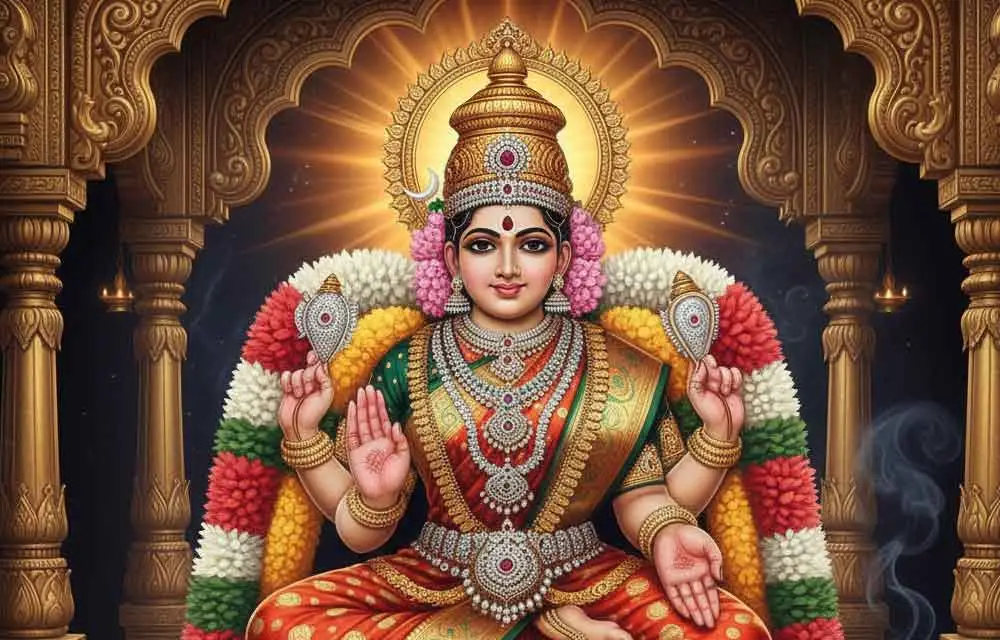
Narayana Kavacham (Srimad Bhagavatam 6.8): Full Text with Meaning
The Narayana Kavacham, the 'armour of Narayana', is taught by Vishvarupa to Indra in Srimad Bhagavatam 6.8. Here are all 42 verses in Devanagari and IAST from sanskritdocuments.org, with the nyasa, our own verse-by-verse meaning, when it is traditionally recited and how to recite it at home.
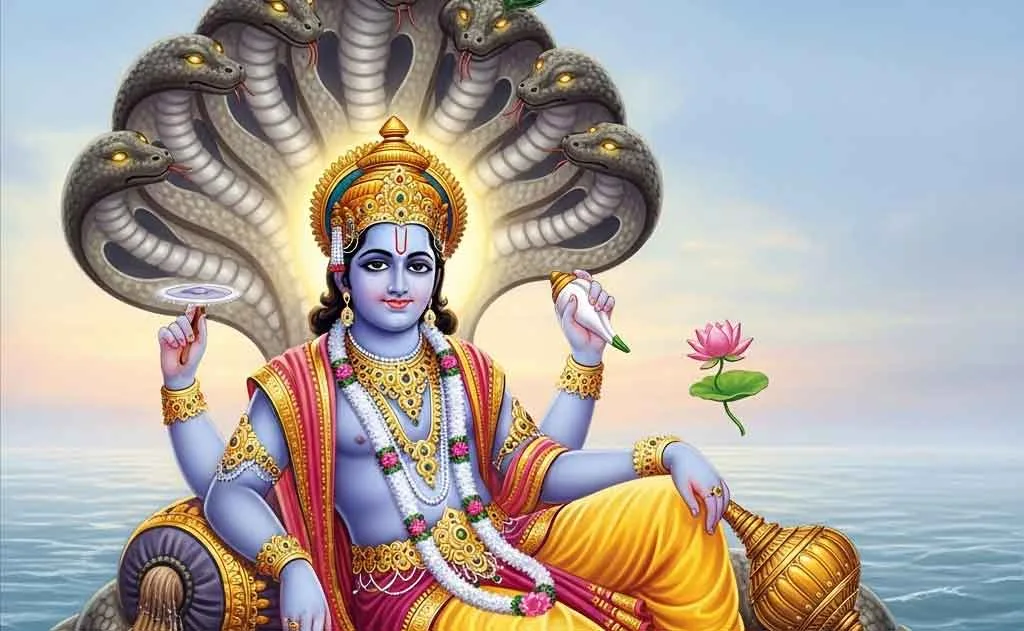
The Narayana Kavacham, the 'armour of Narayana', is taught by Vishvarupa to Indra in Srimad Bhagavatam 6.
Quick answer: The Narayana Kavacham (Narayana Varma, 'the armour of Narayana') is a Sanskrit prayer of 42 verses from the Srimad Bhagavatam, Book 6, Chapter 8. Vishvarupa, the priest of the gods, teaches it to Indra before his battle with the demons, and the sage Shuka tells the story to King Parikshit. Its heart (verses 12 to 34) calls on Narayana, his avatars, his names for each hour of the day and his weapons to guard the devotee on every side. It is traditionally recited on Thursdays, on Ekadashi and in times of fear.
Last updated: 20 October 2026. The Sanskrit below is the complete text published by sanskritdocuments.org (file narayana-kavacha.itx), converted to Devanagari and IAST by software from the source, with no word typed by hand; two letters are corrected as explained in the editor's note. Our own plain-English meaning follows every verse.
Narayana Kavacham: full text with meaning
The source prints a nyasa first; it is not part of the Bhagavatam but is widely used before the recitation. Verses 1 to 11 set the scene and describe how to put on the armour; verses 12 to 34 are the armour itself; verses 35 to 42 tell of its merit. Each verse appears in Devanagari and then in IAST transliteration, followed by its meaning.
Nyasa (from a kavacha collection, printed by the source before the text)
ॐ श्रीगणेशाय नमः ।
ॐ नमो नारायणाय ।
अङ्गन्यासः
ॐ ॐ नमः पादयोः ।
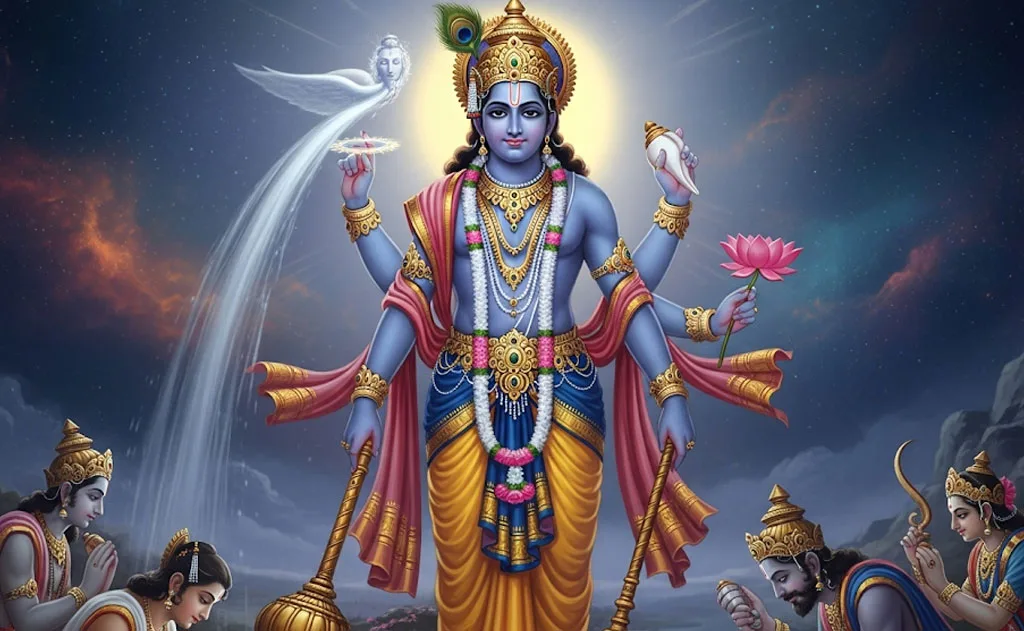
ॐ नं नमः जानुनोः ।
ॐ मों नमः ऊर्वोः ।
ॐ नां नमः उदरे ।
ॐ रां नमः हृदि ।
ॐ यं नमः उरसि ।
ॐ णां नमः मुखे ।
ॐ यं नमः शिरसि ॥
करन्यासः
ॐ ॐ नमः दक्षिणतर्जन्याम् ।
ॐ नं नमः दक्षिणमध्यमायाम् ।
ॐ मों नमः दक्षिणानामिकायाम् ।
ॐ भं नमः दक्षिणकनिष्ठिकायाम् ।
ॐ गं नमः वामकनिष्ठिकायाम् ।
ॐ वं नमः वामानामिकायाम् ।
ॐ तें नमः वाममध्यमायाम् ।
ॐ वां नमः वामतर्जन्याम् ।
ॐ सुं नमः दक्षिणांगुष्ठोर्ध्वपर्वणि ।
ॐ दें नमः दक्षिणांगुष्ठाय पर्वणि ।
ॐ वां नमः वामांगुष्ठोर्ध्वपर्वणि ।
ॐ यं नमः वामांगुष्ठाय पर्वणि ॥
विष्णुषडक्षरन्यासः
ॐ ॐ नमः हृदये ।
ॐ विं नमः मूर्धनि ।
ॐ षं नमः भ्रुवोर्मध्ये ।
ॐ णं नमः शिखायाम् ।
ॐ वें नमः नेत्रयोः ।
ॐ नं नमः सर्वसन्धिषु ।
ॐ मः अस्त्राय फट् प्राच्याम् ।
ॐ मः अस्त्राय फट् आग्नेयाम् ।
ॐ मः अस्त्राय फट् दक्षिणस्याम् ।
ॐ मः अस्त्राय फट् नैरृत्ये ।
ॐ मः अस्त्राय फट् प्रतीच्याम् ।
ॐ मः अस्त्राय फट् वायव्ये ।
ॐ मः अस्त्राय फट् उदीच्याम् ।
ॐ मः अस्त्राय फट् ऐशान्याम् ।
ॐ मः अस्त्राय फट् ऊर्ध्वायाम् ।
ॐ मः अस्त्राय फट् अधरायाम् ॥
oṃ śrīgaṇeśāya namaḥ |
oṃ namo nārāyaṇāya |
aṅganyāsaḥ
oṃ oṃ namaḥ pādayoḥ |
oṃ naṃ namaḥ jānunoḥ |
oṃ moṃ namaḥ ūrvoḥ |
oṃ nāṃ namaḥ udare |
oṃ rāṃ namaḥ hṛdi |
oṃ yaṃ namaḥ urasi |
oṃ ṇāṃ namaḥ mukhe |
oṃ yaṃ namaḥ śirasi ||
karanyāsaḥ
oṃ oṃ namaḥ dakṣiṇatarjanyām |
oṃ naṃ namaḥ dakṣiṇamadhyamāyām |
oṃ moṃ namaḥ dakṣiṇānāmikāyām |
oṃ bhaṃ namaḥ dakṣiṇakaniṣṭhikāyām |
oṃ gaṃ namaḥ vāmakaniṣṭhikāyām |
oṃ vaṃ namaḥ vāmānāmikāyām |
oṃ teṃ namaḥ vāmamadhyamāyām |
oṃ vāṃ namaḥ vāmatarjanyām |
oṃ suṃ namaḥ dakṣiṇāṃguṣṭhordhvaparvaṇi |
oṃ deṃ namaḥ dakṣiṇāṃguṣṭhāya parvaṇi |
oṃ vāṃ namaḥ vāmāṃguṣṭhordhvaparvaṇi |
oṃ yaṃ namaḥ vāmāṃguṣṭhāya parvaṇi ||
viṣṇuṣaḍakṣaranyāsaḥ
oṃ oṃ namaḥ hṛdaye |
oṃ viṃ namaḥ mūrdhani |
oṃ ṣaṃ namaḥ bhruvormadhye |
oṃ ṇaṃ namaḥ śikhāyām |
oṃ veṃ namaḥ netrayoḥ |
oṃ naṃ namaḥ sarvasandhiṣu |
oṃ maḥ astrāya phaṭ prācyām |
oṃ maḥ astrāya phaṭ āgneyām |
oṃ maḥ astrāya phaṭ dakṣiṇasyām |
oṃ maḥ astrāya phaṭ nairṛtye |
oṃ maḥ astrāya phaṭ pratīcyām |
oṃ maḥ astrāya phaṭ vāyavye |
oṃ maḥ astrāya phaṭ udīcyām |
oṃ maḥ astrāya phaṭ aiśānyām |
oṃ maḥ astrāya phaṭ ūrdhvāyām |
oṃ maḥ astrāya phaṭ adharāyām ||
Meaning: Om, salutations to Shri Ganesha. Om, salutations to Narayana. Anganyasa: the eight syllables of 'om namo narayanaya' are placed in turn on the feet, knees, thighs, belly, heart, chest, mouth and head. Karanyasa: the twelve syllables of 'om namo bhagavate vasudevaya' are placed on the fingers and on the joints of the thumbs. The Vishnu six-syllable nyasa: the syllables of 'om vishnave namah' are placed on the heart, head, the point between the brows, the crown tuft, the eyes and all the joints, and 'om mah astraya phat' is directed to the ten directions as a protective weapon.
Parikshit's question and Shuka's reply (verses 1 to 3)
Verse 1
राजोवाच ।
यया गुप्तः सहस्राक्षः सवाहान्रिपुसैनिकान् ।
क्रीडन्निव विनिर्जित्य त्रिलोक्या बुभुजे श्रियम् ॥ १॥
rājovāca |
yayā guptaḥ sahasrākṣaḥ savāhānripusainikān |
krīḍanniva vinirjitya trilokyā bubhuje śriyam || 1||
Meaning: King Parikshit said: Protected by that armour, the thousand-eyed Indra conquered the soldiers of his enemies with their mounts as if in play, and enjoyed the splendour of the three worlds.
Verse 2
भगवंस्तन्ममाख्याहि वर्म नारायणात्मकम् ।
यथाऽऽततायिनः शत्रून् येन गुप्तोऽजयन्मृधे ॥ २॥
bhagavaṃstanmamākhyāhi varma nārāyaṇātmakam |
yathā''tatāyinaḥ śatrūn yena gupto'jayanmṛdhe || 2||
Meaning: O lord, tell me that armour made of Narayana, protected by which he defeated in battle the enemies who had risen to kill him.
Verse 3
श्रीशुक उवाच ।
वृतः पुरोहितस्त्वाष्ट्रो महेन्द्रायानुपृच्छते ।
नारायणाख्यं वर्माह तदिहैकमनाः शृणु ॥ ३॥
śrīśuka uvāca |
vṛtaḥ purohitastvāṣṭro mahendrāyānupṛcchate |
nārāyaṇākhyaṃ varmāha tadihaikamanāḥ śṛṇu || 3||
Meaning: Shuka said: Vishvarupa, the son of Tvashta, whom the gods had chosen as their priest, told the great Indra, when he asked, the armour called Narayana. Listen to it with an undivided mind.
Preparing to put on the armour: the nyasa (verses 4 to 11)
Verse 4
विश्वरूप उवाच ।
धौताङ्घ्रिपाणिराचम्य सपवित्र उदङ्मुखः ।
कृतस्वाङ्गकरन्यासो मन्त्राभ्यां वाग्यतः शुचिः ॥ ४॥
viśvarūpa uvāca |
dhautāṅghripāṇirācamya sapavitra udaṅmukhaḥ |
kṛtasvāṅgakaranyāso mantrābhyāṃ vāgyataḥ śuciḥ || 4||
Meaning: Vishvarupa said: Having washed the hands and feet and sipped water, wearing a ring of kusha grass and facing north, having placed the mantras on the limbs and hands, silent and pure,
Verse 5
नारायणमयं वर्म सन्नह्येद्भय आगते ।
पादयोर्जानुनोरूर्वोरुदरे हृद्यथोरसि ॥ ५॥
nārāyaṇamayaṃ varma sannahyedbhaya āgate |
pādayorjānunorūrvorudare hṛdyathorasi || 5||
Meaning: one should put on the armour made of Narayana when fear arises, placing the syllables on the feet, the knees, the thighs, the belly, the heart and the chest,
Verse 6
मुखे शिरस्यानुपूर्व्यादोङ्कारादीनि विन्यसेत् ।
ॐ नमो नारायणायेति विपर्ययमथापि वा ॥ ६॥
mukhe śirasyānupūrvyādoṅkārādīni vinyaset |
oṃ namo nārāyaṇāyeti viparyayamathāpi vā || 6||
Meaning: then on the mouth and the head, in order, the syllables of 'om namo narayanaya' beginning with Om, or else in the reverse order.
Verse 7
करन्यासं ततः कुर्याद्द्वादशाक्षरविद्यया ।
प्रणवादियकारान्तमङ्गुल्यङ्गुष्ठपर्वसु ॥ ७॥
karanyāsaṃ tataḥ kuryāddvādaśākṣaravidyayā |
praṇavādiyakārāntamaṅgulyaṅguṣṭhaparvasu || 7||
Meaning: Then one should do the karanyasa with the twelve-syllable mantra, from the pranava (Om) to the syllable ya, on the fingers and the joints of the thumbs.
Verse 8
न्यसेद्धृदय ओङ्कारं विकारमनु मूर्धनि ।
षकारं तु भ्रुवोर्मध्ये णकारं शिखया दिशेत् ॥ ८॥
nyaseddhṛdaya oṅkāraṃ vikāramanu mūrdhani |
ṣakāraṃ tu bhruvormadhye ṇakāraṃ śikhayā diśet || 8||
Meaning: One should place Om on the heart, the syllable vi on the head, sha between the brows and na on the crown tuft,
Verse 9
वेकारं नेत्रयोर्युञ्ज्यान्नकारं सर्वसन्धिषु ।
मकारमस्त्रमुद्दिश्य मन्त्रमूर्तिर्भवेद्बुधः ॥ ९॥
vekāraṃ netrayoryuñjyānnakāraṃ sarvasandhiṣu |
makāramastramuddiśya mantramūrtirbhavedbudhaḥ || 9||
Meaning: ve on the eyes and na on all the joints; taking the syllable ma as a weapon, the wise one becomes the very form of the mantra.
Verse 10
सविसर्गं फडन्तं तत् सर्वदिक्षु विनिर्दिशेत् ।
ॐ विष्णवे नम इति ॥ १०॥
savisargaṃ phaḍantaṃ tat sarvadikṣu vinirdiśet |
oṃ viṣṇave nama iti || 10||
Meaning: With the visarga added and 'phat' at the end, one should direct it to all the directions: 'Om, salutations to Vishnu'.
Verse 11
आत्मानं परमं ध्यायेद्ध्येयं षट्शक्तिभिर्युतम् ।
विद्यातेजस्तपोमूर्तिमिमं मन्त्रमुदाहरेत् ॥ ११॥
ātmānaṃ paramaṃ dhyāyeddhyeyaṃ ṣaṭśaktibhiryutam |
vidyātejastapomūrtimimaṃ mantramudāharet || 11||
Meaning: One should meditate on the Supreme Self, worthy of meditation, endowed with the six powers, the embodiment of knowledge, radiance and austerity, and then recite this mantra:
Narayana and his avatars as protection (verses 12 to 19)
Verse 12
ॐ हरिर्विदध्यान्मम सर्वरक्षां
न्यस्ताङ्घ्रिपद्मः पतगेन्द्रपृष्ठे ।
दरारिचर्मासिगदेषुचाप
पाशान्दधानोऽष्टगुणोऽष्टबाहुः ॥ १२॥
oṃ harirvidadhyānmama sarvarakṣāṃ
nyastāṅghripadmaḥ patagendrapṛṣṭhe |
darāricarmāsigadeṣucāpa
pāśāndadhāno'ṣṭaguṇo'ṣṭabāhuḥ || 12||
Meaning: Om. May Hari give me protection in every way: he whose lotus feet rest on the back of Garuda, king of birds, the eight-armed one with the eight powers, who holds the conch, discus, shield, sword, mace, arrows, bow and noose.
Verse 13
जलेषु मां रक्षतु मत्स्यमूर्ति
र्यादोगणेभ्यो वरुणस्य पाशात् ।
स्थलेषु मायावटुवामनोऽव्यात्
त्रिविक्रमः खेऽवतु विश्वरूपः ॥ १३॥
jaleṣu māṃ rakṣatu matsyamūrti
ryādogaṇebhyo varuṇasya pāśāt |
sthaleṣu māyāvaṭuvāmano'vyāt
trivikramaḥ khe'vatu viśvarūpaḥ || 13||
Meaning: In the waters may the Fish form protect me from the creatures of the sea and from the noose of Varuna; on land may Vamana, the young student born of his maya, protect me; in the sky may Trivikrama, whose form is the universe, protect me.
Verse 14
दुर्गेष्वटव्याजिमुखादिषु प्रभुः
पायान्नृसिंहोऽसुरयूथपारिः ।
विमुञ्चतो यस्य महाट्टहासं
दिशो विनेदुर्न्यपतंश्च गर्भाः ॥ १४॥
durgeṣvaṭavyājimukhādiṣu prabhuḥ
pāyānnṛsiṃho'surayūthapāriḥ |
vimuñcato yasya mahāṭṭahāsaṃ
diśo vinedurnyapataṃśca garbhāḥ || 14||
Meaning: In fortresses, forests, battlefields and such places may the Lord Narasimha protect me, the enemy of the demon chiefs, at whose great roar the directions resounded and the unborn children of the demons fell.
Verse 15
रक्षत्वसौ माध्वनि यज्ञकल्पः
स्वदंष्ट्रयोन्नीतधरो वराहः ।
रामोऽद्रिकूटेष्वथ विप्रवासे
सलक्ष्मणोऽव्याद्भरताग्रजोऽस्मान् ॥ १५॥
rakṣatvasau mādhvani yajñakalpaḥ
svadaṃṣṭrayonnītadharo varāhaḥ |
rāmo'drikūṭeṣvatha vipravāse
salakṣmaṇo'vyādbharatāgrajo'smān || 15||
Meaning: On the road may Varaha protect me, the embodiment of sacrifice, who lifted the earth on his tusk; on mountain peaks and when far from home may Rama, the elder brother of Bharata, with Lakshmana, protect us.
Verse 16
मामुग्रधर्मादखिलात्प्रमादा
न्नारायणः पातु नरश्च हासात् ।
दत्तस्त्वयोगादथ योगनाथः
पायाद्गुणेशः कपिलः कर्मबन्धात् ॥ १६॥
māmugradharmādakhilātpramādā
nnārāyaṇaḥ pātu naraśca hāsāt |
dattastvayogādatha yoganāthaḥ
pāyādguṇeśaḥ kapilaḥ karmabandhāt || 16||
Meaning: May Narayana protect me from harsh and wrongful practice and from every carelessness, and Nara from pride; may Dattatreya, lord of yoga, protect me from failure in yoga, and Kapila, master of the qualities, from the bondage of action.
Verse 17
सनत्कुमारोऽवतु कामदेवा
द्धयशीर्षा मां पथि देवहेलनात् ।
देवर्षिवर्यः पुरुषार्चनान्तरात्
कूर्मो हरिर्मां निरयादशेषात् ॥ १७॥
sanatkumāro'vatu kāmadevā
ddhayaśīrṣā māṃ pathi devahelanāt |
devarṣivaryaḥ puruṣārcanāntarāt
kūrmo harirmāṃ nirayādaśeṣāt || 17||
Meaning: May Sanatkumara protect me from desire, Hayagriva on the road from offences against the gods, Narada, best of the divine sages, from lapses in worship, and Kurma, Hari as the tortoise, from every hell.
Verse 18
धन्वन्तरिर्भगवान्पात्वपथ्या
द्द्वन्द्वाद्भयादृषभो निर्जितात्मा ।
यज्ञश्च लोकादवताज्जनान्ता
द्बलो गणात्क्रोधवशादहीन्द्रः ॥ १८॥
dhanvantarirbhagavānpātvapathyā
ddvandvādbhayādṛṣabho nirjitātmā |
yajñaśca lokādavatājjanāntā
dbalo gaṇātkrodhavaśādahīndraḥ || 18||
Meaning: May Lord Dhanvantari protect me from unwholesome food, Rishabha, master of himself, from the fear of heat and cold and the other pairs of opposites, Yajna from blame and from harm by people, Balarama from hostile crowds, and Shesha, lord of serpents, from the serpents called Krodhavasha.
Verse 19
द्वैपायनो भगवानप्रबोधा
द्बुद्धस्तु पाखण्डगणप्रमादात् ।
कल्किः कलेः कालमलात्प्रपातु
धर्मावनायोरुकृतावतारः ॥ १९॥
dvaipāyano bhagavānaprabodhā
dbuddhastu pākhaṇḍagaṇapramādāt |
kalkiḥ kaleḥ kālamalātprapātu
dharmāvanāyorukṛtāvatāraḥ || 19||
Meaning: May Lord Vyasa Dvaipayana protect me from ignorance, Buddha from the delusion of false teachings, and Kalki, who takes his great incarnation to protect dharma, from the stain of the Kali age.
The names of Vishnu through the day and night (verses 20 to 22)
Verse 20
मां केशवो गदया प्रातरव्या
द्गोविन्द आसङ्गवमात्तवेणुः ।
नारायणः प्राह्ण उदात्तशक्ति
र्मध्यन्दिने विष्णुररीन्द्रपाणिः ॥ २०॥
māṃ keśavo gadayā prātaravyā
dgovinda āsaṅgavamāttaveṇuḥ |
nārāyaṇaḥ prāhṇa udāttaśakti
rmadhyandine viṣṇurarīndrapāṇiḥ || 20||
Meaning: May Keshava with his mace protect me at dawn, Govinda with his flute in the early morning, Narayana of lofty power in the forenoon, and Vishnu with the discus in his hand at midday.
Verse 21
देवोऽपराह्णे मधुहोग्रधन्वा
सायं त्रिधामावतु माधवो माम् ।
दोषे हृषीकेश उतार्धरात्रे
निशीथ एकोऽवतु पद्मनाभः ॥ २१॥
devo'parāhṇe madhuhogradhanvā
sāyaṃ tridhāmāvatu mādhavo mām |
doṣe hṛṣīkeśa utārdharātre
niśītha eko'vatu padmanābhaḥ || 21||
Meaning: May Madhusudana with his fierce bow protect me in the afternoon, Madhava, the threefold abode, in the evening, Hrishikesha at nightfall, and Padmanabha alone at midnight and in the dead of night.
Verse 22
श्रीवत्सधामापररात्र ईशः
प्रत्यूष ईशोऽसिधरो जनार्दनः ।
दामोदरोऽव्यादनुसन्ध्यं प्रभाते
विश्वेश्वरो भगवान् कालमूर्तिः ॥ २२॥
śrīvatsadhāmāpararātra īśaḥ
pratyūṣa īśo'sidharo janārdanaḥ |
dāmodaro'vyādanusandhyaṃ prabhāte
viśveśvaro bhagavān kālamūrtiḥ || 22||
Meaning: May the Lord who bears the Shrivatsa protect me in the last part of the night, Janardana with his sword at daybreak, Damodara at dawn, and Vishveshvara, the Lord who is Time itself, at every junction of the day.
The weapons of Vishnu (verses 23 to 26)
Verse 23
चक्रं युगान्तानलतिग्मनेमि
भ्रमत्समन्ताद्भगवत्प्रयुक्तम् ।
दन्दग्धि दन्दग्ध्यरिसैन्यमाशु
कक्षं यथा वातसखो हुताशः ॥ २३॥
cakraṃ yugāntānalatigmanemi
bhramatsamantādbhagavatprayuktam |
dandagdhi dandagdhyarisainyamāśu
kakṣaṃ yathā vātasakho hutāśaḥ || 23||
Meaning: O discus, wheeling on every side, your rim fierce as the fire at the end of the age, set in motion by the Lord: burn, burn the enemy army at once, as fire, the friend of the wind, burns dry grass.
Verse 24
गदेऽशनिस्पर्शनविस्फुलिङ्गे
निष्पिण्ढि निष्पिण्ढ्यजितप्रियासि ।
कूष्माण्डवैनायकयक्षरक्षो
भूतग्रहांश्चूर्णय चूर्णयारीन् ॥ २४॥
gade'śanisparśanavisphuliṅge
niṣpiṇḍhi niṣpiṇḍhyajitapriyāsi |
kūṣmāṇḍavaināyakayakṣarakṣo
bhūtagrahāṃścūrṇaya cūrṇayārīn || 24||
Meaning: O mace, beloved of the unconquered Lord, whose touch throws sparks like thunderbolts: crush, crush and grind to powder the kushmandas, vainayakas, yakshas, rakshasas, bhutas and grahas, the enemies.
Verse 25
त्वं यातुधानप्रमथप्रेतमातृ
पिशाचविप्रग्रहघोरदृष्टीन् ।
दरेन्द्र विद्रावय कृष्णपूरितो
भीमस्वनोऽरेर्हृदयानि कम्पयन् ॥ २५॥
tvaṃ yātudhānapramathapretamātṛ
piśācavipragrahaghoradṛṣṭīn |
darendra vidrāvaya kṛṣṇapūrito
bhīmasvano'rerhṛdayāni kampayan || 25||
Meaning: O king of conches, filled with Krishna's breath, sounding terribly and shaking the hearts of the enemy, drive away the yatudhanas, pramathas, pretas, matrikas, pishachas, the graha spirits and all beings of fearful look.
Verse 26
त्वं तिग्मधारासिवरारिसैन्य
मीशप्रयुक्तो मम छिन्धि छिन्धि ।
चक्षूंषि चर्मञ्छतचन्द्र छादय
द्विषामघोनां हर पापचक्षुषाम् ॥ २६॥
tvaṃ tigmadhārāsivarārisainya
mīśaprayukto mama chindhi chindhi |
cakṣūṃṣi carmañchatacandra chādaya
dviṣāmaghonāṃ hara pāpacakṣuṣām || 26||
Meaning: O best of swords, sharp of edge, wielded by the Lord, cut, cut the enemy army for me; O shield marked with a hundred moons, cover the eyes of the hostile and wicked, take away the sight of those whose eyes intend harm.
The prayer of truth (verses 27 to 34)
Verse 27
यन्नो भयं ग्रहेभ्योऽभूत्केतुभ्यो नृभ्य एव च ।
सरीसृपेभ्यो दंष्ट्रिभ्यो भूतेभ्योंऽहोभ्य एव च ॥ २७॥
yanno bhayaṃ grahebhyo'bhūtketubhyo nṛbhya eva ca |
sarīsṛpebhyo daṃṣṭribhyo bhūtebhyoṃ'hobhya eva ca || 27||
Meaning: Whatever fear we have had from the planets, from comets, from people, from creeping creatures and fanged animals, from spirits and from our own wrongdoing,
Verse 28
सर्वाण्येतानि भगवन्नामरूपास्त्रकीर्तनात् ।
प्रयान्तु सङ्क्षयं सद्यो ये नः श्रेयःप्रतीपकाः ॥ २८॥
sarvāṇyetāni bhagavannāmarūpāstrakīrtanāt |
prayāntu saṅkṣayaṃ sadyo ye naḥ śreyaḥpratīpakāḥ || 28||
Meaning: may all these, and whatever stands against our welfare, be destroyed at once through the singing of the Lord's name, form and weapons.
Verse 29
गरुडो भगवान् स्तोत्रस्तोभश्छन्दोमयः प्रभुः ।
रक्षत्वशेषकृच्छ्रेभ्यो विष्वक्सेनः स्वनामभिः ॥ २९ ॥
garuḍo bhagavān stotrastobhaśchandomayaḥ prabhuḥ |
rakṣatvaśeṣakṛcchrebhyo viṣvaksenaḥ svanāmabhiḥ || 29 ||
Meaning: May Lord Garuda, the master whose body is the hymns, chants and metres of the Veda, protect us from every hardship, and Vishvaksena by his names.
Verse 30
सर्वापद्भ्यो हरेर्नामरूपयानायुधानि नः ।
बुद्धीन्द्रियमनःप्राणान्पान्तु पार्षदभूषणाः ॥ ३०॥
sarvāpadbhyo harernāmarūpayānāyudhāni naḥ |
buddhīndriyamanaḥprāṇānpāntu pārṣadabhūṣaṇāḥ || 30||
Meaning: May Hari's names, forms, mount and weapons, and his attendants who are his ornaments, protect our intellect, senses, mind and life-breath from every calamity.
Verse 31
यथा हि भगवानेव वस्तुतः सदसच्च यत् ।
सत्येनानेन नः सर्वे यान्तु नाशमुपद्रवाः ॥ ३१॥
yathā hi bhagavāneva vastutaḥ sadasacca yat |
satyenānena naḥ sarve yāntu nāśamupadravāḥ || 31||
Meaning: Since truly the Lord alone is all that is, both seen and unseen, by this truth may all our troubles be destroyed.
Verse 32
यथैकात्म्यानुभावानां विकल्परहितः स्वयम् ।
भूषणायुधलिङ्गाख्या धत्ते शक्तीः स्वमायया ॥ ३२॥
yathaikātmyānubhāvānāṃ vikalparahitaḥ svayam |
bhūṣaṇāyudhaliṅgākhyā dhatte śaktīḥ svamāyayā || 32||
Meaning: For those who know oneness, he is in himself free of all difference; by his own maya he bears the powers known as his ornaments, weapons and emblems.
Verse 33
तेनैव सत्यमानेन सर्वज्ञो भगवान् हरिः ।
पातु सर्वैः स्वरूपैर्नः सदा सर्वत्र सर्वगः ॥ ३३॥
tenaiva satyamānena sarvajño bhagavān hariḥ |
pātu sarvaiḥ svarūpairnaḥ sadā sarvatra sarvagaḥ || 33||
Meaning: By that same truth, may the all-knowing Lord Hari, present everywhere, protect us always and everywhere with all his forms.
Verse 34
विदिक्षु दिक्षूर्ध्वमधः समन्ता
दन्तर्बहिर्भगवान्नारसिंहः ।
प्रहापयँलोकभयं स्वनेन
स्वतेजसा ग्रस्तसमस्ततेजाः ॥ ३४॥
vidikṣu dikṣūrdhvamadhaḥ samantā
dantarbahirbhagavānnārasiṃhaḥ |
prahāpayam̐lokabhayaṃ svanena
svatejasā grastasamastatejāḥ || 34||
Meaning: In the intermediate directions and the main directions, above and below, all around, within and without, may Lord Narasimha, whose own light outshines every other light, drive away the fear of the world with his roar.
The merit of the armour (verses 35 to 42)
Verse 35
मघवन्निदमाख्यातं वर्म नारायणात्मकम् ।
विजेष्यस्यञ्जसा येन दंशितोऽसुरयूथपान् ॥ ३५॥
maghavannidamākhyātaṃ varma nārāyaṇātmakam |
vijeṣyasyañjasā yena daṃśito'surayūthapān || 35||
Meaning: O Indra, this armour made of Narayana has been told to you. Clad in it, you will easily conquer the demon chiefs.
Verse 36
एतद्धारयमाणस्तु यं यं पश्यति चक्षुषा ।
पदा वा संस्पृशेत्सद्यः साध्वसात्स विमुच्यते ॥ ३६॥
etaddhārayamāṇastu yaṃ yaṃ paśyati cakṣuṣā |
padā vā saṃspṛśetsadyaḥ sādhvasātsa vimucyate || 36||
Meaning: Whoever wears it, whatever being he looks upon with his eyes or touches with his foot is at once set free from fear.
Verse 37
न कुतश्चिद्भयं तस्य विद्यां धारयतो भवेत् ।
राजदस्युग्रहादिभ्यो व्याघ्रादिभ्यश्च कर्हिचित् ॥ ३७॥
na kutaścidbhayaṃ tasya vidyāṃ dhārayato bhavet |
rājadasyugrahādibhyo vyāghrādibhyaśca karhicit || 37||
Meaning: For one who holds this knowledge there is never fear from anywhere: from rulers, robbers or planets, or from tigers and other wild animals.
Verse 38
इमां विद्यां पुरा कश्चित्कौशिको धारयन् द्विजः ।
योगधारणया स्वाङ्गं जहौ स मरुधन्वनि ॥ ३८॥
imāṃ vidyāṃ purā kaścitkauśiko dhārayan dvijaḥ |
yogadhāraṇayā svāṅgaṃ jahau sa marudhanvani || 38||
Meaning: Long ago a sage of the Kaushika family, who held this knowledge, gave up his body in a desert by the power of yoga.
Verse 39
तस्योपरि विमानेन गन्धर्वपतिरेकदा ।
ययौ चित्ररथः स्त्रीभिर्वृतो यत्र द्विजक्षयः ॥ ३९ ॥
tasyopari vimānena gandharvapatirekadā |
yayau citrarathaḥ strībhirvṛto yatra dvijakṣayaḥ || 39 ||
Meaning: Once Chitraratha, king of the gandharvas, surrounded by women, passed in his aerial chariot over the place where the sage's body lay.
Verse 40
गगनान्न्यपतत्सद्यः सविमानो ह्यवाक्शिराः ।
स वालखिल्यवचनादस्थीन्यादाय विस्मितः ।
प्रास्य प्राचीसरस्वत्यां स्नात्वा धाम स्वमन्वगात् ॥ ४०॥
gaganānnyapatatsadyaḥ savimāno hyavākśirāḥ |
sa vālakhilyavacanādasthīnyādāya vismitaḥ |
prāsya prācīsarasvatyāṃ snātvā dhāma svamanvagāt || 40||
Meaning: At once he fell from the sky with his chariot, head downward. Amazed, on the advice of the Valakhilya sages he gathered the bones, cast them into the eastern Sarasvati, bathed, and returned to his own realm.
Verse 41
श्रीशुक उवाच ।
य इदं शृणुयात्काले यो धारयति चादृतः ।
तं नमस्यन्ति भूतानि मुच्यते सर्वतो भयात् ॥ ४१॥
śrīśuka uvāca |
ya idaṃ śṛṇuyātkāle yo dhārayati cādṛtaḥ |
taṃ namasyanti bhūtāni mucyate sarvato bhayāt || 41||
Meaning: Shuka said: Whoever hears this at the proper time, or holds it with reverence, is honoured by all beings and is freed from every fear.
Verse 42
एतां विद्यामधिगतो विश्वरूपाच्छतक्रतुः ।
त्रैलोक्यलक्ष्मीं बुभुजे विनिर्जित्य मृधेऽसुरान् ॥ ४२॥
etāṃ vidyāmadhigato viśvarūpācchatakratuḥ |
trailokyalakṣmīṃ bubhuje vinirjitya mṛdhe'surān || 42||
Meaning: Having received this knowledge from Vishvarupa, Indra of the hundred sacrifices conquered the demons in battle and enjoyed the splendour of the three worlds.
Colophon
॥ इति श्रीमद्भागवतमहापुराणे पारमहंस्यां संहितायां
षष्ठस्कन्धे नारायणवर्मकथनं नामाष्टमोऽध्यायः ॥
|| iti śrīmadbhāgavatamahāpurāṇe pāramahaṃsyāṃ saṃhitāyāṃ
ṣaṣṭhaskandhe nārāyaṇavarmakathanaṃ nāmāṣṭamo'dhyāyaḥ ||
Meaning: Thus ends the eighth chapter of the sixth book of the great Purana, the Srimad Bhagavatam, the collection of the highest seekers, called 'the telling of the Narayana armour'.
How the armour is built
A kavacha works like a meditation that surrounds the devotee. The Narayana Kavacham builds its protection in layers, and each layer is a different way of remembering Vishnu:
| Verses | What protects | From what |
|---|---|---|
| 12 | Hari on Garuda, eight-armed | every danger |
| 13 to 19 | The avatars: Matsya, Vamana, Trivikrama, Narasimha, Varaha, Rama, Nara-Narayana, Dattatreya, Kapila, Sanatkumara, Hayagriva, Narada, Kurma, Dhanvantari, Rishabha, Yajna, Balarama, Shesha, Vyasa, Buddha, Kalki | dangers of water, land and sky; illness, pride, desire, ignorance and the faults of the age |
| 20 to 22 | Twelve names of Vishnu, one for each part of the day and night | the dangers of every hour |
| 23 to 26 | The discus, mace, conch, sword and shield | hostile forces |
| 27 to 33 | The truth that the Lord alone is all | every trouble |
| 34 | Narasimha in every direction, within and without | the fear of the world |
Verses 20 to 22 are a favourite with many families: Keshava at dawn, Govinda in the early morning, Narayana in the forenoon, Vishnu at midday, Madhusudana in the afternoon, Madhava in the evening, Hrishikesha at nightfall, Padmanabha at midnight, the Lord of the Shrivatsa late at night, Janardana at daybreak, Damodara at dawn and Vishveshvara at every junction of the day. Most of them, from Keshava to Damodara, are also among the twelve names many families say during achamana before a puja.
When is the Narayana Kavacham traditionally recited?
- Thursdays: Thursday is the day of Vishnu and Brihaspati. See our Thursday guide to Vishnu worship and the Thursday rituals guide for NRI families.
- Ekadashi: the coming Ekadashis are Papankusha Ekadashi on Thursday 22 October 2026, Rama Ekadashi on Thursday 5 November, Devutthana Ekadashi on Friday 20 November and Vaikuntha Ekadashi on Sunday 20 December (dates for New Delhi; check your local panchang abroad).
- Before a journey or a new undertaking: verse 15 asks Varaha to protect the traveller on the road and Rama to protect one far from home, which is why many NRI families recite it before travel.
- In times of fear: verse 5 itself says the armour is put on 'when fear arises'.
How to recite it at home
- Sit facing north or east before a picture of Vishnu, Krishna or Narasimha, with a lamp and a tulasi leaf if you have one.
- Sip water three times (achamana) and, if you know them, do the nyasa printed above; if not, simply fold your hands and remember Narayana.
- Read verses 1 to 11 once to understand the setting, then recite verses 12 to 34 slowly. As each avatar, direction or hour is named, keep the mind on that form.
- Close with verses 35 to 42 or with 'om namo narayanaya' repeated a few times.
- On a longer day, follow it with the Vishnu Sahasranama or the Narayana Suktam.
Pronunciation help
- In the IAST, a line over a vowel (ā, ī, ū) means it is held twice as long; ṇ, ṭ and ḍ are made with the tongue curled back; ś and ṣ are both 'sh' sounds; c is always 'ch'.
- Verses 12 to 26 and 34 are in a longer metre with four lines; a line that ends mid-word (for example in verse 12) runs on into the next line without a pause.
- Verse 40 has three lines instead of two; do not run it into verse 41.
Traditional beliefs about the Narayana Kavacham
Verses 35 to 42 state the merit of the armour in the traditional language of the Puranas: Indra's victory, freedom from fear, honour from all beings, and the story of the Kaushika sage whose very bones carried its power. Devotees traditionally believe that reciting it with faith:
- places one's whole life, every hour and every direction, in Narayana's care;
- brings courage and steadiness in times of fear, travel and change;
- deepens remembrance of the avatars and the names of Vishnu;
- is, as verses 31 to 33 say, finally a prayer of truth: that the Lord alone is all that is.
These are matters of faith, not guarantees. The kavacham speaks of protection from enemies, planets, animals and harmful beings; it is not a substitute for medical treatment, legal help, safety measures or professional advice, and it is best recited as an act of surrender rather than for a particular result.
Tips for NRI families
- Start with verses 20 to 22. The twelve names for the hours of the day are short and easy for children, and most of them are the same names families say during achamana.
- Use local dates. Ekadashi abroad can fall a day earlier or later than in India; use a panchang for your city.
- Read the story too. The chapters around it, Srimad Bhagavatam Book 6, Chapters 7 to 13, tell the story of Indra, Vishvarupa and Vritra; the Gajendra Moksha (Bhagavatam 8.3) is another favourite prayer to Vishnu from the same Purana.
- Go deeper. The Vishnu hub gathers our Vishnu guides; the Narasimha mantras and stotras and the Karavalamba Stotram are natural companions to verse 34.
Frequently asked questions
Where does the Narayana Kavacham come from?
From the Srimad Bhagavatam, Book 6, Chapter 8. King Parikshit asks how Indra conquered his enemies; the sage Shuka replies that Vishvarupa, the priest of the gods, taught Indra this 'armour made of Narayana'. The chapter colophon calls it the Narayana Varma.
Is the nyasa part of the Bhagavatam?
No. The anganyasa and karanyasa printed before the text are, as sanskritdocuments.org notes, from a kavacha collection. The Bhagavatam itself describes the nyasa in verses 4 to 10, and many people simply recite verses 12 to 34.
Does the Narayana Kavacham guarantee protection?
No prayer can guarantee protection. Verses 35 to 42 describe its merit in the traditional language of the Puranas: freedom from fear and victory for Indra. Devotees recite it in that faith, as a prayer of surrender to Narayana. It is not a substitute for medical care, legal help, safety measures or professional advice.
When is it traditionally recited?
On Thursdays, on Ekadashi, before a journey or an important undertaking, and at any time of fear or difficulty. Many recite it daily after their morning prayers.
Which verses are recited most often?
Verses 12 to 34, the protective prayer itself, beginning 'om harir vidadhyan mama sarva-raksham'. Verses 20 to 22 assign a name of Vishnu to each part of the day and night.
How long does it take?
About 10 minutes for verses 12 to 34 and about 20 minutes for all 42 verses with the nyasa.
Can anyone recite it?
Yes. It is recited by men and women of every age at home and in temples. Verse 41 asks only that it be heard or recited with reverence.
Editor's note (20 October 2026)
This page was published on 20 October 2026 at the address readers and search engines were already requesting. The Sanskrit is the full text of the Narayana Kavacham on sanskritdocuments.org (file narayana-kavacha.itx, proofread by PSA Easwaran; Author field: Maharshi Vyasa). Its colophon places it in Srimad Bhagavatam, Book 6, Chapter 8; the source notes that the nyasa printed before it is from a kavacha collection and not part of the Bhagavatam. We compared it letter by letter with the second sanskritdocuments.org text of the same chapter (narayana-kavacha_meaning) and corrected two letters: in verse 18 the source's 'avatA~njjanAntA' (an impossible letter cluster) is printed 'avatāj janāntād', and in verse 21 'aparāhne' is printed 'aparāhṇe', as in the second file. Other differences between the two files are recognised variant readings (for example 'nārāyaṇamayaṃ' or 'nārāyaṇaparaṃ' in verse 5); we print the main file's reading. In verse 25 a word naming a class of graha spirits by a hereditary community is rendered 'the graha spirits', and in verse 38 the Kaushika is called 'a sage of the Kaushika family'. The kavacham's statements of protection are given as the text's own traditional words, not as claims of fact. Ekadashi dates are from HinduTone's daily panchang pages for New Delhi.
Related guides
You might also like
Surya Kavacham (Yajnavalkya): Full Text with Meaning
Devi Kavacham (Durga Saptashati): Full Text with Meaning
Gajendra Moksha Stotram (Srimad Bhagavatam 8.3): Full Text with Meaning