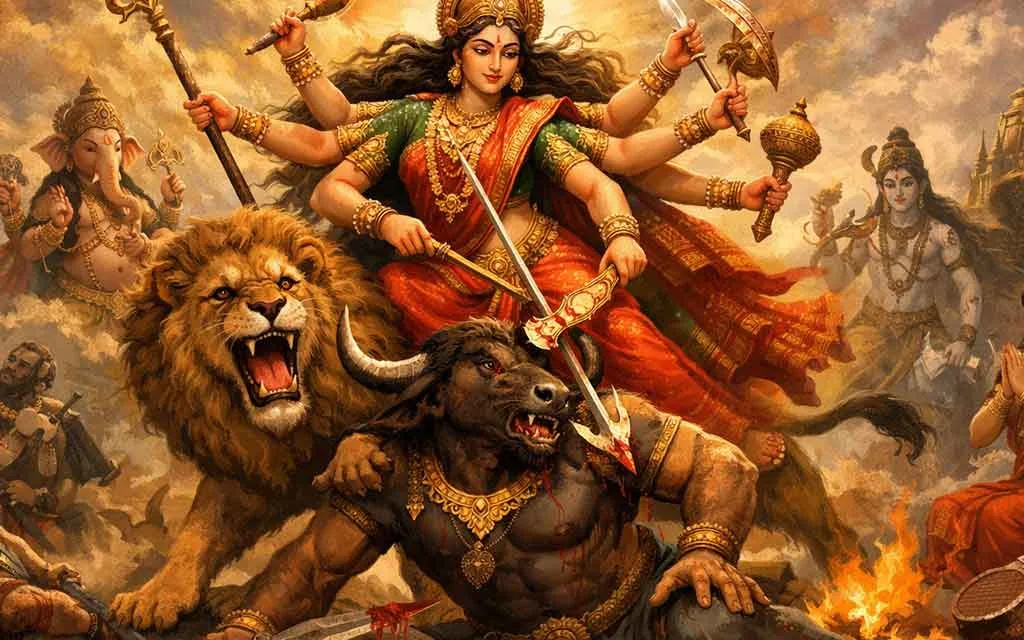
Devi Kavacham (Durga Saptashati): Full Text with Meaning
The Devi Kavacham, the 'armour of the Goddess', is the first of the hymns recited before the Durga Saptashati. Brahma tells the sage Markandeya the nine Durgas and places a form of the Goddess over every direction and every part of the body. Here are all 56 verses in Devanagari and IAST from sanskritdocuments.org, with our own meaning and how to recite it.
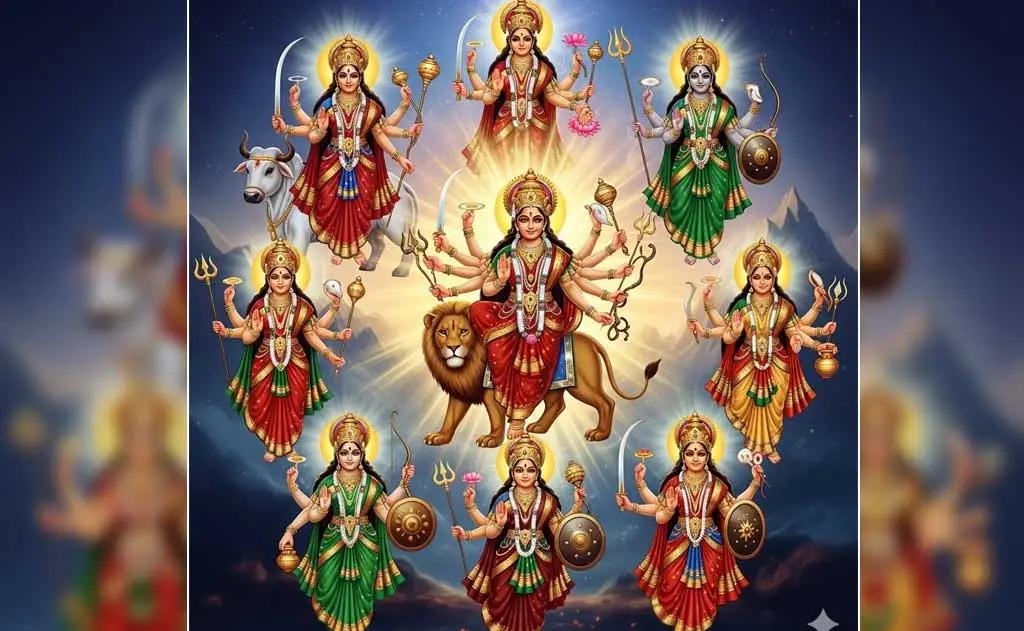
The Devi Kavacham, the 'armour of the Goddess', is the first of the hymns recited before the Durga Saptashati. Brahma tells the sage Markandeya the nine Durgas and places a form of the Goddess over every direction and every part of the body.
Quick answer: The Devi Kavacham (Chandi Kavacham, 'the armour of the Goddess') is a Sanskrit hymn of 56 verses recited as the first of the preliminary hymns of the Durga Saptashati (Devi Mahatmya, Chandi Path), before the Argala Stotram and the Kilakam. In it Brahma tells the sage Markandeya the names of the nine Durgas and calls on a form of the Goddess to guard every direction and every part of the body. It is recited during Navaratri, on Ashtami days and by many families every day.
Last updated: 20 October 2026. The Sanskrit below is the complete text published by sanskritdocuments.org (file dkavach.itx), converted to Devanagari and IAST by software from the source, with no word typed by hand. Our own plain-English meaning follows every verse.
Devi Kavacham: full text with meaning
The text opens with the viniyoga, which names its rishi, metre and deity. Verses 1 and 2 frame the hymn as a dialogue; verses 3 to 42 are the 'armour' itself; verses 43 to 56 state its merit. Each verse appears in Devanagari and then in IAST transliteration, followed by its meaning.
Viniyoga
॥ अथ देव्याः कवचम् ॥
ॐ अस्य श्री चण्डीकवचस्य ॥
ब्रह्मा ऋषिः । अनुष्टुप् छन्दः । चामुण्डा देवता ।
अङ्गन्यासोक्तमातरो बीजम् । दिग्बन्ध देवतास्तत्त्वम् ।
श्रीजगदम्बाप्रीत्यर्थे सप्तशती पाठाङ्गत्वेन जपे विनियोगः ॥
॥ ॐ नमश्चण्डिकायै ॥
|| atha devyāḥ kavacam ||
oṃ asya śrī caṇḍīkavacasya ||
brahmā ṛṣiḥ | anuṣṭup chandaḥ | cāmuṇḍā devatā |
aṅganyāsoktamātaro bījam | digbandha devatāstattvam |
śrījagadambāprītyarthe saptaśatī pāṭhāṅgatvena jape viniyogaḥ ||
|| oṃ namaścaṇḍikāyai ||
Meaning: Now the Armour of the Goddess. Om. Of this Chandi Kavacha, Brahma is the rishi, anushtup is the metre and Chamunda is the deity; the Mothers named in the anganyasa are its seed, and the deities of the directions are its essence. It is recited as a limb of the Saptashati reading, for the pleasure of Shri Jagadamba, the Mother of the world. Om, salutations to Chandika.
Markandeya's question and Brahma's answer (verses 1 and 2)
Verse 1
मार्कण्डेय उवाच ।
ॐ यद्गुह्यं परमं लोके सर्वरक्षाकरं नृणाम् ।
यन्न कस्यचिदाख्यातं तन्मे ब्रूहि पितामह ॥ १॥
mārkaṇḍeya uvāca |
oṃ yadguhyaṃ paramaṃ loke sarvarakṣākaraṃ nṛṇām |
yanna kasyacidākhyātaṃ tanme brūhi pitāmaha || 1||
Meaning: Markandeya said: Om. O Grandfather Brahma, tell me that which is most secret in the world, which gives every kind of protection to people, and which you have not told to anyone.
Verse 2
ब्रह्मोवाच ।
अस्ति गुह्यतमं विप्र सर्वभूतोपकारकम् ।
देव्यास्तु कवचं पुण्यं तच्छृणुष्व महामुने ॥ २॥
brahmovāca |
asti guhyatamaṃ vipra sarvabhūtopakārakam |
devyāstu kavacaṃ puṇyaṃ tacchṛṇuṣva mahāmune || 2||
Meaning: Brahma said: O sage, there is something most secret that benefits all beings: the holy armour of the Goddess. Listen to it, great sage.
The nine Durgas (verses 3 to 5)
Verse 3
प्रथमं शैलपुत्री च द्वितीयं ब्रह्मचारिणी ।
तृतीयं चन्द्रघण्टेति कूष्माण्डेति चतुर्थकम् ॥ ३॥
prathamaṃ śailaputrī ca dvitīyaṃ brahmacāriṇī |
tṛtīyaṃ candraghaṇṭeti kūṣmāṇḍeti caturthakam || 3||
Meaning: The first is Shailaputri, the second Brahmacharini, the third is called Chandraghanta and the fourth Kushmanda.
Verse 4
पञ्चमं स्कन्दमातेति षष्ठं कात्यायनीति च ।
सप्तमं कालरात्रीति महागौरीति चाष्टमम् ॥ ४॥
pañcamaṃ skandamāteti ṣaṣṭhaṃ kātyāyanīti ca |
saptamaṃ kālarātrīti mahāgaurīti cāṣṭamam || 4||
Meaning: The fifth is called Skandamata, the sixth Katyayani, the seventh Kalaratri and the eighth Mahagauri.
Verse 5
नवमं सिद्धिदात्री च नवदुर्गाः प्रकीर्तिताः ।
उक्तान्येतानि नामानि ब्रह्मणैव महात्मना ॥ ५॥
navamaṃ siddhidātrī ca navadurgāḥ prakīrtitāḥ |
uktānyetāni nāmāni brahmaṇaiva mahātmanā || 5||
Meaning: The ninth is Siddhidatri: these are celebrated as the nine Durgas. These names were spoken by the great-souled Brahma himself.
Refuge in danger (verses 6 to 8)
Verse 6
अग्निना दह्यमानस्तु शत्रुमध्ये गतो रणे ।
विषमे दुर्गमे चैव भयार्त्ताः शरणं गताः ॥ ६॥
agninā dahyamānastu śatrumadhye gato raṇe |
viṣame durgame caiva bhayārttāḥ śaraṇaṃ gatāḥ || 6||
Meaning: Those who are caught in fire, who have gone among enemies in battle, who are in a hard and dangerous place, and who in fear have taken refuge in her:
Verse 7
न तेषां जायते किंचिदशुभं रणसंकटे ।
नापदं तस्य पश्यामि शोकदुःखभयं न हि ॥ ७॥
na teṣāṃ jāyate kiṃcidaśubhaṃ raṇasaṃkaṭe |
nāpadaṃ tasya paśyāmi śokaduḥkhabhayaṃ na hi || 7||
Meaning: no misfortune comes to them in the peril of battle. I see no calamity for them, and no grief, sorrow or fear.
Verse 8
यैस्तु भक्त्या स्मृता नूनं तेषां वृद्धिः प्रजायते ।
ये त्वां स्मरन्ति देवेशि रक्षसे तान्न संशयः ॥ ८॥
yaistu bhaktyā smṛtā nūnaṃ teṣāṃ vṛddhiḥ prajāyate |
ye tvāṃ smaranti deveśi rakṣase tānna saṃśayaḥ || 8||
Meaning: Those who remember you with devotion surely prosper. O Queen of the gods, you protect those who remember you; of this there is no doubt.
The Mothers, their mounts and weapons (verses 9 to 16)
Verse 9
प्रेतसंस्था तु चामुण्डा वाराही महिषासना ।
ऐन्द्री गजसमारूढा वैष्णवी गरुडासना ॥ ९॥
pretasaṃsthā tu cāmuṇḍā vārāhī mahiṣāsanā |
aindrī gajasamārūḍhā vaiṣṇavī garuḍāsanā || 9||
Meaning: Chamunda is seated on a corpse, Varahi rides a buffalo, Aindri is mounted on an elephant and Vaishnavi rides Garuda.
Verse 10
माहेश्वरी वृषारूढा कौमारी शिखिवाहना ।
लक्ष्मीः पद्मासना देवी पद्महस्ता हरिप्रिया ॥ १०॥
māheśvarī vṛṣārūḍhā kaumārī śikhivāhanā |
lakṣmīḥ padmāsanā devī padmahastā haripriyā || 10||
Meaning: Maheshvari rides a bull and Kaumari a peacock; Lakshmi, the Goddess beloved of Hari, is seated on a lotus with a lotus in her hand.
Verse 11
श्वेतरूपधरा देवी ईश्वरी वृषवाहना ।
ब्राह्मी हंससमारूढा सर्वाभरणभूषिता ॥ ११॥
śvetarūpadharā devī īśvarī vṛṣavāhanā |
brāhmī haṃsasamārūḍhā sarvābharaṇabhūṣitā || 11||
Meaning: The Goddess Ishvari, white in form, rides a bull; Brahmi rides a swan, adorned with every ornament.
Verse 12
इत्येता मातरः सर्वाः सर्वयोगसमन्विताः ।
नानाभरणशोभाढ्या नानारत्नोपशोभिताः ॥ १२॥
ityetā mātaraḥ sarvāḥ sarvayogasamanvitāḥ |
nānābharaṇaśobhāḍhyā nānāratnopaśobhitāḥ || 12||
Meaning: All these Mothers are endowed with every yogic power, shining with many ornaments and adorned with many jewels.
Verse 13
दृश्यन्ते रथमारूढा देव्यः क्रोधसमाकुलाः ।
शङ्खं चक्रं गदां शक्तिं हलं च मुसलायुधम् ॥ १३॥
dṛśyante rathamārūḍhā devyaḥ krodhasamākulāḥ |
śaṅkhaṃ cakraṃ gadāṃ śaktiṃ halaṃ ca musalāyudham || 13||
Meaning: The goddesses are seen mounted on chariots, filled with wrath, holding the conch, discus, mace, spear, plough and pestle,
Verse 14
खेटकं तोमरं चैव परशुं पाशमेव च ।
कुन्तायुधं त्रिशूलं च शार्ङ्गमायुधमुत्तमम् ॥ १४॥
kheṭakaṃ tomaraṃ caiva paraśuṃ pāśameva ca |
kuntāyudhaṃ triśūlaṃ ca śārṅgamāyudhamuttamam || 14||
Meaning: the shield, the lance, the axe and the noose, the spear, the trident and the excellent bow Sharnga.
Verse 15
दैत्यानां देहनाशाय भक्तानामभयाय च ।
धारयन्त्यायुधानीत्थं देवानां च हिताय वै ॥ १५॥
daityānāṃ dehanāśāya bhaktānāmabhayāya ca |
dhārayantyāyudhānītthaṃ devānāṃ ca hitāya vai || 15||
Meaning: They bear these weapons to destroy the bodies of the demons, to free the devotees from fear, and for the good of the gods.
Verse 16
नमस्तेऽस्तु महारौद्रे महाघोरपराक्रमे ।
महाबले महोत्साहे महाभयविनाशिनि ॥ १६॥
namaste'stu mahāraudre mahāghoraparākrame |
mahābale mahotsāhe mahābhayavināśini || 16||
Meaning: Salutations to you, O greatly fierce one, of terrible valour, mighty and full of energy, destroyer of great fears.
The Goddess in the ten directions (verses 17 to 20)
Verse 17
त्राहि मां देवि दुष्प्रेक्ष्ये शत्रूणां भयवर्द्धिनि ।
प्राच्यां रक्षतु मामैन्द्री आग्नेय्यामग्निदेवता ॥ १७॥
trāhi māṃ devi duṣprekṣye śatrūṇāṃ bhayavarddhini |
prācyāṃ rakṣatu māmaindrī āgneyyāmagnidevatā || 17||
Meaning: Protect me, O Goddess so hard to look upon, who fill enemies with fear. May Aindri protect me in the east and the deity of fire in the south-east;
Verse 18
दक्षिणेऽवतु वाराही नैरृत्यां खड्गधारिणी ।
प्रतीच्यां वारुणी रक्षेद्वायव्यां मृगवाहिनी ॥ १८॥
dakṣiṇe'vatu vārāhī nairṛtyāṃ khaḍgadhāriṇī |
pratīcyāṃ vāruṇī rakṣedvāyavyāṃ mṛgavāhinī || 18||
Meaning: may Varahi guard the south and the sword-bearer the south-west; may Varuni guard the west and the deer-rider the north-west;
Verse 19
उदीच्यां पातु कौमारी ऐशान्यां शूलधारिणी ।
ऊर्ध्वं ब्रह्माणि मे रक्षेदधस्ताद्वैष्णवी तथा ॥ १९॥
udīcyāṃ pātu kaumārī aiśānyāṃ śūladhāriṇī |
ūrdhvaṃ brahmāṇi me rakṣedadhastādvaiṣṇavī tathā || 19||
Meaning: may Kaumari guard the north and the trident-bearer the north-east; may Brahmani protect me above and Vaishnavi below.
Verse 20
एवं दश दिशो रक्षेच्चामुण्डा शववाहना ।
जया मे चाग्रतः पातु विजया पातु पृष्ठतः ॥ २०॥
evaṃ daśa diśo rakṣeccāmuṇḍā śavavāhanā |
jayā me cāgrataḥ pātu vijayā pātu pṛṣṭhataḥ || 20||
Meaning: In this way may Chamunda, seated on a corpse, protect the ten directions. May Jaya protect me in front and Vijaya behind;
The Goddess over every part of the body (verses 21 to 38)
Verse 21
अजिता वामपार्श्वे तु दक्षिणे चापराजिता ।
शिखामुद्योतिनी रक्षेदुमा मूर्ध्नि व्यवस्थिता ॥ २१॥
ajitā vāmapārśve tu dakṣiṇe cāparājitā |
śikhāmudyotinī rakṣedumā mūrdhni vyavasthitā || 21||
Meaning: Ajita on my left and Aparajita on my right. May Udyotini protect the crown of my head, and Uma, seated on my head, protect it;
Verse 22
मालाधरी ललाटे च भ्रुवौ रक्षेद्यशस्विनी ।
त्रिनेत्रा च भ्रुवोर्मध्ये यमघण्टा च नासिके ॥ २२॥
mālādharī lalāṭe ca bhruvau rakṣedyaśasvinī |
trinetrā ca bhruvormadhye yamaghaṇṭā ca nāsike || 22||
Meaning: may Maladhari protect my forehead and Yashasvini my eyebrows, Trinetra the space between the brows and Yamaghanta my nostrils;
Verse 23
शङ्खिनी चक्षुषोर्मध्ये श्रोत्रयोर्द्वारवासिनी ।
कपोलौ कालिका रक्षेत्कर्णमूले तु शाङ्करी ॥ २३॥
śaṅkhinī cakṣuṣormadhye śrotrayordvāravāsinī |
kapolau kālikā rakṣetkarṇamūle tu śāṅkarī || 23||
Meaning: Shankhini the space between my eyes and Dvaravasini my ears; may Kalika protect my cheeks and Shankari the roots of my ears;
Verse 24
नासिकायां सुगन्धा च उत्तरोष्ठे च चर्चिका ।
अधरे चामृतकला जिह्वायां च सरस्वती ॥ २४॥
nāsikāyāṃ sugandhā ca uttaroṣṭhe ca carcikā |
adhare cāmṛtakalā jihvāyāṃ ca sarasvatī || 24||
Meaning: Sugandha my nose, Charchika my upper lip, Amritakala my lower lip and Sarasvati my tongue.
Verse 25
दन्तान् रक्षतु कौमारी कण्ठदेशे तु चण्डिका ।
घण्टिकां चित्रघण्टा च महामाया च तालुके ॥ २५॥
dantān rakṣatu kaumārī kaṇṭhadeśe tu caṇḍikā |
ghaṇṭikāṃ citraghaṇṭā ca mahāmāyā ca tāluke || 25||
Meaning: May Kaumari protect my teeth and Chandika my throat; Chitraghanta the little bell of my throat and Mahamaya my palate.
Verse 26
कामाक्षी चिबुकं रक्षेद्वाचं मे सर्वमङ्गला ।
ग्रीवायां भद्रकाली च पृष्ठवंशे धनुर्धरी ॥ २६॥
kāmākṣī cibukaṃ rakṣedvācaṃ me sarvamaṅgalā |
grīvāyāṃ bhadrakālī ca pṛṣṭhavaṃśe dhanurdharī || 26||
Meaning: May Kamakshi protect my chin and Sarvamangala my speech; Bhadrakali my neck and Dhanurdhari my spine.
Verse 27
नीलग्रीवा बहिःकण्ठे नलिकां नलकूबरी ।
स्कन्धयोः खड्गिनी रक्षेद्बाहू मे वज्रधारिणी ॥ २७॥
nīlagrīvā bahiḥkaṇṭhe nalikāṃ nalakūbarī |
skandhayoḥ khaḍginī rakṣedbāhū me vajradhāriṇī || 27||
Meaning: Nilagriva the outer throat and Nalakubari the windpipe; may Khadgini protect my shoulders and Vajradharini my arms.
Verse 28
हस्तयोर्दण्डिनी रक्षेदम्बिका चाङ्गुलीषु च ।
नखाञ्छूलेश्वरी रक्षेत्कुक्षौ रक्षेत्कुलेश्वरी ॥ २८॥
hastayordaṇḍinī rakṣedambikā cāṅgulīṣu ca |
nakhāñchūleśvarī rakṣetkukṣau rakṣetkuleśvarī || 28||
Meaning: May Dandini protect my hands and Ambika my fingers; may Shuleshvari protect my nails and Kuleshvari my belly.
Verse 29
स्तनौ रक्षेन्महादेवी मनःशोकविनाशिनी ।
हृदये ललिता देवी उदरे शूलधारिणी ॥ २९॥
stanau rakṣenmahādevī manaḥśokavināśinī |
hṛdaye lalitā devī udare śūladhāriṇī || 29||
Meaning: May Mahadevi, who destroys the sorrow of the mind, protect my breast; Lalita Devi my heart and Shuladharini my abdomen.
Verse 30
नाभौ च कामिनी रक्षेद्गुह्यं गुह्येश्वरी तथा ।
पूतना कामिका मेढ्रं गुदे महिषवाहिनी ॥ ३०॥
nābhau ca kāminī rakṣedguhyaṃ guhyeśvarī tathā |
pūtanā kāmikā meḍhraṃ gude mahiṣavāhinī || 30||
Meaning: May Kamini protect my navel and Guhyeshvari my private parts; Putana and Kamika the organ of generation, and Mahishavahini the organ of excretion.
Verse 31
कट्यां भगवती रक्षेज्जानुनी विन्ध्यवासिनी ।
जङ्घे महाबला रक्षेत्सर्वकामप्रदायिनी ॥ ३१॥
kaṭyāṃ bhagavatī rakṣejjānunī vindhyavāsinī |
jaṅghe mahābalā rakṣetsarvakāmapradāyinī || 31||
Meaning: May Bhagavati protect my hips and Vindhyavasini my knees; may Mahabala, who grants every wish, protect my legs.
Verse 32
गुल्फयोर्नारसिंही च पादपृष्ठे तु तैजसी ।
पादाङ्गुलीषु श्री रक्षेत्पादाधस्तलवासिनी ॥ ३२॥
gulphayornārasiṃhī ca pādapṛṣṭhe tu taijasī |
pādāṅgulīṣu śrī rakṣetpādādhastalavāsinī || 32||
Meaning: Narasimhi my ankles and Taijasi the tops of my feet; may Shri protect my toes and Talavasini the soles of my feet.
Verse 33
नखान् दंष्ट्राकराली च केशांश्चैवोर्ध्वकेशिनी ।
रोमकूपेषु कौबेरी त्वचं वागीश्वरी तथा ॥ ३३॥
nakhān daṃṣṭrākarālī ca keśāṃścaivordhvakeśinī |
romakūpeṣu kauberī tvacaṃ vāgīśvarī tathā || 33||
Meaning: Damshtrakarali my nails and Urdhvakeshini my hair; Kauberi the pores of my skin and Vagishvari my skin.
Verse 34
रक्तमज्जावसामांसान्यस्थिमेदांसि पार्वती ।
अन्त्राणि कालरात्रिश्च पित्तं च मुकुटेश्वरी ॥ ३४॥
raktamajjāvasāmāṃsānyasthimedāṃsi pārvatī |
antrāṇi kālarātriśca pittaṃ ca mukuṭeśvarī || 34||
Meaning: May Parvati protect my blood, marrow, fat, flesh, bones and tissues; Kalaratri my intestines and Mukuteshvari my bile.
Verse 35
पद्मावती पद्मकोशे कफे चूडामणिस्तथा ।
ज्वालामुखी नखज्वालामभेद्या सर्वसन्धिषु ॥ ३५॥
padmāvatī padmakośe kaphe cūḍāmaṇistathā |
jvālāmukhī nakhajvālāmabhedyā sarvasandhiṣu || 35||
Meaning: Padmavati the lotus of my heart and Chudamani the phlegm; Jvalamukhi the lustre of my nails; and may Abhedya, the unbreakable, protect all my joints.
Verse 36
शुक्रं ब्रह्माणि मे रक्षेच्छायां छत्रेश्वरी तथा ।
अहंकारं मनो बुद्धिं रक्षेन्मे धर्मधारिणी ॥ ३६॥
śukraṃ brahmāṇi me rakṣecchāyāṃ chatreśvarī tathā |
ahaṃkāraṃ mano buddhiṃ rakṣenme dharmadhāriṇī || 36||
Meaning: May Brahmani protect my vital essence and Chhatreshvari my shadow; may Dharmadharini protect my sense of self, my mind and my intellect.
Verse 37
प्राणापानौ तथा व्यानमुदानं च समानकम् ।
वज्रहस्ता च मे रक्षेत्प्राणं कल्याणशोभना ॥ ३७॥
prāṇāpānau tathā vyānamudānaṃ ca samānakam |
vajrahastā ca me rakṣetprāṇaṃ kalyāṇaśobhanā || 37||
Meaning: May Vajrahasta protect my five vital breaths, prana, apana, vyana, udana and samana, and may Kalyanashobhana protect my life.
Verse 38
रसे रूपे च गन्धे च शब्दे स्पर्शे च योगिनी ।
सत्त्वं रजस्तमश्चैव रक्षेन्नारायणी सदा ॥ ३८॥
rase rūpe ca gandhe ca śabde sparśe ca yoginī |
sattvaṃ rajastamaścaiva rakṣennārāyaṇī sadā || 38||
Meaning: May Yogini protect me in taste, form, smell, sound and touch; may Narayani always protect the qualities of sattva, rajas and tamas.
Life, family and the road (verses 39 to 42)
Verse 39
आयू रक्षतु वाराही धर्मं रक्षतु वैष्णवी ।
यशः कीर्तिं च लक्ष्मीं च धनं विद्यां च चक्रिणी ॥ ३९॥
āyū rakṣatu vārāhī dharmaṃ rakṣatu vaiṣṇavī |
yaśaḥ kīrtiṃ ca lakṣmīṃ ca dhanaṃ vidyāṃ ca cakriṇī || 39||
Meaning: May Varahi protect my life span and Vaishnavi my dharma; may Chakrini protect my good name, honour, good fortune, wealth and learning.
Verse 40
गोत्रमिन्द्राणि मे रक्षेत्पशून्मे रक्ष चण्डिके ।
पुत्रान् रक्षेन्महालक्ष्मीर्भार्यां रक्षतु भैरवी ॥ ४०॥
gotramindrāṇi me rakṣetpaśūnme rakṣa caṇḍike |
putrān rakṣenmahālakṣmīrbhāryāṃ rakṣatu bhairavī || 40||
Meaning: May Indrani protect my family line; O Chandika, protect my cattle. May Mahalakshmi protect my children and Bhairavi my wife.
Verse 41
पन्थानं सुपथा रक्षेन्मार्गं क्षेमकरी तथा ।
राजद्वारे महालक्ष्मीर्विजया सर्वतः स्थिता ॥ ४१॥
panthānaṃ supathā rakṣenmārgaṃ kṣemakarī tathā |
rājadvāre mahālakṣmīrvijayā sarvataḥ sthitā || 41||
Meaning: May Supatha protect my path and Kshemakari my road; Mahalakshmi at the doors of authority, and Vijaya, present everywhere, protect me on every side.
Verse 42
रक्षाहीनं तु यत्स्थानं वर्जितं कवचेन तु ।
तत्सर्वं रक्ष मे देवि जयन्ती पापनाशिनी ॥ ४२॥
rakṣāhīnaṃ tu yatsthānaṃ varjitaṃ kavacena tu |
tatsarvaṃ rakṣa me devi jayantī pāpanāśinī || 42||
Meaning: Whatever place is left without protection, not covered by this armour, protect all of it for me, O Devi Jayanti, destroyer of sin.
The merit of the kavacham (verses 43 to 56)
Verse 43
पदमेकं न गच्छेत्तु यदीच्छेच्छुभमात्मनः ।
कवचेनावृतो नित्यं यत्र यत्रैव गच्छति ॥ ४३॥
padamekaṃ na gacchettu yadīcchecchubhamātmanaḥ |
kavacenāvṛto nityaṃ yatra yatraiva gacchati || 43||
Meaning: One who wishes oneself well should not take even one step without it. Covered always by the armour, wherever one goes,
Verse 44
तत्र तत्रार्थलाभश्च विजयः सार्वकामिकः ।
यं यं चिन्तयते कामं तं तं प्राप्नोति निश्चितम् ।
परमैश्वर्यमतुलं प्राप्स्यते भूतले पुमान् ॥ ४४॥
tatra tatrārthalābhaśca vijayaḥ sārvakāmikaḥ |
yaṃ yaṃ cintayate kāmaṃ taṃ taṃ prāpnoti niścitam |
paramaiśvaryamatulaṃ prāpsyate bhūtale pumān || 44||
Meaning: there one gains wealth and victory that fulfils every wish; whatever desire one thinks of, one surely obtains it; such a person gains matchless prosperity on earth.
Verse 45
निर्भयो जायते मर्त्यः संग्रामेष्वपराजितः ।
त्रैलोक्ये तु भवेत्पूज्यः कवचेनावृतः पुमान् ॥ ४५॥
nirbhayo jāyate martyaḥ saṃgrāmeṣvaparājitaḥ |
trailokye tu bhavetpūjyaḥ kavacenāvṛtaḥ pumān || 45||
Meaning: A person covered by the armour becomes fearless, unconquered in battle, and honoured in the three worlds.
Verse 46
इदं तु देव्याः कवचं देवानामपि दुर्लभम् ।
यः पठेत्प्रयतो नित्यं त्रिसन्ध्यं श्रद्धयान्वितः ॥ ४६॥
idaṃ tu devyāḥ kavacaṃ devānāmapi durlabham |
yaḥ paṭhetprayato nityaṃ trisandhyaṃ śraddhayānvitaḥ || 46||
Meaning: This armour of the Goddess is hard to obtain even for the gods. One who recites it daily, pure, at the three junctions of the day, with faith,
Verse 47
दैवी कला भवेत्तस्य त्रैलोक्येष्वपराजितः ।
जीवेद्वर्षशतं साग्रमपमृत्युविवर्जितः ॥ ४७॥
daivī kalā bhavettasya trailokyeṣvaparājitaḥ |
jīvedvarṣaśataṃ sāgramapamṛtyuvivarjitaḥ || 47||
Meaning: gains a portion of the divine, is unconquered in the three worlds, and lives a full hundred years and more, free from untimely death.
Verse 48
नश्यन्ति व्याधयः सर्वे लूताविस्फोटकादयः ।
स्थावरं जङ्गमं चैव कृत्रिमं चापि यद्विषम् ॥ ४८॥
naśyanti vyādhayaḥ sarve lūtāvisphoṭakādayaḥ |
sthāvaraṃ jaṅgamaṃ caiva kṛtrimaṃ cāpi yadviṣam || 48||
Meaning: All illnesses, such as spider bites and boils, perish; and poison, whether from plants, from creatures or made by people,
Verse 49
अभिचाराणि सर्वाणि मन्त्रयन्त्राणि भूतले ।
भूचराः खेचराश्चैव जलजाश्चौपदेशिकाः ॥ ४९॥
abhicārāṇi sarvāṇi mantrayantrāṇi bhūtale |
bhūcarāḥ khecarāścaiva jalajāścaupadeśikāḥ || 49||
Meaning: all spells of harm and all harmful mantras and yantras on earth; beings that move on the earth and in the sky, beings of the water, and those sent by others,
Verse 50
सहजा कुलजा माला डाकिनी शाकिनी तथा ।
अन्तरिक्षचरा घोरा डाकिन्यश्च महाबलाः ॥ ५०॥
sahajā kulajā mālā ḍākinī śākinī tathā |
antarikṣacarā ghorā ḍākinyaśca mahābalāḥ || 50||
Meaning: those born with one and those of the family line, Mala, Dakini and Shakini, and the terrible, mighty Dakinis that move in the sky,
Verse 51
ग्रहभूतपिशाचाश्च यक्षगन्धर्वराक्षसाः ।
ब्रह्मराक्षसवेतालाः कुष्माण्डा भैरवादयः ॥ ५१॥
grahabhūtapiśācāśca yakṣagandharvarākṣasāḥ |
brahmarākṣasavetālāḥ kuṣmāṇḍā bhairavādayaḥ || 51||
Meaning: grahas, bhutas and pishachas, yakshas, gandharvas and rakshasas, brahmarakshasas and vetalas, kushmandas, bhairavas and the rest:
Verse 52
नश्यन्ति दर्शनात्तस्य कवचे हृदि संस्थिते ।
मानोन्नतिर्भवेद्राज्ञस्तेजोवृद्धिकरं परम् ॥ ५२॥
naśyanti darśanāttasya kavace hṛdi saṃsthite |
mānonnatirbhavedrājñastejovṛddhikaraṃ param || 52||
Meaning: all perish at the very sight of one who holds this armour in the heart. One's standing before rulers rises, and it brings the highest growth of radiance.
Verse 53
यशसा वर्धते सोऽपि कीर्तिमण्डितभूतले ।
जपेत्सप्तशतीं चण्डीं कृत्वा तु कवचं पुरा ॥ ५३॥
yaśasā vardhate so'pi kīrtimaṇḍitabhūtale |
japetsaptaśatīṃ caṇḍīṃ kṛtvā tu kavacaṃ purā || 53||
Meaning: Such a person grows in fame on an earth adorned with renown. One should recite the Saptashati, the Chandi, after first reciting the armour.
Verse 54
यावद्भूमण्डलं धत्ते सशैलवनकाननम् ।
तावत्तिष्ठति मेदिन्यां सन्ततिः पुत्रपौत्रिकी ॥ ५४॥
yāvadbhūmaṇḍalaṃ dhatte saśailavanakānanam |
tāvattiṣṭhati medinyāṃ santatiḥ putrapautrikī || 54||
Meaning: As long as the earth holds its mountains, forests and groves, so long do one's children and grandchildren continue on the earth.
Verse 55
देहान्ते परमं स्थानं यत्सुरैरपि दुर्लभम् ।
प्राप्नोति पुरुषो नित्यं महामाया प्रसादतः ॥ ५५॥
dehānte paramaṃ sthānaṃ yatsurairapi durlabham |
prāpnoti puruṣo nityaṃ mahāmāyā prasādataḥ || 55||
Meaning: At the end of the body, by the grace of Mahamaya, one attains the supreme abode, hard to attain even for the gods,
Verse 56
लभते परमं रूपं शिवेन सह मोदते ॥ ॐ ॥ ५६॥
labhate paramaṃ rūpaṃ śivena saha modate || oṃ || 56||
Meaning: gains the supreme form and rejoices with Shiva. Om.
How the kavacham is built
A kavacha works like a meditation that moves around and through the body. After naming the nine Durgas (verses 3 to 5) and the seven Mothers (Matrikas) with Lakshmi and Ishvari on their mounts (verses 9 to 15), the hymn places a goddess in each of the ten directions (verses 17 to 20), then over each part of the body from the crown of the head to the soles of the feet (verses 21 to 35), then over the inner faculties: breath, mind, intellect and the three gunas (verses 36 to 38), and finally over one's life, dharma, family and the road one travels (verses 39 to 41). Verse 42 asks the Goddess to guard whatever has been left out.
| Verses | What is entrusted to the Goddess |
|---|---|
| 3 to 5 | The nine Durgas, worshipped on the nine nights of Navaratri |
| 9 to 15 | The Mothers on their mounts, with their weapons |
| 17 to 20 | The ten directions: east to north-east, above and below |
| 21 to 35 | Every part of the body, from head to feet |
| 36 to 38 | Vital essence, mind, intellect, the five breaths, the senses and the gunas |
| 39 to 42 | Life, dharma, fame, family, the road; anything left out |
| 43 to 56 | The traditional merit of reciting the kavacham |
Verses 3 to 5 are the source of the well-known order of the nine Navaratri goddesses, from Maa Shailaputri on day 1 to Maa Kalaratri on day 7 and Maa Siddhidatri on day 9.
When to recite the Devi Kavacham
- Before the Saptashati: as its first limb, followed by the Argala Stotram and the Kilakam; verse 53 asks for the kavacham to be recited first.
- Navaratri: Sharad Navaratri 2026 ran from 11 to 19 October; many families recite the kavacham on each of the nine days of every Navaratri. See the Navratri 2026 complete guide and the 9-day Devi worship guide.
- Ashtami and Navami: Durga Ashtami, Maha Navami and the monthly Masik Durgashtami (next on Tuesday 17 November 2026); see Maha Ashtami 2026, Durga Ashtami in the USA and Maha Navami in the USA.
- Daily: verse 46 speaks of reciting it daily at the three junctions of the day; many recite it once each morning.
How to recite it at home
- Sit before a picture of Durga or a lamp, with a flower and a little kumkum if you have it.
- Read the viniyoga and 'om namash chandikayai', then verses 1 and 2, which set the scene.
- From verse 17 onwards, many devotees touch or simply bring their attention to each direction and each part of the body as it is named; this keeps the mind with the words.
- Continue to the end of verse 56. If you are reading the Saptashati, go on to the Argala Stotram and the Kilakam.
- On a short day, follow it with the 108 names of Durga.
Pronunciation help
- In the IAST, a line over a vowel (ā, ī, ū) means it is held twice as long; ṇ, ṭ and ḍ are made with the tongue curled back; ś and ṣ are both 'sh' sounds.
- Most of the goddess names are compounds: read them in parts, for example Ur-dhva-ke-shi-ni (verse 33) or Kal-yaa-na-sho-bha-naa (verse 37).
- Verse 44 has three lines instead of two; do not run it into verse 45.
Traditional beliefs about the kavacham
Verses 43 to 56 state the merit of the kavacham in the traditional language of the Puranas: fearlessness, freedom from illness and harm, honour, long life, descendants, and at the end the supreme abode by the grace of Mahamaya. Devotees traditionally believe that reciting it with faith:
- places the whole of one's life, body, mind and family, in the Mother's care;
- brings steadiness and courage in times of fear, as verses 6 to 8 describe;
- prepares the mind for the Saptashati;
- deepens the bond with the nine forms of Durga honoured at Navaratri.
These are matters of faith, not guarantees. The kavacham describes protection from illness, poison and harmful forces; it is not a substitute for medical treatment, safety measures or professional help, and it is best recited as an act of trust and devotion rather than for any particular result.
Tips for NRI families
- Learn the nine names first. Verses 3 to 5 are short and easy; children can learn them during one Navaratri and connect them with the nine days.
- Use local dates. Navaratri and Ashtami dates abroad can differ from India by a day; see Durga Ashtami in the USA and our other country pages.
- Read it in parts. Verses 1 to 16 one day, 17 to 42 the next and 43 to 56 the third: a gentle way to learn it over a weekend.
- Go deeper. The Devi Mahatmya guide explains the Saptashati that the kavacham opens; the 108 Shakti Peethas guide covers the Goddess's sacred places.
Frequently asked questions
What is the Devi Kavacham?
A kavacha is a protective 'armour' hymn. In the Devi Kavacham, also called the Chandi Kavacham, Brahma answers the sage Markandeya by naming the nine Durgas and then calling on a form of the Goddess to guard each direction, each part of the body, one's life, family and path. It is recited as the first limb (anga) of the Durga Saptashati.
Who is its rishi and deity?
The viniyoga at the start names Brahma as the rishi, anushtup as the metre and Chamunda as the deity, and says it is recited as a limb of the Saptashati reading.
Does the Devi Kavacham guarantee protection?
No hymn can guarantee protection. Verses 43 to 56 describe the merit of the kavacham in the traditional language of the Puranas: fearlessness, long life, freedom from illness and harmful influences. Devotees recite it in that faith, as a prayer for the Goddess's grace. It is not a substitute for medical care, safety measures or professional help.
In what order is it recited with the Argala and Kilakam?
In the widely followed order the Devi Kavacham is first, then the Argala Stotram, then the Kilakam, and then the thirteen chapters of the Devi Mahatmya. Verse 53 itself says one should recite the Saptashati after first reciting the kavacham. Family traditions differ, so follow your teacher where you have one.
Which verses name the nine Durgas?
Verses 3 to 5: Shailaputri, Brahmacharini, Chandraghanta, Kushmanda, Skandamata, Katyayani, Kalaratri, Mahagauri and Siddhidatri, the goddesses worshipped on the nine nights of Navaratri.
How long does it take to recite?
About 15 to 20 minutes for all 56 verses at a steady pace.
Can anyone recite it?
Yes. It is recited by men and women, young and old, at home and in temples. Verse 46 asks only that it be recited with purity and faith.
Editor's note (20 October 2026)
This page was published on 20 October 2026. The Sanskrit is the full text of the Devi Kavacham on sanskritdocuments.org (file dkavach.itx, encoded by Ahto Jarve and proofread by him and PSA Easwaran). The source gives no author line and no colophon; the text itself is a dialogue between Markandeya and Brahma, and its viniyoga names Brahma as the rishi. It was converted from ITRANS to Devanagari and IAST by software; no word has been changed. The source keeps some older spellings with doubled consonants (for example in verses 6 and 17); we print them as they are. In verse 2 Brahma addresses Markandeya with a word that also names a hereditary community; we have rendered it 'O sage', which is how Markandeya is addressed throughout. Verses 30 and 34 name parts of the body plainly; we give their meaning simply and respectfully. The kavacham's statements of protection are given as the text's own traditional words, not as claims of fact. Dates are from Drik Panchang (New Delhi) as used across HinduTone's Navaratri pages.
Related guides
You might also like
Devi Suktam (Rigveda 10.125): Aham Rudrebhih in Sanskrit with IAST and Meaning
Argala Stotram (Durga Saptashati): Full Text with Meaning
Krishnashtakam (Vasudeva Sutam Devam): Full Text with Meaning