
Maha Ashtami 2026: Date (Monday 19 October), Pushpanjali, Kumari Puja, Sandhi Puja and Rituals
Maha Ashtami (Durga Ashtami) 2026 falls on Monday 19 October in India and Sunday 18 October in the USA, Canada and the UK. How Pushpanjali, Kumari Puja, Sandhi Puja and Kanya Pujan are kept, with local Sandhi times abroad.
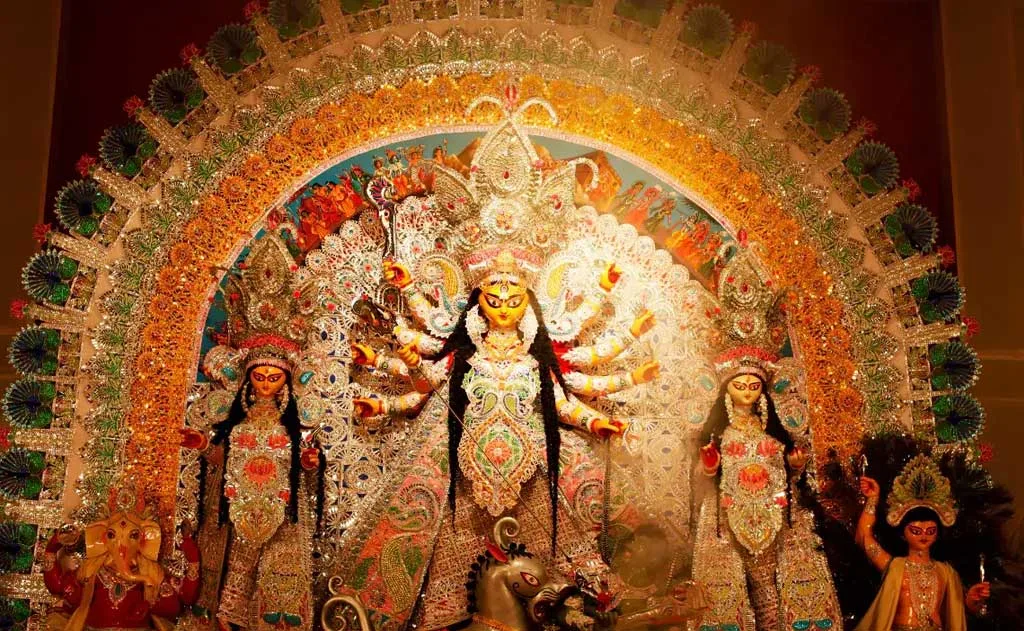
Maha Ashtami (Durga Ashtami) 2026 falls on Monday 19 October in India and Sunday 18 October in the USA, Canada and the UK. How Pushpanjali, Kumari Puja, Sandhi Puja and Kanya Pujan are kept, with local Sandhi times abroad.
Quick answer: Maha Ashtami (Durga Ashtami) 2026 is on Monday 19 October in India, and on Sunday 18 October in the USA, Canada and the UK. Sandhi Puja is centred on 10:51 AM IST on 19 October. The day's main rituals are Pushpanjali, Kumari Puja, Sandhi Puja and, in North India, Kanya Pujan.
Maha Ashtami, the eighth day of Sharad Navratri, is the most important day of Durga Puja for many devotees. In Bengali homes and pandals it is the day of Pushpanjali, Kumari Puja and Sandhi Puja; across North India it is Durga Ashtami, when Maa Mahagauri is worshipped and many families perform Kanya Pujan. This guide gives the 2026 date for India and abroad and explains each of the day's rituals.
Maha Ashtami 2026 date
In India, Maha Ashtami (Durga Ashtami) is on Monday 19 October 2026. The Ashtami tithi begins at 08:27 AM IST on Sunday 18 October and ends at 10:51 AM IST on Monday 19 October, when Navami begins (Drik Panchang; the page shows the same instants in US Eastern time). Because Ashtami is the tithi at sunrise on Monday, that is the day of worship, and it is also the day of Sandhi Puja. Our Durga Puja 2026 calendar for Kolkata lists Maha Saptami on Sunday 18 October, Maha Ashtami on Monday 19 October and Maha Navami worship on Tuesday 20 October.
Outside India, the date follows the tithi at local sunrise, so it is not the same everywhere:
| Where | Ashtami at sunrise | Sandhi junction (local time) |
|---|---|---|
| India | Monday 19 October | 10:51 AM, Monday 19 October |
| UAE (Dubai) | Monday 19 October | 9:21 AM, Monday 19 October |
| Singapore and Malaysia | Monday 19 October | 1:21 PM, Monday 19 October |
| Eastern Australia (Sydney) | Monday 19 October | 4:21 PM, Monday 19 October |
| UK (London) | Sunday 18 October | 6:21 AM, Monday 19 October |
| USA and Canada (Eastern) | Sunday 18 October | 1:21 AM, Monday 19 October |
| USA (Pacific) | Sunday 18 October | 10:21 PM, Sunday 18 October |
The sunrise tithi abroad comes from our own panchang calculations, which are checked against Drik Panchang. Many Bengali associations abroad follow the Kolkata panjika or hold their Ashtami on the nearest weekend, so check your puja committee's schedule. Sandhi Puja is held over the 48 minutes around the junction shown above.
What is Maha Ashtami?
Ashtami means "the eighth". In the Navadurga sequence followed in North and West India, the eighth day of Navratri is devoted to Maa Mahagauri, the radiant, white-clad form of the Goddess; see our Navratri Day 8 Mahagauri guide. This year Durga Ashtami and Maha Navami fall on the same day in India, so Day 8 and Day 9 observances are both kept on Monday 19 October.
In Bengal, Odisha, Assam and among Bengali communities everywhere, Maha Ashtami is the heart of Durga Puja. The day begins early with the Goddess's ritual bath and full worship, and builds through Pushpanjali and Kumari Puja in the morning to Sandhi Puja at the junction of Ashtami and Navami.
The Ashtami puja
The Ramakrishna Math describes the main Ashtami rituals as kept in its own Durga Puja (Ramakrishna Math, Kamarpukur):
- Mahasnan and shodashopachara puja: the Goddess is bathed and worshipped with sixteen offerings, as on Saptami.
- Nine Shaktis: nine small pots with coloured flags are installed, and the nine Shaktis are invoked and worshipped in them.
- Yoginis: the sixty-four yoginis are worshipped.
- Navadurga and other goddesses are worshipped, and the day closes with bhog and arati.
Household and community pujas follow the same outline in shorter or longer forms, depending on their priest and family tradition.
Pushpanjali: offering flowers to the Goddess
For many Bengalis, Ashtami morning means anjali. Devotees fast from the night before, bathe, wear new or clean clothes and gather in front of the Goddess. The priest recites the anjali mantras, and the devotees repeat them while holding flowers and bel leaves in folded hands, then offer them at the Goddess's feet. In most pandals the anjali is offered in batches through the morning, so large crowds can take part, and the fast is broken afterwards with prasad and bhog, often khichuri, labra and payesh.
One of the verses most often recited during anjali comes from the Argala Stotram of the Devi Mahatmya:
> Om Jayanti Mangala Kali Bhadrakali Kapalini, Durga Kshama Shiva Dhatri Svaha Svadha Namostu Te.
It salutes the Goddess by eleven of her names, from Jayanti, "the victorious", to Dhatri, "the sustainer". At Belur Math, Pushpanjali is offered every day of the puja after the Goddess's bhog arati (Belur Math programme).
If you cannot reach a pandal, you can offer anjali at home before a picture of the Goddess: light a lamp, hold a few flowers and bel leaves, recite the verse above or simply chant "Om Dum Durgayai Namah", and place the flowers before her.
Kumari Puja
On Ashtami, a young girl is worshipped as the living form of the Goddess. The Ramakrishna Math explains that worship of a young girl "treating her as Devi" is part of Ashtami Puja. When Durga Puja was first held at Belur Math in 1901, Swami Vivekananda worshipped several kumaris; today one kumari is worshipped (Ramakrishna Math, Kamarpukur).
The Kumari Puja at Belur Math, the headquarters of the Ramakrishna Math and Mission in Howrah, draws very large crowds every year; the Math's news bulletin for 2017 reported huge crowds at the Kumari Puja and about two lakh visitors over the four days (Belur Math). In 2023 it began at 9 AM on Mahashtami. Belur Math follows the Vishuddha Siddhanta almanac, so its timings can differ from Drik Panchang; its 2026 programme is published on its news site before the puja.
The girl is dressed and adorned as the Goddess, seated in the place of honour and worshipped by the priest. Many traditional household pujas in Bengal also keep the custom.
Sandhi Puja
Sandhi Puja is held at the meeting point of Ashtami and Navami: the last 24 minutes of Ashtami and the first 24 minutes of Navami, 48 minutes in all (Ramakrishna Math, Kamarpukur). According to tradition, this is the moment the Goddess took the form of Chamunda to slay the demons Chanda and Munda. In 2026 the junction falls at 10:51 AM IST on Monday 19 October, and 108 lamps and 108 lotuses are traditionally offered. Our full Sandhi Puja 2026 guide explains the ritual and the timing.
Kanya Pujan in North India
Across North India, many families honour young girls as forms of the Goddess on Ashtami or Navami. The girls' feet are washed, they are given a meal of puri, halwa and black chana, and they receive red thread, gifts and the family's blessings. With Ashtami and Navami on the same day in India this year, most families will hold Kanya Pujan on Monday 19 October; see our Kanya Pujan 2026 guide and the prasad recipe.
Maha Ashtami for Bengali families abroad
Durga Pujas abroad are usually organised by Bengali associations in community halls, temples and schools, often over a weekend. Families can still keep the spirit of Ashtami at home: fast until anjali, offer flowers before a picture of the Goddess at your local sunrise tithi, cook a simple khichuri bhog, and watch the Belur Math puja online. Remember that the Sandhi junction falls in the middle of the night in North America this year, so most committees there will follow their own panjika.
Frequently asked questions
When is Maha Ashtami 2026?
In India, Maha Ashtami (Durga Ashtami) is on Monday 19 October 2026. The Ashtami tithi runs from 08:27 AM IST on 18 October to 10:51 AM IST on 19 October (Drik Panchang). In the USA, Canada and the UK, Ashtami prevails at sunrise on Sunday 18 October.
What time is Sandhi Puja on Maha Ashtami 2026?
The junction of Ashtami and Navami falls at 10:51 AM IST on Monday 19 October 2026, and Sandhi Puja spans the 48 minutes around it. Your pandal or panjika announces the exact window; Belur Math follows the Vishuddha Siddhanta almanac.
What is Pushpanjali on Ashtami?
Pushpanjali (anjali) is the offering of flowers and bel leaves to the Goddess while repeating mantras after the priest. Devotees usually fast until they have offered anjali on Ashtami morning.
What is Kumari Puja?
Kumari Puja is the worship of a young girl as the living form of the Goddess on Ashtami. At Belur Math, Swami Vivekananda worshipped several kumaris at the first Durga Puja there in 1901; today one kumari is worshipped.
Are Durga Ashtami and Maha Navami on the same day in 2026?
Yes, in India. The Ashtami tithi ends at 10:51 AM IST on Monday 19 October, so Ashtami and Navami observances such as Kanya Pujan fall on the same day. Bengal's Kolkata calendar keeps Maha Navami worship on Tuesday 20 October.
Which goddess is worshipped on Maha Ashtami?
In the Navadurga sequence, Day 8 is devoted to Maa Mahagauri. In Bengal's Durga Puja, Ashtami worship includes the nine Shaktis, the sixty-four yoginis, Kumari Puja and Sandhi Puja, when the Goddess is worshipped as Chamunda.
Editor's note (11 October 2026)
Dates and tithi times for India follow Drik Panchang; dates abroad follow the tithi at local sunrise from our panchang calculator, checked against Drik. Ritual descriptions follow the Ramakrishna Math and Belur Math. Pandal timings vary, so follow your puja committee or priest.
Related guides
You might also like
Navratri 2026 Day 8: Maa Mahagauri Mantra, Colour, Bhog and Puja Vidhi (Sunday 18 October)
Dussehra 2026 in Odisha, District by District: Durga Puja and Dussehra
Dussehra 2026 in Assam, District by District: Durga Puja