
Durga Puja 2026 Dates in Kolkata: Mahalaya to Sindoor Khela, Day by Day
Durga Puja 2026 dates for Kolkata and Bengal, day by day from Drik Panchang: Mahalaya on Saturday 10 October, Bodhon on Saturday 17 October, Maha Ashtami on Monday 19 October and Bijoya Dashami with Sindoor Khela on Wednesday 21 October, with what happens on each day and how families abroad celebrate.
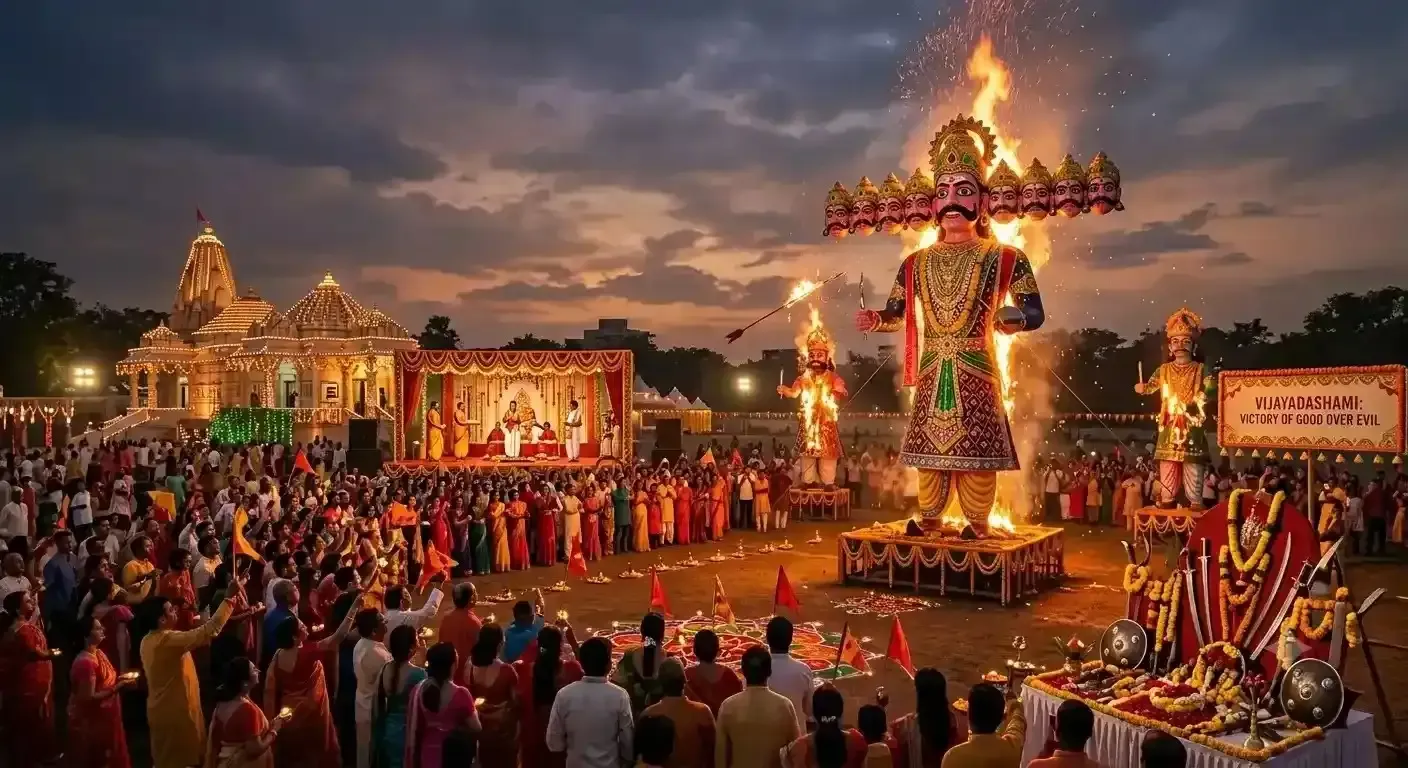
Durga Puja 2026 dates for Kolkata and Bengal, day by day from Drik Panchang: Mahalaya on Saturday 10 October, Bodhon on Saturday 17 October, Maha Ashtami on Monday 19 October and Bijoya Dashami with Sindoor Khela on Wednesday 21 October, with what happens on each day and how families abroad celebrate.
Quick answer: The Durga Puja 2026 dates in Kolkata begin with Mahalaya on Saturday 10 October, and the main puja days run from Maha Shashthi on Saturday 17 October to Bijoya Dashami and Sindoor Khela on Wednesday 21 October 2026. Maha Ashtami, with Kumari Puja and Sandhi Puja, is on Monday 19 October and Maha Navami is on Tuesday 20 October, the same day as all-India Dussehra. All dates below are from the Drik Panchang Durga Puja calendar for Kolkata.
This guide has been restored at its original hindutone.com address. It lists every Durga Puja 2026 date, explains what happens on each day, and adds practical notes for pandal hopping in Kolkata and for Bengali families celebrating abroad.
Durga Puja 2026 dates: full calendar for Kolkata
| Day | Date (2026) | Main observance |
|---|---|---|
| Mahalaya | Sat 10 Oct | Mahalaya Amavasya; end of Pitri Paksha, start of Devi Paksha |
| Panchami | Fri 16 Oct | Bilva Nimantran |
| Maha Shashthi | Sat 17 Oct | Kalparambha, Akal Bodhon, Amantran and Adhivas |
| Maha Saptami | Sun 18 Oct | Kolabou (Nabapatrika) Puja |
| Maha Ashtami | Mon 19 Oct | Kumari Puja and Sandhi Puja |
| Maha Navami | Tue 20 Oct | Navami Homa |
| Bijoya Dashami | Wed 21 Oct | Durga Visarjan and Sindoor Khela (Sindoor Utsav) |
Source: Drik Panchang, Durga Puja calendar for Kolkata. Sharad Navratri across India begins on Sunday 11 October 2026, and the all-India Dussehra / Vijayadashami is Tuesday 20 October 2026. Exact puja and tithi timings vary by location, so check Drik Panchang for your city or your local puja committee's schedule.
Mahalaya (Saturday 10 October): the Goddess is invoked
Mahalaya Amavasya is the last day of Pitri Paksha, the fortnight dedicated to ancestors. Early in the morning many Bengalis offer tarpan (water oblations) to their forefathers at the Ganga ghats or at home. The day also marks the start of Devi Paksha, the fortnight of the Goddess.
For generations, Bengali homes have woken before dawn on Mahalaya to the radio programme Mahishasura Mardini, with Birendra Krishna Bhadra's recitation of the Chandi verses and devotional songs. In the idol-making quarter of Kumartuli and in workshops across Bengal, artisans traditionally work to complete the images in time for the festival, and Mahalaya is widely associated with the painting of the Goddess's eyes (chokkhu daan).
Panchami and Shashthi (16 and 17 October): invitation and awakening
On Panchami, Friday 16 October, Drik Panchang lists Bilva Nimantran, the ritual invitation of the Goddess at a bel (bilva) tree, which is sacred to Shiva and Devi. Many pandals open to visitors around this time, and the city's crowds start building.
On Maha Shashthi, Saturday 17 October, the formal puja begins with Kalparambha (the sankalpa that starts the worship), Akal Bodhon (the 'untimely awakening' of the Goddess), and Amantran and Adhivas (inviting and installing her). Akal Bodhon recalls the tradition that Lord Rama worshipped Durga in autumn, outside the usual spring season, to seek her blessing before his battle with Ravana. On Shashthi the face of the Goddess is unveiled in many pandals.
Maha Saptami (Sunday 18 October): Nabapatrika or Kolabou
Saptami begins at dawn with the bathing of the Nabapatrika, a bundle of nine plants, including a banana plant, tied together and representing nine forms of the Goddess. It is bathed, traditionally in the Ganga or a river or pond, wrapped in a red-bordered white sari and placed beside the image of Lord Ganesha, which is why it is popularly called Kola Bou (banana bride). The main Saptami puja follows, with the life-infusing rites (prana pratishtha) of the Goddess in the image.
Maha Ashtami (Monday 19 October): Kumari Puja and Sandhi Puja
Ashtami is the most important day for many devotees. Families fast until they offer pushpanjali (flower offerings with mantras recited after the priest) in the morning, then share bhog.
- Kumari Puja: A young girl is worshipped as the living form of the Goddess. The ritual, famously performed at Belur Math and in many traditional household pujas, honours the divine feminine in its purest form.
- Sandhi Puja: Performed at the junction (sandhi) of Ashtami and Navami, it honours the moment Devi took the form of Chamunda to slay the demons Chanda and Munda. Traditionally 108 lotuses and 108 lamps are offered. The exact window depends on the tithi, so check Drik Panchang for your city or your puja committee's schedule.
Maha Navami (Tuesday 20 October): Navami Homa and the last night
Maha Navami concludes the main worship with the Navami Homa (fire offering). Many pujas serve a grand bhog on this day, and Navami night is the busiest evening of pandal hopping, with dhak drums and dhunuchi naach, the dance with clay incense burners, in front of the Goddess. Tuesday 20 October 2026 is also the all-India Dussehra / Vijayadashami, so Bengali families with friends in other states will find two celebrations on the same day.
Bijoya Dashami and Sindoor Khela (Wednesday 21 October)
On Bijoya Dashami, Wednesday 21 October 2026, the final rites are performed and the Goddess is bid farewell before visarjan (immersion). A mirror is often held before the image so that devotees can see her reflection in water, a symbolic farewell before her return to Kailash.
Sindoor Khela is the emotional high point. Married women offer sindoor (vermilion) and sweets to the Goddess, touch the sindoor to her forehead and feet, then apply it to one another's foreheads and faces, praying for the well-being of their families. In recent years many pujas have welcomed all women who wish to take part.
After the immersion, families exchange Shubho Bijoya greetings: younger members touch elders' feet, friends embrace, and sweets such as narkel naru and sandesh are shared. Visits for Bijoya continue for days afterwards.
Pandal hopping and bhog in Kolkata
Kolkata's Durga Puja was inscribed on UNESCO's list of the Intangible Cultural Heritage of Humanity in 2021, and it is easy to see why. Thousands of community (sarbojanin) pujas create pandals ranging from traditional styles to elaborate themed installations, and many families also visit old household (bonedi bari) pujas.
- Plan by area: Group pandals by neighbourhood (north, central and south Kolkata) to avoid long journeys between them.
- Go early or late: Mornings and late nights are often less crowded than evenings, especially on Saptami, Ashtami and Navami.
- Use public transport: Roads near popular pandals get heavily congested; metro and walking are usually easier.
- Bhog: Traditional bhog includes khichuri, labra (mixed vegetables), beguni (fried aubergine), chutney and payesh (rice pudding). Many pujas serve bhog to visitors; follow the committee's queue and timing.
- Respect the space: Remove footwear where asked, avoid blocking the view during aarti and pushpanjali, and keep the area clean.
Durga Puja 2026 for Bengali families abroad
Bengali associations and Hindu temples in the USA, Canada, the UK, Australia, Singapore, the Gulf and elsewhere hold Durga Puja every year. Because the tithi days fall on weekdays, many community pujas shift their main celebrations to the nearest weekend, while others keep the exact dates. Check your local association's or temple's official website for its schedule.
- Join pushpanjali in person, or watch a livestreamed puja from Kolkata if you cannot attend locally.
- Cook a simple bhog at home on Ashtami (khichuri, labra and payesh) and share it with neighbours.
- Play the Mahalaya recitation on the morning of Saturday 10 October and tell children the story of Durga and Mahishasura.
- On Bijoya, call elders in India to touch-feet virtually and send Shubho Bijoya greetings.
Frequently asked questions
When is Durga Puja 2026 in Kolkata?
The main days of Durga Puja 2026 in Kolkata run from Maha Shashthi on Saturday 17 October to Bijoya Dashami on Wednesday 21 October 2026, per the Drik Panchang Durga Puja calendar for Kolkata. Mahalaya, which opens the Devi Paksha, is on Saturday 10 October and Bilva Nimantran (Panchami) is on Friday 16 October.
When is Sindoor Khela 2026?
Sindoor Khela (Sindoor Utsav) falls on Bijoya Dashami, Wednesday 21 October 2026, in Kolkata. It is performed by married women after the final puja and before the idol leaves the pandal for immersion, so the exact hour depends on each puja committee and family.
Why is Bijoya Dashami on 21 October when Dussehra is on 20 October?
The all-India Dussehra / Vijayadashami date is Tuesday 20 October 2026. Bengal's Durga Puja calendar follows its own rules for Dashami and visarjan, and for Kolkata Drik Panchang lists Maha Navami on Tuesday 20 October and Bijoya Dashami, Durga visarjan and Sindoor Khela on Wednesday 21 October 2026.
What time is Sandhi Puja in 2026?
Sandhi Puja falls on Maha Ashtami, Monday 19 October 2026, at the junction where Ashtami ends and Navami begins. The exact window depends on the tithi timings, so check Drik Panchang for your city or follow your puja committee's announced schedule.
When is Mahalaya 2026?
Mahalaya Amavasya is on Saturday 10 October 2026. It closes Pitri Paksha, when families offer tarpan to their ancestors, and in Bengal it is the day the Goddess is invoked to begin her journey home, with Navratri starting the next day, Sunday 11 October.
Is Durga Puja abroad held on the same dates?
Many Bengali community pujas in the USA, Canada, the UK, Australia and elsewhere hold their main celebrations on the nearest weekend so that working families can attend, while some follow the exact tithi dates. Check your local association's or temple's official website for its schedule.
Editor's note
Editor's note (6 October 2026): This guide has been restored at its original address after the earlier version was lost. All Durga Puja 2026 dates are from the Drik Panchang Durga Puja calendar for Kolkata; the all-India Dussehra date is Tuesday 20 October 2026. We have not listed clock times for Sandhi Puja, pushpanjali or visarjan because they vary by location and committee, so please check Drik Panchang for your city or your puja's official schedule.
Related guides
You might also like
Bathukamma 2026 Dates: Engili Pula (10 October) to Saddula Bathukamma (19 October)
Navratri 2026 Colours: The 9 Days List (11 to 19 October) with Navadurga Forms
Dussehra 2026 Wishes, Messages and Quotes: 45 Original Vijayadashami Greetings