
Navratri 2026 Colours: The 9 Days List (11 to 19 October) with Navadurga Forms
The Navratri 2026 colours list for all nine days, from Sunday 11 October to Monday 19 October. Days 1 to 7 follow the popular weekday colour pattern, days 8 and 9 vary by publisher, and each day is matched with its Navadurga form, plus outfit ideas and office-wear tips for NRIs.
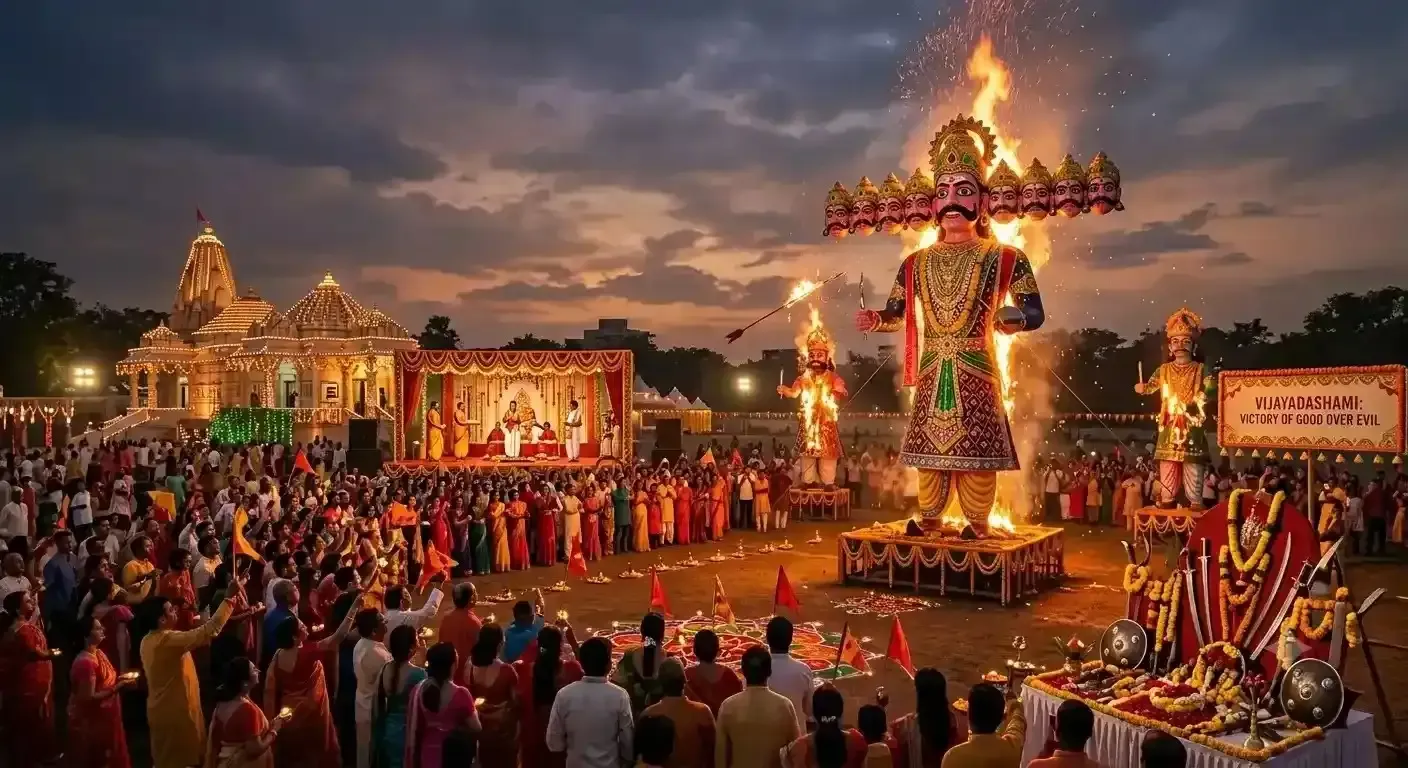
The Navratri 2026 colours list for all nine days, from Sunday 11 October to Monday 19 October. Days 1 to 7 follow the popular weekday colour pattern, days 8 and 9 vary by publisher, and each day is matched with its Navadurga form, plus outfit ideas and office-wear tips for NRIs.
Quick answer: The Navratri 2026 colours for the nine days from Sunday 11 October to Monday 19 October 2026 are: orange (11 Oct), white (12 Oct), red (13 Oct), royal blue (14 Oct), yellow (15 Oct), green (16 Oct) and grey (17 Oct). For day 8 (Sunday 18 Oct) and day 9 (Monday 19 Oct), lists differ, and the most common choices are purple, pink or peacock green. In India, Durga Ashtami and Maha Navami both fall on Monday 19 October, and Dussehra is on Tuesday 20 October 2026.
This page has been restored at its original hindutone.com address. It explains where the colour custom comes from, gives a clear day-by-day table with the Navadurga form for each day, and offers simple outfit ideas for home, temple, Garba nights and the office, in India and abroad.
Where the Navratri colour custom comes from
Wearing one colour for each day of Navratri is a modern custom. It became popular in Maharashtra, especially in Mumbai, where newspapers began publishing a colour for each day and offices, local trains and housing societies joined in. Today the idea has spread across India and to Indian communities around the world through social media.
It is important to be clear: the colours are not prescribed in the scriptures. Texts such as the Devi Mahatmya describe the glory of the Goddess and how to worship her, but they do not assign a dress colour to each day. The colour list is a happy community tradition that brings people together. You can follow it, adapt it or ignore it, and your Navratri worship remains complete.
Most lists follow a simple rule for the first seven days: the colour is decided by the day of the week on which that Navratri day falls. Because Navratri starts on a different weekday each year, the order of colours changes every year.
The weekday colour rule
| Weekday | Colour |
|---|---|
| Sunday | Orange |
| Monday | White |
| Tuesday | Red |
| Wednesday | Royal blue |
| Thursday | Yellow |
| Friday | Green |
| Saturday | Grey |
Since Navratri 2026 begins on a Sunday, the first seven days follow this table in order, starting with orange.
Navratri 2026 colours: the 9 days list
| Day | Date (2026) | Colour | Navadurga form (by day count) |
|---|---|---|---|
| Day 1 | Sunday 11 October | Orange | Shailaputri |
| Day 2 | Monday 12 October | White | Brahmacharini |
| Day 3 | Tuesday 13 October | Red | Chandraghanta |
| Day 4 | Wednesday 14 October | Royal blue | Kushmanda |
| Day 5 | Thursday 15 October | Yellow | Skandamata |
| Day 6 | Friday 16 October | Green | Katyayani |
| Day 7 | Saturday 17 October | Grey | Kalaratri |
| Day 8 | Sunday 18 October | Varies: purple, pink or peacock green | Mahagauri |
| Day 9 | Monday 19 October | Varies: purple, pink or peacock green | Siddhidatri |
About days 8 and 9: There is no single agreed colour for the last two days. Different newspapers and websites publish different choices, and purple, pink and peacock green are the most common. Treat these as options, not as fixed facts. If your office, Garba group or temple committee has shared a list, follow that list so everyone matches.
About Ashtami and Navami in 2026: In the Hindu calendar, festival days follow the tithi (lunar day), not the civil date. In 2026 the tithis overlap, so in India Durga Ashtami and Maha Navami both fall on Monday 19 October, per Drik Panchang. Families who follow the tithi may worship Mahagauri (the Ashtami form) and Siddhidatri (the Navami form) on the same day, and Kanya Pujan is usually done on that day too. Dussehra follows on Tuesday 20 October. Your temple or family priest will tell you which form to honour on each day.
The nine forms of Durga, day by day
Each day of Navratri is dedicated to one of the nine forms of the Goddess, called the Navadurga. The sequence below is the standard one.
- Shailaputri: Daughter of the mountain king Himavan. She rides a bull and holds a trident and a lotus. She represents a firm and steady start.
- Brahmacharini: The Goddess in deep penance, holding a rosary and a water pot. She represents discipline and devotion.
- Chandraghanta: She wears a half-moon shaped like a bell on her forehead. She represents courage and calm strength.
- Kushmanda: She is described as the one whose gentle smile created the universe. She represents light and energy.
- Skandamata: Mother of Skanda (Kartikeya), shown holding her child. She represents a mother's love and protection.
- Katyayani: Born in the hermitage of the sage Katyayana, she is the warrior form who defeated Mahishasura.
- Kalaratri: The fierce, dark form who destroys fear and darkness. Devotees see her as a protector.
- Mahagauri: The bright, peaceful form, dressed in white. She represents purity and forgiveness.
- Siddhidatri: The giver of spiritual gifts and fulfilment. She completes the nine days of worship.
The colour list and the Navadurga sequence are separate traditions. The colours come from the weekday rule, while the Navadurga forms come from religious practice. Some articles try to link each colour to a particular Goddess, but that link is a modern idea as well.
Outfit and saree ideas for each colour
- Orange (11 Oct): A saffron or orange cotton saree, a kurta with white pyjama, or an orange dupatta over a simple outfit.
- White (12 Oct): A white or cream saree with a coloured border, such as a Kerala kasavu style saree, or a white chikankari kurta.
- Red (13 Oct): Red is a favourite colour for Devi worship. A red silk saree, a red lehenga for Garba, or a red kurta works well.
- Royal blue (14 Oct): A royal blue silk or georgette saree, a blue Nehru jacket over a kurta, or a blue chaniya choli.
- Yellow (15 Oct): A bright yellow cotton saree, a yellow kurta, or a yellow dupatta with any neutral outfit.
- Green (16 Oct): A green silk saree, green bangles, or a green kurta. Green suits both temple visits and Garba nights.
- Grey (17 Oct): Grey can look elegant with silver jewellery. Try a grey saree with a bright border, or a grey kurta with a coloured stole.
- Days 8 and 9 (18 and 19 Oct): Keep one purple, one pink and one peacock green item ready, such as a dupatta or stole. Then you can match whichever list your group follows.
Children can join in easily with a T-shirt, a hair ribbon or a bindi in the colour of the day. There is no need to buy a new outfit for every day. Reusing and mixing what you already have is in the spirit of the festival.
Office-wear tips for NRIs and working professionals
Many Indian professionals in the USA, Canada, the UK, the Gulf, Singapore and Australia like to follow the colours even on working days. A few simple ideas help:
- Use one coloured item: A shirt, a tie, a scarf, a blouse or a pocket square in the day's colour is enough. It fits most office dress codes.
- Plan the week on the weekend: Navratri 2026 starts on a Sunday, so 12 to 16 October are working days in most countries. Lay out the white, red, royal blue, yellow and green items in advance.
- Start a friendly colour group: Indian colleagues often share a daily colour photo. Keep it inclusive and invite anyone who wants to join.
- Change for the evening: Keep a traditional outfit in the car or bag if you are going to the temple or a Garba night after work.
- Remember local dates: In the USA, Canada and the UK, Drik Panchang lists Durga Ashtami on 18 October and Maha Navami on 19 October, so your local temple may hold Ashtami events a day earlier than India.
For temple schedules, Garba nights and puja times in your city, see the Navratri 2026 NRI guide, and check your temple's official website for current timings.
Frequently asked questions
Are the Navratri colours mentioned in the scriptures?
No. The nine-colour dress code is a modern custom. It became popular in Maharashtra, especially in Mumbai, over the last two decades and then spread through newspapers and social media. The scriptures describe the worship of the Goddess, not a colour for each day. Wearing the colours is a joyful community practice, and it is completely optional.
What is the Navratri 2026 colour for day 1?
Navratri 2026 begins on Sunday 11 October. In the popular weekday pattern, Sunday is orange, so orange is the most widely shared colour for day 1. Day 1 is dedicated to Goddess Shailaputri.
Why do different websites give different colours for day 8 and day 9?
Days 1 to 7 follow the weekday rule, which almost everyone uses. For the last two days there is no single fixed rule, so each publisher chooses its own colours. Purple, pink and peacock green are the most common choices. Pick the list your community or office group is following.
When are Ashtami and Navami in Navratri 2026?
In India, Durga Ashtami and Maha Navami both fall on Monday 19 October 2026, per Drik Panchang. Dussehra (Vijayadashami) is on Tuesday 20 October 2026. In the USA, Canada and the UK, Drik Panchang lists Durga Ashtami on 18 October and Maha Navami on 19 October, so check your local temple calendar.
Do I have to wear the colour of the day to perform Navratri puja?
No. Clean clothes, a sincere heart and regular prayer matter far more than the colour you wear. Many families simply wear red, yellow or other bright traditional colours throughout Navratri, and many temples request only modest traditional dress.
Editor's note
Editor's note (6 October 2026): This guide has been restored at its original address after the earlier version was lost. Navratri 2026 dates are India dates from Drik Panchang: Navratri begins Sunday 11 October, Durga Ashtami and Maha Navami fall on Monday 19 October, and Dussehra is Tuesday 20 October. The colours for days 1 to 7 follow the widely used weekday rule. The colours for days 8 and 9 vary between publishers and are shown as options. The colour custom is modern and is not a scriptural requirement.
Related guides
You might also like
Bathukamma 2026 Dates: Engili Pula (10 October) to Saddula Bathukamma (19 October)
Dussehra 2026 in Victoria, BC: Date, Vijay Muhurat, Temples and Navratri Celebrations
Dussehra 2026 in Surrey: Date, Vijay Muhurat, Temples and Navratri Celebrations