
Bastar Dussehra 2026: Chhattisgarh's 75-Day Festival of Danteshwari Devi, Rituals in Order and How to Visit
Bastar Dussehra 2026 is the famous 75-day festival of Jagdalpur in Chhattisgarh, devoted to Goddess Danteshwari, not to Rama's victory over Ravana. This guide explains the rituals as commonly documented, from Pat Jatra and Kachhan Gadi to the chariot processions, Muria Darbar and Kutumb Jatra, with the 2026 Navratri (11-19 October) and Dussehra (Tuesday 20 October) dates and general advice for visitors.
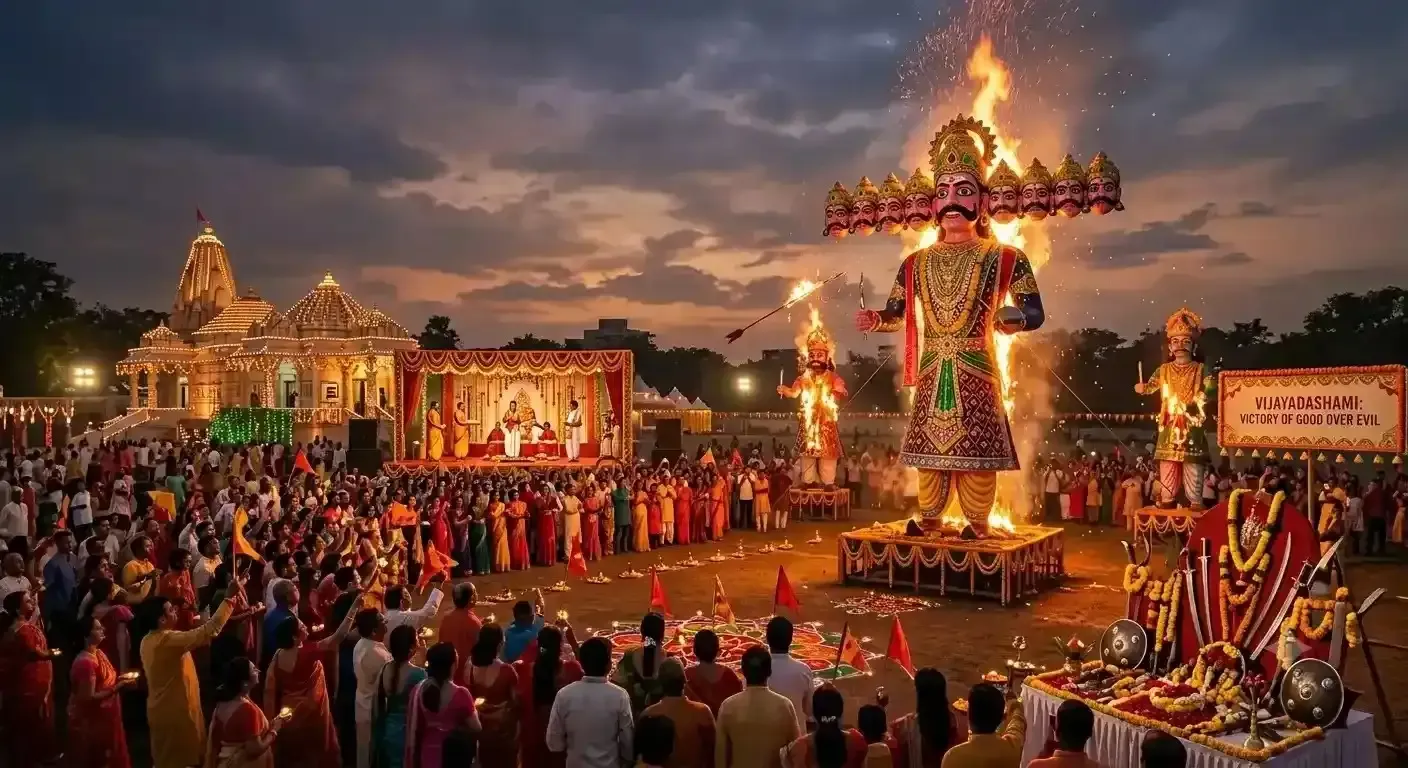
Bastar Dussehra 2026 is the famous 75-day festival of Jagdalpur in Chhattisgarh, devoted to Goddess Danteshwari, not to Rama's victory over Ravana. This guide explains the rituals as commonly documented, from Pat Jatra and Kachhan Gadi to the chariot processions, Muria Darbar and Kutumb Jatra, with the 2026 Navratri (11-19 October) and Dussehra (Tuesday 20 October) dates and general advice for visitors.
Quick answer: Bastar Dussehra 2026 is the famous festival of Jagdalpur in Chhattisgarh that, as commonly documented, lasts about 75 days and is devoted to Goddess Danteshwari, not to Rama's victory over Ravana. Its central days fall in Navratri, which in 2026 runs from Sunday 11 to Monday 19 October, and around Dussehra on Tuesday 20 October 2026. There is no Ravan Dahan. Instead, the festival has a long chain of rituals carried out by many tribal and non-tribal communities, including giant wooden chariots pulled through the town, a tribal council called the Muria Darbar, and a farewell to visiting village deities.
This guide has been restored at its original hindutone.com address. It explains the rituals in the order they are commonly documented. Apart from the Navratri and Dussehra dates, it does not give 2026 dates for individual rituals, because these are fixed locally each year.
Bastar Dussehra 2026: key dates
The festival committee in Jagdalpur fixes the dates of each ritual by the local Hindu calendar. Only the following 2026 dates are confirmed from Drik Panchang. Times are India Standard Time.
| Item | 2026 (India) |
|---|---|
| Sharad Navratri | Sun 11 Oct to Mon 19 Oct 2026 |
| Durga Ashtami and Maha Navami | Mon 19 Oct 2026 |
| Dussehra / Vijayadashami | Tue 20 Oct 2026 |
| Dashami tithi | 12:50 PM IST 20 Oct - 2:11 PM IST 21 Oct (Drik) |
| Vijay Muhurat, Jagdalpur | 1:43-2:29 PM |
| Individual Bastar rituals | Announced locally; check the Bastar district administration |
For Raipur, Bilaspur and other Chhattisgarh celebrations, see Dussehra 2026 in Chhattisgarh.
Why Bastar Dussehra is different
In most of North India, Dussehra marks Rama's victory over Ravana, and large effigies of Ravana are burnt. In Bastar, the festival has a different meaning. It is a festival of the Goddess and of the community. It honours Danteshwari Devi, the family deity of the former rulers of Bastar, together with hundreds of village gods and goddesses whose priests and symbols are brought to Jagdalpur.
The festival brings together many communities of the Bastar region, including Gond, Muria, Maria, Halba, Dhurwa and Bhatra people, among others. Different communities have hereditary roles. Some bring wood, some build the chariot, some pull it, and some perform specific rituals. As commonly told, the chariot tradition began in the time of the Kakatiya rulers of Bastar, after a king visited Jagannath Puri and received the title 'Rathapati' (lord of the chariot).
Bastar Dussehra 2026 rituals in order
The sequence below follows the order in which the main rituals are commonly documented. Details and names can vary slightly between sources, and the exact days are announced locally each year.
Pat Jatra
The festival opens with Pat Jatra, traditionally held on Hariyali Amavasya in the month of Shravan. Wood brought from the forest is worshipped. This wood is used in making the tools and parts of the chariot. Pat Jatra marks the start of the roughly 75-day festival.
Building the chariot
After Pat Jatra, pillars are set up and craftsmen from local communities build the chariot by hand from sal and other wood. Ropes are commonly made from forest fibres. The chariot is very large and is made fresh, so this work takes many weeks.
Kachhan Gadi
On the eve of Navratri, around Ashwin Amavasya, comes Kachhan Gadi. A young girl from a particular community is believed to be possessed by Kachhan Devi. She is seated on a swing made of thorns. As commonly documented, she then gives the royal representative permission to hold the festival. Without this permission, the festival does not proceed.
Jogi Bithai
At the start of Navratri comes Jogi Bithai. A man from the Halba community sits in a pit dug inside a hall in Jagdalpur, in a meditative posture. As commonly documented, he stays there through Navratri, fasting and praying, so that the festival is completed without obstacles.
Rath Parikrama
During Navratri, the chariot is pulled around the town in the Rath Parikrama. The Goddess's umbrella (chhatra) is placed on the chariot, and devotees pull it with thick ropes along a fixed route. In the commonly documented pattern, a smaller chariot, often called the Phool Rath (flower chariot), is pulled on the earlier days of Navratri, and a larger chariot is used later.
Nisha Jatra and Mawli Parghav
Near the end of Navratri there are night rituals, often called Nisha Jatra. Around the same time, Mawli Parghav takes place. This is the welcome of the doli (palanquin) of Mawli Devi, a form of Danteshwari, which is brought from Dantewada to Jagdalpur. The royal representative and devotees receive the Goddess with great honour.
Bhitar Raini and Bahar Raini
Around Vijayadashami, the large chariot is pulled again in the ritual commonly called Bhitar Raini. In Bahar Raini, which follows it, the chariot is taken by members of the Maria community to Kumhdakot, a forest area near the town. As commonly told, this is a symbolic 'capture' of the chariot. The royal representative then goes to Kumhdakot, shares a meal of the new harvest with the villagers, and the chariot is brought back to the palace with celebration.
Muria Darbar
The Muria Darbar is a traditional assembly. Village headmen and community representatives meet the royal representative and officials. They speak about the festival and about problems in their villages. In recent times, senior state officials and leaders commonly attend. It shows the festival's role as a meeting point between the people and those in authority.
Kutumb Jatra and farewell to the deities
In Kutumb Jatra, the village deities and their priests, who came to Jagdalpur for the festival, are honoured and given a formal farewell. Finally, the doli of Mawli Devi is sent back to Dantewada with worship and music. This brings the long festival to a close.
Danteshwari Devi and Dantewada
Goddess Danteshwari is the presiding deity of Bastar. Her main temple stands at Dantewada, at the meeting point of the Shankini and Dankini rivers, and many devotees regard it as one of the Shakti Peethas. There is also a Danteshwari temple in Jagdalpur, next to the palace, which is a centre of the festival. For the Shakti tradition behind Navratri, see Navratri and Dussehra 2026: complete 9-day Devi worship guide.
How to visit Bastar Dussehra
- Getting there: Jagdalpur is the headquarters of Bastar district in southern Chhattisgarh. Most visitors travel by road from Raipur. Jagdalpur also has a railway station and a small airport, but connections are limited, so check current schedules.
- Plan early: Hotels in Jagdalpur fill quickly during the main festival days. Book early and confirm with the hotel directly.
- Check the schedule: Ritual dates and times are set locally. Follow the official announcements of the Bastar district administration and Chhattisgarh tourism.
- Be respectful: This is a living religious festival. Ask before photographing people, priests or rituals, and follow the instructions of organisers and police.
- Crowds: Chariot processions draw large crowds. Keep a safe distance from the chariot and its ropes, and look after children and elders.
- Nearby places: Visitors often combine the trip with Dantewada and with natural sites of Bastar such as Chitrakote Falls. Check local travel advisories before going.
Bastar Dussehra and the rest of India
Bastar Dussehra is one of several regional Dussehra traditions that do not centre on Ravan Dahan. Kullu Dussehra in Himachal Pradesh begins on Vijayadashami with a gathering of village deities, and Mysore Dasara centres on Goddess Chamundeshwari. For the pan-Indian meaning of the day, see Dussehra / Vijayadashami 2026.
Frequently asked questions
When is Bastar Dussehra 2026?
Bastar Dussehra is a long festival that, as commonly documented, lasts about 75 days. Its central days fall during Navratri, which in 2026 runs from Sunday 11 to Monday 19 October, and around Dussehra on Tuesday 20 October 2026 (Drik Panchang). The festival committee in Jagdalpur sets the exact dates of each ritual by the local Hindu calendar, so check the official announcements of the Bastar district administration.
Is Ravana burnt at Bastar Dussehra?
No. Bastar Dussehra does not involve Ravan Dahan. The festival is devoted to Goddess Danteshwari, the presiding deity of Bastar, and to the many local village deities. Its main events are worship of the Goddess, chariot processions and gatherings of tribal communities.
Why does Bastar Dussehra last 75 days?
As commonly documented, the festival begins on Hariyali Amavasya in the month of Shravan with the Pat Jatra ritual and continues until after Vijayadashami. The long period covers bringing wood from the forest, building the chariot, and a series of rituals that involve many communities of the region.
Who is Danteshwari Devi?
Danteshwari Devi is the family deity of the former rulers of Bastar and the presiding Goddess of the region. Her main temple is at Dantewada, and many devotees regard it as one of the Shakti Peethas. During Bastar Dussehra, her umbrella (chhatra) and her doli are taken in procession in Jagdalpur.
What is the Muria Darbar?
The Muria Darbar is a traditional assembly held during the festival. Headmen and representatives of villages meet the royal representative and officials to discuss matters of the region. Today senior government officials and leaders commonly attend.
Can tourists attend Bastar Dussehra?
Yes. The public processions are open and draw large crowds. Some rituals are private or held inside temple spaces, and visitors should respect any restrictions. Check the official announcements of the Bastar district administration and Chhattisgarh tourism before planning travel.
Editor's note
Editor's note (6 October 2026): This guide has been restored at its original address after the earlier version was lost. The only 2026 dates given are Navratri (11 to 19 October) and Dussehra (Tuesday 20 October), from Drik Panchang; the Vijay Muhurat for Jagdalpur is an India Standard Time value. The ritual sequence is described as commonly documented; names, order and details can vary between sources, and the dates of individual rituals are fixed locally each year. Please check the official announcements of the Bastar district administration.
Related guides
You might also like
October 2026 Festivals State-Wise in India: Dates, Traditions and Where Each Festival Is Biggest
Kati Bihu 2026: Date (18 October), Kongali Bihu Rituals, Tulsi, Saki Lamps and Akash Banti
Eco-Friendly Puja Items in the USA: A Practical Guide to a Greener Daily and Festival Puja