
Sandhi Puja 2026: Date (19 October), Ashtami–Navami Timing, 108 Lamps and Lotuses, and Kolkata Traditions
Sandhi Puja 2026 falls on Monday 19 October, at the meeting of Ashtami and Navami, which Drik Panchang places at 10:51 AM IST. Here is what the junction means, the Chamunda legend, why 108 lamps and 108 lotuses are offered, how Kolkata pandals and family pujas observe it, and how to mark it at home or abroad.
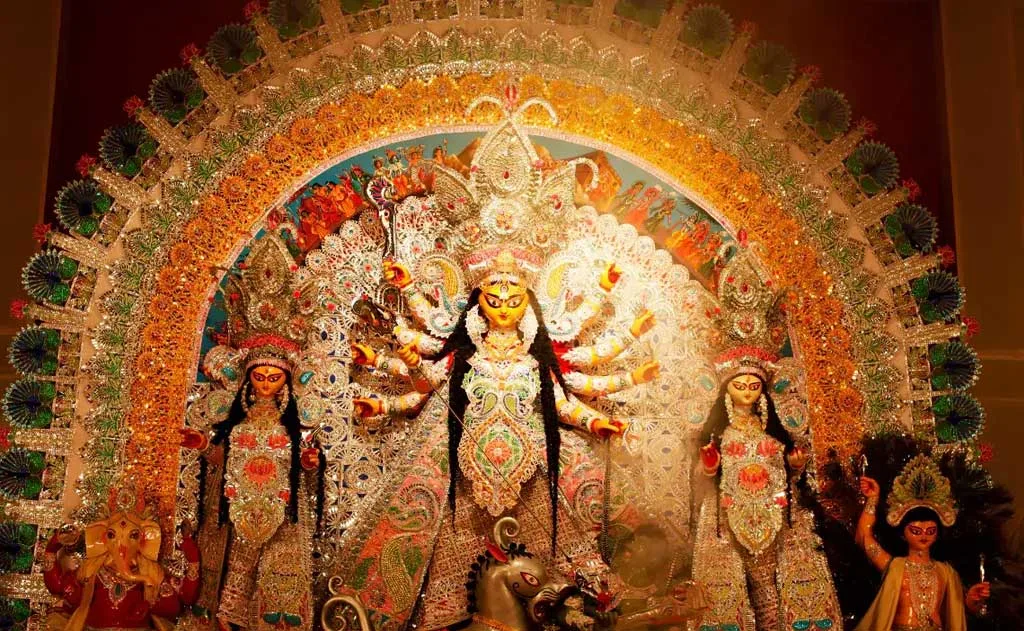
Sandhi Puja 2026 falls on Monday 19 October, at the meeting of Ashtami and Navami, which Drik Panchang places at 10:51 AM IST. Here is what the junction means, the Chamunda legend, why 108 lamps and 108 lotuses are offered, how Kolkata pandals and family pujas observe it, and how to mark it at home or abroad.
Quick answer: Sandhi Puja 2026 is on Monday 19 October 2026. It is performed at the meeting point (sandhi) of Ashtami and Navami, which Drik Panchang places at 10:51 AM IST for both Kolkata and Hyderabad. The puja traditionally spans the 48 minutes around that moment, the last 24 minutes of Ashtami and the first 24 minutes of Navami. Pandals and the Bengali panjika announce the exact window, so follow your committee or priest.
Last updated: 10 October 2026. Dates and tithi times are from Drik Panchang's day panchang (Kolkata and Hyderabad) and its Durga Puja calendar for Kolkata. We do not print a separate muhurat window because Drik's day panchang lists the observance without one.
Of all the moments in Durga Puja, none is awaited with more hushed intensity than Sandhi Puja. The dhak falls into a different rhythm, the lamps are counted out one by one, and for a short time the whole pandal seems to hold its breath. This guide explains what the junction means, where the tradition of 108 lamps and lotuses comes from, how Kolkata keeps it, and how you can take part in your own way. For the full festival calendar see our Durga Puja 2026 dates in Kolkata, from Mahalaya to Sindoor Khela.
Sandhi Puja 2026 date and timing
| Detail | 2026 (IST, Drik Panchang) |
|---|---|
| Date | Monday, 19 October 2026 |
| Ashtami tithi | Began 08:27 AM on Sunday 18 October; ends 10:51 AM on Monday 19 October |
| Navami tithi | Begins 10:51 AM on Monday 19 October |
| Sunrise in Kolkata | 05:35 AM |
| Sandhi Puja window | The 48 minutes spanning the 10:51 AM junction; exact time announced by your panjika or pandal |
| Maha Navami worship (Kolkata calendar) | Tuesday, 20 October 2026 |
| Bijoya Dashami (Kolkata calendar) | Wednesday, 21 October 2026 |
Because a tithi ends at one instant for the whole of India, the junction falls at 10:51 AM IST in Kolkata, Delhi, Mumbai or Hyderabad alike. What differs from city to city is sunrise and the local customs of each puja. In 2026 the junction comes in the late morning, so Ashtami pushpanjali is usually completed before it, and many pandals will be at their most crowded just as Sandhi Puja begins.
Drik's day panchang for Hyderabad also lists Durga Ashtami, Maha Navami, Masik Durgashtami and Saraswati Visarjan on 19 October. Our Panchangam for 19 October 2026 has the nakshatra, yoga and other details for the day.
What Sandhi Puja means: the meeting of two tithis
Sandhi means a junction or joining. In the Hindu day, the transitions between periods, such as dawn and dusk, are treated as especially charged times for prayer. Sandhi Puja applies the same idea to the Durga Puja calendar: the moment when the eighth lunar day, Ashtami, hands over to the ninth, Navami, is regarded as the most powerful point of the entire festival.
Traditionally the observance occupies one muhurta of 48 minutes, divided equally across the junction. The rites are timed so that the main offering falls at the instant the tithis meet. Because the moment is fixed by the Moon, not the clock, it can fall at any hour: some years it comes in the middle of the night, and pandals keep vigil to perform it. In 2026 it comes conveniently in the late morning.
The legend: Chamunda, Chanda and Munda
The Devi Mahatmya (Durga Saptashati), the central scripture of Durga worship, tells how the demon brothers Shumbha and Nishumbha sent their generals Chanda and Munda against the Goddess. From the furrowed brow of the Devi, the text says, sprang a terrifying form, Kali, who destroyed both generals. Because she slew Chanda and Munda, the Goddess named her Chamunda.
Durga Puja tradition holds that this victory happened at the junction of Ashtami and Navami, and so Sandhi Puja is offered to the Goddess in her fierce Chamunda aspect. Devotees understand it as worship of the power that cuts through fear, ego and obstacles. The navarna mantra of Chamunda, widely chanted during Navratri, is:
ॐ ऐं ह्रीं क्लीं चामुण्डायै विच्चे॥
Om Aim Hreem Kleem Chamundayai Vichche
Many devotees also recite the famous verse from the Devi Mahatmya hymn that salutes the Goddess present in all beings as power:
या देवी सर्वभूतेषु शक्तिरूपेण संस्थिता। नमस्तस्यै नमस्तस्यै नमस्तस्यै नमो नमः॥
Ya Devi sarvabhuteshu shakti-rupena samsthita, namastasyai namastasyai namastasyai namo namah.
Chant with devotion and steadiness. These are prayers of surrender to the Mother, not formulas that promise a particular result.
Why 108 lamps and 108 lotuses?
The signature offerings of Sandhi Puja are 108 earthen lamps and 108 lotuses. The number 108 runs through Hindu practice, from the beads of a japa mala to the 108 names of deities, and is regarded as complete and auspicious. At the junction, the lamps are lit and arranged before the Goddess, and the lotuses are offered one after another while the priest recites the prescribed mantras.
In Bengal, the lotuses carry an extra layer of meaning. As popularly told in Bengal, in the Krittivasi Ramayana tradition, Rama worshipped Durga out of season before his final battle with Ravana. This autumn worship, the Akal Bodhon or untimely awakening of the Goddess, is often given as the origin of Sharadiya Durga Puja. In the story, Rama gathered 108 blue lotuses for the Goddess, but when he came to offer them, one was missing. Remembering that he was called lotus-eyed, he resolved to offer one of his own eyes, and the Goddess appeared, stopped him and blessed him with victory.
The story is a much-loved part of Bengali devotion rather than an episode of Valmiki's Ramayana, but it explains why the full count of lotuses matters so deeply to Bengali households: the offering stands for complete, holding-nothing-back devotion. For the wider legends behind the season, read Rama vs Ravana and Durga vs Mahishasura: both Dussehra legends.
How Kolkata and Bengal keep Sandhi Puja
In Drik's Kolkata calendar, Maha Ashtami on Monday 19 October brings pushpanjali in the morning, Kumari Puja at many pujas, and Sandhi Puja at the junction. The sequence on the day typically looks like this:
- Morning: devotees, many fasting, offer pushpanjali (handfuls of flowers) to the Goddess as the priest recites the mantras.
- Kumari Puja: a young girl is worshipped as the living Goddess. The Kumari Puja at Belur Math is particularly well known and draws large crowds.
- Before the junction: the 108 lamps are prepared, the 108 lotuses are counted and arranged, and the dhakis (drummers) take position.
- At the junction: the dhak changes to a distinctive, urgent beat, the lamps are lit, the lotuses are offered, and the priest performs the Sandhi rites to the Goddess as Chamunda.
- After the puja: Navami begins, and the mood shifts towards the final day of worship and the farewell that follows.
Sandhi Puja is observed both in the large community (sarbojanin) pandals run by neighbourhood clubs and in the Bonedi Bari pujas of old family homes, where the rites are often performed exactly as they have been for generations. Many Kolkata residents make a point of being present at one puja for Sandhi, even if they spend the rest of the festival pandal hopping.
Offerings vary by tradition. Historically some Shakta pujas included animal sacrifice at Sandhi; today many pujas, family and community alike, offer symbolic bali instead, using an ash gourd or pumpkin, cucumber, sugarcane or bananas. Practices differ from puja to puja, and devotees follow the custom of their own family or committee.
Our guide to Durga Puja and Bijoya Dashami 2026 in West Bengal covers the full five days, from Bodhon to Sindoor Khela. Neighbouring regions keep closely related traditions; see Durga Puja 2026 in Assam.
Ashtami, Navami and Sandhi across India
Outside Bengal, 19 October 2026 is equally significant. In North India, Durga Ashtami is the day of Kanya Pujan for many families, and since Navami begins the same morning, Maha Navami is observed on the same date. In South India, Ayudha Puja and Saraswati Puja traditions centre on Navami. Our Kanya Pujan 2026 date and vidhi explains the Ashtami and Navami choices, and the Navratri 2026 Day 9: Maa Siddhidatri page covers the goddess of the ninth day.
| Observance | Date (2026) |
|---|---|
| Durga Ashtami, Maha Navami, Sandhi Puja (India) | Monday, 19 October |
| Maha Navami worship (Kolkata calendar) | Tuesday, 20 October |
| Vijayadashami / Dussehra (India) | Tuesday, 20 October |
| Bijoya Dashami, Sindoor Khela (Kolkata calendar) | Wednesday, 21 October |
Dates from Drik Panchang. For Vijayadashami timings and rituals, see our Dussehra / Vijayadashami 2026 guide.
A simple Sandhi Puja at home
The full Sandhi rite belongs to a priest, but anyone can honour the moment at home with sincerity. Here is a simple way to do it:
- Before 10:51 AM IST, clean your puja space and place a picture of Maa Durga.
- Arrange as many small lamps as you can manage safely: 108 if you have them, otherwise 9, 11 or even one. Keep them on a metal tray, away from curtains and children.
- Keep flowers ready. Lotuses are traditional, but any fresh red or white flowers are fine.
- Around the junction, light the lamps, offer the flowers one by one and chant the navarna mantra or simply the name of the Goddess.
- Offer fruit or a simple sweet as bhog, then sit quietly for a few minutes in prayer.
- After the junction, share the prasad with your family.
No lamps or flowers? Light a single candle, fold your hands and spend those minutes in silent prayer to the Mother. Devotion, not quantity, is the heart of the offering.
If you are fasting for Ashtami, break the fast according to your family custom. Elderly people, pregnant women and anyone with a medical condition should not feel obliged to fast and should consult a doctor.
Sandhi Puja for Bengalis abroad
Durga Puja committees in the USA, UK, Canada, Australia, the Gulf and Europe usually hold Sandhi Puja on the nearest convenient day and announce their own time. A few points help:
- The junction of Ashtami and Navami is one astronomical instant, but your local clock time is different from India's. Do not convert 10:51 AM IST yourself; follow the time your puja committee or temple publishes for your city.
- Many diaspora pujas shift the main days to a weekend. Where Sandhi Puja is performed on a different date, the committee generally explains its choice.
- If you cannot attend, light a lamp at home at the time your local puja announces and join in spirit.
Our Navratri 2026 NRI guide has more on keeping the festival abroad.
The meaning for devotees today
Sandhi Puja is about thresholds. Between one tithi and the next, between the Goddess's struggle and her victory, there is a moment when everything is held in balance. Devotees bring 108 lamps to light that threshold and 108 lotuses to show that nothing is held back. Whether you stand in a crowded Kolkata pandal as the dhak thunders or light a single lamp in an apartment far from home, the invitation is the same: to offer the Mother your whole heart at the turning point.
Frequently asked questions
When is Sandhi Puja in 2026?
Sandhi Puja 2026 is on Monday 19 October. Drik Panchang's day panchang for both Kolkata and Hyderabad shows Ashtami ending and Navami beginning at 10:51 AM IST, and Drik's Kolkata Durga Puja calendar lists Maha Ashtami, Kumari Puja and Sandhi Puja on that day.
What is the Sandhi Puja timing in 2026?
The puja is traditionally performed in the 48 minutes that span the junction of the two tithis: the last 24 minutes of Ashtami and the first 24 minutes of Navami. In 2026 that window is centred on 10:51 AM IST. The exact start and end are announced by the Bengali panjika, your puja committee or your family priest, so follow their time.
Why are 108 lamps and 108 lotuses offered in Sandhi Puja?
108 is a sacred number in Hindu worship, and offering 108 lamps and 108 lotuses is the classic way of honouring the Goddess at this moment. In Bengal the lotuses are also linked to the popular story of Rama offering 108 blue lotuses to Durga before his battle with Ravana.
Which form of the Goddess is worshipped at Sandhi Puja?
Sandhi Puja is associated with Chamunda, the fierce form in which, according to the Devi Mahatmya, the Goddess slew the demons Chanda and Munda. Durga is worshipped in this powerful aspect during the junction.
Is Maha Navami on 19 or 20 October 2026?
Across most of India, Durga Ashtami and Maha Navami are both observed on Monday 19 October 2026, because Navami begins at 10:51 AM that day. Drik's Kolkata Durga Puja calendar places Maha Navami worship on Tuesday 20 October and Bijoya Dashami on Wednesday 21 October. Dussehra is on Tuesday 20 October.
Can I do Sandhi Puja at home?
Yes, in a simple form. Many families light lamps, offer flowers and chant the Goddess's name around the junction time. A full Sandhi Puja with 108 lamps, 108 lotuses and the prescribed rites is usually performed by a priest at a pandal, temple or family puja.
What time should Bengalis abroad keep Sandhi Puja?
The tithi junction is a single astronomical moment, but the clock time is different in every country. Do not convert India's time yourself; follow the time announced by your local Durga Puja committee or temple, which works it out for your city.
Editor's note (10 October 2026)
Dates and tithi times in this guide are from Drik Panchang's day panchang for Kolkata and Hyderabad and its Durga Puja calendar for Kolkata, as of 10 October 2026. Drik's day panchang lists Sandhi Puja without a separate muhurat window, so we give the junction time only; the exact Sandhi Puja window comes from the Bengali panjika and your puja committee or priest. Customs described here vary between families, pujas and regions.
You might also like
Dussehra 2026 in Odisha, District by District: Durga Puja and Dussehra
Dussehra 2026 in Assam, District by District: Durga Puja
Dussehra 2026 in Uttarakhand, District by District: Ramlila, Dussehra and Navratri