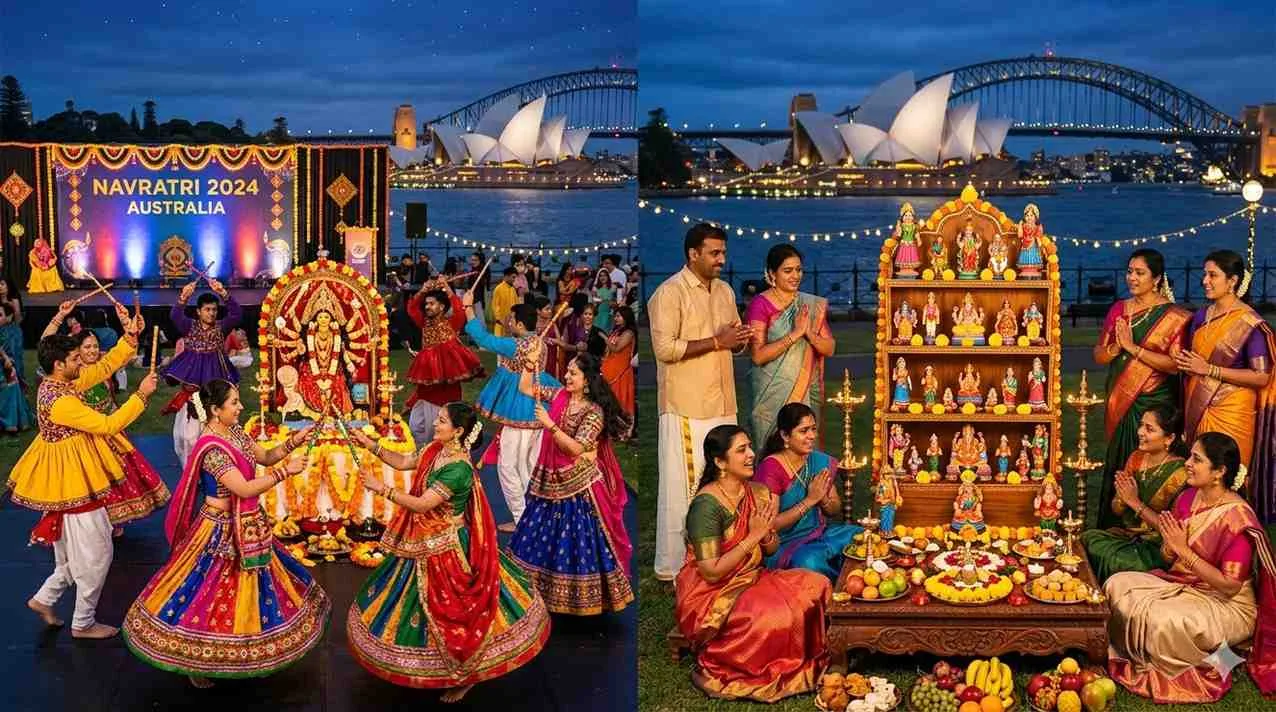
How Indians Celebrate Navratri: Regional Traditions, Garba, Durga Puja, Golu, Bathukamma and Dussehra
A region-by-region guide to Navratri in India: Garba and Dandiya in Gujarat, Durga Puja in Bengal, Bathukamma in Telangana, Golu in Tamil Nadu, Mysuru Dasara, Ramlila, Kerala's Vidyarambham, Kullu Dussehra, fasting food and the 2026 dates.
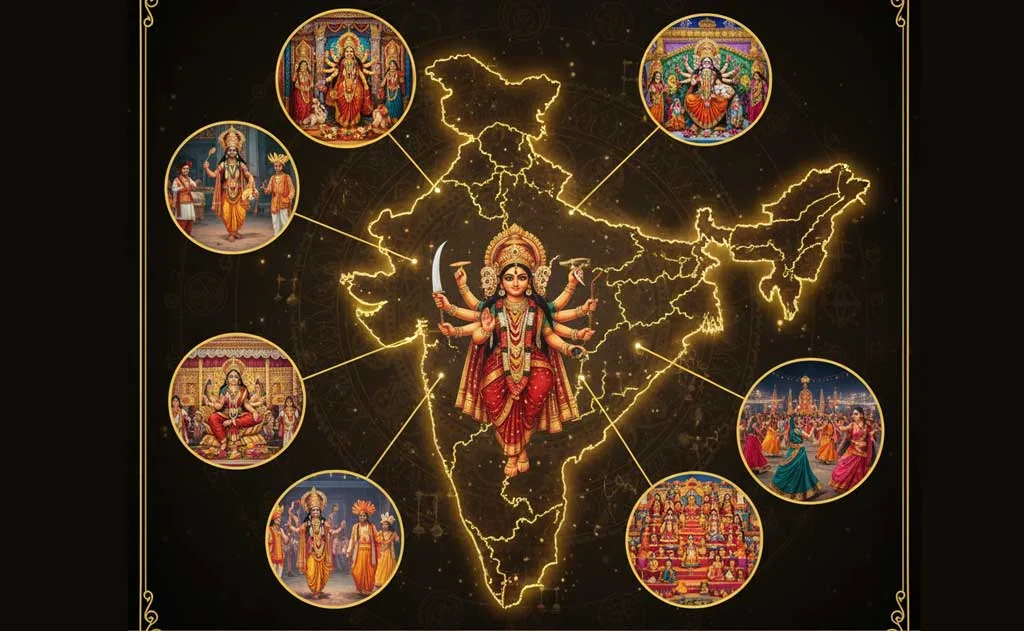
A region-by-region guide to Navratri in India: Garba and Dandiya in Gujarat, Durga Puja in Bengal, Bathukamma in Telangana, Golu in Tamil Nadu, Mysuru Dasara, Ramlila, Kerala's Vidyarambham, Kullu Dussehra, fasting food and the 2026 dates.
Quick answer: Indians celebrate Navratri with nine nights of devotion to the Goddess, but each region has its own way: Garba in Gujarat, Durga Puja in Bengal, Bathukamma in Telangana, Golu in Tamil Nadu, Mysuru Dasara in Karnataka and Ramlila across North India. In 2026, Navratri runs from 11 to 19 October, and Dussehra is on Tuesday 20 October.
Navratri is one of India's most widely celebrated festivals. Observed for nine nights and dedicated to Shakti, the divine feminine, it brings together devotion, fasting, music, dance, family customs and community celebration.
But there is no single way to celebrate Navratri in India. In Gujarat the nights belong to Garba and Dandiya Raas. In West Bengal the season becomes Durga Puja. Tamil families set up Golu doll steps, Telangana women build flower towers for Bathukamma, Karnataka celebrates Mysuru Dasara, and much of North India watches Ramlila before Dussehra. This guide walks through those regional traditions and what connects them.
When is Navratri in 2026?
Sharad Navratri 2026 begins on Sunday 11 October with Ghatasthapana and runs through Monday 19 October, when Durga Ashtami and Maha Navami fall on the same day because of the way the tithis overlap this year. Vijayadashami (Dussehra) is on Tuesday 20 October 2026 in most of India (Drik Panchang).
A few regional dates differ:
| Observance | 2026 date |
|---|---|
| Bathukamma (Telangana) | Engili Pula on 10 October to Saddula Bathukamma on Sunday 18 October |
| Sandhi Puja (Bengal) | Monday 19 October |
| Bijoya Dashami (Bengal) | Wednesday 21 October |
| Jamboo Savari (Mysuru Dasara) | Wednesday 21 October |
| Vidyarambham (Kerala) | Wednesday 21 October |
| Kullu Dussehra (Himachal Pradesh) | Begins Tuesday 20 October, for about seven days |
Because regional calendars and local customs differ, check a panchang for your own city before fixing puja times. The day-by-day list of colours and goddesses is in our Navratri 2026 colours guide.
What does Navratri mean?
The word Navratri means "nine nights". During Sharad Navratri, devotees worship nine forms of Goddess Durga, known together as the Navadurga, one on each day:
1. Shailaputri 2. Brahmacharini 3. Chandraghanta 4. Kushmanda 5. Skandamata 6. Katyayani 7. Kalaratri 8. Mahagauri 9. Siddhidatri
The festival stands for devotion, spiritual discipline and the victory of good over evil. Each part of India expresses these ideas through its own customs, food, music and community events. For the full picture of how the festivals connect, see our explainer on Navratri, Durga Puja, Dussehra and Vijayadashami.
How different parts of India celebrate Navratri
1. Gujarat: nine nights of Garba and Dandiya
For many people, Navratri and Gujarat mean Garba. Every evening, communities gather in decorated grounds, society compounds, temples and cultural venues. Dancers in bright traditional clothes move in circles around a lamp, an image of the Goddess or a decorated garbi, the earthen pot with a lamp inside.
The circular form of Garba is often explained as a symbol of the cycle of life and of the Goddess at the centre. Dandiya Raas, danced in pairs with decorated sticks, usually follows later in the night. Large venues in Ahmedabad, Vadodara, Surat and Rajkot draw thousands of dancers each night, so organisers and police publish rules on timings, passes and crowd safety; see our guide to the Ahmedabad police rules for Navratri 2026.
A Gujarati Navratri night combines devotional music, Garba and Dandiya, traditional clothing, fasting and vegetarian festive food. For many families it is not a festival to watch but one to take part in every night. Our Garba and Navratri 2026 India guide lists events state by state, and the Garba safety guide covers venue checks, crowds and helplines.
2. West Bengal: Durga Puja
In West Bengal the season is celebrated as Durga Puja. Kolkata and towns across Bengal fill with pandals, artist-made Durga images, devotional music, cultural programmes and late-night pandal-hopping.
Durga is worshipped with Lakshmi, Saraswati, Ganesha and Kartikeya, who stand beside her in the traditional image. The main days are Maha Shashthi, Maha Saptami, Maha Ashtami (with Sandhi Puja at the meeting of Ashtami and Navami), Maha Navami and Bijoya Dashami. On the last day, married women take part in Sindoor Khela, and the images are carried to the river for immersion.
Durga Puja is at once a religious festival, an art tradition and a huge community event. Read more in our Durga Puja in West Bengal guide and the latest Kolkata Durga Puja 2026 news.
3. Telangana: Bathukamma
Telangana has one of India's most distinctive traditions of the season: Bathukamma. Women arrange seasonal flowers in layers to build a tall, conical flower tower, then gather around it in a circle to sing traditional songs and clap in rhythm.
Incredible India, the Government of India's tourism portal, describes Bathukamma as a floral festival celebrated by the women of Telangana and links it with Goddess Gauri, nature and the harvest (Incredible India). The festival runs for nine days, from Engili Pula Bathukamma to the grand Saddula Bathukamma, when the flower towers are floated in lakes and tanks. In 2026 that is 10 to 18 October; see our Bathukamma 2026 dates guide and the Hyderabad Tank Bund celebration.
4. Tamil Nadu: Golu (Bommai Kolu)
In Tamil Nadu, Navratri is the season of Golu, also called Bommai Kolu. Families arrange dolls and figurines on an odd number of steps inside the home. The displays show deities, saints, scenes from the epics, village life and sometimes modern themes chosen by the children.
Relatives, neighbours and friends are invited to visit. Guests are usually offered sundal (a spiced lentil dish), prasadam, kumkum and turmeric, and sometimes a small gift, and many homes hold devotional singing in the evenings. Golu turns Navratri into a celebration of family, creativity and devotion. The same tradition is kept in Telugu homes as Bommala Koluvu; our Golu setup guide explains how to arrange one.
5. Karnataka: Mysuru Dasara
Karnataka's best-known celebration is Mysuru Dasara, its state festival. Mysuru Palace is lit up every evening, and the city hosts cultural programmes, exhibitions and sports events through Navratri.
The festival is closely tied to Goddess Chamundeshwari of Chamundi Hill, revered as the goddess who killed the demon Mahishasura. Its high point is the Jamboo Savari, the elephant procession that carries the goddess's idol in a golden howdah from the palace through the city; in 2026 it is on 21 October. Plan a visit with our Mysore Dasara 2026 day-by-day guide and the Mysuru Dasara 2026 news update.
6. North India: fasting, Ramlila and Dussehra
Across much of North India, Navratri is observed with fasting, temple visits, devotional programmes and Ramlila, the staged retelling of the Ramayana that builds over the nights to Lord Rama's victory over Ravana. On Dussehra, large effigies of Ravana, and in many places Kumbhakarna and Meghnada, are burned at sunset as a sign that dharma triumphs over adharma.
Many families also perform Kanya Pujan on Ashtami or Navami, honouring young girls as forms of the Goddess with a meal of puri, halwa and black chana; see our Kanya Pujan 2026 guide. Two of the best-known Ramlilas are in Delhi and Varanasi: see Delhi Ramlila 2026 and the month-long Ramnagar Ramlila.
7. Maharashtra: Ghatasthapana and Devi worship
In Maharashtra, Navratri begins with Ghatasthapana, when families install a sacred pot and sow grain beside it as a sign of growth and prosperity. Homes and Devi temples become centres of worship through the nine days.
In Mumbai, Pune and other cities, Navratri also brings Garba and Dandiya nights, cultural programmes and community gatherings, alongside traditional clothing, devotional music and fasting food.
8. Andhra Pradesh: Dasara and Devi worship
In Andhra Pradesh, Navratri is usually called Dasara or Devi Navaratrulu. Devi temples are the centre of the festival, above all the Kanaka Durga temple on Indrakeeladri hill in Vijayawada, where the goddess is decorated in a different form each day (Kanaka Durga temple guide).
In many Telugu homes, the season also includes Bommala Koluvu doll displays, Saraswati Puja, Ayudha Puja, Aksharabhyasam for young children and family gatherings on Vijayadashami. Practices vary by district and family.
9. Kerala: Saraswati Puja and Vidyarambham
In Kerala, the last days of Navratri are devoted to Goddess Saraswati. On Durgashtami, books, musical instruments and tools are placed before the Goddess for Puja Vaipu and are not used until they are taken back on Vijayadashami. That morning, young children write their first letters in rice or sand at temples and homes in the ceremony called Vidyarambham. Our Vidyarambham guide explains the ritual.
10. Punjab and the north-west: Jagran and devotional singing
In Punjab, Jammu, Himachal Pradesh and Delhi, many families hold a Mata ka Jagran or jagrata, a night of bhajans and devotional songs to the Goddess that continues until dawn. Pilgrims also travel to the hill shrines of the Goddess during Navratri; see our guide to Himachal's Shakti temples in Navratri.
11. Himachal Pradesh: Kullu Dussehra
The Kullu Valley keeps its own Dussehra tradition. Kullu Dussehra begins on Vijayadashami, when Lord Raghunath is drawn in a chariot procession across Dhalpur Maidan and hundreds of village deities are carried in to join him. Unlike the usual image of Dussehra, it does not end on the tenth day with effigies but continues for about a week; see our Kullu Dussehra 2026 guide.
What do Indians eat during Navratri?
Food is a big part of Navratri. Families that fast usually avoid grains such as wheat and rice, pulses, onion and garlic, though the exact rules vary by region and family. Common fasting foods include:
- Sabudana khichdi and vada
- Kuttu (buckwheat) and singhara (water chestnut) flour
- Rajgira (amaranth)
- Fruits, milk and other dairy products
- Potatoes and sweet potatoes
- Nuts and coconut
Fasting rules are not the same everywhere in India, so follow your family tradition or ask your priest. For recipes, see our Navratri day-wise fasting recipes.
Navratri clothing and colours
Navratri is also a festival of colour. Women wear sarees, lehengas and chaniya cholis; men wear kurtas and, in Gujarat, the flared kediyu for Garba nights. Many devotees also follow a colour for each day of Navratri, but lists vary between regions and publishers, especially for the last two days.
Why is Navratri celebrated for nine nights?
The nine nights are devoted to the nine forms of the Goddess, and the festival marks the victory of divine power over evil. Different regions stress different stories:
- Goddess Durga's victory over the demon Mahishasura
- Lord Rama's victory over Ravana
- The worship of Shakti, the divine feminine
- Spiritual purification through fasting and prayer
So Navratri carries several layers of religious and cultural meaning at once.
Navratri across India: a quick comparison
| Region | Main Navratri tradition |
|---|---|
| Gujarat | Garba and Dandiya Raas |
| West Bengal | Durga Puja |
| Telangana | Bathukamma |
| Tamil Nadu | Golu (Bommai Kolu) |
| Karnataka | Mysuru Dasara and the Jamboo Savari |
| North India | Fasting, Ramlila, Kanya Pujan and Dussehra |
| Maharashtra | Ghatasthapana, Devi worship and Garba |
| Andhra Pradesh | Kanaka Durga Dasara, Bommala Koluvu and Ayudha Puja |
| Kerala | Saraswati Puja and Vidyarambham |
| Punjab and the north-west | Mata ka Jagran |
| Himachal Pradesh | Kullu Dussehra |
More than a festival
Navratri brings generations together. Grandparents teach children the prayers, parents pass on family customs, young people fill the Garba grounds, and women keep traditions such as Golu and Bathukamma alive. The rituals, music, food and clothes differ from state to state, but the centre stays the same: devotion to Shakti, community and the victory of good over evil.
Frequently asked questions
How do Indians celebrate Navratri?
With fasting, puja and temple visits over nine nights, and with regional traditions: Garba and Dandiya in Gujarat, Durga Puja in Bengal, Golu in Tamil Nadu, Bathukamma in Telangana, Mysuru Dasara in Karnataka, Ramlila in North India, and Vijayadashami or Dussehra on the tenth day.
When is Navratri 2026?
Sharad Navratri 2026 runs from Sunday 11 October (Ghatasthapana) to Monday 19 October, when Durga Ashtami and Maha Navami fall together. Vijayadashami (Dussehra) is on Tuesday 20 October in most of India; Bengal's Bijoya Dashami and Mysuru's Jamboo Savari are on Wednesday 21 October.
How is Navratri celebrated in Gujarat?
Gujarat celebrates with Garba and Dandiya Raas every night, as communities dance in circles around a lamp or an image of the Goddess, alongside fasting and devotional music.
How is Navratri celebrated in South India?
Tamil and Telugu homes set up Golu or Bommala Koluvu doll steps, Telangana celebrates Bathukamma, Karnataka holds Mysuru Dasara, Vijayawada's Kanaka Durga temple celebrates Dasara, and Kerala marks Saraswati Puja and Vidyarambham.
Is Navratri the same as Dussehra?
They are closely connected but not the same. Navratri is the nine-night festival of the Goddess; Vijayadashami or Dussehra is the tenth day, celebrating the victory of good over evil. Regional customs for each differ.
What do people eat during Navratri fasts?
Common fasting foods include sabudana, kuttu and singhara flour, rajgira, fruits, milk, potatoes, sweet potatoes, nuts and coconut. Grains, pulses, onion and garlic are usually avoided, but rules vary by family and region.
Editor's note (11 October 2026)
Dates for India follow Drik Panchang and our own regional festival pages. Customs differ between families, communities and districts, so treat the descriptions here as common practice rather than fixed rules, and confirm event details with local organisers.
Related guides
You might also like
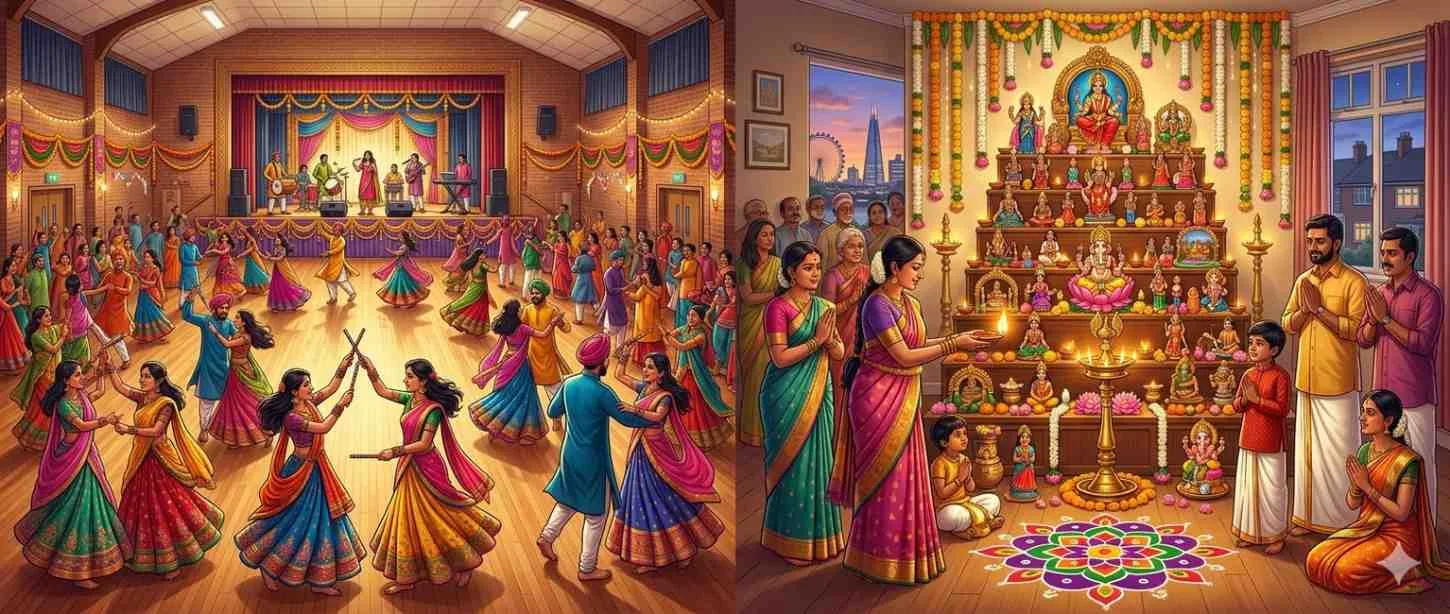
Navratri in the UK: How Gujaratis & South Indians Celebrate Abroad
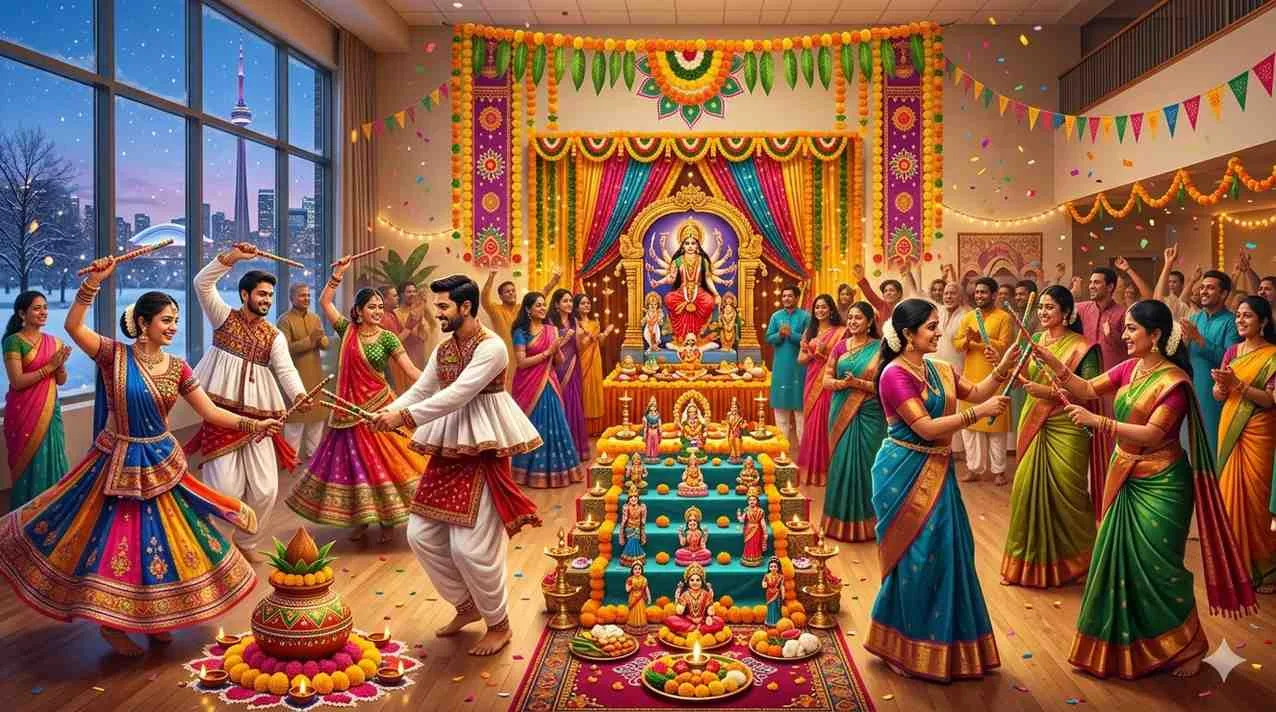
Navratri in Canada: How Gujaratis & South Indians Celebrate Abroad
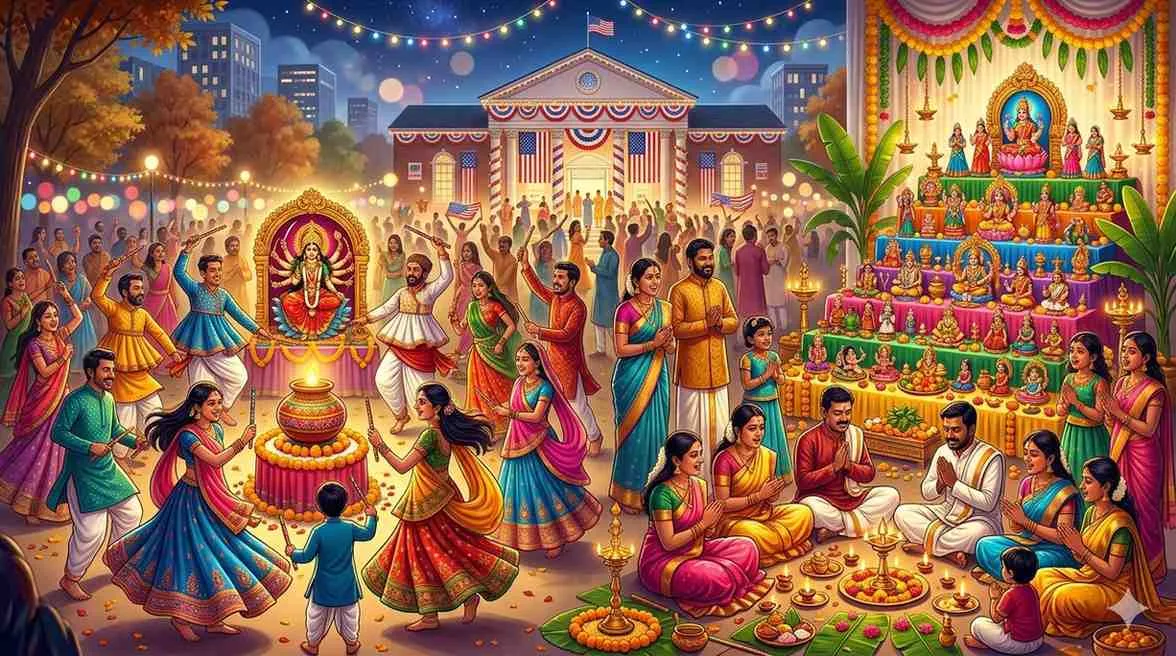
Navratri in the USA: How Gujaratis & South Indians Celebrate Abroad